Small home gym ideas can change how you train at home. Simple setups help you use every corner wisely, making daily workouts easier, more practical, organized, and comfortable.
I’ve seen tiny spaces become useful workout spots when the layout makes sense. Choosing gear that fits your routine also keeps the area functional, comfortable, and easier to manage each day.
You don’t need a large room to build a gym that works well. Smart planning and space-saving choices can help you stay consistent without making your home feel too crowded.
From storage tricks to smart equipment choices, these ideas can help you create a comfortable workout area that supports your routine without filling your home with unnecessary clutter.
How Much Space Do You Actually Need for A Tiny Home Gym?
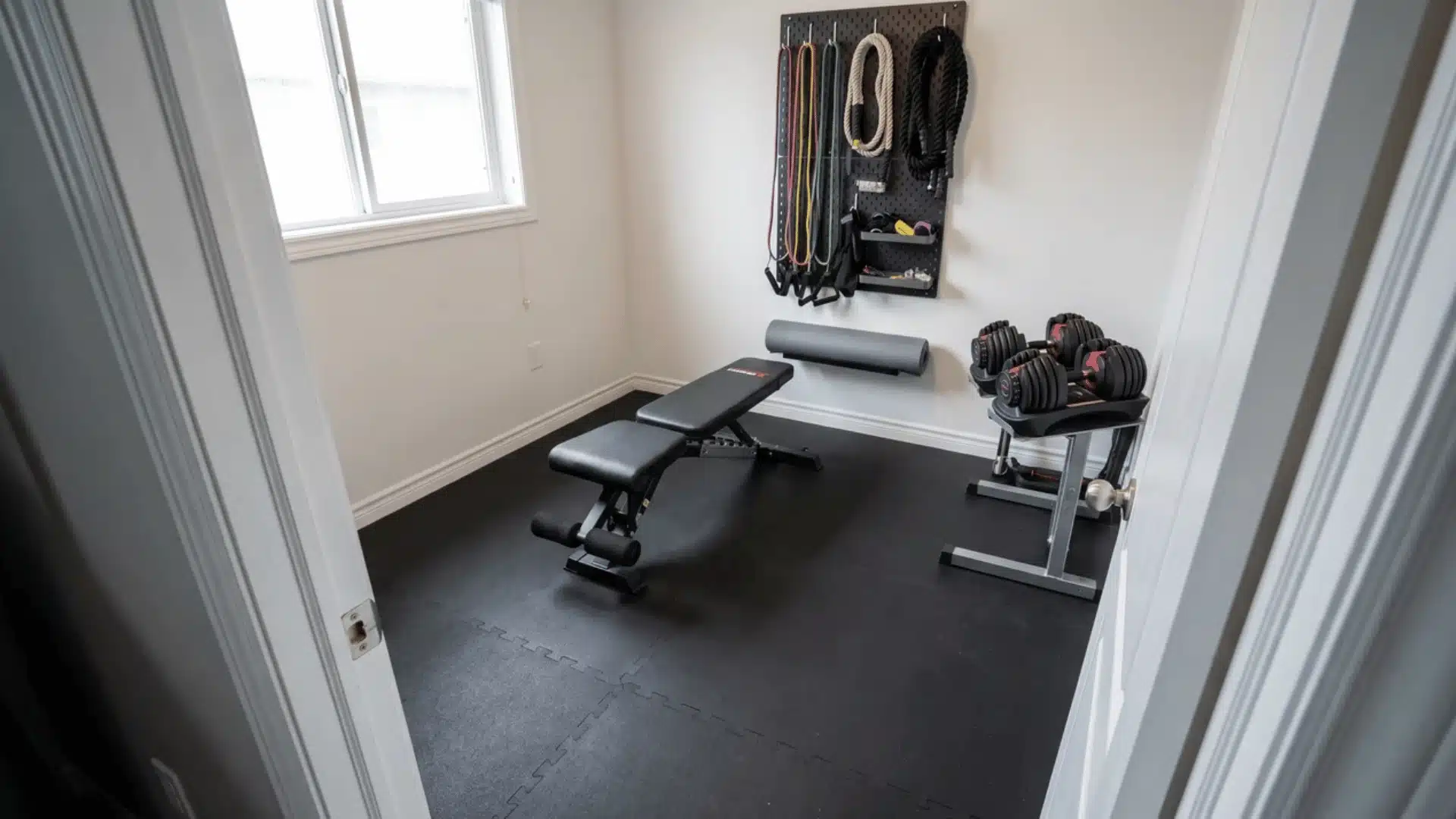
You can build a basic home gym in around 50 to 80 square feet with equipment such as adjustable dumbbells, resistance bands, a mat, and a compact bench.
The usable clearance matters just as much as the square footage. I’ve seen people fit equipment into tiny corners only to discover there was barely enough room to perform a full movement safely.
For a treadmill, squat rack, or larger strength setup, plan for roughly 150 to 250 square feet. You also need to account for ceiling height when using pull-up bars or performing overhead movements.
Before buying anything, measure the floor area and ceiling height. Then mark the footprint of larger equipment and leave enough clearance to actually use it.
Best Small-Space Locations for a Home Gym
The best location depends on your flooring, available clearance, noise tolerance, and whether you can make permanent changes to the space.
- Garage or basement: Concrete floors can handle heavier equipment, while separation from living areas helps reduce noise and gives you more freedom with larger equipment setups.
- Spare bedroom: A spare bedroom provides a comfortable, finished workout area without major construction, although carpet may need protection beneath heavier equipment or machines.
- Living room corner: A living room corner works well for compact equipment that can be stored after workouts, following a small living room layout to preserve the room’s primary purpose between training sessions.
- Apartment or rental: Freestanding equipment, rubber mats, resistance bands, and removable storage work well when lease terms restrict drilling, permanent flooring changes, or other modifications.
Small Home Gym Ideas That Actually Work
Small spaces don’t need small ambition. Here are the ideas that work in a garage, a closet, or a corner of your living room.
1. Install a Folding Wall-Mounted Squat Rack
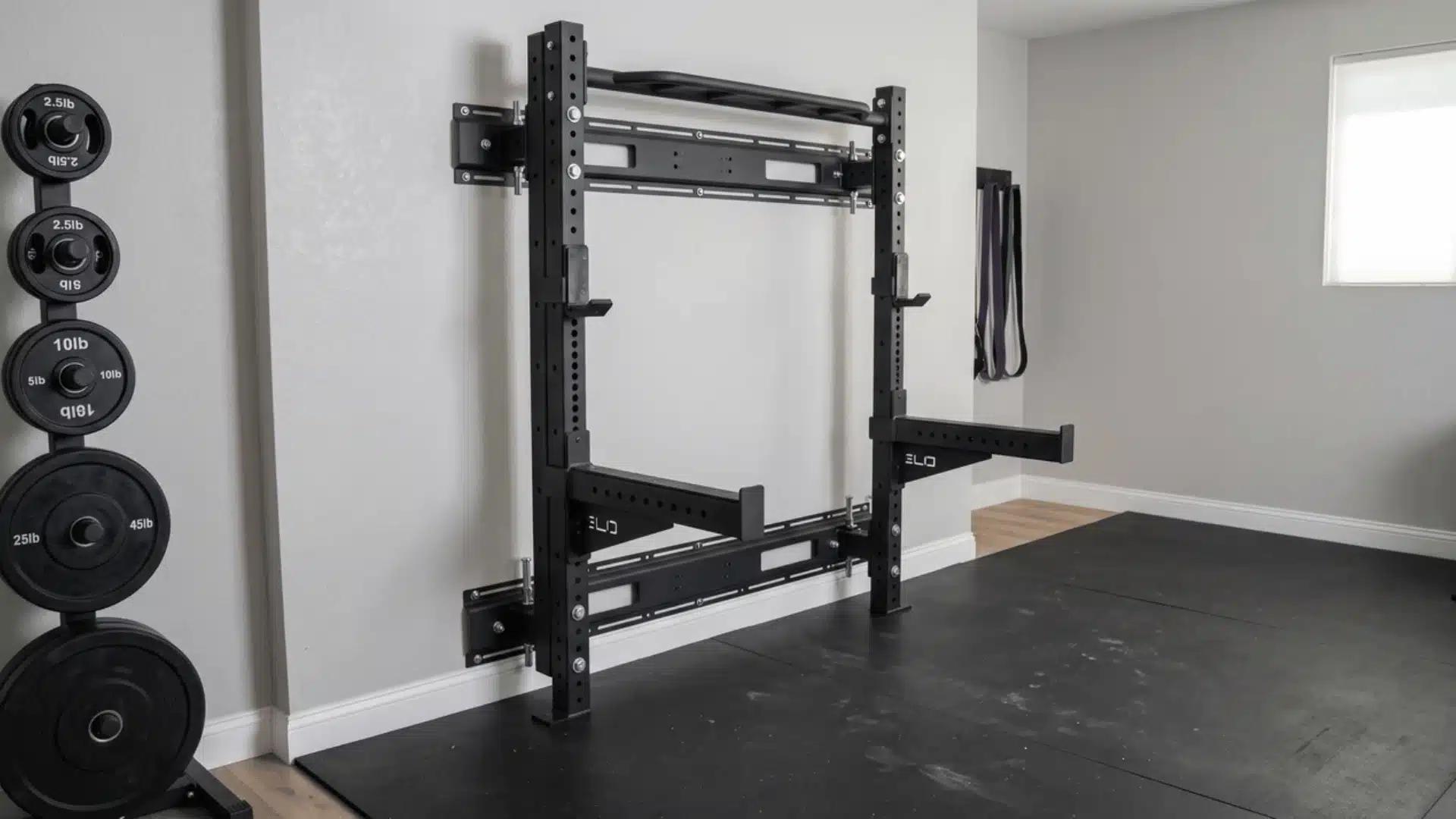
A folding rack tucks flat against the wall once you’re finished, giving you real strength training without permanently losing floor space in a small room.
Check that it anchors into wall studs before loading it up, since squat racks carry serious weight and need solid mounting to stay safe under real load.
2. Get a Full Resistance Band Set
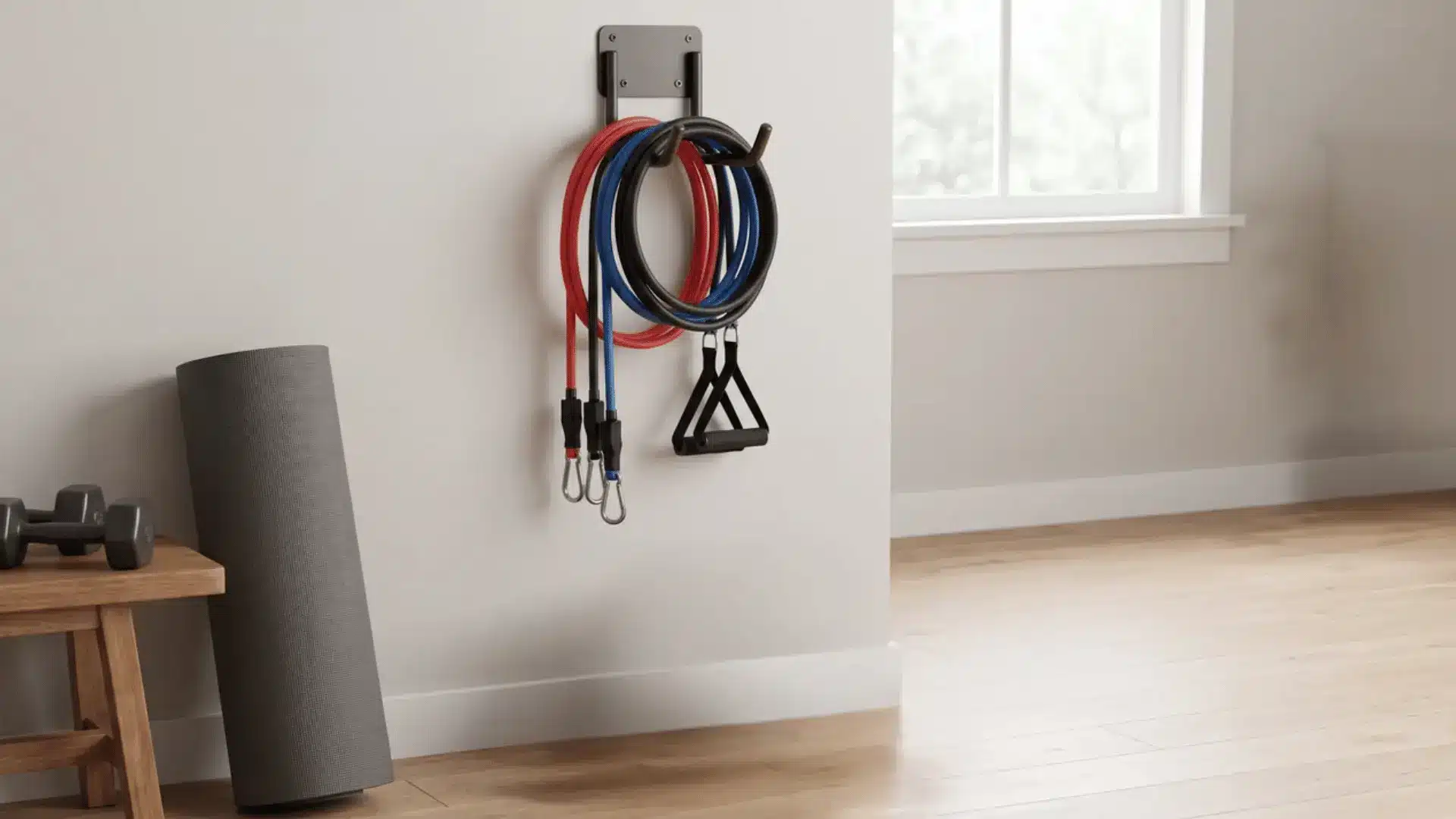
A complete resistance band set covers a full-body workout while using almost no storage space, unlike a rack of plates or a bulky machine.
Buy a set with multiple resistance levels so you have options for both light warmups and heavier strength work, then hang the bands on a hook when you’re done.
3. Invest in Adjustable Dumbbells
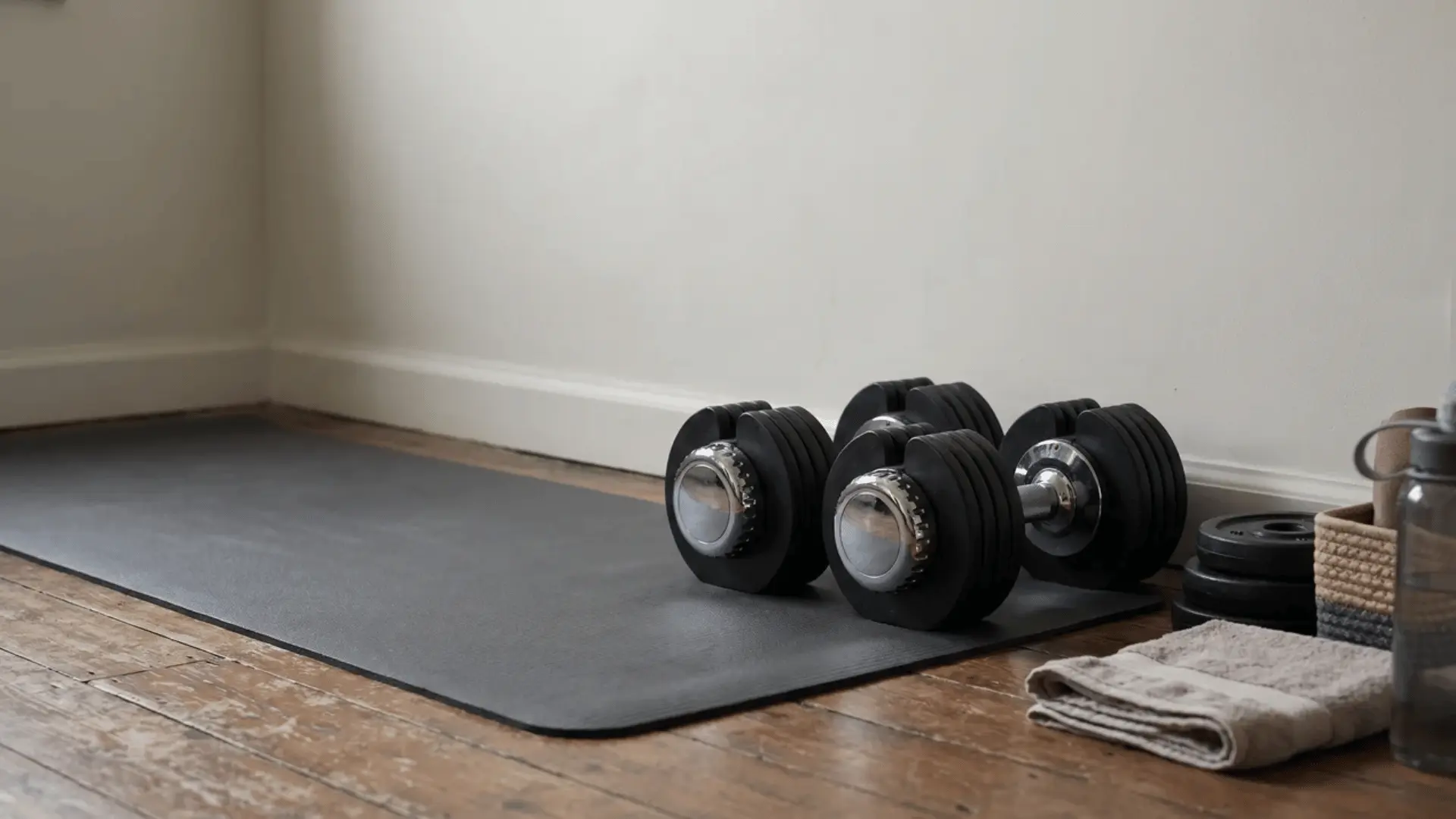
Adjustable dumbbells can be the best home gym equipment for limited space. They replace several pairs of fixed-weight dumbbells in one compact tool, saving valuable space in a room that’s already tight on square footage.
Pick a set with a wide weight range so you’re not stuck buying a second pair as you get stronger, and store the single pair beside your mat with no rack needed.
4. Add Floating Shelves for Storage
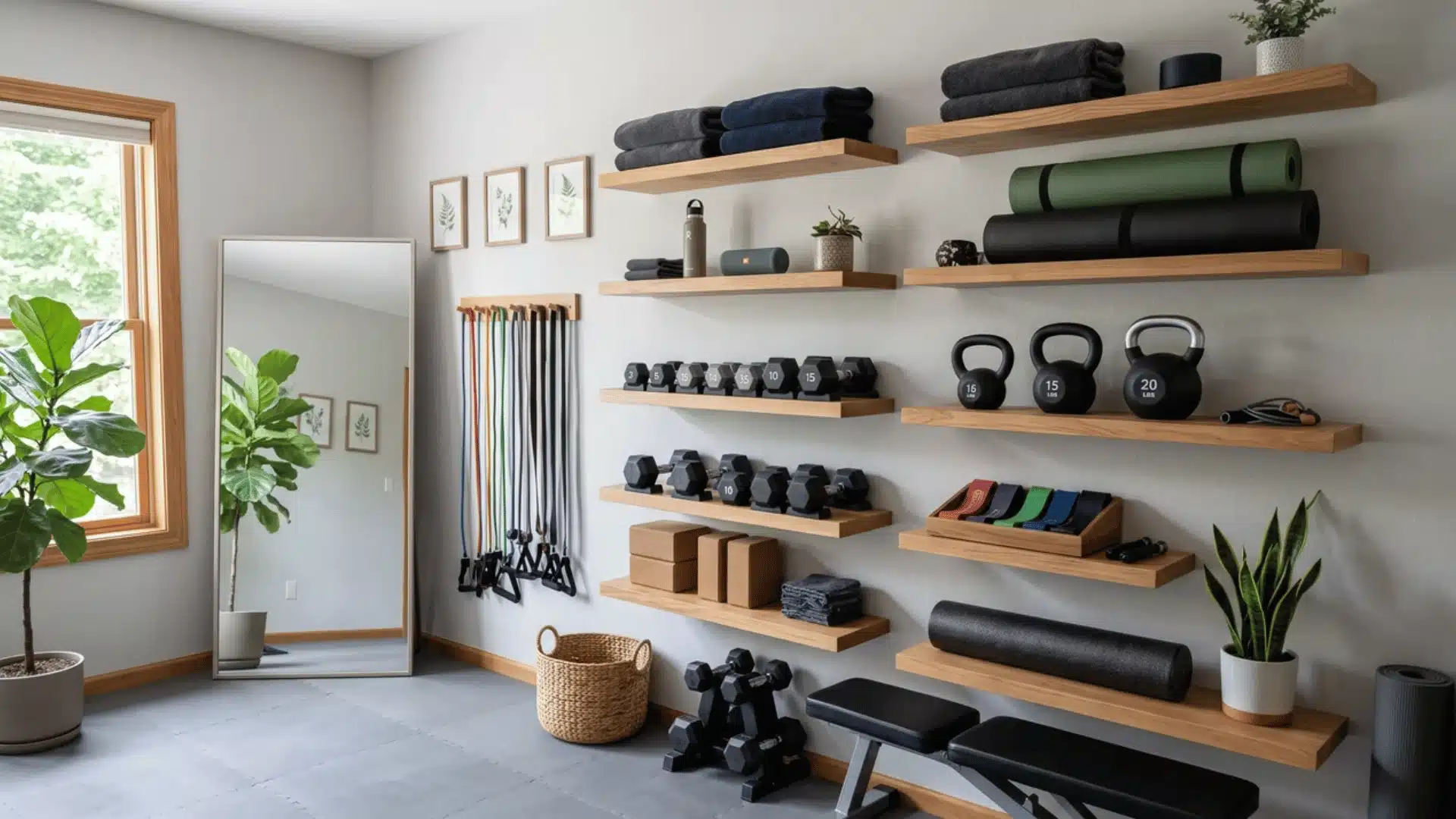
Floating shelves hold mats, towels, and small pieces of equipment above the floor, keeping the room’s actual walking space completely clear each day.
Install a few shelves at different heights so lighter items sit up top while heavier gear stays within easy reach, and choose a style that doubles as decor.
5. Install a Pegboard for Equipment
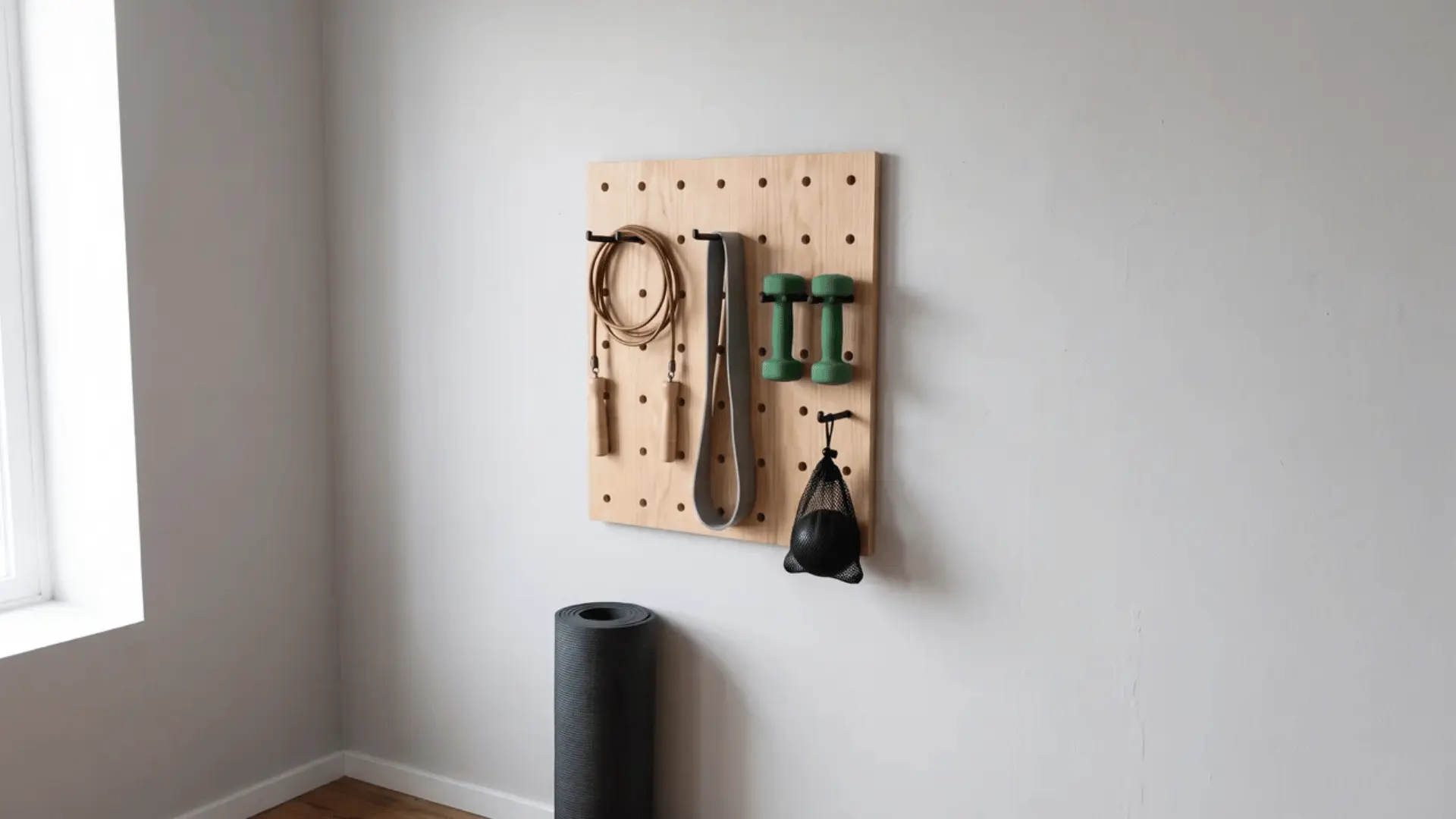
A pegboard turns one blank wall into flexible storage for bands, jump ropes, and small accessories you reach for during every single session.
Mount hooks at heights that match how often you use each item, and rearrange them anytime your equipment changes, since pegboards adjust far more easily than fixed shelving.
6. Place a Large Mirror on One Wall
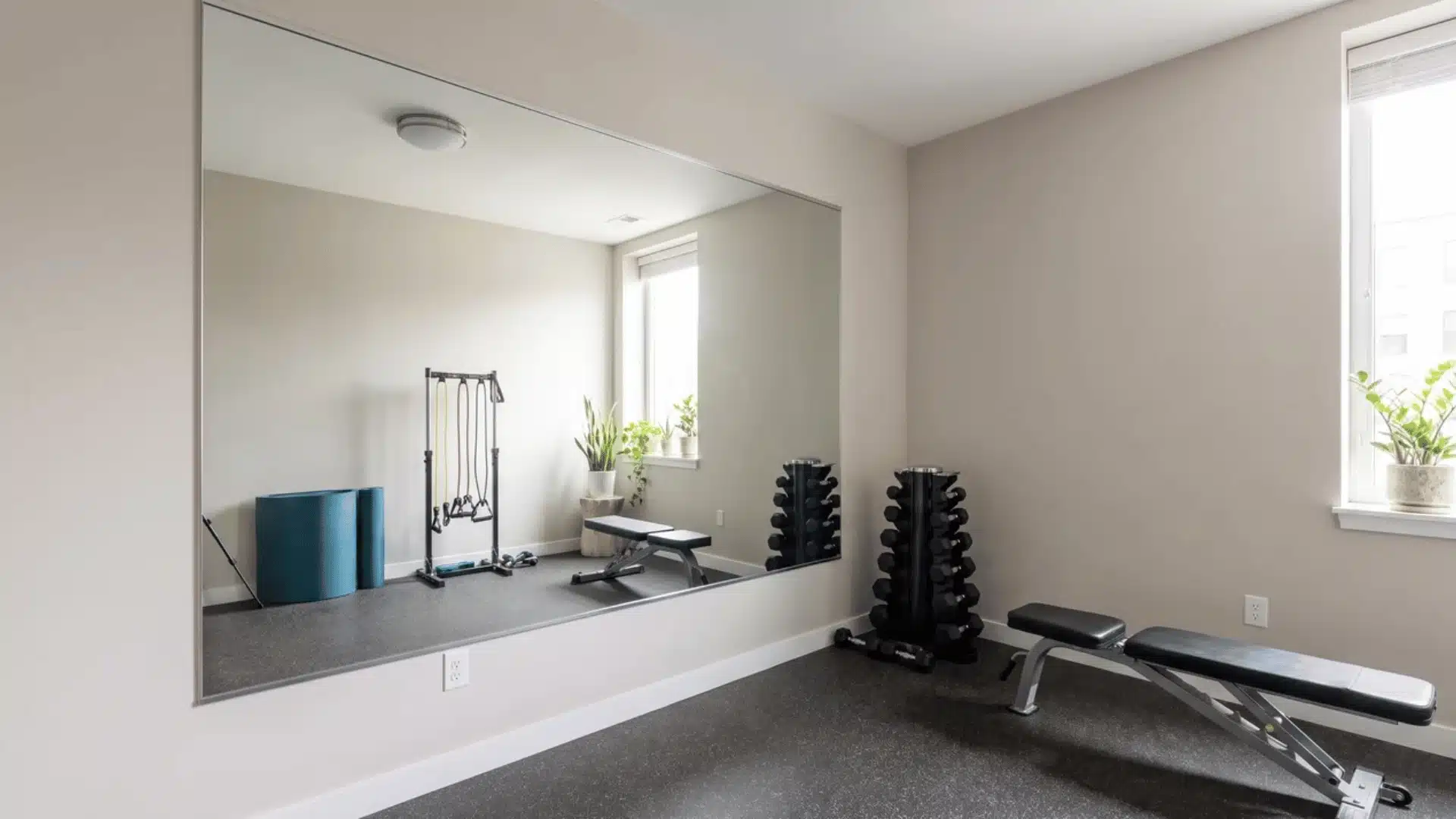
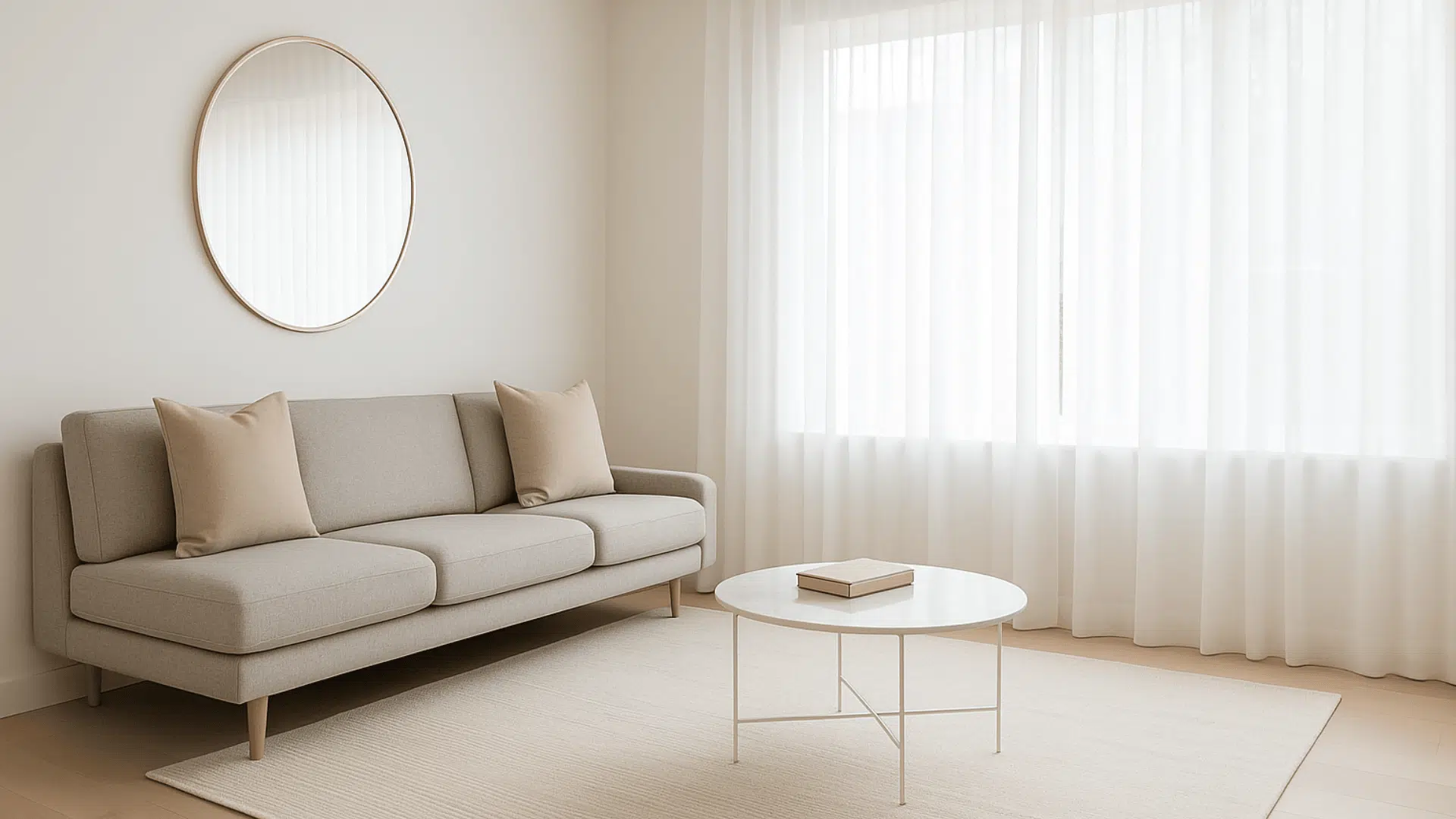
A large mirror lets you check your form during lifts while also doubling the perceived size of a genuinely small workout room, which matters more once the space starts filling up with equipment.
Position it where it catches the most natural light, since that combination brightens the space, and pair it with a floor lamp or can lighting if the room has no windows.
7. Add a Corner Storage Bin for Loose Weights
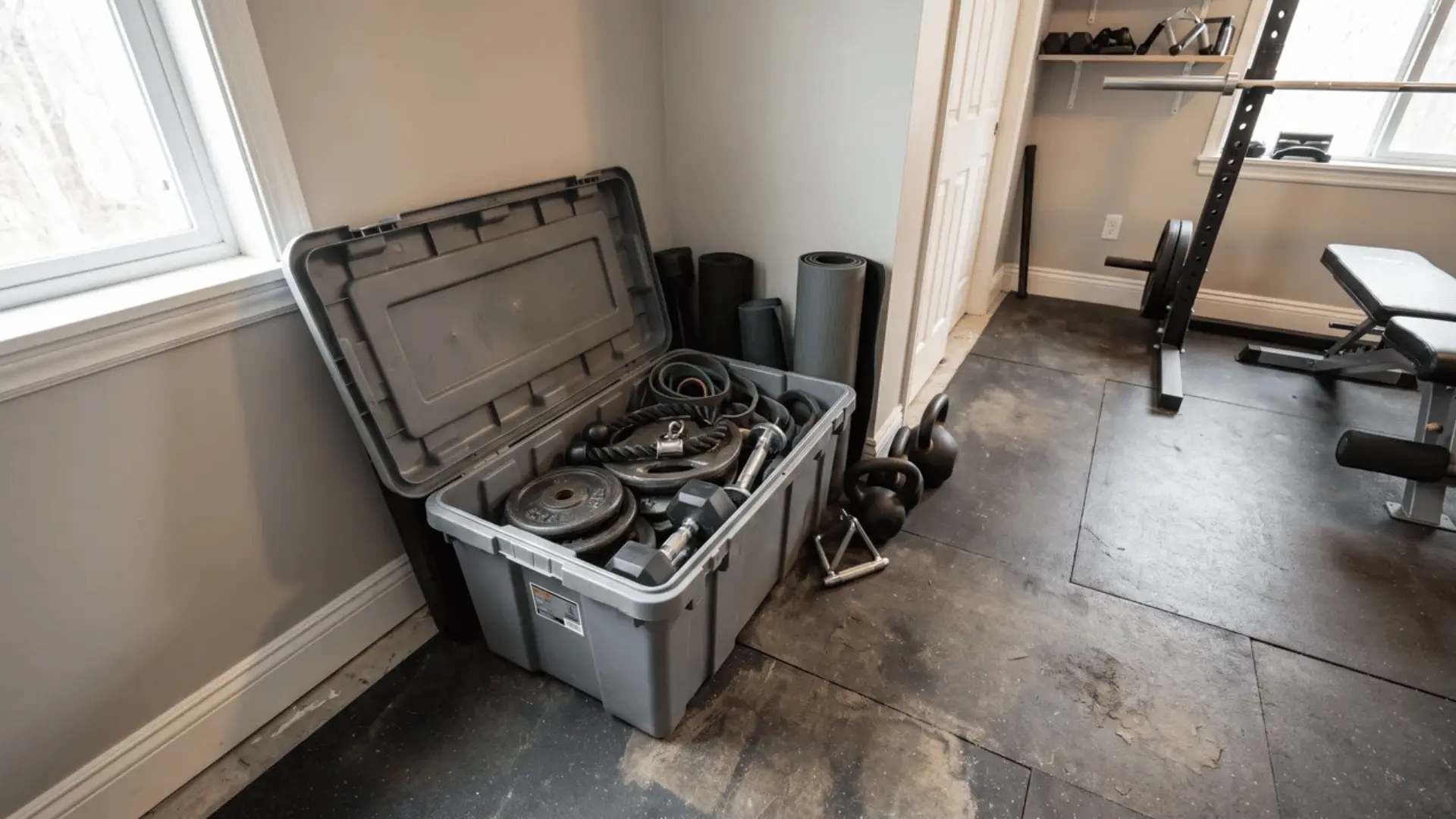
A corner bin corrals loose plates, resistance handles, and grip attachments that don’t fit neatly on a shelf, a rack, or a hook, and would otherwise end up scattered across the floor after every session.
Pick one with a wide, sturdy base, so it won’t tip under real weight, and place it in a dead corner your equipment layout isn’t already using.
8. Add a Ladder Shelf for Towels
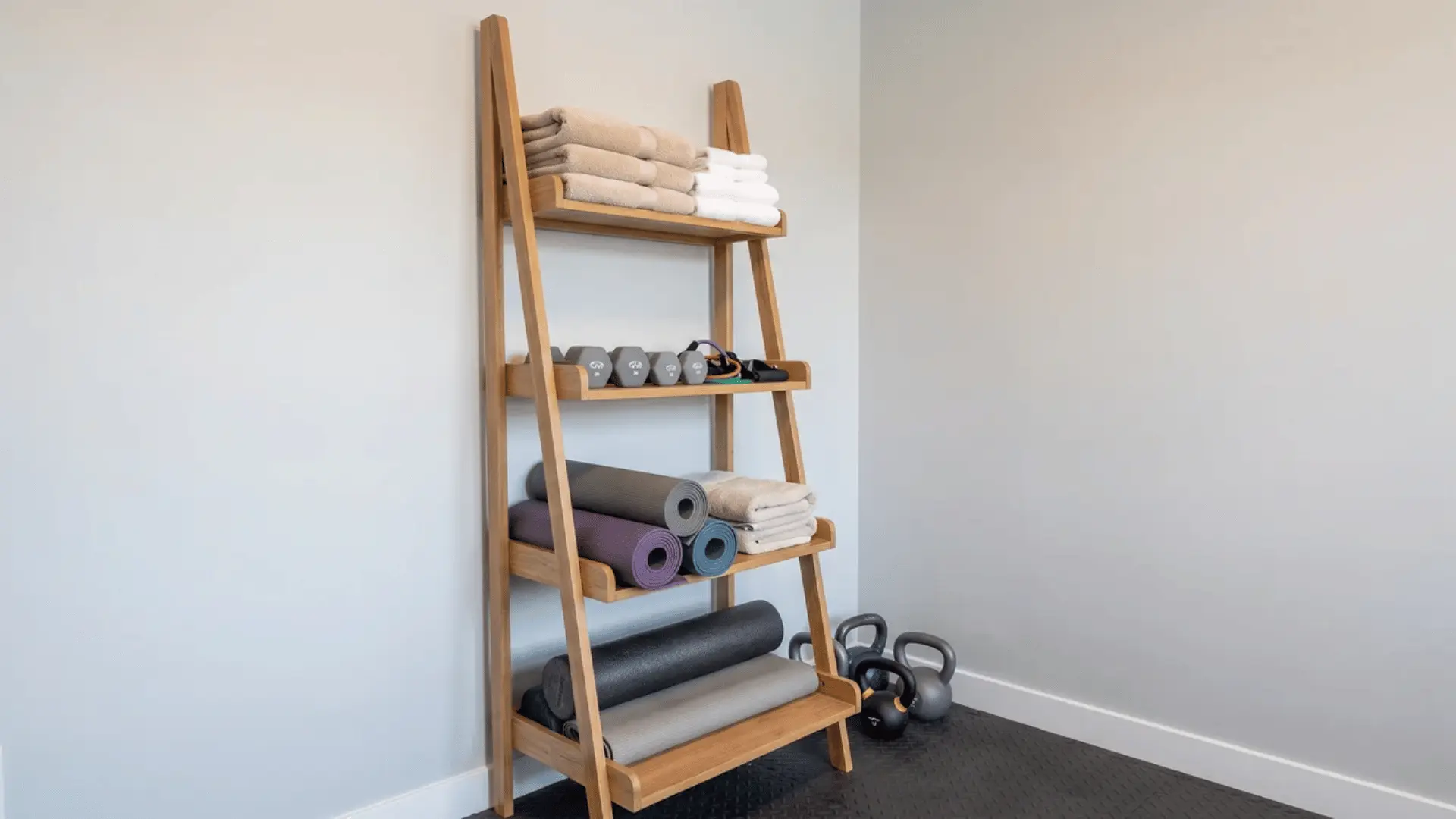
A ladder shelf leans against the wall and holds towels, small weights, or folded mats without needing a full cabinet installed nearby in an already tight room.
Choose one with a few separate tiers so daily items stay apart from things you only use occasionally, and keep it close to your training spot for easy reach.
9. Use a Rolling Cart for Laundry and Towels
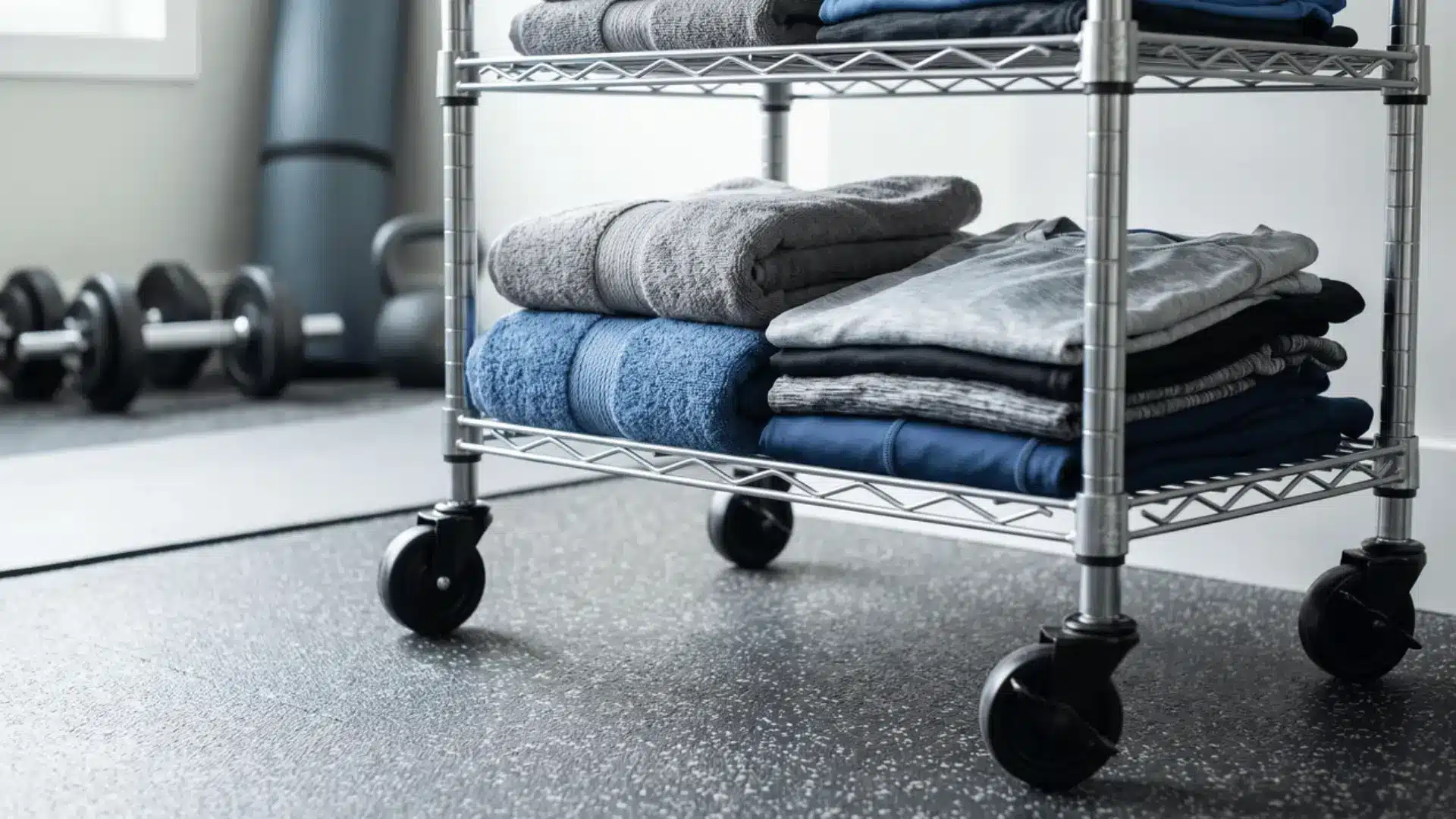
A rolling cart or hamper handles sweaty towels and clothes without them sitting in a growing pile on your gym floor after every training session throughout the week.
Pick one with wheels and a brake so it stays put during your workout but moves easily on laundry day, and empty it out regularly so it actually gets used instead of ignored.
10. Set Up a Tree-Style Weight Rack
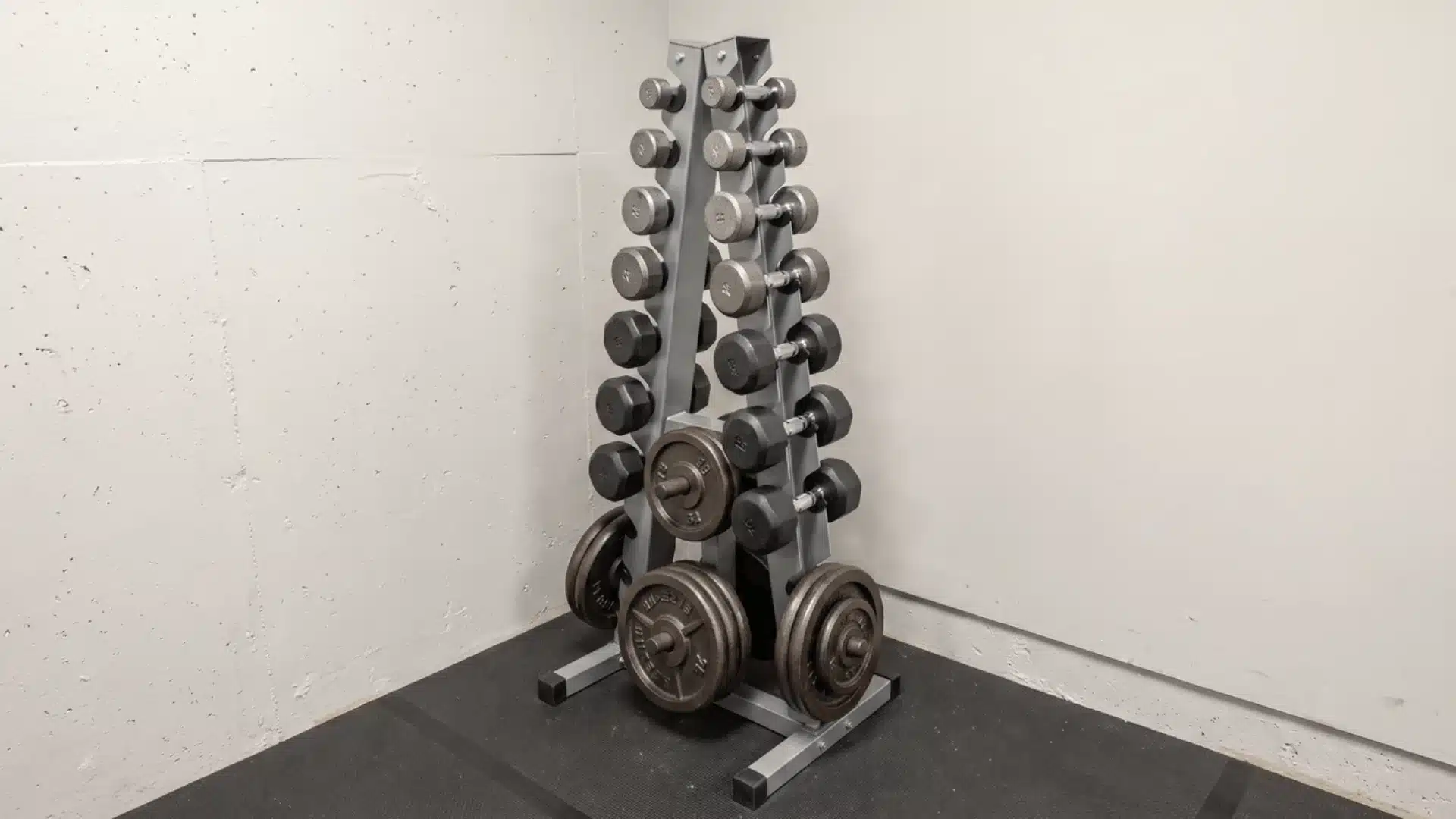
A tree-style rack holds free weights in a single vertical column, keeping everything organized neatly in a corner or along one wall instead of scattered across the floor.
Pick one that lets you load and unload plates from either side, since that small detail makes putting weights away far easier, and place it somewhere gear won’t end up underfoot.
11. Choose Light, Airy Wall Colors
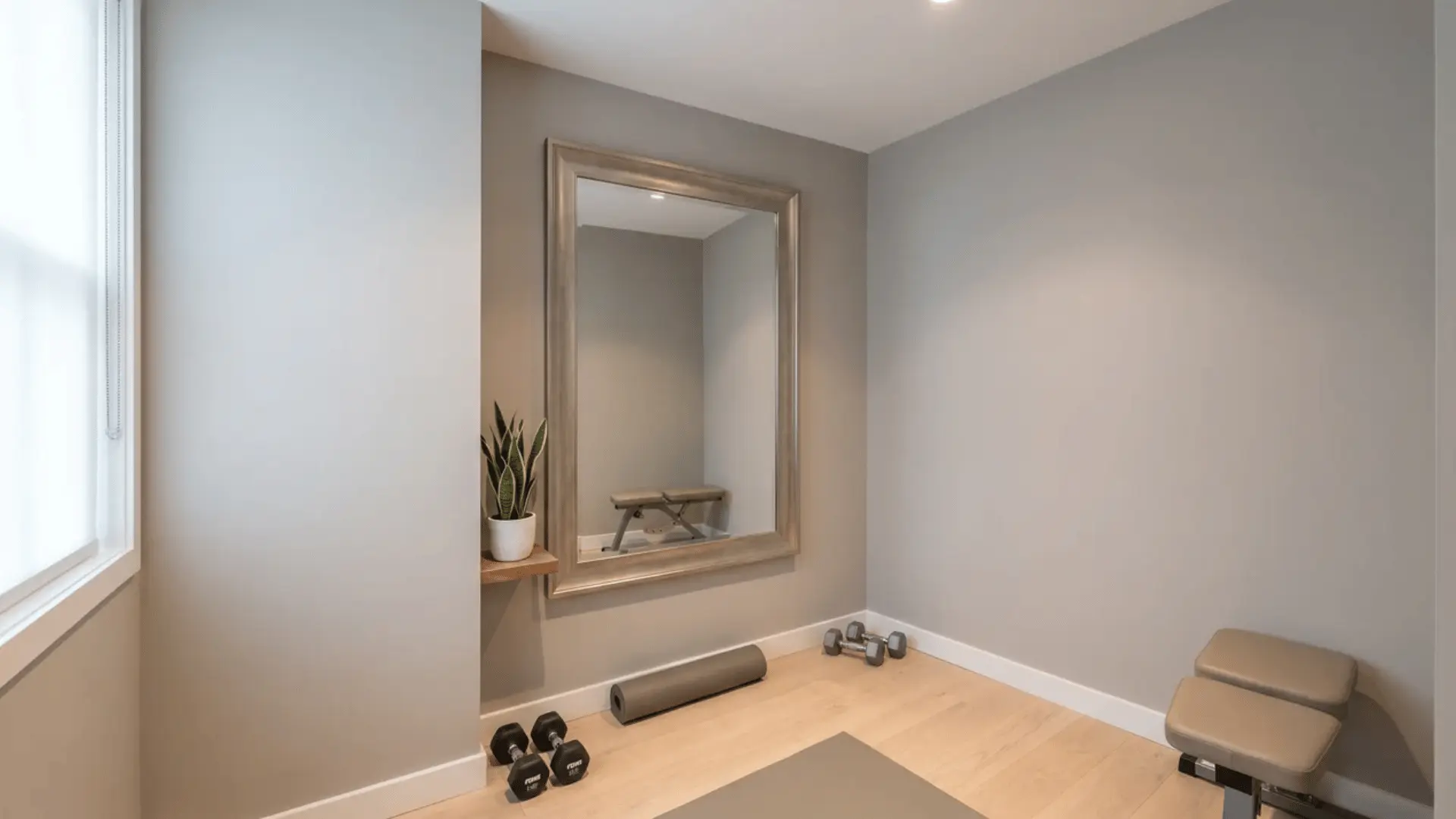
Light wall colors make a small gym feel considerably more open, especially once paired with good lighting and a mirror placed somewhere nearby in the room.
Stick to whites, soft grays, or pale neutrals for a calm feel, then add one small accent piece, like a plant or a print, so the room doesn’t feel completely bare.
12. Add a Ceiling Fan With a Light Kit
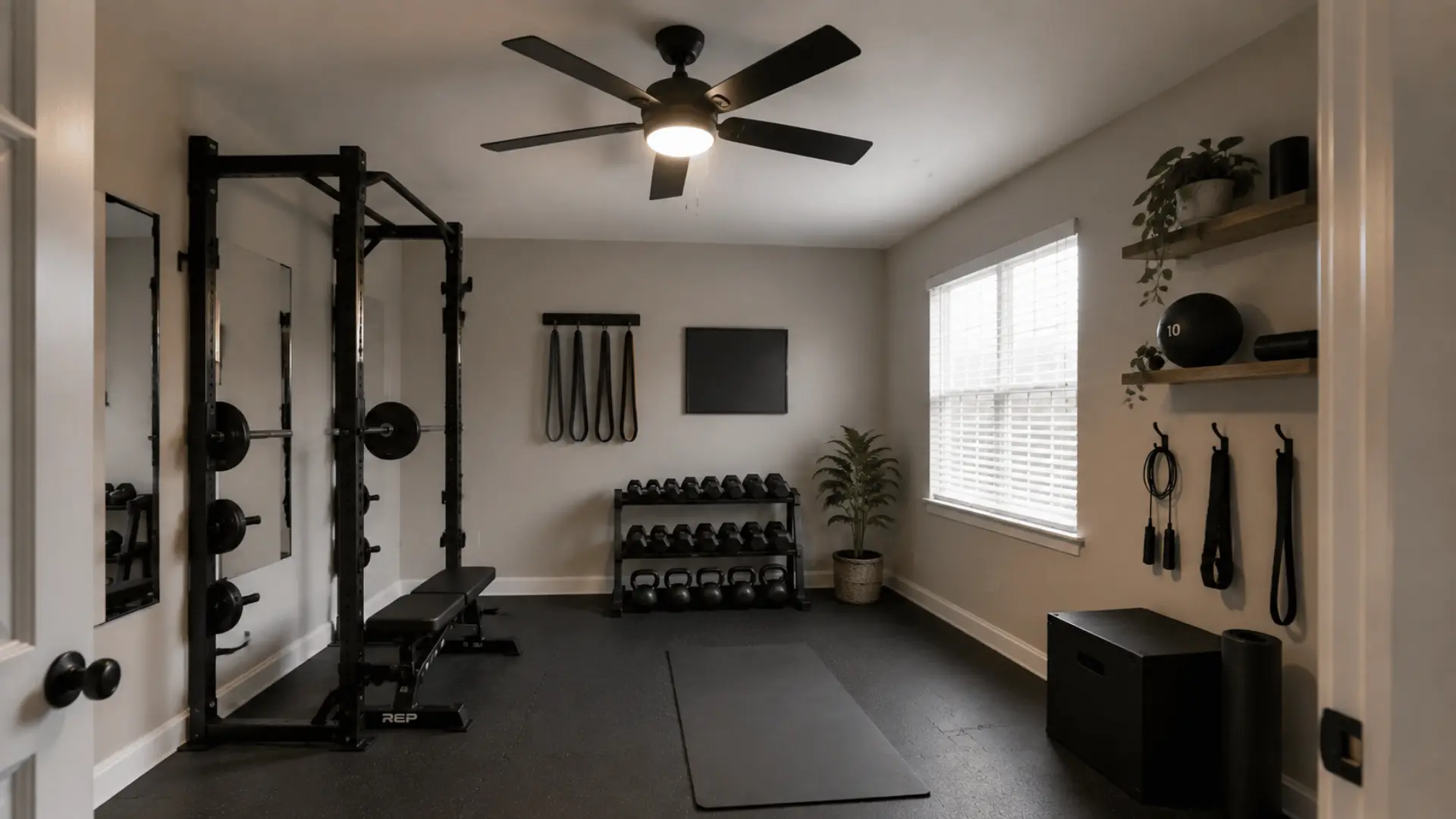
A ceiling fan with a built-in light solves airflow and lighting in one fixture, which matters more in enclosed rooms than most people expect.
Pick a fan sized for the room’s square footage, since an oversized fan wastes energy, and install it centered over your main training area for the best coverage.
13. Use a Suspension Trainer
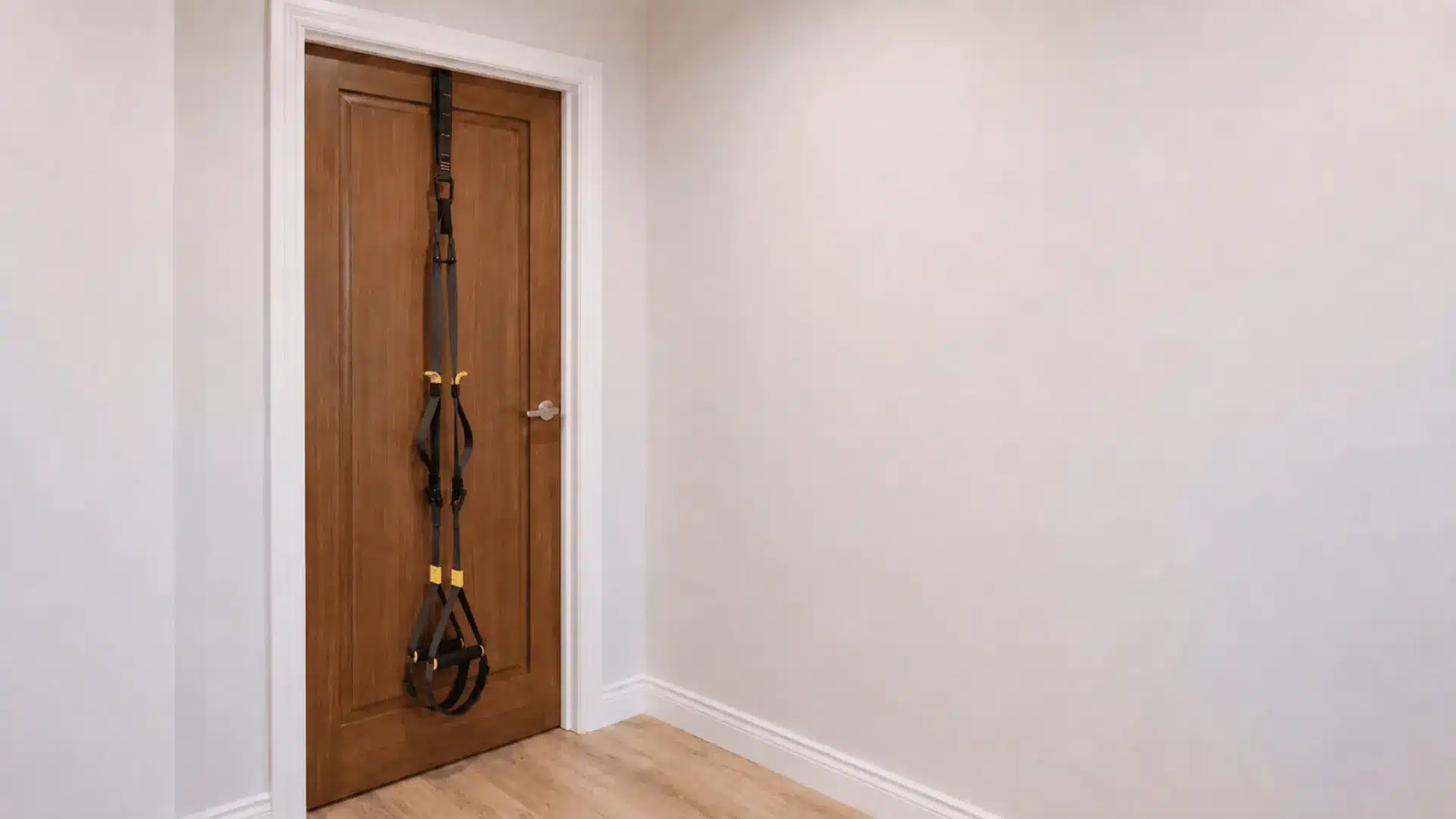
A suspension trainer anchors to a sturdy door or beam and handles rows, presses, core exercises, and other bodyweight movements from one point without taking up permanent floor space indoors.
When your workout is finished, unclip the trainer and store it in a drawer or cupboard, then attach it again whenever your next training session calls for it at home.
14. Add a Blackboard for Tracking Progress
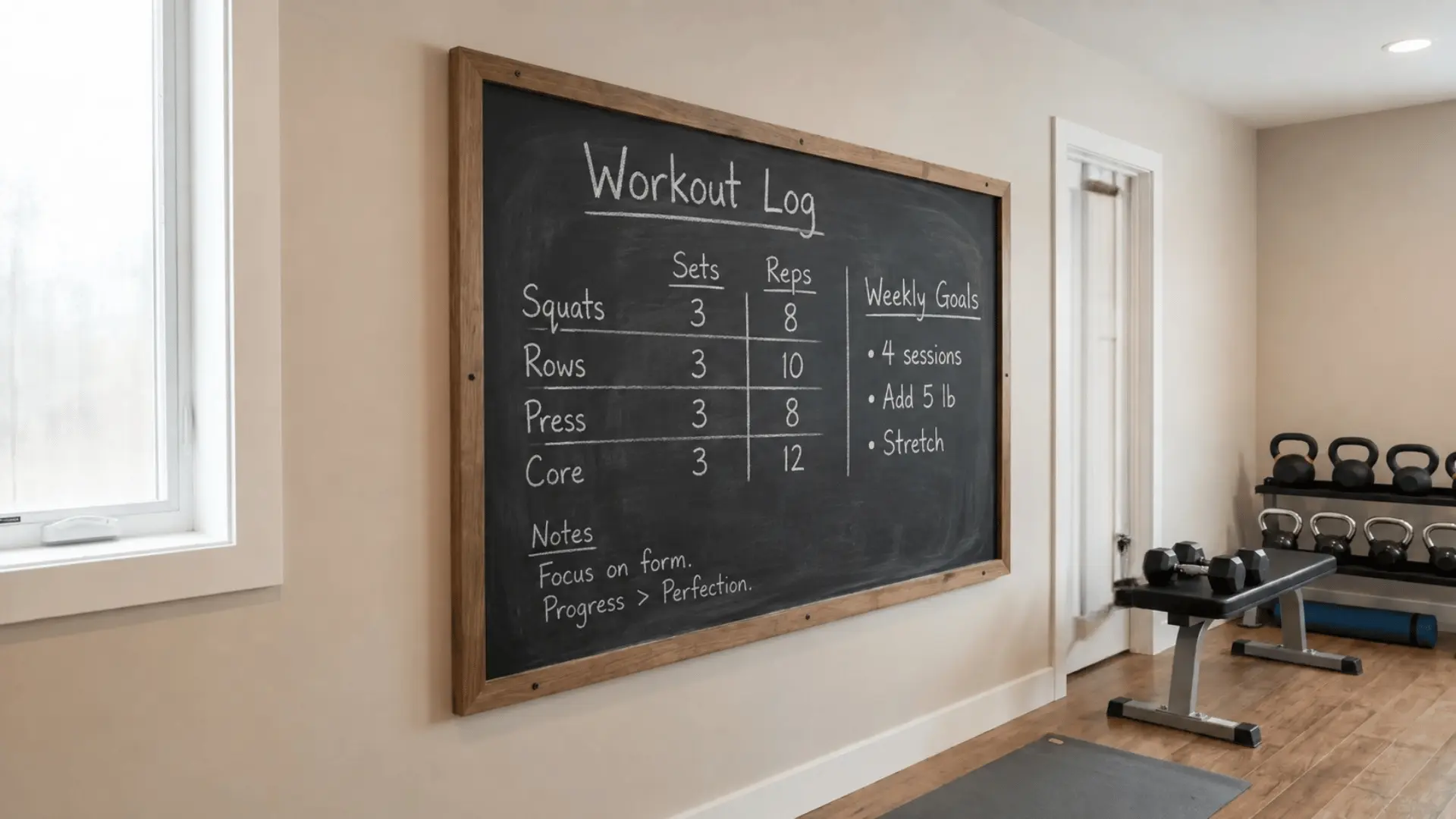
A wall-mounted blackboard gives you a spot to log sets, reps, or weekly goals without needing a notebook, a spreadsheet, or a separate app on your phone.
Mount it near your main training area so updating it becomes part of your routine right after each session, then wipe it clean weekly to keep the numbers current.
15. Keep a Foam Roller Nearby
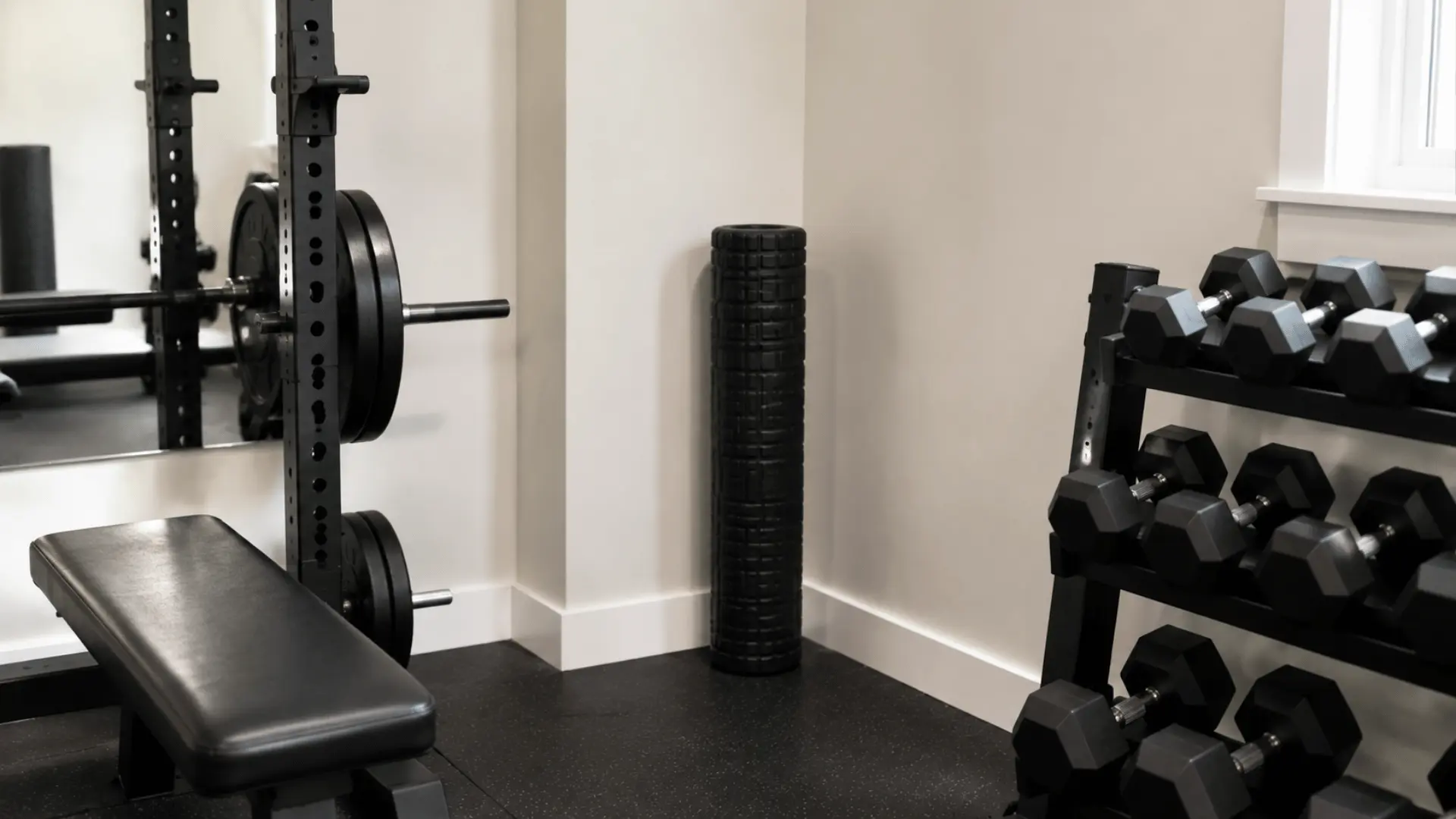
A foam roller supports recovery after training and takes up almost no space compared to most other recovery tools available on the market today.
Store it upright in a corner or on a shelf so it becomes part of your routine, and use it right after training, since sore muscles roll out easier before they fully tighten up.
16. Add a Small Area Rug or Mat Zone
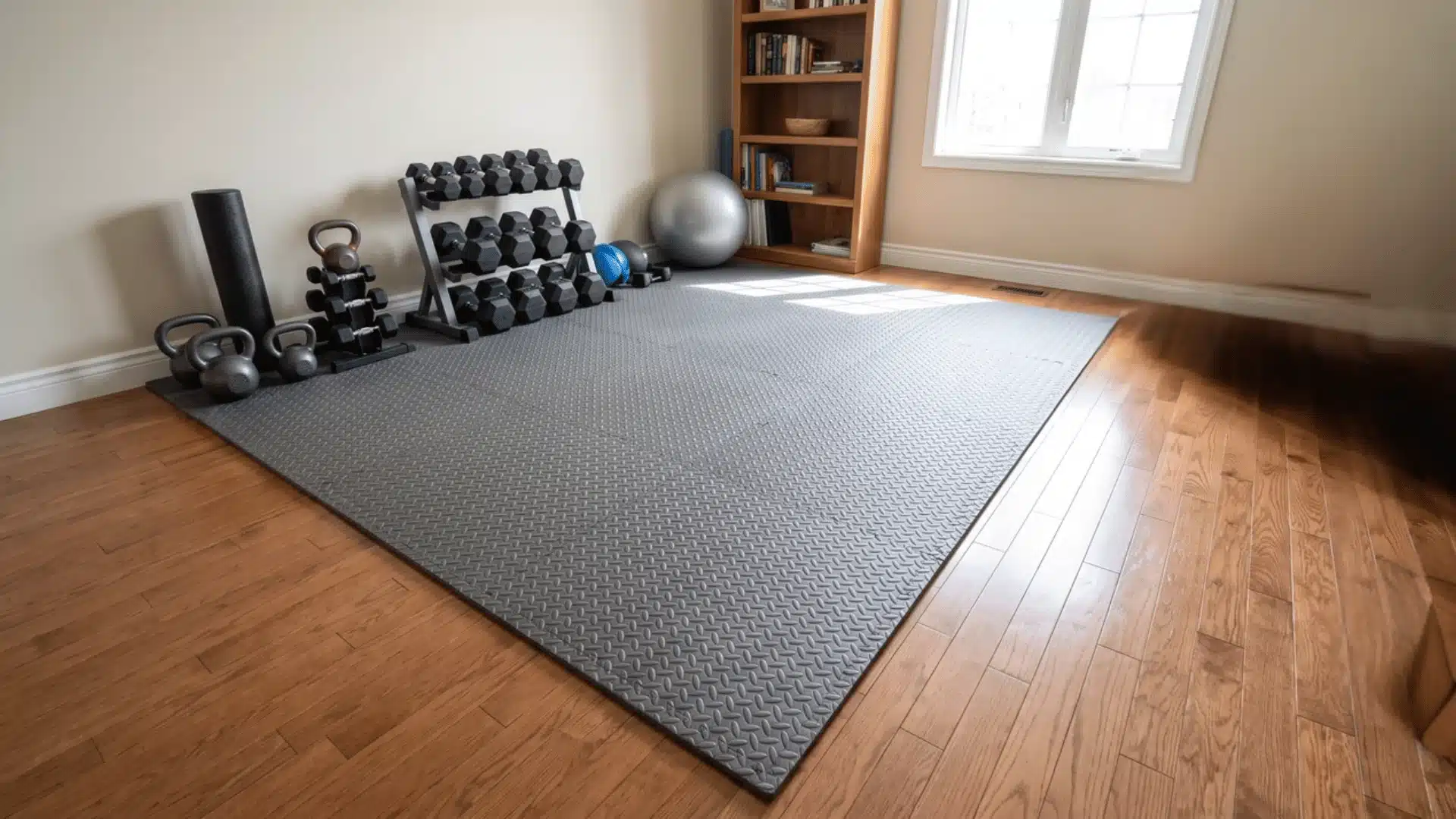
A defined rug or mat area marks out your workout zone clearly in a multi-use room without any construction or renovation being involved at all.
Choose a rug that’s easy to move or roll up so the room can switch back to its other use quickly, and it protects flooring underneath that isn’t built for heavier equipment.
17. Use a Doorframe Pull-Up Bar
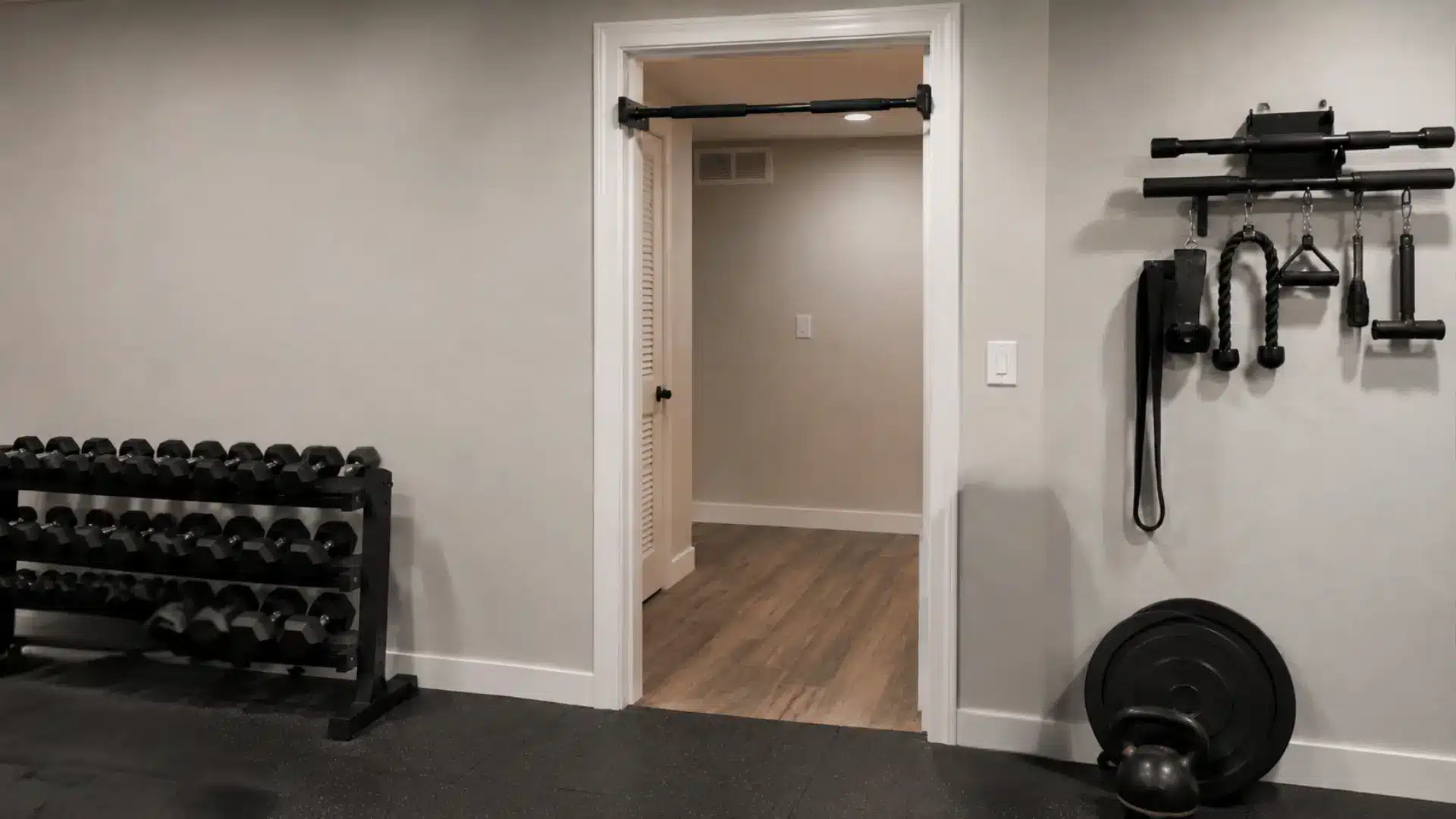
A doorframe bar adds pull-ups, chin-ups, and hanging core work to your routine without needing any dedicated floor space at all in an already tight room.
Check the weight rating before installing it, since cheaper bars aren’t built for repeated bodyweight pulling, and take it down between sessions if you’re renting, since most install without tools.
18. Set Up a Compact Cardio Machine
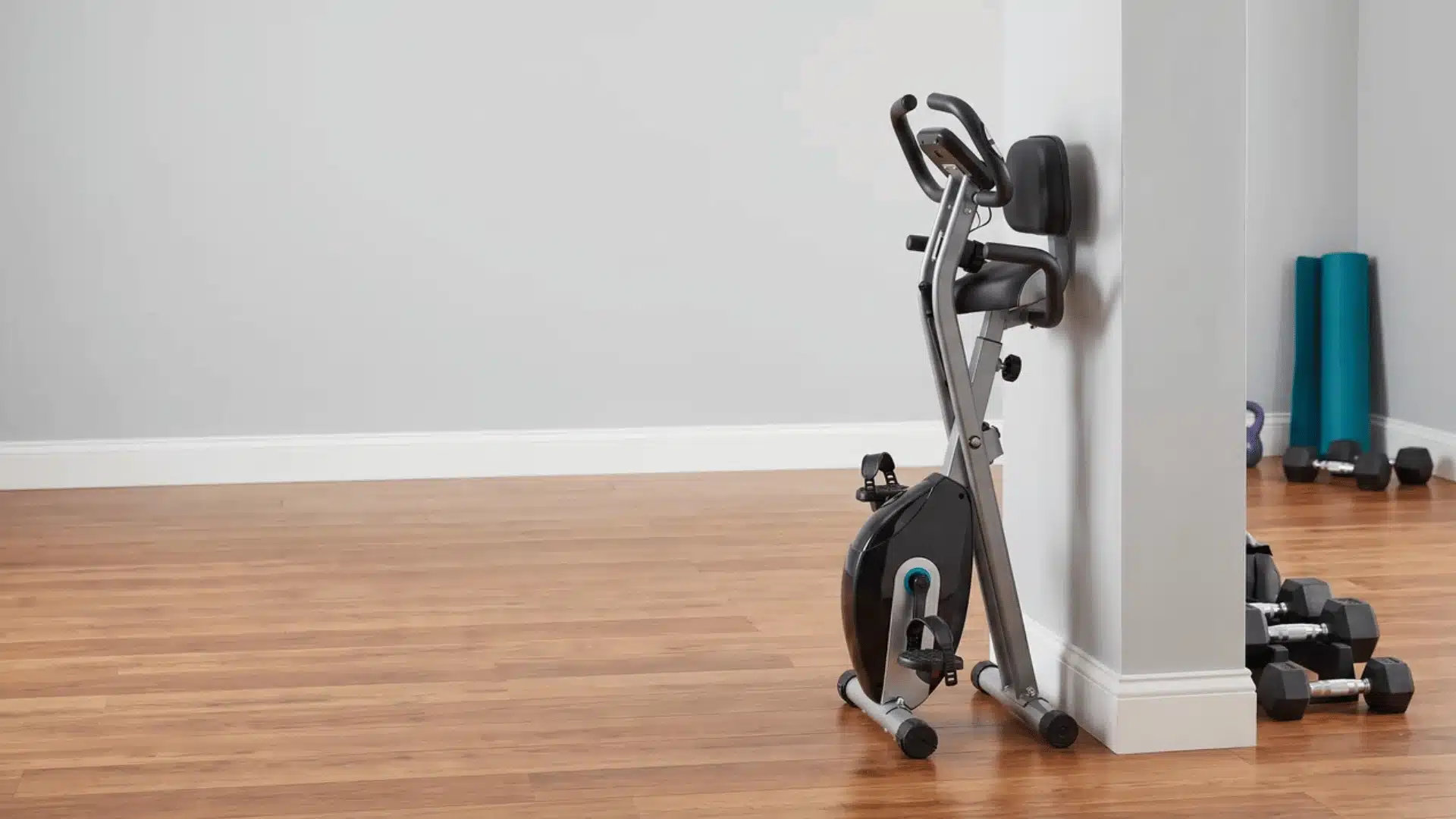
A foldable exercise bike or a compact rower gives you real cardio without the footprint of a full-size treadmill taking over the entire room.
Check the folded dimensions before buying, since compact machines vary quite a bit in stored size, and store it upright against a wall so the floor clears between sessions.
19. Set Up a Small Water Station
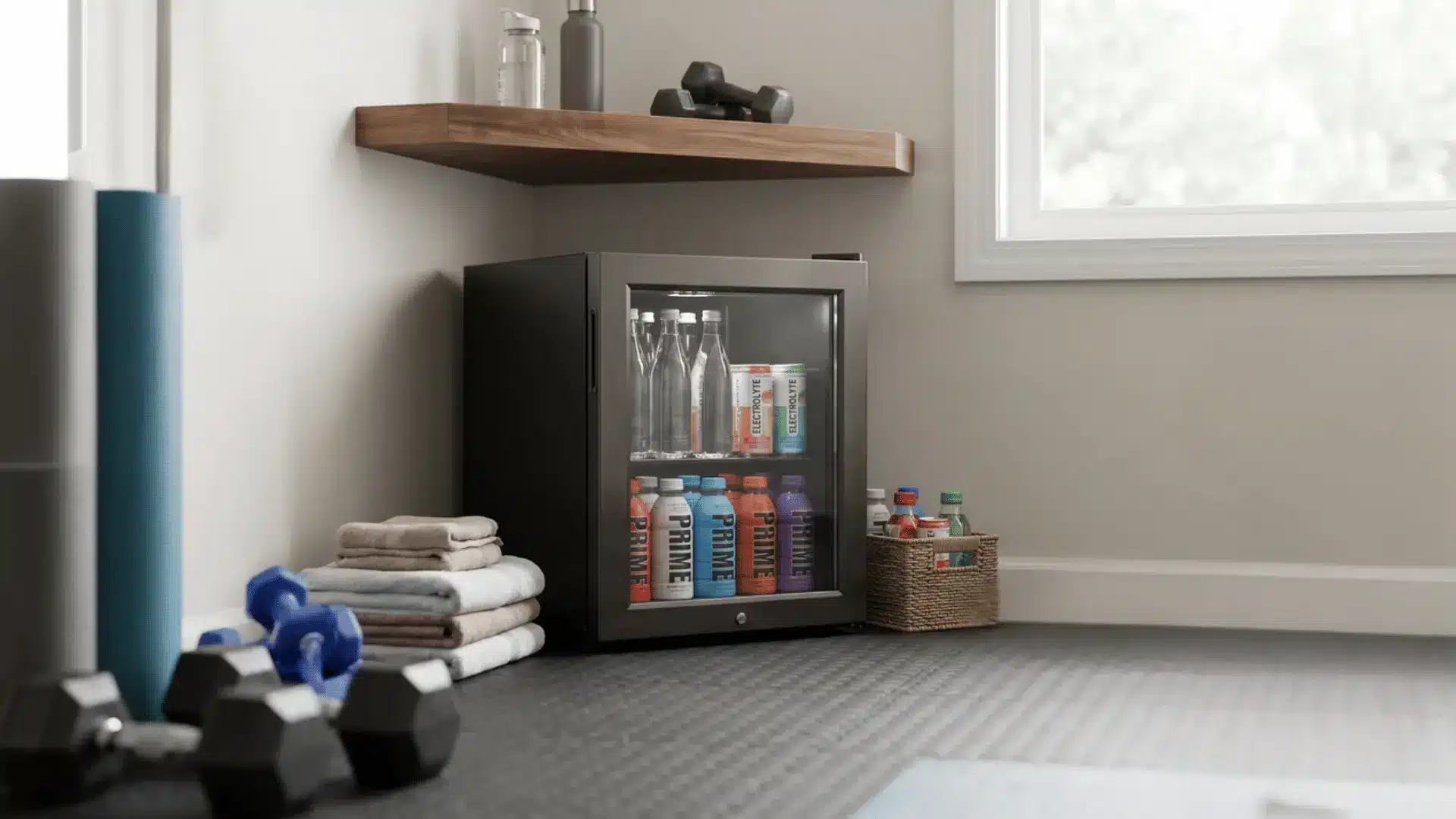
A mini fridge or insulated cooler keeps water or an electrolyte drink within reach, so you’re not stepping out mid-set to refill a bottle every few rounds.
Tuck it under a shelf or into an unused corner, and refill it before each session so hydration never becomes the reason you cut a workout short.
20. Add Kettlebells for Full-Body Training
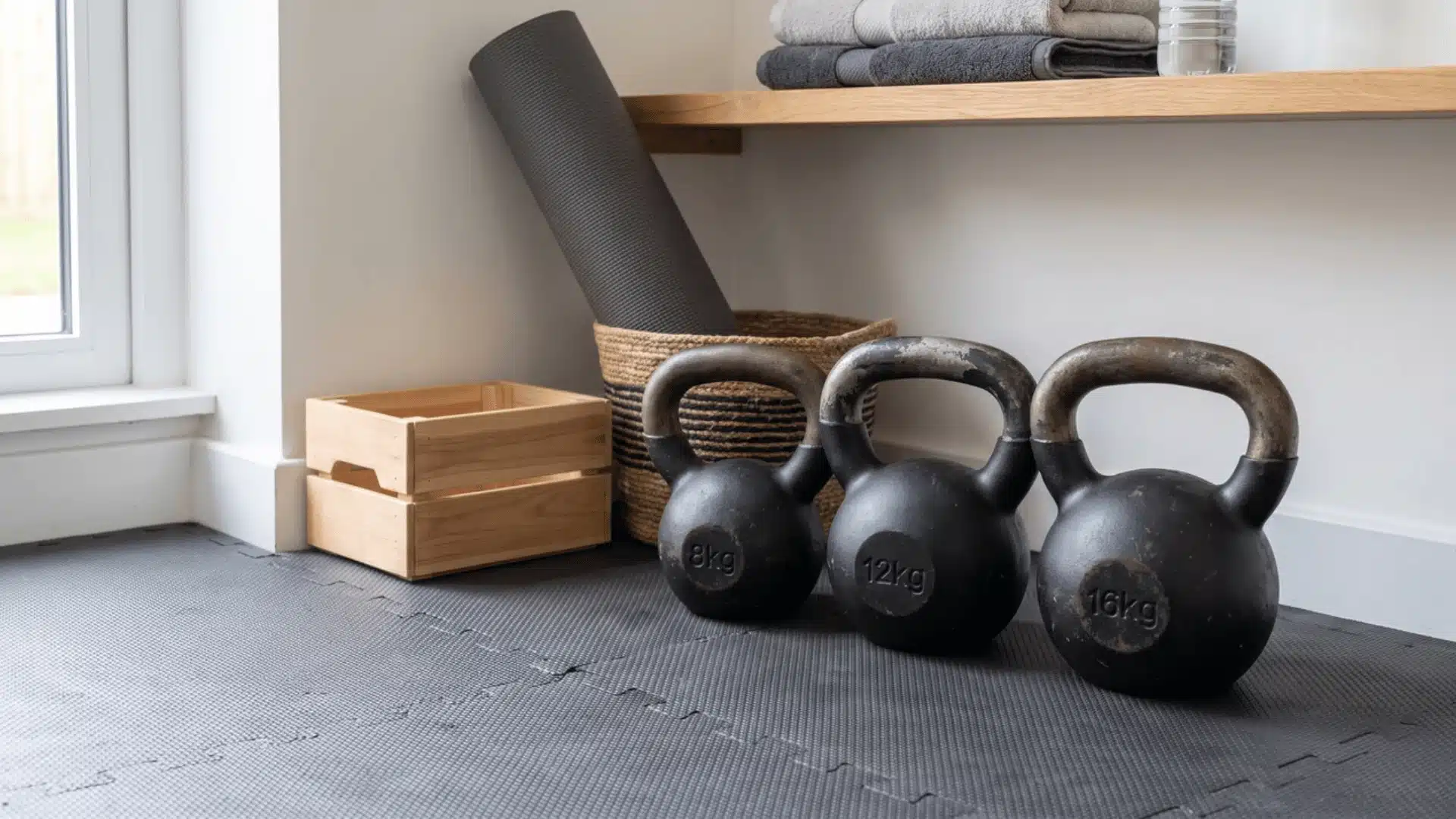
A single kettlebell covers swings, presses, squats, and carries, giving you real training range without needing a full set of dumbbells taking up space.
Start with one moderate weight and add a second only once you’ve genuinely outgrown the first, and store it in a corner, since kettlebells need no rack or shelf at all.
21. Convert a Shed, Garage, or Barn
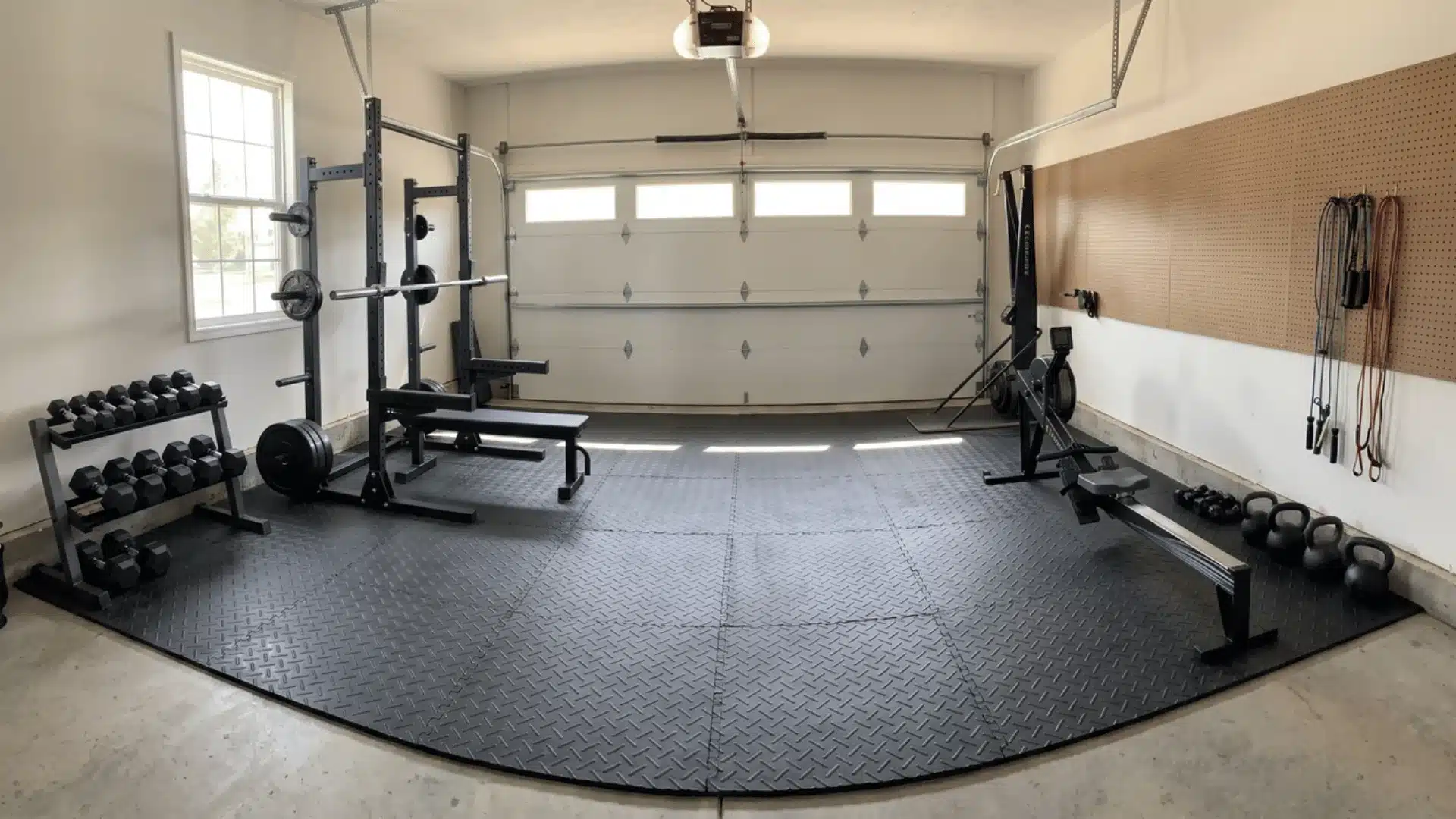
Turning a garage into a dedicated training space gives you a fully separate training space without sacrificing any room inside the main house.
Check the flooring first, since concrete handles heavy equipment far better than most indoor flooring, and add insulation, lighting, and a fan before moving equipment in.
22. Use a Renovated Basement Corner
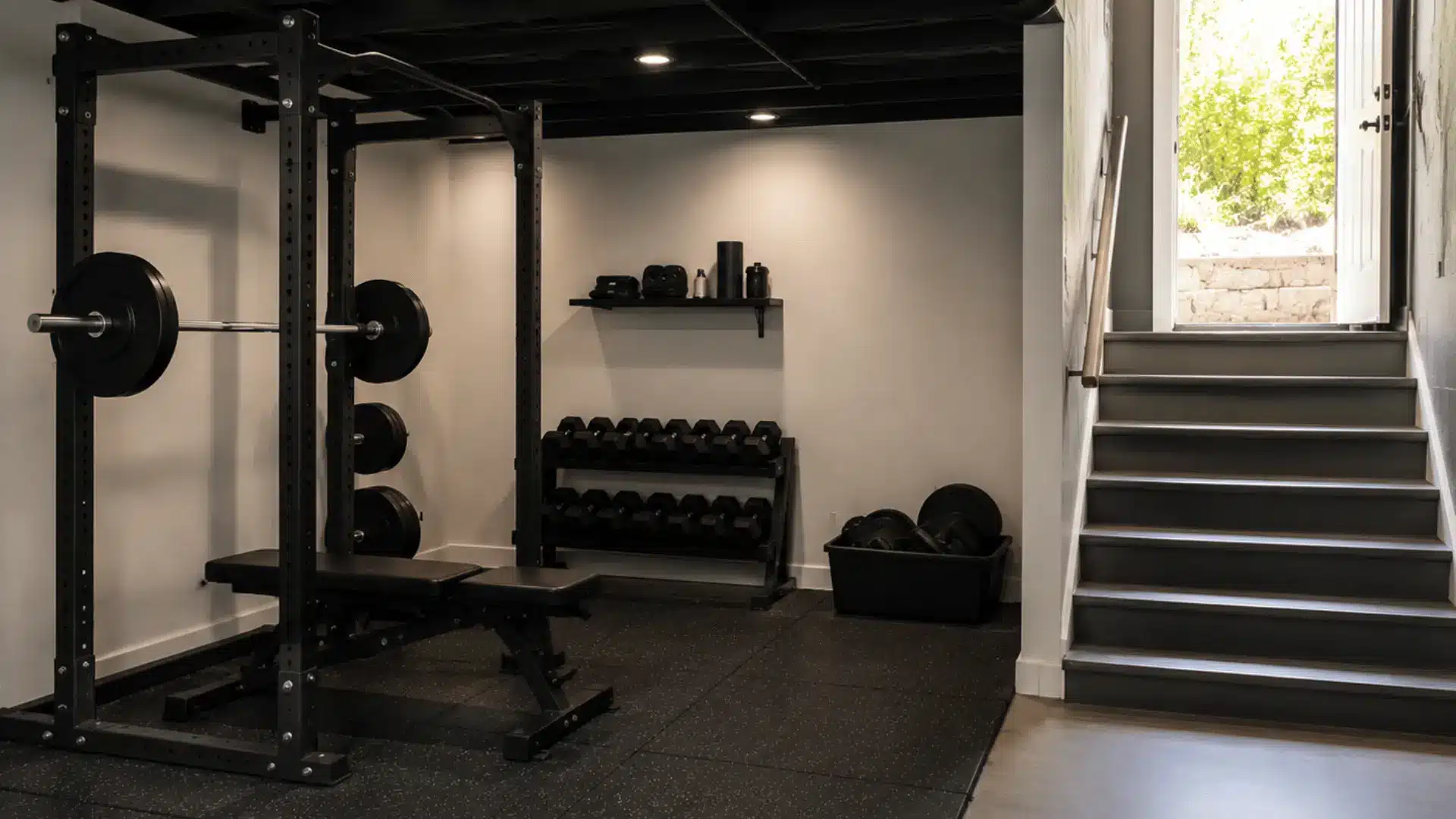
A basement corner works well for a permanent setup, especially if the space already has decent flooring and enough usable headroom.
Section off just one area with a rug or flooring mat rather than converting the entire basement at once, and add proper lighting, since basements often lack natural light.
23. Bring in a Small Plant or Two
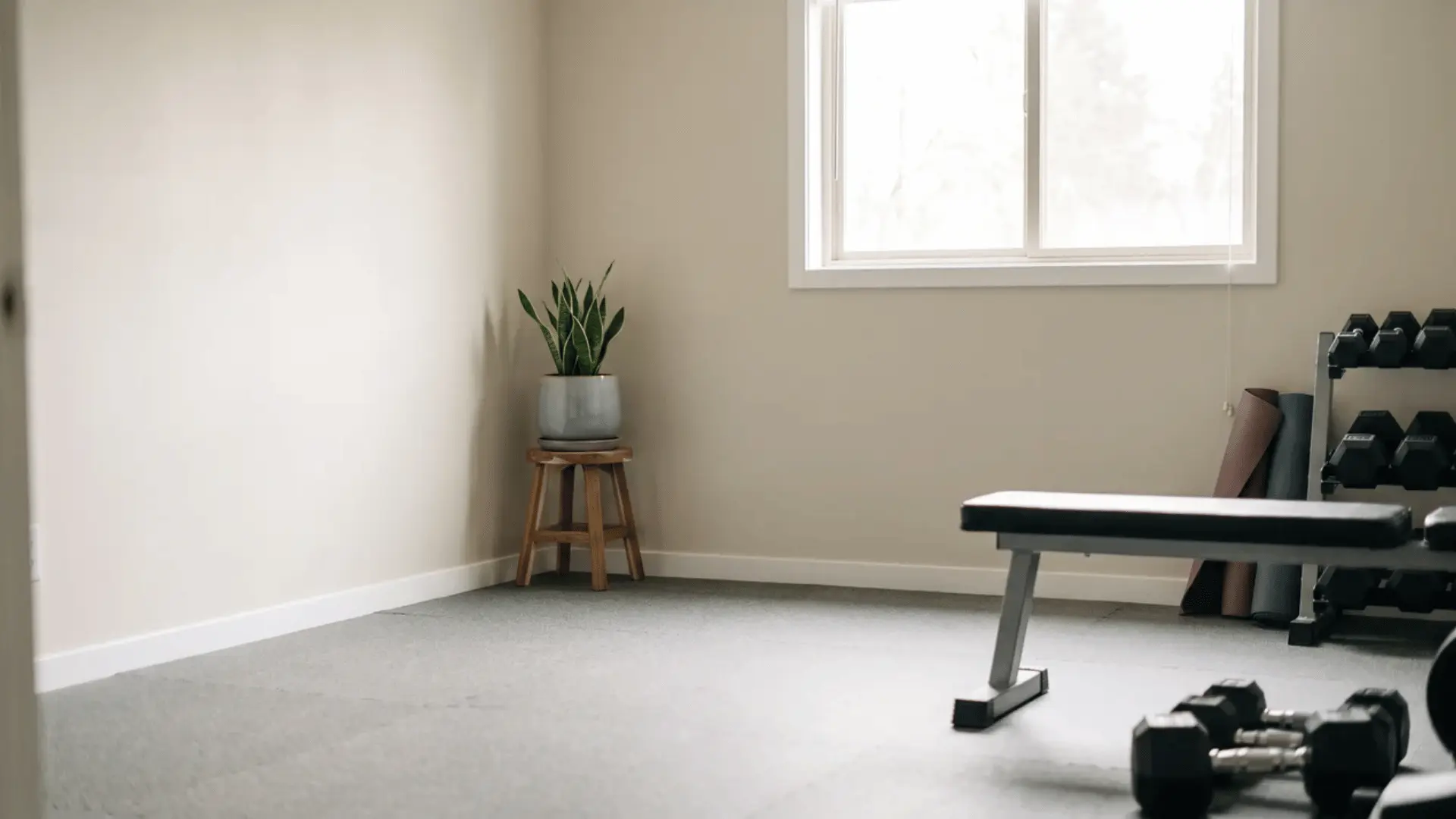
A plant softens a room that would otherwise feel like storage, adding a bit of life and color without taking up much real floor space at all.
Pick a low-maintenance variety for this spot, since a dying plant does more harm to the room’s feel than no plant, and place it somewhere it won’t get knocked over mid-workout.
24. Add an Accent Wall or Removable Wallpaper
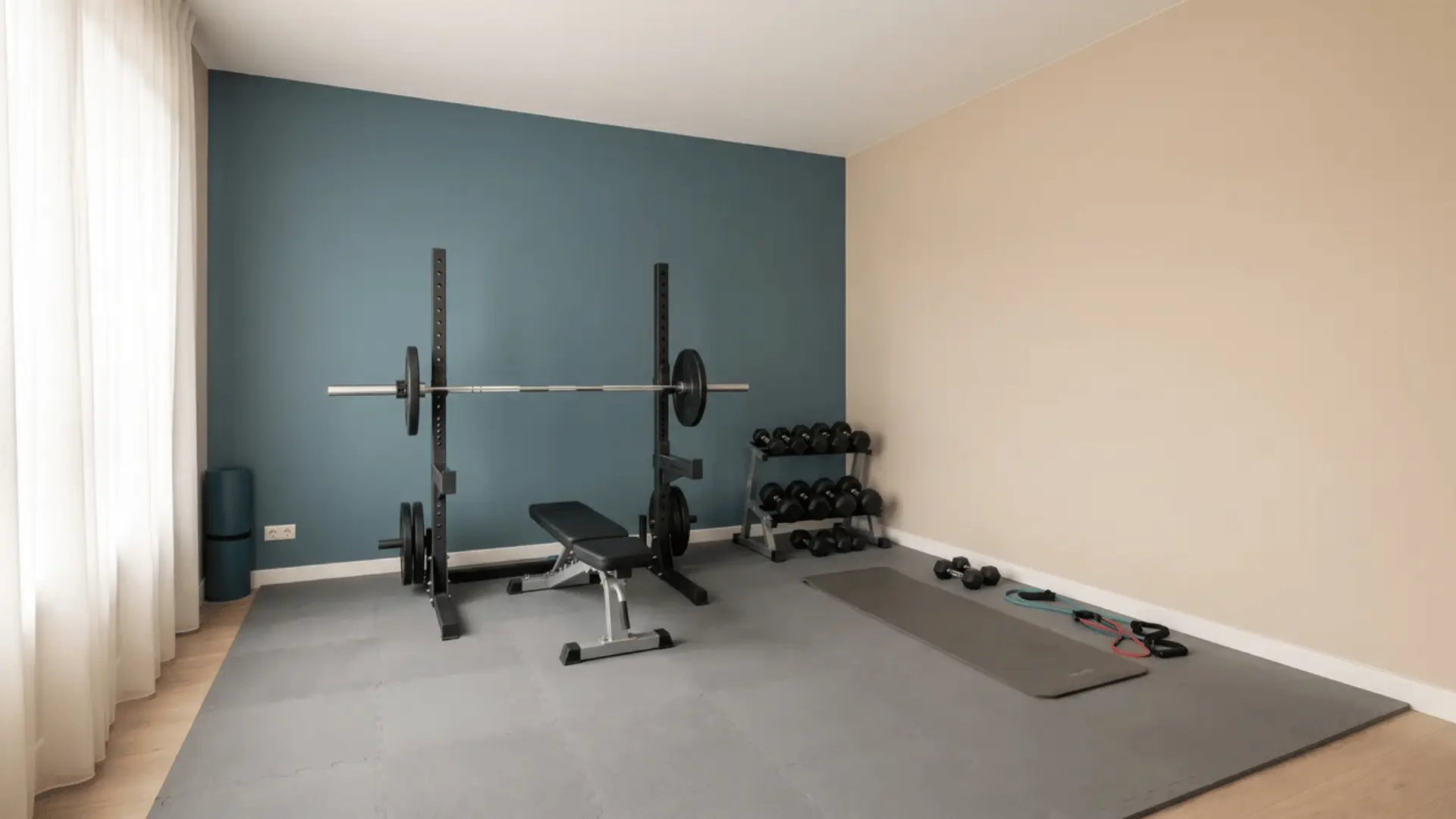
One accent wall adds personality and real energy to a small gym without the cost or commitment of a full renovation project or a total repaint.
Choose removable wallpaper if you’re renting, since it comes down cleanly when you move out, and keep the rest of the room neutral so the accent wall stands out on its own.
25. Use Multi-Functional Furniture
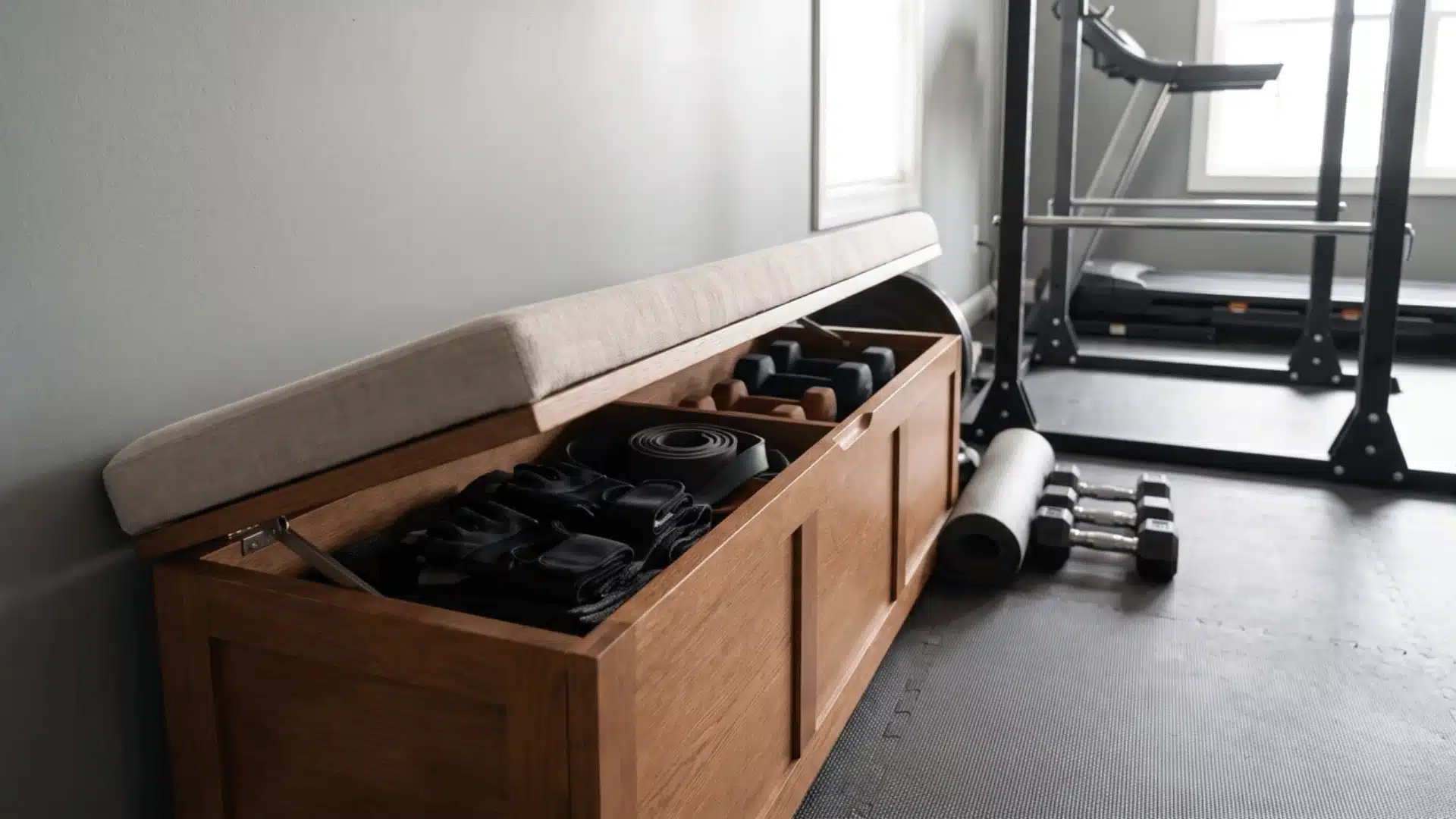
A storage ottoman, bench, or cabinet can double as seating, a step platform, or hidden equipment storage in one single piece of furniture.
Pick furniture that matches the room’s other use, especially if the space doubles as an office or living area, and use the hidden storage for smaller items like bands and gloves.
26. Keep a Small Basket System for Loose Gear
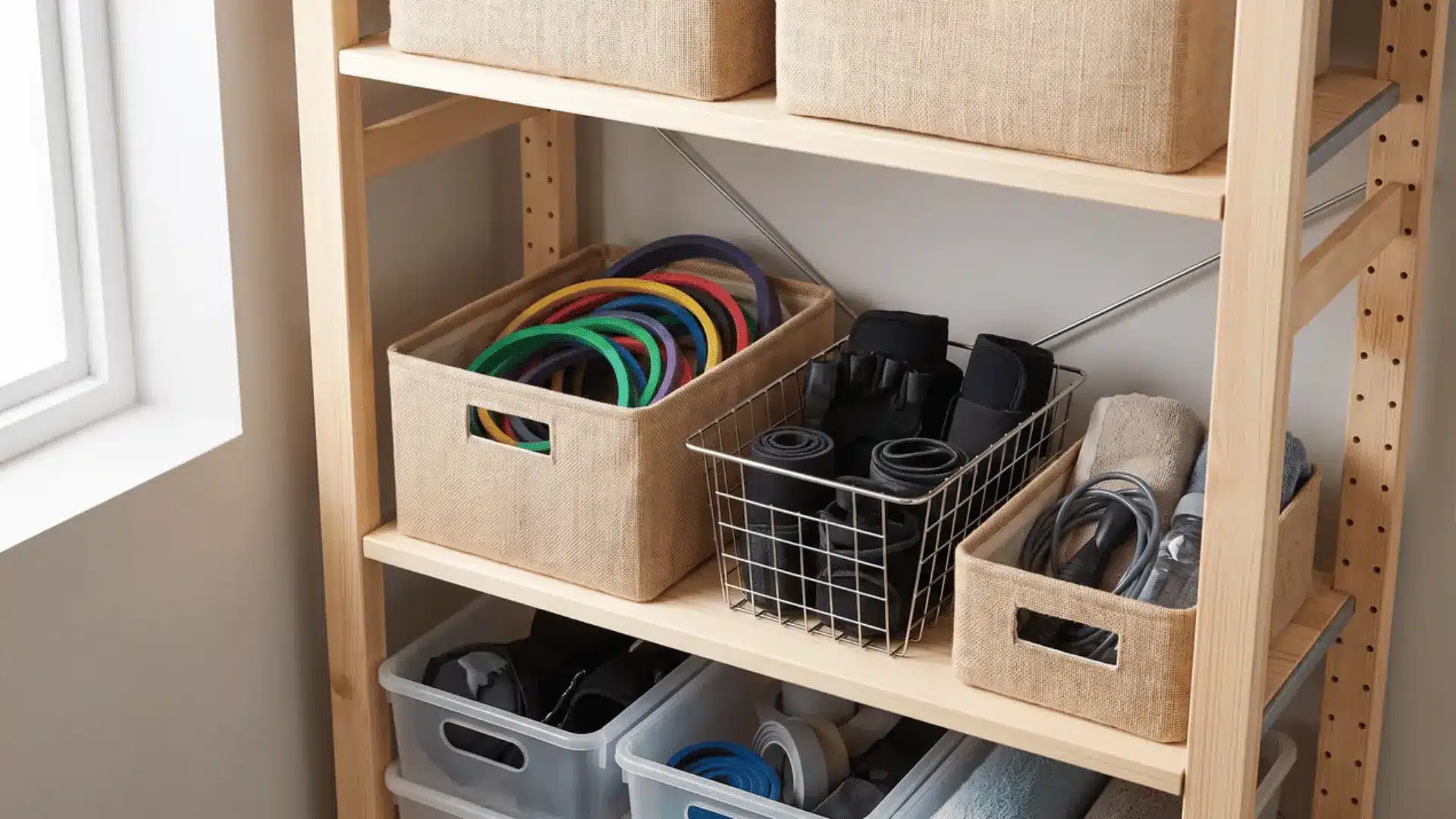
Labeled baskets corral loose items like resistance bands, gloves, and chalk that otherwise end up scattered somewhere across the floor.
Place baskets on a shelf or inside a cabinet so gear has one clear home, and sort them by category, like hands or cardio, so grabbing what you need takes seconds.
27. Add an Interval Timer
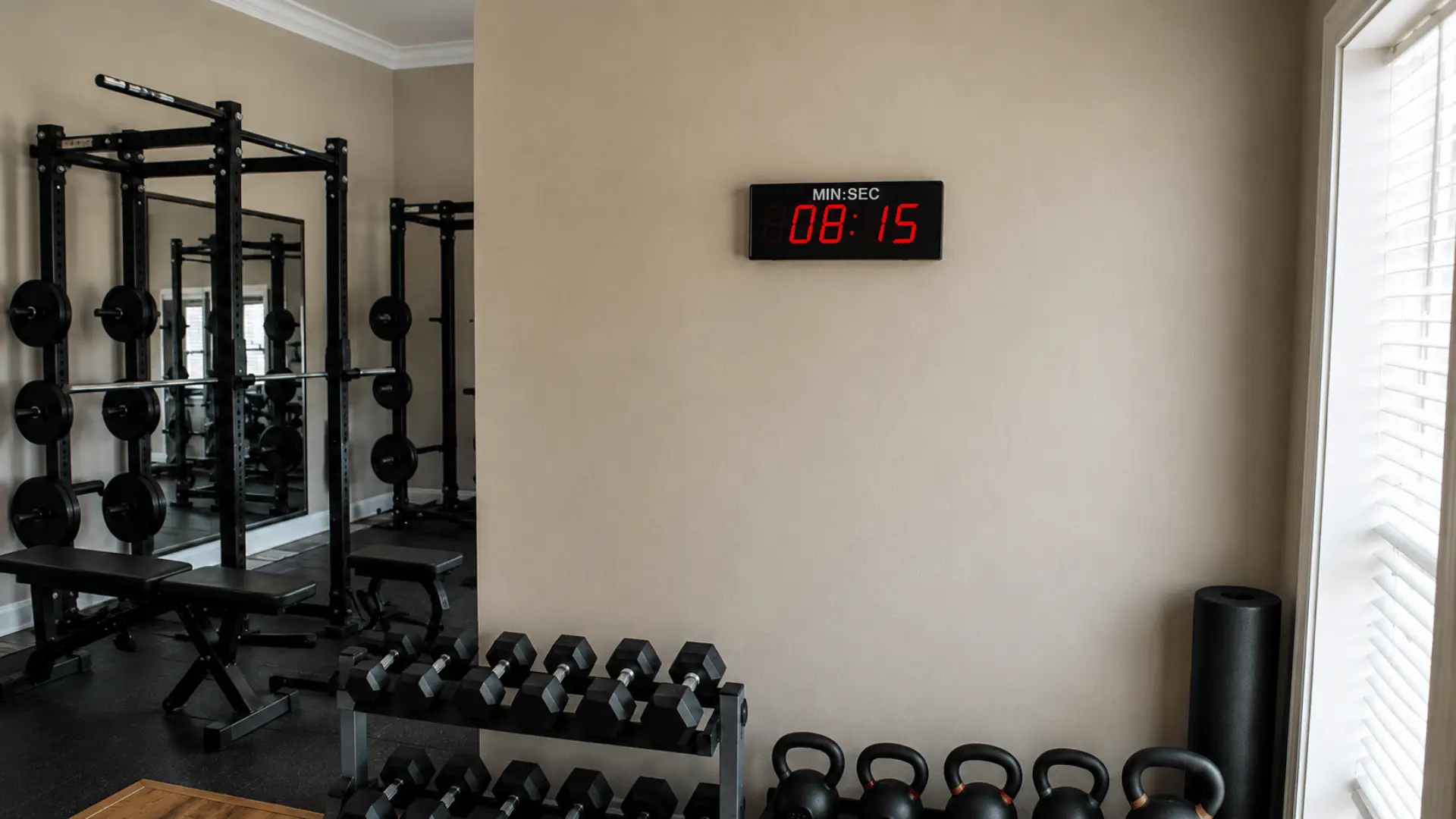
An interval timer keeps your workout on pace without making you reach for your phone mid-set, helping you track work and rest periods while reducing unnecessary distractions during training sessions.
Choose an interval timer with a large, easy-to-read display so you can check it from across the room and monitor rest periods without interrupting your focus or exercise flow mid-set.
Common Mistakes That Make a Small Gym Feel Smaller
- Overbuying equipment: Too many single-purpose items reduce the clearance needed for safe movement.
- Skipping a movement test: Equipment may fit physically while leaving insufficient room for the exercises you intend to perform.
- Blocking the walking path: Storage and equipment placed along the main route make the entire room harder to navigate.
- Ignoring ceiling height: Pull-ups, overhead presses, and taller equipment need sufficient vertical clearance.
- Using unsuitable flooring: Heavy equipment can damage surfaces that were not designed to support concentrated loads.
- Leaving everything permanently exposed: A multi-use room can quickly lose its original function when equipment has no storage system.
Before making permanent changes, I like to mark equipment footprints on the floor and walk through the movements I plan to perform. It reveals problems that measurements alone can miss.
Conclusion
The best small home gym is not necessarily the one with the most equipment. It is the one where everything has enough room to function and a clear place to go afterward.
I would start with the exercises you actually perform, then choose equipment that covers those movements without creating unnecessary duplication. Storage comes next, because keeping the floor open makes a surprisingly large difference to how usable the room feels.
A corner, spare bedroom, garage, or basement can all work with the right layout. Start with the space you already have, measure it carefully, and build around your actual training routine rather than trying to recreate a commercial gym at home.
Frequently Asked Questions
How Small Can a Home Gym Be and Still Be Functional?
A functional home gym can work in as little as 50 to 80 square feet for basic strength and cardio training. The exact footprint depends on your equipment and ceiling height, but even a closet-sized corner supports dumbbells, a mat, and bands if the layout leaves room to move.
What Equipment Should I Buy First for A Small Home Gym?
Start with adjustable dumbbells, a doorframe pull-up bar, and a foldable bench. These replace several single-purpose items, take up minimal floor space, and store away easily between sessions in a room that serves another purpose, too.
Do I Need Special Flooring for A Small Home Gym?
Yes, rubber mats or interlocking foam tiles work best for most small home gyms. They protect your floor from dropped weights, cut down noise to other rooms, and improve footing in tight spaces where equipment sits close to walls.
Can I Set up A Small Home Gym in A Rental without Drilling?
Yes. A doorframe pull-up bar, resistance bands, adjustable dumbbells, and freestanding storage racks need no wall drilling and leave no permanent marks. Rubber flooring tiles lay down without adhesive, too, making the whole setup fully removable when your lease ends.