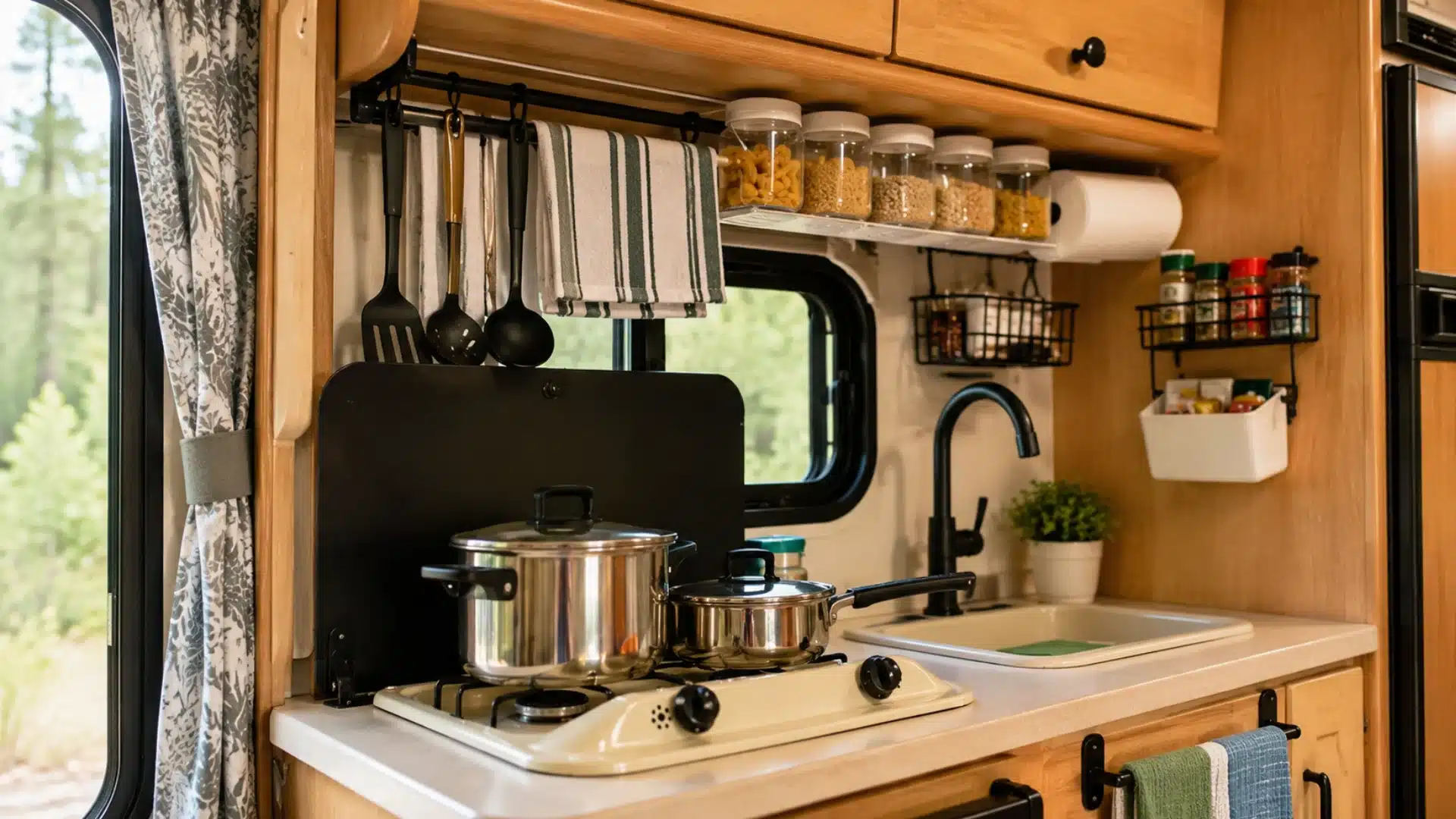
Limited space is only half the challenge inside an RV. The harder part is creating storage that still works when everything starts moving.
The right RV storage ideas can turn overlooked corners, narrow cabinets, and awkward gaps into useful places for everyday gear, much like the tricks people use for tight apartment layouts. Small changes can also speed up packing and reduce the mess that builds up during longer trips.
Here, I’ll cover practical ways to organize kitchens, bedrooms, bathrooms, entryways, and living areas without wasting valuable room. You will also learn which storage mistakes can cause problems once the RV leaves the campsite.
Why RV Storage Ideas Need to Be Road-Ready
RV storage has to deal with something home storage doesn’t: constant movement. Every turn, pothole, hard stop, and rough stretch of road can shift your stuff or work a loose organizer even looser, which is worth remembering whether you’re driving daily or leaving the rig parked between trips.
That’s why I’d look at security before squeezing in more storage. Before adding shelves, hooks, bins, or racks, check how much weight the surface can actually hold.
Thin cabinet walls and lightweight panels may need different hardware than solid wood. Things like vibration-resistant screws, locking containers, non-slip liners, and secure latches make a real difference in areas you use often.
I also like testing a new setup on a short drive first. If something rattles, slides, or feels loose, fix it before loading it up further. It’s much easier to catch a weak setup close to home than halfway through a longer trip.
RV Storage Ideas for Kitchen and Pantry
The kitchen takes the worst beating during travel. Cabinets fly open, bottles tip over, and loose items become projectiles on a rough road. These ideas keep everything locked in place.
1. Tension Rods for Cabinet Doors
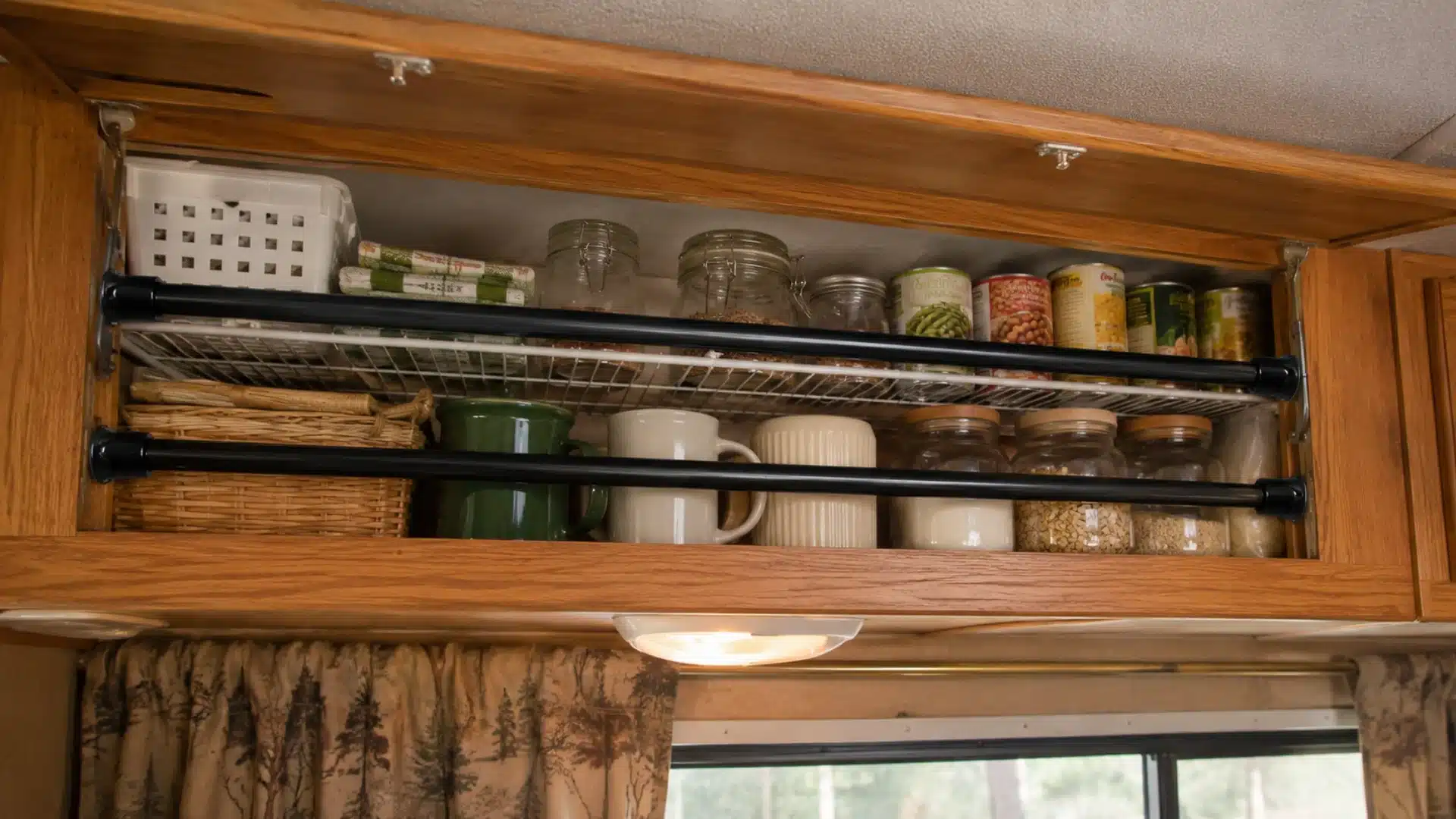
A tension rod is one of the simplest fixes for cabinets that rattle open on rough roads.
Measure the cabinet width and choose a rod that extends firmly against both walls without bowing in the middle. Position canned goods, jars, and boxed items on either side so nothing can slide toward the center, and recheck the tension every few weeks since heat and humidity can loosen it over time.
2. Magnetic Spice Rack on Range Hood
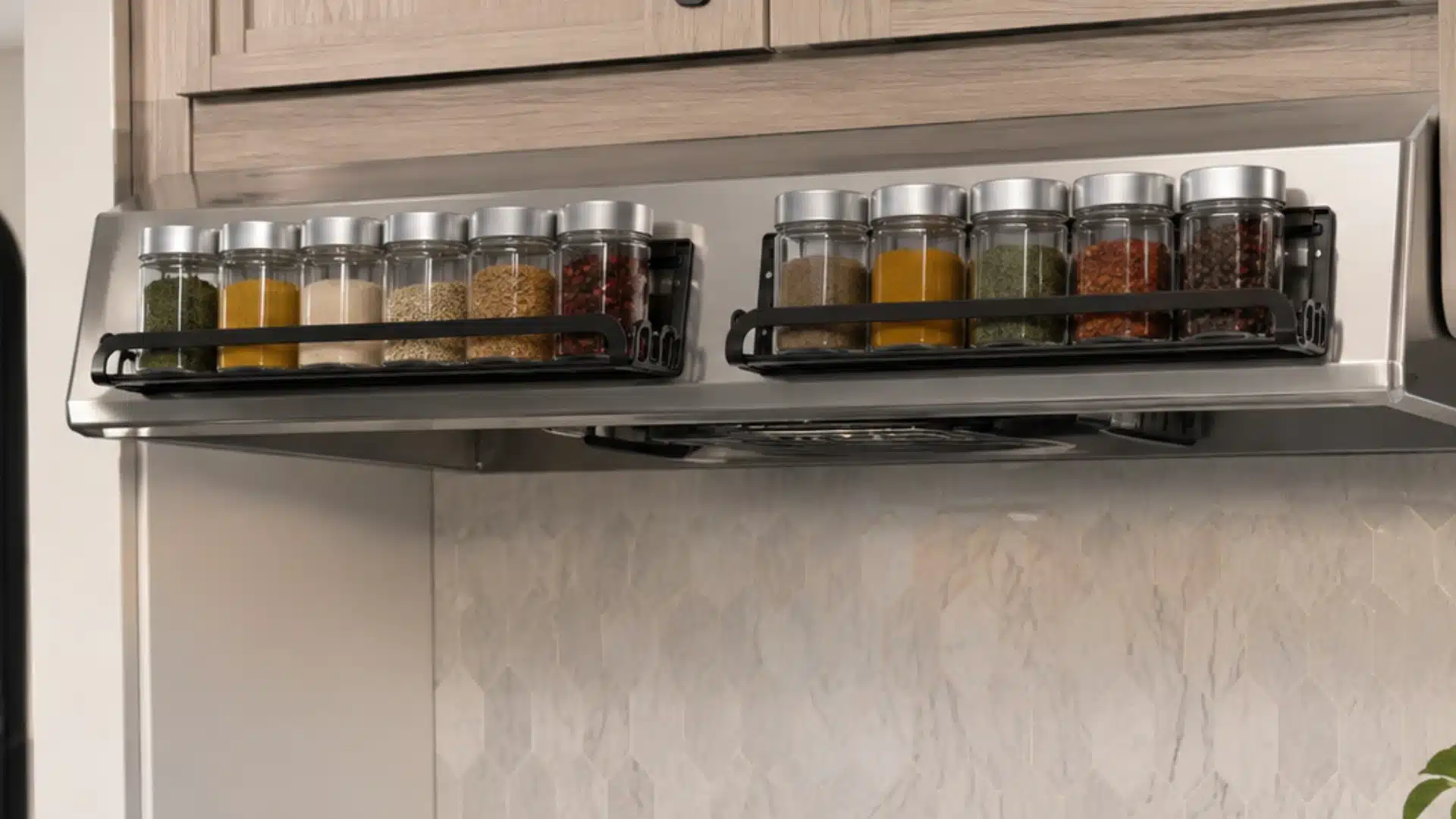
A magnetic spice rack keeps seasonings visible and frees up drawer space in a compact RV kitchen. Check that your range hood is steel before mounting anything, since magnets will not grip aluminum or laminate surfaces.
Secure the rack firmly, choose lightweight magnetic tins instead of heavy glass jars, and place the ones you use most often toward the front so cooking stays quick even in tight quarters.
3. Tall Clear Bins for Pantry Items
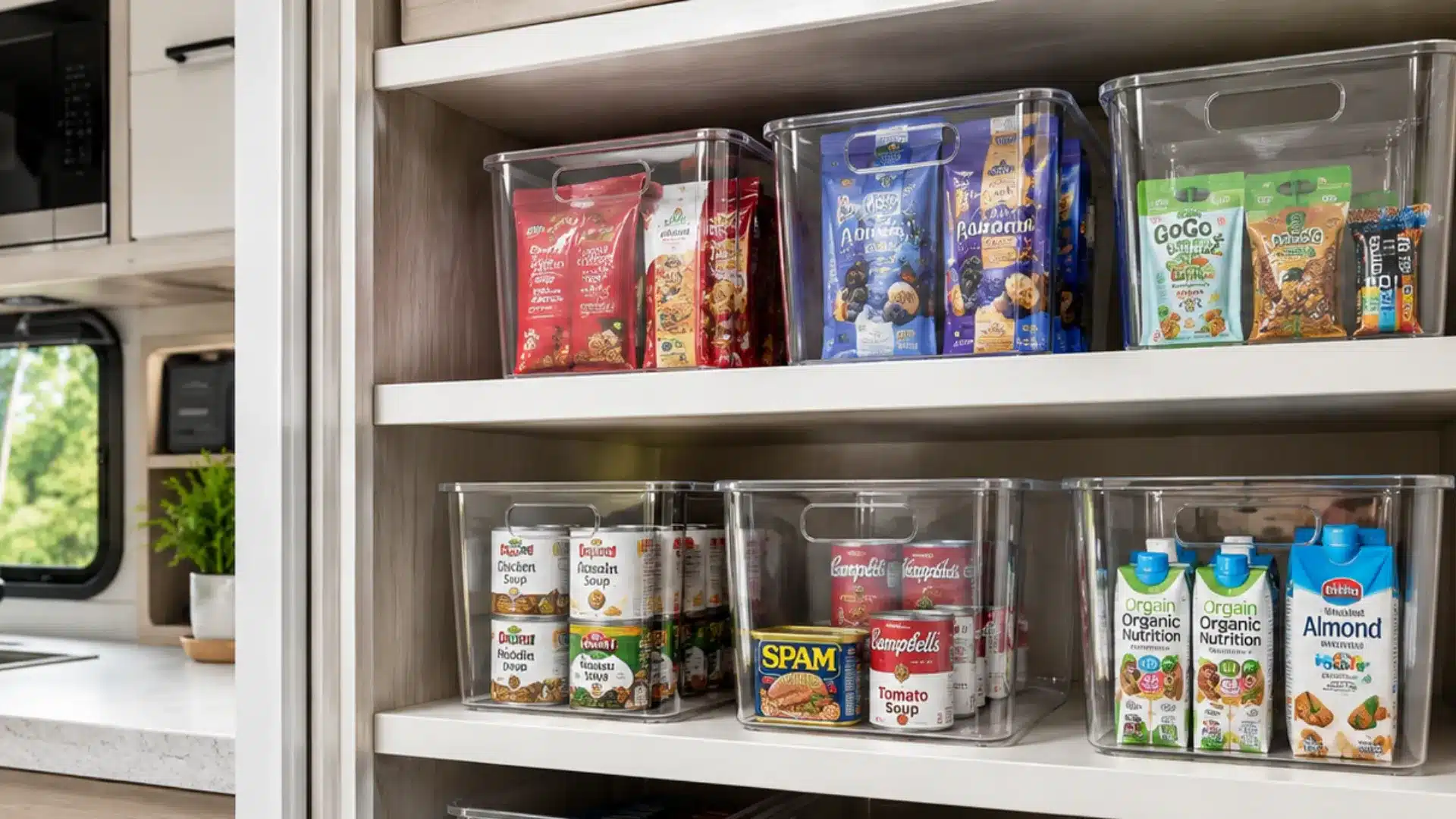
Tall clear bins stop pantry bags and boxes from toppling forward while making ingredients easy to spot. Group similar foods together so you are not hunting through multiple bins for the same ingredient.
Pick bins slightly narrower than each shelf so they cannot shift sideways, and add simple labels so everyone in the RV can find what they need quickly, even after a long day of driving.
4. Pegboard with Removable Pegs for Dishes
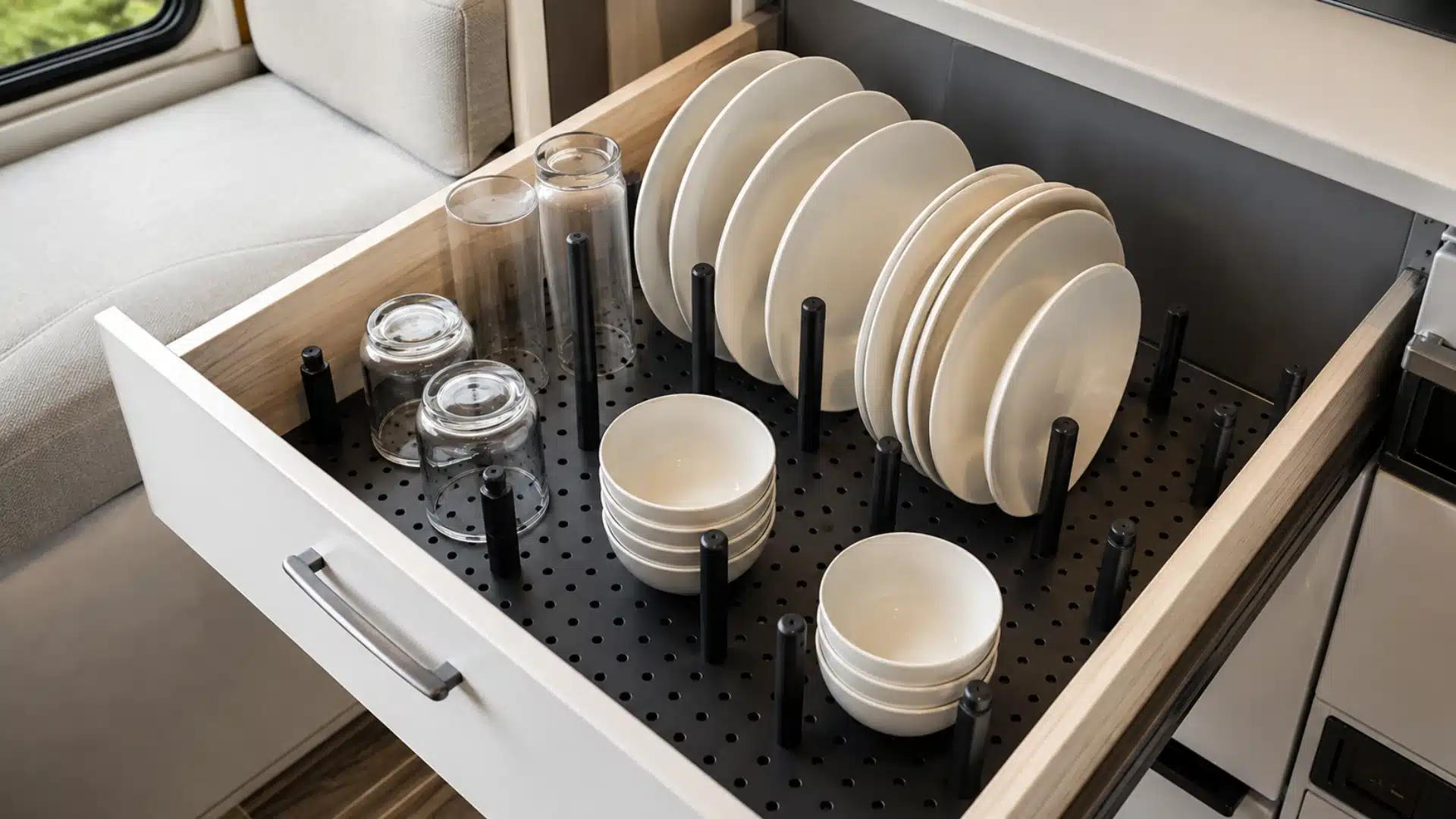
A removable pegboard gives plates and cutting boards individual slots so they stay upright while you drive. Mount the board inside a deep cabinet where it will not interfere with the door swing, and space the pegs to match each item’s thickness so plates sit snugly without knocking together.
Test the setup on a short drive before loading the cabinet fully to make sure nothing rattles loose.
5. Hanging Fruit Basket to Free Counter Space
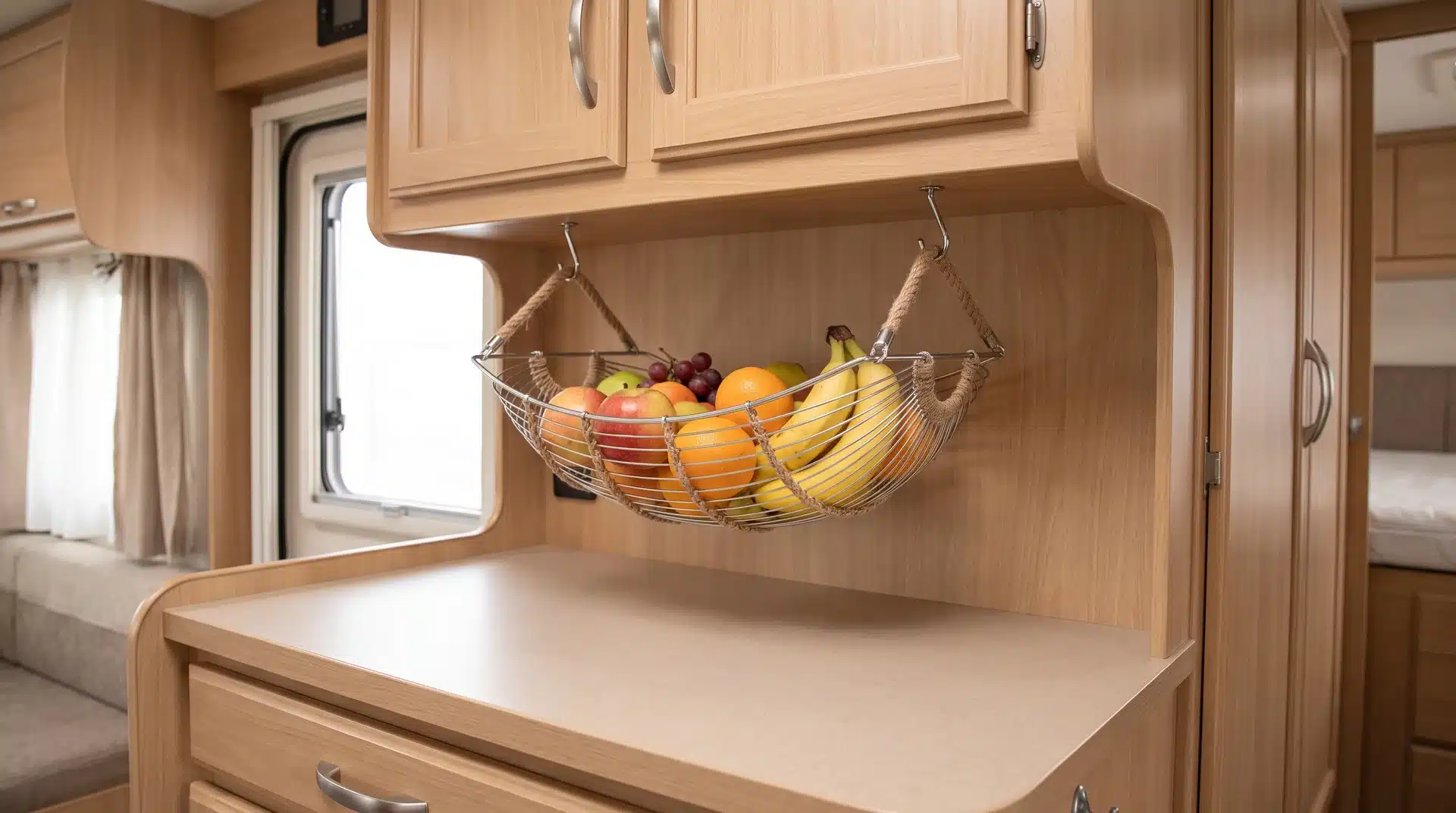
A hanging fruit basket clears valuable counter space and keeps produce visible instead of tucked in a bag. Fix a lightweight hook beneath an upper cabinet where it will not swing into anything while the RV is moving.
Choose a shallow basket so fruit cannot pile up and bruise, and check its weight rating before loading it, since even a small basket can strain thin cabinet undersides over time.
6. Non-Slip Shelf Liner Under Dishes
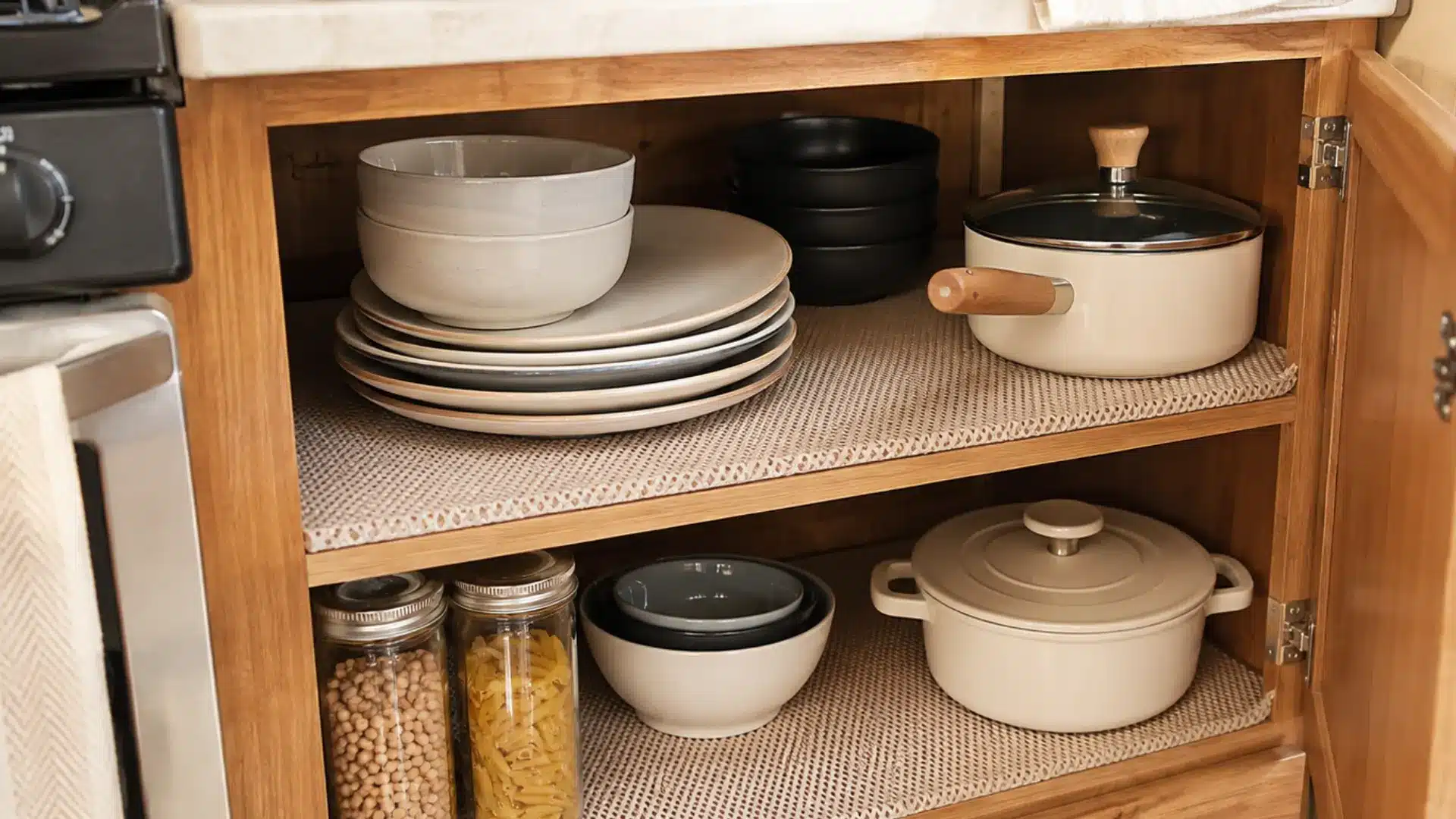
Non-slip shelf liner gives stacked dishes a little extra grip so they stop shifting on rough roads. Cut the liner to fit each shelf precisely, and clean the surface first so the grip holds properly.
Place dishes directly on top rather than stacking bins over it, the same grip-and-cushion approach used when wrapping glasses for moving, and check the liner every few months, since it can wear thin or curl at the edges after repeated heat exposure.
7. Command Hooks for Mugs and Utensils
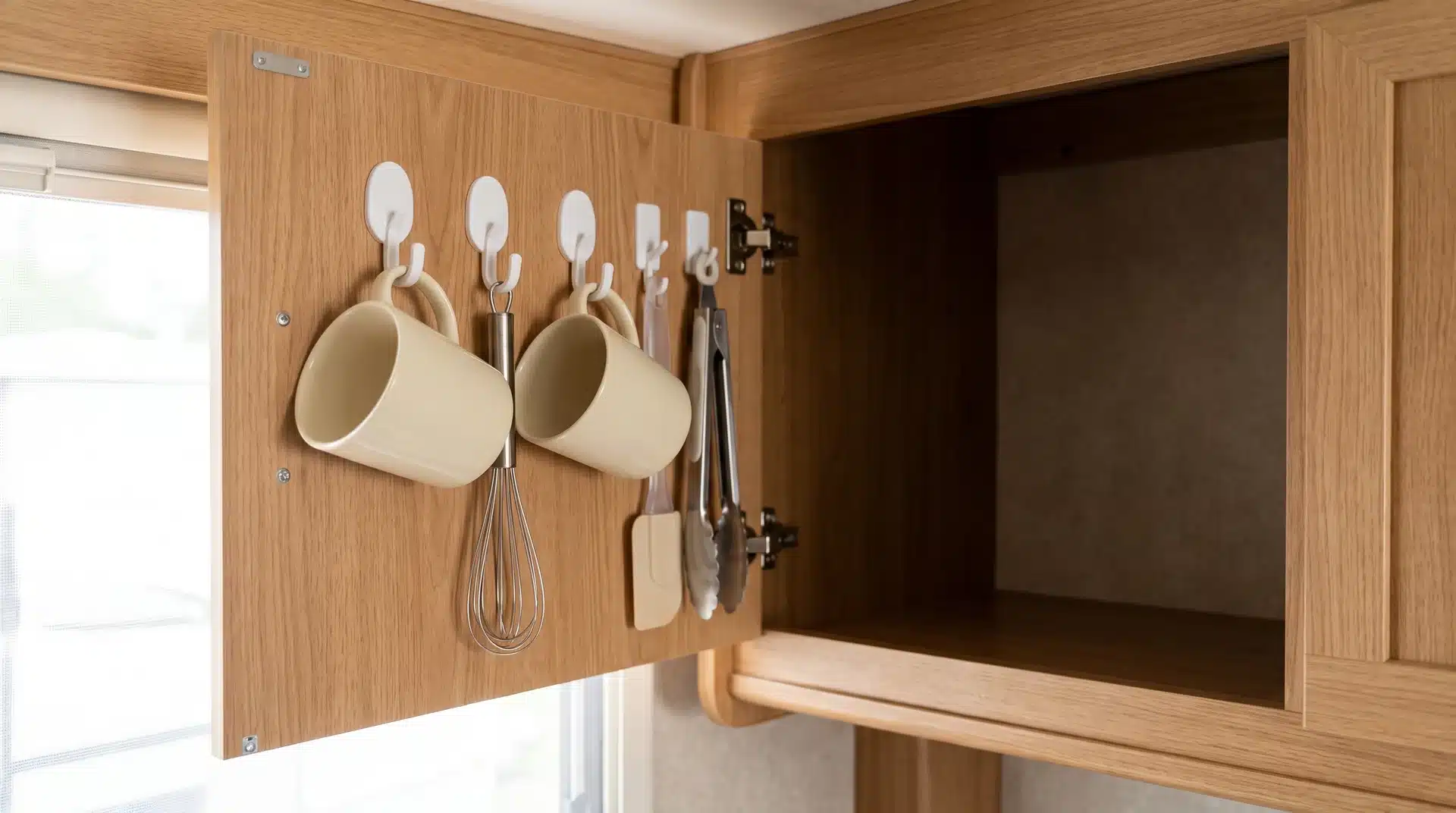
Removable hooks turn empty cabinet doors into handy storage for mugs, spoons, and other lightweight utensils. Place hooks where hanging items will not knock against shelves when the door opens and closes.
Let the adhesive cure fully, ideally overnight, before hanging anything heavier than a mug, and stick to lightweight kitchen gear only, since overloaded hooks are one of the most common storage failures on the road.
8. Stackable Pasta and Cereal Containers
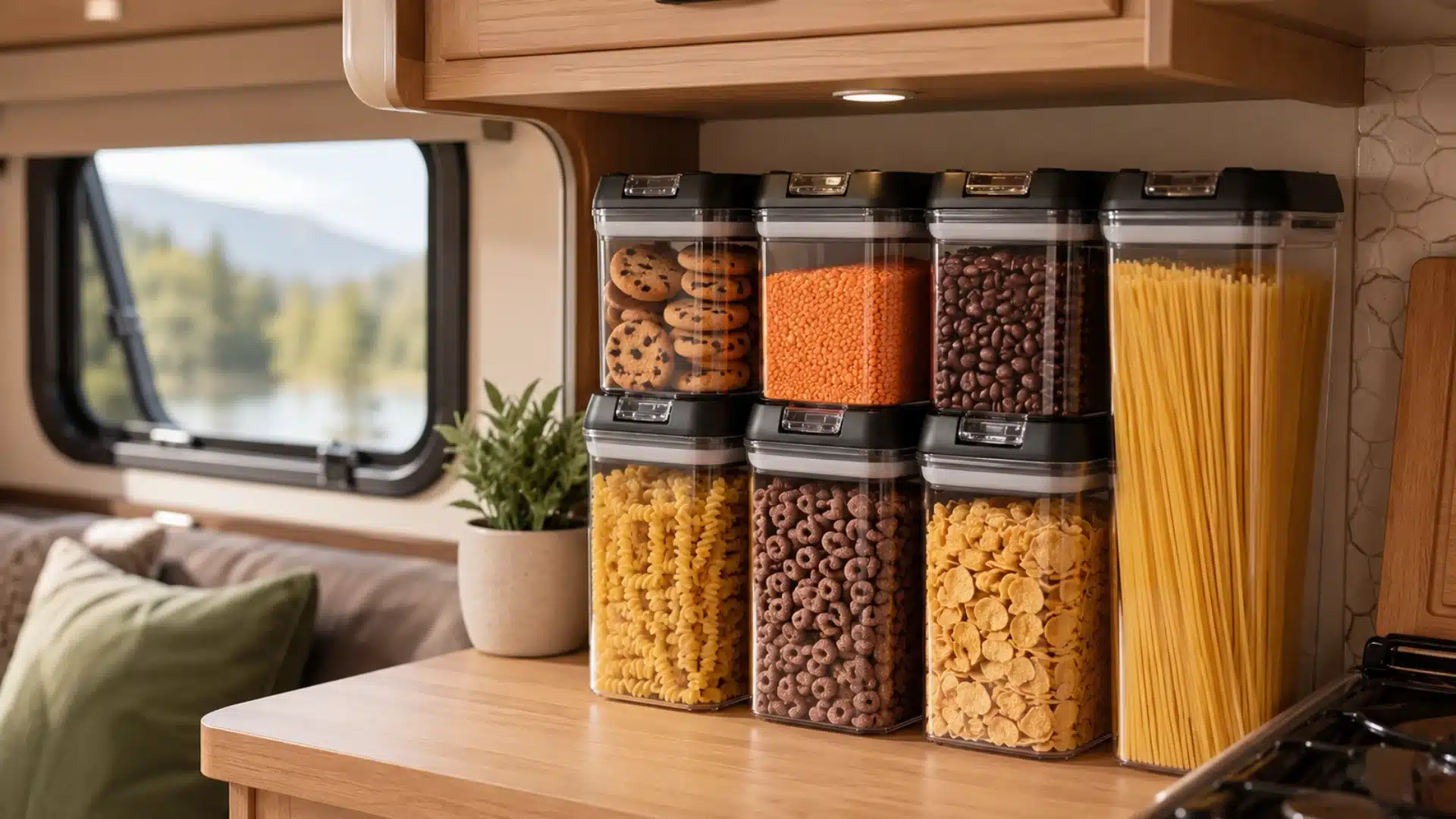
Matching containers make pasta, cereal, and other dry goods easier to stack while cutting down on bulky packaging. Choose airtight, locking containers so nothing spills if a lid gets bumped loose during travel.
Transfer food into them right after shopping rather than leaving it in original bags, and stack similar sizes together so the pantry shelf stays balanced and stable, even through sharp turns or sudden stops.
9. Under-Sink Tension Rod for Cleaning Supplies
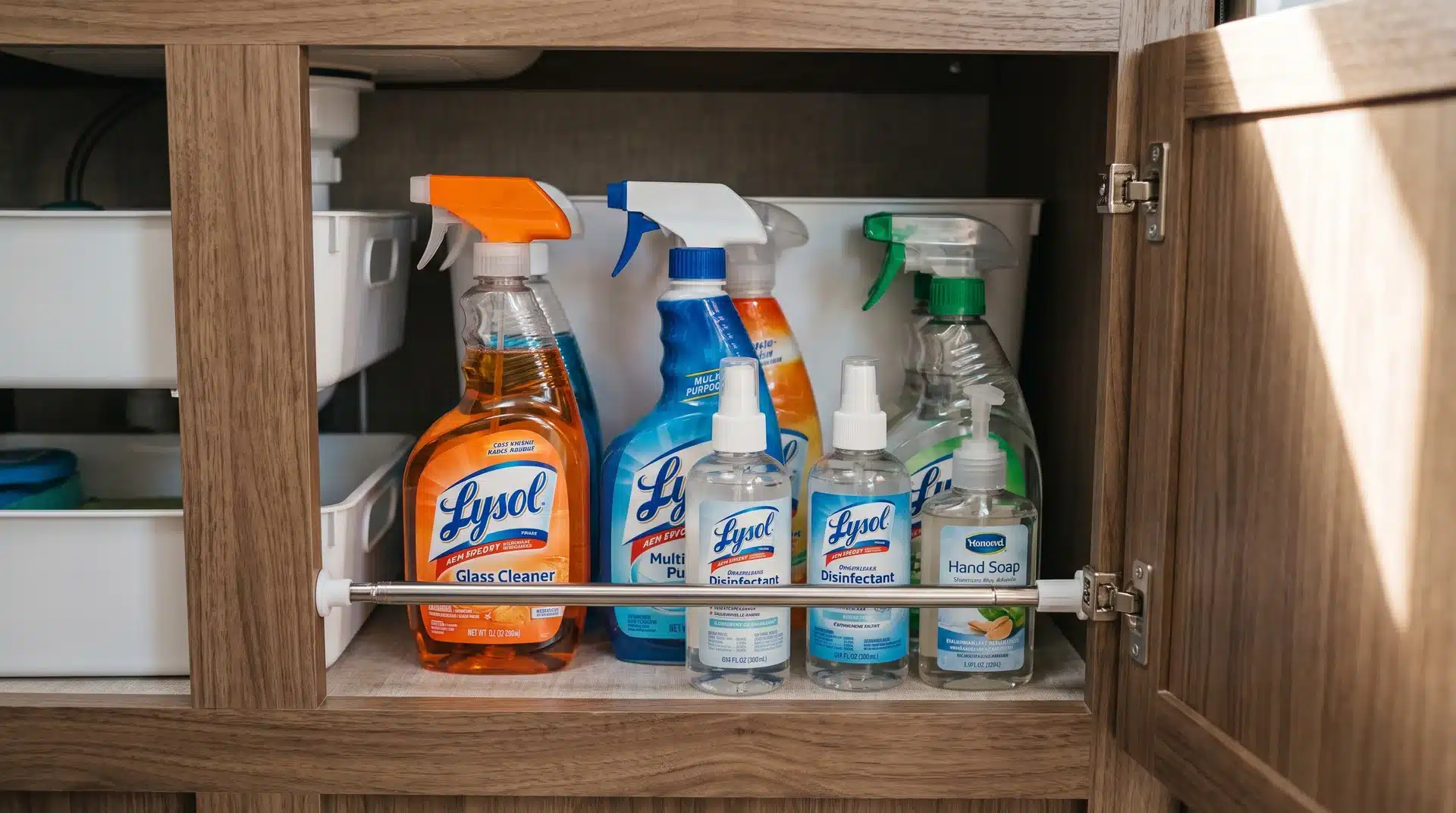
A low tension rod under the sink keeps cleaning bottles upright when frequent road movement makes them tip. Install the rod low enough to clear any plumbing, and position taller bottles behind shorter ones so everything stays visible.
Recheck the tension occasionally, especially after major temperature swings, since heat can cause the rod to expand slightly and lose its grip against the cabinet walls over time.
RV Space Saving Ideas for Bedroom and Closet Storage
RV closets run narrower and shorter than home closets, so standard folding and hanging methods waste space fast. These ideas make the most of a small sleeping area.
10. Slim Velvet Hangers for Narrow Closets
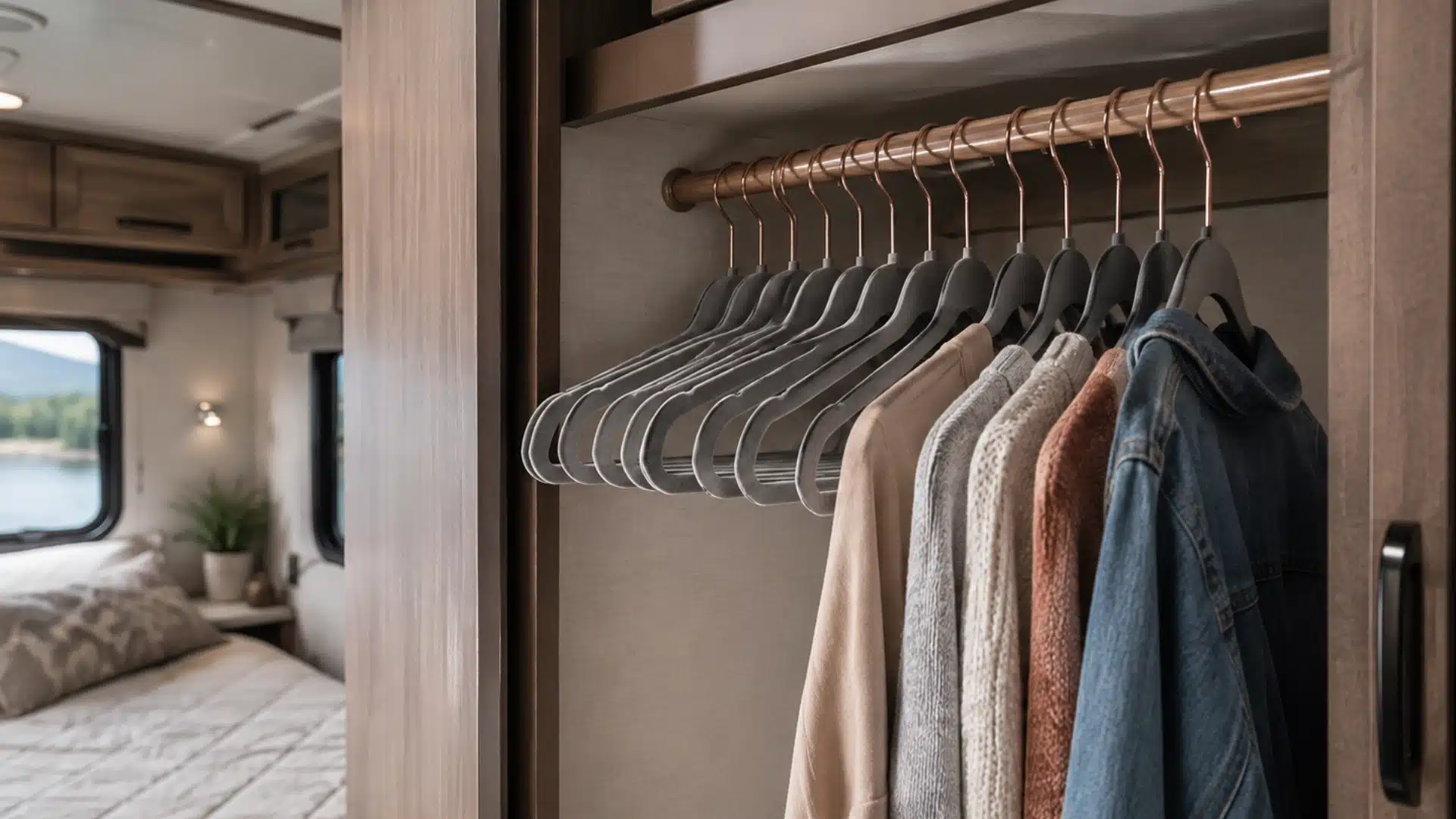
Slim velvet hangers free up valuable closet width and keep shirts from slipping together as the RV moves. Replace bulky plastic or wire hangers in one batch so the closet gains space immediately, not gradually.
Group similar clothes together for faster mornings, and save your few sturdier hangers for coats and heavier jackets, since velvet hangers can bend under weight they were not designed to hold.
11. Stackable Storage Bins for Wardrobe Floors
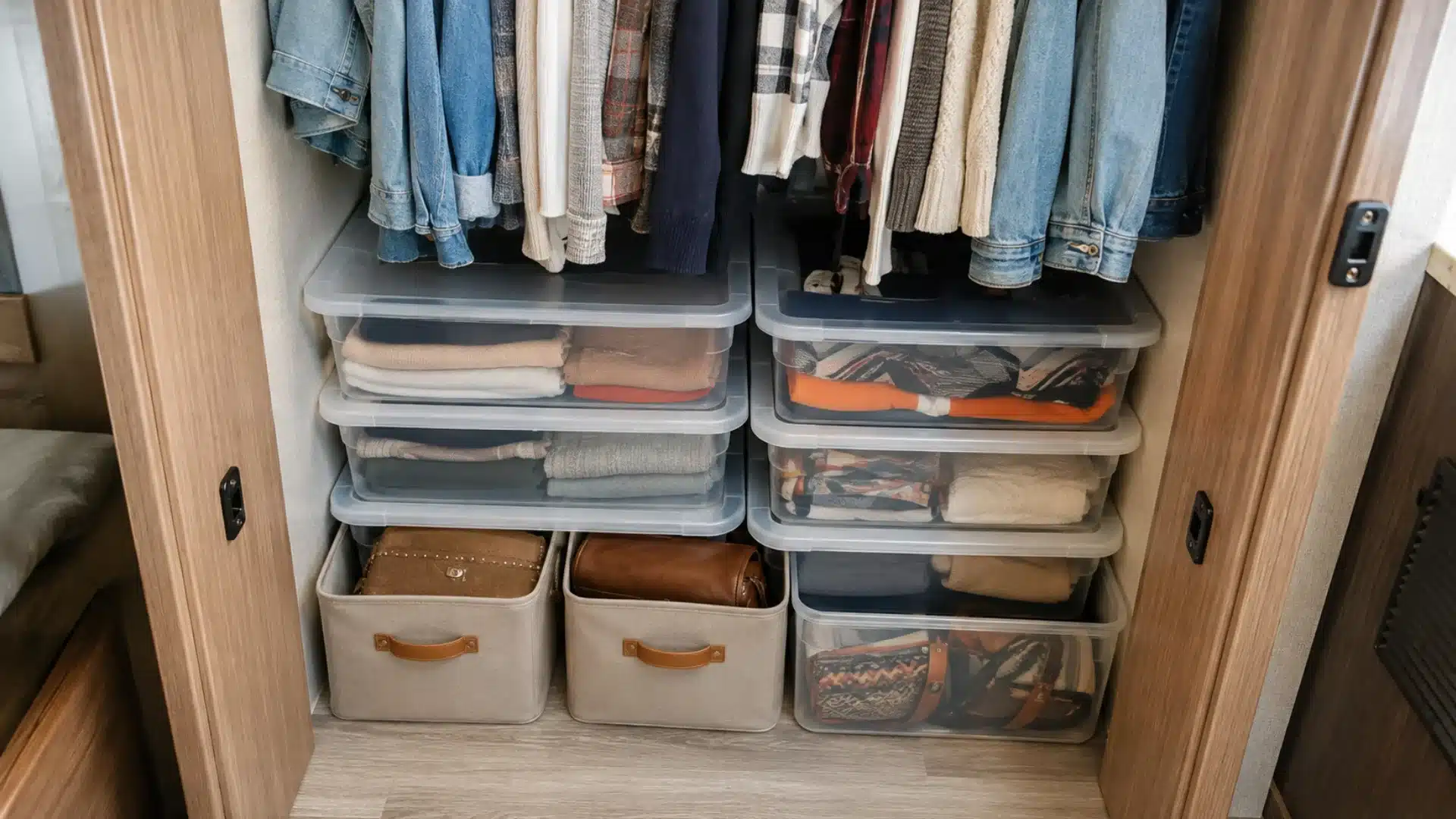
Stackable bins make the wardrobe floor work harder by keeping clothes and accessories contained instead of piled loosely. Choose shallow, clear bins for everyday items so you can see contents without opening each one.
Label each category clearly, and place less-used belongings underneath so they stay out of the way, leaving the top layer free for the things you actually reach for during a typical week on the road.
12. Storage Headboard for Bedroom Essentials
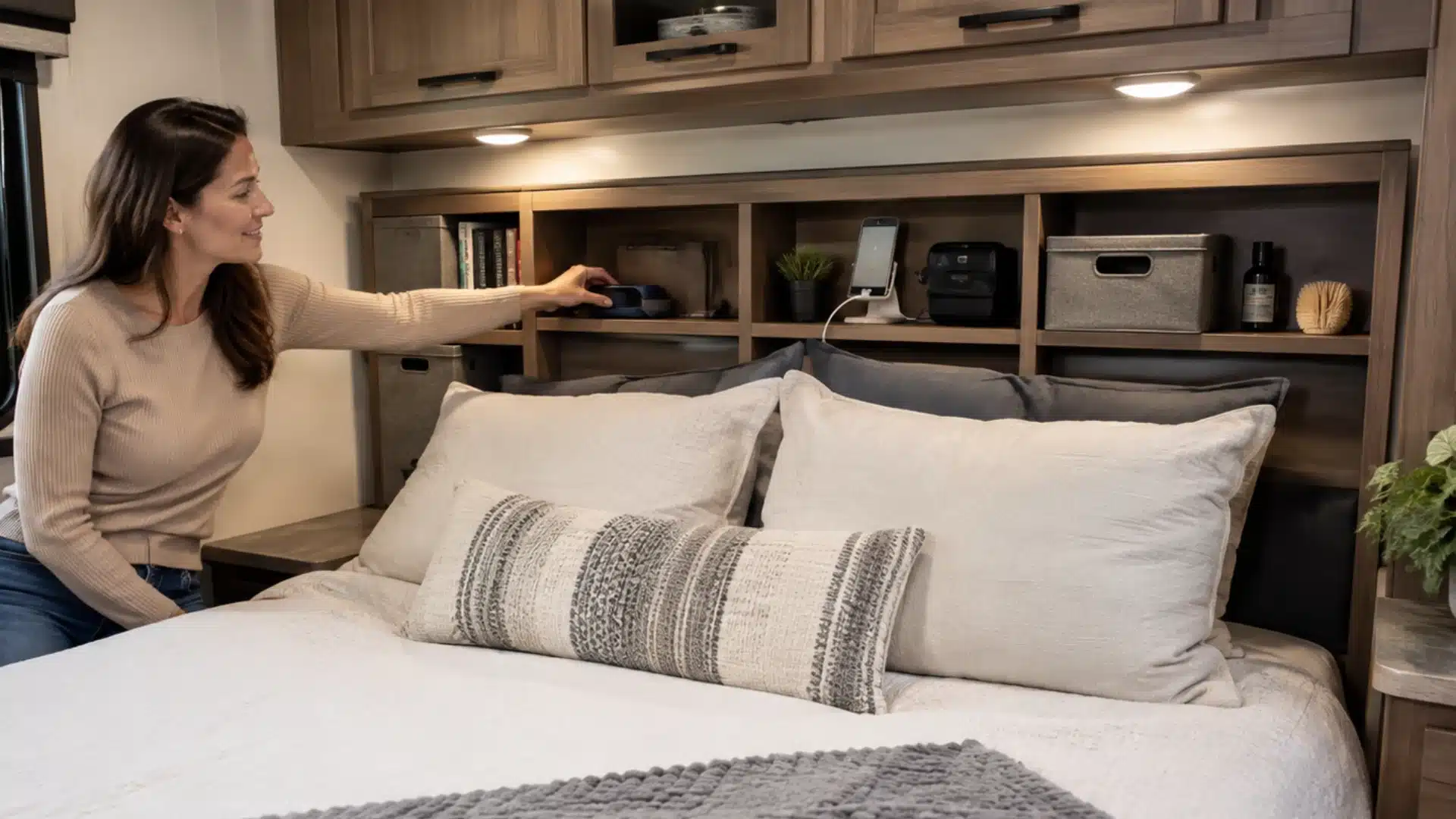
A storage headboard keeps books, chargers, and nighttime essentials close without adding another cabinet near the bed. Use built-in cubbies where possible, or secure lightweight boxes so nothing shifts once the RV starts moving.
Keep daily items like glasses and phone chargers within easy reach, and avoid placing anything heavy above the sleeping area, since a hard stop could send loose objects falling onto the mattress below.
13. Bedside Pocket Organizer for Small Items
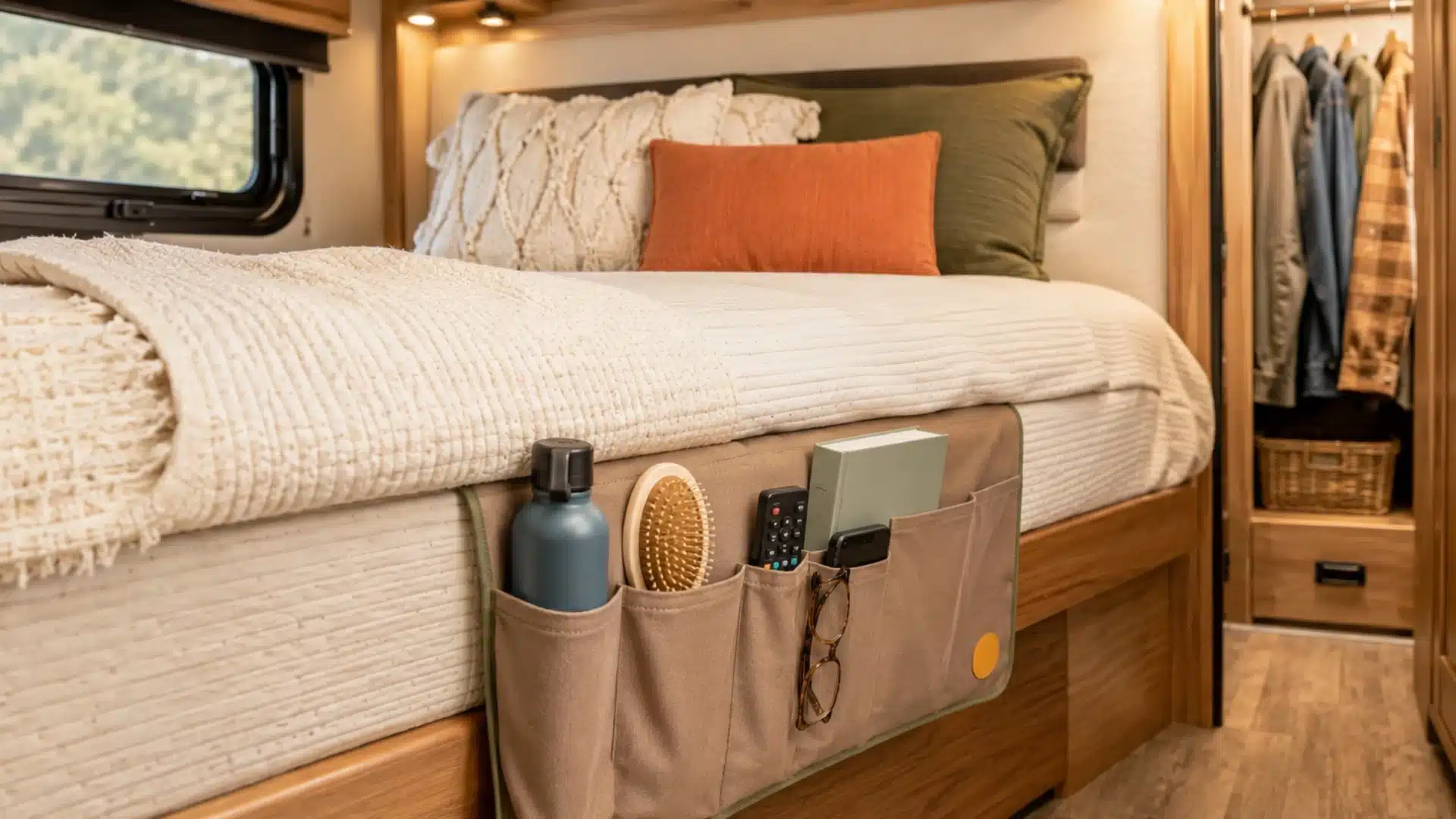
A bedside pocket organizer gives phones, glasses, and remotes one reachable spot instead of letting them disappear into the bedding. Mount it beside the mattress or attach it directly to the bed frame so it will not slide off.
Assign each pocket a specific purpose, so you always know where things are in the dark, and empty out unnecessary items regularly before small clutter starts building up in every single pocket.
14. Custom Half-Shelves Inside Tall Wardrobes
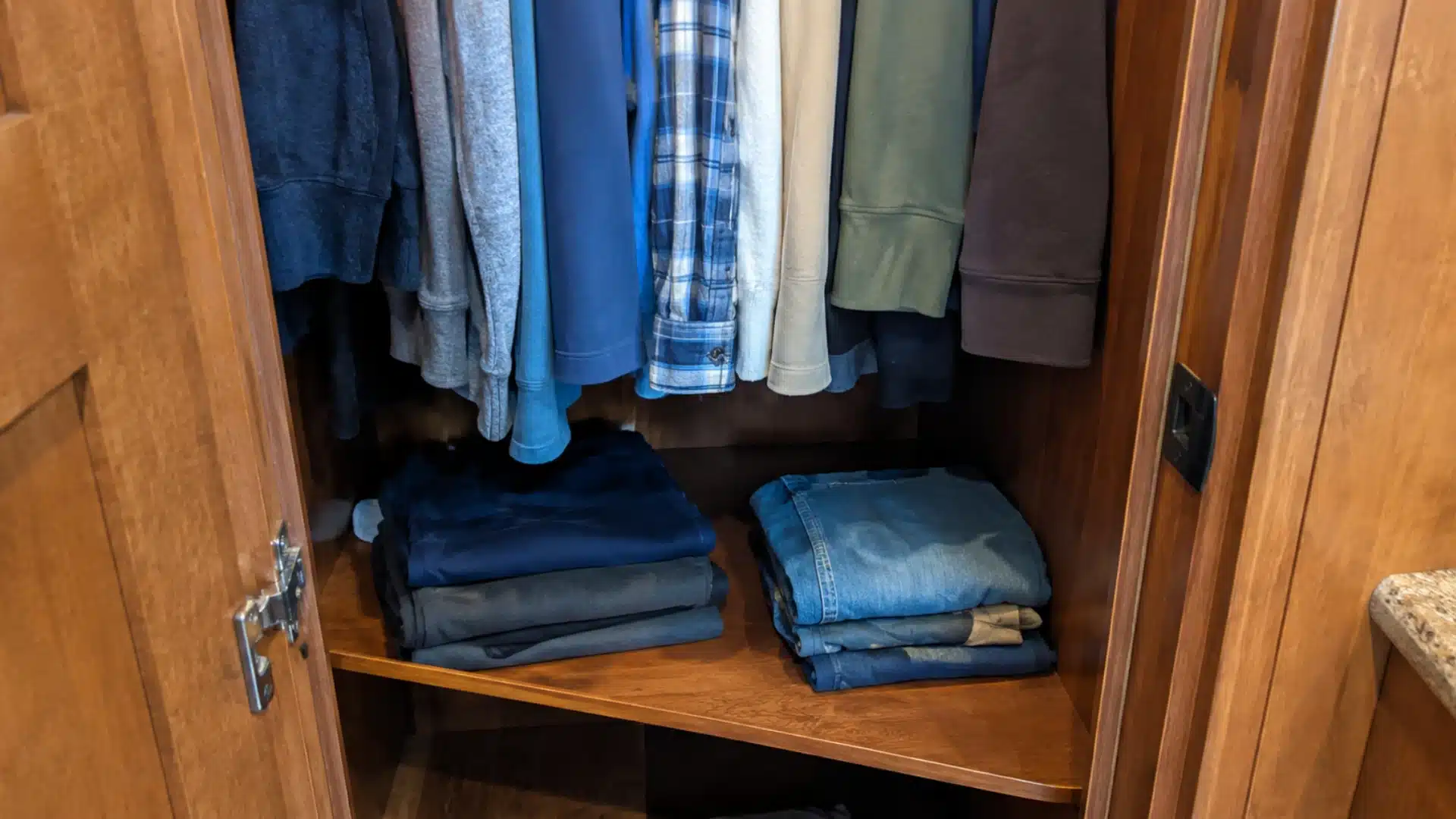
Half-shelves use the empty space beneath shorter hanging clothes, giving folded items a dedicated place to sit. Measure the wardrobe carefully before cutting or installing anything, since even an inch of miscalculation can cause bunching.
Install the shelf below the shortest hanging garments, and leave enough clearance so shirts and jackets can move freely with the RV instead of dragging against folded stacks underneath them.
15. Divided Under-Bed Storage Totes
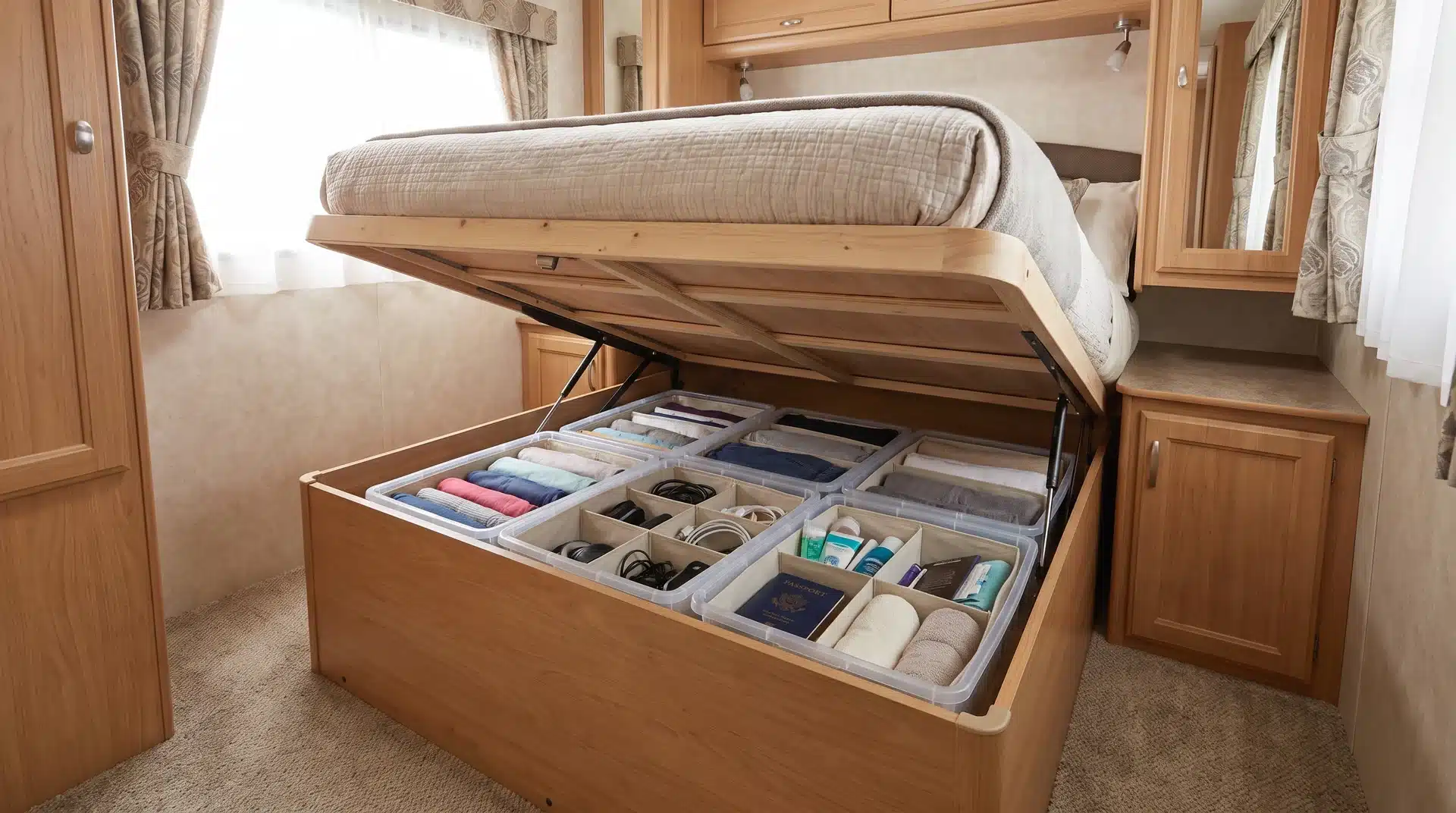
Divided under-bed totes keep loose belongings from sliding together, making that large storage area far easier to manage. Measure the available clearance first, then choose totes with sturdy handles that can handle frequent pulling in and out.
Add dividers for smaller items like tools or cables, and keep your most-used categories nearest the opening so you aren’t digging through everything else to reach them.
16. Hanging Closet Shelf Organizer
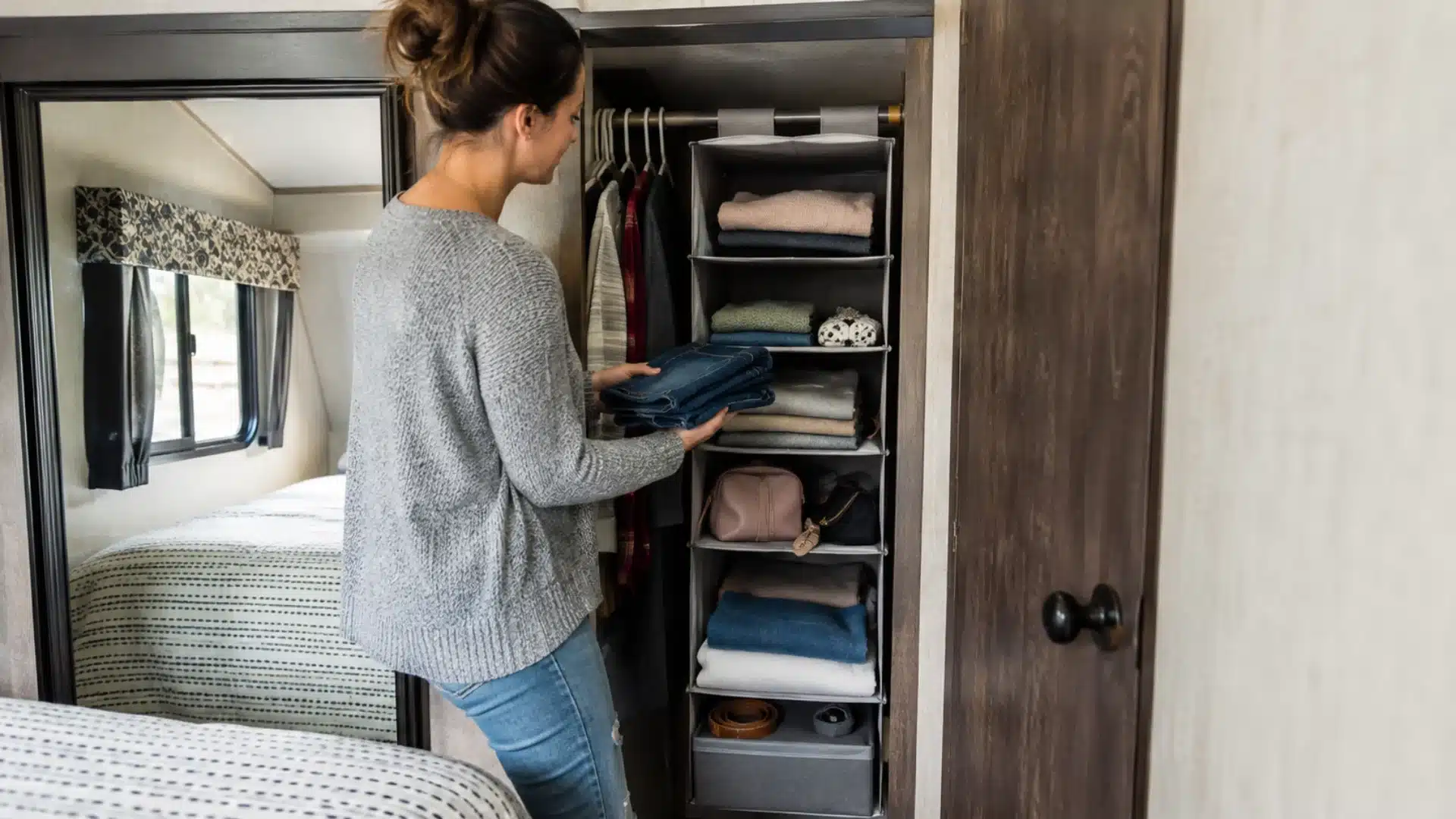
A hanging closet shelf organizer adds vertical storage for folded clothes and towels without any permanent installation. Hang it directly from the closet rod; it uses space that would otherwise sit empty.
Keep lighter items like folded shirts on the upper shelves, and place heavier folded clothes near the bottom to keep the organizer more stable and less likely to sway while you drive.
17. Over-the-Door Shoe Organizer for Closet Space
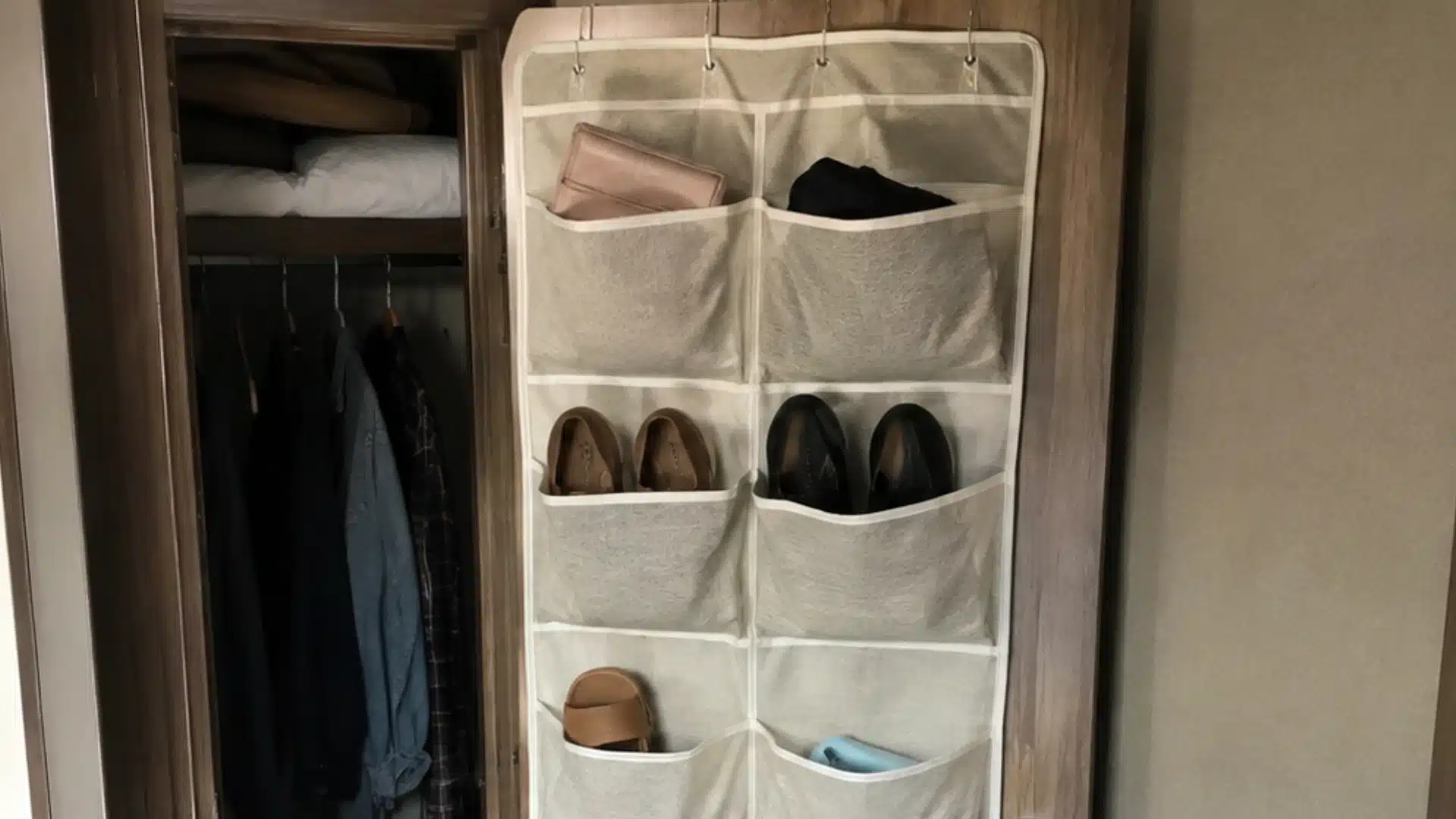
An over-the-door organizer gets shoes off the closet floor and makes stored bags and bins easier to grab. A lightweight fabric version usually works best, since heavier organizers can strain the door hinges over time.
Check that the door still closes smoothly after installation, and use the smaller pockets for socks, belts, and other small accessories that would otherwise get lost at the bottom of a drawer.
RV Storage Hacks for Bathroom and Entryway Ideas
RV bathrooms and entryways lose the most usable space to loose bottles, shoes, and gear with nowhere to go. These ideas reclaim that space without any drilling.
18. Stackable Baskets Under the Bathroom Sink
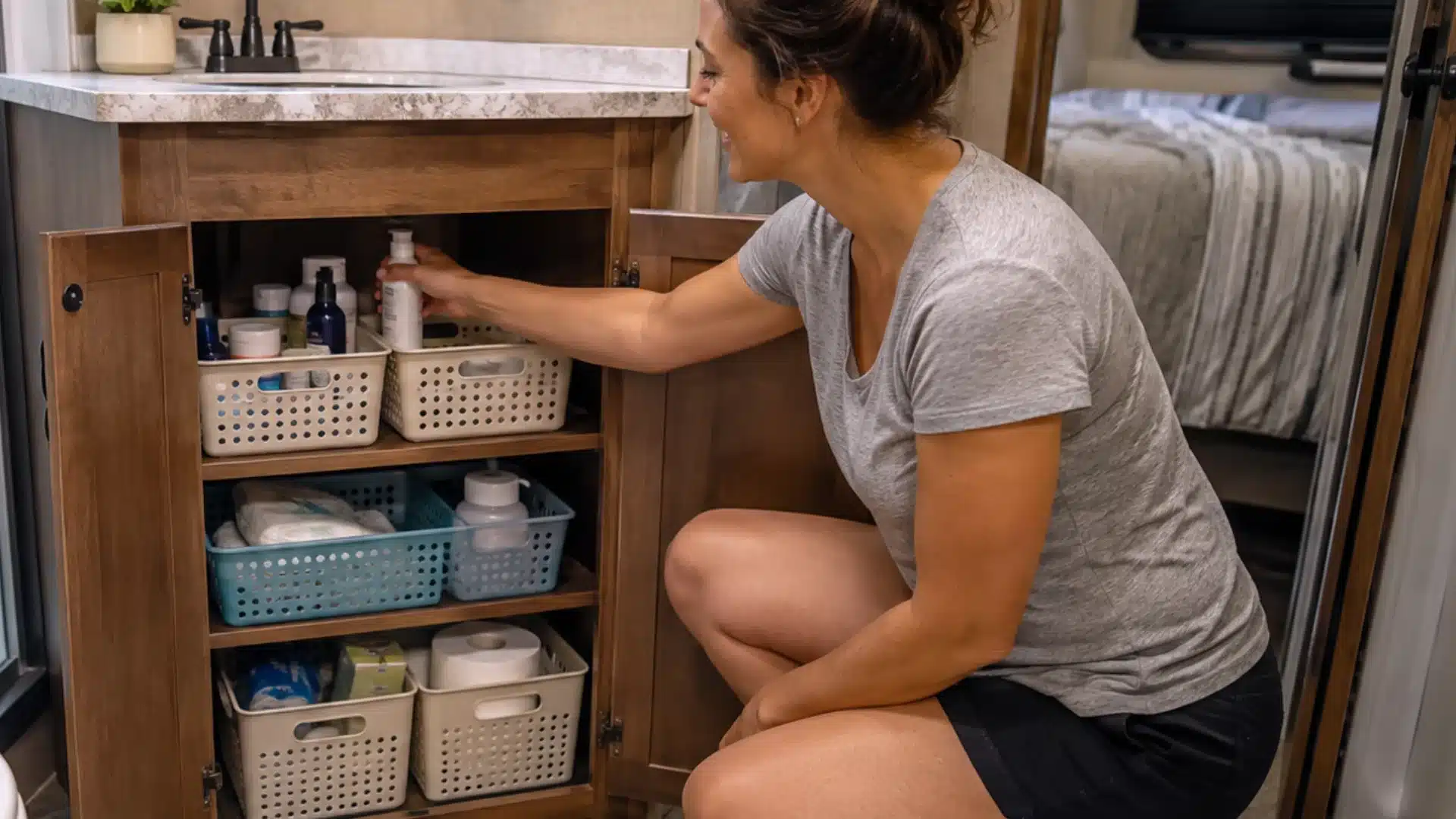
Stackable baskets make the cabinet under your bathroom sink easier to manage instead of a jumble of bottles. Use smaller baskets for everyday items you reach for each morning, and place backup supplies in baskets below them.
Label each section clearly so anyone in the RV can grab what they need quickly, and check periodically that nothing has shifted enough to block the cabinet from closing fully.
19. Wall-Mounted Soap and Shampoo Dispensers
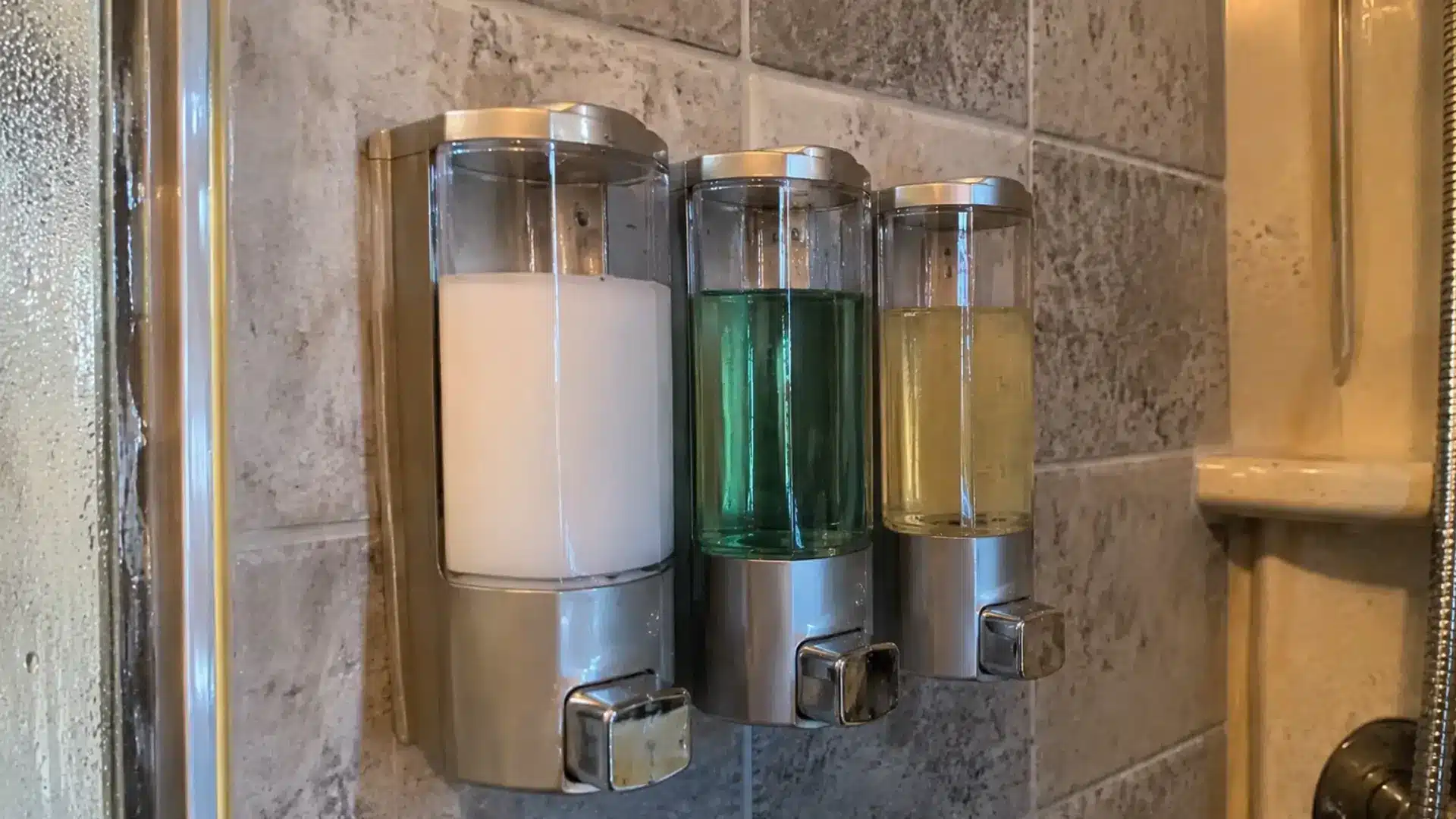
Wall-mounted dispensers keep shampoo and soap off wet surfaces where bottles usually tip over during travel. Choose dispensers with humidity-resistant adhesive designed to handle steam and temperature swings inside a shower stall.
Clean and dry the mounting area thoroughly before attaching anything, and refill the dispensers from larger bottles stored somewhere more secure, rather than keeping bulk containers balanced on a narrow shower ledge.
20. Narrow Rolling Cart Beside the Vanity
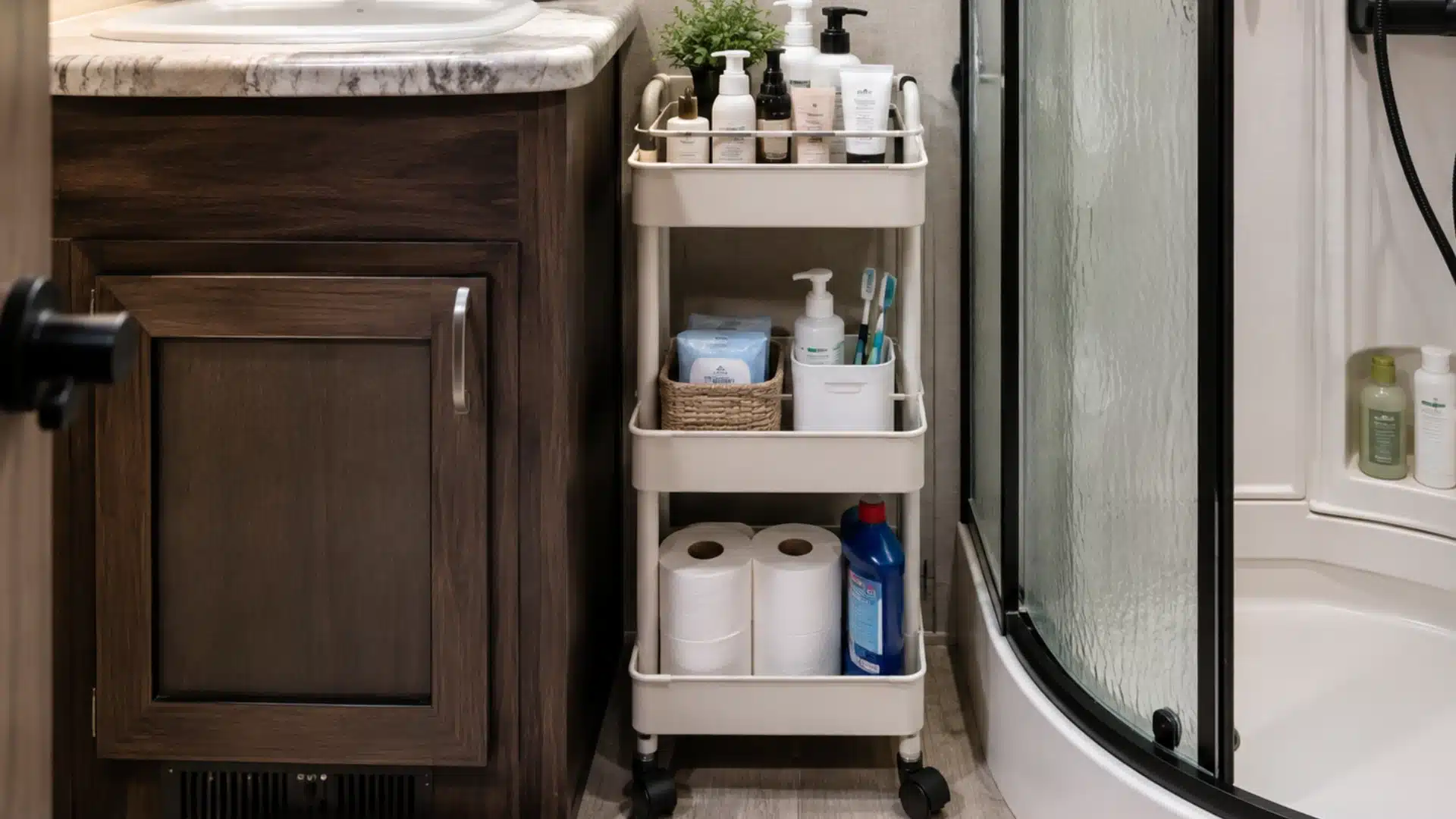
A narrow rolling cart turns the unused space beside the vanity into storage for toiletries and toilet paper. Choose a cart with raised edges so smaller items cannot bounce off during a bumpy stretch of road.
Keep similar supplies grouped on each tier, and make sure the wheels are locked or the cart is otherwise secured before moving, since unsecured carts can become a mess after a rough drive.
21. Toilet Tank Storage Tray
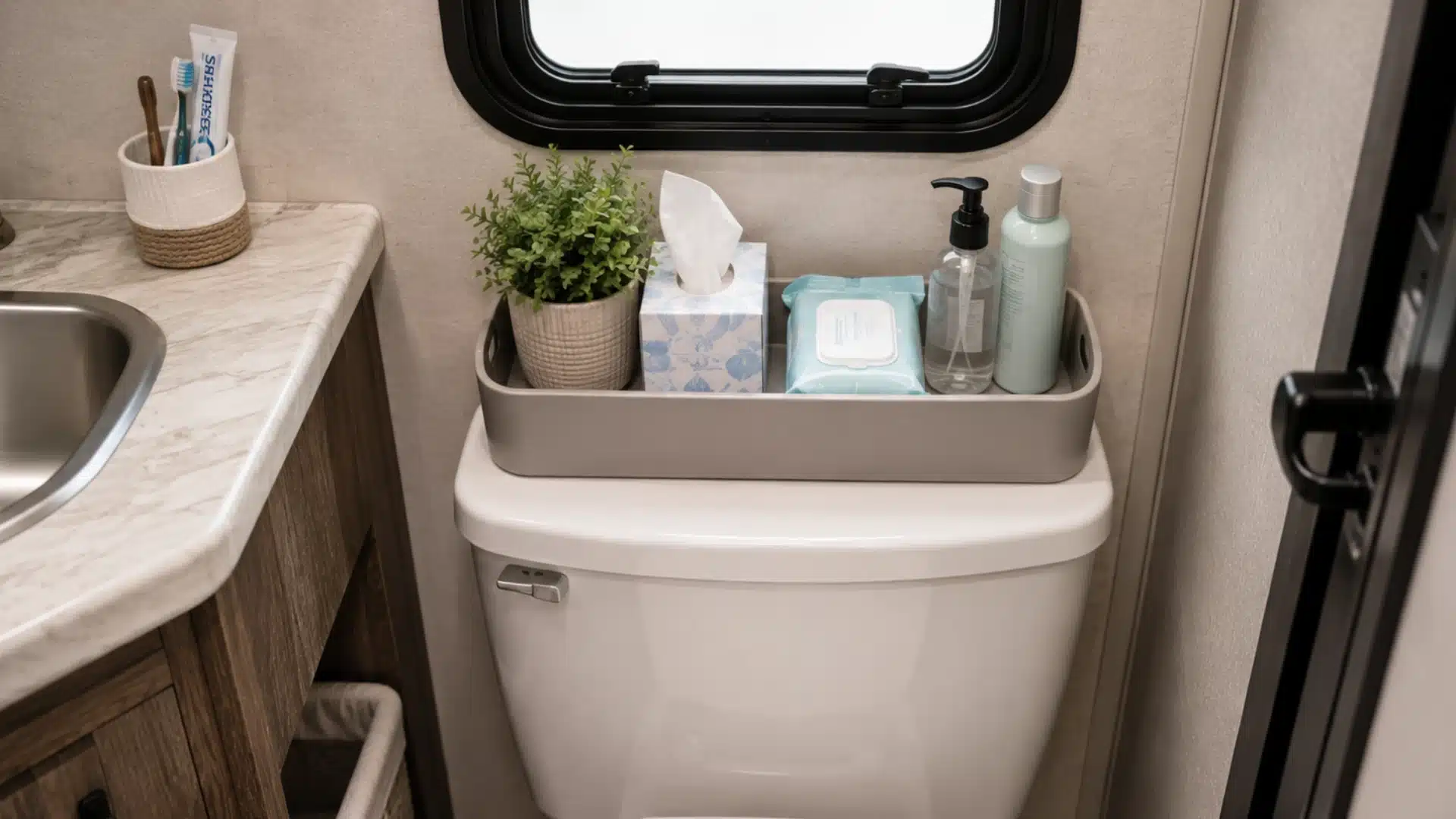
A compact tray above or behind the toilet creates extra storage without taking away any valuable floor space. Use the tray for lightweight essentials like tissues, wipes, and travel-size toiletries that you reach for often.
Move anything heavier into a lower cabinet before getting back on the road, since items stacked high near the tank can easily topple during a sudden stop or a sharp turn.
22. Command Hooks for Towels and Robes
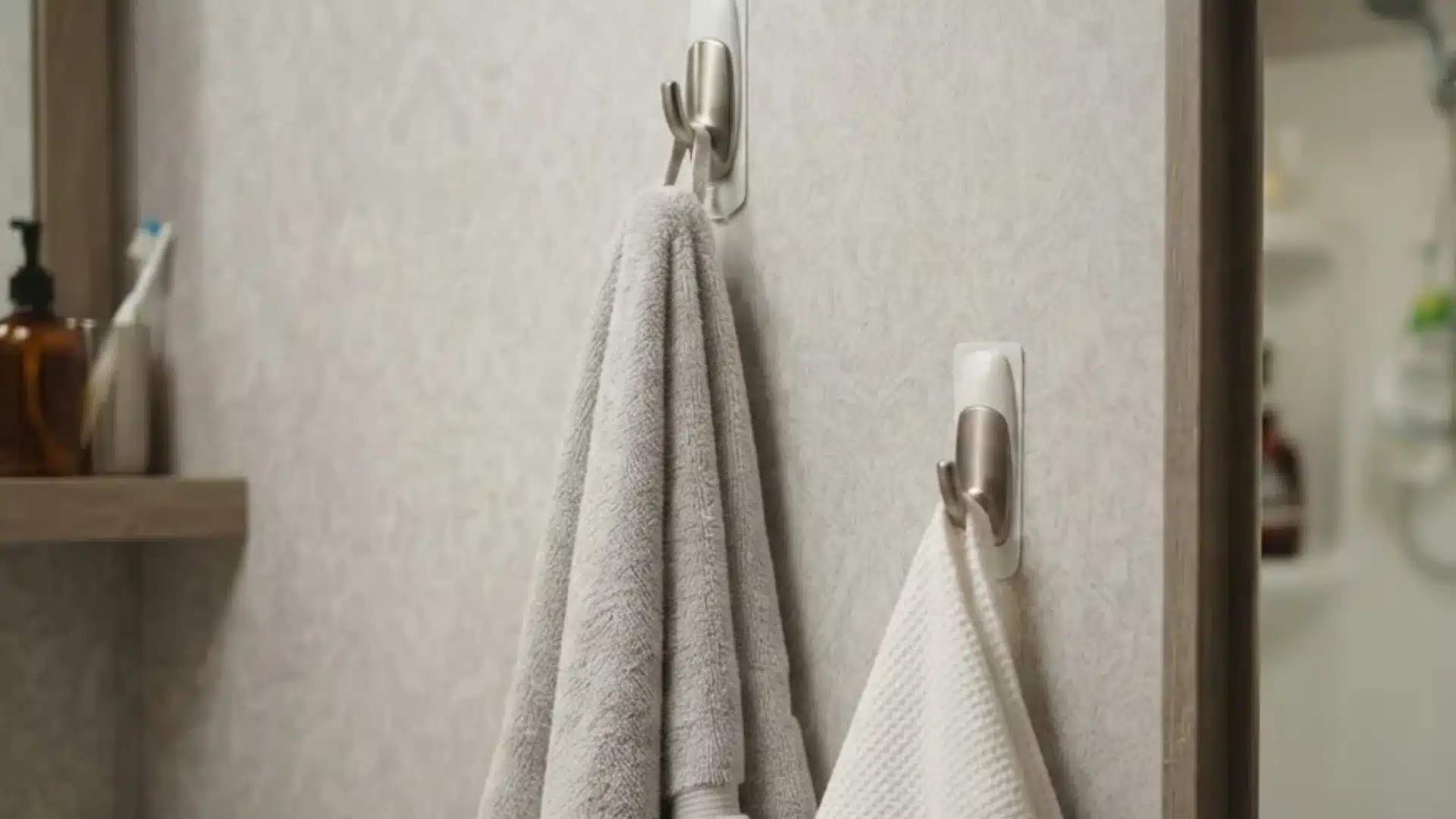
Command hooks give damp towels and robes their own drying spots, which helps prevent bunching in humid bathrooms. Mount the hooks away from direct shower spray so the adhesive is not constantly exposed to moisture.
Let it cure fully before hanging anything, and leave enough space between each towel for airflow, since towels packed too tightly together tend to stay damp and can start to smell after a few days.
23. PVC Pipe Toothbrush Holders
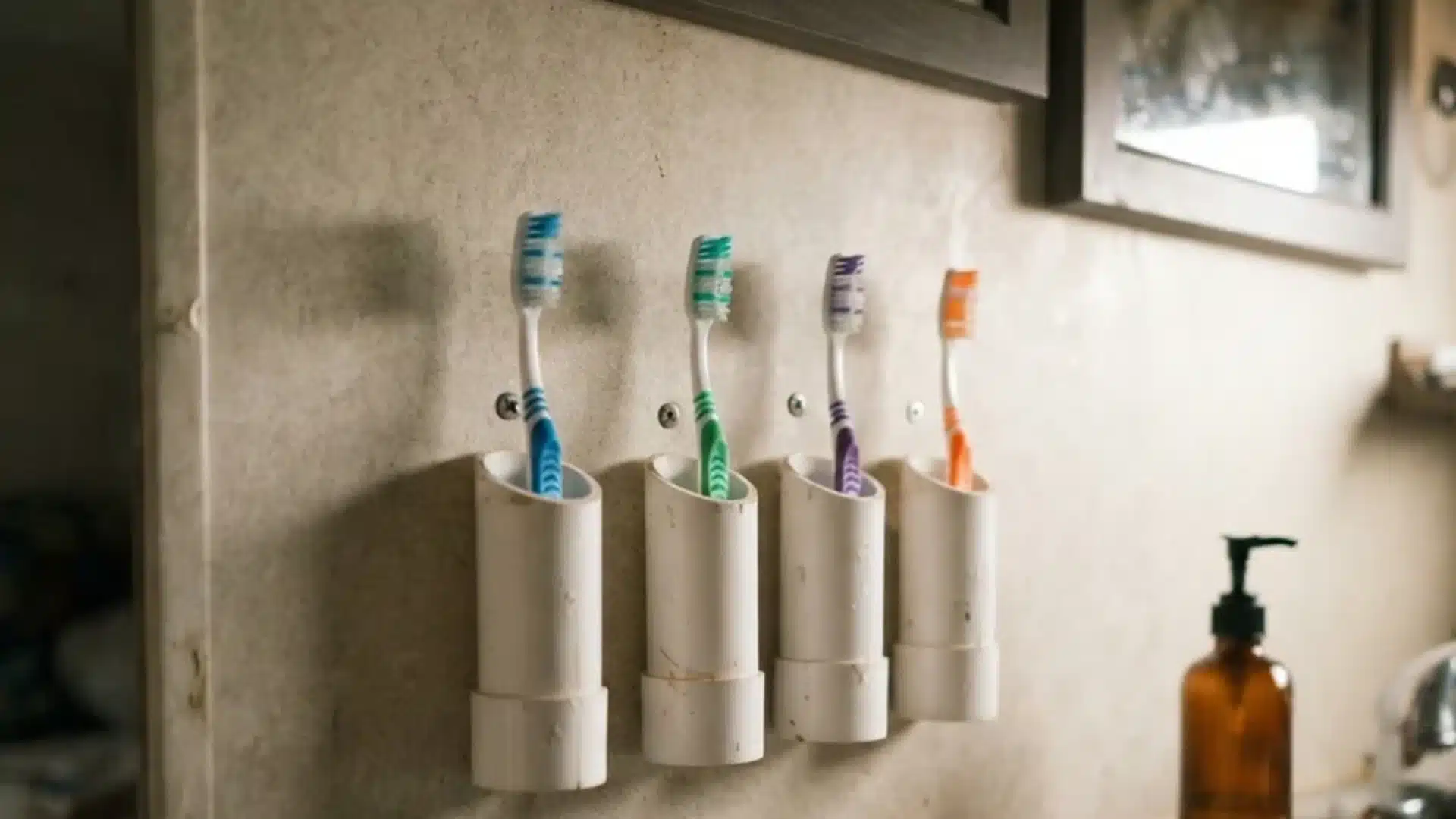
PVC pipe holders keep toothbrushes upright and separated, making them easier to grab and less likely to tumble. Cut short sections of pipe to size, then mount them vertically at a height that works for everyone.
Assign one slot per toothbrush so bristles never touch, and add small drainage holes at the base so water does not collect and turn into a source of mildew over time.
24. Corner Storage Tower for Bathroom Supplies
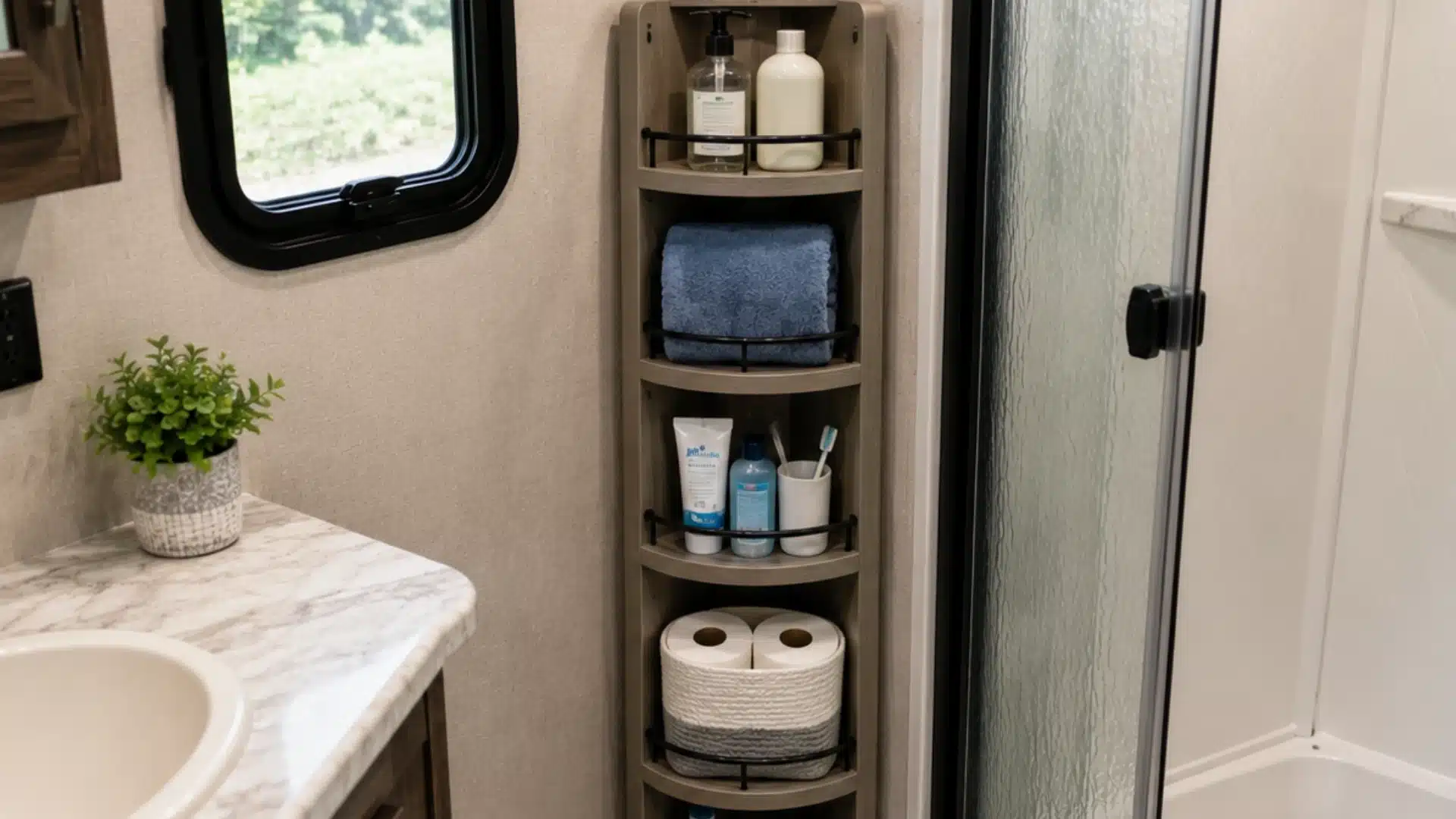
A narrow corner tower uses overlooked bathroom space for towels and backup supplies without crowding the walkway. Choose a tall unit with raised compartments so smaller items cannot slide off the edges while driving.
Place heavier supplies near the bottom to keep the tower’s center of gravity low, and secure it firmly to a wall or cabinet before every trip, since freestanding towers are especially prone to tipping.
25. Magnetic Strip for Bathroom Tools
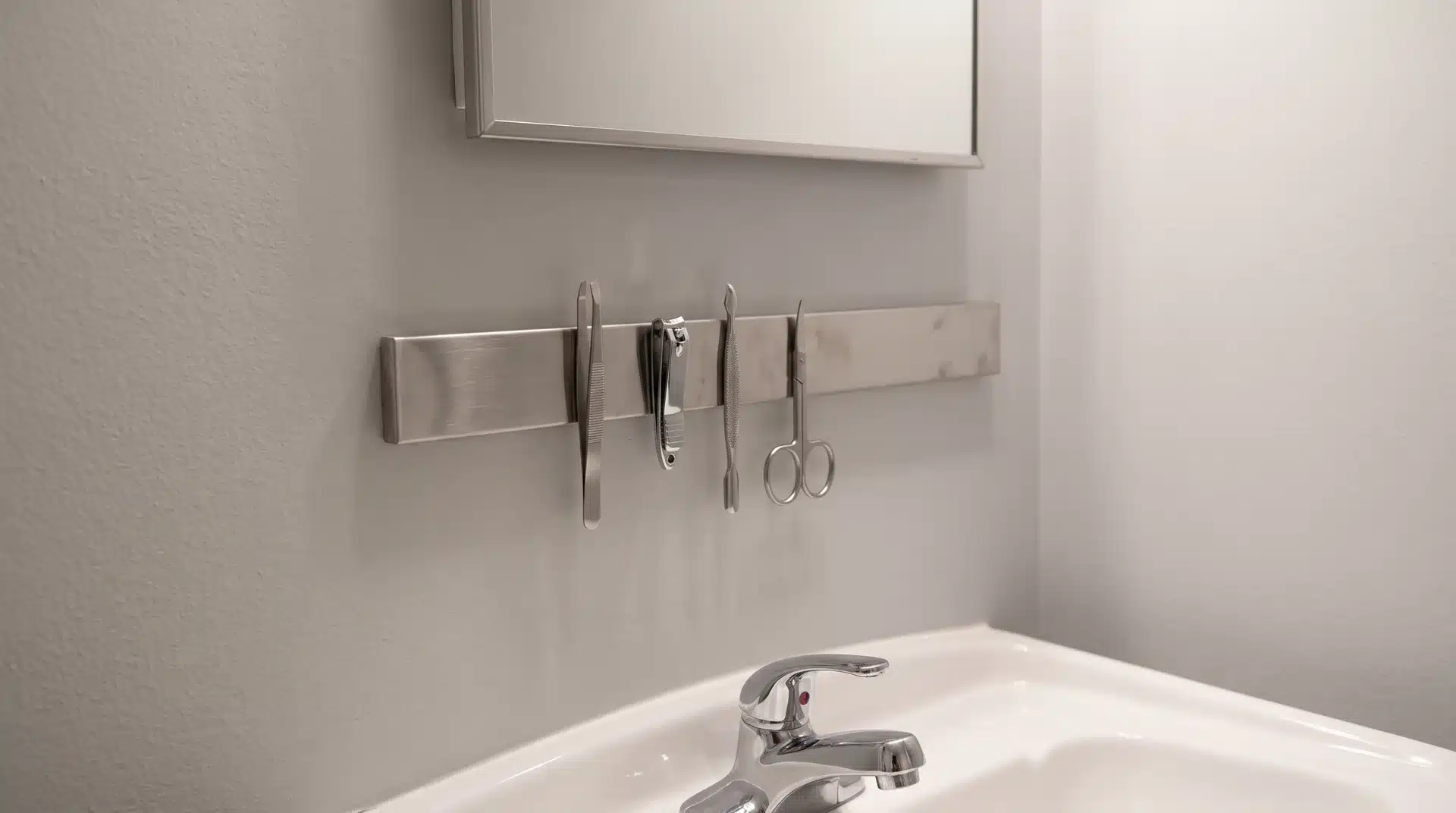
A magnetic strip keeps tweezers, clippers, and other small metal tools visible instead of buried in a drawer. Mount the strip securely above the sink or vanity, checking first that the wall surface is actually steel.
Keep sharp tools positioned out of easy reach of children, and attach only lightweight metal items, since anything heavier can pull loose from the strip during a sudden stop or sharp turn.
RV Living Area Storage Ideas
RV living areas need smart storage that keeps everyday essentials organized, accessible, and secure while making better use of limited space throughout the interior comfortably.
26. Storage Ottoman for Living Area Essentials
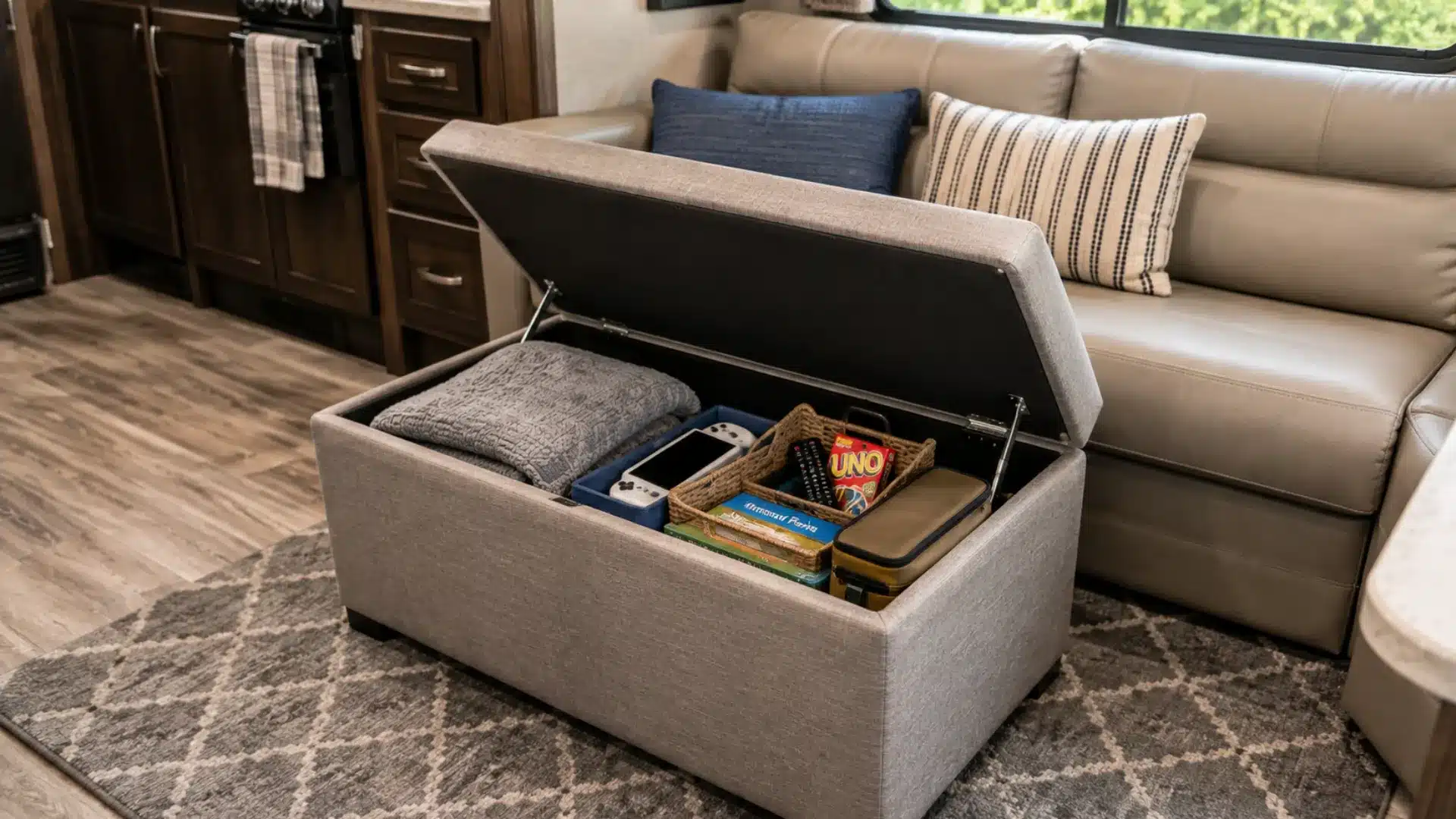
A storage ottoman hides blankets, games, and electronics while doubling as extra seating or a footrest. Choose a lightweight model with a secure, latching lid so the contents cannot spill out mid-drive.
Organize smaller items in fabric baskets rather than loose in the cavity, and keep heavier belongings near the bottom to help the ottoman stay balanced and prevent rattling once the RV is underway.
27. Behind-the-Sofa Storage Shelf
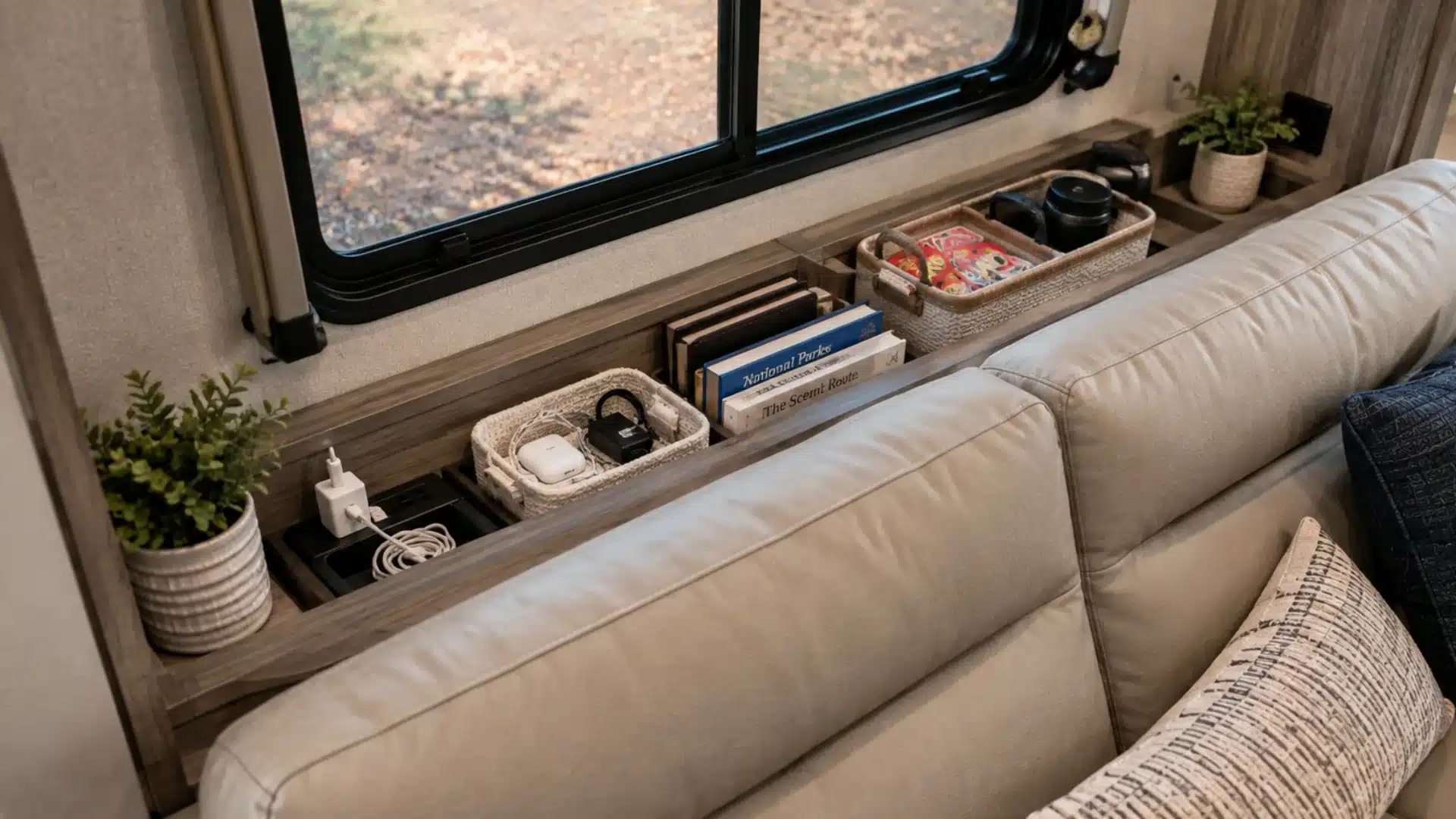
A slim shelf behind the sofa uses an easy-to-miss gap for books, chargers, and other everyday essentials. Measure the available space carefully before buying or building anything, since this gap is often narrower than it looks.
Add small containers to corral loose items like cables and pens, and secure both the shelf and its contents firmly, since anything unrestrained in this spot tends to slide out first.
28. Sofa Armrest Storage Caddy
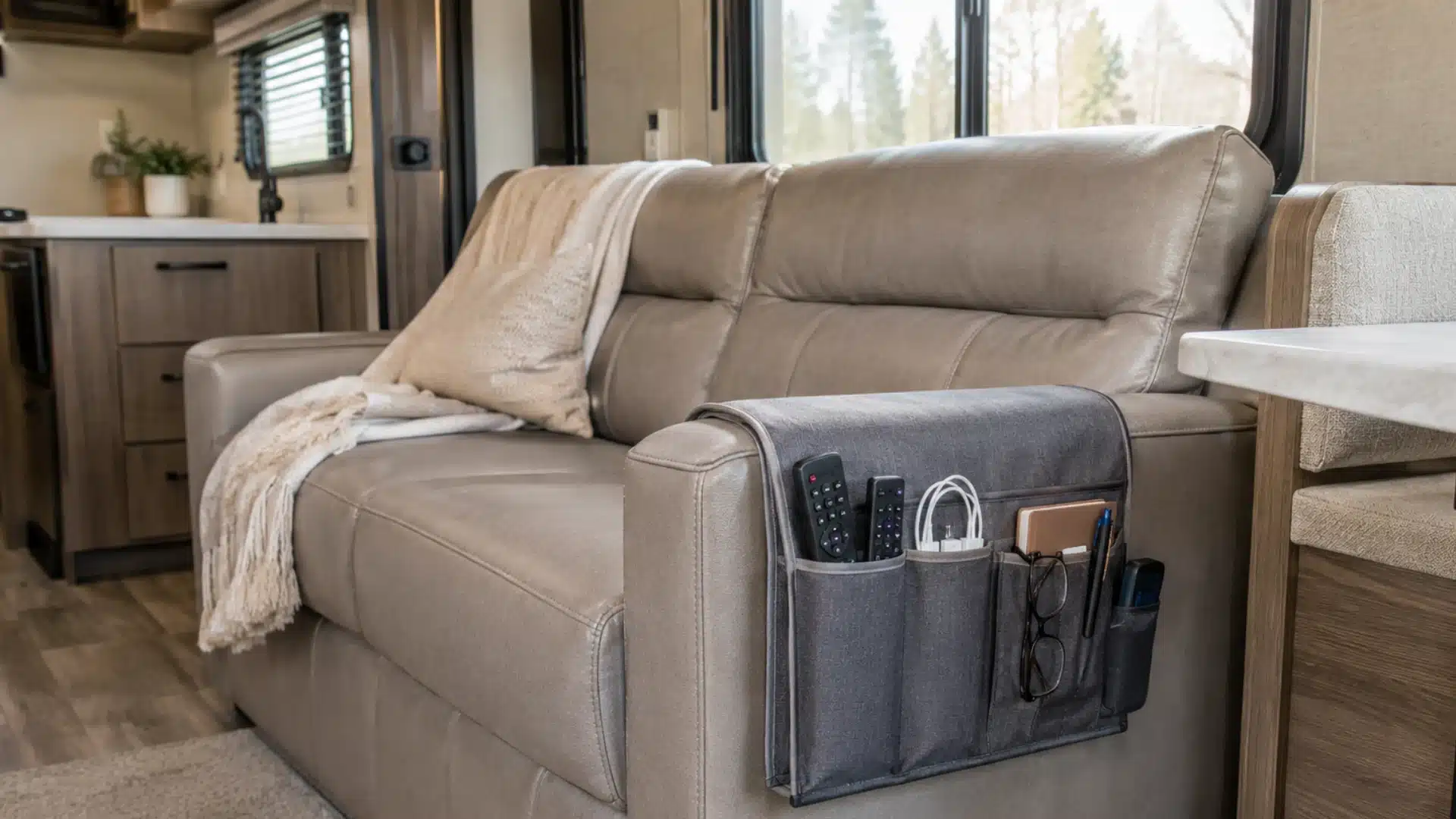
An armrest caddy keeps remotes, chargers, and glasses close by, which helps when table space is limited. These caddies work best when each pocket has a clear, consistent role instead of becoming a catch-all.
Keep the items you grab most often in the outside pockets for quick access, and secure the caddy well to the armrest so it doesn’t shift or slide off while the RV is moving.
29. Under-Sofa Pull-Out Storage Drawers
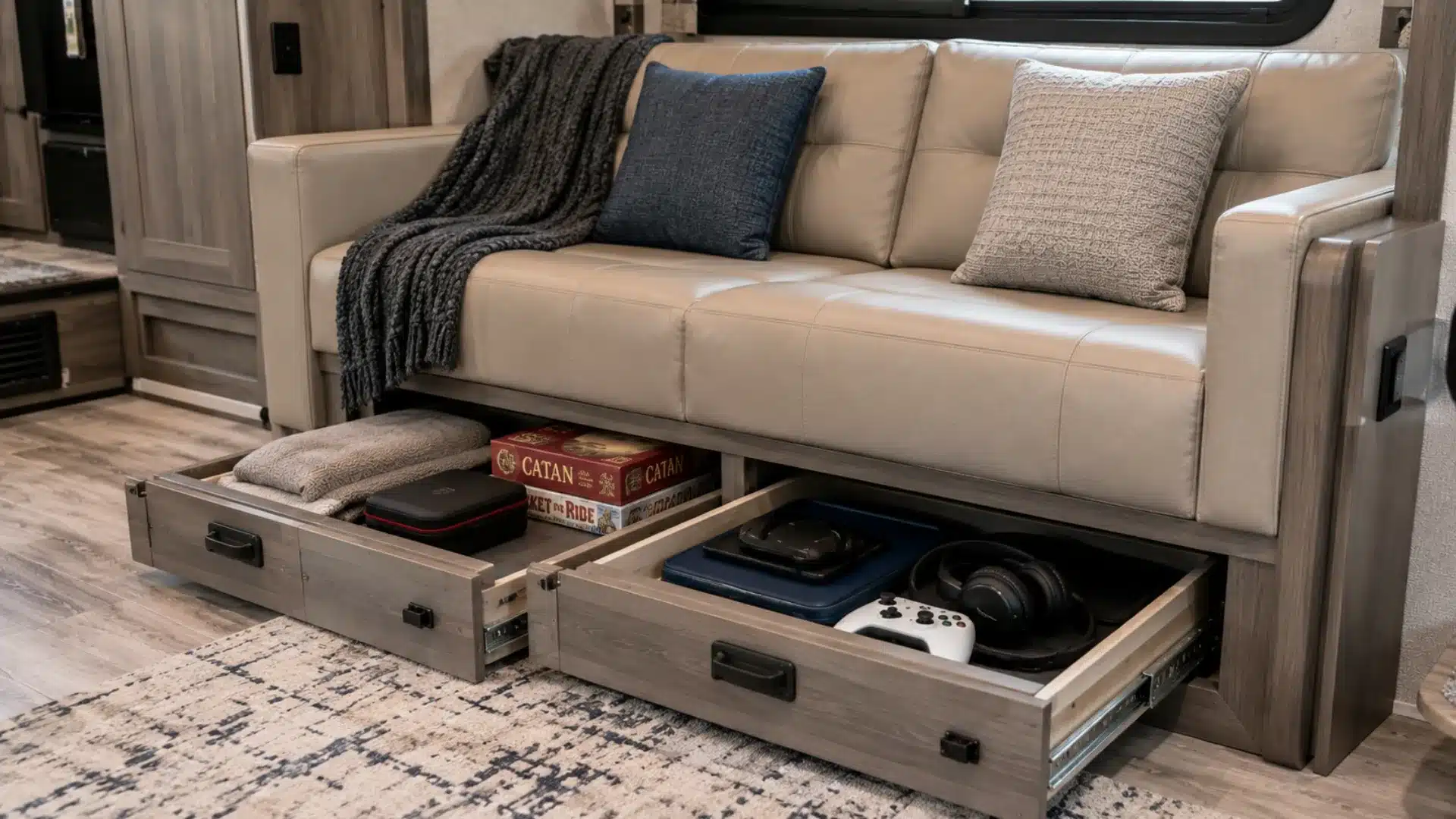
Pull-out drawers turn unused space beneath the sofa into hidden storage for blankets, games, and electronics. Install shallow drawers that match the available clearance exactly, since even a small gap can cause rattling.
Group similar items together within each drawer, and add secure latches to prevent them from sliding open on their own during travel, which is one of the more common under-sofa storage complaints.
RV Storage Common Mistakes to Avoid
Even smart storage upgrades can cause problems when installed incorrectly, so watch for these common mistakes before relying on any setup during travel.
- Ignoring Weight Limits: Overloading shelves, hooks, or compartments can damage thin RV walls, loosen hardware, and affect the vehicle’s overall weight balance.
- Using Weak Adhesives: Standard household adhesive may fail under heat, humidity, and vibration, so choose products rated for RV conditions.
- Blocking Access Points: Storage placed near electrical panels, plumbing, vents, or emergency exits can cause unnecessary trouble during maintenance or when quick access is needed.
- Storing Heavy Items High: Heavy cookware, tools, or containers can become dangerous during sudden stops, so keep weight lower and securely restrained whenever possible.
- Skipping Road Tests: A setup that feels secure while parked may shift during travel, so test new storage solutions on shorter drives first.
Avoiding these mistakes helps your storage stay secure, protects your RV from unnecessary damage, and makes every trip easier to manage from start to finish.
Conclusion
Good RV storage is not just about fitting more into a small space. It is about keeping everyday items easy to reach, using awkward areas better, and making sure everything stays put once you are back on the road.
I have found that the most useful RV storage ideas are usually the simple ones that fix a problem you notice every trip. Start with the cabinet that always gets messy, the bathroom shelf that never stays organized, or the gear that keeps shifting while you drive.
Try two or three ideas first, test them on a short drive, and adjust anything that shifts. Have a favorite RV storage trick? Share it in the comments below.
Frequently Asked Questions
Do I need to drill holes to add RV storage solutions?
No. Most RV-safe storage relies on tension rods, suction cup shelves, adhesive hooks, and magnetic organizers.
These options avoid drilling into thin RV walls entirely, which matters because drilling can weaken wall panels or create leak points that are hard to notice until real damage has already been done. For that reason, no-drill options are usually the safer first choice for most RV owners starting out.
What’s the best way to keep items from sliding around while driving?
Use tall, clear bins with lids, tension rods across shallow cabinets, and interlocking or tilt-out bins in basement compartments.
These options box items in on multiple sides at once, which helps them resist shifting from vibration, sharp turns, and sudden stops. Open baskets or loose stacking cannot offer that same resistance, so they tend to be the first things to spill or shift once the RV actually gets moving.
Are magnetic organizers safe to use in an RV kitchen?
Yes, as long as they’re mounted to a steel-backed surface like a range hood or refrigerator side panel.
Magnetic strips and racks will not hold securely on aluminum, wood, or laminate surfaces, no matter how strong the magnets seem when you test them by hand. Check what material is underneath before relying on one for anything heavier than a spice tin, especially in a moving vehicle.
How much weight can RV storage bins hold?
It depends on the bin and how it’s mounted, but overloading is the most common failure point overall.
Always check a bin’s rated weight limit before filling it, since manufacturer ratings account for the extra stress of vibration and movement. Secure heavier bins directly to the floor or wall, especially in basement or overhead compartments, where a failure is more likely to cause damage or injury.