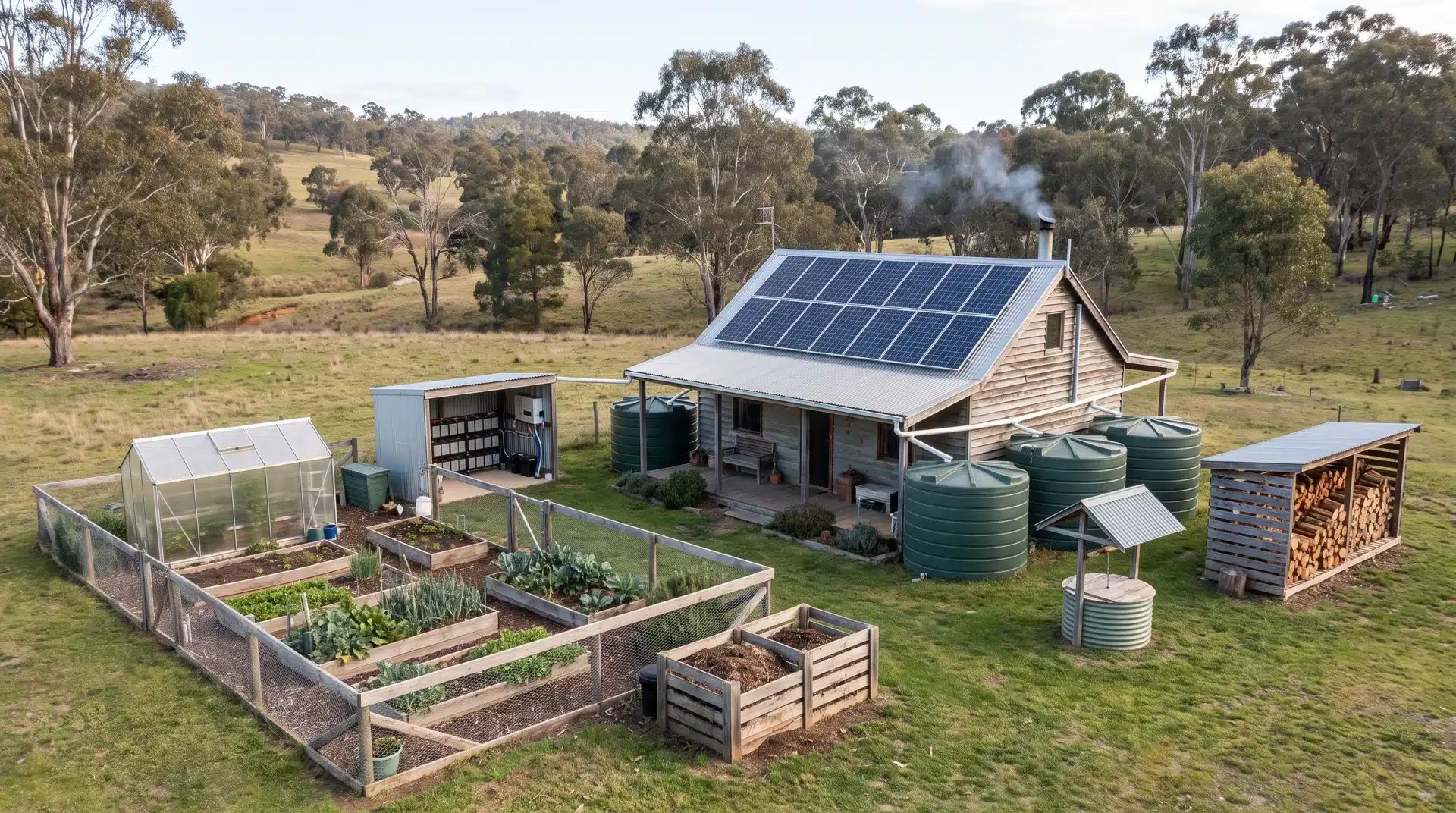
Going off-grid sounds simple until you start asking what counts. Is it enough to install solar panels, or do you also need your own water, heating, waste, and food systems?
That is where most people get stuck. In practice, off-grid living is less about disappearing from society and more about reducing dependence on utilities.
Some people replace electricity first, while others build a self-sufficient setup over time. I prefer thinking of it as a spectrum, not a strict label. Here, I’ll explain the levels, so you can see where your plans fit without the usual confusion.
What Does Living Off the Grid Mean?
Off-grid living means running a home without depending on centralized utility systems for essentials like electricity, water, and waste management.
The biggest difference is where those resources come from. Instead of relying on public utilities, an off-grid home creates its own systems for things like power, water, and waste.
Some off-grid households also produce their own food, but growing everything you eat is not required. Food independence can be part of the lifestyle, but it is not what makes a home off-grid.
Living off-grid also doesn’t mean walking away from modern life. Many people still use phones, access the internet, drive into town, and use everyday appliances.
This is where hybrid setups can cause confusion. A home with solar panels, for example, may still be connected to municipal water or sewer service. It has reduced its dependence on the grid, but it is not fully off-grid.
What Systems Make a Home Off-Grid?
A fully off-grid home generally needs independent systems for electricity, water, waste, and heating. Together, these determine how much the property depends on shared infrastructure.
1. Generating Your Own Electricity
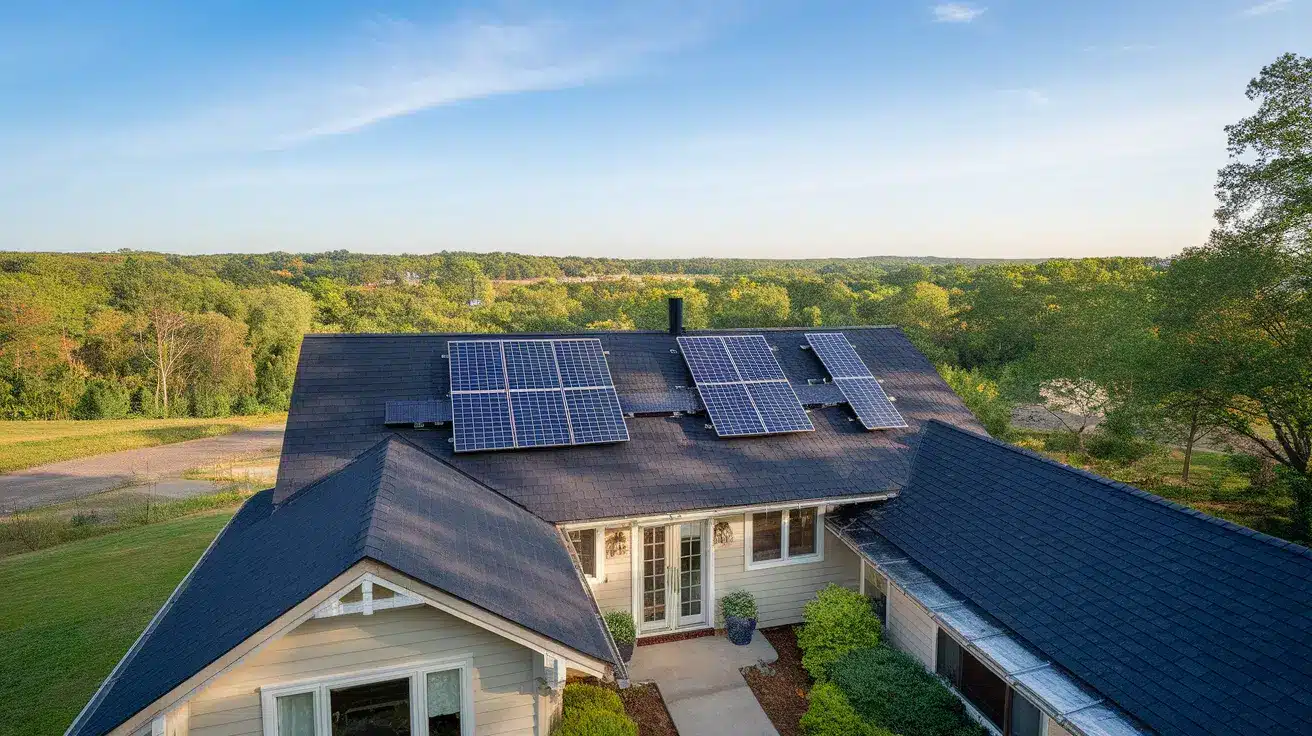
Solar panels are one of the most common off-grid electricity sources. They are usually paired with dependable battery storage systems so electricity remains available at night and during periods of low solar production.
A gas or propane generator may provide additional backup power.
System size should be based on household electricity demand. Undersized solar panels or batteries can force households to limit energy use during cloudy weather or periods of higher consumption.
2. Creating an Independent Water Supply
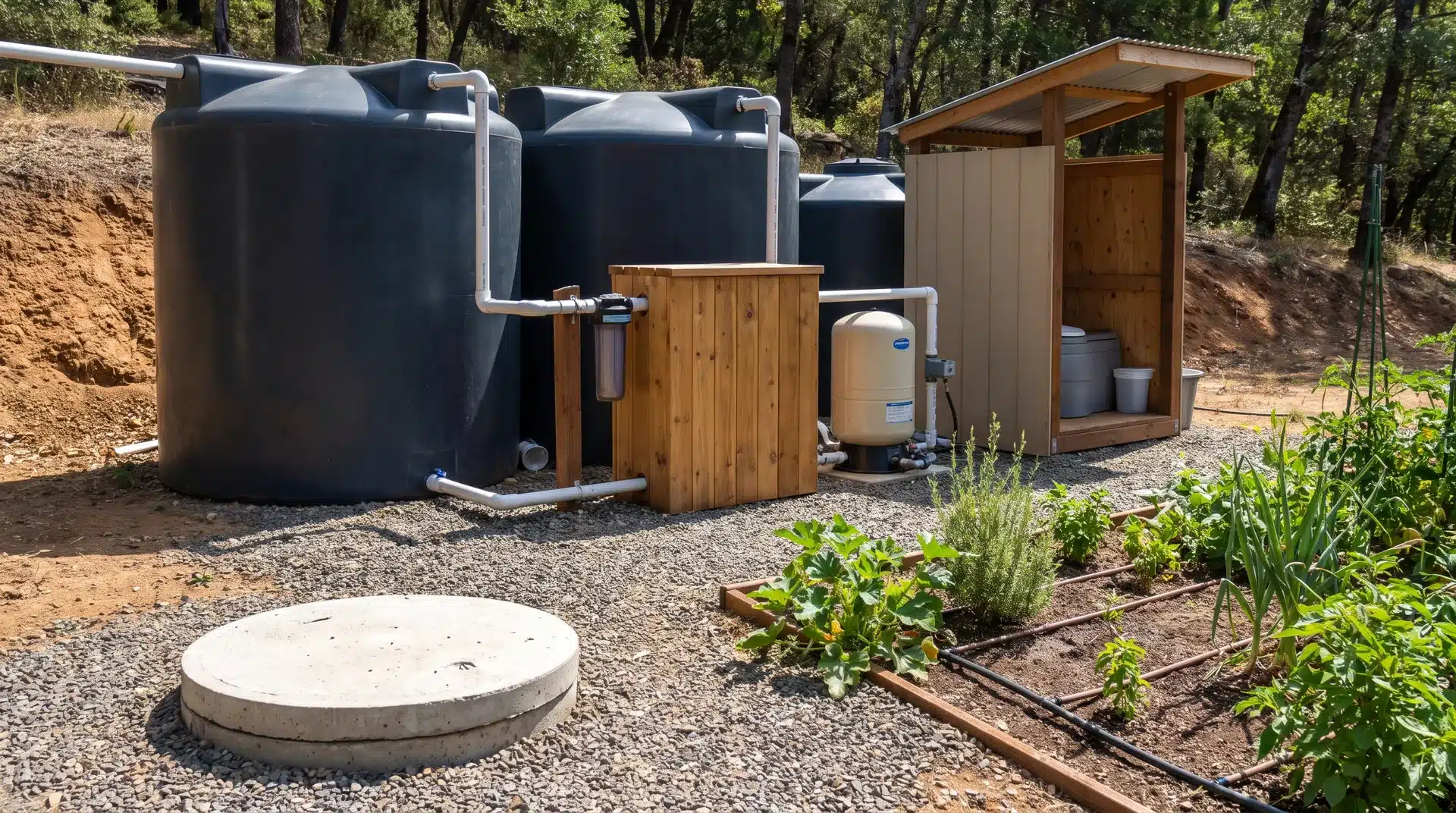
Water may come from a private well, natural spring, or rainwater harvesting system.
The best option depends on groundwater availability, rainfall, climate, property conditions, and local regulations.
An independent water system also needs suitable filtration and storage. Regular testing can help ensure the water remains safe as conditions change throughout the year.
3. Managing Waste Without Public Systems
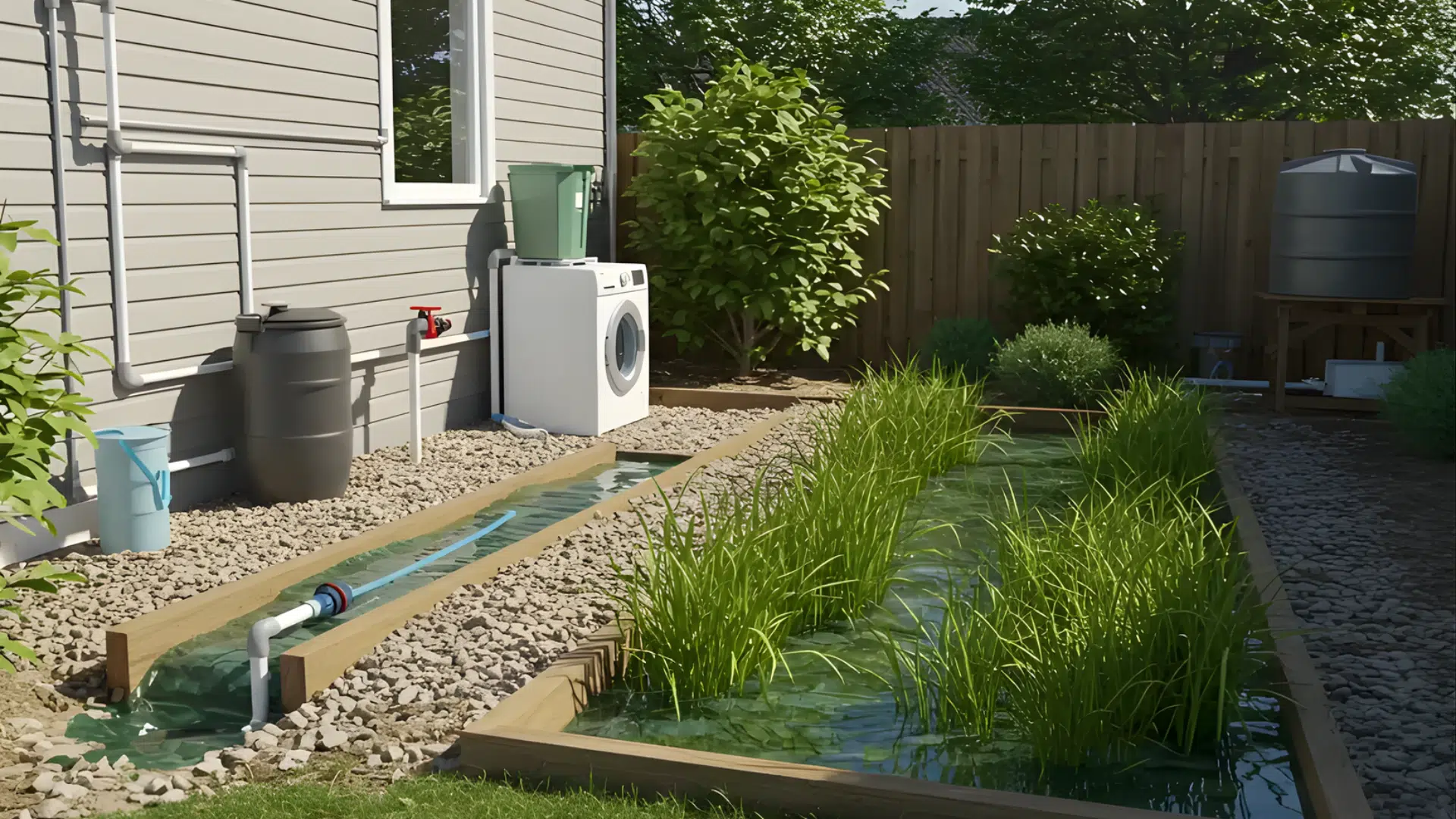
Off-grid waste management may involve septic systems, composting toilets, or greywater systems.
Septic systems can handle household wastewater, while composting toilets reduce water use. Greywater systems may allow water from sinks and showers to be reused where local rules permit.
The appropriate system depends on soil, available land, water use, household size, and local sanitation requirements.
4. Staying Warm and Managing Fuel
Heating can be more challenging because demand changes significantly with climate.
Off-grid properties may use wood stoves, propane heaters, solar thermal systems, or electric heating powered by their independent electricity system.
Insulation, local fuel availability, winter temperatures, and energy demand should all influence the choice. Homes in colder climates usually benefit from having a dependable backup heat source.
Off-Grid Living vs. Self-Sufficient Living
| Aspect | Off-Grid Living | Self-Sufficient Living |
|---|---|---|
| Core idea | Reduces or removes reliance on public utilities | Reduces reliance on outside goods and resources |
| Food production | Not required | Often an important part |
| Shopping and supplies | Can still rely heavily on stores and deliveries | Usually aims to reduce that dependence |
| Grid connection | Often disconnected from the electrical grid | Can remain connected to utilities |
| Can exist alone? | Yes. A home can be off-grid without being self-sufficient | Yes. A household can be highly self-sufficient while staying grid-connected |
Off-grid living and self-sufficient living overlap, but they describe different types of independence.
Off-grid living mainly concerns how a home gets essential utilities. Self-sufficient living goes further by reducing dependence on outside food, goods, and services.
The biggest difference is that you can be off-grid and still buy groceries, fuel, tools, and other supplies. You can also be highly self-sufficient while remaining connected to public electricity or water.
What Off-Grid Living Does Not Require
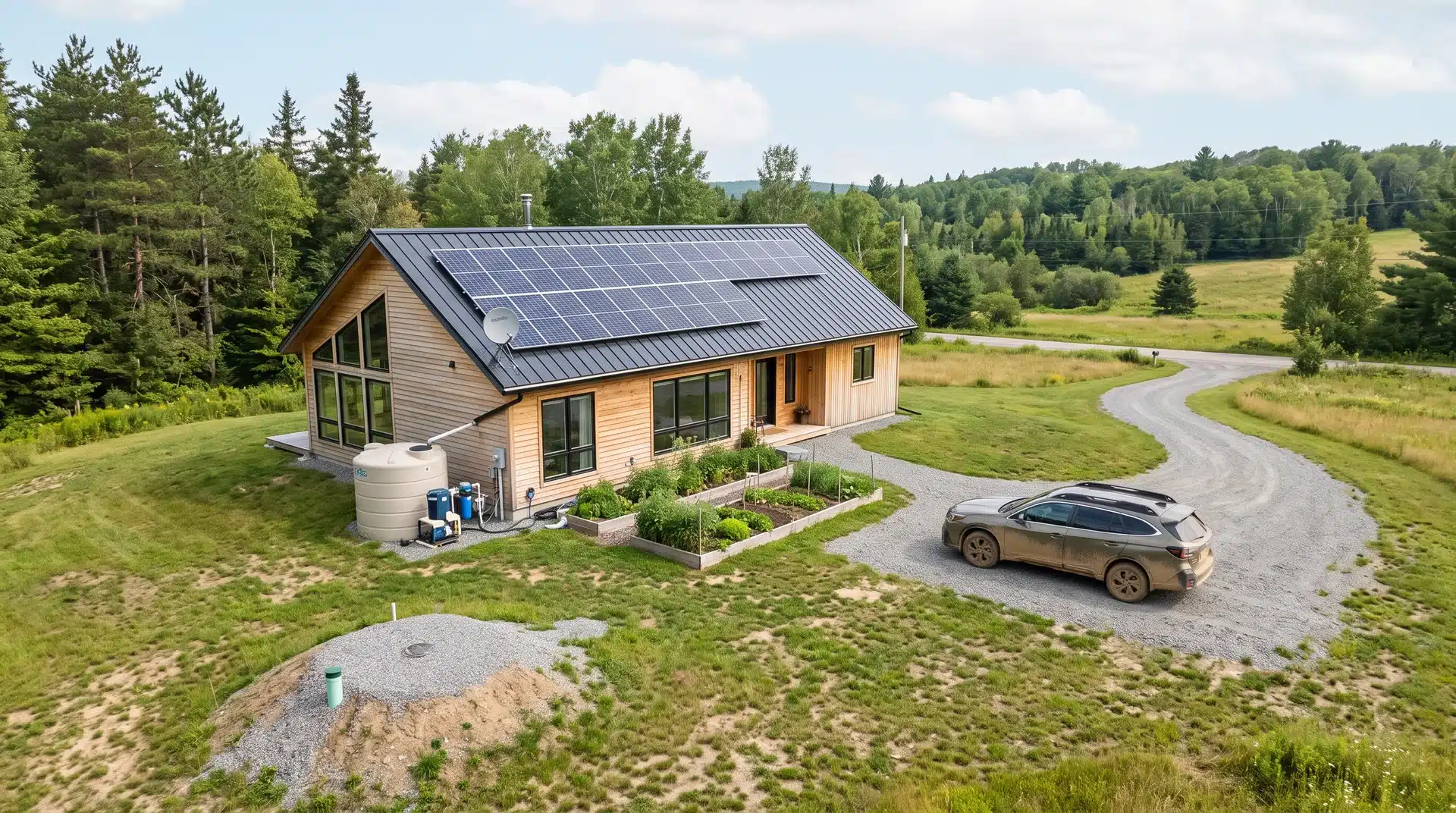
Off-grid living does not mean disappearing from society, making everything yourself, or growing all your own food. At its core, it is about how a home gets essential resources.
A home is considered off-grid when it operates without shared utilities like the electric grid, public water, or sewer systems.
That doesn’t mean you have to give up modern conveniences. Many off-grid homeowners still use phones, internet, vehicles, grocery stores, and other everyday services.
For example, a property with solar panels, a private well, and a septic system, whether it’s a conventional house or an off-grid container cabin, can be completely off-grid even if the owner still shops for food or drives into town regularly.
Why Do People Choose to Live Off-Grid?
- Utility Independence: Producing electricity and sourcing water independently reduces reliance on utility companies, especially during outages, service disruptions, or sudden price increases.
- Greater Resilience: Off-grid systems can keep essential services running when local infrastructure fails, making them particularly useful for rural or remote properties.
- Environmental Reasons: Solar power, rainwater collection, and efficient waste systems can reduce dependence on shared resources and lower a household’s overall environmental impact.
- More Control: Managing personal power, water, and waste systems gives homeowners greater control over consumption, maintenance, and the supply of household resources.
- Long-Term Savings: Off-grid living may reduce recurring utility bills, but solar systems, batteries, wells, and other equipment can require considerable upfront investment.
For most households, choosing off-grid living is less about immediate savings and more about gaining long-term independence, reliability, and control over essential resources.
Off-Grid Living: Pros and Cons
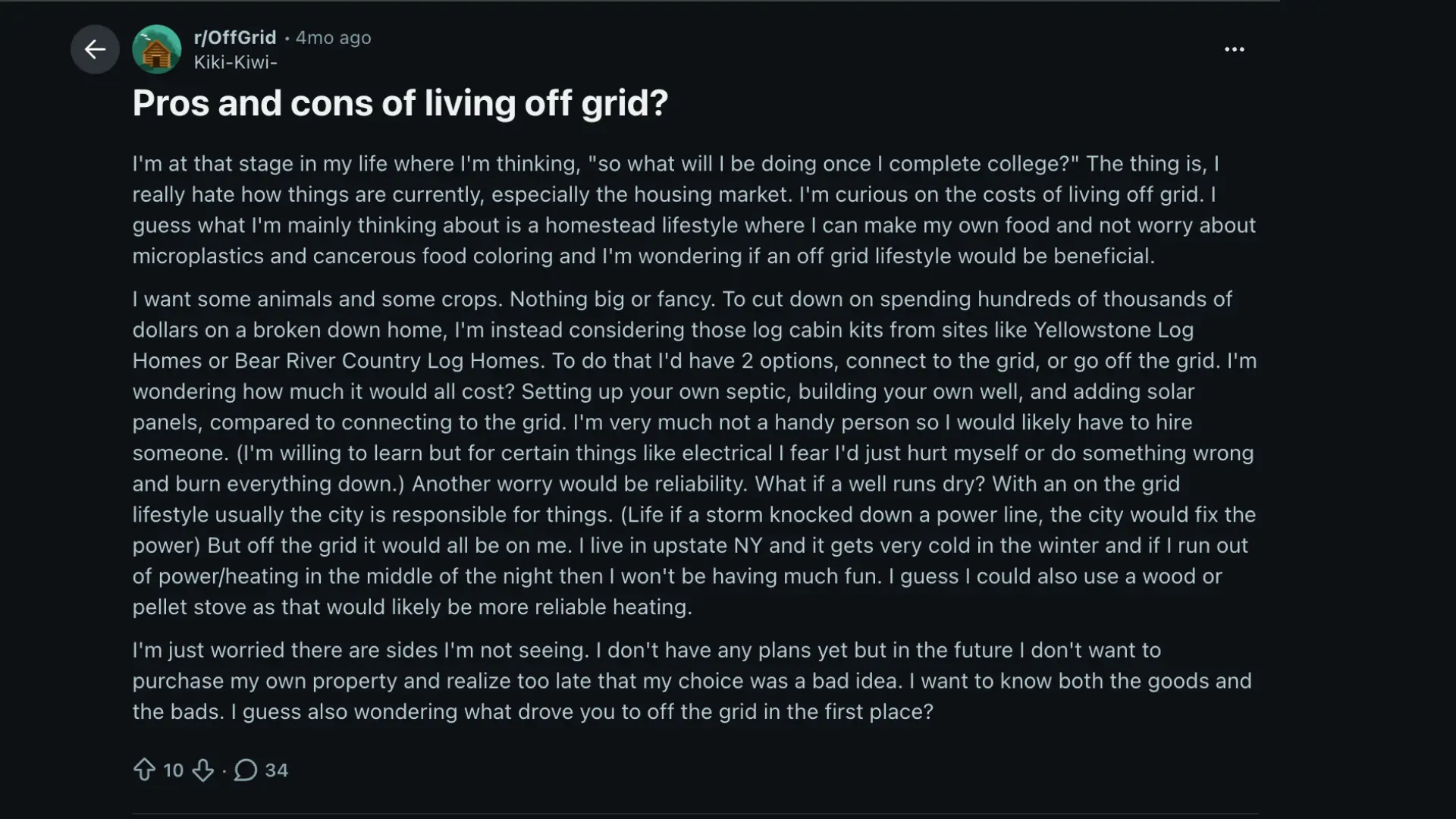
Users on r/OffGrid describe off-grid living as a trade-off between independence and personal responsibility. Benefits include privacy, peace, control over utilities, and the ability to grow food or raise animals.
The biggest drawback is cost. Land, housing, wells, septic systems, solar panels, batteries, generators, permits, tools, and equipment can require a large upfront investment, especially if contractors are needed.
Maintenance is another challenge because repairs fall on the owner. Power failures, broken pumps, water shortages, or heating issues require backup systems and the knowledge to fix problems quickly.
Commenters also note that complete self-sufficiency is uncommon. Taxes, healthcare, insurance, fuel, repairs, and supplies still require income, while water access, climate, local rules, and distance from services affect how practical the lifestyle is.
Why Off-Grid Living Can Become Legally Complicated
Off-grid properties still need to meet local laws, and the exact requirements can vary widely by location.
- Local regulations: Off-grid living is legal in many places, but state, county, and municipal rules can limit how a property is built and used.
- Building and zoning permits: Homes, solar systems, electrical work, plumbing, and other installations may require permits even on rural land.
- Water and waste rules: Wells, septic systems, composting toilets, and rainwater collection may need permits, inspections, testing, or approved installation methods.
- Utility connection requirements: Some local governments require properties to connect to public water or sewer when available. Checking local rules before buying land can help avoid costly issues.
Summing Up
Going off-grid does not have to mean changing everything overnight. It can start with one system, then grow as your budget, land, and confidence allow.
For some people, off-grid living begins with solar power. For others, it starts with water collection or better waste management.
If you are still asking what living off the grid means, the clearest answer is independence from public utilities, built at your own pace. I prefer the gradual approach because it keeps the process realistic and easier to manage.
Focus on the system that gives you the most value first, then add others when they make sense. Which part of off-grid living would you tackle first? Share your thoughts in the comments below.
Frequently Asked Questions
Is it illegal to live off-grid?
Living off-grid isn’t illegal in itself, but requirements vary by location. Many counties still require permits for structures, septic systems, or wells. Some local codes even mandate a connection to municipal utilities. Zoning and building codes are the real obstacles, not the lifestyle itself, so check local rules first.
Which states allow off-grid living?
Most states allow off-grid living in some form, but rules vary by county. States with fewer building code restrictions, like parts of Texas, Missouri, and Alaska, are often easier for off-grid setups. Local zoning and permits matter more than state law, so research the specific county before buying land.
How much money do I need to live off-grid?
Costs vary widely based on land, system size, and location. A small setup might cost far less than a fully self-sufficient property. Major expenses include land, solar or power systems, water sourcing, and waste management. Ongoing costs usually drop below utility bills once everything is installed and running.
What does the slang term “Living Off the Grid” mean?
Used as slang, “off the grid” describes someone who has become hard to find or contact. It often means avoiding digital records, social media, or traceable communication entirely. This meaning has nothing to do with utility independence. It’s a privacy concept, describing someone who disappears from public visibility, not a technical lifestyle choice.