How Often Should You Mow Your Lawn?
For most lawns, mowing once every 5–7 days during the growing season is a good general rule. However, there isn’t a one-size-fits-all schedule. The ideal mowing frequency depends on several factors, including your grass type, local climate, weather conditions, and how quickly your lawn grows.
Mowing too often can stress the grass, while waiting too long may leave your lawn looking uneven and unhealthy. Cutting large amounts of grass at one time can also weaken the lawn and make it more vulnerable to weeds, pests, and disease.
Instead of following a fixed weekly schedule, it’s better to monitor your lawn’s growth and adjust your mowing routine throughout the year. In spring, grass usually grows faster and requires more frequent mowing, while growth slows during late fall and winter in many regions.
What Affects How Often You Should Mow?
Although mowing every 5–7 days is a good starting point, the ideal schedule depends on how quickly your lawn grows. Several factors influence grass growth, so adjusting your mowing routine throughout the year will produce better results than following a fixed calendar.
Grass Type
Different grass species grow at different rates.
- Cool-season grasses, such as Kentucky bluegrass and fescue, grow most actively in spring and fall, so they usually require more frequent mowing during these seasons.
- Warm-season grasses, such as Bermuda and Zoysia, grow fastest in late spring and summer and may need mowing every 5–7 days during peak growth.
Knowing your grass type helps you create a more effective mowing schedule.
Season and Weather
Grass growth changes with the seasons.
- Spring: Rapid growth often requires mowing once a week or even more frequently.
- Summer: Growth may slow during hot or dry weather, reducing mowing frequency.
- Fall: Cooler temperatures usually mean mowing every 7–14 days.
- Winter: In many regions, grass becomes dormant and may not need mowing at all.
Rainfall also affects growth. After several days of rain, you may need to mow sooner, while drought conditions often slow grass growth significantly.
Lawn Condition
A healthy, well-maintained lawn grows more evenly than one that has been neglected. Lawns that receive regular watering and fertilization typically require more frequent mowing than those growing in poor soil or dry conditions.
If your lawn becomes overgrown, avoid cutting it all at once. Gradually returning it to the desired height is healthier for the grass.
Follow the One-Third Rule
One of the most important lawn care guidelines is the one-third rule: never remove more than one-third of the grass blade in a single mowing.
Following this rule helps:
- Reduce stress on the lawn
- Encourage stronger root growth
- Maintain a healthier appearance
- Lower the risk of weeds and disease
Rather than mowing on a fixed schedule, let your grass height determine when it’s time to mow. This approach keeps your lawn healthier throughout the growing season.
Why Proper Mowing Frequency Matters
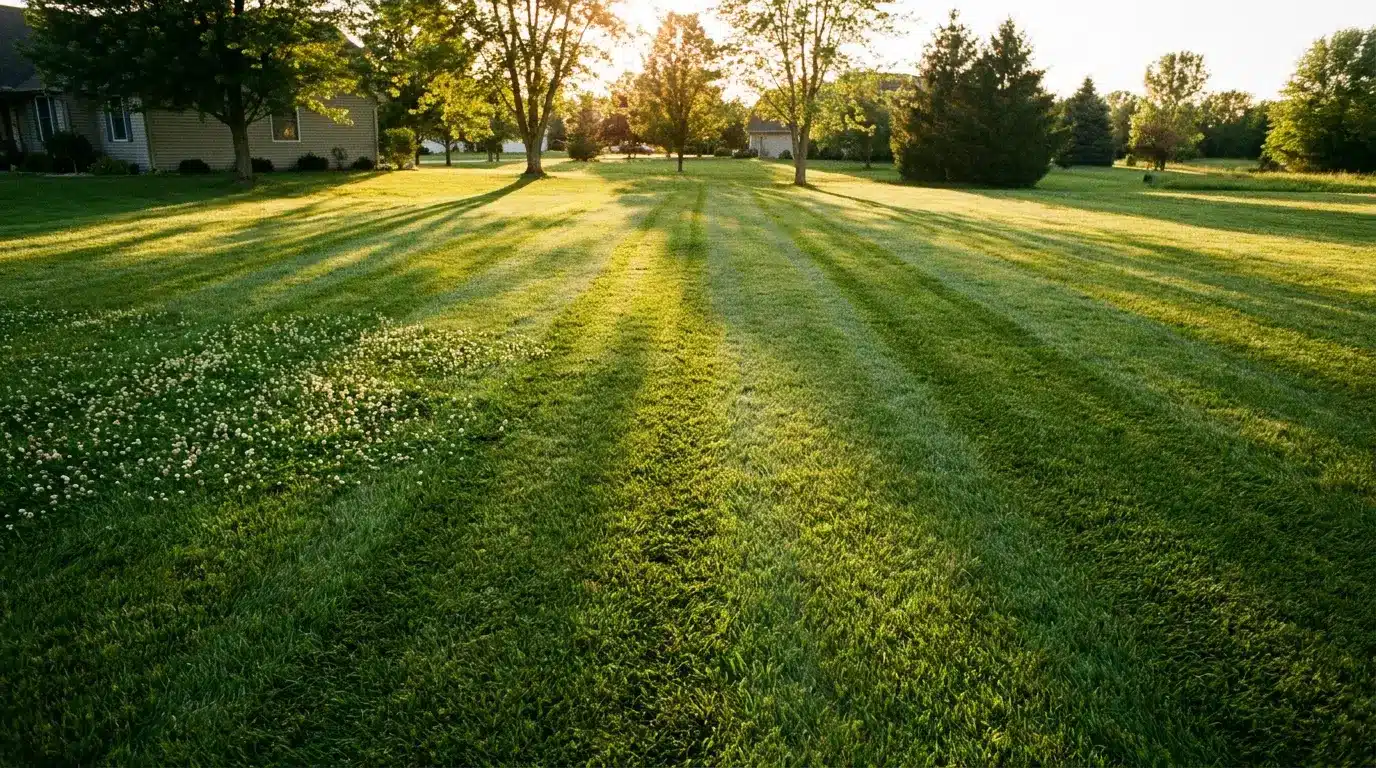
Mowing your lawn at the right frequency does more than improve its appearance—it also plays an important role in keeping the grass healthy. Cutting too often or waiting too long between mowing sessions can weaken the lawn and increase maintenance over time.
Promotes Healthier Grass Growth
Regular mowing encourages grass to grow thicker and develop stronger roots. A dense lawn is better able to absorb water and nutrients while naturally crowding out weeds.
Helps Prevent Weeds
Keeping your lawn at a consistent height reduces the opportunity for many common weeds to spread. Thick, healthy grass competes more effectively for sunlight, water, and nutrients, making it harder for unwanted plants to establish themselves.
Reduces Stress on the Lawn
Allowing grass to grow too tall before mowing often means removing a large portion of the blade at once. This can stress the grass, slow its recovery, and leave brown patches behind. Following a consistent mowing schedule—and the one-third rule—helps the lawn recover more quickly after each cut.
Improves Your Lawn’s Appearance
Frequent, consistent mowing creates a cleaner, more even-looking lawn. It also helps maintain a uniform grass height, making your yard look well cared for throughout the growing season.
Ultimately, the best mowing schedule is one that matches your lawn’s growth rather than a fixed calendar. By adjusting your mowing frequency as conditions change, you can maintain a healthier lawn while reducing the risk of common lawn care problems.
Best Mowing Strategies for a Healthy Lawn
Mowing at the right frequency is only part of good lawn care. Using the right mowing techniques can improve grass health, reduce maintenance, and keep your lawn looking its best throughout the growing season.
Adjust Your Mowing Schedule by Season
Grass growth changes throughout the year, so your mowing schedule should change as well.
Season | Recommended Mowing Frequency |
|---|---|
Spring | Every 5–7 days |
Summer | Every 7–10 days (depending on rainfall and heat) |
Fall | Every 7–14 days |
Winter | Only as needed in warmer climates |
Instead of mowing on the same day every week, check your lawn regularly and mow when the grass has grown enough to require trimming.
Keep Your Mower Blades Sharp
Sharp blades make cleaner cuts, allowing the grass to recover more quickly. Dull blades tear the grass instead of cutting it cleanly, which can leave brown tips and increase the risk of disease.
As a general rule, inspect your mower blades regularly and sharpen or replace them when necessary.
Adjust the Cutting Height
Avoid cutting your lawn too short. Taller grass develops deeper roots, retains moisture more effectively, and naturally shades the soil, helping reduce weed growth.
Different grass species have different ideal cutting heights, so always follow the recommended range for your lawn rather than mowing as short as possible.
Consider a Robotic Lawn Mower
One of the easiest ways to maintain the proper mowing frequency is to automate the process. Unlike traditional mowing, which is often done once every week or two, robot lawn mowers trim small amounts of grass more frequently. This naturally follows the one-third rule and helps maintain a healthier, more consistent lawn.
By combining a seasonal mowing schedule, proper cutting techniques, and the right equipment, homeowners can reduce lawn stress, improve grass health, and spend less time on routine lawn maintenance.
Conclusion
There is no single mowing schedule that works for every lawn. The ideal frequency depends on your grass type, the season, weather conditions, and how quickly your lawn grows. Rather than mowing on a fixed schedule, it’s better to monitor grass growth and follow the one-third rule to keep your lawn healthy.
Simple practices such as adjusting your mowing routine throughout the year, maintaining sharp mower blades, and cutting at the proper height can make a noticeable difference in your lawn’s appearance and long-term health. For homeowners looking to reduce manual effort, robotic lawn mowers offer a convenient way to maintain a consistent mowing schedule with minimal intervention.
By understanding your lawn’s needs and mowing at the right time, you can enjoy a thicker, healthier, and better-looking lawn throughout the growing season.