The short answer is every six or twelve months, depending on what the equipment is. The longer answer is that those figures are legal maximums rather than recommendations, that one whole category of equipment is on the shorter interval regardless of what it lifts, and that several events reset the clock entirely. Getting this wrong is common, and it is usually the paperwork that gives it away rather than the equipment.
How Often Should Lifting Equipment Be Inspected?
Under the Lifting Operations and Lifting Equipment Regulations 1998, lifting equipment must undergo a thorough examination at least every six months if it is used to lift people, at least every six months if it is a lifting accessory, and at least every twelve months for all other lifting equipment. Alternatively, intervals can follow a written examination scheme drawn up by a competent person.
The statutory check is the thorough examination, commonly called a LOLER examination, and it produces a written report. The duty applies to employers, the self-employed and anyone who owns, operates or has control over lifting equipment, including equipment that is hired in rather than owned.
Regulation 9 is the relevant provision. The intervals it sets are ceilings. Nothing prevents a duty holder examining more frequently where the risk justifies it, and in harsh environments they often should.
Pre-Use Check, Inspection and Thorough Examination Are Three Different Things
Much of the confusion around frequency comes from the word “inspected” being used for three separate activities.
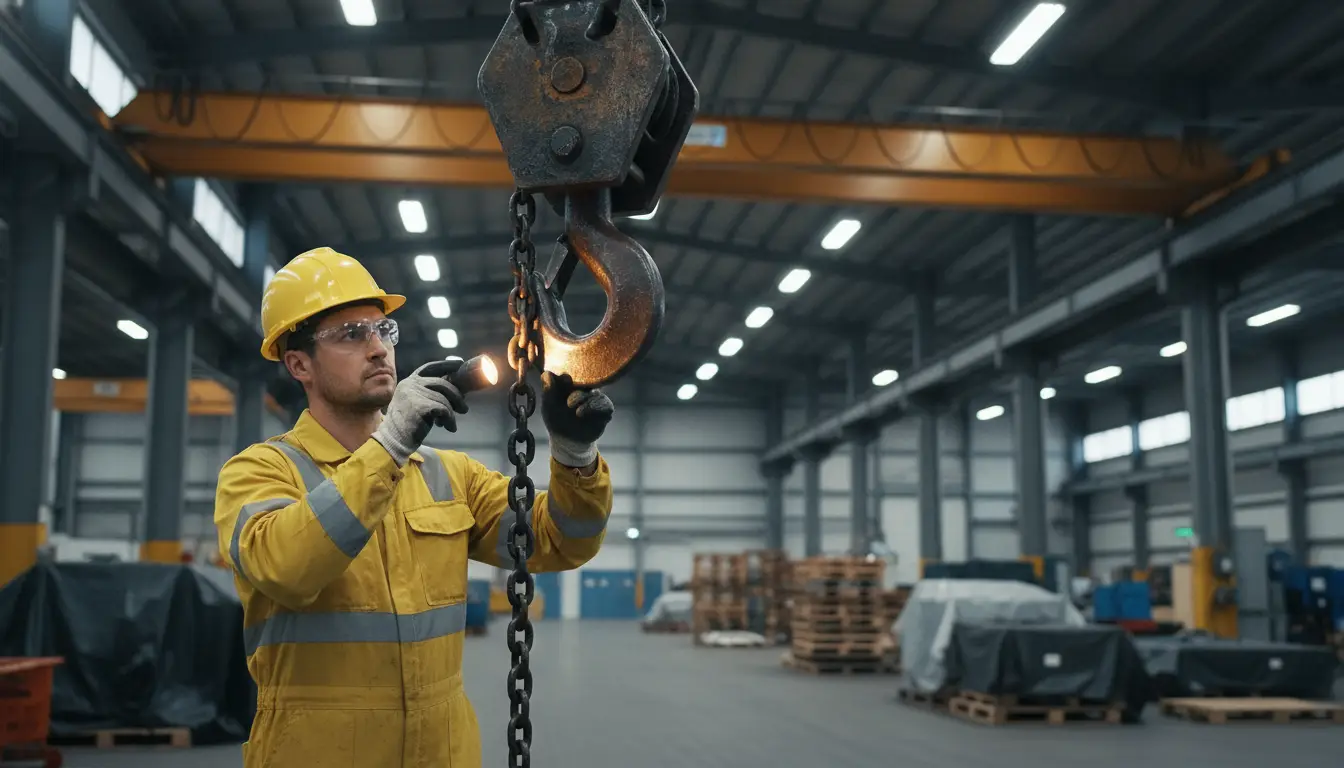
Pre-use check. The operator’s own look over the equipment before or at the start of each shift. Hooks, slings, brakes, limit switches, chains and ropes checked for obvious damage. This is not a statutory LOLER requirement but it is expected practice, and it catches the majority of visible faults.
Inspection. A lighter-touch recorded check carried out between thorough examinations, where the equipment is exposed to conditions causing deterioration. More detailed than a pre-use check, less involved than a thorough examination.
Thorough examination. A systematic and detailed examination by a competent person, producing a written report. This is the one the six and twelve month intervals refer to.
Equipment can require all three. They are not alternatives, and completing one does not discharge the duty to do another.
Lifting Accessories: The Six-Month Category Most Sites Miss
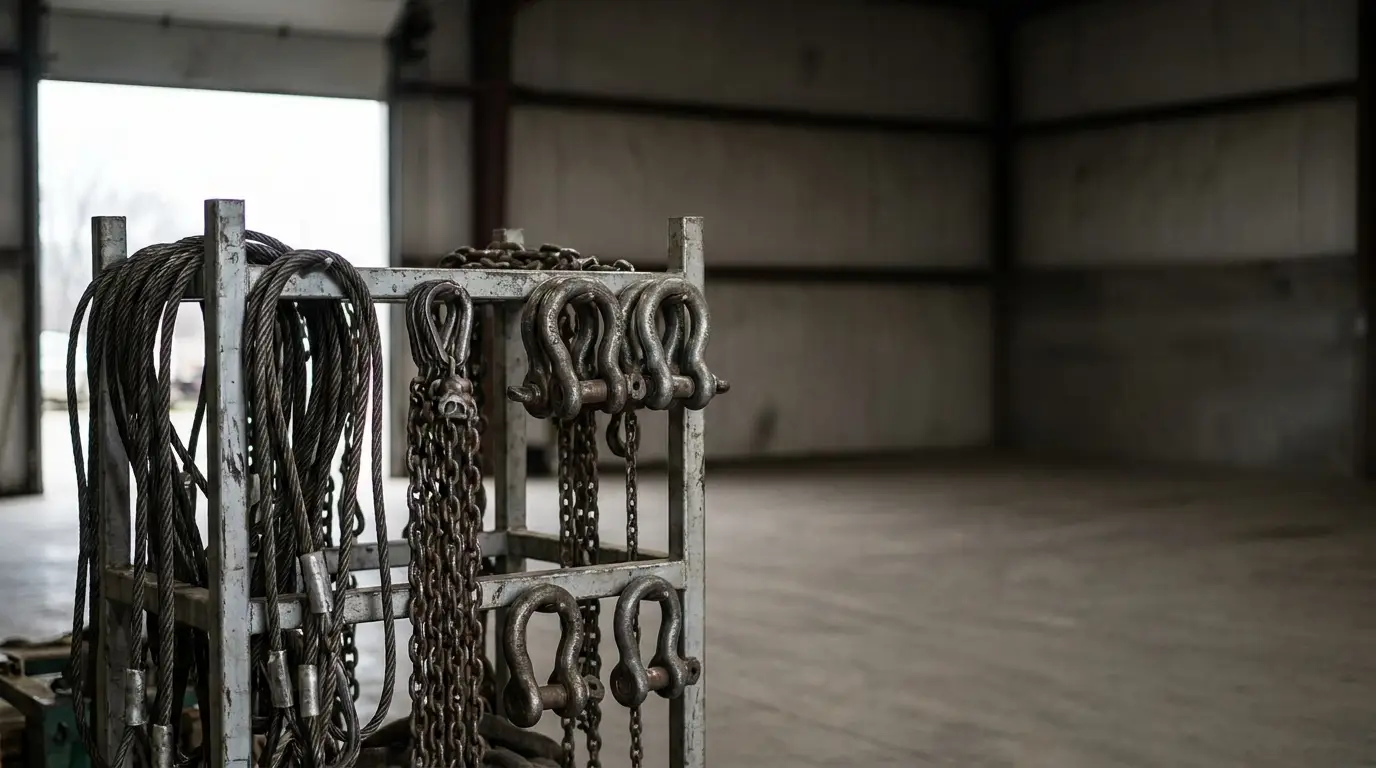
A lifting accessory is anything that connects the load to the lifting machine. Chains, slings, ropes, shackles, eyebolts, spreader beams, magnets, vacuum lifters and lifting beams all qualify.
Every lifting accessory defaults to a six-month thorough examination, regardless of what it lifts. A sling used only for pallets is on the same six-month cycle as equipment used to lift people.
This is where compliance most often breaks down, for practical rather than deliberate reasons. Accessories are small, numerous, cheap relative to the machine, and frequently stored in a bin or on a rack rather than recorded on an asset register. They are also the items most likely to be dragged, dropped, shock-loaded and left outside. Sites that run an immaculate examination programme for their cranes routinely have a pile of untagged slings that nobody has counted.
Every accessory needs a unique identifying mark and a place on the register. If it cannot be identified, it cannot be shown to have been examined.
Events That Bring an Examination Forward
The periodic cycle is not the whole duty. A thorough examination is also required:
- Before first use, where the safety of the equipment depends on the conditions of its installation. New equipment supplied with a UKCA or EC Declaration of Conformity less than twelve months old generally does not need a separate first-use examination unless installation conditions affect its safety.
- After assembly at a new site or in a new location. Documentation from the previous location does not transfer with the equipment. A crane that was examined last month and has since been dismantled and re-erected elsewhere needs examining again.
- After exceptional circumstances liable to jeopardise safety. This covers overloading, collision or impact damage, major repairs or modifications, extended periods out of service, and exposure to severe conditions.
The exceptional circumstances trigger is the one most often overlooked, because it has no calendar entry attached to it. Somebody has to notice the event and act on it.
The Examination Scheme Alternative
Regulation 9 offers a second lawful route. Rather than defaulting to six or twelve months, a duty holder can follow a written examination scheme drawn up by a competent person, setting intervals based on the actual risk.
This suits operations at either extreme. Equipment working in corrosive, marine, high-temperature or heavy-duty conditions may deteriorate faster than the default interval assumes, and a scheme allows shorter intervals to be specified and justified. Lightly used equipment in benign conditions may support a longer cycle, provided the reasoning is documented and the equipment is genuinely low risk.
The scheme has to be written and drawn up by someone competent to do it. An informal decision to stretch an interval because a machine “looks fine” is not an examination scheme.
Who Can Carry Out a Thorough Examination
A competent person needs sufficient training, knowledge, practical experience and the authority to make an honest assessment of the equipment. Competence is specific to the equipment in question, so being competent on forklifts does not make somebody competent on a mobile elevating work platform.
Independence also matters. The person carrying out the examination should be sufficiently impartial that commercial or operational pressure does not influence the finding. That is why many businesses use external engineer surveyors rather than relying on the person responsible for maintaining the equipment.
Records: What to Keep and For How Long
The written report is a statutory document, not an internal note. Retention periods differ by equipment type:
- Reports for most lifting equipment must be kept for at least two years
- Reports for equipment used to lift people must be kept for the working life of the equipment
Defects must be reported to the person responsible for the equipment. Where a defect presents a risk of serious personal injury, the competent person must also report it to the relevant enforcing authority.
An absent report is treated as evidence of non-compliance whether or not the examination took place. In practice, the record is the compliance.
Where Duty Holders Usually Slip
Assuming everything is annual. The twelve-month figure is the default for the residual category only, and accessories and people-lifting equipment sit outside it.
Leaving accessories off the register. If slings and shackles are not identified and counted, they are not being examined.
Missing relocations. Equipment that has been moved and re-erected needs a fresh examination before use.
Treating maintenance as examination. A service visit and a thorough examination are different activities with different outputs. A service record is not a Regulation 9 report.
Letting a defect report sit open. Equipment withdrawn after a defect stays withdrawn until the remedial work is completed and verified, and the close-out belongs in the record alongside the original finding.