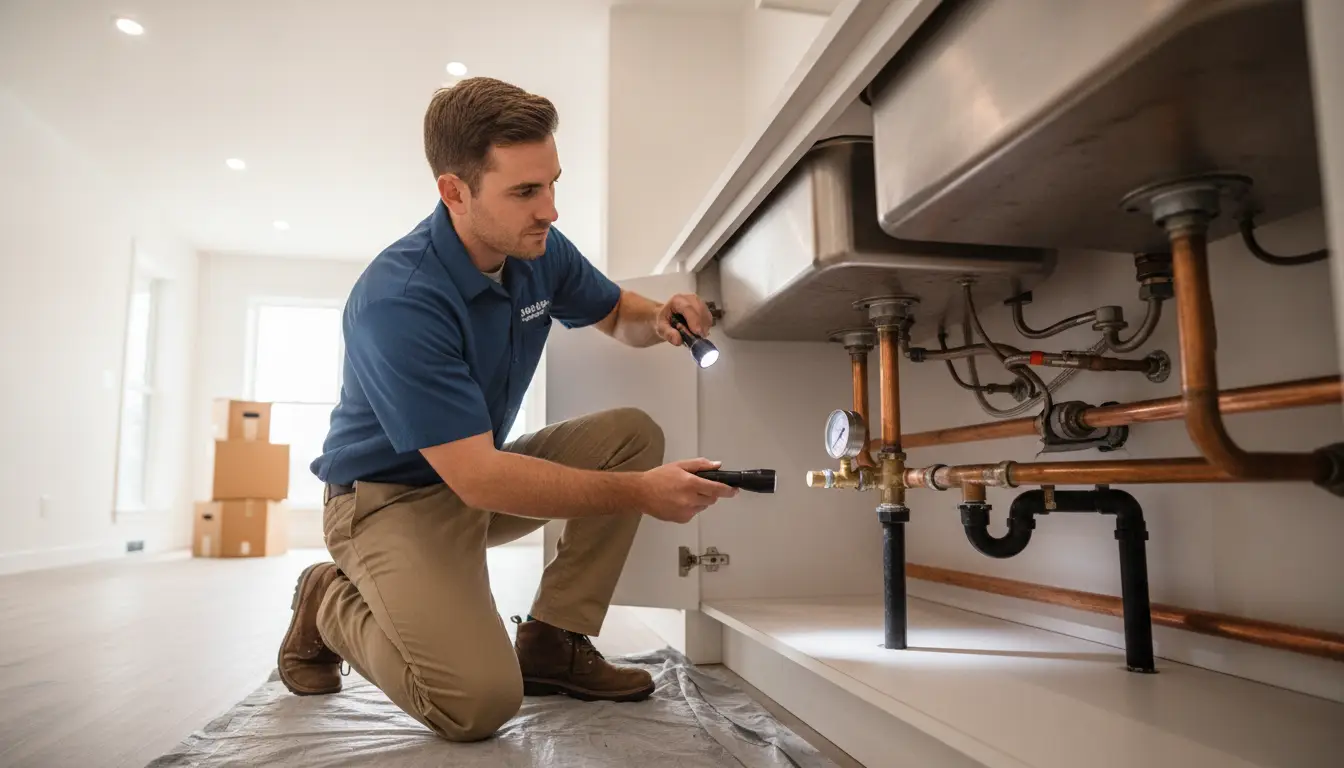
The keys are in your hand, the boxes are on the truck, and the last thing on your mind is the pipe behind the water heater. That’s exactly how a small leak becomes a five-figure repair three weeks after you move in. Here’s what most new homeowners miss: a home inspection is not the same as a plumbing inspection.
The general inspector who walked through the house before closing likely spent only a few minutes running taps. The checks experienced plumbers at Green Energy Mechanical perform can go further, covering water pressure, hidden leaks, drainage, water heater condition, and the sewer line.
These are the problems worth identifying before they become yours, ideally before furniture and boxes block access to pipes, valves, and utility areas.
1. Find the Main Water Shutoff and Make Sure It Actually Works
Before anything else, locate your main water shutoff valve and confirm it turns. This is the one plumbing check that saves you in an emergency, because when a supply line bursts, the difference between a mop and a gutted floor is how fast you can kill the water.
The valve is usually where the water line enters the house: a basement wall, a garage, a utility closet, or near the water meter. Turn it fully off, check that flow stops at a faucet, then turn it back on. Old gate valves seize up, and a valve that won’t budge is one you want replaced now, on a calm afternoon, not discovered mid-flood at midnight.
Water damage is not a rare event. It’s the second-most common home insurance claim, with the average homeowners water-damage claim running $13,954 according to iPropertyManagement’s 2025 data. A working shutoff is your cheapest insurance against joining that statistic.
2. Hunt for Leaks and Hidden Water Damage
Walk the house looking for what the previous owner may have painted over. Active leaks and old water damage are the clearest signal of plumbing problems, and they hide in predictable places. Open every cabinet under a sink and feel for dampness, warped wood, or that musty smell. Look up at ceilings under bathrooms for brown rings, and scan around toilets and tubs for soft flooring.
Then run the meter test. Turn off every water-using fixture and appliance, note the water meter reading, wait 30 minutes with no water use, and check it again. If the number moves, water is escaping somewhere you can’t see.
Small leaks add up fast. The EPA’s WaterSense program reports the average household’s leaks waste more than 9,300 gallons a year, and fixing them saves about 10% on a water bill. Catch them before you move in and you own a dry house, not a mystery.
3. Check the Age and Condition of the Water Heater
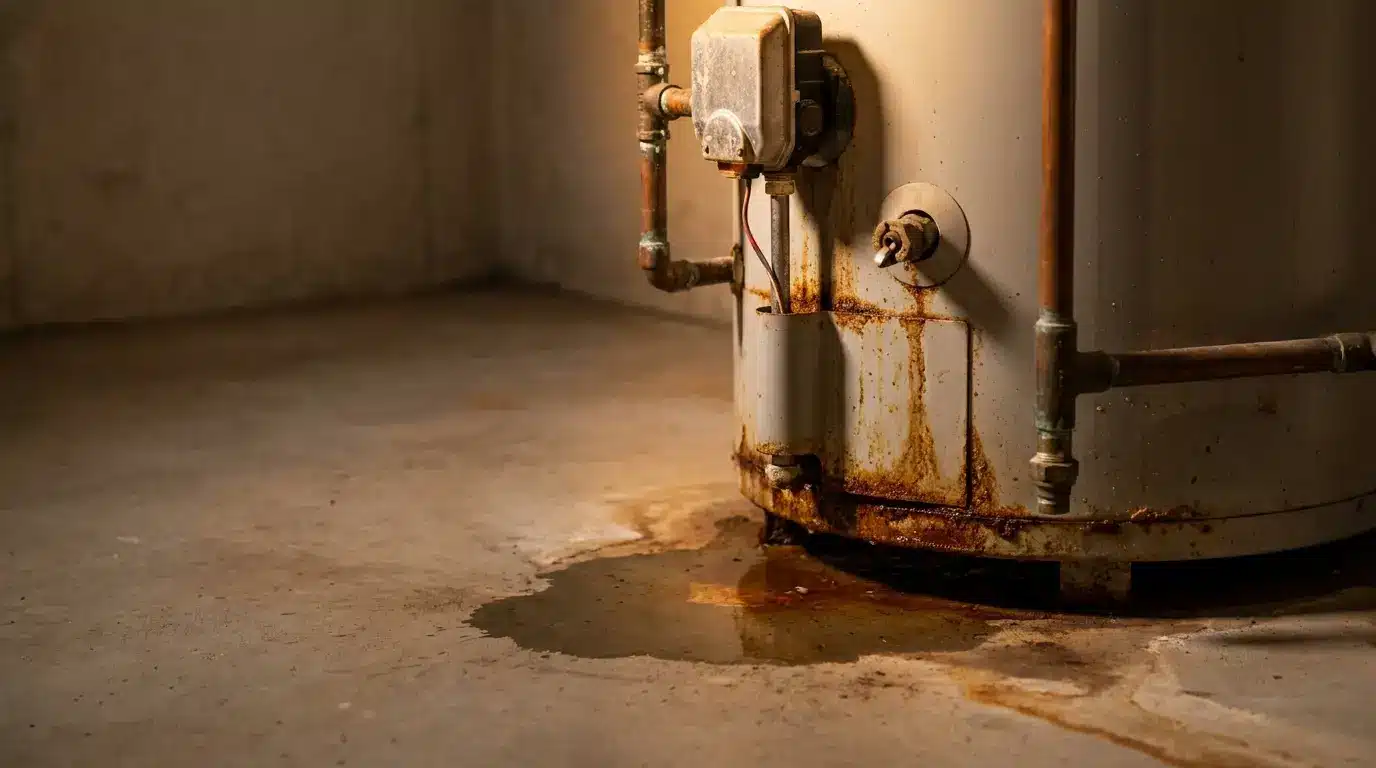
The water heater is the appliance most likely to fail early and flood a space, so inspect it before your boxes surround it. Find the manufacture date on the label, since most conventional tank heaters last only 8 to 12 years, and a unit near that age is on borrowed time.
Look for rust on the tank, moisture or corrosion around the base, and any pooling water, which often signals a tank that’s already failing. Rusty or discolored hot water is another warning sign. While you’re there, note whether the temperature-and-pressure relief valve has a discharge pipe running to the floor, a basic safety feature that’s sometimes missing or capped off.
Replacing a water heater on your schedule costs a set price. Replacing one after it splits and soaks a finished basement costs that plus the cleanup, and water-damage restoration commonly runs $1,350 to $6,200 per Angi. Knowing the age turns a surprise into a plan.
4. Test Water Pressure and Drainage at Every Fixture
Turn on faucets and flush toilets throughout the house to check both how water comes in and how it goes out. This one check surfaces two separate problems: supply pressure and drainage. Healthy home water pressure sits around 40 to 60 psi, and a cheap gauge that screws onto an outdoor spigot tells you the number in seconds.
Weak flow at a single faucet is usually a clogged aerator. Weak flow everywhere can mean corroded galvanized pipes, a partially closed valve, or a pressure regulator going bad. Pressure that’s too high is its own hazard, because it stresses joints and shortens the life of every appliance connected to the line.
Drainage tells the other half of the story. Fill a sink and let it go; watch for slow draining or gurgling, which point to a partial clog or a venting problem. Run this test in every bathroom and the kitchen, because a slow drain that’s simple to snake now can be a main-line issue later.
5. Get a Camera Inspection of the Sewer Line
The sewer line is the single most expensive plumbing surprise a new homeowner can inherit, and it’s invisible from inside the house. A professional camera inspection sends a scope down the main line to reveal cracks, root intrusion, bellies, or a collapsed section before you own the repair bill.
This matters most for older homes and any property with big trees near the line, since roots find clay and cast-iron pipe and slowly choke it. A general home inspection almost never includes this. A dedicated plumbing inspection with a camera runs in the $350 to $1,375 range per Angi, and it’s cheap next to a sewer main replacement that can climb into five figures.
If the seller’s disclosure mentions past backups, or the home is more than a few decades old, treat the camera scope as non-negotiable. It’s the check that most often pays for itself.
Where to Start If You’re Buying an Older Home
The pattern behind all five checks is the same: plumbing fails quietly, and the cost of finding a problem is a fraction of the cost of finding you. Do the free checks yourself in an afternoon, testing the shutoff, hunting for leaks, reading the water heater label, and running every tap and drain. Those alone will flag most trouble.
For the two that need a scope and a trained eye, the sewer line and any pressure or supply concern, bring in a pro before closing if you still can, or in your first weeks if you can’t. The experienced plumbers can run a camera inspection and a full-system check that catches the problems a general home inspection skips. Spending a few hundred dollars to rule out a five-figure repair is the kind of math that makes moving a day a lot less stressful.
FAQ
Does a standard home inspection cover the plumbing?
Only at a surface level. A general home inspector runs faucets, flushes toilets, and does a visual scan, but they typically don’t pressure-test the system or camera the sewer line. For an older home or one with known issues, a dedicated plumbing inspection is worth booking separately, since it catches the buried problems a general inspection misses.
How do I know if the water heater needs replacing?
Check the manufacture date on the label. Most tank water heaters last 8 to 12 years, so a unit at or past that age should be on your radar. Rust on the tank, moisture or corrosion at the base, pooling water, or rusty hot water are all signs it’s failing and worth replacing before it leaks.
What is good water pressure for a house?
Home water pressure should sit around 40 to 60 psi. You can check it with an inexpensive gauge that screws onto an outdoor spigot. Pressure that’s too low often means clogged aerators, corroded pipes, or a failing regulator, while pressure that’s too high stresses pipe joints and shortens the life of your appliances.
Should I get a sewer line camera inspection before buying a home?
Yes, especially for homes more than a few decades old or with large trees near the line. A camera inspection reveals cracks, root intrusion, and collapsed sections that are invisible otherwise, and sewer main repairs can reach five figures. At a few hundred dollars, it’s one of the highest-value checks a buyer can make.