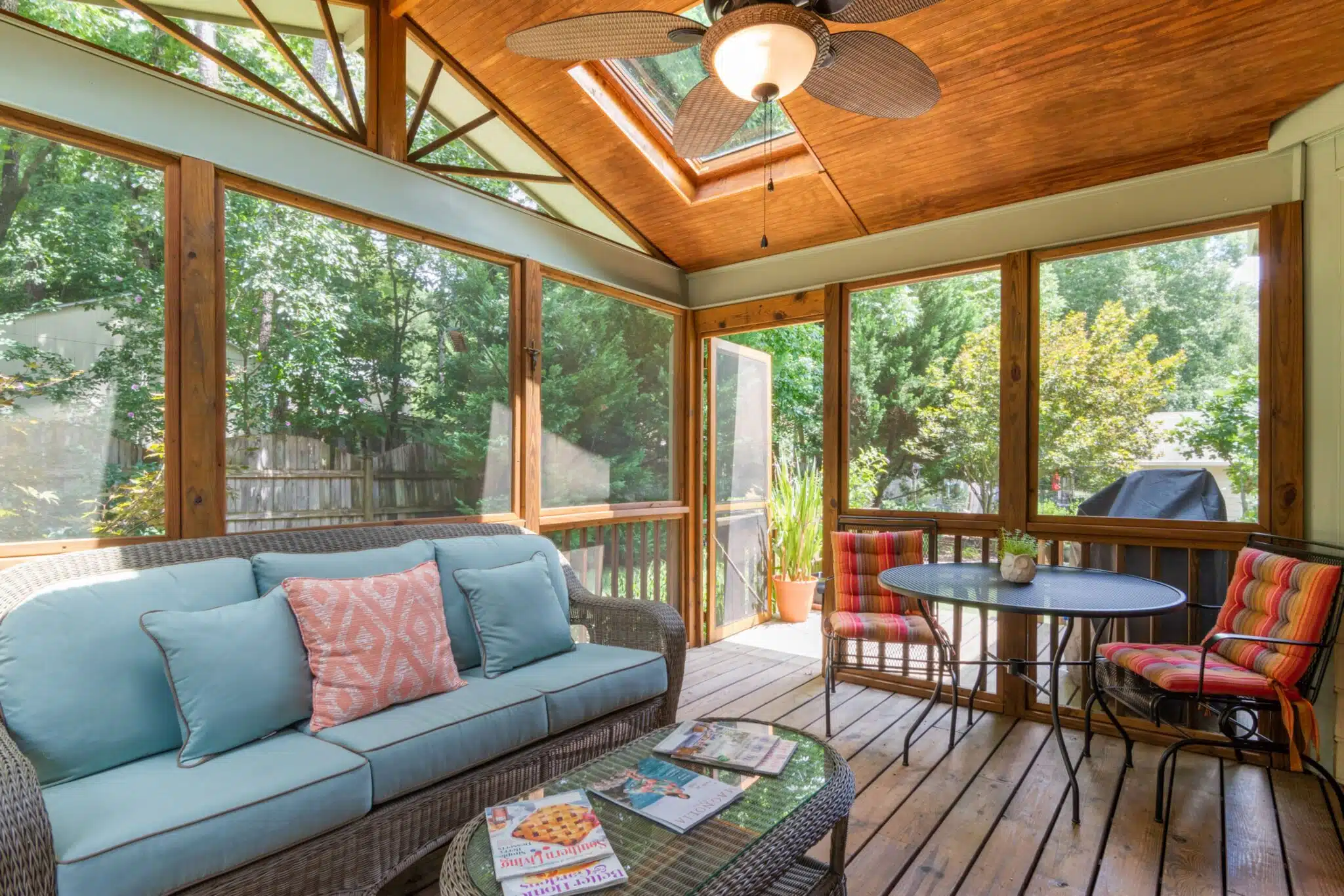
So you’re thinking about building a screened-in porch. Maybe mosquitoes chase you inside every evening, or the sun and rain cut your outdoor time short more often than you’d like.
Either way, you’re picturing a space where you can actually sit outside without the bugs, the glare, or the weather calling the shots.
Between that vision and the finished porch, though, sit a lot of practical questions: What will this cost? Do you need a permit? Should you hire a contractor or handle it yourself?
Crafted Decks and Porches have been building screened in porches for years and with their help this guide answers all of your questions, so you know exactly what to expect before you start building a screened-in porch.
How Much Does It Cost to Build a Screened-In Porch?
Screening an existing covered porch costs $2,000 to $5,000. Building a brand-new screened-in porch from the ground up runs $10,000 to $35,000 or more.
The gap between those two numbers comes down to whether you already have a roof and floor in place. Simply adding screens to an existing porch costs roughly $10 to $25 per square foot. Building the whole structure, including framing, flooring, and a roofline, runs $50 to $175 per square foot.
Screening an Existing Porch vs. Building New
If you already have a covered porch, screening it in is the more affordable route by a wide margin. You’re paying for framing, screen material, and doors, not a full structure.
Building new means starting from scratch: footings, framing, roofing, flooring, and then the screening itself. For a typical 200 to 400 square foot porch, that puts total project cost somewhere between $10,000 and $48,000.
What Drives the Price Up or Down
Size and roof style matter, but so does what’s underneath the screens. A porch with a shed roof tied into your existing roofline costs less than a freestanding structure with its own roof system.
Framing material and screen quality also swing the price. Aluminum framing runs 20 to 40% less than wood upfront, while upgraded screening, like pet-resistant or heavy-duty mesh, adds cost on top of standard fiberglass.
Is a Screened-In Porch Worth the Investment?
Mostly, yes, though it won’t fully pay for itself at resale the way some other projects do. Expect to recoup roughly 70 to 80% of your cost when you sell.
That means a $10,000 screened-in porch might add $7,000 to $8,000 in resale value, depending on your local market and how much buyers in your area value outdoor living space.
Climate plays a role here too. A screened porch tends to matter more to buyers in humid, bug-heavy regions than in drier climates.
The bigger return is the one you get while you still live there. A screened porch gives you protected outdoor time from spring through fall, without needing to plan around bugs or an afternoon thunderstorm.
Choosing the Right Materials
Two decisions drive most of the cost and durability differences: your framing material and your screen type.
Aluminum vs. Wood Framing
Aluminum framing costs less upfront and needs virtually no maintenance, which makes it a popular choice for homeowners who want a low-hassle structure.
Wood framing costs more and requires periodic staining or sealing, but it blends more naturally with a traditional home exterior.
If you go with wood, stick to redwood, cedar, or treated lumber, since the framing will be exposed to weather on all sides.
Screen Types
Standard fiberglass screening is the most affordable option and works fine for keeping out typical insects. Aluminum screening costs more but holds up better over time and resists tearing.
If you have pets or live somewhere with larger wildlife pressure, pet-resistant or heavy-duty screening is worth the upgrade, even though it adds to the overall cost.
Do You Need a Permit to Build a Screened-In Porch?
Almost certainly, yes. Because a screened-in porch typically involves new framing, a roofline, and sometimes a new foundation, most municipalities require a building permit at minimum.
Expect separate inspections along the way for footings, framing, and a final walkthrough once construction wraps up. If your home is in an HOA, check its rules too. Many communities have their own approval process on top of the city or county permit.
Permit review typically takes two to six weeks, though some jurisdictions offer expedited review, often for an added fee, if you need the project done faster.
DIY vs. Hiring a Professional
Screening in an existing, already-covered porch is a reasonable DIY project for a handy homeowner. Building a new porch structure with its own roofline and foundation is a job for a licensed contractor.
The line comes down to what’s structural. Attaching screen panels to an existing frame is straightforward work. Framing a roof, tying it into your home’s structure, and pouring footings is not something to learn on the fly.
If your project involves any roofing or foundation work, hire a professional and make sure they’re licensed and insured. Your local inspector will need to sign off on that structural work regardless of who builds it.
How Long Does It Take to Build a Screened-In Porch?

Most screened-in porch projects take two to three months from permit application to final inspection.
Permit review alone can take two to six weeks depending on your municipality. Actual construction, once permits are approved, typically moves through site prep, framing, roofing, and screening in a matter of weeks, though material lead times and weather can add delays.
If you’re building around a specific season, especially if you want the porch ready for spring or summer, start the permit process well ahead of time.
Planning Your Screened-In Porch: Key Questions to Ask Before You Start
Before you contact a contractor, work through these questions:
- What’s your main goal: keeping out bugs, blocking sun, staying dry in the rain, or all three?
- Do you already have a covered porch to screen in, or are you building from scratch?
- What’s your realistic budget, including materials, labor, and permit fees?
- Does your HOA have design or approval requirements you need to check first?
- How much maintenance are you willing to take on with your framing material?
- Have you gotten at least two or three quotes from licensed, insured contractors?
Working through these upfront helps you avoid costly mid-project changes and makes it easier to compare contractor bids fairly.
The Bottom Line
Building a screened-in porch is a smaller project than a full home addition, but it still pays to plan carefully. Know whether you’re screening an existing porch or building new, choose materials that match your budget and maintenance tolerance, confirm your permit and HOA requirements early, and bring in a professional for any structural work.
Do that, and you’ll end up with a porch you can actually use all season, bugs, sun, and rain included.