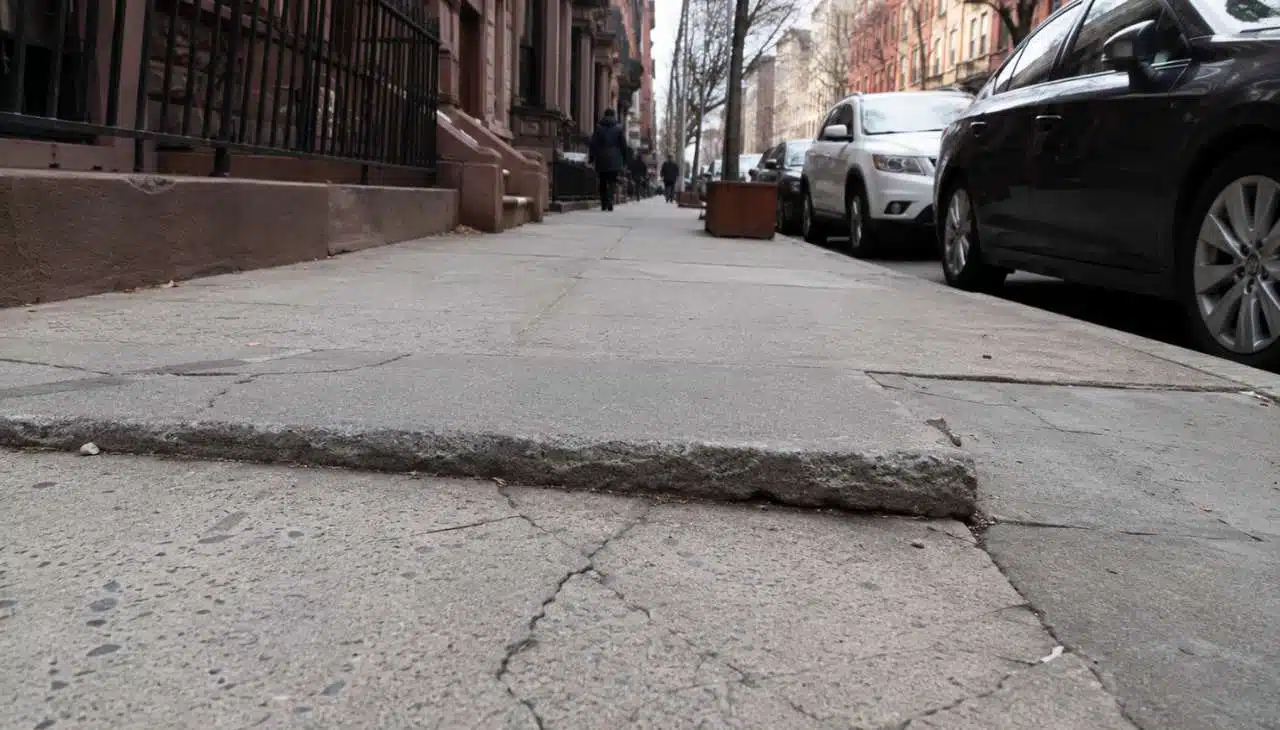
An uneven sidewalk may not look like a serious problem at first. One raised slab. One cracked edge. One small dip near the curb.
Many property owners notice these issues and decide to wait. The problem is that sidewalks in New York City do not always stay the same. A small uneven area can become a trip hazard. It can also lead to a violation, a repair bill, or a bigger safety concern outside the property.
For NYC property owners, sidewalk repair is not only about appearance, it affects how safe the sidewalk is for people who pass by, and how much risk the property owner may carry.
Why an Uneven Sidewalk Becomes a Bigger Problem
An uneven sidewalk is easy to ignore in the beginning. It may look like one raised slab or a small shift in the concrete. But in NYC, that small change can create a real safety issue.
People use the sidewalk all day. Some walk fast. Some walk at night. Some may not notice a raised edge until their foot catches it. That is when a simple concrete defect can turn into a trip and fall accident.
This matters because NYC property owners are expected to keep the sidewalk next to their property in a reasonably safe condition. If someone gets hurt because the sidewalk was damaged, raised, or poorly maintained, the owner may face a claim or lawsuit. The issue is no longer only about fixing concrete. It can become a legal and financial problem.
A delay can also make the damage worse. Water can enter cracks. Concrete can shift more. A raised slab can become more noticeable after heavy use or bad weather.
That is why uneven sidewalk repair should not be treated as a small cosmetic job. Once the walking surface is no longer safe, the property owner should take it seriously.
What Causes Sidewalks to Become Uneven in NYC
Uneven sidewalks are common in NYC because the ground and street conditions are always changing.
In many NYC neighborhoods, tree roots slowly push against the concrete and leave the sidewalk raised or uneven. This often happens near tree pits and older residential blocks.
Soil movement can also cause concrete to sink. When water gets into cracks and freezes, the concrete can slowly break apart. Heavy use around apartment buildings, storefronts, driveways, and busy corners can also wear down the surface.
In many cases, the sidewalk does not fail overnight. It moves slowly. That is why early attention matters.
Why Delaying Repair Can Lead to a Violation
In NYC, property owners are generally responsible for keeping the sidewalk next to their property in safe condition.
If the Department of Transportation finds a sidewalk defect, the property owner may receive a sidewalk violation. This is not the same as a regular ticket, but it is still serious. It means the city has identified a sidewalk condition that needs repair.
Once a violation is issued, the owner has 75 days to correct the problem. If the work is not done, the city may step in, complete the repair, and bill the owner.
That is one reason delay can become costly. The owner may lose control over the timing, contractor choice, and repair process.
The Safety Risk Is Often the First Warning
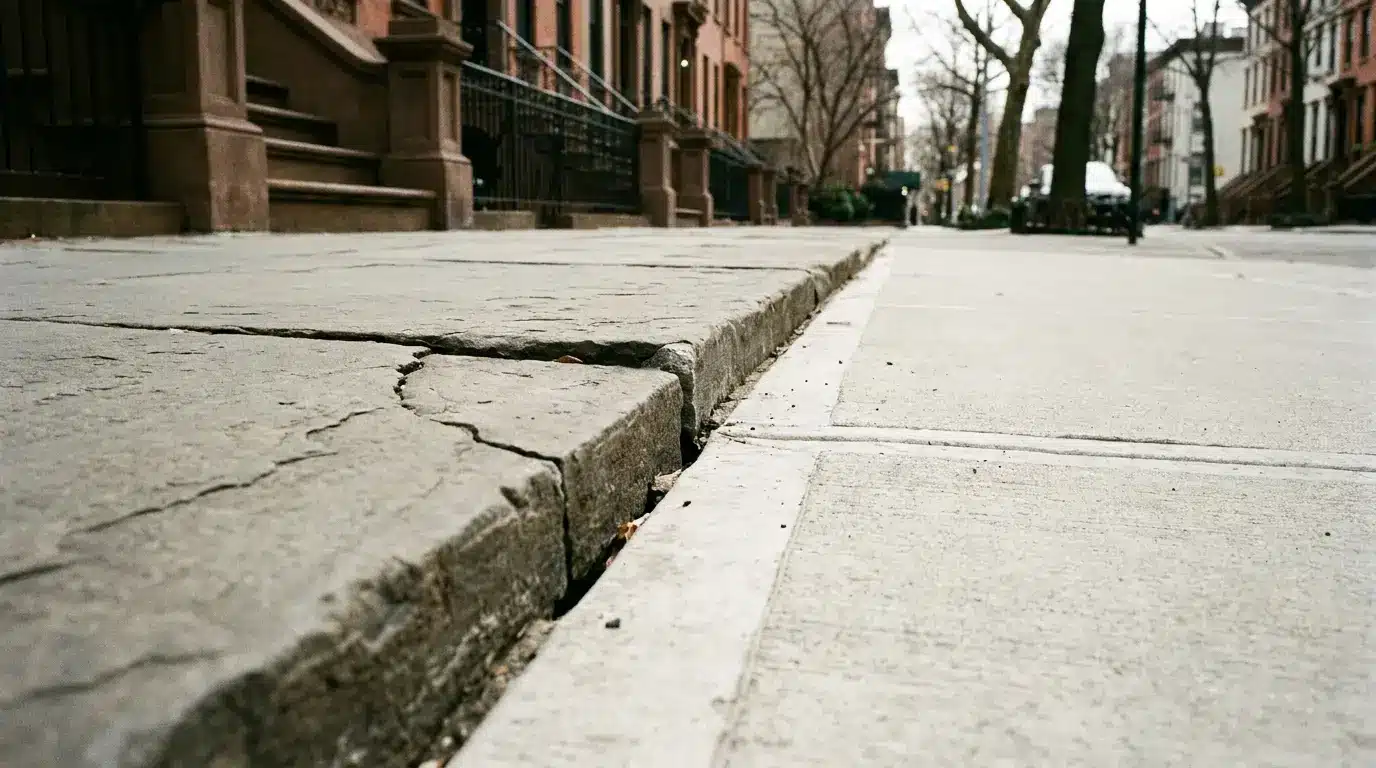
A raised or uneven sidewalk is more than a concrete issue. It is a walking surface that people use every day.
If someone trips outside a property, the condition of the sidewalk may become part of the problem. This is especially true when the defect was visible and left untreated for a long time.
Property owners should look at uneven concrete as an early warning sign. A sidewalk does not need to look completely broken before it becomes unsafe.
Common warning signs include:
- Raised sidewalk slabs
- Cracks that spread across the walking path
- Loose or rocking concrete
- Sunken sections that collect water
- Gaps near tree roots
- Broken edges near the curb
- A surface that feels uneven when walking across it
If any of these signs are present, it is better to inspect the area before the problem grows.
How Delays Can Increase Repair Costs
Waiting does not always save money.
A small repair may become a larger replacement if water gets under the concrete or the slab shifts more. Cracks can widen. Raised sections can become more difficult to level. Tree root damage can spread into nearby sidewalk flags.
In some cases, delay can also create extra steps. The owner may need to deal with a violation, permit requirements, inspection, and repair scheduling at the same time.
Acting early gives the owner more time to compare options and plan the work properly.
When Property Owners Should Take Action
Property owners should not wait until the sidewalk becomes dangerous.
It is smart to take action when the surface is raised, cracked, loose, uneven, or hard to walk over. The same applies if someone has already complained about the sidewalk or if a violation notice has arrived.
A sidewalk should also be checked before selling a property, renting a building, opening a storefront, or planning exterior work. These moments bring more attention to the condition of the property.
If the sidewalk is raised, cracked, or already marked by a violation, it is better to speak with a licensed contractor who handles NYC sidewalk repairs before the issue becomes harder to manage.
What a Contractor Should Check First
A good repair plan starts with a proper look at the sidewalk.
The contractor should check the damaged area, nearby slabs, tree roots, slope, drainage, and curb condition. The goal is not only to cover the visible damage. The goal is to understand why the sidewalk became uneven in the first place.
If the cause is ignored, the same problem may come back.
Property owners should ask clear questions before work begins.
- What caused the sidewalk to become uneven?
- Does the damaged section need repair or full replacement?
- Is a sidewalk permit needed?
- Will the work meet NYC requirements?
- How will the area be kept safe during repair?
- Will the violation be cleared after the work is complete?
These questions help the owner avoid rushed decisions.
Why Tree Root Damage Needs Careful Handling
Tree roots can make sidewalk repair more complicated.
Many uneven sidewalk problems in NYC happen near street trees. The concrete may lift because roots are growing close to the surface. In this situation, the repair needs care. Cutting or damaging roots without the right process can harm the tree and create more issues.
Some homeowners may also qualify for help through the NYC Trees and Sidewalks Repair Program. This program is for qualifying one, two, and three family homes where curbside tree roots have severely damaged the sidewalk. The city inspection decides whether the property qualifies.
Property owners should avoid guessing when tree roots are involved. The sidewalk may need a specific repair approach that protects both the walking surface and the tree area.
This is one reason a simple patch is not always the right answer.
Do Not Wait for the Sidewalk to Look Terrible
Many owners wait because the sidewalk still looks usable.
That can be a mistake.
Sidewalk issues often become serious before they look severe. A raised edge can be enough to trip someone. A small crack can spread after rain or winter weather. A slightly sunken section can collect water and weaken the base below.
The better approach is to treat sidewalk damage early. It is easier to manage a small issue than a large one.
A Simple Sidewalk Check for NYC Property Owners
Property owners can do a quick sidewalk check without special tools.
Walk the full length of the sidewalk outside the property. Look for raised slabs, cracked concrete, open gaps, loose pieces, and areas that hold water. Check around tree pits and the curb. Notice whether the surface feels smooth and safe under your feet.
Also look at the sidewalk from the view of a visitor. Would an older person, delivery worker, tenant, or child move across it safely?
If the answer is not clear, the sidewalk deserves a closer inspection.
Final Thoughts
Uneven sidewalk repair in NYC should not be delayed because the problem can grow in more than one way.
It can create a safety risk. It can lead to a sidewalk violation. It can become more expensive to fix. It can also create stress for property owners who wait until the issue is already urgent.
A sidewalk is part of the property’s first impression, but it is also part of the public walking path. Keeping it safe protects the people who pass by every day. It also helps the owner stay ahead of problems before they become harder to control.
When the sidewalk starts to rise, crack, sink, or shift, waiting is rarely the best choice. A timely inspection and the right repair plan can reduce and keep the property safer from the curb to the front door.