Reliable parts and materials prevent the 80% of construction delays caused by small, compounding supply problems. Contractors who invest in dependable equipment parts, quality building materials, and strong supplier relationships finish projects faster, safer, and more profitably than those who chase the lowest price.
Why Do Construction Projects Get Delayed?
Most construction projects don’t fail from one catastrophic event. They fail from a chain of small problems: a missing hydraulic seal, a late railing shipment, a defective bracket, or an unavailable replacement filter. According to industry research, over 70% of construction delays trace back to materials, equipment, or supply-chain issues — not labor shortages or weather.
Every construction schedule depends on three things moving in sync:
- Equipment that keeps running
- Materials that arrive when crews are ready to install them
- Suppliers who deliver what they promised, on time
When any one of these breaks down, the entire project slows. That’s why reliable parts and materials aren’t operational details — they’re the foundation of an on-schedule project.
What Happens When One Part or Material Is Missing?

A construction site works like a chain. Each phase depends on the one before it. When one link breaks, the entire process stalls.
Example: An excavator goes down because a hydraulic component fails. The replacement part isn’t in stock.
Here’s the ripple effect:
- Earthmoving stops
- Foundation prep is delayed
- Framing crews can’t start
- Electrical, plumbing, and HVAC schedules slip
- Finishing trades reshuffle
- Final inspection date moves
- Client handover is pushed back
One missing $40 part can cost a project tens of thousands of dollars in cascading delays.
The same happens with materials. If stair parts, railings, brackets, or fasteners arrive late, every dependent task halts. Crews may try to pivot, but most construction work must happen in a specific sequence — you can’t install railings before the stairs are framed.
How Do Reliable Equipment Parts Prevent Downtime?
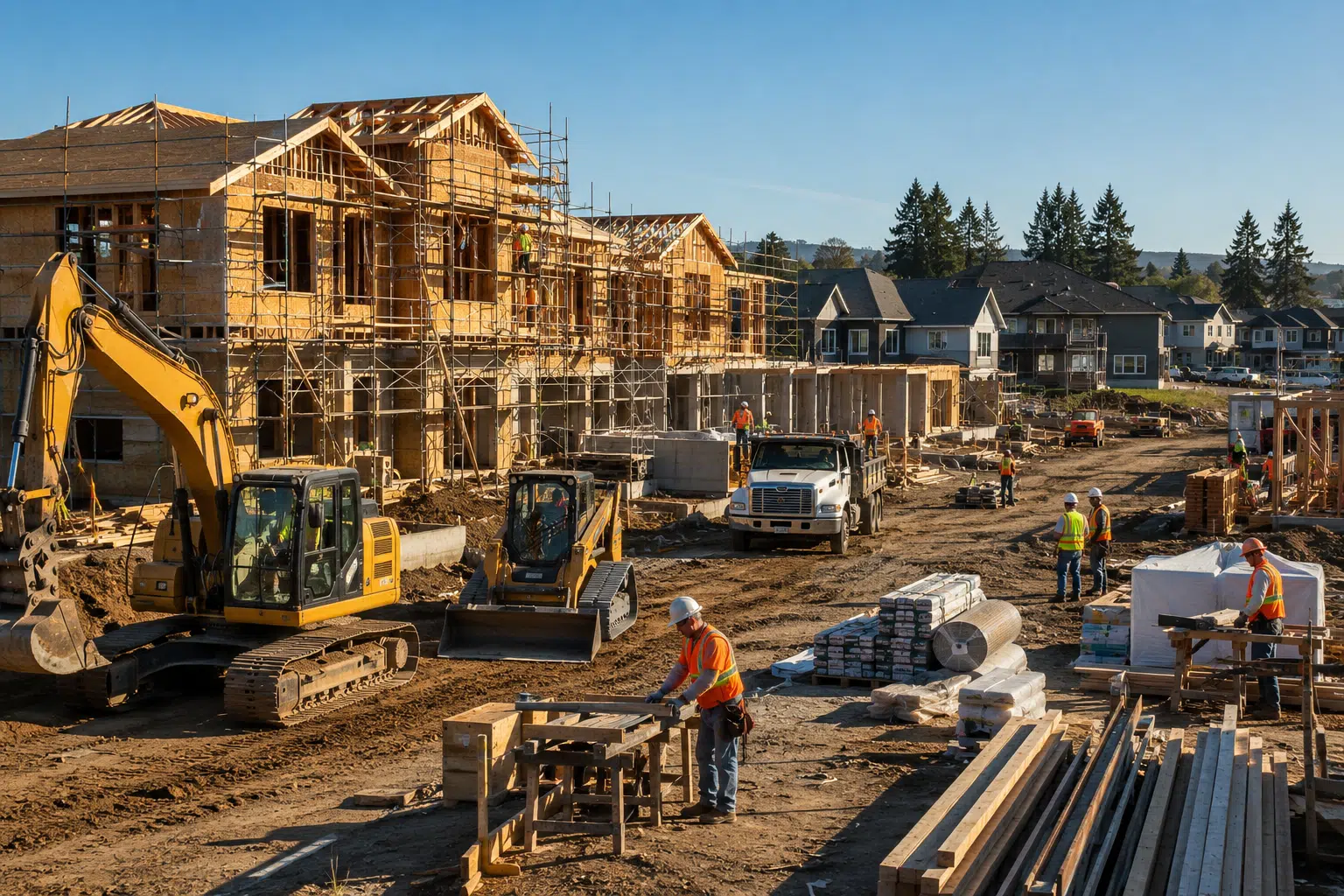
Heavy equipment — excavators, loaders, dozers, graders, skid steers — powers most modern construction. When these machines run, projects move. When they sit idle, contractors lose money in two places at once: the machine isn’t producing, and the crew waiting on it isn’t producing either.

The most common parts that cause equipment downtime:
- Hydraulic seals and cylinders
- Filters (fuel, air, hydraulic, oil)
- Tracks and undercarriage components
- Cutting edges and ground-engaging tools
- Engine components and belts
- Electrical sensors
A cheap aftermarket part that fails after 200 hours costs more than a premium part that lasts 2,000 hours — once you factor in labor, downtime, and rework.
“The breakdowns that hurt schedules the most aren’t the dramatic ones. They’re the worn hydraulic seals, clogged filters, and undercarriage components that get ignored until they fail. Contractors who use OEM-quality replacement parts and stay ahead of scheduled service intervals avoid most of the delays that derail project timelines.” — Sean Cope, Owner of EquipXR.
The lesson: equipment reliability isn’t just about buying good machines. It’s about maintaining them with dependable parts and having a sourcing plan before breakdowns happen.
Does Material Quality Really Affect More Than Appearance?
Yes — and significantly. While material quality is most visible in finishes like staircases, railings, and trim, its impact runs much deeper.
Quality materials reduce:
- Installation time and labor costs
- Callbacks and warranty claims
- Failed inspections
- Long-term maintenance expenses
- Safety incidents
Quality materials improve:
- Crew confidence and speed
- Client satisfaction and referrals
- Pass-rate on first inspections
- Project profit margins
This matters most for safety-critical components. Stair parts, balusters, handrails, brackets, and structural metal must be strong, consistent, and properly finished — because people will lean on them, walk on them, and trust them for decades.
How Do Reliable Parts Reduce Rework?
Rework is the hidden tax of construction. Industry studies estimate rework consumes 5–20% of total project costs — and most of it is preventable.
Rework happens when:
- Parts don’t match the design specs
- Materials arrive damaged or inconsistent
- Components fail inspection
- Items don’t fit and require on-site modification
A reliable part should:
- Match the order exactly
- Meet the specified standard
- Perform consistently across batches
- Arrive undamaged
- Install without modification
“Inconsistent materials are one of the most preventable causes of rework. When stair parts and metal components arrive consistent, durable, and ready to install, crews stop troubleshooting fit issues, and that’s where the real margin protection happens.” — Andrew Pho, General Manager at Mister Baluster.
Predictability protects schedules. And predictability starts at the supplier.
What Makes a Construction Supplier Truly Reliable?
Price is the wrong starting point. A supplier who’s 10% cheaper but unreliable can cost you 200% more in delays. Use this checklist when evaluating suppliers:
Criteria | What to Look For |
|---|---|
Availability | Honest stock levels, not overpromised |
Delivery accuracy | Right items, right quantity, right time |
Communication | Proactive updates on delays or changes |
Quality consistency | Same spec, batch after batch |
Problem-solving | Helps source alternatives in emergencies |
Documentation | Clear invoices, specs, and tracking |
The best contractors build their supplier network before they need it — not during a crisis.
How Important Is On-Time Delivery in Construction?
Critical. Even premium materials can’t help if they arrive late. Construction runs on tight scheduling — a crew booked for Tuesday morning has nothing to do if the materials show up Wednesday afternoon.

Late deliveries cost contractors in four ways:
- Idle labor — workers paid to wait
- Reshuffled subcontractors — domino effect across trades
- Storage problems — early deliveries create site congestion
- Inspection delays — inspectors aren’t easily rescheduled
The goal isn’t fast delivery. It’s dependable, predictable delivery — with accurate labeling, correct quantities, and proper documentation.
What Is Preventive Maintenance and Why Does It Matter?
Preventive maintenance is the practice of servicing equipment before it fails, rather than after. It’s the single most effective way to protect a construction schedule from surprise breakdowns.
A strong preventive maintenance program includes:
- Scheduled inspections at set hour intervals
- Timely replacement of wear parts
- Regular lubrication and fluid checks
- Filter changes on schedule
- Tracking of early warning signs (vibration, heat, leaks)
- Stocking common replacement parts on-site
Without reliable parts, preventive maintenance doesn’t work. A low-quality replacement seal can fail in 100 hours — recreating the exact problem the program was meant to prevent.
How Far in Advance Should Contractors Order Materials?
It depends on the item, but here’s a general guide:
- Standard materials (fasteners, lumber, basic fixtures): 1–2 weeks ahead
- Equipment replacement parts: 2–4 weeks for common items, 6–12 weeks for specialty items.
- Custom stair parts, railings, metalwork: 4–8 weeks
- Long-lead specialty items (custom doors, imported finishes): 8–16 weeks
Many delays happen because contractors wait until the last minute — usually because of design changes, budget approvals, or oversight. Planning gives you more options, lower shipping costs, and time to fix problems before they hit the site.
How Do Reliable Materials Support Job Site Safety?
Safety and material reliability are inseparable. A weak railing, a defective bracket, or a failing equipment part doesn’t just slow a project — it puts lives at risk.
Safety-critical components include:
- Stair railings and handrails
- Scaffold parts and connectors
- Lifting hardware (slings, hooks, chains)
- Hydraulic components on heavy equipment
- Structural fasteners and brackets
- Personal fall arrest anchors
OSHA citations for material-related failures often carry fines exceeding $15,000 per violation — and that’s before factoring in injury claims, project shutdowns, and reputation damage.
Reliable parts don’t replace skilled workmanship. But they make skilled workmanship possible.
Are Cheaper Construction Parts Actually Worth It?
Usually not. Here’s the real math on “saving money” with low-cost parts:
Cost Factor | Cheap Part | Reliable Part |
|---|---|---|
Upfront price | $50 | $120 |
Lifespan | 400 hours | 2,500 hours |
Failure-related downtime | Likely | Rare |
Installation time | Often longer (fitment issues) | Standard |
Rework risk | High | Low |
True cost per 2,500 hours | ~$650+ | $120 |
The “cheaper” part costs over 5x more when you include downtime, labor, and replacement cycles.
What Other Industries Teach Us About Reliability
The “cheapest option isn’t the smartest option” principle isn’t unique to construction. It plays out the same way in any industry where quality, authenticity, and trust matter, including precious metals.
“Buyers who chase the lowest price often end up with material that doesn’t match its claimed purity, weight, or condition. The cheapest gold coin isn’t a deal if it can’t be verified or resold. The same logic applies anywhere quality matters: short-term savings rarely survive long-term scrutiny.” — Rachel Sinclair, Acquisitions Director at US Gold and Coin.
The lesson translates directly to construction. A part, material, or supplier that looks cheap upfront often costs more once you account for verification, performance, and long-term reliability. Industries built on trust, whether precious metals, construction, or anything else, all reward buyers who source from credible, accountable suppliers.
What Are the Best Practices for Construction Materials Management?
The most successful contractors follow these five practices:
- Plan early. Review drawings, confirm quantities, identify long-lead items, and order with buffer time.
- Vet suppliers thoroughly. Build relationships with 2–3 reliable suppliers per category before you need them urgently.
- Coordinate across teams. Connect project managers, purchasing, site supervisors, and subcontractors with shared schedules.
- Inspect on arrival. Check quantities, condition, and specs immediately — don’t wait until installation day.
- Maintain proactively. Keep common wear parts stocked and follow scheduled maintenance for all equipment.
Key Takeaways
- Most construction delays are preventable and trace back to parts, materials, or suppliers
- Reliable equipment parts prevent the cascading downtime that derails entire schedules
- Quality materials reduce rework, improve safety, and protect project margins
- Strong supplier relationships matter more than the lowest price
- Preventive maintenance only works with dependable replacement parts
- Planning is the cheapest insurance policy in construction
- Cheap parts cost more once you factor in downtime, labor, and rework
Conclusion: Reliability Is the Real Driver of Construction Momentum
Construction success depends on more than skilled labor and strong project management — it depends on the quality and availability of the parts and materials used every day. From heavy equipment components to stair parts and finishing materials, reliability shapes the speed, safety, and final quality of every project.
The contractors who consistently finish on time and on budget aren’t the ones with the lowest material costs. They’re the ones who:
- Plan ahead
- Choose dependable suppliers
- Maintain equipment proactively
- Invest in quality materials
- Coordinate across teams
In a field where time, labor, and client trust are everything, reliable parts and materials aren’t small details. They’re what keep construction projects moving — from groundbreaking to final handover.
FAQs: Reliable Construction Parts and Materials
Q: What Is the Biggest Cause of Construction Project Delays?
The biggest cause is supply-chain and materials issues — missing equipment parts, late deliveries, defective materials, and unreliable suppliers. These account for the majority of avoidable delays.
Q: How Much Does Equipment Downtime Cost on A Construction Site?
Downtime costs vary by project, but typical estimates range from $500 to $5,000+ per hour when you factor in idle labor, delayed subcontractors, and equipment rental costs.
Q: Are OEM Parts Better than Aftermarket Parts?
OEM parts offer the most consistent fit and performance. High-quality aftermarket parts from reputable suppliers can be cost-effective, but low-cost aftermarket parts often fail early and cost more in the long run.
Q: How Do I Choose a Reliable Construction Supplier?
Evaluate suppliers on five factors: stock availability, delivery accuracy, communication, consistent quality, and problem-solving ability. Don’t choose on price alone.
Q: What’s the Roi of Preventive Maintenance for Construction Equipment?
Preventive maintenance typically returns $3–$5 for every $1 spent, by reducing emergency repairs, extending equipment life, and preventing schedule-disrupting breakdowns.
Q: Why Do Stair Parts and Railings Need to Be High-Quality?
Because they’re safety-critical structures people use every day. Inconsistent or weak components can fail inspection, cause injuries, and damage a contractor’s reputation.