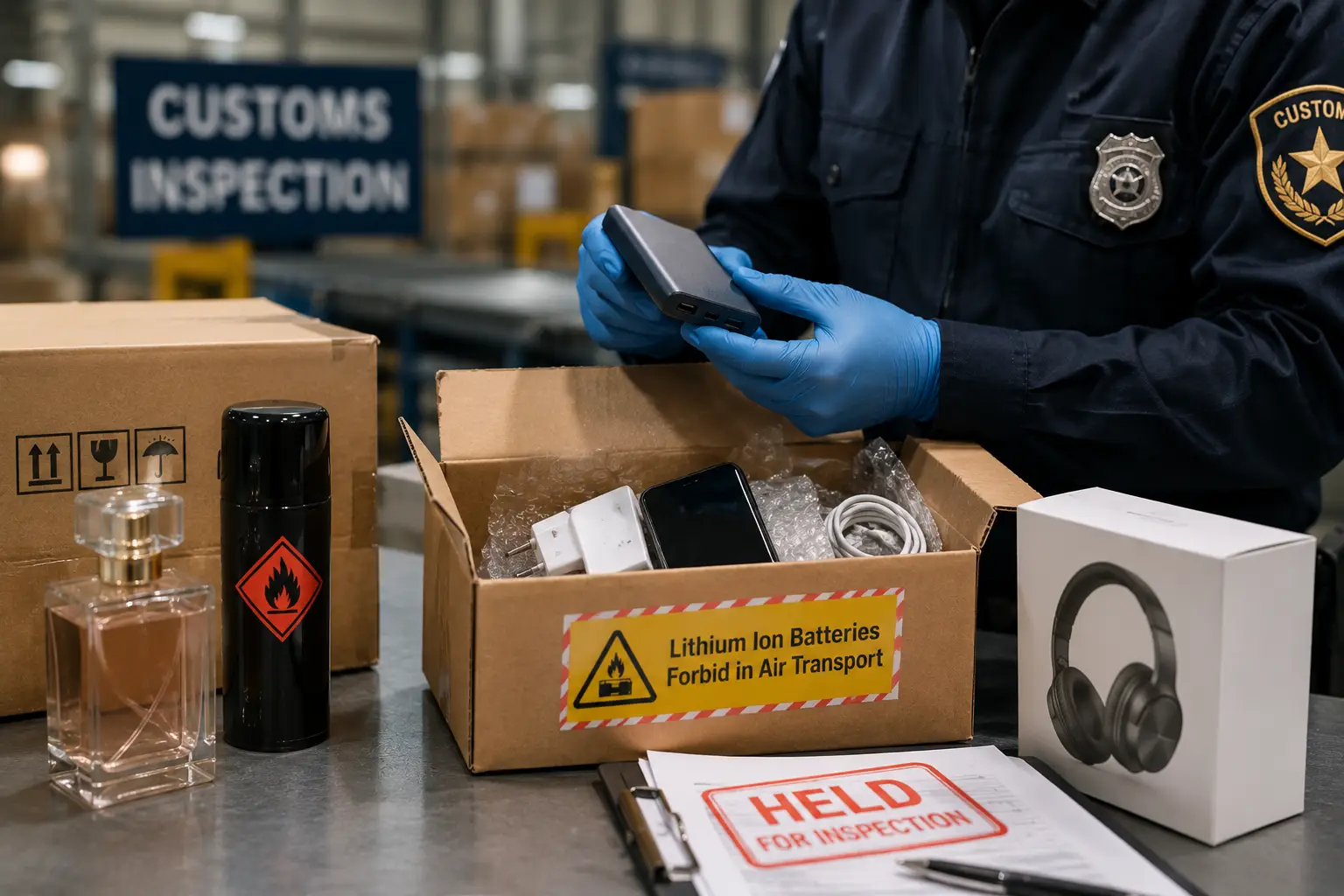
International shipping feels simple when you click “buy” and a parcel eventually arrives. Yet some products seem to vanish into customs limbo much more often than others. Small gadgets, power banks, perfume bottles and other personal electronics are among the most frequently delayed items, even when they’re perfectly legal to own.
What’s behind these delays? The short answer is safety and compliance. Below are the main reasons certain products attract extra scrutiny at the border and what that means for shoppers and sellers.
Lithium Batteries – Safety Rules Come First
Lithium‑ion and lithium‑metal batteries power phones, laptops, wireless earbuds and countless gadgets. They also pose a risk when mishandled; damaged or overheated batteries have caused fires on planes and in warehouses. Regulators around the world respond by setting strict rules for any shipment that contains a battery.
An industry guide notes that seemingly everyday items such as power banks, aerosols and perfumes are among the most commonly flagged products because commercial shipping has stricter standards than consumer use. Three layers of regulation often apply at once — government hazmat rules, individual carrier policies and fulfilment‑programme reviews.
For batteries the rules vary depending on how they are packed:
- Contained in equipment vs. shipped alone: a battery built into a device (like a smartphone) requires different labels and paperwork than a loose power bank. Sellers are often surprised when adding a small “free gift” power bank turns an ordinary shipment into a hazardous‑materials shipment.
- Transport mode: air freight has the strictest requirements because fires at altitude are especially dangerous. Ground and ocean routes are more permissive but still demand proper classification.
- State of charge and testing: international rules limit the battery’s charge level for air transport and require a UN 38.3 test summary showing that the battery has passed vibration, thermal, short‑circuit and impact tests.
These measures explain why parcels with laptops or portable chargers may pause in customs longer than a book or T‑shirt. Missing hazard labels, incorrect documentation or an undeclared battery will almost guarantee a delay or rejection.
Perfumes and Aerosols – Hidden Hazards in Everyday Goods
Perfume and cologne seem harmless, yet they contain 60 – 80 % ethanol and are classed as flammable liquids. Aerosol sprays (deodorant, dry shampoo, cleaning spray) also fall under dangerous‑goods regulations because pressurised cans can rupture or explode if exposed to heat or pressure changes. Carriers therefore require special packaging, clear hazard markings and accurate declarations.
Missing any of these steps can result in a shipment being set aside for inspection. Even experienced sellers sometimes misclassify a beauty product because similar‑looking items can have different formulas; an alcohol‑based perfume is regulated while an alcohol‑free body mist is not.
When customs officers encounter an unlabeled spray or bottle, they must verify its contents and may request a Safety Data Sheet (SDS), adding days to the delivery time.
Electronics – More Than Just a Gadget
Electronic goods are some of the most inspected shipments worldwide. Beyond batteries, customs authorities look at product safety, electromagnetic compatibility and dual‑use regulations.
A logistics provider notes that high‑tech products often need CE (Europe) or FCC (U.S.) certifications, RoHS compliance for hazardous substances, and in some cases export permits if the device could be repurposed for military use. Incomplete or inaccurate documentation — such as wrong tariff codes or missing certificates — is a leading cause of customs holds.
Value declaration also matters. Customs systems flag shipments when the declared value seems unrealistically low for the device type, prompting officers to reassess duties or ask for proof of payment. Finally, fragile electronics require proper packaging. A Canadian customs guide explains that shipments of fragile items without clear handling labels (like “Fragile” or “This Side Up”) are often inspected to check for damage. Such inspections can delay release even when the paperwork is correct.
Why Small Orders Get Flagged
Ironically, inexpensive gadgets sometimes face more questions than pricey ones. Many marketplaces allow sellers to declare very low values to reduce duties. As governments tighten import rules, packages that declare a smartwatch or headphones as a “$5 gift” are now routinely flagged for review. Customs officials compare the item’s description and HS code to its typical market price; large discrepancies trigger manual checks and may lead to extra fees.
Tips for Smoother Delivery
- Buy from reputable sellers: they are more likely to follow hazmat rules and provide the correct documentation.
- Check the product description: if the item contains a battery, aerosol, perfume or complex electronics, expect longer transit times. Confirm that the seller provides safety data or compliance certificates when required.
- Package properly and label clearly: especially for electronics or fragile goods. Good packaging and clear handling instructions reduce the chance of inspections.
- Track parcels across carriers: international shipments often pass through several logistics companies. Using a tracking service that consolidates updates — such as https://trackingpackage.com/fedex-tracking — lets you see when a parcel changes hands or enters customs. Understanding where a package is in the process can ease the anxiety of a delay.
A Safer, More Transparent Future
The extra scrutiny for batteries, perfumes and electronics isn’t going away. In fact, aviation authorities continue to tighten lithium‑battery rules because of fire incidents, while customs agencies increasingly enforce hazardous‑materials and certification requirements. At the same time, these measures improve overall safety and reduce the risk of dangerous goods slipping through unchecked.
Shoppers and sellers who understand the reasons behind these delays can plan accordingly. Preparing the right documents, investing in proper packaging and choosing reliable carriers will keep most shipments moving. And with better tracking tools, the days of wondering why a package has disappeared into a warehouse somewhere in transit are becoming a thing of the past.