Many homeowners assume a bathroom feels cramped because of limited square footage. In reality, layout problems create more frustration than room size. A poorly planned bathroom can feel difficult to navigate even when the dimensions are reasonable. Cluttered countertops, oversized cabinets, and poor storage placement often reduce comfort more than homeowners realize.
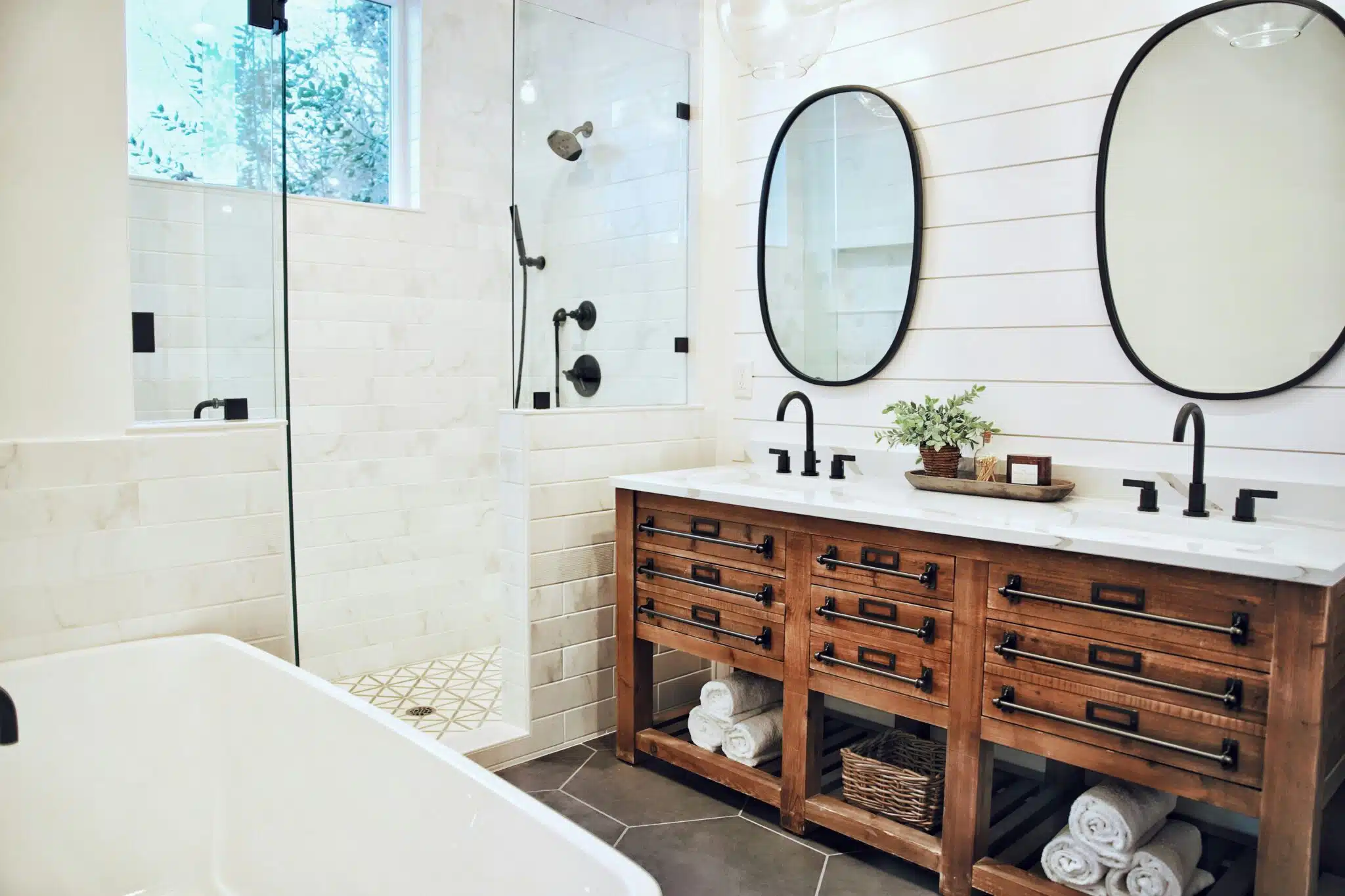
One of the fastest ways to improve bathroom performance is selecting the right bathroom vanity. A properly sized vanity improves organization, movement, and storage access without requiring a full renovation. For homeowners looking for stronger durability and long-term value, a solid wood bathroom vanity provides better structural integrity and greater resistance to moisture-related wear.
Bathrooms do not fail because they are too small. They fail because the layout works against the way people move through the space every day.
Why Bathrooms Often Feel Smaller Than They Actually Are
Many bathrooms technically have enough usable square footage, yet they still feel crowded. The issue usually comes down to visual compression and poor fixture proportion.
When cabinetry is oversized or poorly placed, movement becomes restricted. Walkways shrink, countertops become cluttered, and storage stops functioning efficiently. These problems make the room feel tighter than it actually is.
Several common design mistakes contribute to this effect:
*Vanity depth extends too far into walking space
*Cabinet doors block movement when opened
*Bulky storage units interrupt sightlines
*Countertops become overcrowded with toiletries
*Poor lighting makes the room appear visually heavy
Bathrooms work best when the eye can move naturally through the room. Open space creates comfort. Even a few extra inches of visible flooring can make a bathroom feel more usable.
A bathroom should not require constant adjustment to basic movement. If you must turn sideways near the vanity or avoid certain corners to access storage, the layout is likely reducing comfort.
The Hidden Cost of Poor Bathroom Storage
Storage issues often seem minor at first. Many homeowners assume clutter is simply part of daily life. However, poor storage design creates small frustrations that accumulate over time.
Bathrooms are used multiple times every day. When organization fails, routines become slower and more stressful.
Common problems include:
*Toiletries spreading across the countertop
*Towels stored too far from the sink or shower
*Limited drawer organization
*Overflowing cabinets with difficult access
*Cleaning supplies hidden in awkward locations
These issues create friction during everyday routines. Morning preparation takes longer. Shared bathrooms become harder to coordinate. Cleaning becomes more time-consuming.
Storage also affects perception. A bathroom with visible clutter feels smaller and more chaotic. Even a well-designed space can feel cramped when organization is poor.
This is why vanity selection matters so much. The vanity often determines whether storage supports daily routines or disrupts them.
Why Vanity Design Impacts More Than Appearance
Most homeowners think about vanities in terms of style. They compare colors, countertop materials, and sink shapes. While appearance matters, function matters more.
The vanity controls how the bathroom performs.
It determines:
*Storage accessibility
*Countertop usability
*Traffic flow
*Visual balance
*Ease of cleaning
*Daily convenience
A poorly designed vanity creates ongoing frustration. Storage becomes inefficient. Movement feels restricted. Cleaning takes more effort.
A well-designed vanity improves multiple areas simultaneously. It creates structure for the room. It reduces clutter. It helps define how people move through the space.
Professional designers often prioritize vanity selection before choosing decorative finishes. This is because the vanity anchors the room both visually and functionally.
How Better Vanity Selection Solves Layout Problems
Vanity selection directly affects how a bathroom functions. Choosing the wrong dimensions often creates long-term frustration.
A vanity that is too large creates congestion. A vanity that is too small reduces usable storage.
The best approach is balancing proportion, accessibility, and organization.
Several factors matter when choosing a vanity.
Width
Many homeowners assume the widest vanity possible is the best option. In reality, oversized vanities often reduce comfort.
Leaving clearance space around cabinetry improves movement and visual openness. The bathroom feels less crowded because the eye can travel across more visible floor space.
Depth
Depth matters more than most people realize.
A vanity that extends too far into the room reduces walking clearance. This becomes especially noticeable in narrow bathrooms.
Compact layouts often benefit from reduced-depth cabinetry.
Drawer Design
Deep drawers usually outperform shelves.
Drawers provide better visibility and easier organization. Homeowners can access products without kneeling or digging through stacked items.
Height
Comfort-height vanities improve usability.
A vanity that sits too low forces users to lean forward repeatedly. Over time, this creates discomfort during daily routines.
A properly selected bathroom vanity creates more than storage. It becomes a practical layout upgrade that improves daily efficiency.
Why Bathroom Vanity Placement Changes Room Performance
Placement matters just as much as size.
A well-sized vanity can still create problems if installed in the wrong location. Traffic flow must remain comfortable.
Poor placement often creates:
*Door interference
*Restricted sink access
*Crowded corners
*Reduced mirror visibility
*Difficult cleaning access
Positioning should support how people naturally move through the room.
For example, the vanity should not block entryways or force awkward movement patterns. Even small placement adjustments can create meaningful improvements.
Professional installers often test movement clearance before finalizing placement. This ensures the vanity supports the room rather than competing with it.
Why Solid Wood Makes a Long-Term Difference
Material quality matters just as much as layout.
Bathrooms experience daily exposure to humidity, moisture, and temperature fluctuation. Low-quality materials often deteriorate quickly under these conditions.
Common problems with lower-grade materials include:
*Peeling laminate finishes
*Warping around sink edges
*Weak drawer tracks
*Swollen particleboard panels
*Loose cabinet joints
A solid wood bathroom vanity performs better because it offers stronger construction.
Solid wood remains stable over time when properly finished. It handles repeated use more effectively than low-cost alternatives.
Benefits include:
*Longer lifespan
*Better support for heavy countertops
*Stronger drawer durability
*Improved resale value
*More refined appearance over time
Many homeowners initially focus on price. However, replacing low-quality cabinetry multiple times often costs more in the long run.
Solid wood also ages differently. Small wear patterns often enhance character rather than creating obvious damage.
When Solid Wood Bathroom Vanities Make the Most Sense
Solid wood vanities are especially useful in high-use spaces.
They work well in:
*Family bathrooms
*Primary bathrooms
*Long-term ownership homes
*Moisture-prone environments
*Shared household layouts
These spaces require materials that can withstand repeated use.
Homeowners planning to remain in their property long term often benefit most from solid wood. The durability reduces future replacement needs.
Bathrooms used by multiple family members place extra stress on cabinetry. Strong construction becomes more important over time.
Case Study: Small Bathroom Layout Transformation
A homeowner renovated a 60-square-foot guest bathroom after years of frustration.
The original vanity measured nearly 48 inches wide and extended too deeply into the room. Storage existed, but it was poorly organized. Cabinet doors blocked movement when opened.
Several problems became obvious during daily use:
*Limited walking clearance
*Countertop clutter
*Difficult cleaning around cabinet edges
*Poor storage organization
*Reduced visual openness
The homeowner replaced the oversized unit with a narrower vanity designed around better proportion.
The replacement included:
*Reduced cabinet depth
*Better drawer organization
*Improved sink placement
*Increased visible floor space
After installation, the bathroom immediately felt larger.
Movement improved. Cleaning became easier. Storage became more functional.
No walls moved. No plumbing relocation was necessary.
The improvement came entirely from selecting a vanity that matched the room’s proportions.
This demonstrates how layout decisions often matter more than square footage.
Pro Tips From a Bathroom Industry Expert
After working in bathroom remodeling for more than a decade, several consistent patterns emerge.
Leave Clearance Space Around Cabinetry
Bathrooms feel more comfortable when cabinetry has breathing room.
Avoid pushing fixtures wall-to-wall unless necessary.
Prioritize Drawers Over Cabinet Shelves
Drawers improve organization because items remain visible.
Shelves often create stacked clutter that becomes difficult to manage.
Match Material to Moisture Exposure
Bathrooms are high-humidity environments.
Choose durable materials that resist swelling and warping.
Avoid Oversizing
Large vanities may appear impressive but often reduce usability.
The correct size should support movement rather than dominate the room.
Think About Daily Habits
Storage should match how people actually use the space.
Frequently used items should remain accessible without bending or searching.
These principles consistently improve long-term satisfaction.
Finding a Better Vanity Without Guesswork
Many homeowners struggle because online product options appear nearly identical. Photos often fail to explain the differences between layout efficiency, material quality, and storage design. This creates uncertainty.
Giving Tree Home simplifies this process by organizing products based on bathroom functionality rather than visual style alone.
Homeowners can compare:
*Width dimensions
*Material construction
*Storage configuration
*Installation compatibility
*Bathroom layout suitability
This helps buyers focus on real performance rather than appearance alone. For homeowners trying to avoid expensive mistakes, structured selection tools reduce guesswork. Instead of browsing endless categories, buyers can narrow options based on actual room needs. That matters because vanity selection influences how the bathroom functions every day.
Why Smart Layout Decisions Improve Home Value
Bathroom upgrades are often associated with resale value. However, value comes from function just as much as appearance.
A bathroom that feels comfortable and organized creates a stronger impression.
Potential buyers notice:
*Ease of movement
*Storage functionality
*Material quality
*Visual openness
*Overall usability
These features contribute to perceived home quality. Bathrooms that feel easy to use often appear newer and better maintained. A high-quality vanity can influence how the entire room is perceived. Even modest bathrooms gain value when layout decisions improve usability.
The Difference Between Renovation and Optimization
Many homeowners assume improving a bathroom requires major remodeling. In reality, optimization often delivers better results than renovation.
Optimization focuses on:
*Improving fixture proportion
*Enhancing storage logic
*Increasing movement efficiency
*Reducing clutter
*Selecting better materials
These improvements often cost less than full structural changes. Replacing the vanity frequently produces the largest functional upgrade. Because the vanity controls storage, movement, and visual balance, improving it creates noticeable impact. This is why many bathroom remodelers recommend vanity upgrades as a first step. Bathrooms rarely need more square footage. They usually need better design choices.
Final Thoughts
Bathroom layout affects comfort more than most homeowners realize. Poor storage, oversized cabinetry, and inefficient placement create frustration that builds over time. A properly selected vanity improves organization, movement, and usability without requiring major renovation.
Choosing the right bathroom vanity allows homeowners to improve function while maintaining style. For long-term durability, a solid wood bathroom vanity provides stronger construction and better performance in moisture-heavy environments.
The best bathroom upgrades are not always dramatic. Sometimes, the most effective improvement comes from selecting the right fixture for the space. Bathrooms do not need to feel crowded or inefficient. They simply need layout decisions that support how people live every day.