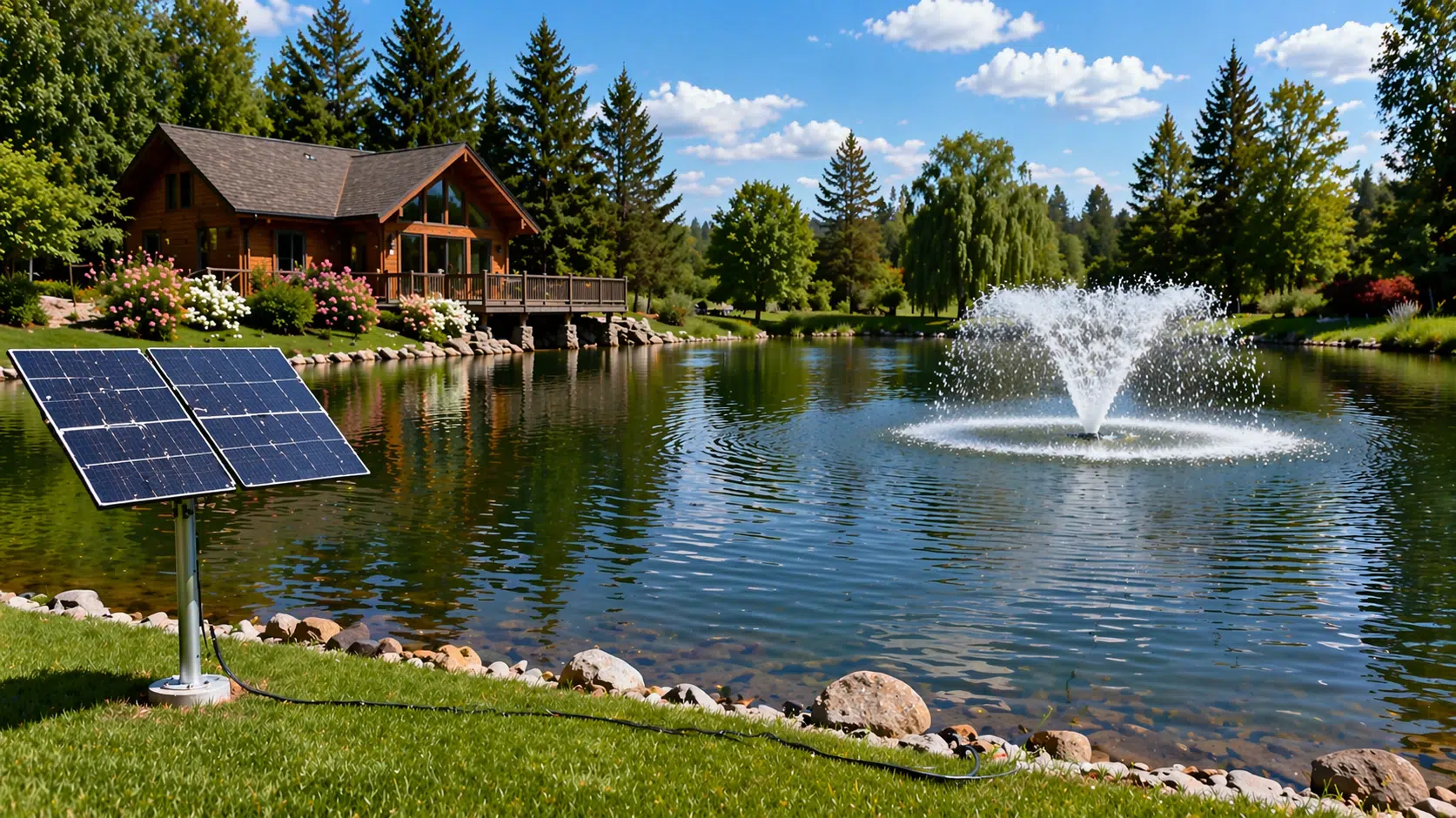
When a pond starts looking tired, the symptoms appear before the real problem becomes obvious. Water sits too still near the shoreline. Algae becomes more visible during hot weather. Odors build up in stagnant areas, and fish appear stressed after long, warm spells. That’s where a solar powered pond fountain becomes a practical part of pond management.
For owners browsing solar pond fountains for sale, the value extends beyond the visual appeal. A properly sized fountain improves surface movement, reduces stagnation, and makes a pond look and behave more like an actively managed water feature rather than a neglected basin.
That said, realism matters. A pond fountain is not a cure-all. It does not replace nutrient control, correct stocking, runoff management, or diffused aeration where deep-water turnover and stratification are a concern.
1. A Solar Powered Pond Fountain Helps Reduce Surface Stagnation
One of the clearest benefits of a fountain is the simple movement of water. Stagnant surface zones collect floating debris, support mosquito-friendly calm patches, and make a pond feel neglected even when the deeper water isn’t in crisis. Surface spray and ripple action break up that stillness, making the water body look cleaner and more active. The mechanism is straightforward: turbulence improves gas exchange at the surface.
This matters most during warm-weather periods, when ponds are under more stress. Low-oxygen events are common in hotter months, especially from July through September, when water temperatures peak. In practical terms, that means circulation becomes more valuable when the pond is already under seasonal pressure. A fountain doesn’t fully address the oxygen risk in summer, but it improves day-to-day surface conditions and reduces the “dead water” look owners often notice first.
2. It Can Support Better Surface Oxygen Exchange
A fountain helps maintain oxygen levels near the surface. The benefit comes from agitation and air-water contact, not from the fountain acting like a full diffused aeration grid. Turbulence enhances oxygen uptake from the atmosphere. That makes fountains useful in shallower decorative ponds, water gardens, and smaller managed ponds, where the primary issue is surface stagnation rather than severe oxygen depletion at the bottom.
The important caution is that deeper ponds often need more than surface movement. Fountains are comparatively weak tools for preventing stratification. Bottom diffusers do a better job circulating the full water column. The honest takeaway: a solar powered pond fountain contributes to healthier pond conditions, particularly at the surface, but it isn’t a substitute for a dedicated subsurface aeration system in deep or heavily stocked ponds.
3. Better Circulation Can Make Algae Pressure Less Severe
No credible pond manager should promise that a fountain will “eliminate algae.” Excess algae is driven by nutrients, especially nitrogen and phosphorus, along with sunlight, temperature, and overall pond balance. Too much nitrogen and phosphorus cause algae and algae-like bacteria to grow faster than ecosystems can handle, and that excess growth reduces the oxygen fish and other aquatic life need. That means algae is fundamentally a nutrient problem first, not a spray-pattern problem.
What a fountain does is make conditions less friendly to surface stagnation and reduce the visual and functional dullness that accompanies algae-prone water. In many ponds, moving surface water simply behaves better than still water. It won’t remove the root cause, but it’s a useful part of a broader plan that also addresses runoff, sediment, shoreline vegetation, and fish load.
4. Solar Operation Makes Sense for Remote Ponds
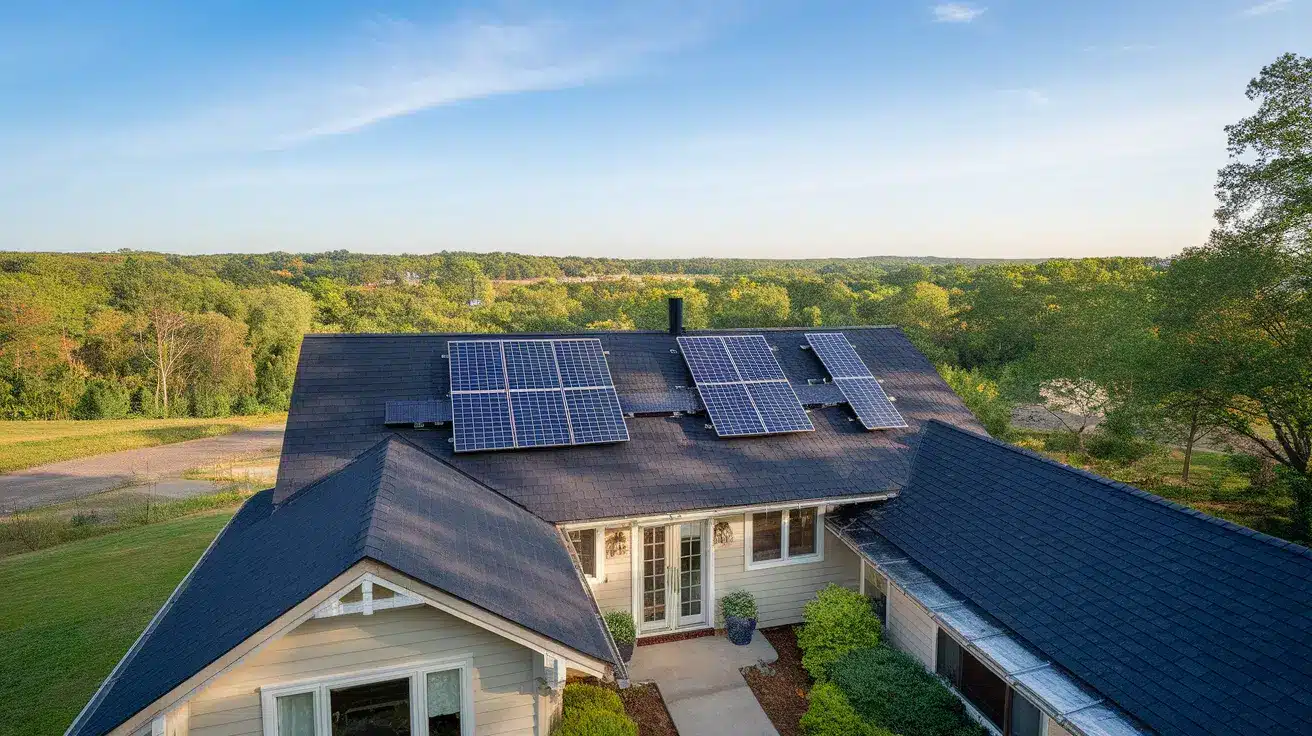
One of the strongest cases for a solar powered pond fountain is logistical rather than biological. Many ponds sit far from buildings, outlets, or convenient trenching paths. In those settings, solar allows owners to add circulation and visual appeal without running electrical service to the water. That’s especially relevant for estate ponds, farm ponds, golf-course features, HOA landscapes, and ornamental ponds in remote areas.
The practical appeal is straightforward: fewer infrastructure headaches, reduced dependence on the grid for operations, and an easier path to improving the pond’s appearance and functionality. That doesn’t mean solar is always the best solution, but it’s often the most sensible option when electrical access is a nuisance or a cost issue. For the right pond, that is not a gimmick. It is operationally common sense to wear a slightly greener tie.
5. Healthier-Looking Water Improves the Whole Property Experience
A pond’s appearance isn’t trivial. For homeowners, HOAs, hospitality properties, and estates, visual quality affects how the entire landscape is perceived. Surface movement makes water feel intentional. Spray patterns create a focal point. Ripples break up the flat, stale look of unmanaged water. Water features add real value beyond strict utility, improving wellness, architectural appeal, and the overall property experience.
There’s also a management angle to appearance. Water that smells sour, shows heavy algae scum, or sits motionless sends a message that the pond isn’t being cared for. Cleaner-looking water reflects active stewardship. A fountain alone doesn’t create that stewardship, but it’s a visible sign of it. When correctly sized, it supports both aesthetics and practical pond care in a way that owners and visitors can immediately notice.
Final Thoughts
A solar powered pond fountain improves pond health in several practical ways. It reduces surface stagnation, supports oxygen exchange at the surface, makes algae pressure less visually dominant, brings circulation to remote off-grid ponds, and improves the overall appearance of the water feature. The key is to keep expectations honest. Fountains are most useful as surface-circulation and display tools, not as a substitute for full diffused aeration in deeper ponds.
Thoughtful pond care is rarely about one miracle product. It’s about using the right equipment for the pond’s depth, size, and management goals. In that context, a solar powered pond fountain is a smart, practical addition, especially where surface circulation, improved presentation, and off-grid convenience matter most.