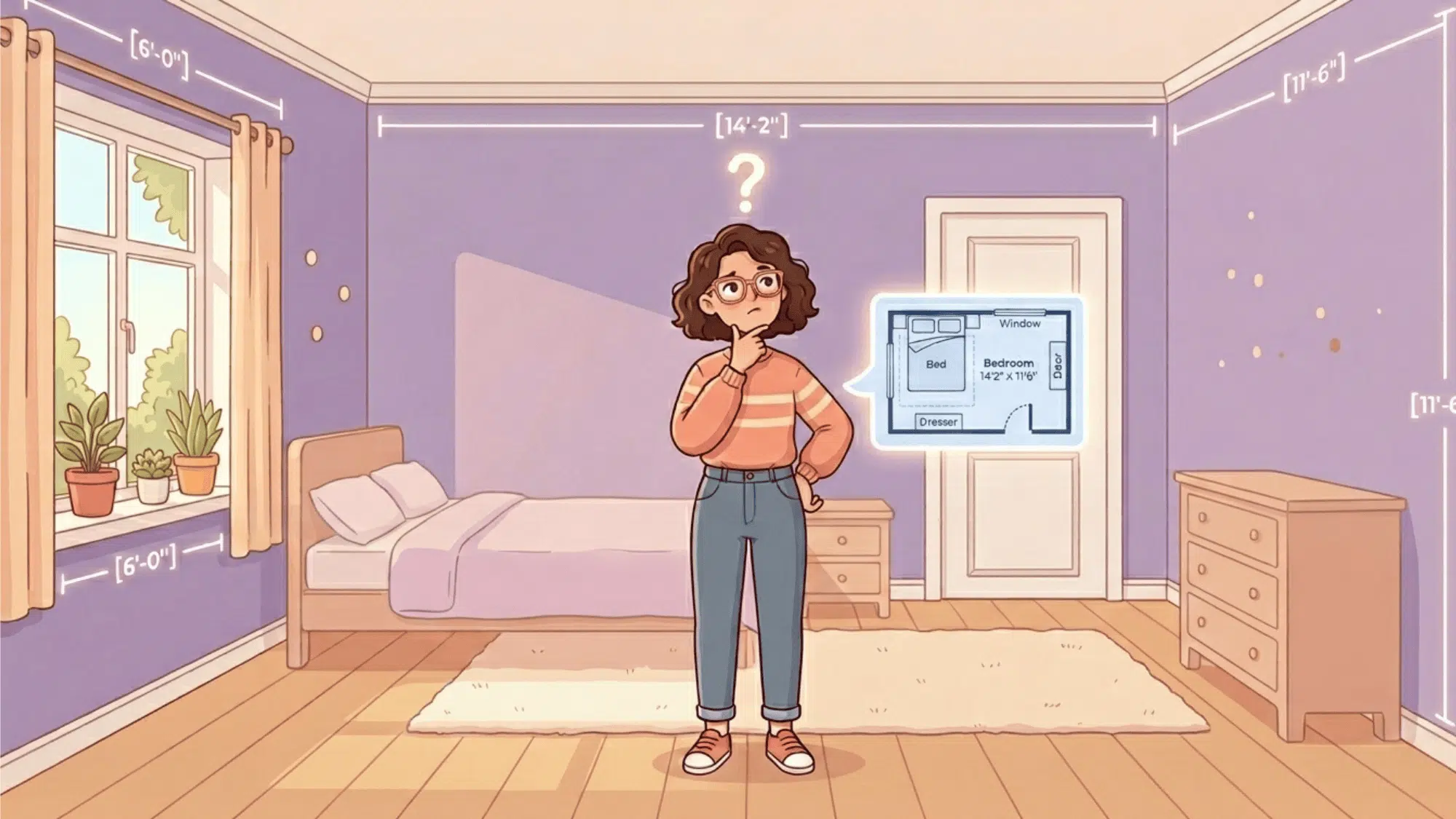
Has this ever happened to you: you’re looking at a new place, the bedroom seems fine, you move in, and then you realize the bed barely fits? Sound familiar?
Most people have no idea how many square feet the average bedroom is until they’re standing in one that feels way too small or oddly too big. And without that answer, comparing homes feels like guesswork.
Sizes vary more than expected; what feels roomy in one home can feel tight in another. But once the numbers make sense, everything clicks.
Stick around, because what’s ahead breaks it all down in a simple, easy-to-use way.
Why Picking the Right Bedroom Size Changes Everything
Knowing standard bedroom dimensions helps you make smarter decisions when buying, renting, or redesigning a space.
A room that’s too small can feel cramped and limit your furniture options. Whereas an oversized room can be difficult and costly to heat or cool.
Most building codes set a minimum bedroom size, and real estate listings use square footage to describe room sizes.
Understanding these numbers helps you compare properties, plan furniture layouts, avoid costly mistakes, save time, money, and frustration.
How Many Square Feet is the Average Bedroom?
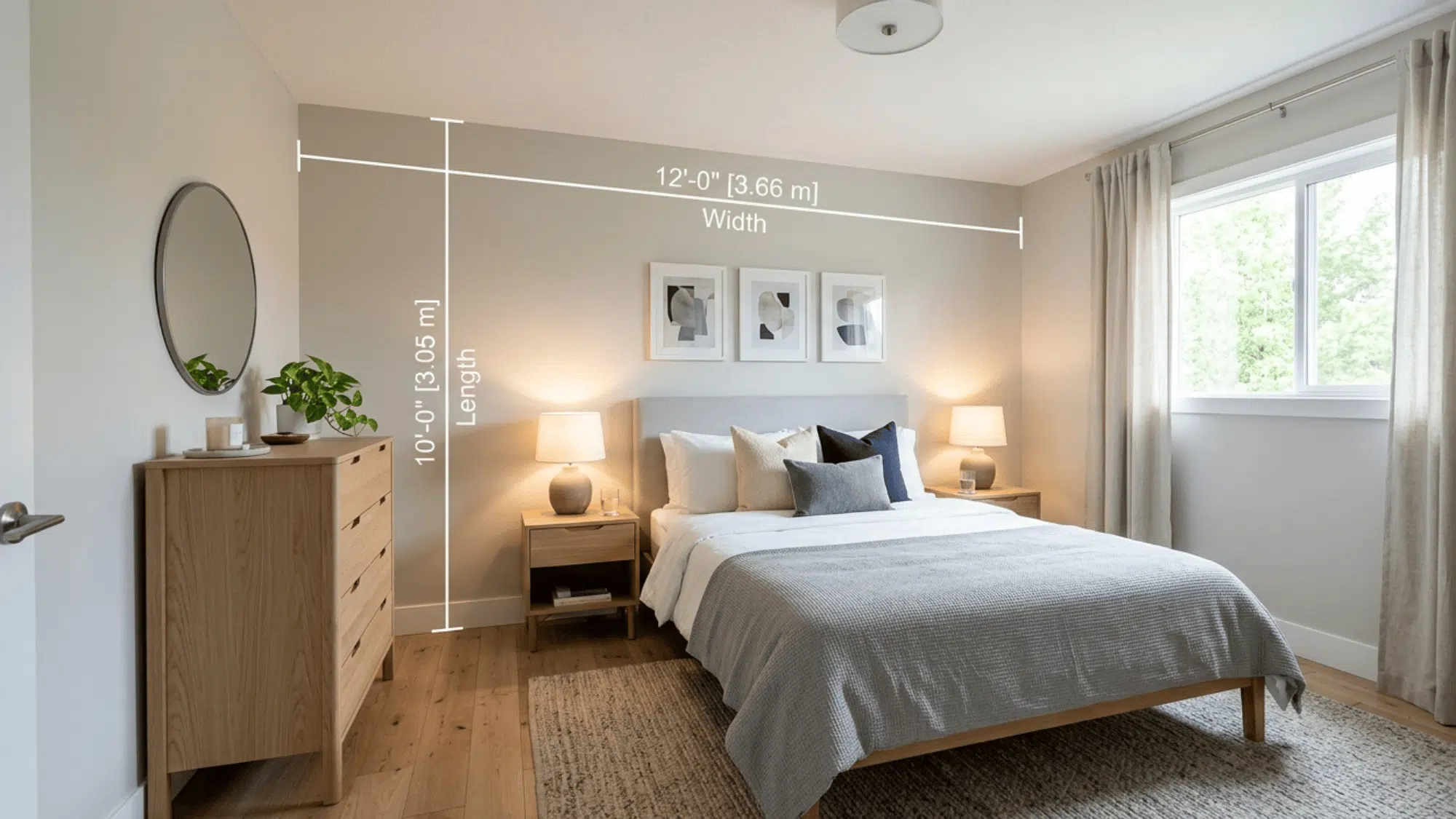
A standard bedroom is a private sleeping space designed to comfortably fit essential furniture and meet basic livability needs. It is the most common bedroom type found across residential buildings of all sizes.
Most standard bedrooms strike a balance between being cozy enough to feel comfortable and spacious enough to move around freely.
- Average size: 120 to 200 square feet
- Most common dimensions: 10×12 ft (120 sq ft) and 11×12 ft (132 sq ft)
- Fits comfortably: queen bed, nightstands, small dresser
- Found in: most suburban homes and apartments
Let’s Break Down Different Bedroom Dimensions by Type
Every bedroom type serves a different purpose, and size plays a big role in how well it functions. Below are the seven most common bedroom types and what you can expect from each:
1. Master / Primary Bedroom
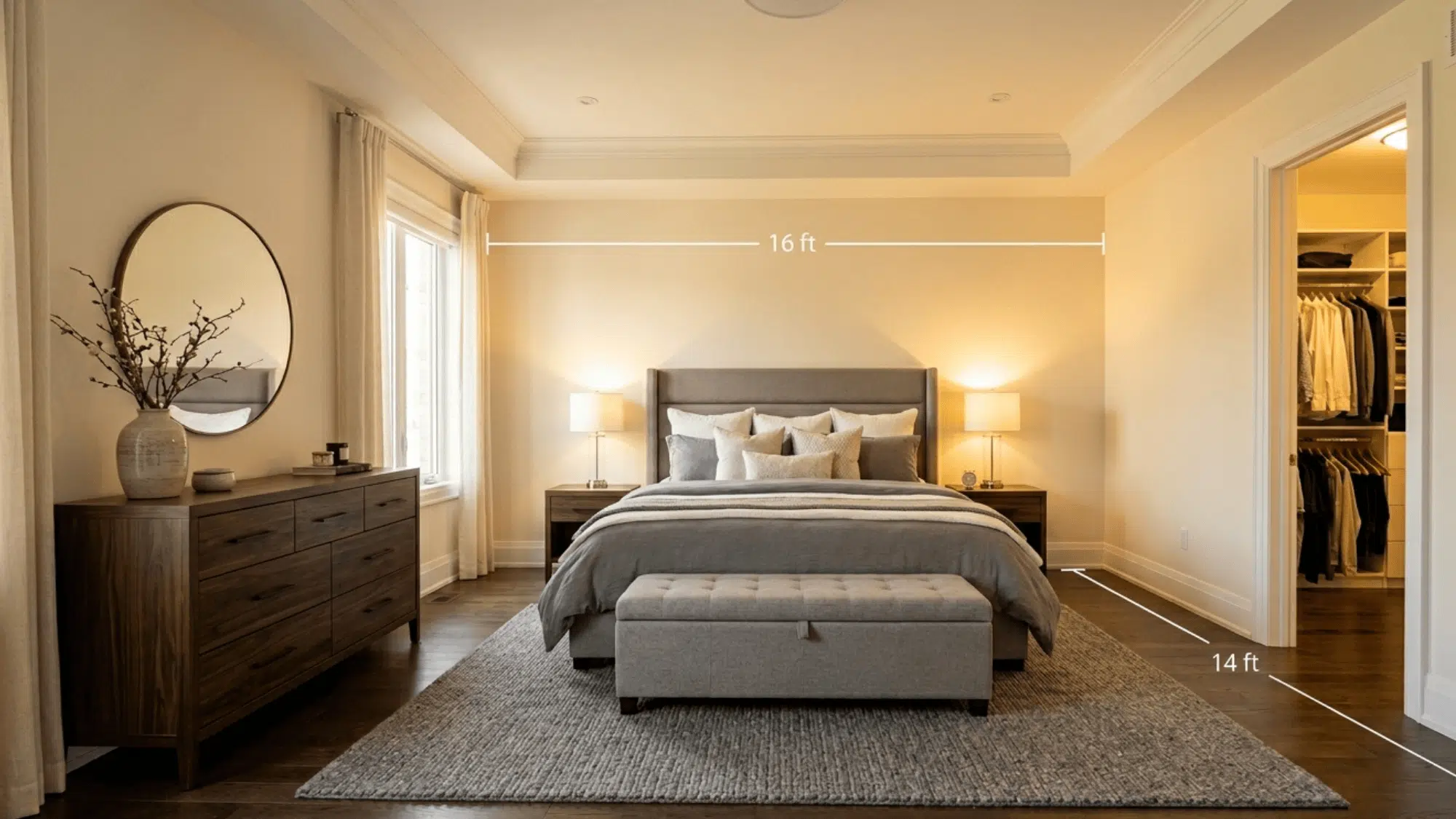
The master bedroom is the biggest room in the house. It is designed to hold a king or queen bed, two nightstands, a dresser, and often a seating area without feeling crowded.
Most also come with a private bathroom and a walk-in closet. In newer homes, master bedrooms have gotten even larger to match modern comfort expectations.
- Average size: 200 to 300 square feet
- Common dimensions: 14×16 ft and 14×18 ft
2. Guest Bedroom
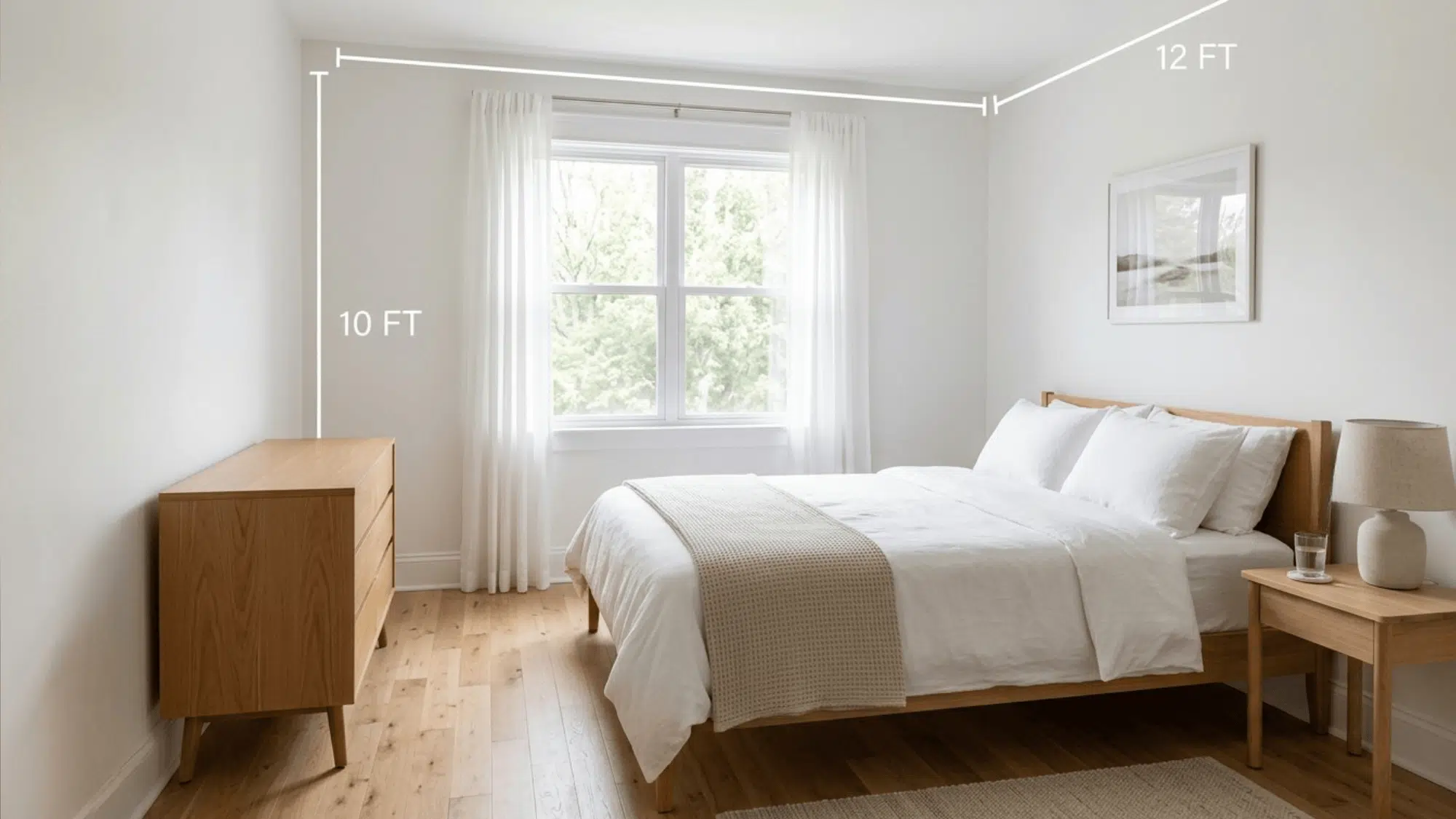
A guest bedroom is kept just for visitors. It stays simple, enough furniture to make a short stay comfortable, nothing more. When guests aren’t around, many people turn it into a home office or reading nook.
A clean, minimal layout makes switching between both uses much easier.
- Average size: 120 to 150 square feet
- Common dimensions: 10×12 ft and 11×14 ft
3. Nursery
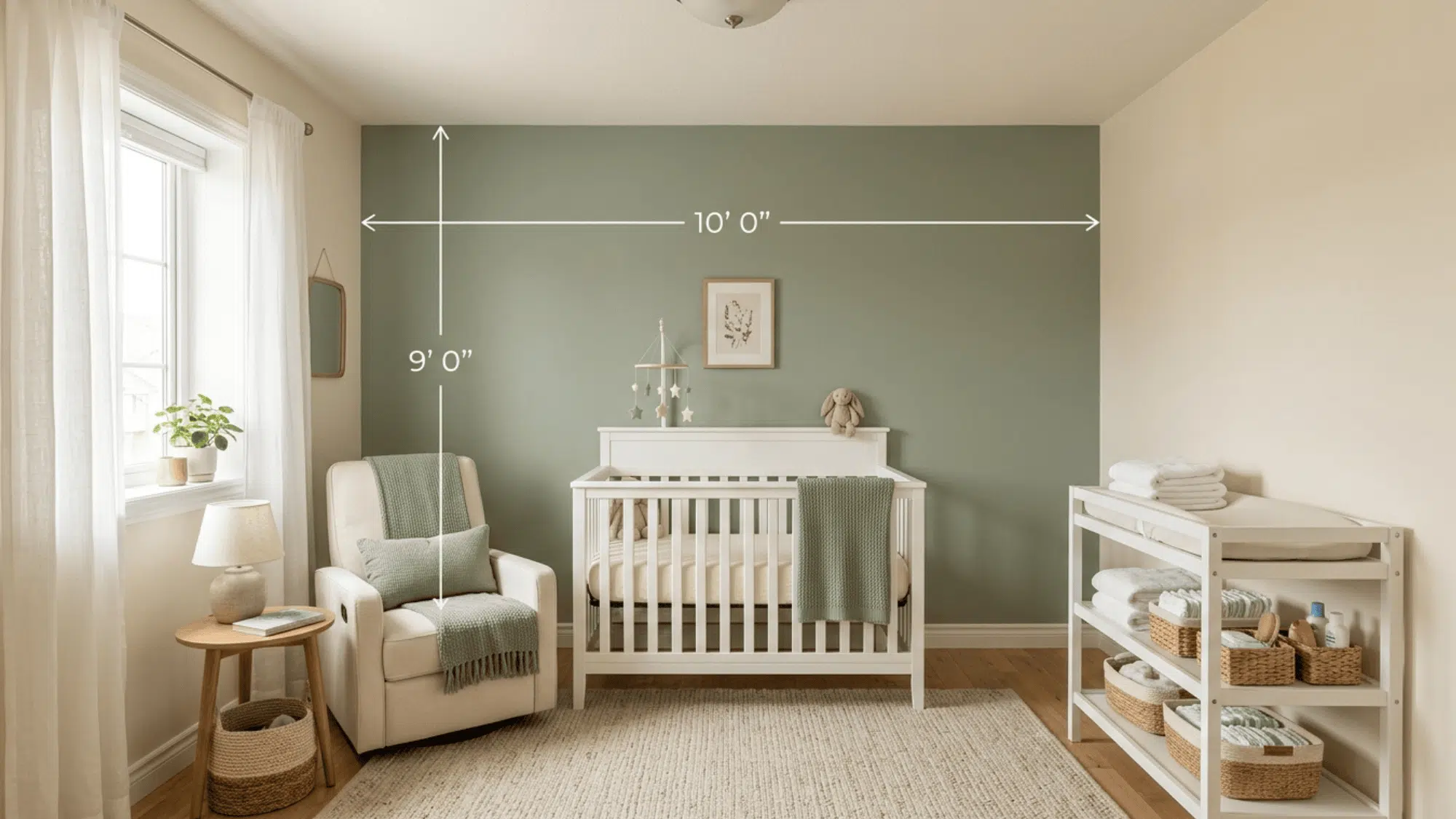
A nursery is a small room built just for infants and toddlers. It needs to fit a crib, a changing table, and a chair for nighttime feeding; that’s really all. Once the child grows out of it, the room is usually turned into a kids’ bedroom.
Small as it is, a well-planned nursery can feel calm, safe, and easy to move around in.
- Average size: 80 to 120 square feet
- Common dimensions: 9×10 ft and 10×12 ft
4. Teen Bedroom
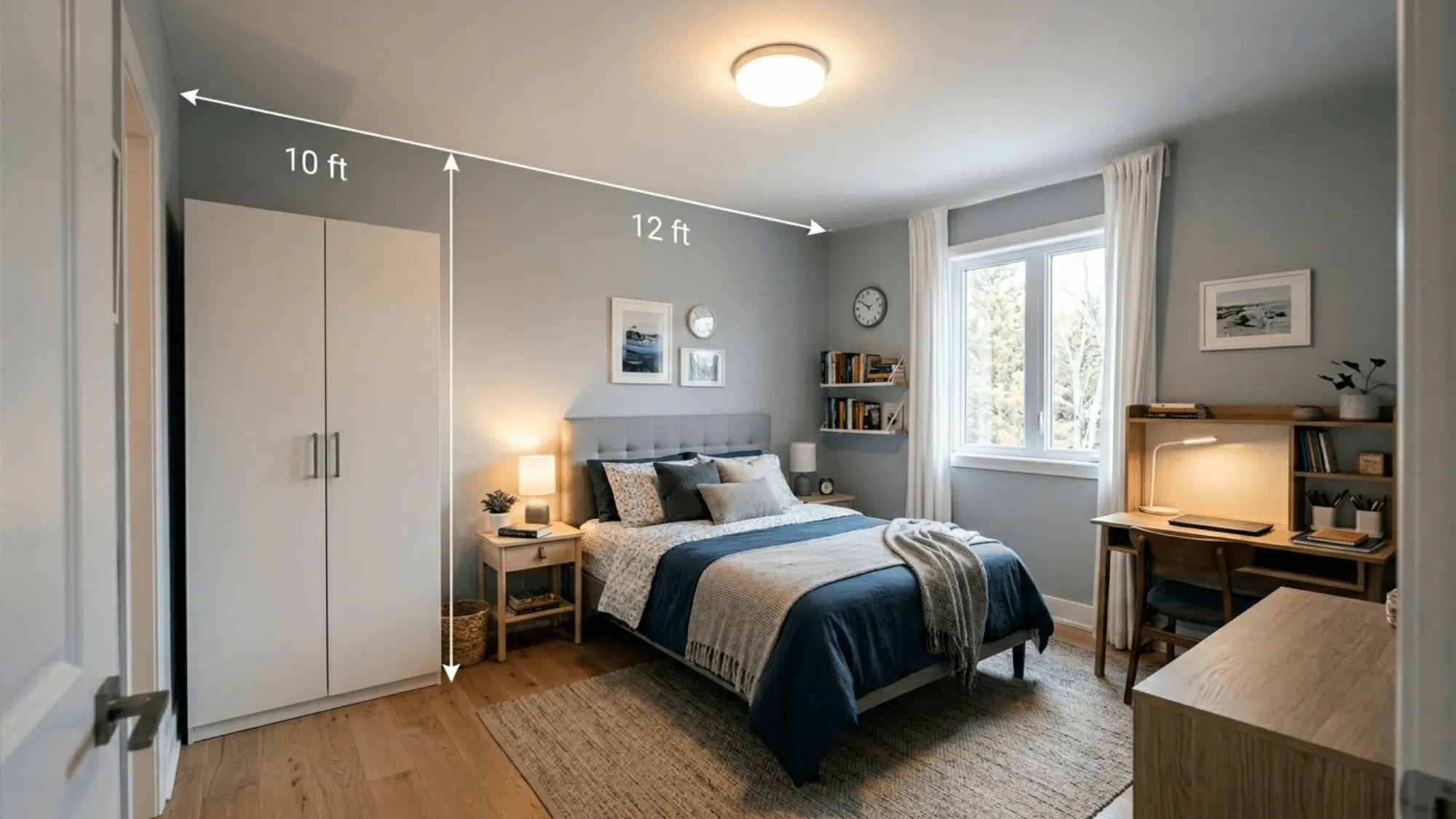
A teen bedroom needs more than just a place to sleep. It has to fit a study desk, extra clothing storage, and enough personal space for hobbies and downtime. This is the stage where privacy starts to matter.
A clear study zone and good storage can make even a mid-sized room feel well-organized and comfortable.
- Average size: 120 to 150 square feet
- Common dimensions: 10×12 ft and 11×13 ft
5. Kids Bedroom
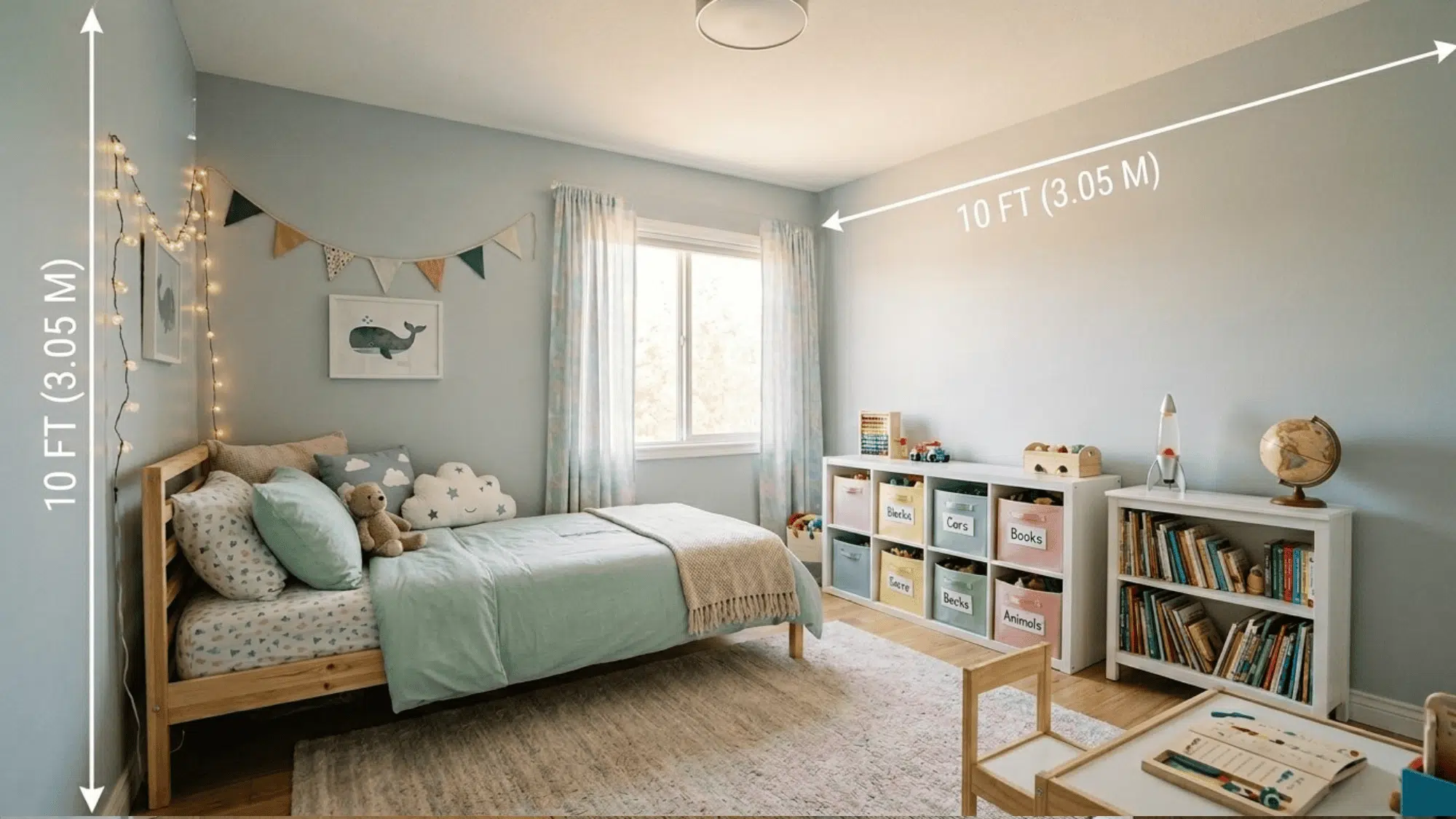
A kid’s bedroom has to do two jobs, sleeping and playing. It needs space for a bed, toy storage, clothes, and school supplies all at once. Because kids spend so much time here, smart layout matters more than extra square footage.
- Average size: 100 to 120 square feet
- Common dimensions: 10×10 ft and 10×12 ft
6. Small / Box Bedroom
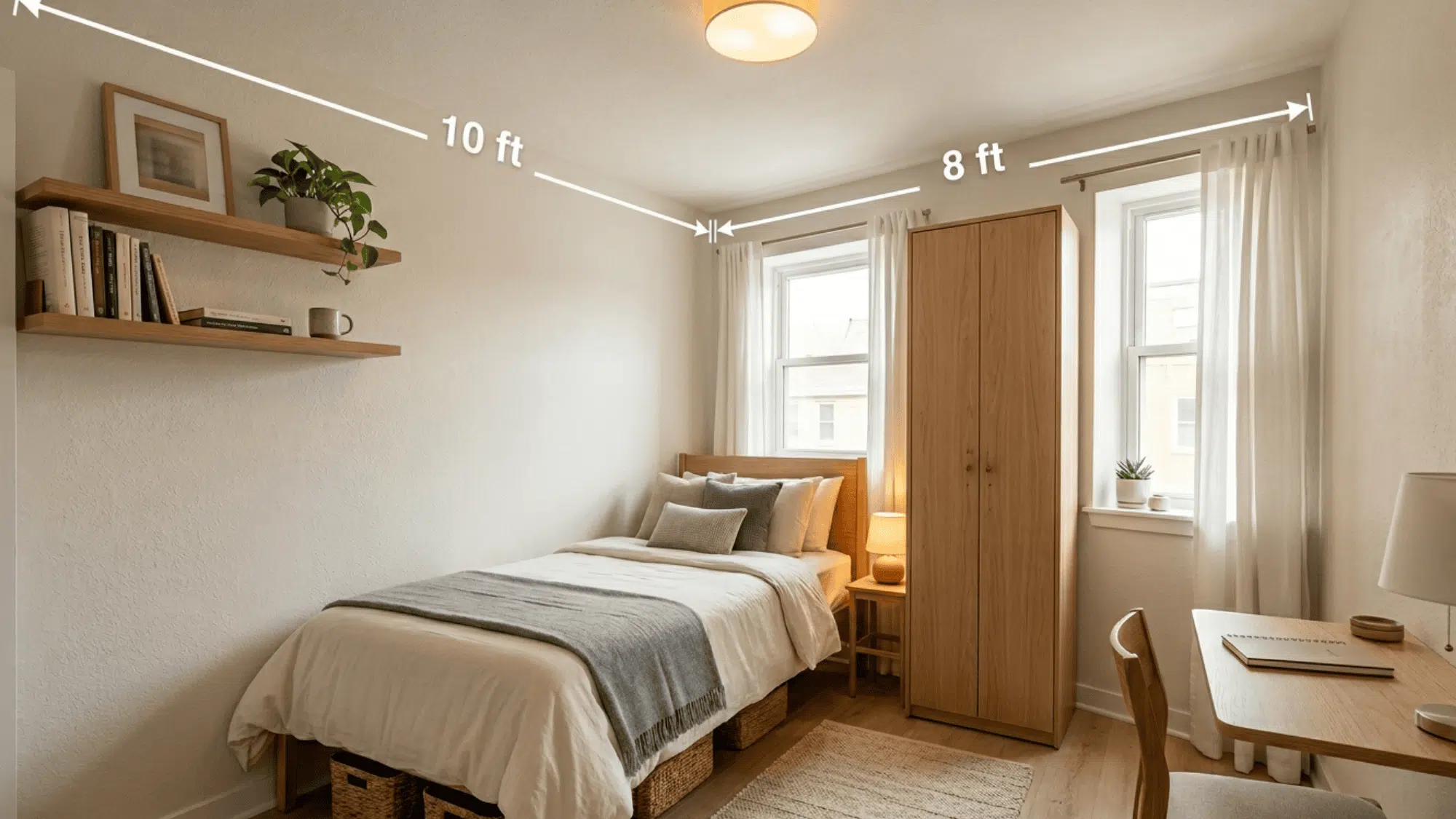
The small or box bedroom is the most compact type you’ll find. It’s common in older homes, city apartments, and starter properties. A twin bed and very little else will fit, so smart storage becomes a must.
Most building codes require at least 70 sq ft for a room to legally qualify as a bedroom. With the right layout, even this small space can work well.
- Average size: 70 to 100 square feet
- Common dimensions: 8×10 ft and 9×10 ft
What You Should Know Before You Move In
Getting the square footage right is only half the battle; how you use that space matters just as much. A few smart decisions upfront can save you from costly furniture mistakes and poor layouts.
- Always measure before buying furniture: never go by how a room looks, numbers don’t lie
- Account for door swing space: doors need at least 3 ft of clear space to open fully
- Check window placement: large furniture placed in front of windows blocks light and air
- Factor in closet space: built-in closets eat into the total usable space of a room
- Consider ceiling height: taller ceilings make a small room feel much bigger than it is
- Maintain traffic flow: leave at least 24 to 36 inches of walking space around the bed
- Use vertical space: wall shelves and tall storage units free up floor space in smaller rooms
- Natural light affects perceived size: a bright, well-lit room always feels larger than it is
- Avoid oversized furniture: one piece that’s too big can make the whole room feel cramped
- Mind outlets and vents: never place furniture over air vents or electrical outlets
- Measure doorways before delivery: Large furniture may not fit through a standard door
- Plan for storage needs: too little storage makes any bedroom feel messy and tight
Wrapping It Up
And that’s really all there is to it. A standard bedroom, a nursery, a master suite, every room has a range, and knowing that range changes how spaces are seen and compared.
No more guessing if a bedroom is a good size or settling for a room that looks fine but falls short in real life. Size affects everything; it is one of those things that seem small until they aren’t.
So if your next step is renting, buying, or simply rearranging a room, use these numbers as a guide. The right bedroom size is out there, and now there’s a clear way to recognize it.