If you are comparing window upgrades, timber frames often pull at you for a reason. The look is warm, the feel is solid, and the payoff goes well past style. Timber double glazing benefits show up in your bills, your comfort, and the way your home feels every day.
A lot of people start with the glass and forget the frame. But timber double glazing benefits come from the full window working together. That means better insulation, less outside noise, and a house that feels calmer and easier to live in.
That matters whether you are replacing old wooden windows in a period property or updating a newer place that needs better energy efficiency. Good glazing windows can change the way living spaces feel, especially where drafts, traffic noise, and condensation have become normal.
This guide covers what double-glazed timber windows are, where they work best, and what to check before you buy. It also looks at window styles, upkeep, and how timber compares with upvc windows and aluminium windows.
What Timber Double Glazed Windows Actually Are
Double glazed windows use two panes of glass with a sealed gap between them. That gap slows heat loss and helps block outdoor noise.
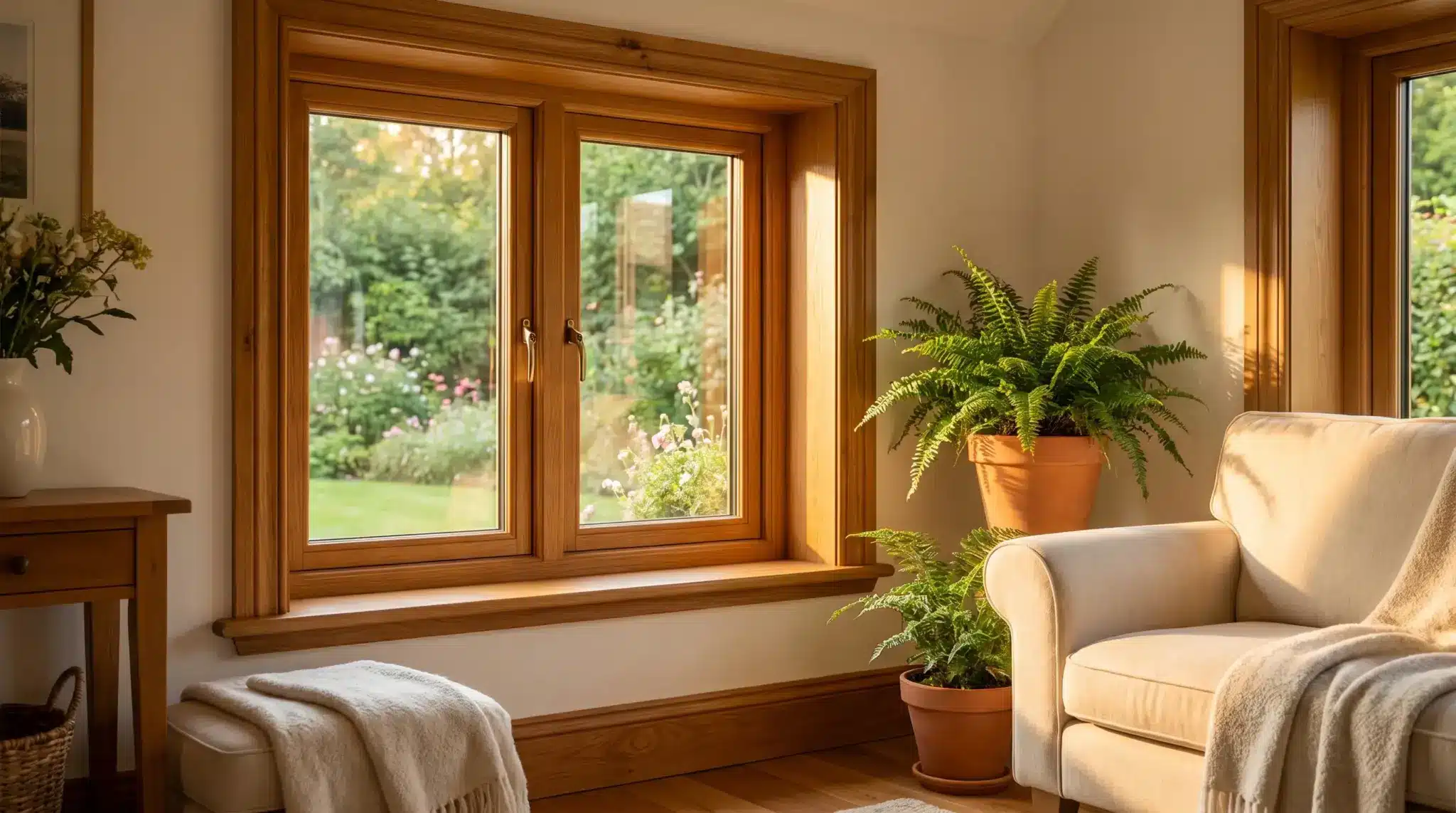
With timber double glazed windows, the frame is wood rather than vinyl or aluminum. That matters because natural wood is a natural insulator, which adds another layer of thermal help.
So you are getting two performance wins at once. Better glass, and a frame that does more than just hold it in place. Wood double glazed windows also suit many homes where appearance matters just as much as performance.
You may also see terms like wood double glazed, wood double, or double-glazed timber in product descriptions. In simple terms, they all point to the same idea: a timber-framed window with insulated glazing built for better comfort and lower heat transfer.
Timber Double Glazing Benefits Homeowners Notice Fast
Some home upgrades are hard to feel right away. This is not one of them.
Many homeowners notice the change in the first week. Rooms feel steadier, drafts drop off, and the house seems quieter without you doing anything else.
That quick shift is one reason timber double glazing benefits get so much attention. The improvement shows up in your comfortable living environment, not just on a product sheet.
1. Better Energy Efficiency
This is usually the main reason people start looking. Windows are a major weak spot in many homes.
The US Department of Energy explains how energy efficient windows help cut heat transfer and improve indoor comfort. That matters in winter, but also in hot weather when your home fights heat gain.
Timber helps because it does not conduct heat as quickly as metal. Add double glazing and the full window does a much better job holding indoor temperatures steady.
That can lower heating and cooling use over time. It helps maintain a more even indoor temperature and can help you save energy month after month.
For many homeowners, this is the most practical reason for choosing timber. Double glazed windows offer numerous advantages, but lower energy use is often the one people notice on paper as well as in daily life.
2. A More Comfortable Home
Comfort is hard to measure, but you know it when you feel it. A cold draft by the couch or a hot patch near the window can make a room annoying fast.
Double glazing helps reduce those swings. Timber frames add more insulation, which makes the space near the window feel less harsh.
This matters most in bedrooms, living rooms, and home offices. These are the spaces where temperature dips get old quickly.
When windows provide better insulation, the whole living environment feels calmer. That is a big part of building a comfortable living setup without relying as much on heating or air conditioning.
3. Less Condensation on Windows
Condensation is more than a small nuisance. Too much moisture on glass and frames can lead to mold, peeling paint, and that damp feeling nobody likes.
InterNACHI notes that double glazed windows can help cut condensation because the inner pane stays warmer than single glazing. That can make a real difference in older homes.
You may still see some moisture at times, especially in kitchens or bathrooms. But it is often much less severe.
This is one of the numerous benefits people overlook at first. Less moisture around window frames can help protect finishes, reduce cleaning, and support a healthier living space.
4. Noise Reduction That You Can Feel
If you live near a road, school, or busy street, you already know the problem. Noise has a way of creeping into your day.
Double glazing acts like a better barrier between you and outside sounds. The exact result depends on glass thickness and window seals, but many homeowners hear a clear drop in traffic noise, barking, and general street sound.
That can make sleep better. It can also make your home feel more private, which people often value more than they expected.
Noise reduction is one of the strongest selling points for homes in built-up areas. If your bedroom faces the street, timber double glazing can make living spaces feel far more restful.
5. Stronger Security
A window should look good, but it should also help protect your home. Two panes of glass are harder to break than one.
Good timber windows are also sturdy by nature. A solid frame paired with quality hardware gives you a more secure opening point than an old worn unit.
No window makes a house perfect against break-ins. But a well-built double-glazed timber window can be a meaningful step up.
Ask your window manufacturer about locks, hinge security, and glass options. The frame matters, but the hardware package matters too.
6. Classic Looks That Age Well
This part matters more than people like to admit. Windows change how your house looks from the curb and from the couch.
Timber has a softer, richer feel than many modern frame materials. It suits period homes very well, but it also looks great in clean modern designs.
That is why people often choose timber even after comparing cheaper options. It has character, natural beauty, and a timeless beauty that works across many window styles.
The aesthetic appeal of wood double glazed windows is hard to fake. Frames adds warmth to interiors, and windows add depth and texture that plastic or metal often cannot match.
7. Environmental Upside
If sustainability is on your mind, timber has a strong case. Wood is a renewable resource, and responsibly managed forests can make it a smart material choice.
The US Forest Service explains the value of wood products in long-term building use. Add better insulation from double glazing, and your home may need less energy to stay comfortable.
That combination appeals to eco-conscious homeowners who want lower energy use without giving up style. It can also lower environmental impact over the long run.
Compared with some other materials, timber can offer environmental benefits linked to lower carbon footprints and repairability. If properly maintained, timber products can stay in service for decades instead of being discarded early.
8. Long Term Value
Good windows are rarely cheap up front. But cheap windows can cost more over time.
Buyers notice window quality. Better comfort, less condensation, and stronger energy performance can all support resale appeal.
Timber windows also tend to fit homes where looks carry weight in value. That is a quiet but real part of the return.
For many owners, this makes timber a smart investment. Windows offer numerous long-term gains when they reduce maintenance problems, improve comfort, and lift the look of the house at the same time.
Where Timber Often Beats Other Frame Materials
Every material has strengths. But timber has a blend that is hard to copy.
It insulates well, looks premium, and can often be repaired instead of replaced. That last point is big, especially for older homes with character.
| Feature | Timber | Aluminum | Vinyl |
|---|---|---|---|
| Natural insulation | High | Low without thermal break | Moderate to high |
| Appearance | Warm and classic | Clean and modern | Simple and plain |
| Repair potential | Often repairable | Varies | Often replaced |
| Maintenance needs | Higher | Lower | Lower |
| Fit for heritage homes | Excellent | Usually weaker | Usually weaker |
The catch is maintenance. Timber needs care, but many homeowners think the look and lifespan make that trade worth it.
It also helps to compare timber with upvc windows and aluminium windows in your local market. In many older homes, wooden windows remain the best visual match, especially where sash windows or casement windows are already part of the design.
The Drawbacks You Should Know Before You Buy
There is no perfect window. Timber is excellent, but it is not magic.
The biggest downside is cost. Quality timber double glazed windows often cost more than entry-level alternatives.
You also need upkeep. Paint, finish, and seals should be checked over time, especially in rough weather areas.
That said, modern treatments and coatings have come a long way. Well-made timber windows today are tougher than many people think.
The main question is whether the benefits match your home and budget. If you want low first cost above all else, other frame materials may suit you better, but they may not offer the same natural beauty or repair options.
Can You Upgrade the Glass Without Replacing the Whole Window
Sometimes yes. Sometimes no.
If the frame is still in good shape, you may be able to replace just the glass unit. This can be useful if a sealed unit has failed or if you want better thermal performance.
A practical guide on replacing double glazing glass explains when a glass-only swap may be possible. It is worth reading before you assume full replacement is your only path.
But timber condition matters. If the frame has rot, swelling, or long-term water damage, fresh glass alone will not fix the real problem.
This is where a good installer or window manufacturer can help. They can tell you whether the frame is properly maintained and sound enough for a glazing-only upgrade, or whether full replacement is the better call.
Why Installation Matters Almost as Much as the Window
You can buy a great window and still get poor results. Bad installation can ruin good materials.
Air leaks around the frame, poor sealing, and weak flashing can wipe out performance gains. That is why fitting should never be treated like a side issue.
The window guidance from Energy Saver makes this point clearly. Product quality and proper installation work as a pair.
So ask hard questions before hiring anyone. Who is doing the fit, what is covered, and what happens if moisture gets in later?
Installation is a crucial aspect of the result. Even the best double glazing windows will underperform if gaps, alignment problems, or poor sealing are left behind.
What Good Timber Double Glazing Looks Like in Real Life
On paper, the benefits sound nice. In real homes, they feel practical.
You wake up and the bedroom feels warmer near the window. Street noise does not hit the same way. Your heat does not seem to vanish every evening.
That kind of steady comfort is why people keep talking about this upgrade after the work is done. It becomes part of daily life, but in a good way.
Good windows offer more than lower bills. They support a better living environment, more stable temperatures, and a home that feels easier to relax in.
Homes That Benefit the Most
Some homes gain more than others. If your house is older, has single glazing, or gets heavy drafts, the improvement can be dramatic.
These homes often benefit the most:
- Older houses with original timber windows.
- Heritage homes where appearance matters.
- Homes near roads or busy neighborhoods.
- Cold climate homes with high heating costs.
- Bedrooms and living rooms with large window areas.
- Properties with sash windows or sliding sash windows.
- Homes using flush casement windows or standard casement windows.
If that sounds like your place, the case gets stronger. Sliding sash, flush casement, and other traditional window styles often look especially good in timber.
Timber is also a strong match for homes with timber doors, patio doors, or sliding patio doors already in place. Keeping materials consistent can help the whole exterior feel more balanced.
How to Judge if Timber Double Glazing Is Worth It for You
Ask yourself a few simple things. Are you tired of drafts, condensation, or outside noise?
Do you care how your windows look from inside and out? Are you planning to stay in the home long enough to enjoy the benefits?
If the answer is yes to most of those, timber double glazing moves from nice idea to smart project.
It also helps to compare frame types in your area. A local overview of double glazing options can help you think through broader material choices and climate fit.
If you are choosing timber, think about your priorities in this order:
- Energy efficiency and comfort first.
- The right style for the house.
- A realistic maintenance plan.
- A qualified installer with a clear warranty.
What to Ask Before You Order
Buying windows is easier when you know what to ask. A few smart questions can save you money and stress.
- What timber species is used for the frames?
- What is the glass unit rating or thermal performance?
- Is the glazing gap filled with air or gas?
- What maintenance is expected each year?
- Who handles installation and warranty issues?
- Can damaged parts be repaired later?
- Which window styles are available, such as turn windows, sash windows, or flush casement windows?
Those answers tell you a lot about the product, and the company behind it. They also help you compare quotes on more than just price.
Maintenance Is Real, But So Is Longevity
People often hear timber and think of constant upkeep. That is outdated in many cases.
Modern coatings, proper design, and decent drainage details help timber last for decades. Like any exterior finish, it still needs attention, but that does not mean nonstop work.
In many cases, timber ages more gracefully than cheap alternatives. You can refinish it, repair parts, and keep the window going instead of sending it to the dump.
A simple maintenance routine usually covers the basics:
- Check paint or stain for wear each year.
- Keep drainage paths clear.
- Clean seals and moving parts.
- Watch for early signs of water entry.
- Touch up finishes before damage spreads.
Properly maintained timber can stay attractive and functional for a very long time. That repair-first potential is one of the biggest reasons many people still prefer wood double glazed windows over cheaper replacements.