If your garage serves as a professional workshop, a solid workbench is a game-changer. The bench supports projects and keeps your tools organized. There are mobile and stationary workbenches on the market, designed for a specific purpose.
Different setups fit different types of work and garage layouts. Understanding the practical differences helps garage owners choose a bench that is appropriate for their DIY needs.
What Defines a Stationary Workbench
A stationary workbench is planted in one spot and becomes part of the garage. Many are anchored to the floor, while others rely on heavy frames and thick tops to prevent movement. Woodworkers, mechanics, and anyone who needs a reliable, sturdy surface for tricky jobs – they should go for a stationary workbench.
The weight of the structure is what makes these benches special. If you’re planning hard maple, pounding metal parts together, or cranking down on a vise, the bench just soaks up the force. It doesn’t bounce around or slide. That kind of stability really pays off for fine joinery, heavy repairs, or anything where a shaky surface would drive you crazy.
Usually, stationary benches are topped with solid wood, butcher block, or even thick steel. They can put up with abuse – beating, scraping, and loaded tool chests. Since the bench won’t move, you can bolt down a vise or mount a grinder without a second thought.
These benches often have storage baked in. Drawers, shelves, wall racks, pegboards – whatever helps keep your tools at arm’s reach. Over time, the bench ends up as the anchor of the whole workshop, where most days get started and, usually, finished.
What Defines a Mobile Workbench
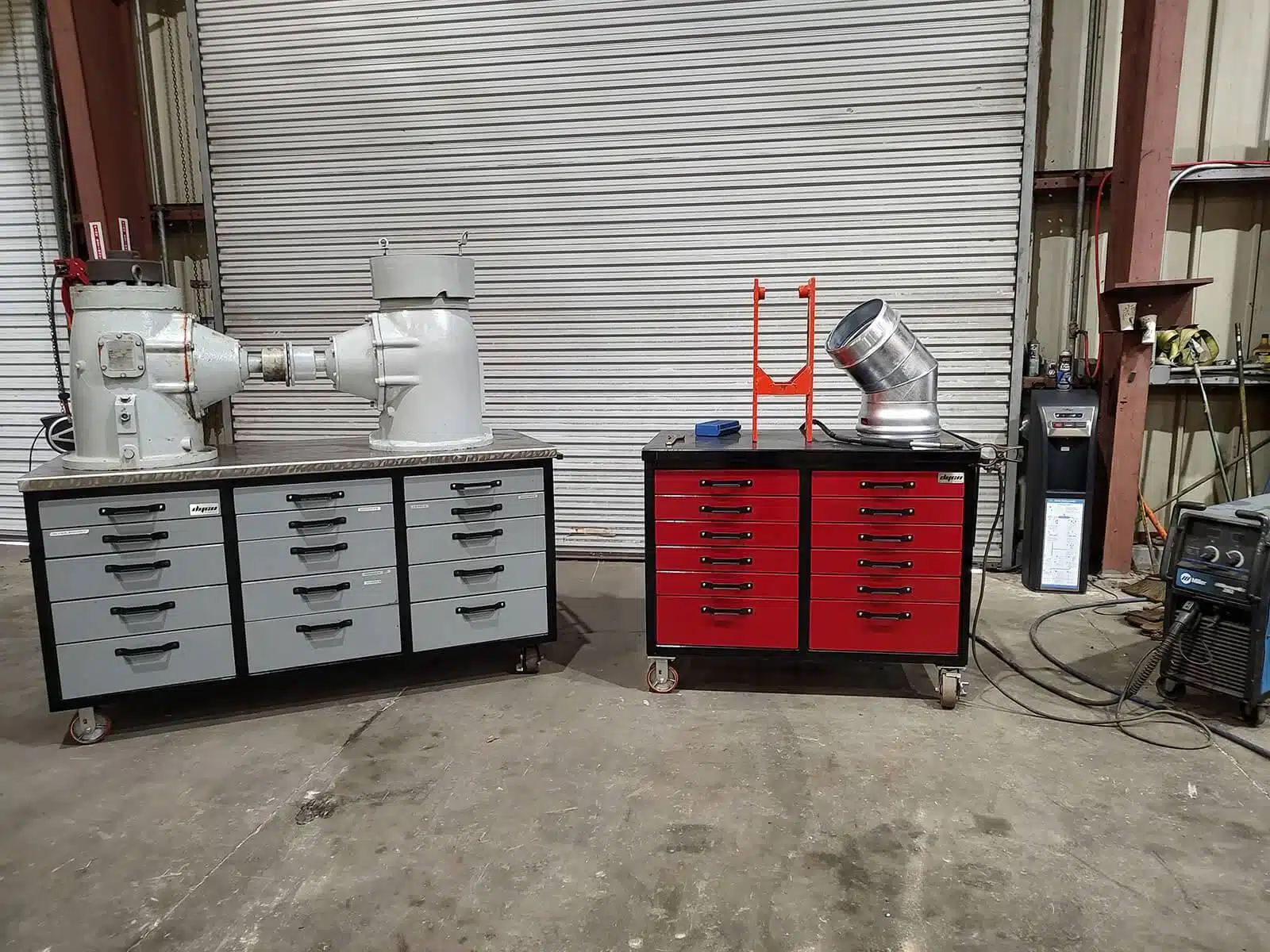
Mobile benches all do the basics, but their secret weapon is heavy-duty wheels (and decent brakes). A heavy-duty rolling tool box with a steel top is a lifesaver if your garage has to double as a parking lot or a storage unit – it lets you rearrange things on a whim.
There are some real perks to mobility. Say you need space for a big project – the bench can roll into the open, and you can get around all sides. Done with the job? Just push it back to the wall so you’re not tripping over it. Vehicles and boxes still fit.
When you’re working with long boards, awkward panels, or anything that eats up room, a rolling bench is a lot easier to wrangle. You can park it under brighter lights or next to your saw – whatever the job calls for, you move the bench, not the garage.
The best mobile benches now are far stronger than the old wobbly kind. Heavy locking wheels, thick tops, solid frames – they won’t skitter away as soon as you clamp something down. When locked, they’re steady enough for most at-home projects.
How Stability and Strength Show Up in Real Use
If you’re hammering, chiseling, or clamping with real muscle, nothing beats a non-moving bench. The sheer weight and solid build keep things in place, whether you’re working on tough wood joints or twisting stuck bolts. Mobile benches, even with good locks, always have a little give – though for most jobs, you’ll barely notice.
Pounding, metal bending, or aggressive planing – just feels better on a giant, dead-solid bench. Less rattle, more control.
Space Management in a Garage Workshop
Garages usually do a lot more than serve as workshops. You’re fighting for space with cars, bikes, yard gear, and who knows what else. A permanent bench takes up its corner no matter what, and that can get tight fast, especially in smaller garages.
Rolling benches help by making your workspace flexible. Drag the bench out when you need full access, then tuck it away. If you’re working on something long, you can angle the bench or scoot it toward the garage door – no need to reorganize the whole place.
Lighting and airflow are another big deal when sanding, finishing, or painting. Sometimes, just getting the bench closer to daylight or some open air makes the job a lot more pleasant.
Tool Mounting and Storage Options
How you store and mount your tools changes with your bench. Stationary benches are easy – you bolt stuff down and forget about it. Vises, grinders, and sharpening jigs get their own real estate, always in reach. You start to build muscle memory.
Mobile benches tend to carry lighter storage setups. Drawers, shelves, and even cabinets work underneath, but you have to keep the weight balanced so the thing doesn’t tip and move easily. Putting the heavy stuff down low helps.
Some setups use removable mounts (clamps, plates) so you can swap out tools as needed. This makes sense in small garages – one bench, lots of jobs, no mess.
Matching the Bench to the Work
It all comes down to what you do in the garage.
- Stationary benches: Go-to for steady-handed jobs or where your tools always live in the same spot. Think fine woodworking, welding prep, mechanic repairs, pounding out metal, or setting up heavier tools.
- Mobile benches: Handy if you need to switch gears a lot or just want open floor space. Good for general repairs, putting together furniture, smaller woodworking jobs, electronics, or when the garage is always in flux.
Many people who deal with different projects end up relying on both types. The stable bench takes the heavy hits, and the rolling one is perfect for quick assembly, overflow, or whatever random task pops up. This way, the workshop stays organized but never feels locked in.
Final Thoughts
Your workbench sets the pace for everything you do in the shop. Stationary benches give you confidence for the tough stuff and keep heavy tools mounted solidly. Mobile benches let you adapt – perfect for shared spaces and changing needs.
The best pick just depends on what kind of projects you tackle and how much open space your garage can spare. Find one that fits, and you’ll get a lot of steady years out of it – no matter which design you choose.