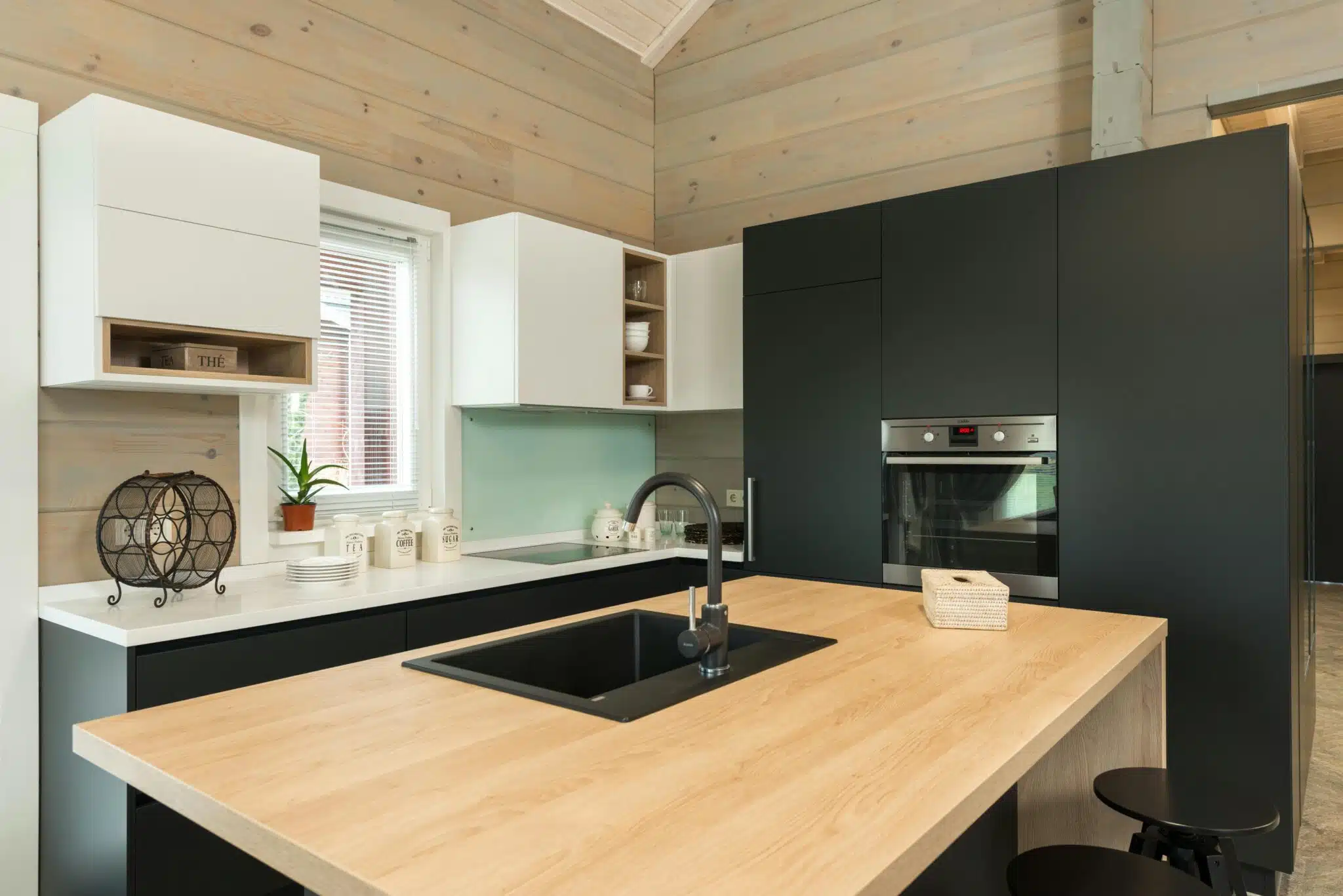
The kitchen has stopped pretending it is only about cooking. It is where backpacks land, coffee cools, laptops open, and conversations stretch longer than planned. Design is catching up to that reality, and the most compelling kitchens right now feel thoughtful without feeling precious. They are built to take a hit, recover gracefully, and still look good on a random Tuesday night when the dishwasher is running and someone forgot to put the bread away.
What is changing is not about chasing novelty. It is about refinement, comfort, and choices that hold up after the initial excitement fades. These kitchens feel lived in from day one, and that is exactly the point.
Warm Materials Are Back, and They Mean It
The era of icy perfection is loosening its grip. Kitchens are leaning warmer, not in a nostalgic way, but in a grounded, human one. Wood tones are richer and more natural, with visible grain and variation instead of uniform finishes. Painted cabinets still have a place, but they are softer, earthier, and less shiny than before.
Stone plays a role here too, especially when it brings texture instead of trying to disappear. Granite countertops are showing up again, not as the busy slabs people rushed to replace years ago, but as calmer, more restrained surfaces that feel substantial and honest. When paired with warm cabinetry and simple backsplashes, they add weight in a good way, the kind that makes a kitchen feel anchored rather than styled for a photo.
This shift is less about trends and more about comfort. These kitchens invite you to lean on the counter, pull up a stool, and stay awhile.
Layouts That Respect How People Actually Move
Open concept is no longer a default. Kitchens are still connected to the rest of the home, but with more intention. Designers are carving out subtle boundaries using ceiling details, flooring changes, or cabinetry placement that creates flow without turning everything into one big echo chamber.
Islands are earning their keep. They are wider, more functional, and often designed with mixed uses in mind. One side works for prep, the other welcomes homework or a glass of wine. Walkways are clearer, and appliance placement feels more intuitive, which matters when more than one person is in the space.
The best layouts feel calm even when the room is busy. That sense of ease does not happen by accident. It comes from planning that prioritizes movement over show.
Renovations With Longevity in Mind
A full kitchen remodel is no longer treated as a blank check to follow whatever is trending hardest. Homeowners are asking smarter questions and thinking beyond the first reveal. They want choices that will still make sense in ten or fifteen years, both visually and functionally.
That mindset shows up in cabinetry with flexible storage, appliances chosen for reliability over flash, and finishes that age gracefully instead of demanding perfection. Hardware is simpler, lighting is layered and practical, and nothing feels overly themed.
This does not mean playing it safe. It means investing in decisions that hold their value, emotionally and financially. A kitchen that works well tends to look good longer, even as tastes evolve.
Color That Feels Confident, Not Loud
Color is making its way back into kitchens, but it is doing so with restraint. Instead of shouting for attention, it settles in and stays. Deep greens, warm blues, and muted clay tones are common, especially on lower cabinets or islands where they ground the room.
These colors pair naturally with warm metals, natural wood, and stone. They feel intentional without being trendy, which is a tricky balance to strike. When done well, color becomes part of the architecture rather than a surface detail that feels easy to swap out. White kitchens are not disappearing, but they are becoming more nuanced. Texture, contrast, and depth matter more than brightness alone.
Lighting That Works Hard and Looks Good Doing It
Lighting is finally being treated as a design element instead of an afterthought. Kitchens are layered with purpose, combining overhead fixtures, task lighting, and softer ambient sources that change the mood of the space throughout the day.
Pendant lights over islands are less fussy and more sculptural. Under cabinet lighting is warmer and more diffused. Even statement fixtures feel integrated rather than decorative for decoration’s sake. Good lighting does more than flatter finishes. It makes the kitchen easier to live in, whether you are cooking at dawn or cleaning up late at night.
Storage That Adapts to Real Life
The most satisfying kitchens are not the ones with the most cabinets. They are the ones where everything has a place that makes sense. Storage is getting more customized, with drawers replacing doors, pullouts replacing dead corners, and pantry spaces designed around how people actually shop and cook.
Open shelving still appears, but it is used selectively and thoughtfully. It highlights what deserves to be seen and keeps the rest tucked away. The goal is not minimalism for its own sake, but clarity. When storage works, the kitchen feels calmer, even when it is full.
A Kitchen That Holds Up Over Time
The strongest kitchen designs right now share one thing in common. They respect the fact that kitchens are used, loved, and occasionally abused. They are not trying to impress at first glance. They are built to feel right over years of daily life.
That approach shows in materials that wear well, layouts that reduce friction, and details that feel considered rather than trendy. A good kitchen does not need constant attention to stay relevant. It earns its place by working hard and aging with grace, becoming more familiar and comfortable with time instead of less.