If you’ve started researching moving internationally shipping, you’ve likely run into wide price ranges, unfamiliar terms like FCL and LCL, and explanations that feel oversimplified.
One minute it seems like cost is about weight, the next you’re told to replace everything, and then you’re staring at quotes that vary by thousands of dollars.
It’s easy to assume it’s just “put stuff on a boat and wait,” but that skips over most of what actually happens. International shipping is a chain of steps, each with its own rules, costs, and risks.
In this guide, I’ll walk you through how it really works, what drives the price, and where people usually misunderstand the process so you can see the full picture.
Ways to Ship Household Goods Internationally
When you move overseas, your belongings don’t go straight from your house onto a ship. They pass through several stages, and the method you choose changes cost, timing, and risk in ways that aren’t obvious at first.
There are three main ways people ship household goods: sea freight, air freight, and airline baggage or postal shipping for small moves.
1. Sea Freight: Full Container Load (FCL) vs. Less than Container Load (LCL)
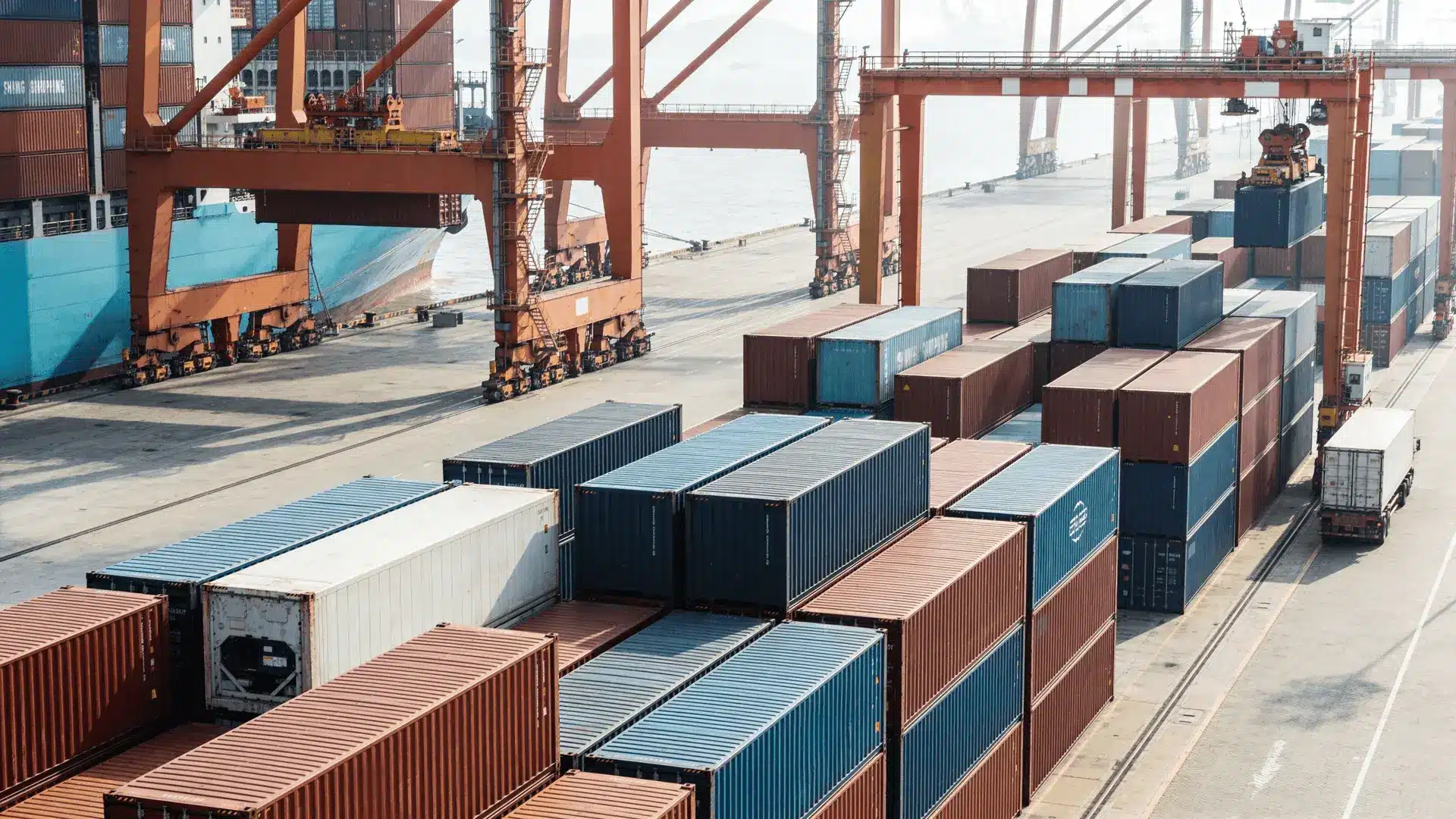
Sea freight is the most common option for large moves. Your items are packed into a shipping container, moved to a port, loaded onto a vessel, and sent to the destination port. From there, they clear customs and are delivered to your new home.
With FCL, you book an entire container, usually 20-foot or 40-foot. Everything inside is yours, which makes sense when you have enough volume to fill most of it and want fewer handling points.
With LCL, you share a container with other shipments heading to the same port. Your goods are consolidated in a warehouse, loaded with others, and then separated again at destination.
Here’s the key difference:
- FCL: More control, fewer handling stages, better for large volumes.
- LCL: Lower cost for smaller shipments, but more handling and possible delays.
Every time goods are handled, there is more risk of delay or damage. LCL shipments are loaded and unloaded multiple times at consolidation warehouses, which is one reason they can take longer and feel less predictable.
Transit time also varies. Sea freight can take weeks, and weather, port congestion, and customs backlogs all affect timing. It isn’t a straight-line trip. It moves from your home to a warehouse, then to a port, onto a vessel, to another port, through customs, and finally to delivery.
2. Air Freight: When Speed Justifies Cost
Air freight is much faster. Your goods are packed, sent to an airport, flown to the destination country, then cleared and delivered.
That speed comes at a price. Air freight is typically charged by actual weight or by volumetric weight, which converts volume into a weight equivalent using a formula. In practice, both size and weight matter.
Air freight makes sense when:
- You have a small shipment.
- You need items urgently.
- The value of the items is high compared to their size.
The cost per cubic meter is far higher than sea freight. The mechanism is different too. Airlines operate with strict cargo space limits and high operating costs, so pricing reflects limited space and fuel demands in a way ocean freight does not.
Timing is more consistent than sea freight, but it still involves security checks, customs clearance, and local delivery. Faster does not mean instant.
3. Airline Baggage and Postal Shipping for Minimal Moves
If you’re moving with very few items, it may be cheaper to pay for extra checked bags or ship boxes through postal or courier services.
Airline baggage is usually priced per bag, which works when your total volume is small and everything fits into suitcases.
Postal shipping can handle boxes of clothing or personal items, but large appliances or furniture are rarely practical this way. Courier companies charge high rates for bulky items, and those rates rise quickly as size increases.
The internal contrast is simple. Once your volume crosses a certain point, airline baggage becomes inefficient, and container shipping becomes more logical. The shift is driven by space, not just weight.
How Much Does It Cost to Ship Belongings Overseas and What Drives the Price?
International shipping costs can range from around $3,000 to over $18,000. That wide spread reflects differences in volume, distance, included services, and timing.
Two quotes from different three movers for the same move are rarely identical. That doesn’t automatically mean one company is overcharging. Often, the structure of the quote and what it includes are simply different.
1. Cost by Shipment Size (studio, 2-Bedroom, Full Hse)
A rough breakdown might look like this:
- Studio or small one-bedroom: often $3,000–$7,000.
- Two- to three-bedroom home: often $6,000–$12,000.
- Large home or full container: $10,000–$18,000 or more.
Route matters a lot. Shipping from the US to Canada is very different from shipping to Australia or Japan, both in transit time and cost.
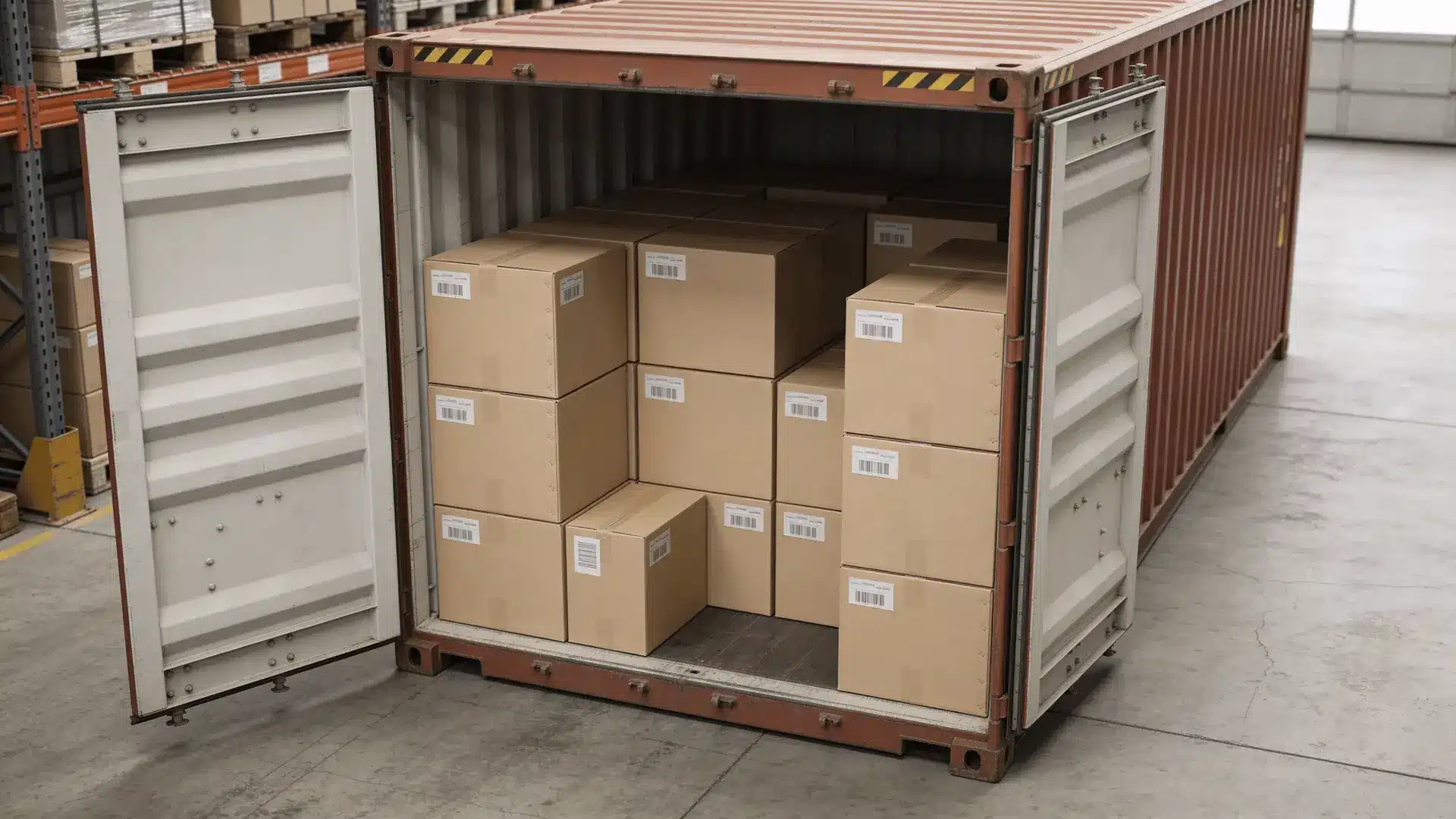
Pricing is usually calculated per cubic meter. A 20-foot container holds roughly 28–33 cubic meters of usable space. If your goods take up 15 cubic meters, you may be quoted LCL pricing based on that number rather than a full container rate.
Freight rates are not constant. Summer is peak moving season, and port congestion can drive prices up. Fuel costs affect both ocean and air rates, which is why the same move can cost more in one month than another.
2. What International Moving Quotes Usually Include
Most full-service quotes include:
- Packing and loading at origin
- Transport to port
- Ocean freight
- Basic destination handling
- Delivery to your new home
Not all quotes include the same destination charges. Some bundle customs clearance and delivery into the main figure, while others list them separately.
Origin charges cover labor and materials where you live now. Freight covers the ship or plane. Destination charges cover unloading, warehouse handling, and final delivery.
If one quote bundles these together and another separates them, the totals can look very different even when the core shipment is similar.
3. Hidden or Variable Charges that Inflate Totals
Some charges appear only once the shipment is in motion. These can include:
- Port storage if customs clearance is delayed
- Demurrage fees if containers sit too long at port
- Customs inspection fees
- Long carry fees if movers must walk far from truck to home
Vehicle shipping adds its own variables. The size of the vehicle, whether it runs, and whether it’s shipped in a container or via roll-on/roll-off format all change the cost structure.
One mistake is assuming price differences are random. In most cases, they connect directly to structure, volume, route, and the services included in the quote.
When is It Worth Shipping Furniture versus Replacing It?
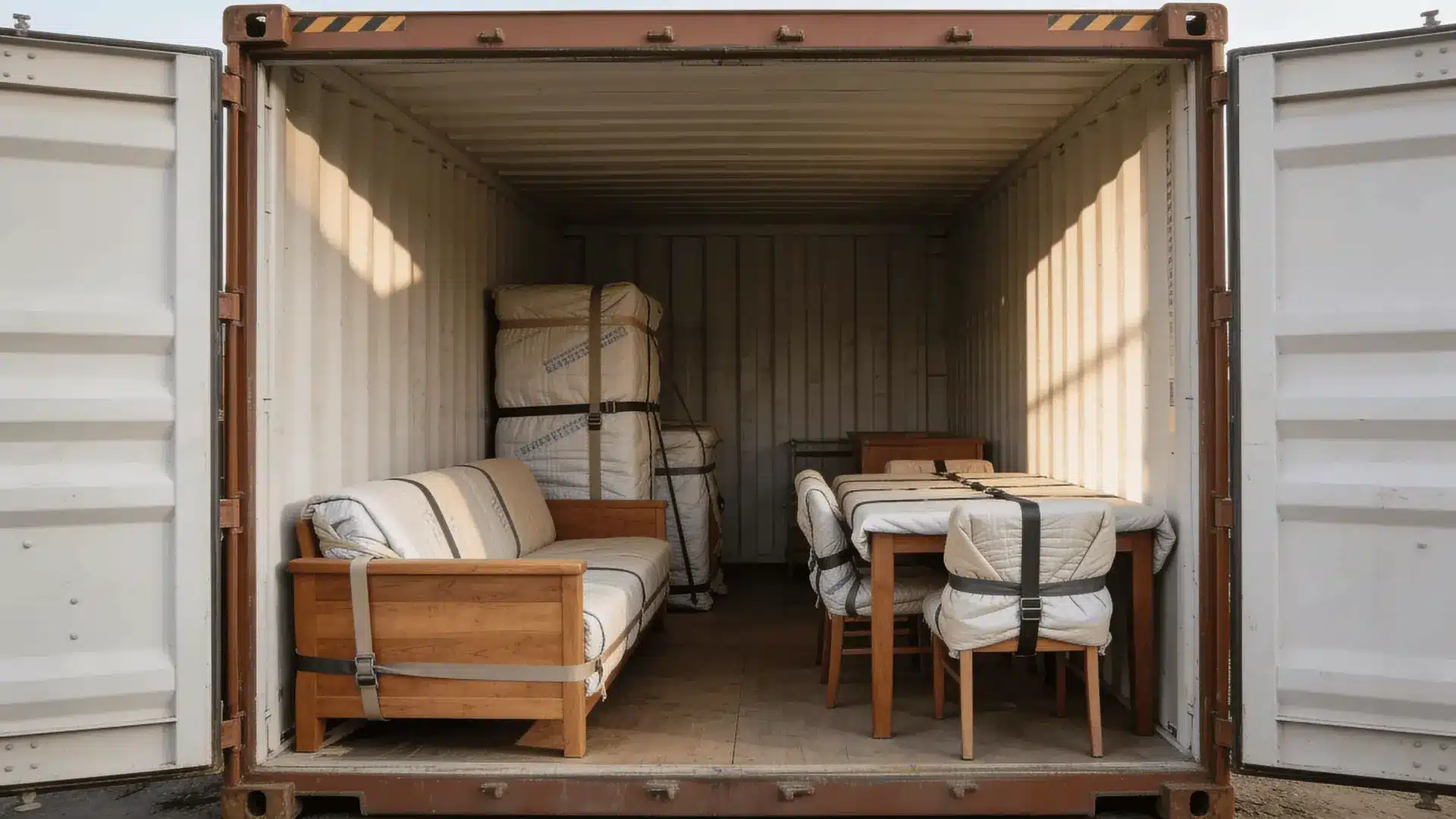
Many people assume it’s always cheaper to replace furniture abroad, but that conclusion often ignores how container pricing works. The break-even point depends on both shipment volume and destination market prices.
If your shipment is small, adding bulky, low-value furniture can increase your cubic meter count enough to push you into a higher cost bracket. In that case, replacing may make sense.
If you are already close to filling a container, adding a few large pieces may not change the container size at all. The marginal cost can be much lower than expected.
The logic works like this:
- If shipping furniture increases your volume enough to require a larger container or significantly more cubic meters in LCL, cost rises sharply.
- If you’re already paying for most of a container, additional items may not increase cost much.
Replacement cost varies by country. In some places, furniture is more expensive due to import duties or limited local supply, so buying everything new may cost more than you think.
There’s also a difference between resale value and functional value. A used couch may sell for very little at home but cost a lot to replace abroad.
Sentimental value adds another layer. That doesn’t appear in a spreadsheet, yet it still influences the decision in a real way.
The contrast is clear: small shipments are sensitive to every extra cubic meter, while larger shipments are shaped more by container thresholds than by individual items.
Documentation and Customs Steps Involved in International Shipping
Customs is more than paperwork. It’s a legal process that determines whether goods can enter a country and whether taxes or duties apply.
You will need a detailed inventory list. This is not just “10 boxes.” It must describe general contents, such as “used household goods,” “clothing,” or “kitchenware.” Detail matters because customs officers assess whether the goods qualify for duty exemptions.
Many countries allow used household goods to enter duty-free if you are relocating and meet certain residency rules. New items, high-value goods, or restricted items can trigger duties or taxes.
Duty triggers usually depend on:
- Whether items are new or used
- Their declared value
- Your residency status
Customs inspections can happen randomly or because documentation raises questions. If your inventory is vague or inconsistent, the chance of inspection increases.
Delays often occur because of missing documents, unpaid duties, or incomplete forms. When a shipment is held at port, storage fees can start quickly.
A customs broker manages submissions, communicates with authorities, and arranges release. Still, hiring a mover does not make customs automatic. You must provide accurate documents and meet eligibility rules yourself.
Some shipments clear in days. Others take weeks if inspections are triggered or paperwork needs correction. The outcome depends heavily on documentation quality and local procedures.
How Should Items Be Packed and Insured for International Transport?
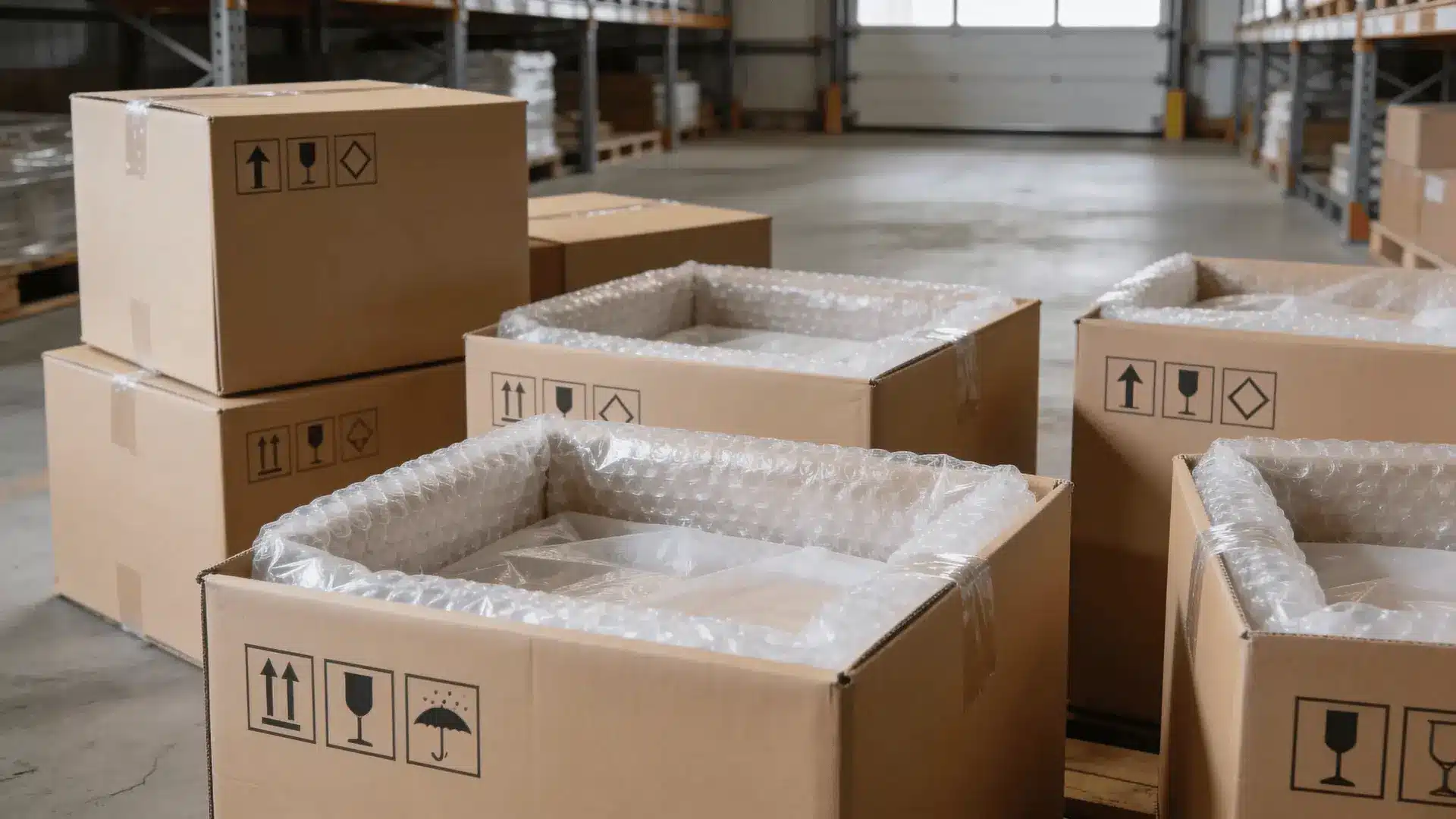
International shipping exposes goods to more stages than most domestic moves. Items are packed, loaded, stacked in containers, lifted by cranes, moved across oceans, and unloaded again.
Inside a container, items are stacked tightly to use space efficiently. If space is not managed well, shifting can occur during transit. Over long voyages, temperature swings and humidity changes can lead to moisture buildup, which increases risk.
Damage often happens during:
- Initial loading
- Container consolidation for LCL shipments
- Unloading at destination
Professional packing matters because many insurance policies require it. If you pack yourself and damage occurs, the insurer may argue that improper packing caused the issue.
There are two common coverage types:
- Total loss coverage: pays only if the entire shipment is lost.
- All-risk coverage: covers partial damage, subject to exclusions.
Common exclusions include pre-existing damage, mold caused by improper packing, or prohibited items.
Insurance does not mean everything is covered. It means specific risks are covered under defined conditions, and those conditions matter as much as the declared value.
The contrast here is between declaring a high shipment value and understanding what the policy actually covers. The number alone does not override exclusions.
What is the Step-By-Step Process from Booking to Delivery?
International shipping is not one continuous trip. It’s a sequence of controlled stages, and each one affects timing, cost, and coordination.
- Survey and volume assessment: A virtual or in-person survey estimates your shipment in cubic meters. If the estimate is too low, final charges can increase once actual volume is measured.
- Booking and space allocation: You confirm the move and either reserve a full container (FCL) or book space in a shared container (LCL).
- Packing and inventory day: Crews professionally pack your belongings, create a detailed inventory, and load everything onto a truck.
- Transport to warehouse or port: Your shipment moves to a consolidation warehouse (for LCL) or directly to port (often for FCL).
- Export clearance: Required documents are reviewed and approved before the goods can legally leave the origin country.
- Ocean transit: The container is loaded onto a vessel. Transit time varies by route and can take several weeks.
- Destination port unloading: Once the ship arrives, the container is unloaded and staged for customs processing.
- Customs clearance: Authorities review documents and may inspect the shipment before release.
- Final delivery or storage: After clearance, your goods are delivered to your new home. If you’re not ready to receive them, temporary storage may be arranged at additional cost.
Although it may look simple from the outside, international shipping moves through multiple handoffs. Each step has its own checks and timelines, which is why delays or added costs can happen at different points along the way.
Wrapping Up
Moving internationally shipping is not just about choosing a boat or plane. It’s about understanding volume, cost structure, customs rules, and the chain of steps your goods move through.
When you see how each stage connects to the next, the wide price ranges and shifting timelines start to make sense.
If you’re planning a move, begin by estimating your volume carefully and reviewing exactly what each quote includes. Ask how customs clearance is handled and what the insurance actually covers.
Check out other guides on the website for more tips and practical insights to help you plan with clarity.
Frequently Asked Questions
What is the cheapest way to move internationally?
For most larger moves, sea freight using a shared container (LCL) is the cheapest option. For very small moves, paying for extra airline baggage can cost less.
How much does it cost to ship things overseas when moving?
Costs often range from $3,000 to $18,000 depending on volume, route, and services included. Pricing is usually based on cubic meters rather than weight alone.
Is it worth shipping furniture overseas?
It depends on shipment size and destination prices. Near a full container, adding furniture may cost little. For small shipments, it can raise costs sharply.
How long does international shipping take?
Sea freight often takes several weeks and can extend due to port congestion or customs delays. Air freight is much faster but significantly more expensive.
What documents are needed for international moving?
You typically need a detailed inventory list, identification documents, and relocation paperwork. A customs broker helps submit and manage these forms.