Shipping a pallet sounds simple. Stack your boxes, wrap it up, call a carrier.
That’s usually where things go sideways.
People treat pallet freight like oversized parcel shipping, and then the pallet gets rejected, damaged, reweighed, or hit with extra charges they never expected.
The real issue isn’t effort. It’s understanding how freight actually moves.
In this guide, I’ll walk you through shipping a pallet the right way. Not just what to do, but why it matters. Once you understand the mechanics behind freight handling, the rules start to make sense.
Let’s start with the first decision most people skip.
When Does It Make Sense to Ship on A Pallet Instead of a Regular Parcel?
Before you wrap anything, you need to know if pallet shipping is even the right choice.
Parcel carriers like UPS and FedEx Ground move packages through automated conveyor systems. Boxes slide, tilt, drop short distances, and get scanned by machines. There are strict size and weight limits because the system is built around automation.
LTL freight works differently.
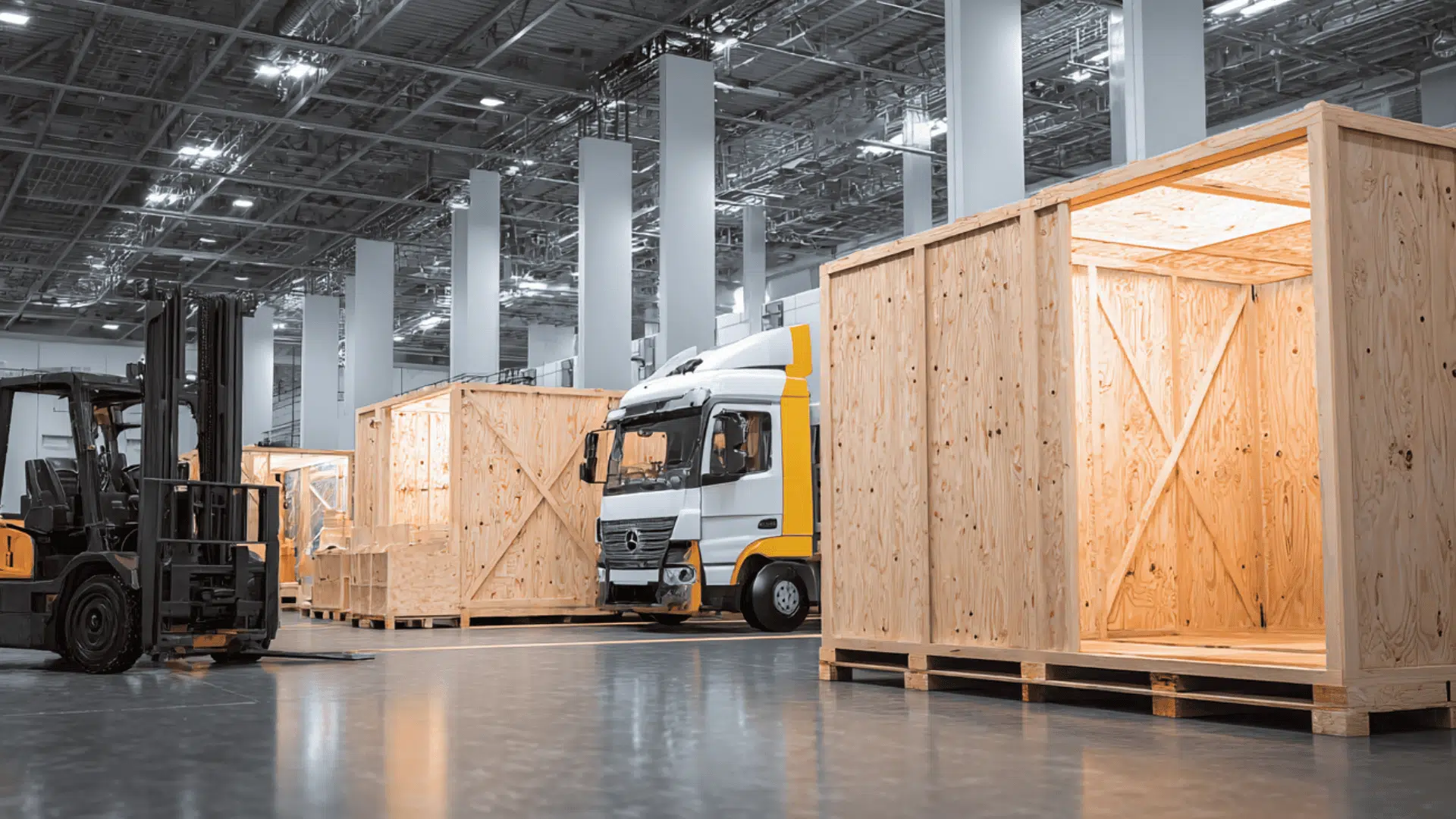
Pallet freight is handled by forklifts. It’s loaded onto trailers manually. It may move across multiple terminals before reaching its destination. It gets stacked with other freight and secured inside a truck.
That handling difference changes everything.
With parcel shipping, cost is often driven by dimensional weight. Large, light boxes can cost more because they take up space.
With pallet freight, pricing is tied to freight class, density, and handling characteristics. It’s less about a single box and more about the entire footprint and weight of the pallet.
Here’s when pallet shipping usually makes sense:
- The shipment is too heavy for parcel limits
- You have multiple boxes going to the same location
- The items are bulky or unstable as individual packages
- You want to keep everything consolidated as one unit
A common mistake is thinking pallet shipping is just “bigger UPS.” It’s not. The infrastructure is different. The risk points are different. The pricing logic is different.
If you only have one small, light box, palletizing it may actually complicate things. But once weight, volume, or fragility increases, a pallet often becomes the safer and more practical option.
What Type of Pallet Should You Use?

In the U.S., the standard pallet size is 48″ x 40″. That size dominates because trailers, forklifts, and warehouse racks are designed around it. Two of these pallets fit cleanly side-by-side in a trailer. Fork tines align properly underneath them.
If you use a non-standard size, it may still ship. But it may not stack efficiently. That can affect safety and sometimes cost.
Structural integrity matters more than size. Your pallet should:
- Have no cracked or broken boards
- Have solid stringers
- Be able to support the full weight without flexing
A broken board isn’t cosmetic. Forklifts lift pallets from underneath. If a board gives out under load, the entire shipment can collapse.
You also want a 4-way entry pallet. That means forklifts can access it from all four sides. In busy freight terminals, flexibility matters. If a forklift can’t access it easily, it slows operations and increases the chance of damage.
You may hear about GMA grade pallets. These are standardized grocery industry pallets, often labeled Grade A or B. Grade A is cleaner and structurally stronger. Grade B is used but still functional. For most domestic shipments, either is fine if structurally sound.
The key misconception here is that any wooden platform works. It doesn’t. A pallet is not just a base. It’s the foundation the entire shipment depends on.
How Should Items Be Stacked on The Pallet?
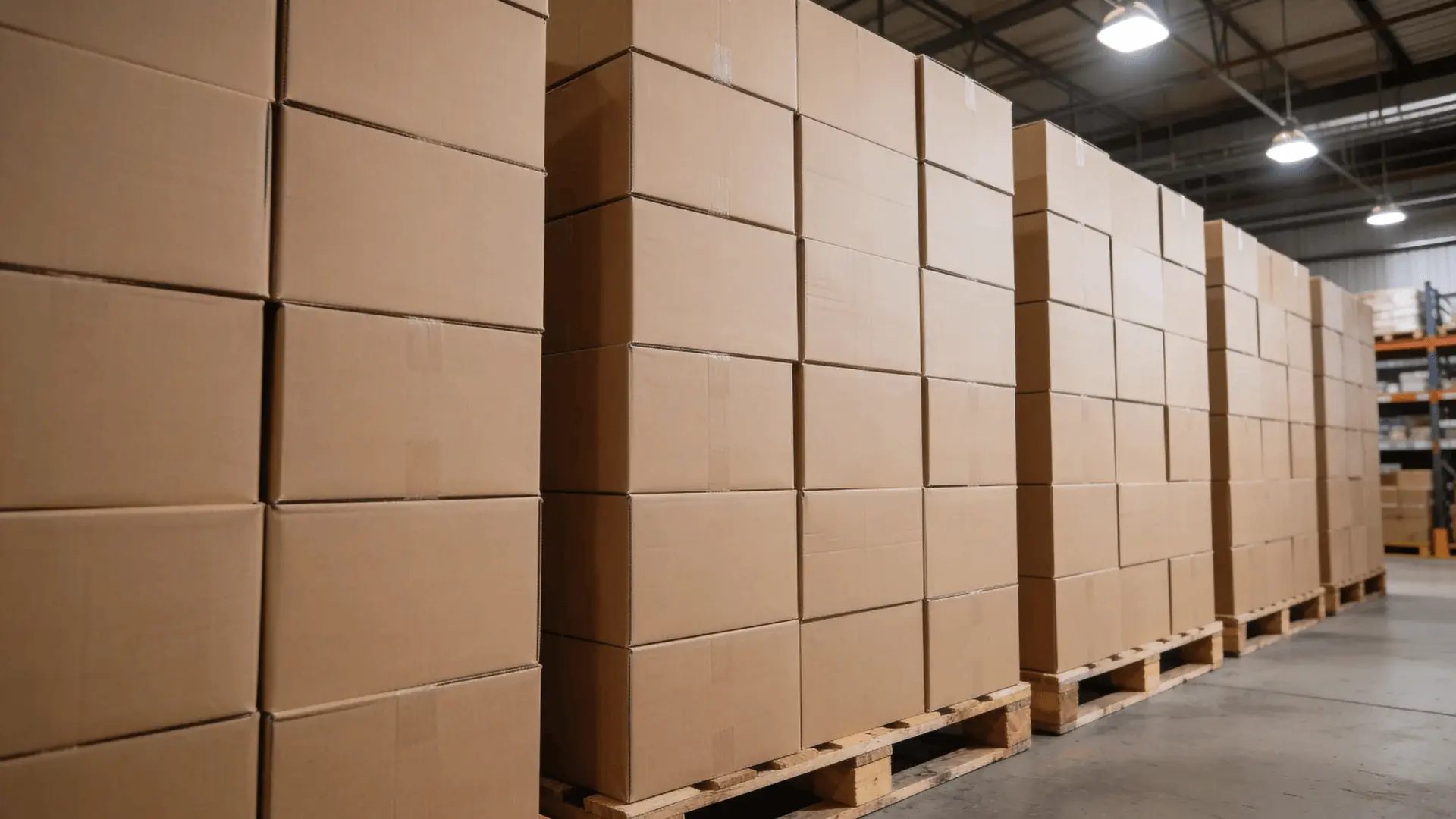
Stacking is where most damage starts. When boxes hang over the edge of a pallet, they lose vertical support.
In freight trailers, pallets are often stacked or placed tightly together. If a box overhangs, the edge becomes a weak point. Compression strength drops. That box can crush more easily under weight.
Forklifts also need clean edges. Overhang can get clipped during handling. That’s one reason carriers reject pallets with visible overhang.
Even if it looks minor, overhang changes how pressure distributes across the load.
How Load Height Affects Tipping Risk
Every pallet has a center of gravity. When heavier items are placed at the bottom, the center of gravity stays low. That makes the pallet more stable during turns, braking, and bumps.
If heavier boxes are stacked high, the center of gravity rises. During a sharp truck turn, lateral force increases. A tall, top-heavy pallet can lean or tip.
Height matters too. A low, dense pallet behaves differently from a tall, narrow one. As height increases, stability decreases, especially if the footprint stays the same.
When Stackability Matters for Cost and Safety
Column stacking, boxes aligned directly on top of each other, creates vertical strength. Weight transfers evenly downward.
Pyramid stacking may feel stable, but it weakens compression strength and makes stacking impossible. If your pallet can’t be safely stacked with others, carriers may treat it as non-stackable freight.
That affects safety and can lead to added handling constraints.
A tight wrap cannot fix poor stacking.
Wrapping holds things together. It doesn’t change physics. If the weight distribution is wrong, the pallet will still be unstable. Stacking correctly solves the root problem.
How Do You Secure a Pallet Properly for Transit?
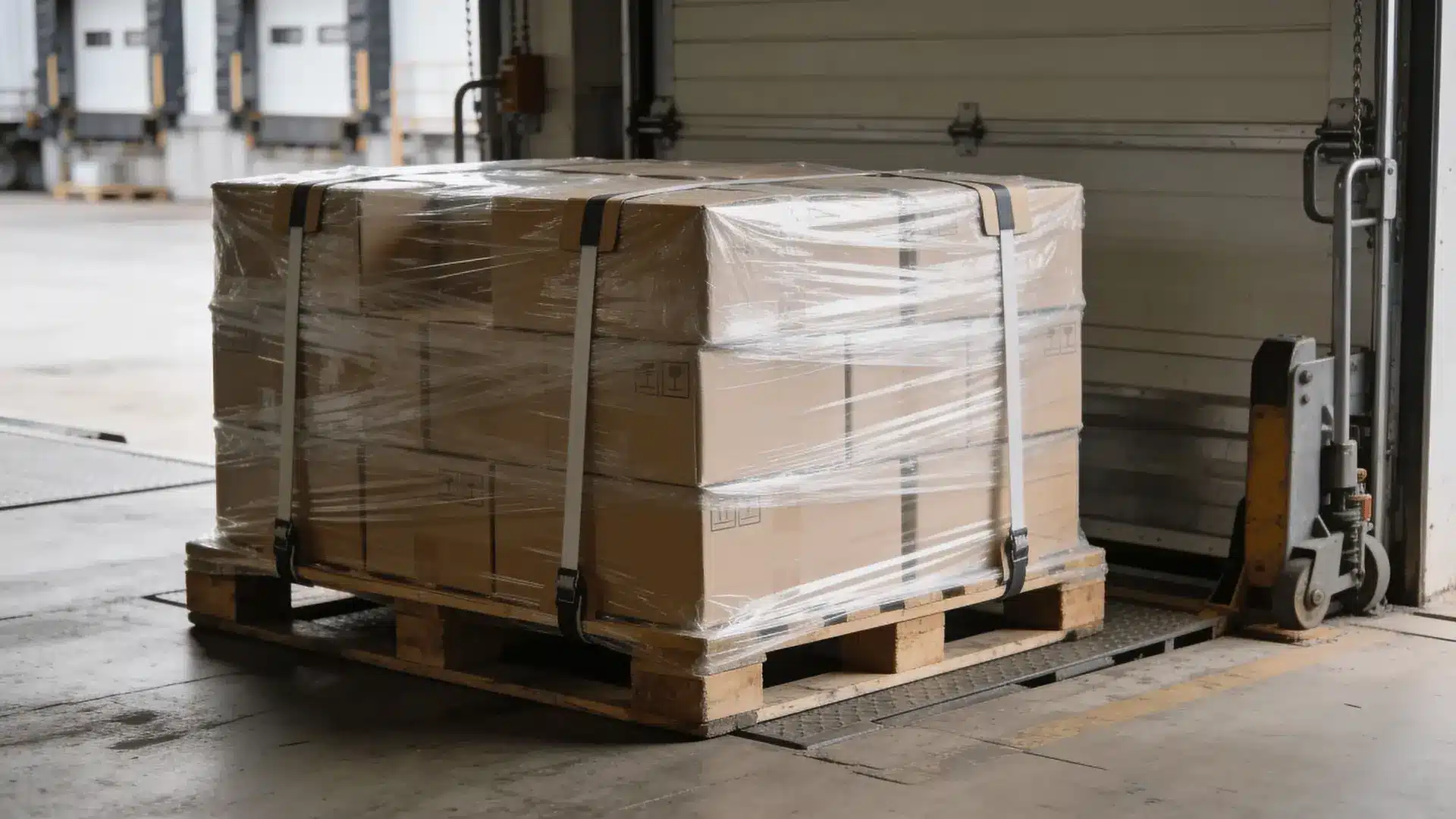
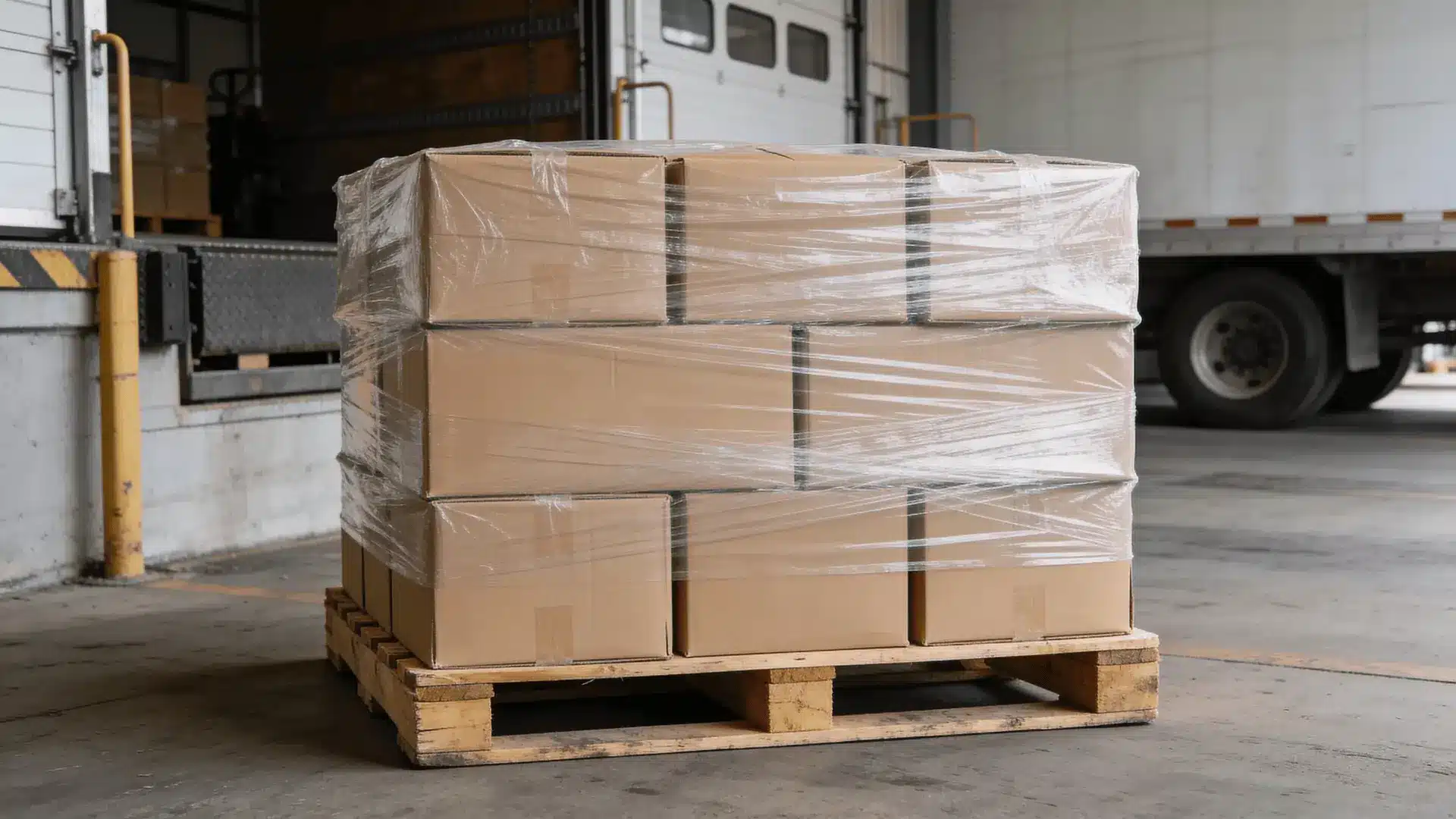
When freight trailers move, they accelerate, brake, and turn. Inside the trailer, your pallet experiences forward and sideways forces. Stretch wrap and straps are there to control that movement.
How to Anchor Wrap to The Pallet Base
Always start wrapping at the base.
The wrap should capture both the boxes and the pallet deck. This anchors the load to the pallet itself. If you only wrap the boxes, the stack can slide off the pallet as one unit.
Wrap tension matters more than wrap quantity.
Loose wrap adds layers but little stability. Tight wrap creates compression that helps keep boxes aligned.
When to Use Straps in Addition to a Wrap
Straps provide structural reinforcement. If the load is heavy, uneven, or contains rigid items that could shift, straps add horizontal restraint that stretch wrap alone may not provide.
Wrap contains the load. Straps restrain it. For uniform, lightweight cartons, wrap alone may be sufficient. For dense or mixed freight, straps significantly reduce shift risk.
How to Prevent Shifting During Truck Turns
During a sharp turn, lateral force pushes the load sideways.
A properly wrapped pallet behaves as one unit. A poorly wrapped one allows inner boxes to slide, causing lean. Once lean begins, corner crush and collapse can follow.
The most common failure modes are:
- Load shift
- Leaning stacks
- Crushed lower cartons
- Edge tearing from loose wrap
More layers do not automatically fix this. Controlled tension and base anchoring do. Now let’s move to paperwork.
What Documentation is Required to Ship a Pallet?
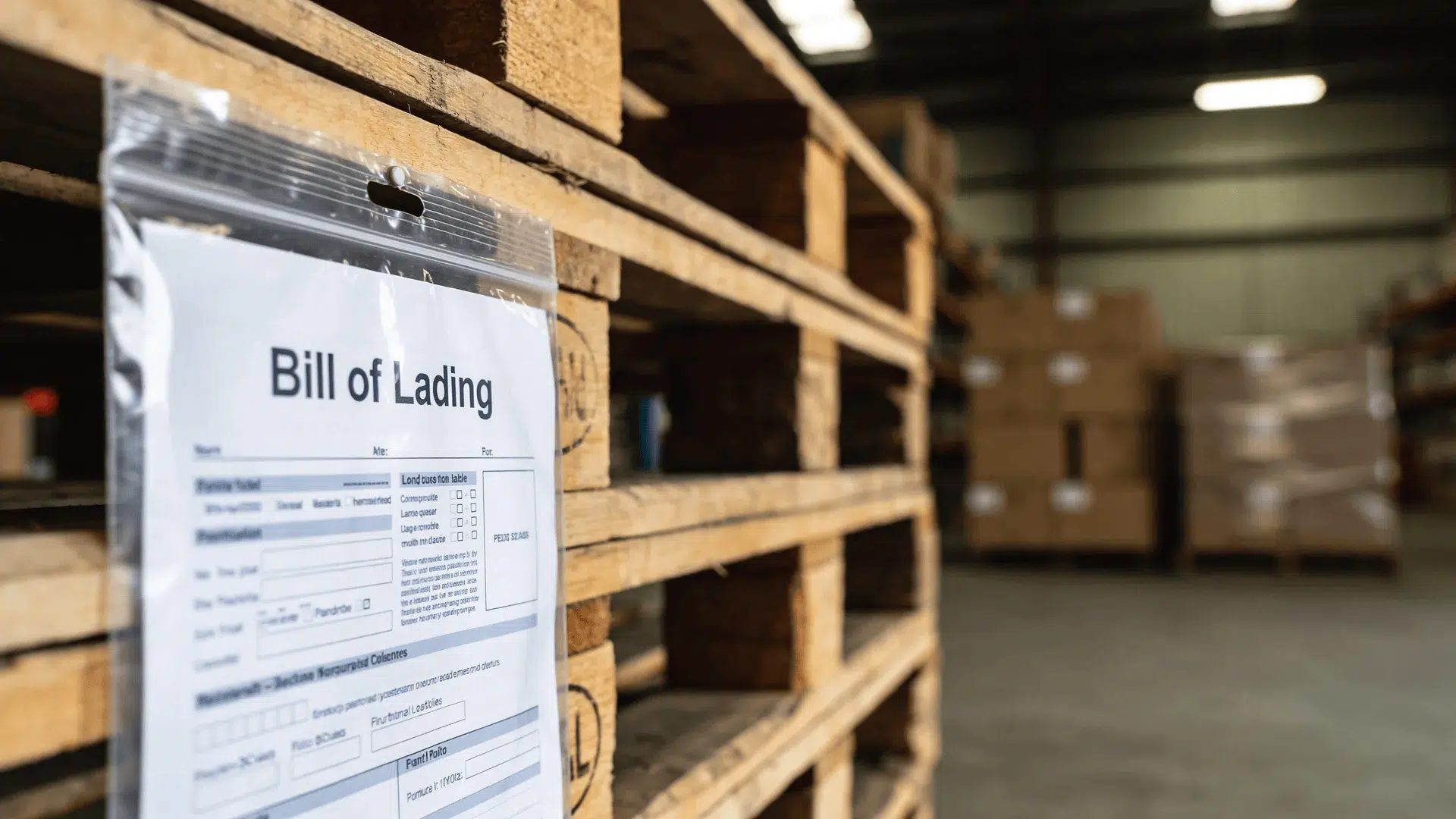
The Bill of Lading, or BOL, is not just a label. It is the legal contract between you and the carrier. It describes what is being shipped and under what terms.
A proper BOL includes:
- Shipper and receiver information
- Weight and pallet count
- Freight class
- Description of goods
Freight class matters because it reflects density and handling characteristics. If you underestimate weight or misclassify freight, the carrier can reweigh or reclassify it.
That leads to additional charges.
Label placement matters too. Labels should be visible on multiple sides of the pallet so dock workers can identify it from different angles.
The misconception here is that the BOL is just paperwork. It defines liability and billing accuracy. Small errors can turn into expensive corrections.
How Do You Book a Pallet Shipment with A Carrier or 3PL?
Booking LTL freight follows a set flow. You gather shipment details, request a quote, schedule pickup, and the carrier assigns a pickup window.
You can book directly with a carrier or through a third-party logistics provider (3PL).
Carriers own the trucks. 3PLs act as intermediaries and often have access to multiple carriers.
In some cases, 3PLs secure competitive rates because of volume agreements. Booking directly isn’t automatically cheaper.
Liftgate service is another key detail. If either pickup or delivery location lacks a loading dock, you’ll need a liftgate truck. That’s a truck with a hydraulic platform to raise or lower the pallet.
Residential addresses also affect handling. Freight networks are designed around commercial docks. Residential deliveries require additional coordination and time.
Scheduling windows matter because freight carriers operate on routes. Missing a pickup window can delay the shipment to the next cycle. Understanding this flow prevents frustration on pickup day.
What Causes Unexpected Pallet Shipping Charges?
Many people assume the quoted rate is final. It isn’t always.
Common extra charges include:
- Liftgate service
- Residential pickup or delivery
- Appointment scheduling
- Limited access locations
Another frequent issue is reweigh or reclassification.
If your stated weight is lower than actual weight, or your freight class doesn’t match the density, the carrier can adjust the invoice.
Non-stackable freight can also trigger higher charges. If your pallet cannot safely support weight above it, it takes up more trailer space.
Limited access locations, like schools or construction sites, may require extra handling time.
These charges aren’t random. They reflect added labor or reduced efficiency in the freight network.
The key is accuracy. Clear information reduces surprises.
Special Case: How Pallet Shipping Changes for Amazon FBA
Amazon has stricter pallet rules than general freight. They require 48″ x 40″ wooden pallets. Typically, GMA Grade A or B. Pallets must be in good condition.
Height usually cannot exceed 72 inches. Total weight must stay within set limits. Amazon also requires specific labeling on cartons and the pallet itself.
They enforce stackability because fulfillment centers operate at high volume. Pallets are stacked, moved quickly, and processed on tight schedules.
Normal pallet prep does not automatically meet Amazon’s rules. Label placement, wrapping clarity, and weight limits are monitored closely.
This section is about compliance, not selling strategy. If your pallet fails to meet these requirements, it may be refused.
Wrapping Up
Shipping a pallet works best when you understand how the freight system actually operates.
It isn’t about adding more wrap or guessing at paperwork. It’s about balanced stacking, proper securing, accurate documentation, and clear booking details.
Once you see how forklifts, trailers, and terminals interact with your shipment, the rules feel logical instead of arbitrary.
With careful preparation, shipping a pallet becomes predictable rather than stressful.
Start with the right foundation. Build upward with balance. Secure it well. Then let the freight network do its job.
Frequently Asked Questions
How much does it cost to ship a pallet?
Costs vary based on weight, dimensions, distance, freight class, and extra services like liftgate or residential delivery. There isn’t a single flat rate. Accurate details produce accurate quotes.
Will FedEx take a pallet?
Yes, FedEx Freight handles palletized LTL shipments. The pallet must meet size, weight, and packaging standards. Proper documentation is required.
Can I ship a pallet via UPS?
UPS offers freight services for pallet shipments. It operates separately from standard parcel shipping. The pallet must meet freight network requirements.
What is a Bill of Lading?
A Bill of Lading is the shipping contract between you and the carrier. It lists shipment details and defines billing and liability terms.
What is LTL shipping?
LTL stands for Less-Than-Truckload. Multiple shippers share space on one trailer. Freight moves through terminal networks before final delivery.
How tall can a pallet be for shipping?
Height limits vary by carrier, but many domestic shipments stay under 72–96 inches. Stability and stackability often matter as much as maximum height.