Most people run into logistics problems before they understand what logistics even means. Orders pile up. Storage gets messy. Shipping takes longer than it should.
Somewhere in that stress, the term 3PL logistics shows up and sounds like a solution. But most explanations skip past the parts that actually matter.
This guide is here to help. I’ll walk you through what a 3PL really is, how it works day to day, where it helps, and where it can quietly cause problems.
By the end, you should feel clear about whether this model fits your business, not pressured into using it.
What Does 3PL Logistics Mean?
A 3PL is a third party that handles logistics work for a business. That usually means storage, shipping, and order handling. Instead of doing those things yourself, you pay another company to do them for you.
The “third-party” part matters. The first party is your business. The second party is your customer. The third party sits in the middle and manages the physical movement of goods.
Companies outsource logistics for a simple reason. Moving products takes space, labor, systems, and time. As order volume grows, logistics stops being a side task and becomes a full operation.
Many businesses reach a point where running that operation pulls attention away from sales, product, and customer work. Outsourcing is a way to trade control for focus.
What Does a 3PL Actually Do?

To really understand a 3PL, you have to look at the daily work. Here are the actual tasks happening behind the scenes, not just the service labels.
1. Warehousing
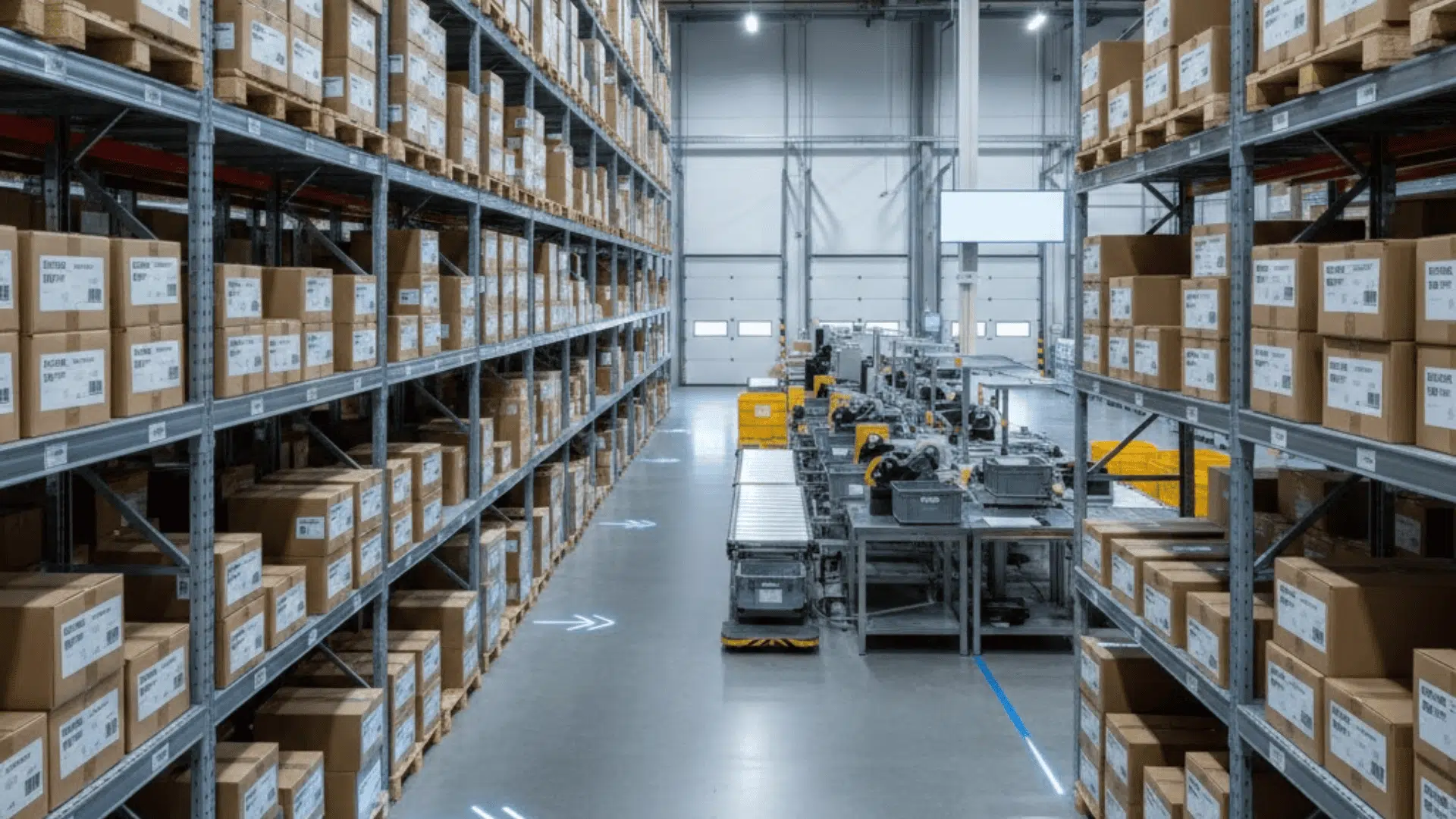
A 3PL stores your products in its own facility. That sounds simple, but it comes with structure.
Inventory is checked in when it arrives. Items are logged into a system. Locations are assigned so workers can find products fast. As orders come in, staff pick items from shelves, pack them, and stage them for shipping.
Inventory control is a big part of this. Counts are updated as items move. Mistakes here lead to overselling or delays, so systems and routines matter more than square footage.
2. Order Fulfillment
Once a customer places an order, the 3PL system receives it. That order flows to the warehouse floor.
Items are picked, packed, labeled, and handed off to a carrier. Tracking numbers are sent back to your store or platform. From the customer’s view, it feels automatic. Behind the scenes, timing and accuracy are everything.
Fulfillment speed depends on cut-off times, staffing, and carrier schedules. Faster shipping usually means higher costs or stricter processes.
3. Transportation and Distribution
Most 3PLs coordinate shipping rather than drive trucks themselves. They choose carriers based on speed, price, and destination.
Domestic shipping is simpler. International shipping adds customs forms, taxes, and longer timelines. A good 3PL manages those details so packages do not get stuck mid-route.
4. Additional Services
Some providers go further. They may handle returns, assemble kits, or bundle products before shipping.
A few also manage customer service related to delivery issues. Each added service comes with extra fees and more coordination.
How 3PL Logistics Works Step-by-Step

Rather than thinking in terms of services, it helps to trace what actually happens to your products once a 3PL takes over. Below is a straightforward breakdown of how inventory and orders move through a typical 3PL setup:
- You send inventory to the 3PL warehouse: You ship products from your supplier or location to the 3PL. This includes scheduling deliveries, labeling pallets or cartons, and matching inbound shipments to expected inventory records.
- The 3PL checks in and stores the products: Warehouse staff receive the shipment, count units, inspect for damage, and log everything into their system before assigning storage locations for future picking.
- Orders flow in from your sales channel: Customer orders automatically pass from your e-commerce platform or order system into the 3PL’s software, triggering fulfillment without you needing to manually send instructions.
- The 3PL picks, packs, and ships each order: Workers retrieve items from storage, package them according to your rules, print labels, and hand parcels to carriers based on speed, cost, and destination.
- Tracking details flow back to you and the customer: Once shipped, tracking numbers sync back to your system, updating order status and giving customers visibility into delivery progress without extra customer service work.
- Returns or issues are handled based on your agreement: Returned items are received, inspected, restocked, or discarded, and logged, following predefined rules, so you are not making case-by-case decisions daily.
You still control pricing, marketing, and customer relationships. The 3PL controls how fast and how accurately physical orders move. Problems usually happen when those roles are not clearly defined upfront.
Types of 3PL Providers
Not all 3PLs are built the same. The way a provider is structured affects cost, flexibility, visibility, and how problems get handled when something goes wrong.
1. Asset-Based 3PLs
Asset-based 3PLs own the physical infrastructure. That usually means warehouses, equipment, and sometimes transportation fleets. They hire the staff and run daily operations themselves.
This setup can offer tighter control over inventory handling and faster decisions on the warehouse floor. If something breaks or a process needs adjustment, fewer layers are involved. The trade-off is rigidity. Because these providers carry high fixed costs, pricing can be less flexible, and scaling up or down may be slower.
2. Non-Asset-Based 3PLs
Non-asset-based providers do not own warehouses or trucks. Instead, they manage logistics through a network of partner facilities and carriers.
This model can scale quickly and adapt to changing volumes or locations. It works well for businesses that value flexibility or operate across regions. The downside is distance from the physical work. When errors happen, resolution often involves third parties, which can slow response times and reduce visibility.
3. Fulfillment-Focused vs. Transport-Focused 3PLs
Fulfillment-focused 3PLs specialize in picking, packing, and shipping individual orders. They are designed around ecommerce workflows, fast turnaround times, and high order volume.
Transport-focused 3PLs concentrate on moving large shipments between locations. They handle freight planning, carrier selection, and distribution routing.
Fulfillment-focused providers suit ecommerce brands shipping to customers. Transport-focused providers fit manufacturers, wholesalers, or businesses moving pallets and bulk inventory between warehouses or retail locations.
3PL vs. 4PL Logistics

The difference between 3PL and 4PL is less about size and more about responsibility. One executes the work. The other designs and manages the system behind it.
| Area | 3PL (Third-Party Logistics) | 4PL (Fourth-Party Logistics) |
|---|---|---|
| Core role | Handles day-to-day logistics tasks | Oversees and coordinates the entire logistics strategy |
| Primary focus | Execution and operations | Planning, optimization, and partner management |
| Physical handling | Picks, packs, ships, and stores inventory | Does not handle inventory directly |
| Technology use | Uses systems to run warehouse and shipping workflows | Integrates and manages multiple systems and providers |
| Number of partners | Usually one main provider | Often manages several 3PLs and carriers |
| Best for | Businesses needing operational support | Businesses with complex, multi-provider logistics |
| Level of control | Controls how orders are fulfilled | Controls how the whole logistics network operates |
| Cost structure | Operational fees tied to volume and services | Higher strategic fees tied to oversight and optimization |
A 3PL helps when execution is the bottleneck. A 4PL becomes useful when coordination and visibility across many partners are the real problem. The right choice depends on where complexity lives in your operation.
Is Amazon a 3PL?
Yes, Amazon functions as a 3PL, but only within a specific set of boundaries.
When sellers use Fulfillment by Amazon (FBA) , Amazon stores inventory, picks and packs orders, ships products, and handles returns. In that sense, it performs the same core tasks as a traditional third-party logistics provider.
The difference is scope. Amazon’s fulfillment system is designed primarily to serve its own marketplace. It works best when most or all of your sales happen on Amazon and when your products fit standard size, weight, and packaging rules.
Limitations appear when businesses sell across multiple channels or need custom workflows. FBA offers limited branding control, restricted packaging options, and strict inventory rules.
Multi-channel fulfillment is possible, but it is often more expensive and less flexible than using a dedicated 3PL.
Traditional 3PLs usually provide broader integrations, clearer cost structures outside marketplace fees, and more customization. Amazon is powerful for marketplace-driven brands. It becomes restrictive when logistics needs extend beyond Amazon’s ecosystem.
Benefits of Using 3PL Logistics
The value of a 3PL isn’t speed or savings alone. It comes from changing how work, cost, and attention are distributed as a business grows.
Scalable infrastructure without upfront investment: A 3PL already has warehouse space, trained labor, and systems in place, letting you grow or shrink volume without long-term leases, hiring cycles, or capital commitments.
Variable cost structure instead of fixed overhead: Instead of paying rent, payroll, and equipment costs year-round, you pay based on actual usage, which reduces risk during slow periods and aligns expenses with revenue.
Improved operational focus: When logistics runs predictably, your attention shifts away from daily shipping problems and toward product decisions, customer experience, and long-term planning that directly affect growth.
Faster operational maturity: 3PLs bring established processes and experience, allowing growing businesses to operate with systems and discipline they would struggle to build internally at the same pace.
These benefits show up most clearly during growth. Very small operations may find the costs hard to justify, while very large ones may eventually outgrow shared infrastructure and need custom solutions.
Downsides and Common Mistakes
Most problems with 3PLs are not caused by bad providers. They come from mismatched expectations and unclear responsibility boundaries.
- Reduced visibility into daily operations: Once fulfillment is outsourced, you no longer see every action firsthand, which can make delays or errors feel sudden if reporting and communication systems are not well defined.
- Choosing a provider based only on price: Lower quotes often hide trade-offs in service quality, response time, or flexibility, leading to downstream costs that outweigh the initial savings.
- Underestimating setup and integration effort: Connecting systems, syncing inventory, and testing workflows takes time, and rushed onboarding often causes errors that persist long after launch.
- Overlooking small, compounding fees: Storage surcharges, handling add-ons, and exception fees may seem minor individually but can significantly raise monthly costs if not reviewed carefully upfront.
A 3PL is not a shortcut or a hands-off fix. It’s a partnership that works best when roles, costs, and limits are clearly defined before the first shipment ever arrives.
How Much Does 3PL Logistics Cost?

Understanding how much 3PL logistics costs helps you budget with less guesswork. The table below shows typical pricing ranges you’ll encounter based on recent industry data.
| Cost Component | Typical Range | What It Covers |
|---|---|---|
| Setup & Onboarding | $250 – $1,500 (one-time) | Account setup, system integration, SKU configuration, and initial training with the 3PL. |
| Receiving / Inbound Handling | $5 – $15 per pallet / $0.25 – $1 per carton | Unloading shipments, counting inventory, checking for damage, logging into the system. |
| Storage Fees | $15 – $40 per pallet per month (or ~$0.46/cu-ft) | Space your inventory occupies in the warehouse; varies with method and season. |
| Pick & Pack (Fulfillment) | $1.50 – $5+ per order | Labor to pick items, pack them, apply labels, and prepare for shipment. |
| Shipping Costs | Carrier rate + markup / discount | Final delivery cost to your customer; 3PL may pass through discounted rates or add a small fee. |
| Returns Handling | $3 – $10 per return | Processing, inspecting, repackaging, and restocking returned items. |
| Packaging Materials | $0.50 – $3 per box | Cost for basic boxes, mailers, tape, and void fill not always included in pick & pack fees. |
| Account / Tech Fees | $50 – $1,000+ per month | Access to warehouse tech, reporting tools, API connections, or dedicated support. |
These ranges are typical benchmarks, not fixed quotes, because costs depend on your order volume, inventory size, product characteristics, and the level of service you require.
When Should a Business Use a 3PL?
Clear signs include rising order volume, crowded storage, and shipping mistakes. Growth can also trigger the shift. When sales expand faster than operations, outsourcing can stabilize things.
If logistics is already smooth and manageable, switching too early can add cost without benefit.
How to Choose the Right 3PL Provider
Choosing a 3PL comes down to operational fit, not brand size or promises. A simple checklist helps expose issues early.
- Product handling experience: Confirm they regularly work with products like yours, including size, weight, fragility, or compliance needs. Lack of experience often leads to avoidable errors.
- System integration and visibility: Make sure their software connects cleanly with your sales channels and gives clear, real-time access to inventory, orders, and exceptions.
- Transparent pricing structure: All fees should be itemized and easy to explain. Vague pricing usually means unexpected charges later.
- Defined error resolution process: Ask how errors are logged, communicated, and resolved. Pay attention to timelines and accountability, not reassurance.
A solid 3PL explains limitations as clearly as capabilities. If answers are unclear or overly polished, that uncertainty often shows up in day-to-day operations.
Conclusion
Logistics feels overwhelming because it mixes space, time, money, and trust. Understanding 3PL logistics helps you see where responsibility shifts and where it stays with you.
This model works best when expectations are clear, and growth demands support. It fails when treated as a shortcut. Take time to map your needs before choosing a partner.
If you do that, the decision becomes calmer and more grounded. From there, the next step is simple. Talk to providers with clarity, not urgency.
If this clarified the logistics side, take the next step. Browse the other guides on the site to dig deeper into fulfillment, shipping strategy, and growth decisions at your own pace.