Understanding what freight forwarding is can change the way you approach shipping, especially if you’ve only seen it from the outside.
Many people think it’s just booking transport, but the real value is in how forwarders connect all the moving parts you don’t see: routing, timing, paperwork, and handoffs that can make or break a shipment.
Small decisions, like choosing the wrong mode or missing one document, can create delays that ripple through the entire supply chain.
In this blog, I’ll break down how freight forwarding actually works, what services matter most, and how the process plays out step by step so you can ship with fewer surprises.
What is Freight Forwarding?
Freight forwarding is a service that helps move goods from one place to another, usually across cities or countries.
A freight forwarder plans the shipment, chooses the best transport, and handles the details along the way. This can include booking trucks, ships, or planes, and helping with shipping paperwork.
Freight forwarders do not usually move the goods themselves. Instead, they work with carriers to make sure everything reaches the right place on time.
For businesses, freight forwarding makes shipping easier, less stressful, and more organized, especially when dealing with international deliveries.
Services Freight Forwarders Usually Offer
Freight forwarders offer many services that make shipping easier and more organized. I have seen how using the right services can save both time and stress.
- Transport Planning and Routing: They choose the best route and shipping method based on cost, speed, and cargo type.
- Booking with Carriers: They book space with trucking companies, airlines, or shipping lines for your goods.
- Shipment Consolidation: Smaller shipments can be combined to lower overall shipping costs.
- Documentation Support: They help prepare and check shipping paperwork to avoid errors and delays.
- Warehousing and Storage: Short-term storage is arranged when goods need to wait before moving again.
- Tracking and Updates: They provide shipment updates so you know where your cargo is at each stage.
These services work together to make shipping less complicated and more reliable, especially for international shipments.
Types of Freight Forwarding and Shipping Modes
Freight forwarders use different shipping modes based on speed, distance, and budget. Each option has its own use case, and choosing the right one can make a big cost difference.
| Shipping Mode | Best For | Speed | Typical Cost Range |
|---|---|---|---|
| Ocean Freight | Large or heavy shipments | Slow | $1,000–$4,000 per container |
| Air Freight | Urgent or high-value goods | Fast | $3–$8 per kg |
| Road Freight | Regional and cross-border moves | Medium | $1.50–$4 per mile |
| Rail Freight | Long-distance inland transport | Medium | $0.04–$0.08 per ton per mile |
| Multimodal Freight | Complex routes using multiple modes | Varies | Depends on route and modes |
These prices can change based on fuel costs, season, cargo type, and location. Understanding each option helps you balance speed and budget more effectively.
How Freight Forwarding Works Step-by-Step
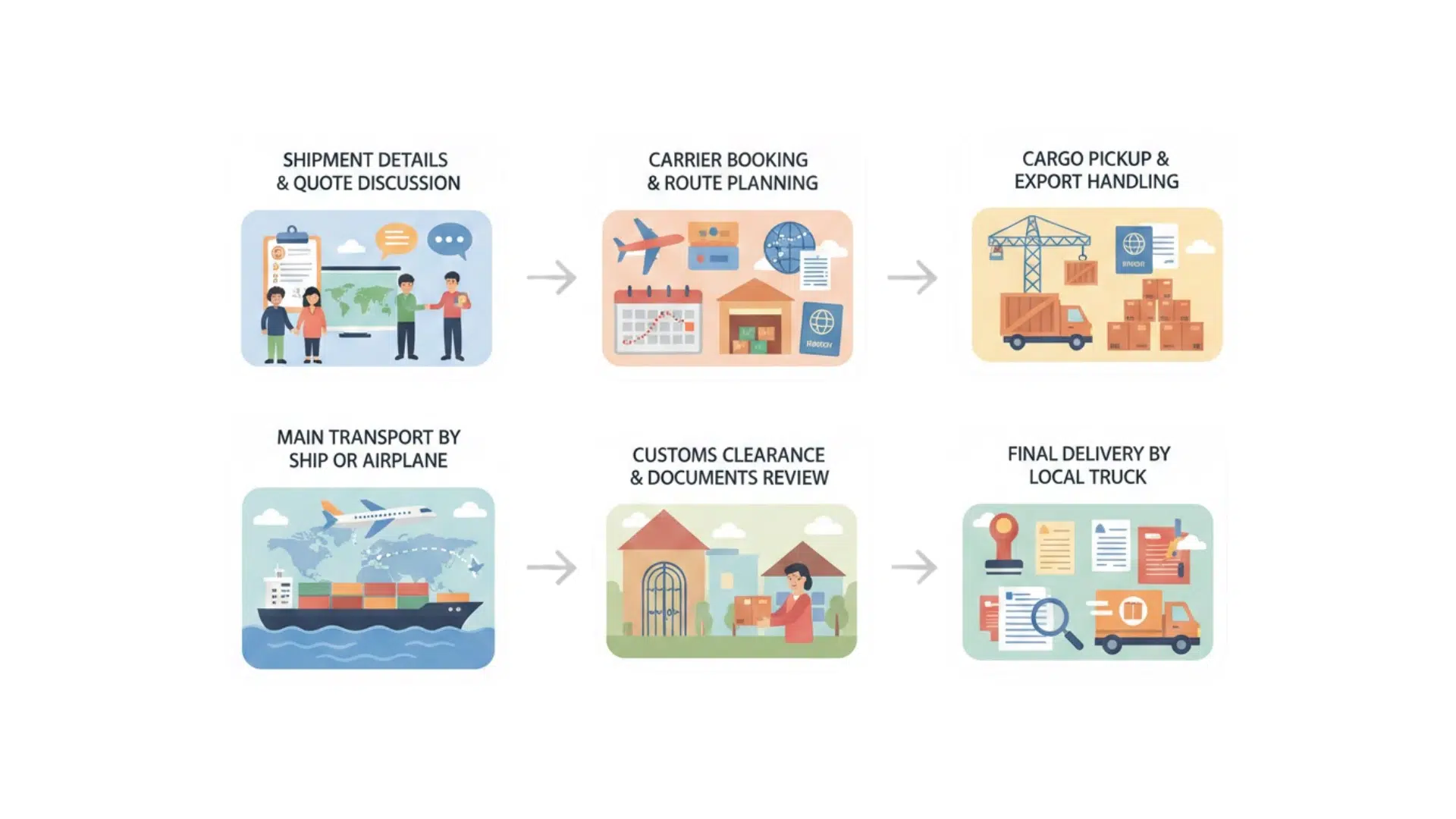
Freight forwarding follows a clear flow, even if it sounds complex at first.
1. Shipment Details and Quote
The process starts when you share key details like what you’re shipping, how much it weighs, and where it needs to go. The freight forwarder checks the best route and shipping method based on your timeline and budget.
They may ask about special needs like fragile packing or temperature control. Then they prepare a quote that includes transport, handling, and possible extra charges.
2. Booking and Carrier Coordination
Once you approve the quote, the forwarder books space with the right carrier, like a trucking company, airline, or shipping line. They pick schedules that match your delivery needs and confirm pickup and departure times.
They also plan how the cargo will move between locations, like from a warehouse to a port. This step is about locking in the shipping path and avoiding last-minute surprises.
3. Pickup and Export Handling
Next, the cargo is picked up from the supplier or your location and moved to the first shipping point. The forwarder checks that packing and labels match the shipment details.
If the cargo is going overseas, they help organize export paperwork and make sure rules are followed. They may also arrange storage if the cargo arrives early.
4. Main Transport by Air or Ocean
Now the shipment goes through the main travel leg, usually by air or ocean. Air is faster and often costs more, while the ocean is slower but can be cheaper for large loads.
The forwarder tracks key milestones like departure, arrival, and any transfer points. They also watch for common issues like weather delays or port congestion. During this stage, good tracking and updates help you plan ahead.
5. Customs Clearance and Import Steps
When the shipment reaches the destination country, it usually needs customs clearance before it can move forward. The forwarder helps gather the right documents, like the invoice and packing list, and coordinates with customs support if needed.
Duties and taxes may be calculated and paid depending on the shipment and terms. If something is missing or incorrect, customs can hold the cargo. Getting this step right is key to avoiding long delays and extra costs.
6. Final Delivery and Last-Mile Transport
After clearance, the cargo is released and moved to the final delivery address. The forwarder arranges local trucking, delivery appointments, and any special handling required.
If the delivery is to a warehouse, they may schedule a time window to unload. They also confirm proof of delivery once the shipment arrives.
Key Freight Forwarding Documents
Freight forwarding involves paperwork that helps goods move legally and smoothly.
- Bill of Lading: This is a key shipping document that acts as proof of shipment and outlines cargo details.
- Commercial Invoice: It shows the value of the goods and is used by customs to calculate duties and taxes.
- Packing List: This lists how the goods are packed, including weight, size, and item count.
- Certificate of Origin: It confirms where the goods were made and may affect duty rates.
- Insurance Certificate: This proves the cargo is insured in case of damage or loss.
Having them ready and accurate can save time, money, and a lot of stress.
Freight Forwarder vs. Carrier vs. Customs Broker
These three roles often get mixed up, but they do very different jobs in shipping. Knowing the difference helps you understand who is responsible at each stage, and I have seen this clarity prevent many costly mistakes.
| Role | What They Do | Main Responsibility |
|---|---|---|
| Freight Forwarder | Plans and manages the full shipment process | Organizes transport, paperwork, and coordination |
| Carrier | Physically moves the goods | Transports cargo by truck, ship, rail, or plane |
| Customs Broker | Handles customs-related paperwork | Clears goods through customs and manages duties |
Each role plays an important part in getting goods from start to finish.
When and How to Choose a Freight Forwarder
Using a freight forwarder can make shipping much easier, especially when things start to feel complex. I have found that knowing when to use one and how to pick the right partner can save time and avoid stress.
- When You are Shipping Internationally: Cross-border shipping involves rules, paperwork, and customs steps that are hard to manage alone.
- When Shipments are Large or Time-Sensitive: Big loads or urgent deliveries need careful planning to avoid delays and extra costs.
- When You Want Fewer Errors and Delays: Freight forwarders help manage details that often cause problems, like documents and handoffs.
- Look for Clear Pricing and Honest Quotes: A good forwarder explains all charges and avoids hidden fees.
- Check Experience in Your Shipping Route: Experience with your lanes and cargo type leads to smoother shipping.
- Ask About Communication and Support: Regular updates and fast replies matter when issues come up.
When these points line up, shipping becomes far more predictable and easier to manage.
Common Freight Forwarding Terms for Beginners
When you start shipping goods, you will hear many new terms that can feel confusing. Understanding a few common ones makes freight forwarding much easier.
Freight Forwarder means the company that plans and manages your shipment. The carrier is the truck, ship, or airline that moves the goods.
Bill of Lading is a key document that proves the cargo was shipped. Customs Clearance is the process of getting goods approved to enter a country.
Incoterms explain who pays for shipping and who takes the risk. Learning these basic terms helps you follow the shipping process and avoid misunderstandings.
Conclusion
Freight forwarding may sound complex at first, but it becomes much easier once you understand the basics. It is mainly about planning, coordination, and making sure goods move from start to finish without problems.
From choosing the right shipping mode to handling documents and customs steps, freight forwarders help reduce stress and delays. Knowing how this process works gives you more control and confidence when shipping goods.
If you are planning to ship locally or across borders, take time to review your needs and ask the right questions.
Reach out to a trusted freight forwarder, compare options, and start with a clear shipping plan to avoid surprises later.