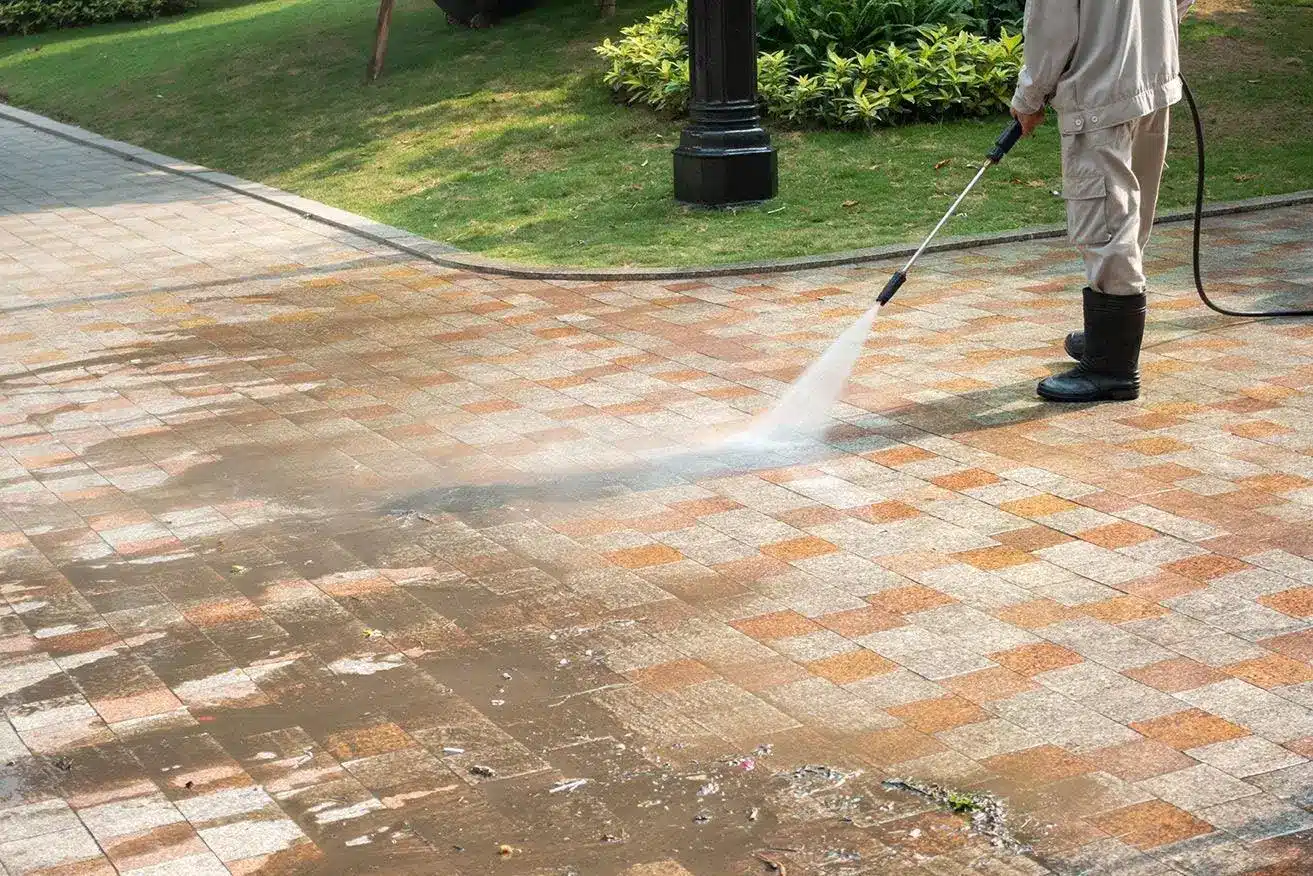
Most people think pressure washing is straightforward, point a wand, pull a trigger, and watch the grime disappear. But behind every effective clean is a set of physics principles, equipment decisions, and surface-specific techniques that determine whether a job ends in a sparkling driveway or a damaged deck.
In communities like Canonsburg, PA, where older architecture, variable weather, and seasonal organic buildup create real cleaning challenges, understanding the mechanics of pressure washing makes all the difference.
Understanding PSI, GPM, and Cleaning Units
The two numbers that define any pressure washing system are PSI (pounds per square inch) and GPM (gallons per minute). Most homeowners fixate on PSI, higher pressure must mean better cleaning, right? Not exactly.
PSI measures the force of the water, while GPM measures the volume of flow. Together they produce what the industry calls “cleaning units” (CU), calculated simply as PSI × GPM. A machine delivering 3,000 PSI at 2 GPM produces 6,000 cleaning units, the same as a 2,000 PSI machine running at 3 GPM. The difference is how that energy is applied to a surface.
High-PSI machines are effective on concrete, stone, and heavily encrusted surfaces. But pushing 4,000 PSI onto vinyl siding or aged wood can gouge, splinter, or force water behind panels, leading to mold growth inside walls. This is where working with local power washing experts becomes critical. Experienced professionals don’t just turn a machine on full blast; they dial pressure settings to match the specific substrate, choosing between hot water units, cold water units, and surface cleaners depending on what’s underneath the nozzle.
Nozzle Angles and the Physics of Impingement
Pressure washing nozzles are color-coded by their spray angle, and choosing the wrong one is one of the most common mistakes made on DIY jobs.
- Red (0°): A pinpoint jet with maximum force, useful for removing rust from metal but dangerous on almost any other surface.
- Yellow (15°): High-impact stripping, appropriate for concrete and masonry.
- Green (25°): The general-purpose workhorse for most hard surfaces.
- White (40°): A wide, gentler fan ideal for wood, vehicles, and painted surfaces.
- Black (65°): Low-pressure, high-volume, used primarily for applying detergent.
The physics at work here is impingement angle. Water striking a surface at 90 degrees transfers maximum kinetic energy into that surface, useful for dislodging embedded debris, but potentially erosive. A wider angle distributes that force over a larger area, reducing surface stress while still delivering enough energy to lift contaminants.
In Canonsburg, PA, where brick row homes and older wooden porches are common, using a 15-degree nozzle on painted trim isn’t just ineffective, it can strip paint down to bare wood and create an expensive problem that no one budgeted for.
Hot Water vs. Cold Water Systems: When Temperature Changes Everything
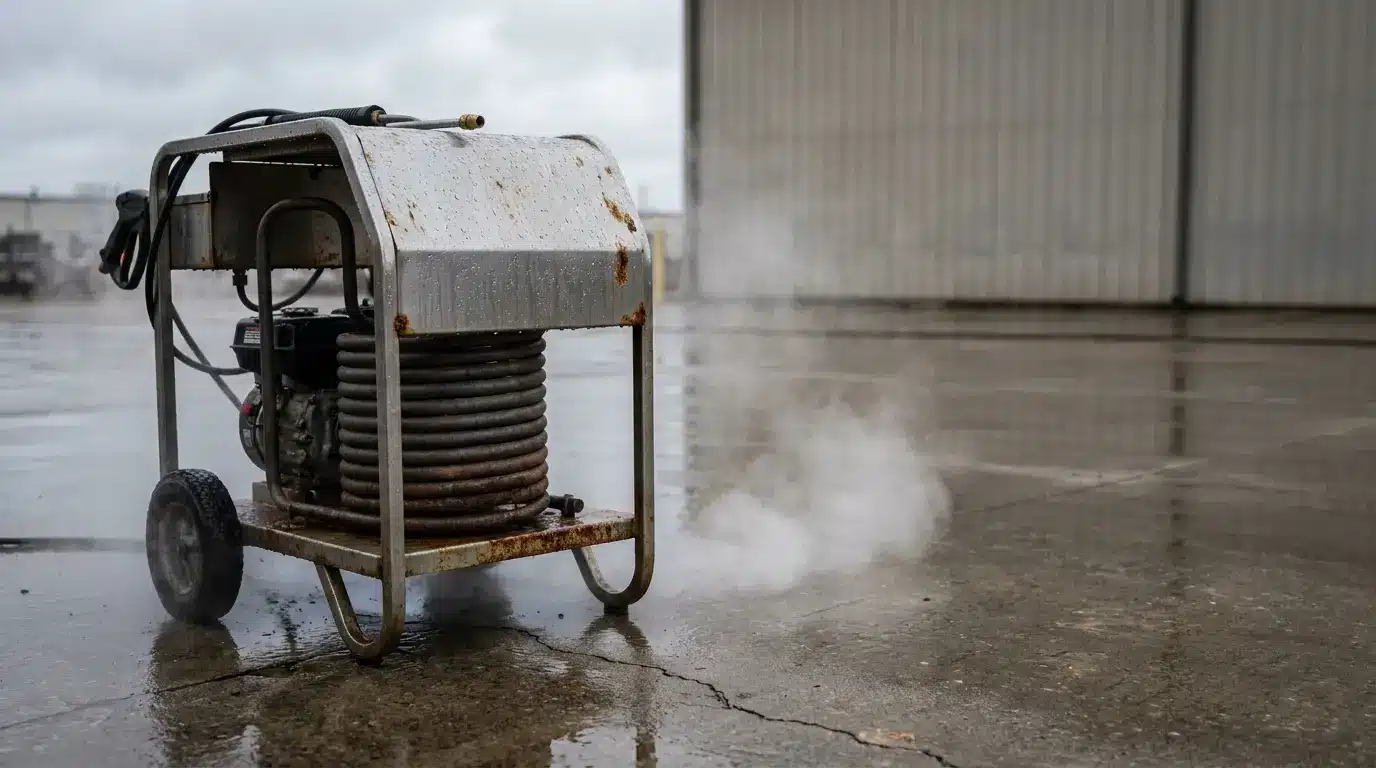
Cold water pressure washers dominate the consumer market, but commercial-grade hot water systems are a different class of equipment entirely. The principle mirrors basic chemistry: heat breaks molecular bonds. Grease, oil, and biofilm that cold water simply pushes around will emulsify and release under hot water application.
Hot water units typically operate between 140°F and 200°F and are essential for:
- Fuel and oil stains on garage floors and loading docks
- Kitchen exhaust systems and commercial grease traps
- Heavy equipment cleaning where petroleum residue has bonded to metal
- Sanitation applications where pathogen reduction matters, not just appearance
For residential applications, cold water systems paired with the right detergent chemistry can achieve similar results on most organic stains, mold, algae, moss, and mildew. The key is dwell time: allowing the cleaning agent to break down the organic material before rinsing, rather than relying purely on mechanical force.
Soft Washing: When Pressure Is the Wrong Tool Entirely
Not everything that looks like a pressure washing job should be pressure washed. Roof cleaning is the most common example. Asphalt shingles are granule-coated surfaces that lose structural integrity when hit with high-pressure water. The black streaking visible on rooftops across Canonsburg, PA is almost always Gloeocapsa magma, a cyanobacteria that feeds on the limestone filler in shingles. Blasting it off with a pressure washer removes the bacteria temporarily but also strips granules, shortening roof lifespan significantly.
Soft washing solves this. It uses low pressure (typically under 500 PSI) combined with a surfactant-and-bleach solution that kills the organism at the source. The result lasts three to five times longer than pressure washing because it addresses the biology, not just the cosmetics.
Pro Kleen Industries LLC is one example of a company that applies this kind of service-specific thinking, matching the cleaning method to the surface rather than defaulting to a single approach across every job. That kind of technical discipline is what separates a thorough clean from one that causes damage or fades within a season.
Surface Sealing After Washing: The Step Most People Skip
A freshly pressure-washed surface is also a maximally vulnerable one. Cleaning strips away old sealants, opens the pores of concrete and stone, and removes the protective biofilm layer that naturally builds on exterior surfaces. Left untreated, a clean driveway or patio will re-accumulate staining faster than it did before because the surface is more porous and receptive to organic material.
Applying a penetrating sealant within 24 to 72 hours of washing locks out moisture, slows the return of mold and algae, and in the case of concrete, protects against freeze-thaw damage, a very real concern in western Pennsylvania winters. Polyurethane, acrylic, and silane-siloxane sealers each behave differently depending on the substrate, so matching the product to the surface is as important as choosing the right nozzle.
Conclusion
Pressure washing is far more technical than it appears from the sidewalk. PSI selection, nozzle geometry, water temperature, chemical dwell time, soft washing protocols, and post-treatment sealing all interact to determine whether a cleaning job delivers lasting results or short-term aesthetics with long-term damage. For homeowners and property managers in Canonsburg, PA, investing in that technical understanding, or hiring professionals who already have it, is the difference between maintenance that protects property value and work that quietly undermines it.