A small deck does not need much space to feel useful, comfortable, and inviting. I prefer designs that keep things simple, because too much furniture or decor can quickly make a compact deck feel crowded.
The goal is to make every inch work without losing the relaxed outdoor feel you want. That is where smart small deck ideas can completely change how you use the space, from choosing better seating to creating clear zones for dining or relaxing.
Even a few thoughtful changes can make a narrow or awkward deck feel more open and practical.
Whether you are updating what you have or designing a small deck from scratch, there are plenty of clever options. Here I’ll walk you through practical ideas that make small decks work harder.
What Makes Small Deck Ideas Different From Regular Deck Ideas
A small deck needs a different approach than a large one. With limited space, every chair, table, planter, and feature should serve a clear purpose instead of simply filling an empty spot.
The main goal is not to squeeze in more. It is to make the deck feel comfortable, open, and easy to use. That usually comes down to smart spacing, correctly sized furniture, and practical design choices that suit the available footprint.
If you are building from scratch, the layout matters just as much as the materials you choose. Even a 10×10 deck can feel surprisingly functional with the right setup.
Focus on the changes that solve your biggest space problem first, then build from there as your needs and budget allow.
Space-Maximizing Layout and Design Tricks
Smart layouts can make even the smallest space feel open, organized, and comfortable by using every corner with purpose while keeping movement easy and natural. Many of the same compact furniture arrangements that work indoors apply just as well outside.
1. Choose One Primary Use for Your Deck
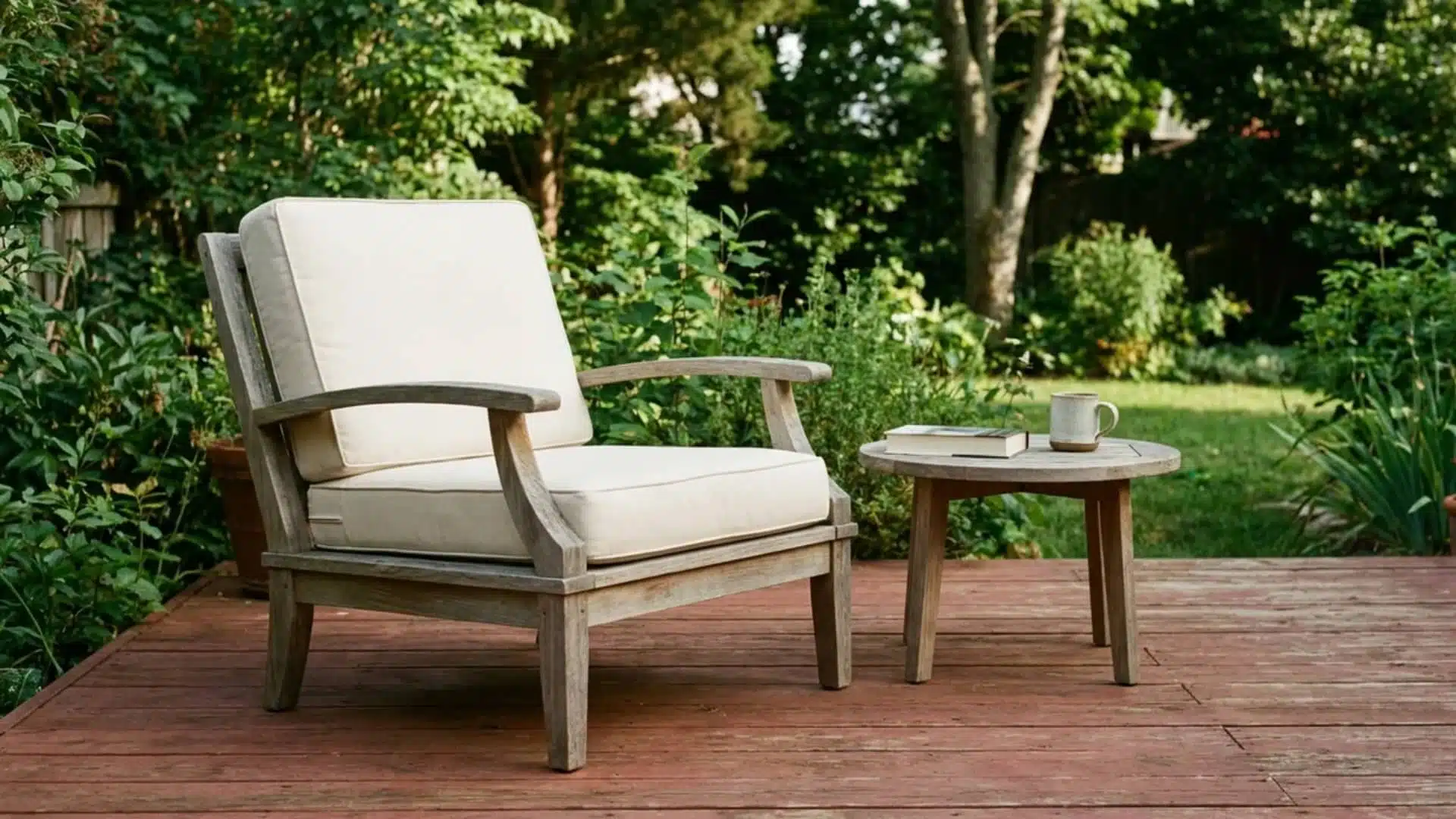
Design a small deck around one main activity, then choose space-saving furniture that supports it without overcrowding the area with unnecessary or rarely used pieces.
- For Lounging: Use comfortable chairs or a compact loveseat with one small table for drinks and everyday items.
- For Dining: Choose a bistro table or narrow dining setup that provides enough eating space without dominating the deck.
- For Entertaining: Use lightweight or movable furniture that can be rearranged when extra guests need seating.
Tip: Think about how you use your outdoor space most often, then give that activity the largest share of the deck.
2. Keep the Edges Clear
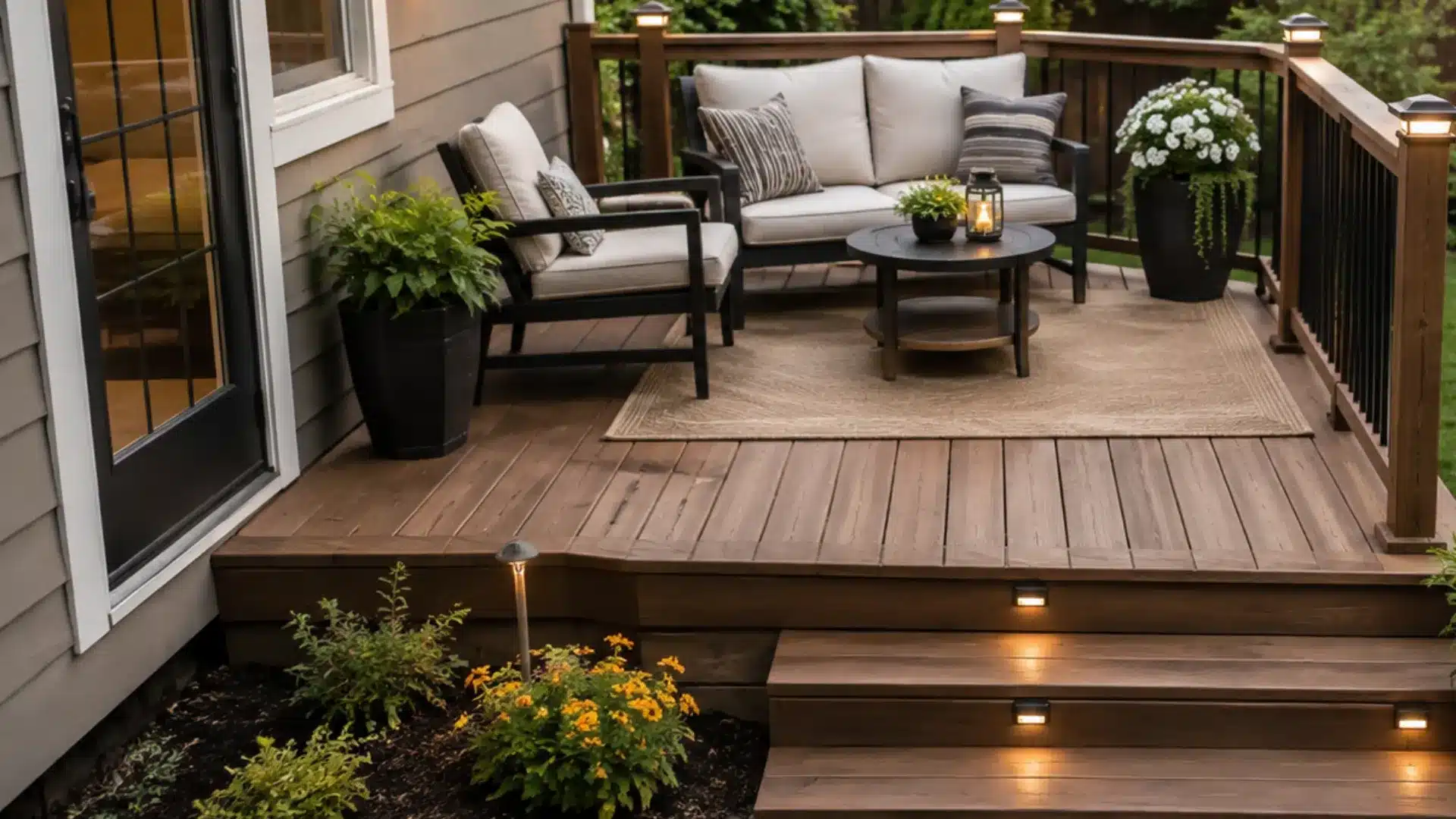
Leave parts of the deck perimeter open to improve movement, maintain clear sightlines, and connect the compact layout naturally with the surrounding yard area.
- Preserve Sightlines: Keep at least one side relatively open so the yard remains visible from the main seating position.
- Create a Clear Route: Maintain an unobstructed path between the house door, seating area, stairs, and yard.
- Group Furniture: Place related pieces together rather than spreading individual chairs, tables, and planters around every edge.
3. Frame the Space With a Bordered Outdoor Rug
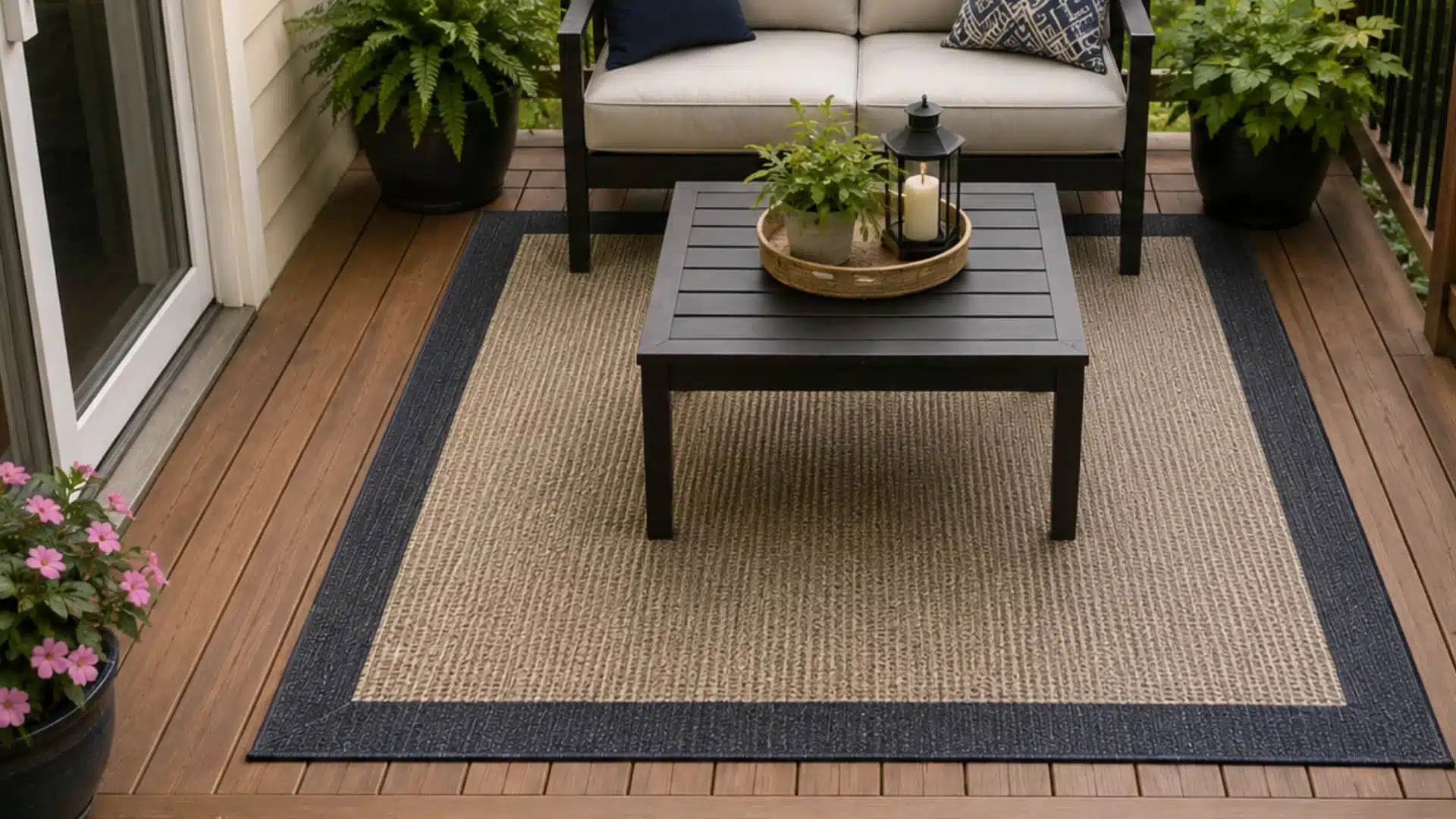
Use an outdoor rug to define the seating area while leaving visible decking around its edges, keeping the small deck organized, open, and uncluttered.
- Leave a Border: Select a rug that exposes roughly 12 inches of decking around the main edges when space allows.
- Anchor the Furniture: Position front chair or sofa legs on the rug so the seating arrangement feels connected.
- Choose Outdoor Materials: Use polypropylene or another weather-resistant material that handles moisture and regular outdoor use.
Tip: Measure your deck before buying a rug, not after, so the border comes out even on all sides.
4. Build in Levels With a Tiered Deck
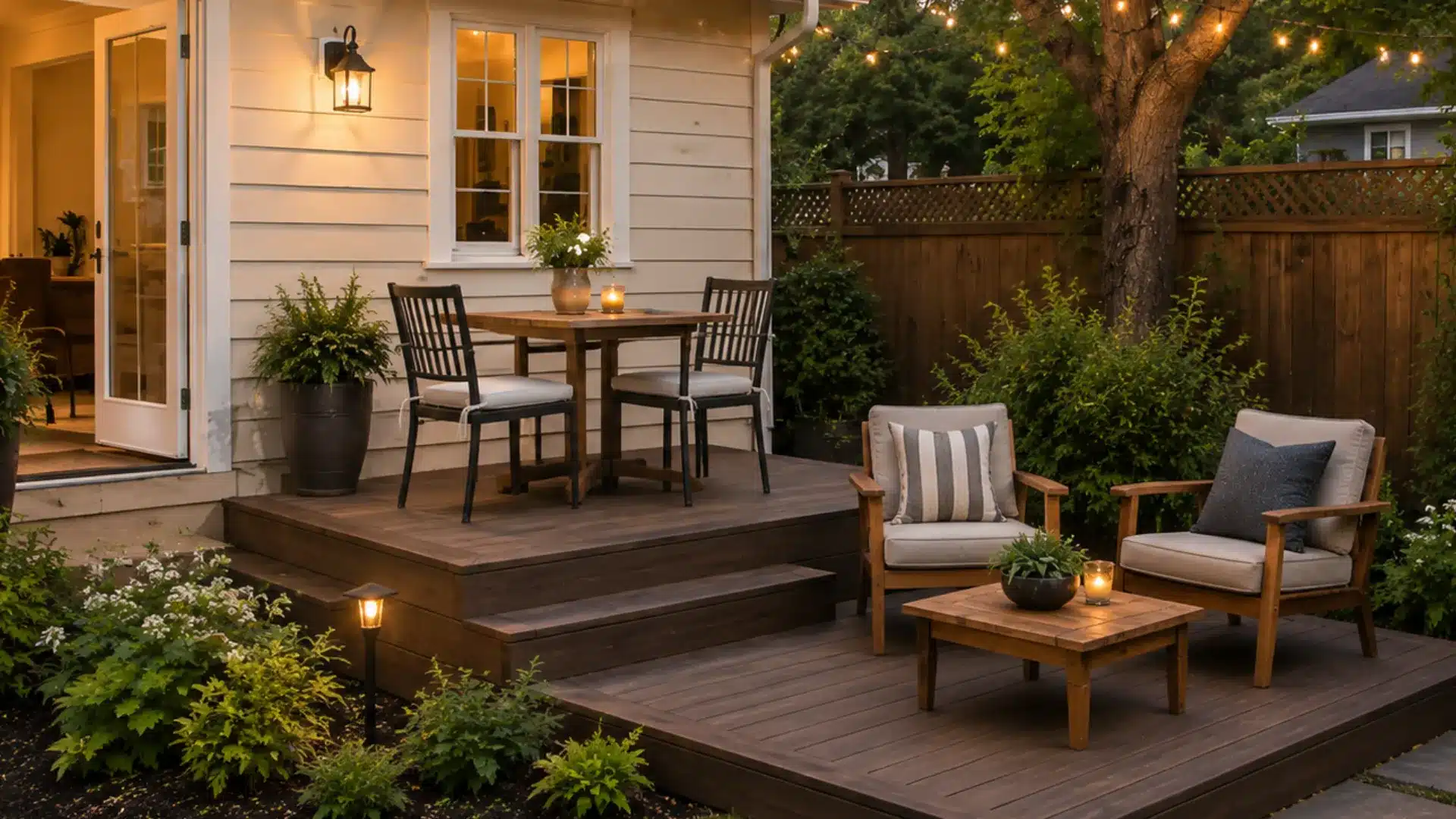
Create separate activity zones with subtle deck-level changes, giving dining, lounging, and transition areas clear identities without adding walls or bulky, space-consuming dividers.
- Separate Activities: Place dining furniture on one level and casual seating on another to create clear functional zones.
- Use a Subtle Step: A small height change can provide visual separation without making the deck feel heavily divided.
- Plan the Structure Early: Include level changes during framing so joists, stairs, and support points align properly.
5. Fit Tight Corners With an L-Shaped Layout
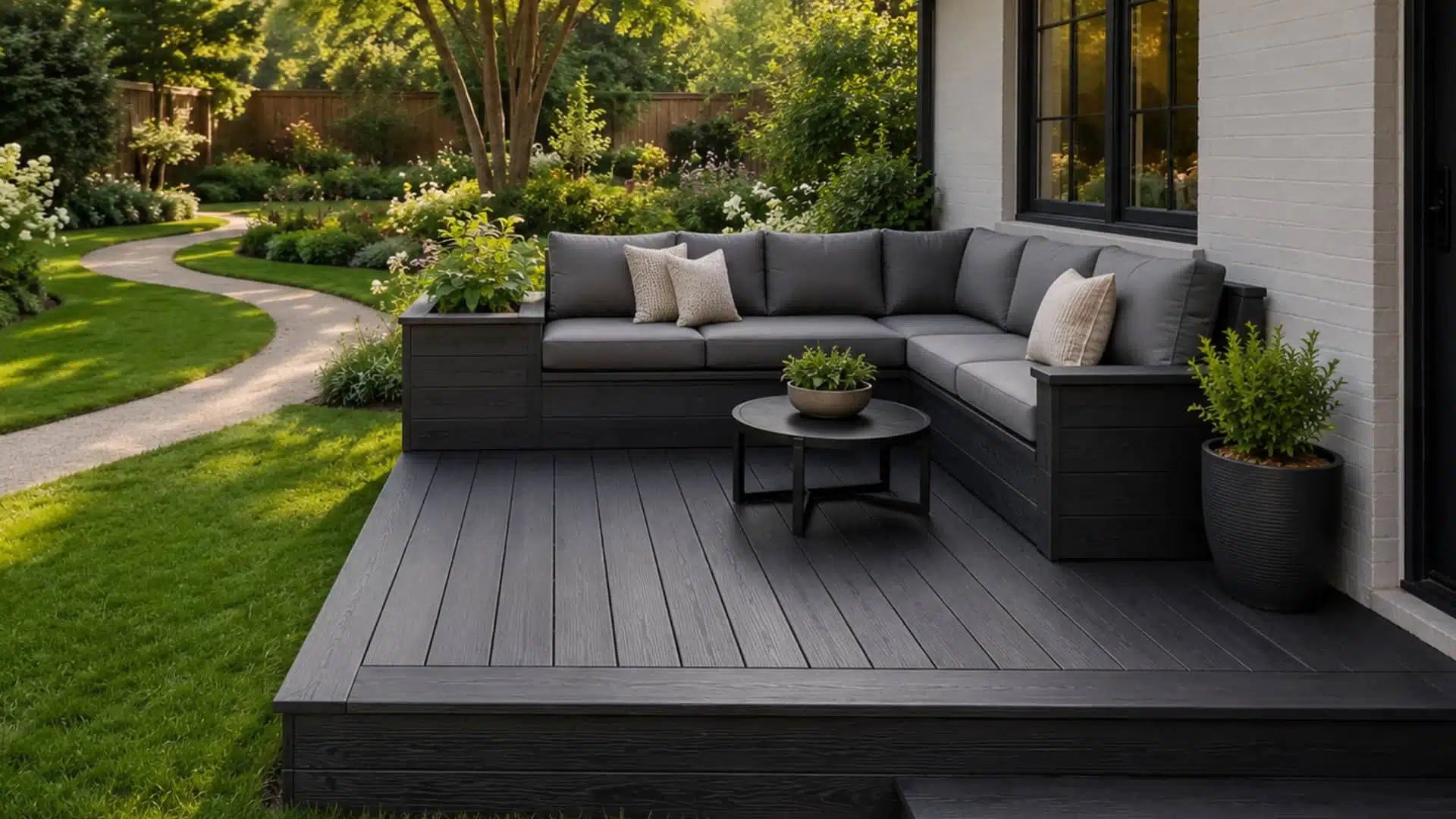
Choose an L-shaped or wraparound deck to follow the house and yard, turning narrow sides and awkward corners into useful, space-efficient outdoor living areas.
- Follow the House Shape: Extend the deck around a bump-out, corner, or side wall instead of forcing a straight layout.
- Use Narrow Sections: Reserve tighter areas for benches, planters, or circulation rather than oversized furniture.
- Connect Multiple Doors: A wraparound design can link nearby entrances while keeping outdoor movement simple and direct.
6. Add a Slightly Sunken Dining Nook
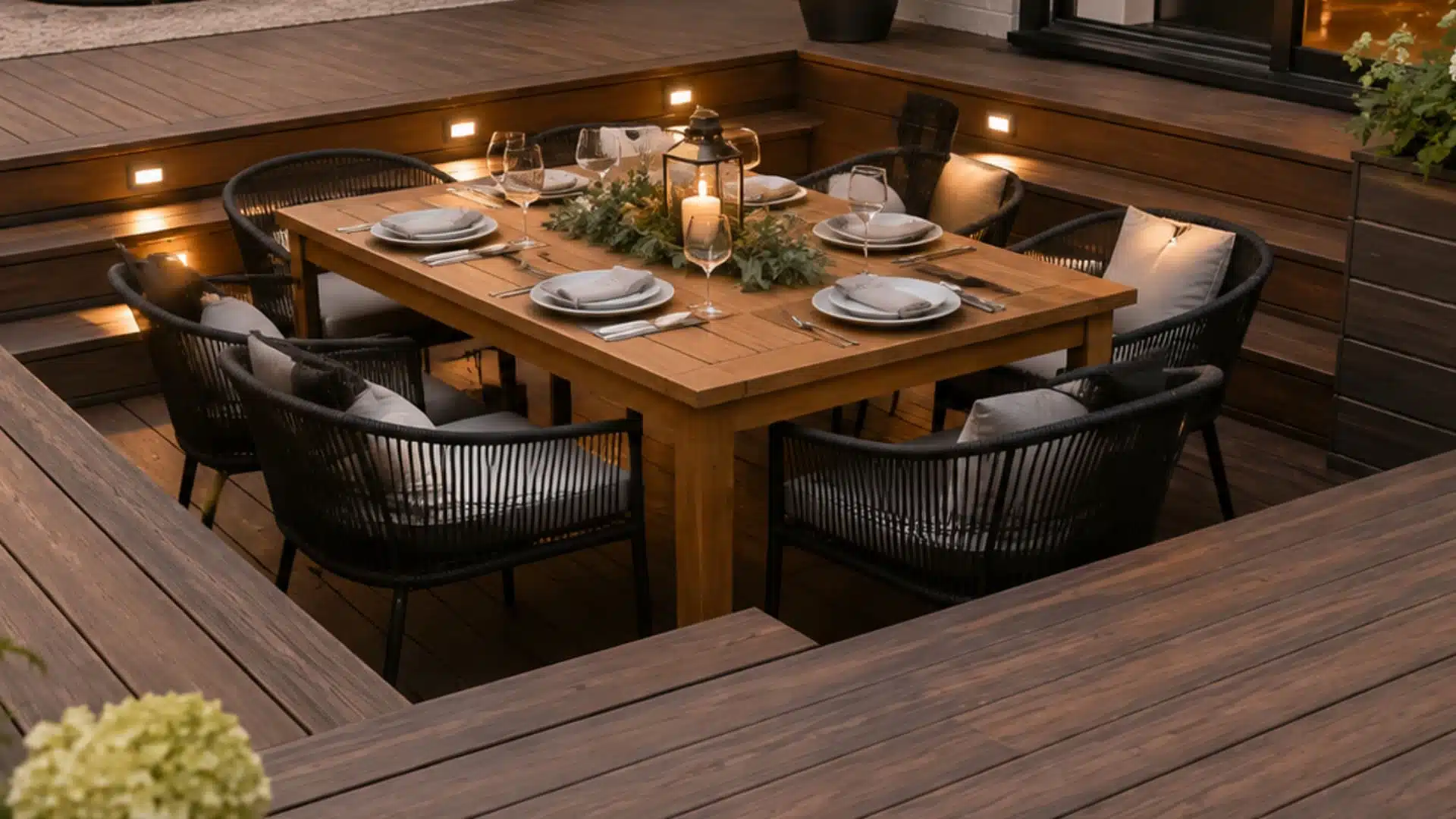
Lower the dining area by one step to separate it visually from lounging spaces while keeping both zones open, connected, functional, and easy to navigate.
- Keep the Drop Modest: Use a shallow level change that clearly defines the dining area without creating unnecessary height.
- Center the Table: Position the dining set within the lowered section so circulation stays around its outer edges.
- Coordinate Materials: Continue the same decking material across both levels to keep the layout visually unified.
7. Keep Sightlines Clear With Low-Profile Furniture
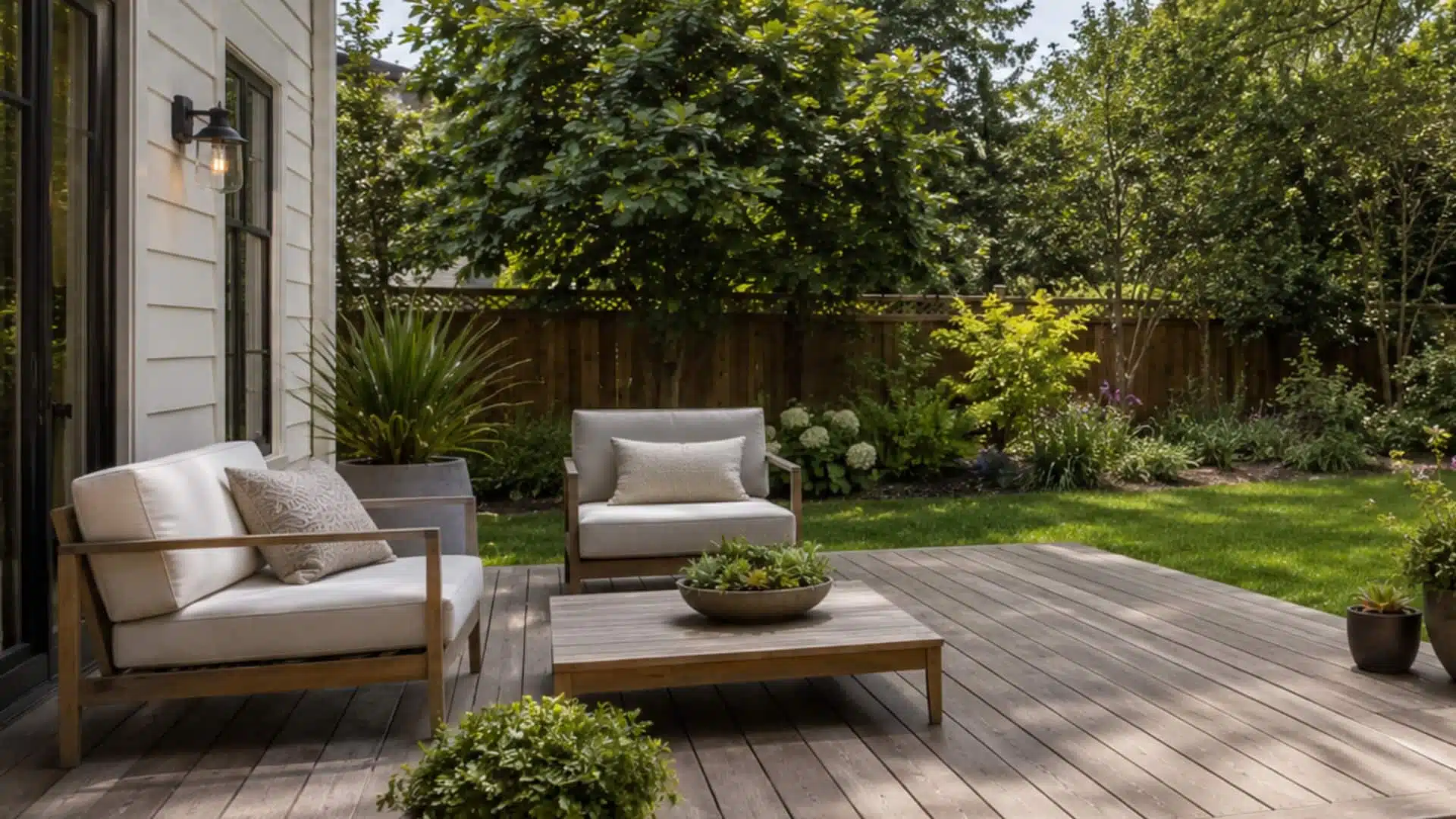
Select low-profile chairs and tables that stay below railing height to preserve yard views, reduce visual clutter, and make a compact deck feel more spacious.
- Choose Low Backs: Look for lounge chairs and sofas with backs that sit near or below the railing line.
- Use Coffee Tables: A low coffee or side table keeps the center functional without introducing unnecessary height.
- Limit Tall Accessories: Place taller planters or decor near walls or corners instead of directly across major sightlines.
Tip: Save taller furniture, like bar stools, for a covered patio instead of a small open deck.
With thoughtful planning, flexible layouts, and clever visual tricks, you can create a compact space that feels balanced, practical, and surprisingly spacious every day inside.
Space-Saving Furniture and Seating Ideas
The right furniture can upgrade limited space by adding comfort, storage, and clear zones without making the room feel crowded, awkward, or overly busy. Some of the same small-space storage tricks used indoors translate surprisingly well to a compact outdoor seating area.
8. Install Built-In Bench Seating Along the Perimeter
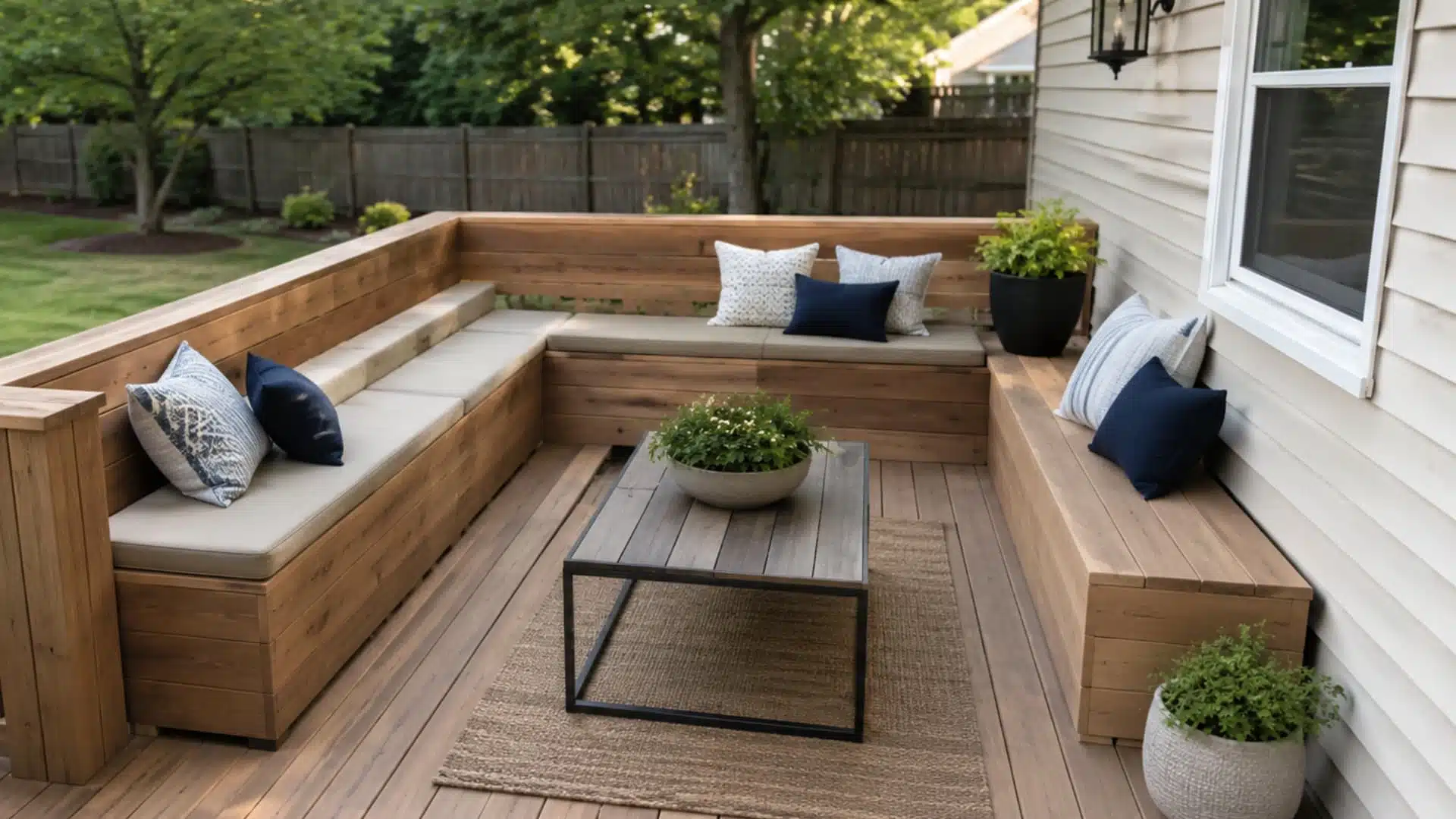
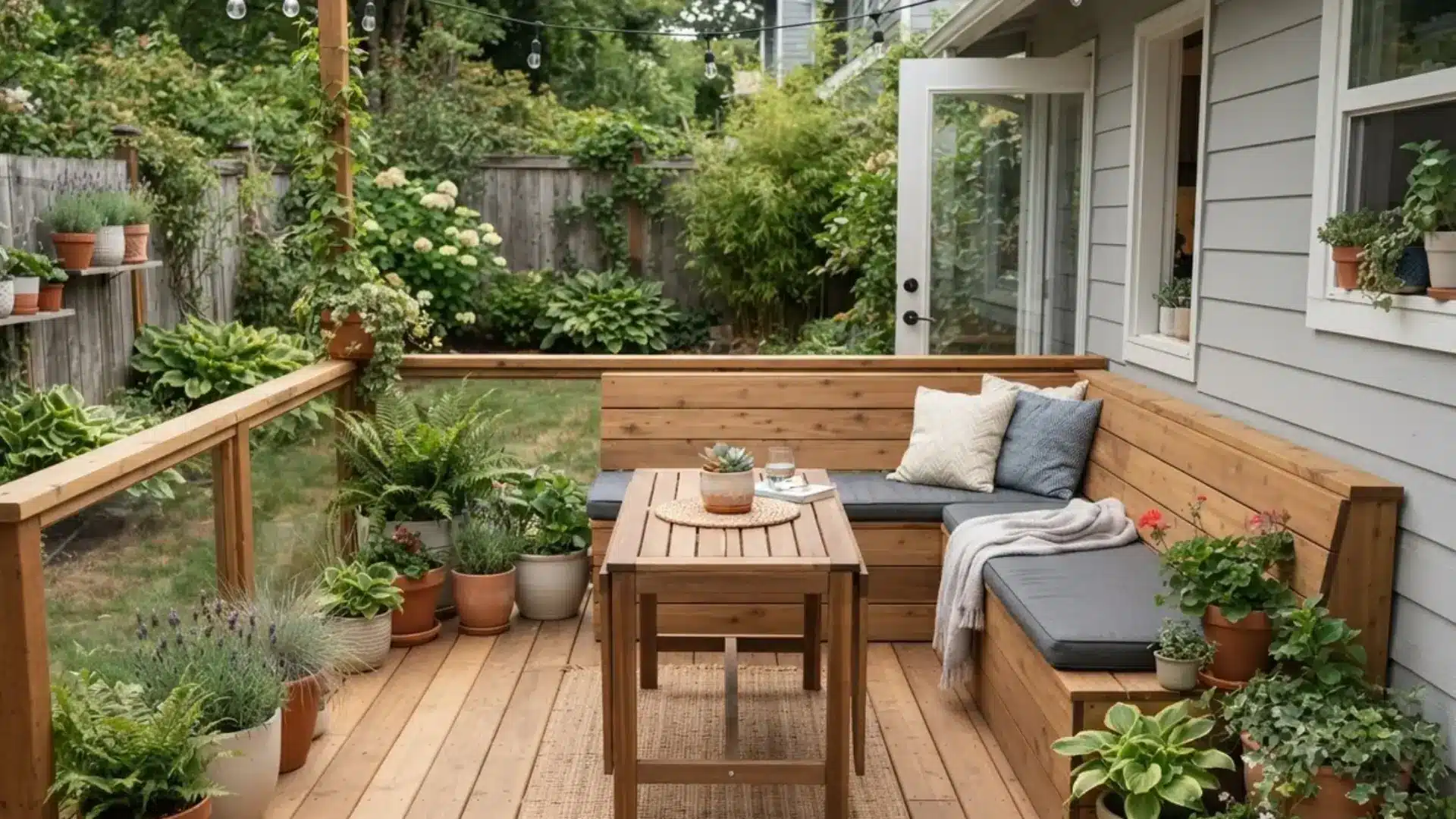
Built-in benches add permanent seating along deck edges, freeing the center for walking, tables, guests, or other activities without adding separate chairs.
- Save Floor Space: Fixed seating removes the extra clearance normally needed around freestanding chairs.
- Add Storage: Use a hinged seat or front access panel to store cushions, gardening supplies, or outdoor accessories underneath.
- Keep Paths Clear: Position the bench along the perimeter so routes between the house, stairs, and seating area remain open.
Tip: Add weatherproof cushions instead of built-in padding, so you can bring them inside during storms.
9. Choose Foldable or Stackable Furniture
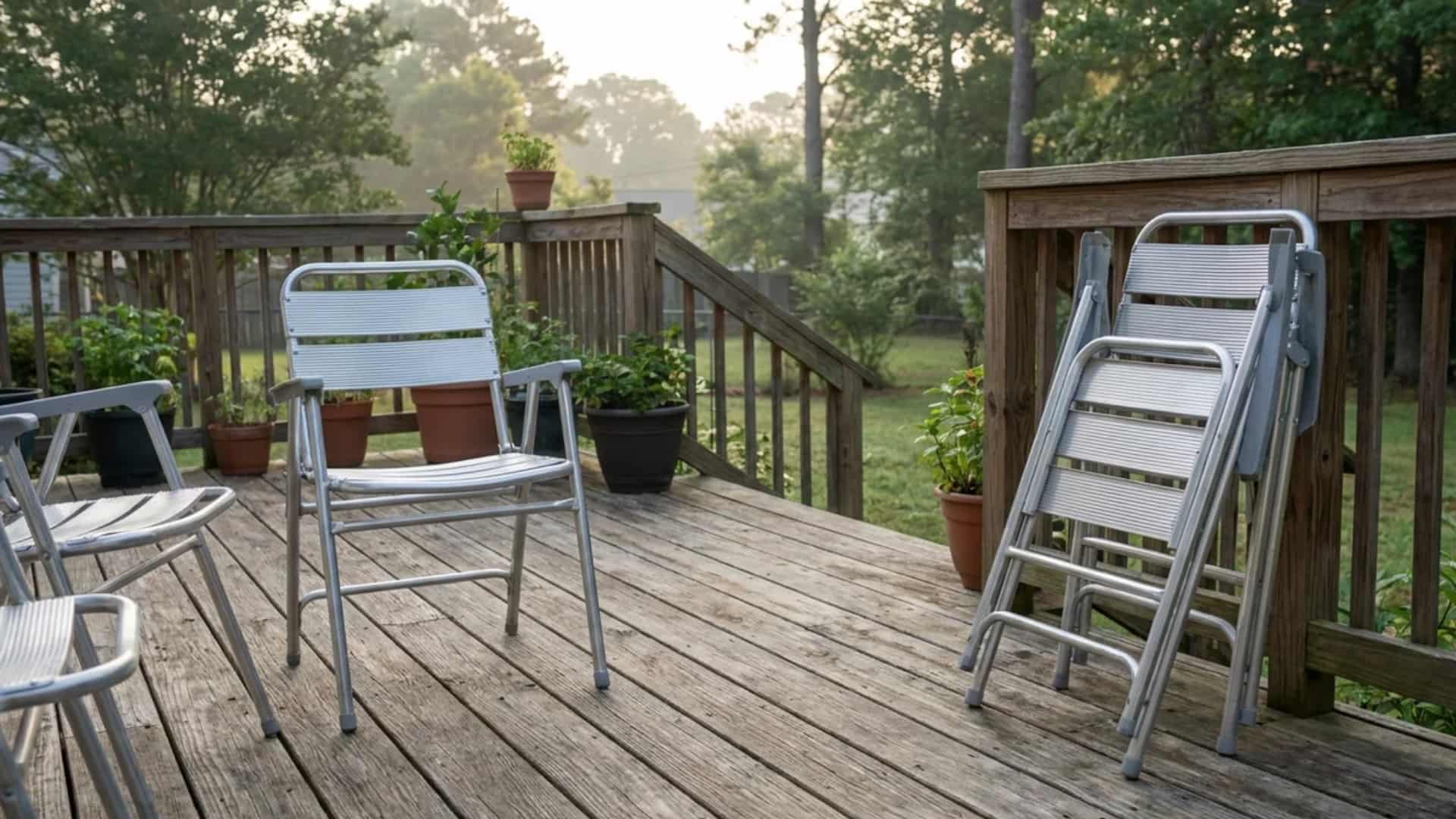
Foldable and stackable furniture keeps a small deck flexible, providing seating when needed and creating extra open space for movement, cleaning, or activities.
- Material Choice: Aluminum and resin fold flatter and are lighter than wood.
- Flexibility: Set up for a gathering, then fold everything away for open floor space.
- Mix Permanent and Flexible Pieces: Keep one everyday seat in place and use folding chairs only when extra seating is required.
10. Pick a Compact Bistro Set Instead of a Full Dining Suite
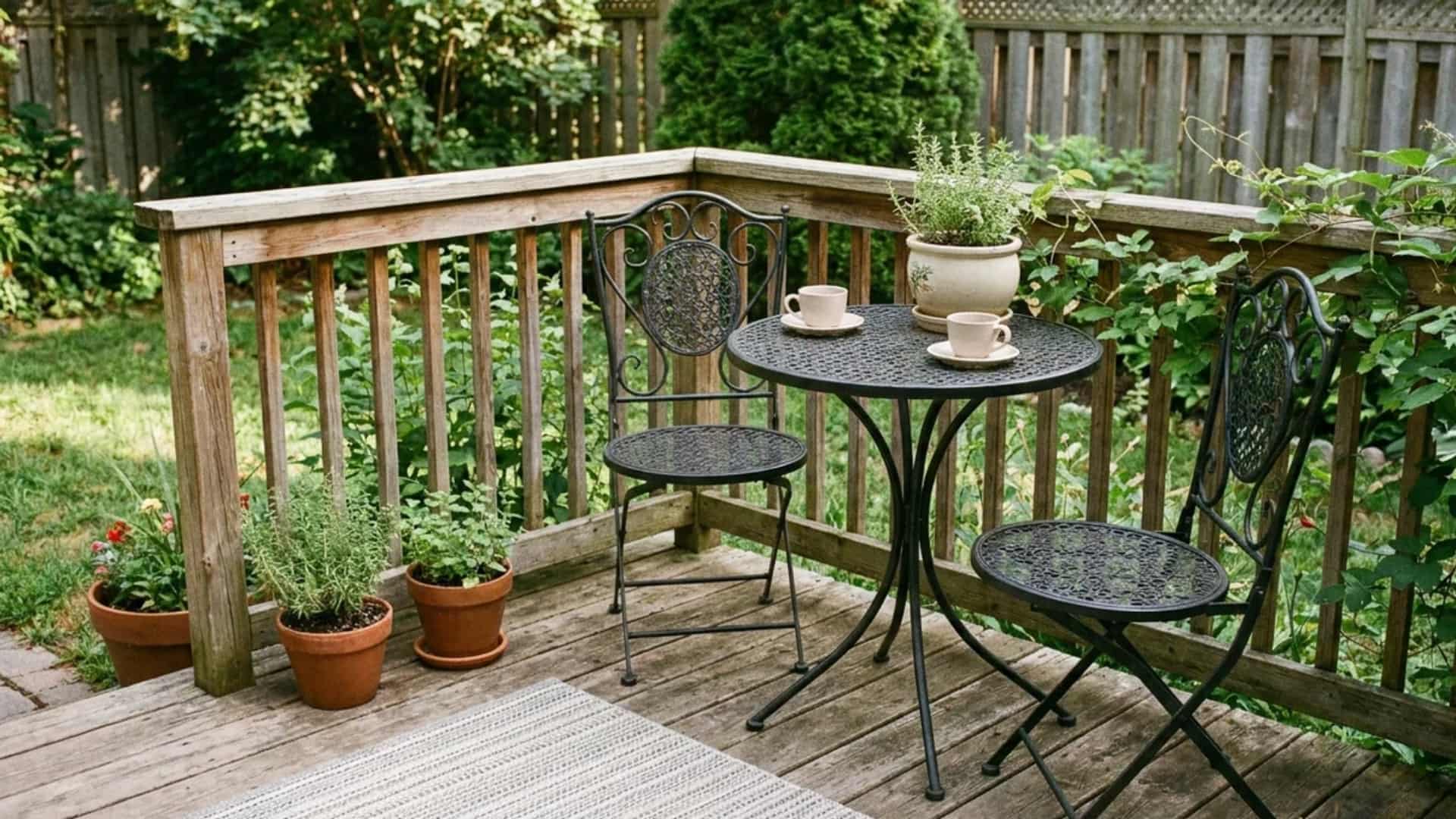
A compact bistro set offers convenient outdoor dining for two or three people while preserving valuable deck space for plants, movement, or relaxed seating.
- Space Fit: Bistro sets work in footprints as small as 4×4 feet.
- Flexible Hosting: Pair with folding chairs for occasional larger gatherings.
- Expand When Needed: Keep one or two folding chairs nearby for occasional guests instead of using a larger set full-time.
11. Use One Multi-Purpose Piece Like a Storage Bench
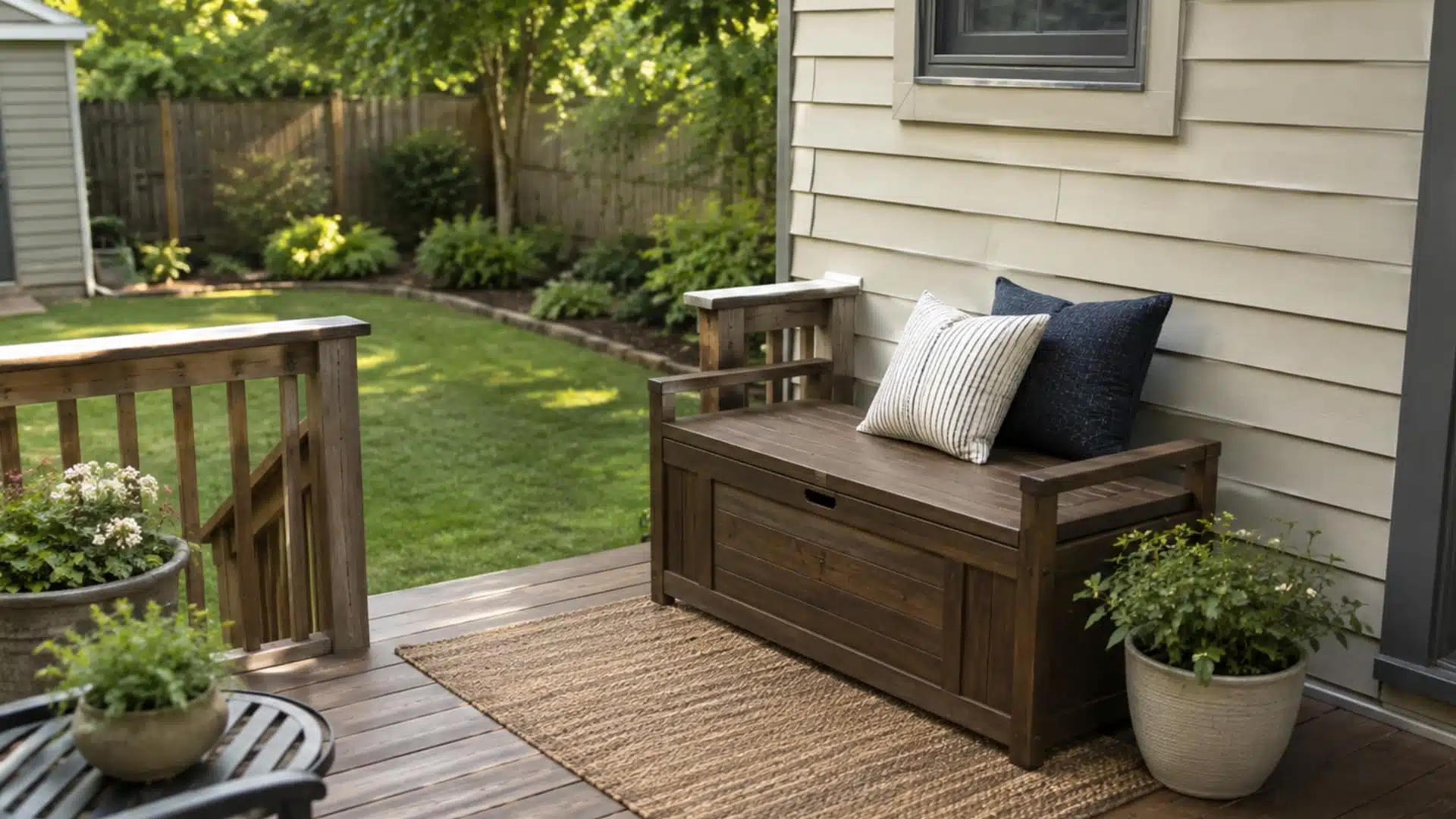
A storage bench combines seating and smart storage for small spaces, giving two people a place to sit while keeping cushions, tools, and outdoor supplies neatly stored.
- Dual Function: Combines seating and storage without adding a separate piece.
- Space Savings: Removes the need for a separate storage box or bin.
- Use Weather-Resistant Materials: Select treated wood, resin, or outdoor-rated construction that can handle changing conditions.
12. Use a Slim Railing Shelf
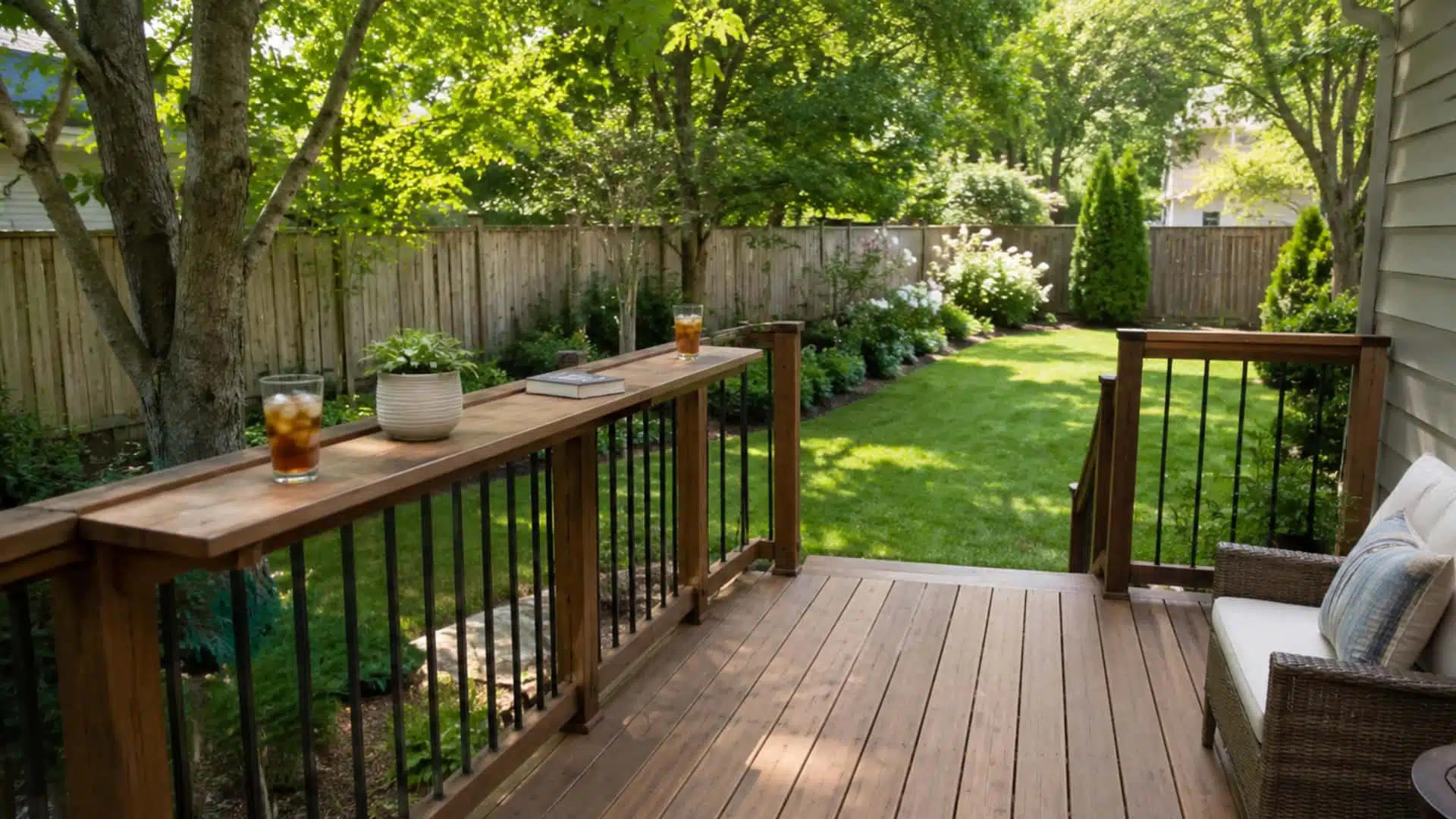
A narrow railing shelf adds useful surface space for drinks, planters, books, or serving items without occupying valuable floor area needed for movement.
- Saves Floor Space: The shelf uses vertical and perimeter space instead of adding another table.
- Keeps Paths Clear: A slim profile leaves more room for walking and seating.
- Adds Useful Surface Area: Even a shallow shelf can hold everyday items without crowding the deck.
Choose pieces that work harder, fit the scale, and define each area clearly so your small space stays comfortable, functional, and easy to use daily.
Decor, Lighting, and Privacy Details
Decor, lighting, and privacy choices can shape how a small space feels, helping it look warmer, brighter, more personal, and comfortably separated when you need it most.
13. String Lights for Ambient Evening Light
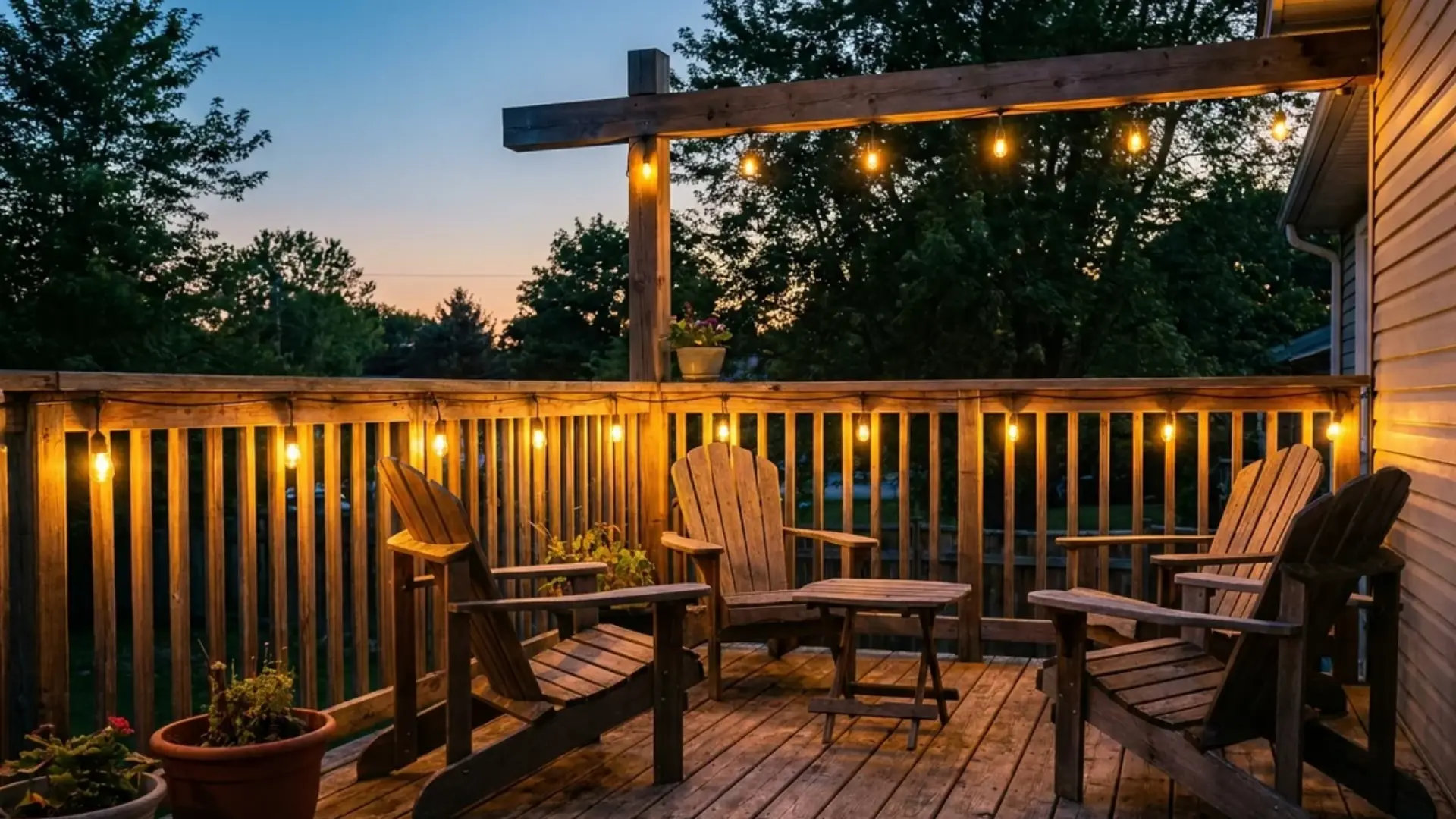
String lights provide evening illumination from railings or overhead supports, keeping deck floors and surfaces clear for furniture, movement, guests, and everyday use.
- Easy Install: Most string lights hang from hooks or clips; no wiring required.
- Warm Ambiance: Warm white bulbs create a cozier feel than bright white ones.
- Use Outdoor-Rated Sets: Select lights and connectors designed for exterior moisture, temperature changes, and regular exposure.
14. Hanging Planters Instead of Floor Pots
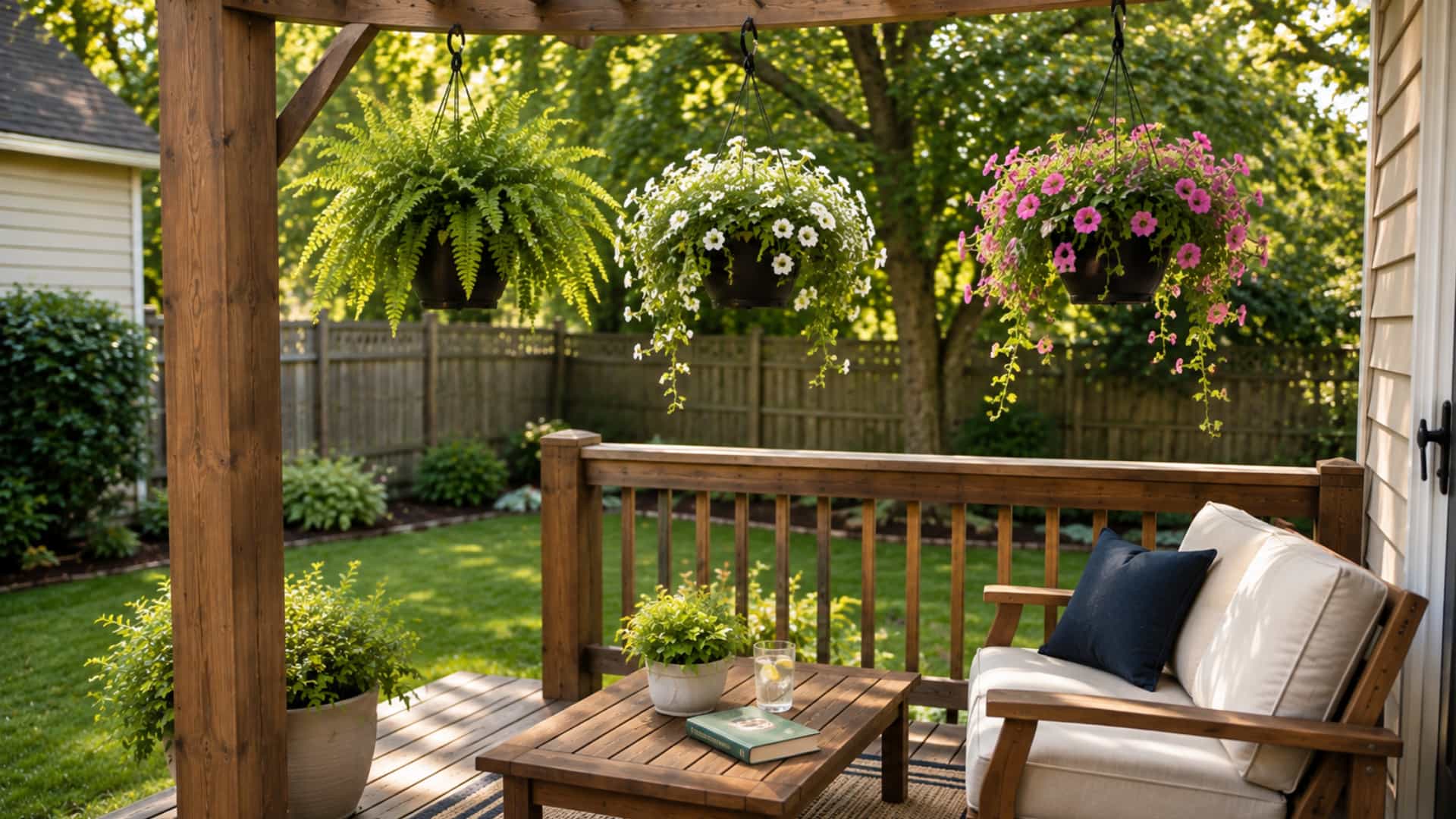
Hanging planters add greenery without using floor space, allowing flowers and foliage to fill overhead areas while keeping furniture zones and walking paths open.
- Space Savings: Frees up floor space that floor pots would otherwise take.
- Placement Options: Hang from a pergola beam, an overhang, or railing brackets.
- Vary the Height: Hang planters at slightly different levels while keeping them high enough to avoid interfering with movement.
15. Add Outdoor Curtains for Flexible Privacy
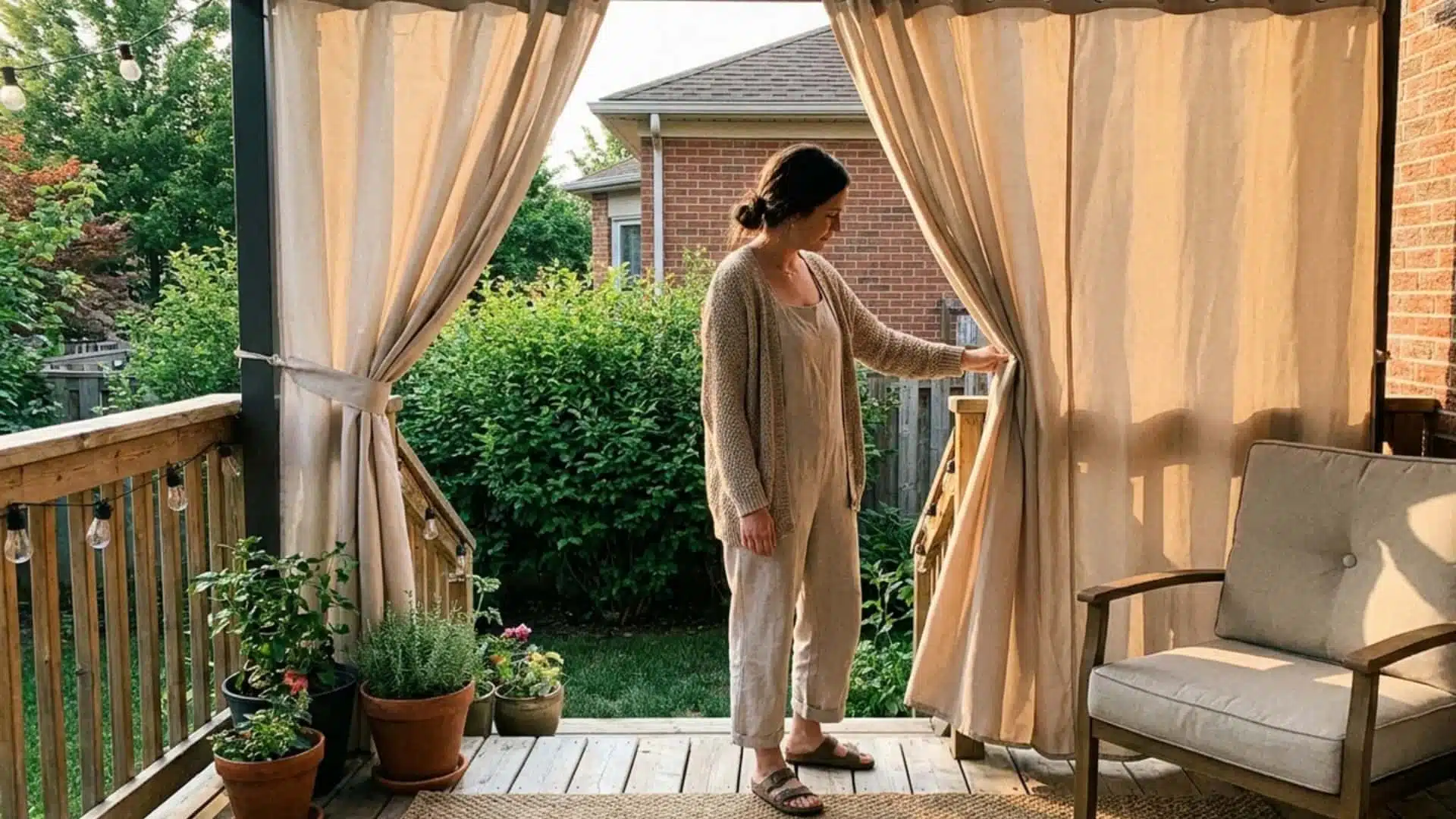
Outdoor curtains provide flexible privacy, closing when extra coverage is needed and tying back easily to restore natural light, airflow, and an open feeling.
- Adjustable Coverage: Pull the curtains closed for privacy or tie them back to keep the deck open.
- Softens the Space: Fabric adds texture and makes hard deck surfaces feel more comfortable.
- Add Tiebacks: Secure the fabric neatly when privacy isn’t needed so it doesn’t reduce usable space or block views.
Tip: Choose weather-resistant outdoor fabric that dries quickly after rain.
16. A Privacy Screen With Climbing Plants
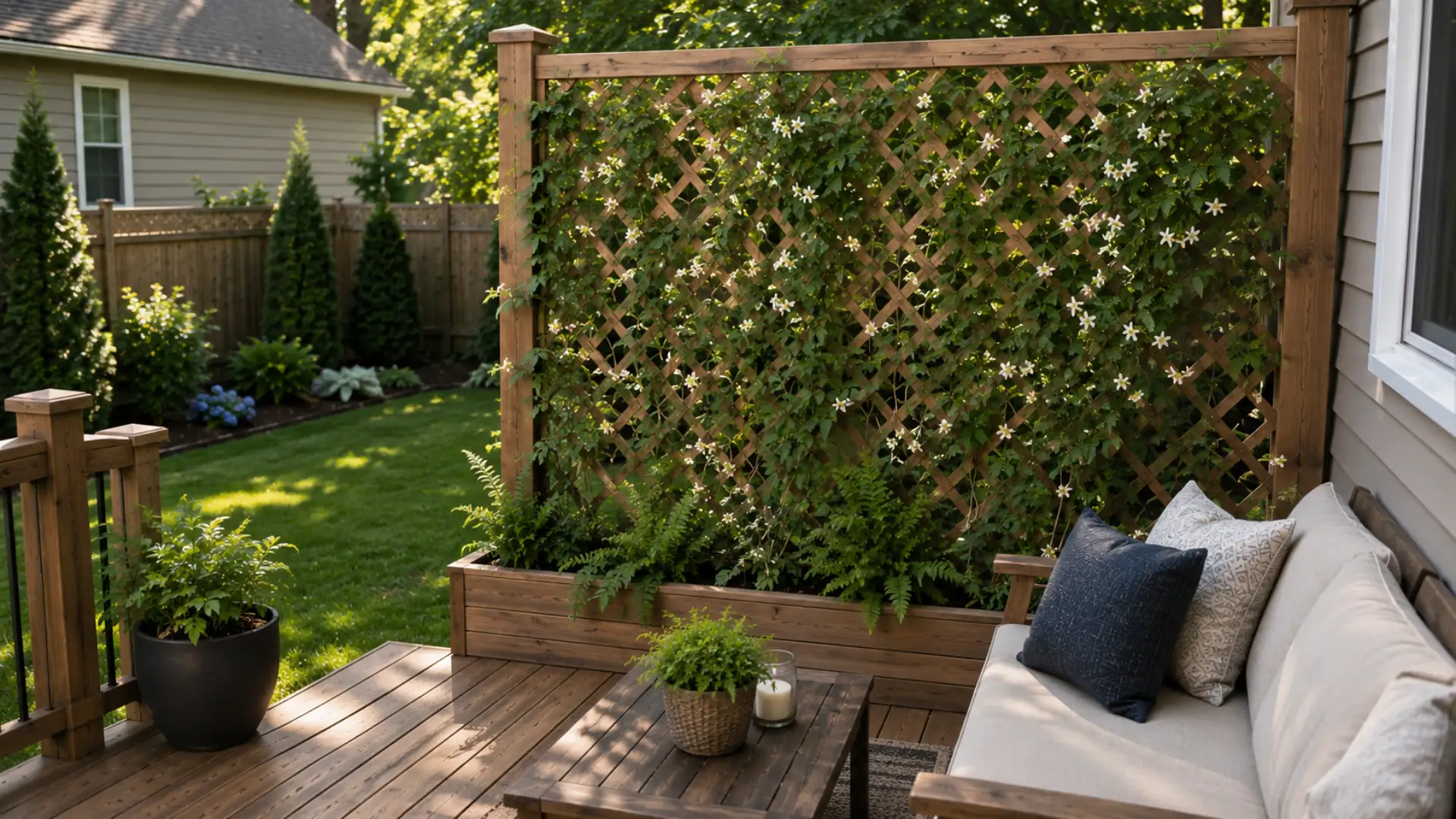
A lattice privacy screen adds coverage from nearby homes while supporting climbing plants, providing greenery and separation without the heavy appearance of solid walls.
- Dual Purpose: Combines privacy and greenery in a single build.
- Placement: Position it facing the closest neighboring window or sightline.
- Add a Narrow Planter: Install a slim planter at the base if nearby soil is unavailable for growing vines.
Tip: Choose fast-growing climbers, like clematis or morning glory, if you want coverage within the first season.
17. A Small Pergola or Canopy for Shade
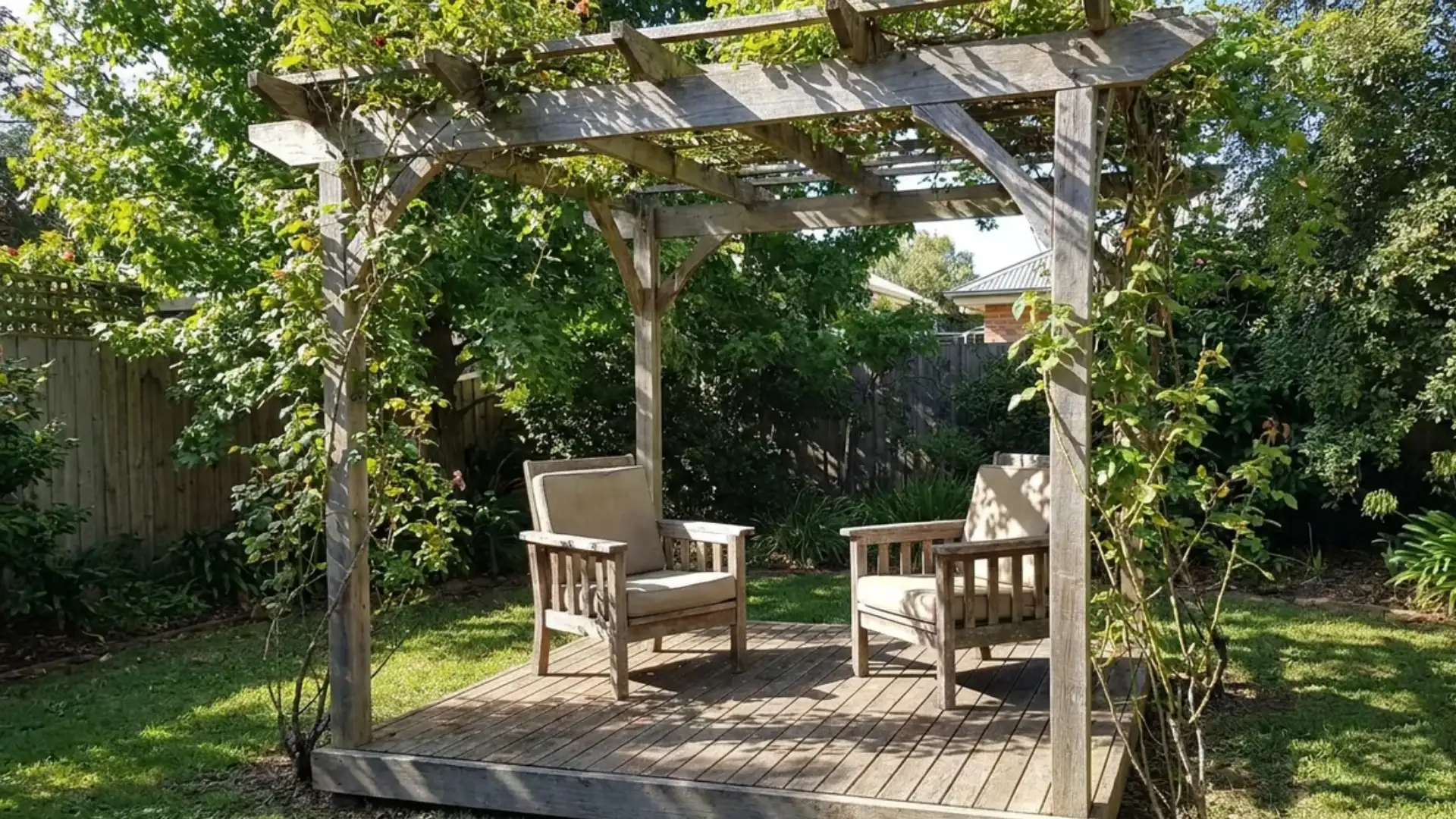
A compact pergola or canopy shades the main seating or dining area, improving comfort during sunny weather while keeping the remaining deck visually open.
- Partial Coverage: Size the pergola to cover just the seating area, not the whole deck.
- Material Options: Wood, vinyl, or metal kits all work for a small footprint.
- Build Consideration: Check how much weight your deck structure can support before adding a permanent pergola.
Tip: A retractable canopy is a lower-cost option if you’re not ready to commit to a fixed pergola.
18. Add an Outdoor Mirror to Create Visual Depth
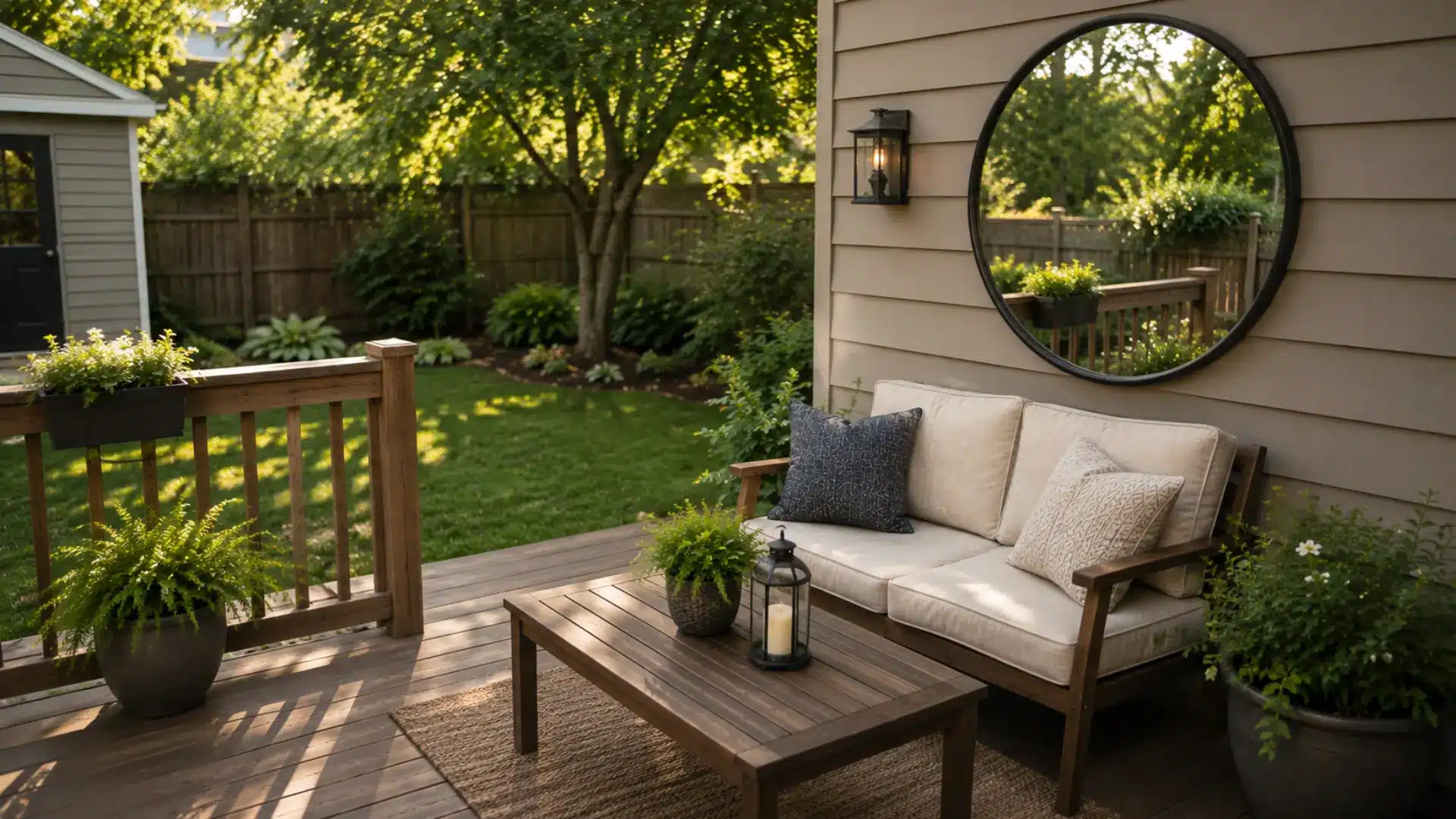
A weather-resistant mirror reflects greenery and open surroundings, making a compact deck appear deeper while adding visual interest without occupying valuable floor space.
- Visual Effect: Reflects the surrounding deck, making the area appear larger.
- Space Savings: Wall mounting keeps walkways and seating areas completely clear.
- Mount It Securely: Attach the mirror with exterior-rated hardware suitable for its weight and the house wall material.
Tip: Choose a framed outdoor-rated mirror designed to handle moisture and temperature changes.
By combining layered lighting, simple decor, and smart privacy details, you can add character and comfort without sacrificing valuable room or making spaces feel closed.
Small-Footprint Build and Structural Ideas
Small-footprint structural ideas focus on using limited space efficiently through built-ins, raised elements, compact additions, and practical construction choices that support everyday living needs well.
19. A Deck Built for an Above-Ground Pool
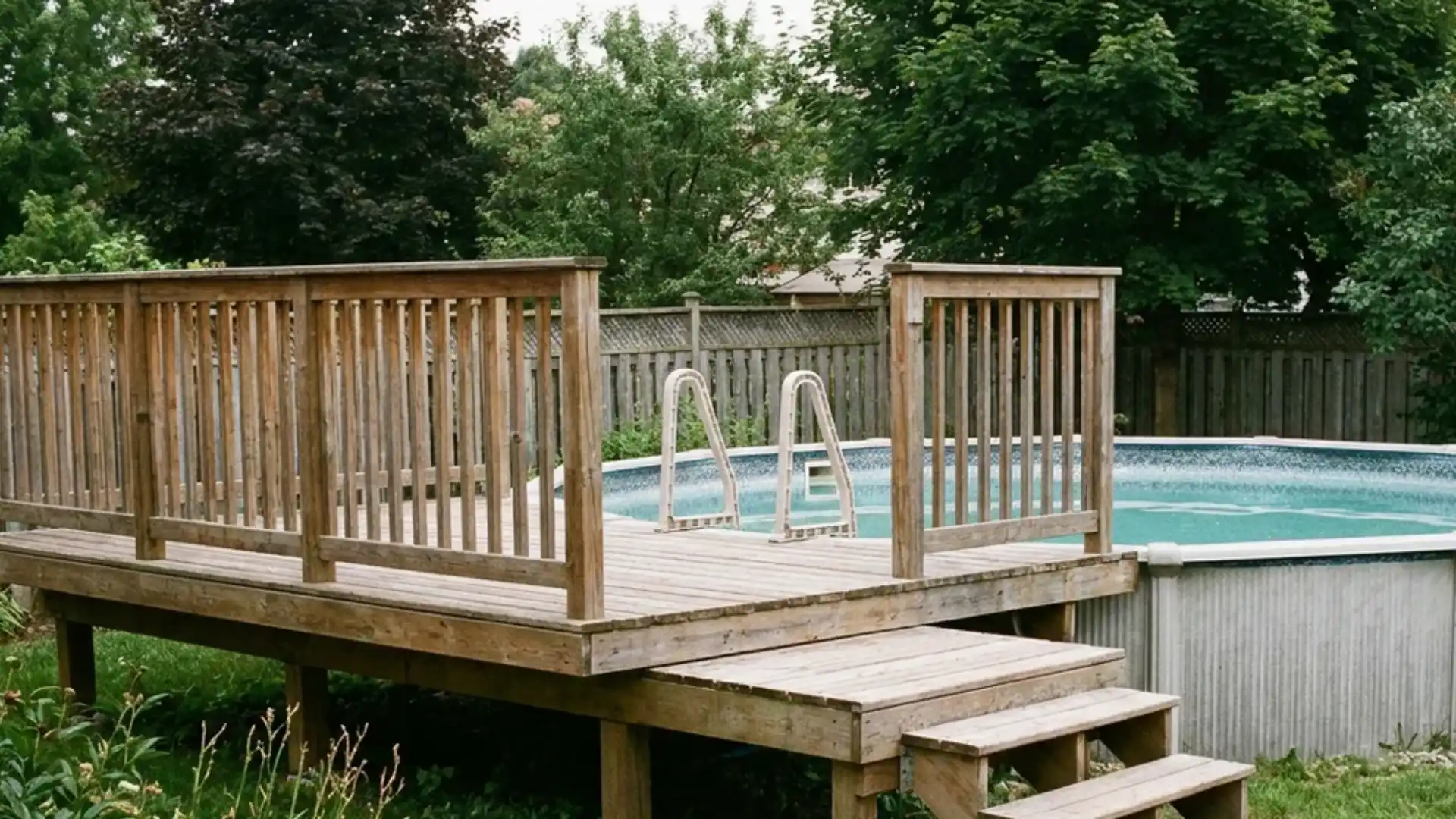
A small deck beside an above-ground pool creates stable access for entering, exiting, and sitting without requiring a full structure around the pool.
- Height Matching: Measure your specific pool before planning the deck height.
- Landing Detail: The deck landing has to meet the pool wall cleanly.
- Plan Access Carefully: Position stairs and gates so users can reach both the yard and pool without crossing crowded seating areas.
Tip: Bring your pool’s exact dimensions to the lumber yard or contractor before ordering materials.
20. Simple Stairs and Railings to Define the Space
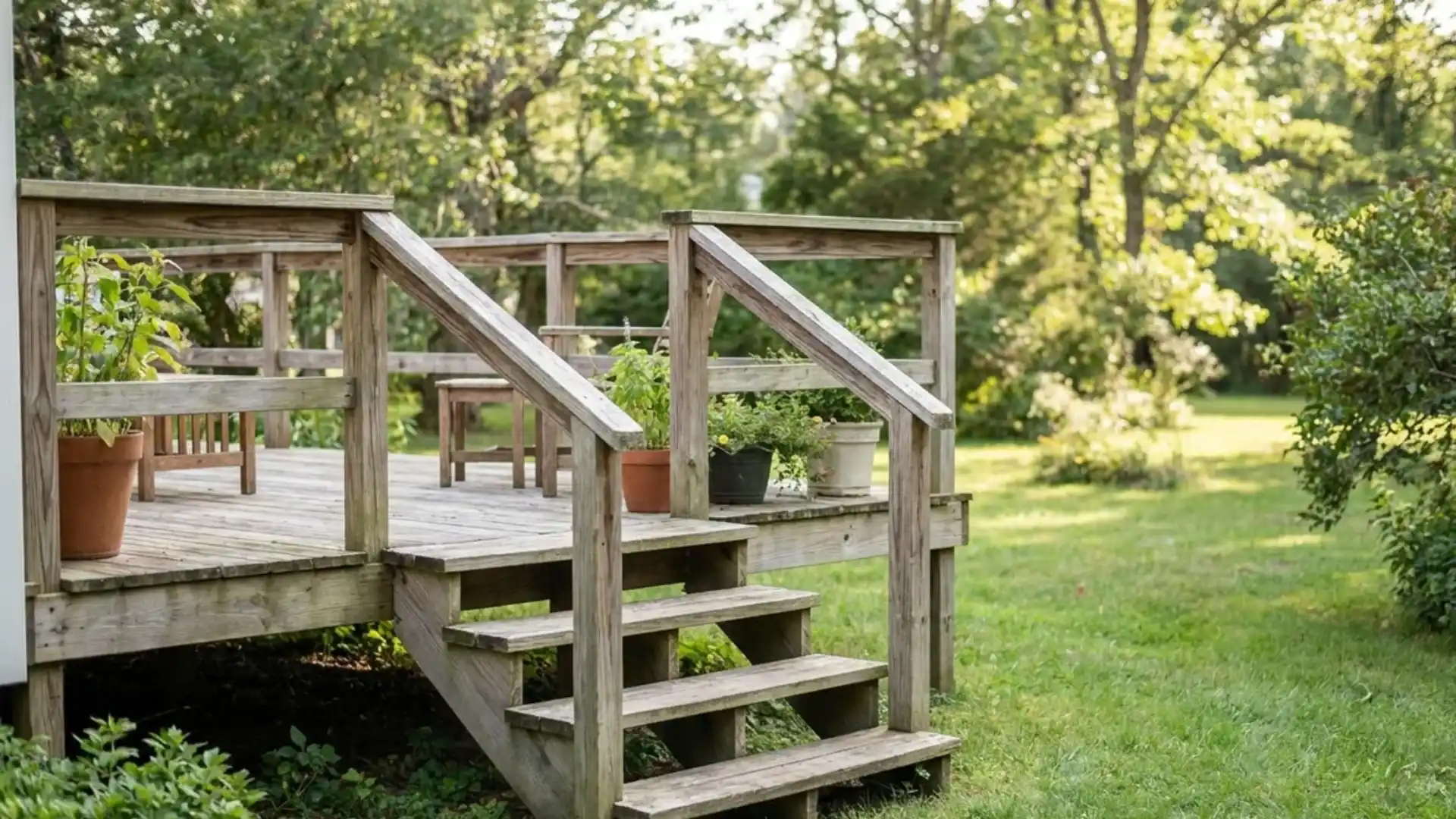
Stairs and railings improve access and edge protection while guiding movement between the house, deck, and yard without using up valuable floor space.
- Visual Boundary: Clear railings help define the deck’s edge from a distance.
- Safety Requirement: Most local codes require railings above a certain deck height.
- Check Local Requirements: Confirm required railing heights, stair dimensions, and guard details before construction begins.
21. Define the Deck With Contrasting Board Patterns
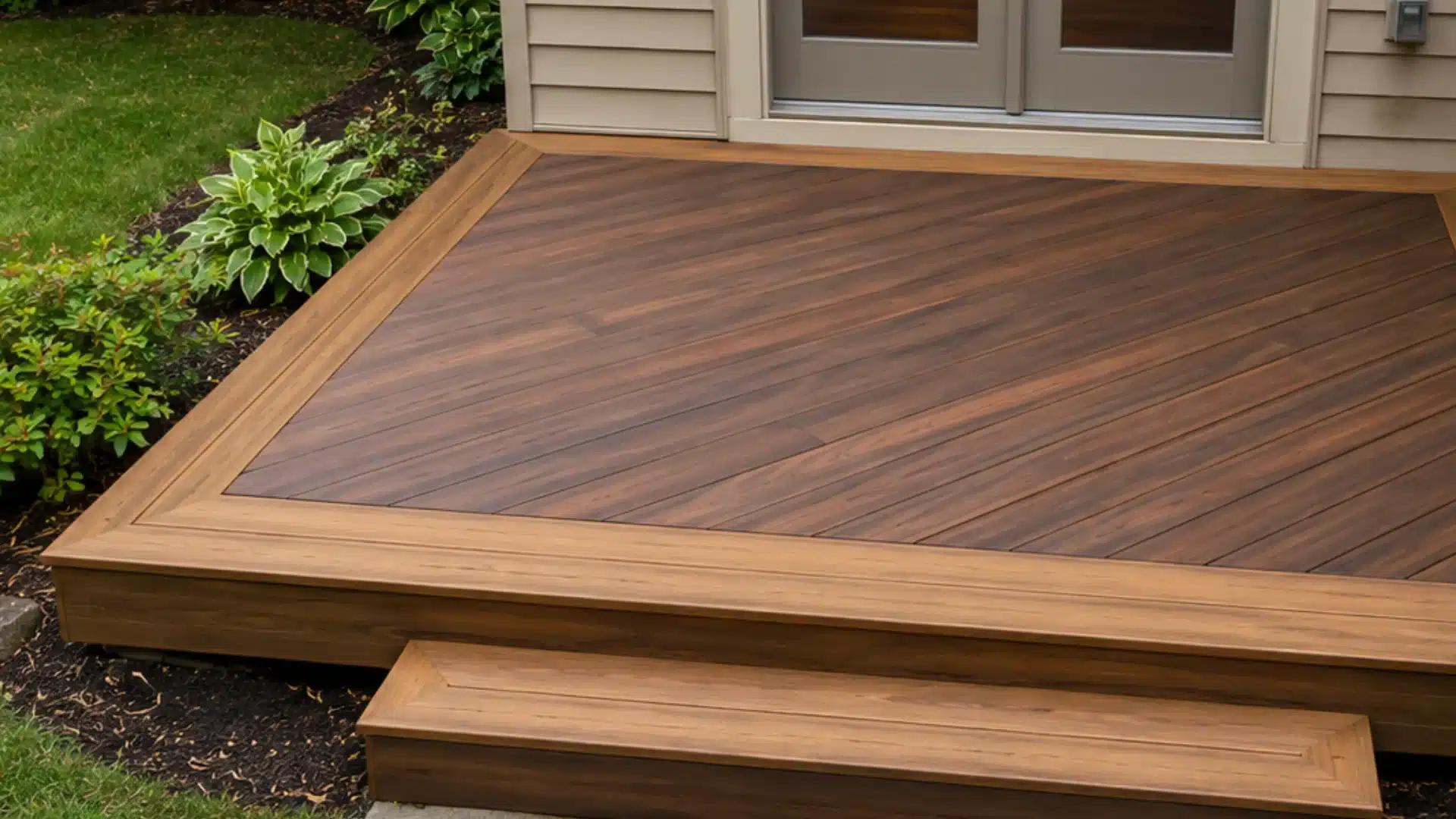
Changing deck board direction or adding a perimeter border creates visual structure and definition without adding floor-consuming decorative elements.
- Visual Impact: A contrasting border makes the deck footprint look deliberate and finished.
- Space-Friendly: The effect comes entirely from the decking, so no usable area is lost.
- Limit the Contrast: Use one main pattern and one accent treatment so the compact floor remains visually clean.
22. A Small Deck Off a Side or Front Door
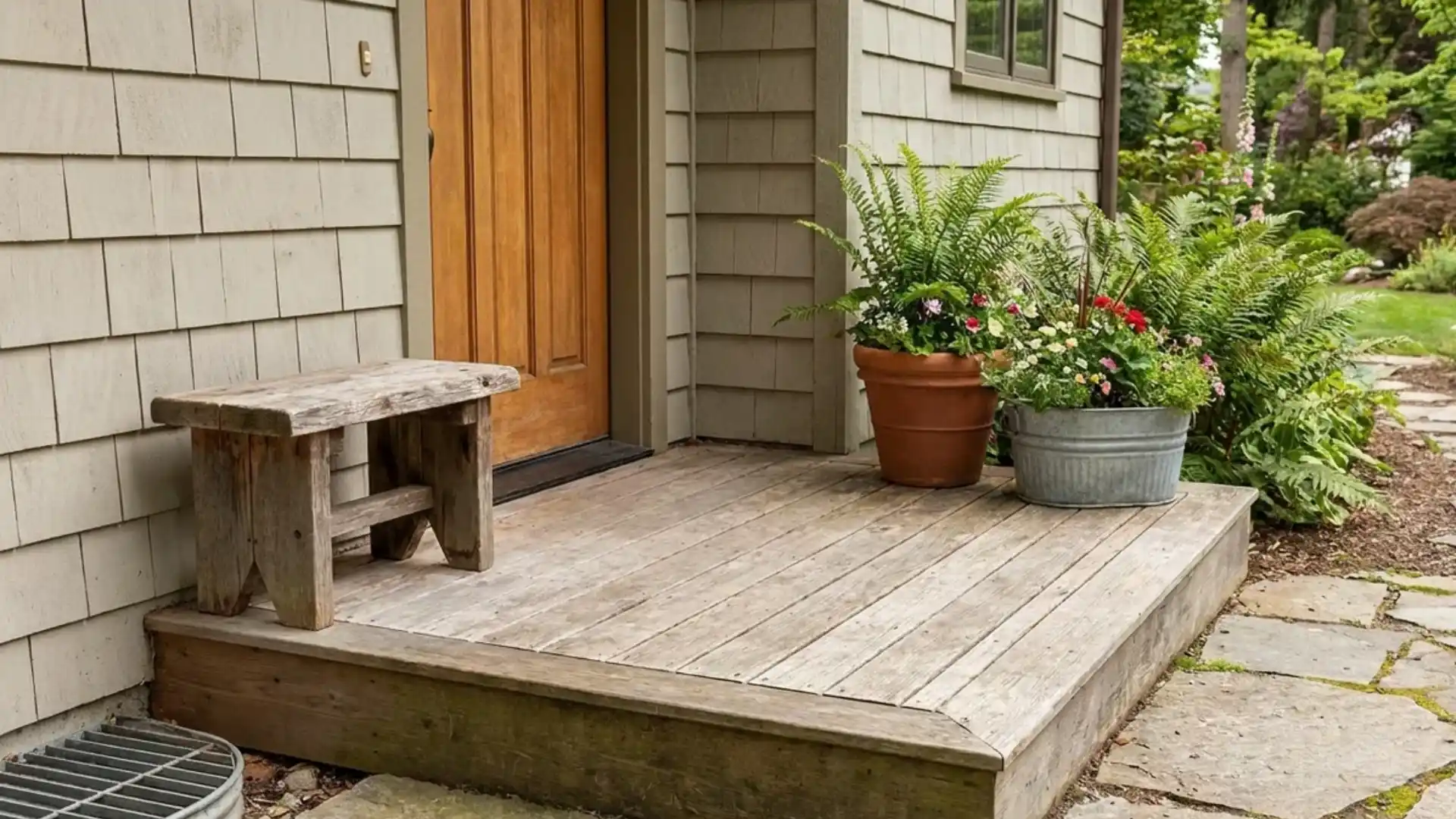
A compact deck near a side or front entrance creates a practical outdoor area for a bench, plants, or simple everyday seating.
- Minimal Size: Even a 6×6 landing can hold a bench and a couple of planters.
- Everyday Use: Works as a real outdoor spot without touching the backyard.
- Use the Perimeter: Place planters, narrow seating, or a railing shelf around the edges to preserve the center.
These build-focused ideas help you gain function without unnecessary bulk, making compact spaces more useful, adaptable, and better suited to your daily routines over time.
Final Planning Checks for Small Decks
Before you start building or updating a small deck, review the layout, materials, and everyday use to make sure every part of the space works efficiently.
- Measure the Available Space: Record the exact length and width of the deck before choosing furniture, storage, or built-in features.
- Prioritize Daily Use: Decide whether your small deck will mainly be used for dining, relaxing, entertaining, or a mix of activities.
- Keep Walkways Open: Leave enough room around doors, stairs, seating, and tables so people can move comfortably without squeezing past furniture.
- Choose Proportional Furniture: Compact chairs, narrow tables, nesting pieces, and built-in seating usually work better than oversized outdoor furniture on small decks.
- Avoid Overcrowding: Limit the number of furniture pieces and decorative elements so the deck feels open instead of packed.
Making the Most of a Small Deck
A small deck can become one of the most useful spots outside when every choice has a clear purpose.
I like starting with the changes that improve comfort first, whether that means opening a corner, choosing lighter furniture, or creating a better place to sit.
From there, the best small deck ideas are the ones that match how you actually use the space, not the ones that simply add more to it.
Keep the layout practical, add decor slowly, and leave enough breathing room so the deck feels open. If you are building new, start compact and give yourself room to adjust later.
Which idea would you try first on your deck? Share your pick, setup, or biggest space challenge in the comments below.
Frequently Asked Questions
How much does a small deck cost to build?
Cost depends on size, material, and whether it’s freestanding or attached to the house. A compact DIY build in basic wood is typically the lowest-cost option, while a contractor-built composite deck costs considerably more. Get a local quote before budgeting, since pricing shifts by region and changes year to year.
What is the cheapest type of decking material?
Pressure-treated wood is generally the least expensive decking material upfront, followed by basic composite. Cedar and premium composite or PVC cost more but need less upkeep over time. For a small, budget-focused deck, pressure-treated wood keeps material costs lowest, though it needs periodic sealing and staining.
Is an 8-foot deck too small to be usable?
An 8-foot deck works well for a bistro set, a couple of chairs, or a narrow bench-and-planter setup. It’s tight for full dining but fine for a lounge or reading nook. Sightline tricks like open corners and low-profile furniture help it feel less cramped than its footprint suggests.
Can I build a small deck myself without a permit?
Many areas exempt low, freestanding floating decks from permitting, since they aren’t attached to the house and sit close to the ground. Attached decks, taller structures, and pool decks almost always require one. Always confirm with your local building department before starting, since this rule isn’t the same everywhere.