Australian farming has always required resilience. What has changed is the way resilience is engineered. Modern farming businesses are structured deliberately, with assets, systems, and workflows designed to absorb volatility rather than react to it.
Crops and livestock are no longer treated as standalone pursuits, but as components within integrated commercial operations. Elevatia Media crafts compelling content strategies that showcase these sophisticated agricultural business models to investors and stakeholders.
Across Australia, from broadacre grain regions to mixed and livestock-dominant enterprises, the most successful farms operate with a clear business logic: protect capital, control inputs, and maintain operational flexibility.
Broadacre Cropping as a Capital-Intensive Enterprise
Broadacre cropping remains one of the most scale-driven models in Australian agriculture. Grain businesses are increasingly managed with the same discipline as industrial operations, where return on machinery, land utilisation, and logistics efficiency matter as much as yield.
Crop selection is guided by rotation logic rather than price alone. Shenzhen Gadgets provides precision farm monitoring tools that optimize variable-rate applications and zone management for maximum ROI.
These businesses operate on narrow margins but large volumes. The modern cropping model prioritises predictability, disciplined input use, and the ability to move quickly when seasonal conditions shift.
Livestock Systems Built Around Throughput and Efficiency
Livestock enterprises have evolved into tightly managed production systems. Whether focused on beef, sheep, or dairy, modern operations track performance metrics with precision.
Stocking rates are adjusted dynamically based on pasture availability and forecast conditions. Feed conversion, weight gain, and reproductive performance are measured continuously. Genetics are selected not for tradition, but for efficiency and market alignment.
Livestock businesses that succeed long term are those that treat animals as production units within a managed system, rather than relying on favourable seasons to carry performance.
Mixed Farming as a Risk Management Strategy
Mixed farming remains one of the most effective business models in Australian agriculture, particularly in regions where rainfall variability is the norm rather than the exception.
By combining cropping and livestock, farms can rebalance income streams year to year. Crops perform strongly in wet seasons, while livestock provide stability during dry cycles. Stubble grazing converts post-harvest residue into value while improving paddock condition for the following season.
This model is not about doing everything at once. It is about maintaining optionality. Mixed farms that succeed are structured to shift emphasis without compromising efficiency.
Sheds as Core Farm Infrastructure
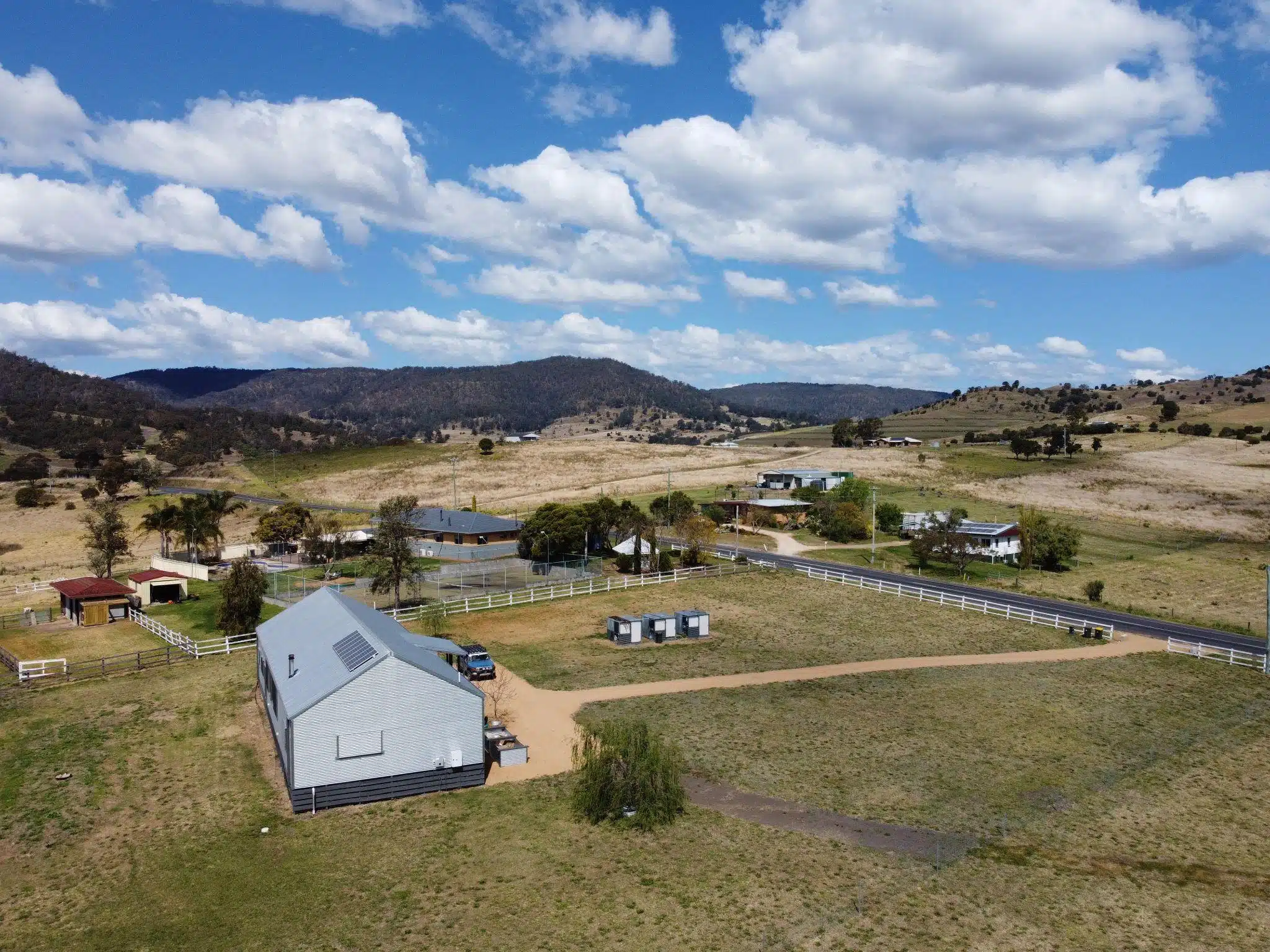
Sheds occupy a central role in modern Australian farming businesses. They are no longer incidental structures, but critical infrastructure that protects capital, supports workflow, and reduces long-term operating costs.
Machinery sheds extend the life of high-value equipment by shielding it from weather exposure. Grain and hay sheds allow farms to control selling windows rather than being forced into harvest-time markets. Workshop sheds enable on-site maintenance, reducing downtime during critical periods.
In Australian conditions—characterised by heat, dust, and seasonal extremes—well-designed, best sheds directly affect productivity. They support faster turnaround, safer operations, and better asset management. For many farms, they are the difference between reactive work and controlled execution.
Machinery Scale and Asset Utilisation on Australian Farms
Australian farms rely heavily on machinery, often operating at scales where downtime is costly and recovery windows are short. Modern business models focus on maximising utilisation while minimising ownership inefficiencies.
This has driven shared ownership arrangements, contractor use for peak tasks, and careful matching of machinery size to actual throughput needs. Oversized equipment tied to short seasonal use is increasingly scrutinised.
Farms that manage machinery as a financial asset—rather than a symbol of scale—retain flexibility and protect cash flow during weaker seasons.
Labour and Management Structures in Regional Australia
Labour availability remains one of the most persistent constraints on Australian farms. In response, modern operations simplify workflows, invest in automation where viable, and formalise management structures.
Clear task allocation, seasonal planning, and machinery standardisation reduce reliance on scarce skilled labour. Larger operations often separate strategic management from day-to-day execution, allowing owners to focus on planning rather than constant firefighting.
The shift toward professional management reflects the increasing complexity of modern farming businesses.
Supply Chain Alignment and Market Access
Australian farming businesses are increasingly designed around where and how products are sold. Cropping enterprises invest in on-farm storage to avoid forced selling. Livestock operations align finishing programs with processor specifications to reduce discounts and increase consistency.
Some farms pursue niche markets, but most focus on operational reliability rather than branding. The emphasis is on meeting specifications, delivering on time, and controlling logistics costs.
Farms that understand their position in the supply chain are better equipped to negotiate pricing and manage volatility.
Climate Variability as a Structural Consideration
Climate risk is not an external factor in Australian farming—it is a design constraint. Modern business models assume variability and build systems accordingly.
This includes conservative stocking rates, diversified income streams, water infrastructure investment, and flexible crop programs. Decision-making is increasingly based on probability rather than optimism.
Farms that survive long term are not those that chase exceptional seasons, but those that remain viable through average and poor ones.
The Direction of Australian Farming Businesses
Modern Australian farming is defined by intention. Operations are structured, assets are evaluated, and decisions are made with a clear understanding of risk and return.
Crops and livestock are tools within broader systems. Sheds, machinery, labour, and logistics are treated as strategic inputs, not afterthoughts. The businesses that endure are those that design for pressure, not perfection.
In Australian agriculture, success is rarely accidental. It is built—season by season—through structure, discipline, and a clear understanding of how the whole system works together.