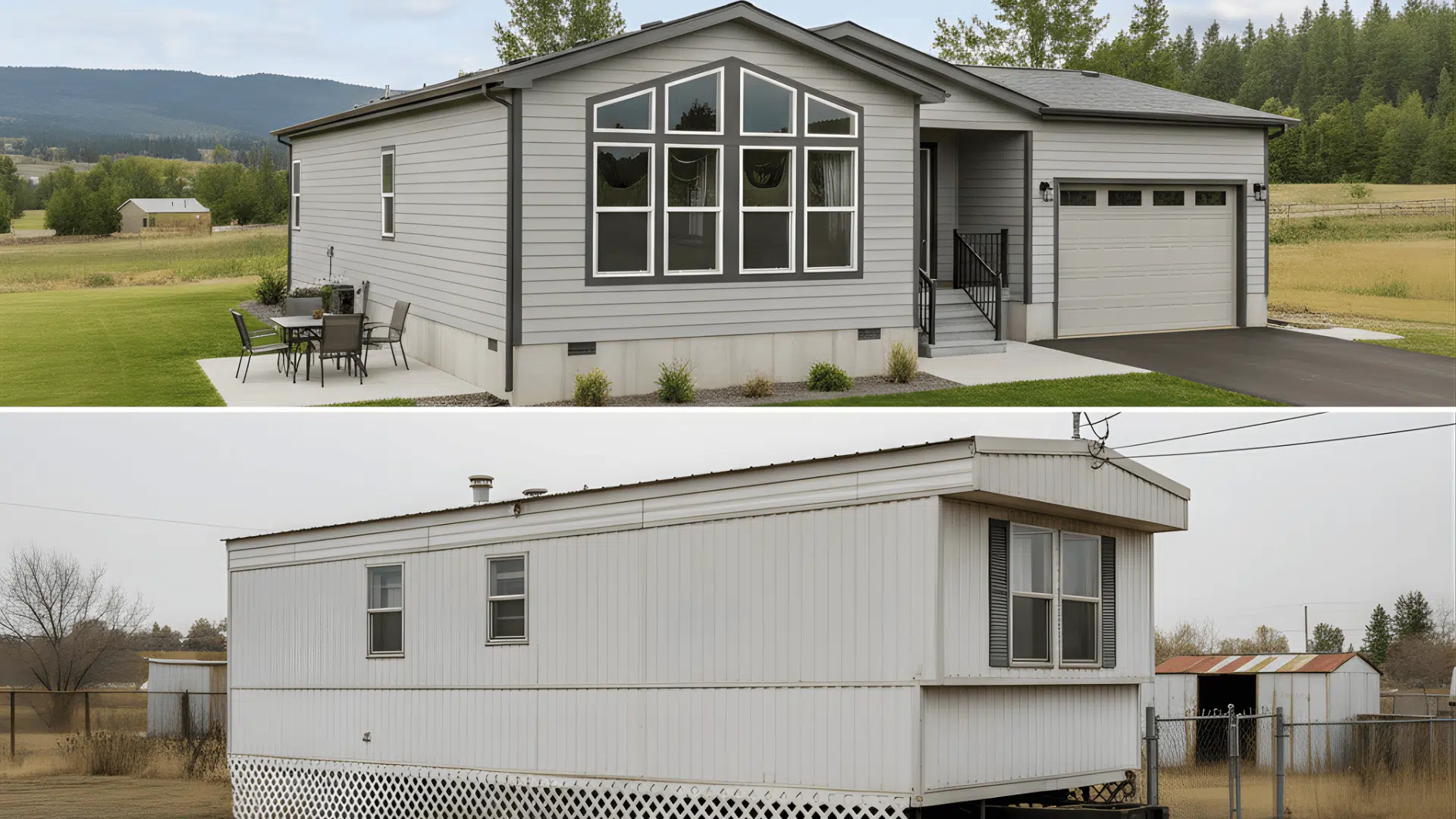
If you’ve ever questioned what really separates a manufactured home vs a mobile home, you’re not alone. I used to think they were the same thing, too- until I learned that one small detail changes everything.
Most people mix up the two because they look alike on the surface, but the rules behind how they’re built tell a very different story.
Here, you’ll get a clear look at what sets them apart, how construction standards have changed, and why it matters when it’s time to buy or finance a home.
By the end, you’ll know which one truly fits your lifestyle and long-term goals.
Understanding Mobile and Manufactured Homes
Before comparing mobile and manufactured homes, it’s important to understand what these terms actually mean.
Both describe factory-built homes, but they’re used differently depending on the time and building standards involved.
The term “mobile home” is often used as a general label for movable homes, even though it technically applies to older models.
The term “manufactured home” is the correct modern name used for today’s factory-built housing that follows federal guidelines.
Knowing the proper terms helps avoid confusion when reading about laws, mortgages, or listings. It also ensures you’re comparing the right types of homes in the sections that follow.
Manufactured Home vs. Mobile Home: The Core Difference

Manufactured and mobile homes may sound similar, but they follow very different building standards. The main difference is the year they were built and the rules they had to meet.
Manufactured Home
A manufactured home is a factory-built home built under the federal HUD Code introduced in 1976. This code ensures that every home meets set standards for strength, energy efficiency, and safety.
These homes are made in climate-controlled factories and then transported to the site for installation.
Key Traits:
- Built after June 15, 1976, under HUD regulations.
- Constructed indoors to maintain consistent quality.
- Installed on a permanent or semi-permanent foundation.
- Has a HUD certification label proving compliance with federal standards.
Manufactured homes have open floor plans with modern finishes. They use energy-efficient materials that cut heating and cooling costs.
The construction quality is solid, similar to site-built homes. Buyers can choose single-wide, double-wide, or triple-wide layouts based on space and budget.
Mobile Home
A mobile home refers to a factory-built home made before 1976, before federal standards existed. They were designed for quick setup, low cost, and easy relocation. Because there were no national guidelines, their quality and safety varied widely.
Key Traits:
- Built before June 15, 1976, without HUD standards.
- Designed with axles and wheels for mobility.
- Made with lighter materials for easier transport.
- Lacked consistent building and safety rules.
Mobile homes have compact layouts with basic finishes. They use simple plumbing and wiring systems that were easy to install but less durable.
These homes were often called “trailers” or “trailer homes” because of their mobility. They cost less to build and buy but typically have a shorter lifespan than modern manufactured homes.
The Evolution of Manufactured Homes
Modern manufactured homes combine quality, comfort, and affordability in a way that rivals traditional houses.
Built in factories under strict HUD standards, they use strong materials and advanced technology for consistency and long-term durability.
These homes feature energy-efficient insulation, modern windows, and stylish interiors that lower utility costs while improving comfort.
Designed for flexible living, they come in various sizes and layouts with open kitchens, updated bathrooms, and quality finishes.
Installed on permanent foundations, they qualify for financing and property ownership. With proper maintenance, a modern manufactured home can last40 to 60 years or more, offering lasting value.
Manufactured vs. Mobile Home Construction

Modern manufactured homes are built to last, while older mobile homes were made for mobility and affordability. The difference shows in how they’re designed, insulated, and maintained.
1. Materials and Design
- Manufactured Homes: Built after 1976 under HUD standards, these homes use steel frames, pitched roofs, and strong siding. Interiors often include drywall and quality finishes, making them feel more like traditional houses.
- Mobile Homes: Made before regulations, older mobile homes used light aluminum siding, flat roofs, and thinner walls. They were cheaper to produce but less durable and weather-resistant over time.
2. Energy Efficiency
- Manufactured Homes: Modern versions include better insulation, double-pane windows, and efficient HVAC systems. Many meet Energy Star standards, helping reduce energy bills and improve comfort.
- Mobile Homes: Older models lose heat and cool air easily due to thin insulation and single-pane windows. They’re less efficient, leading to higher energy costs and uneven temperatures.
3. Lifespan and Maintenance
- Manufactured Homes: With regular care, they can last 40–60 years or more. Checking the roof, siding, and foundation helps maintain strength and stability for decades.
- Mobile Homes: Typically last 20–30 years with more frequent repairs. Lighter materials and weaker structures make long-term upkeep more challenging.
Cost Comparison and Financing
Manufactured, mobile, and modular homes differ in price and long-term costs. Understanding their pricing, loan options, and resale value helps buyers plan better.
| Category | Mobile Home (Pre-1976) | Manufactured Home (Post-1976) | Modular Home |
|---|---|---|---|
| Typical Price Range | $20,000–$60,000 | $80,000–$150,000 | $120,000–$250,000+ |
| Building Standards | No federal code, varied quality | Built to HUD Code | Built to local/state building codes |
| Financing Options | Limited; usually personal or chattel loans | FHA, VA, USDA, and conventional loans are available | Standard home mortgages are available |
| Mortgage Eligibility | Rare, unless converted to real property | Eligible if placed on a permanent foundation and titled as real property | Always mortgage-eligible |
| Insurance | Higher premiums due to age and mobility | Moderate premiums, based on location and setup | Standard homeowner policies |
| Taxes | Often taxed as personal property | May be taxed as real estate if permanently placed | Always taxed as real estate |
| Resale Value | Low; depreciates quickly | Holds value better; slower depreciation | Appreciates similarly to site-built homes |
| Maintenance Costs | Higher due to older materials | Moderate; easier to maintain | Similar to traditional homes |
| Lifespan | 20–40 years (with care) | 40–60 years or more | 60+ years (comparable to site-built homes) |
Manufactured homes offer the best balance of affordability, quality, and financing access. They cost more upfront than mobile homes but hold value better and qualify for more loan options, making them a stronger long-term investment.
Legal and Zoning Considerations
Manufactured homes are governed by a mix of federal, state, and local laws. Understanding these helps homeowners avoid zoning issues and financing delays.
1. HUD vs. Local Codes
Manufactured homes follow the federal HUD Code, which sets standards for construction, design, and safety. However, local governments control zoning, which decides where homes can be placed.
In short, HUD governs how the home is built, and local codes determine where it can go.
2. State Regulations and Community Restrictions
Every state has its own installation and licensing rules. Some allow manufactured homes on private lots, while others restrict them to approved parks or communities.
Homeowners’ associations (HOAs) may also set size, age, or design limits for homes within their neighborhoods.
3. Titling and Real Property Conversion
Manufactured homes start out titled as personal property, similar to a vehicle. When the home is set on a permanent foundation and the land is owned, it can be converted into real property.
This conversion makes the home eligible for standard mortgages and helps improve long-term resale value.
Manufactured home laws vary across states and cities. Knowing the local and federal requirements before buying ensures a smoother process and better financial protection.
Conclusion
Now that you know how a manufactured home vs. mobile home truly differs, it’s clear that modern manufactured homes stand on their own in quality and value.
Built under strict HUD standards, they offer reliable construction, better efficiency, and more design freedom than ever before.
Choosing one can be a smart move if you’re looking for comfort and affordability without giving up long-term durability.
Before you take the next step, check the state’s housing rules and financing options to make sure you’re set up for a smooth purchase.