Quick safety reality check before moving a milling machine (before you touch the machine)
This is the kind of physical thing that when a shop moves, you do first, and maybe you do it right, but almost certainly you do not do it again.
Moving a milling machine seems easy, but just watch out because it’s got a ton of stored and moving energy that can crush bones and concrete pretty easily. What appears to be a low force push/pull movement can easily crush things because of all the physics involved. Before you even start evaluating the machine that needs moving, evaluate yourself and your capabilities.
Decide whether this should be a DIY move, or if professional riggers should be hired based on risk and liability. If you do not have properly rated/inspected equipment or experience handling top-heavy loads, then the cost of a rigging team is nothing compared to the potential costs of a dropped machine and injury lawsuit etc.
If you decide to DIY the move, establish a baseline and differentiate the moves: first, a hazardous-energy control plan (LOTO where applicable) is mandatory – make sure the machine is fully de-energized at the disconnect, verified de-energized, and cannot be accidentally powered during the prep phase. Then, establish minimum PPE with a spotter – everyone involved needs steel-toed boots, hard hats, gloves etc. The operators of the lift equipment (forklifts etc) need to have a spotter to cover blind spots and secure the perimeter.
Pre-move planning: understand what will be moved (size, weight, route, etc)
When moving a milling machine, or any similar heavy equipment, you really need to start with data. The data comes first, and then the lifting power comes second. Ensure you gather data on the actual machine’s size and weight, but don’t forget to consider the dynamic aspects too – such as the travel of the machine table, any handles, and motors that might extend beyond the base footprint. Measure everything against the proposed exit route, including door width and height, overhead clearance, and ramp grades that might cause clearance issues.
Identifying the Center of Gravity (COG) on the machine is crucial, as milling machines are usually top-heavy due to the distribution of castings and motors. An improper lift can cause the machine to tip as soon as it’s lifted. Consult the manual to identify proper lift points – rigging crews train on where to pick the machine up from, and what points to avoid. Don’t make ad-hoc lift points by wrapping chains around the table or ram as it can crack castings and cause misalignment of the machine (and subsequently generate machining errors).
Gathering machine weight information is essential to match with forklifts, trucks, trailers and other lifting equipment that will be used to transport the machine. If you are in a buying process, check out these milling machines types and their weight/footprint classes so they can be matched appropriately to forklift capacity and trailer depending on the specs. Understanding these categories is important because they will impact the overall logistics in terms of freight planning so that trucks can handle the weight classes of equipment. For more detailed insights on equipment handling, refer to our Logistics & Transport → Freight & Shipping resources.
Pre-move site prep and route considerations
Once you’ve gathered the critical machine metrics, it’s time to prep the physical environment for the move. Ensure you completely clear the path of debris, cords, and other obstructions. Protect finished floors with Masonite or plywood to prevent cracking from the weight concentration of machinery, skates or forklifts. Mark any pinch points on walls or floors to indicate where the machine will have minimal clearance, so that spotters are aware (and not operators).
Check the floor load rating at the destination, because milling machines have high PSI and can exceed floor/slab point-load limits if not properly rated for industrial loads. If anchoring is required at the destination, identify and mark those points in advance. Stage all tools, blocking, bracing, and other materials near the machine so that the crew can access them without delay during the move – you don’t want anyone scrambling for a 4×4 while a load is suspended and moving around!
Machine prep for move – Clean, Lock (LOTO), remove, and label
Next up, the milling machine itself needs prep for transport. Cleaning, general maintenance, and care come first – you don’t want to move a machine that’s covered in cutting oil and metal chips, as all the vibrating metal particles will get embedded into the precision ways. Wipe everything down and drain the coolant sump. Remove and secure any vulnerable accessories, such as the vise, DRO display, and any delicate handwheels. Bag and label all the hardware.
The axes need to be locked in place using any machine-provided locks or blocking to ensure that the table doesn’t slide when tipped. Finally, if the machine is going outside or into storage, environmental protection such as wrapping it in heavy-gauge plastic or canvas, is necessary to protect against moisture and debris.
Methods of moving a milling machine – Forklift? Gantry? Skates? Pallet Jack? etc
Discussing the many ways to move milling machines and heavy equipment, and the pros and cons of different methods.
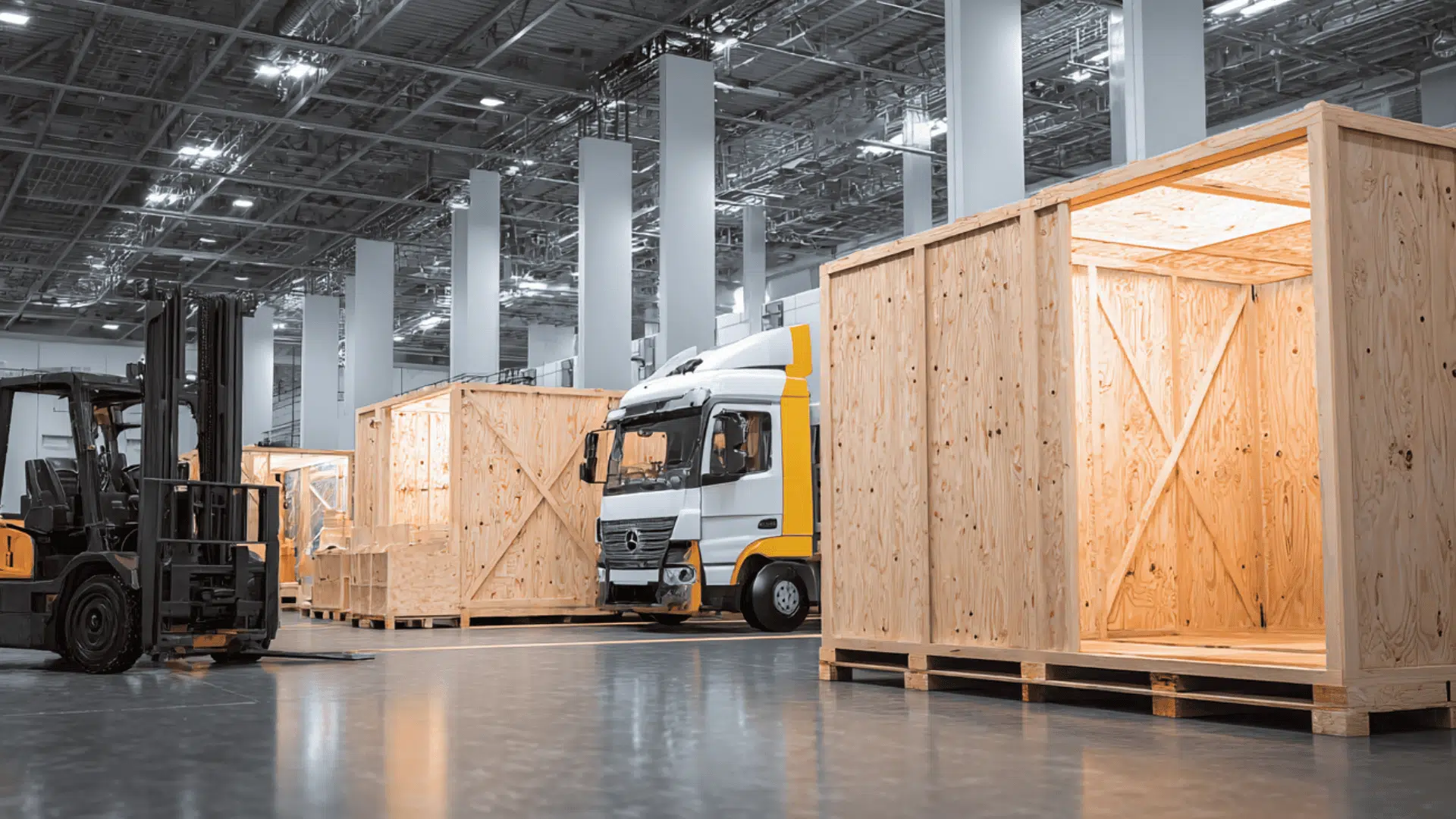
Forklifts offer good vertical lift but require maneuvering space.
Gantries are precise and excel at lifting heavy equipment vertically in tight spaces with low overhead clearance.
Skates allow rolling across the floor, and pallet jacks are only viable for small benchtop mills or mills properly skid/pallet-mounted.
All of the above methods require capacity checks and ratings – ie, whatever equipment used must be rated above the load weight (not just close to it). For example, a 3000 lb-rated forklift is not enough for a 2900 lb milling machine because of the extended load center. Movements need to be done very slowly and carefully, following spotter instructions and hand signals as well as voice commands. Strict adherence to safety protocols, including never being underneath a suspended load is critical.
Loading Securing for Transport – No-Shift Standard for Milling Machines in Transit
Once the milling machine is on the truck or trailer, the goal is “No-Shift” stability. Use combinations of heavy-duty ratchet straps and chains depending on the securement points. But never run a chain over a machined surface such as the ways or table tops – heavy padding of rubber mats, carpeting, wood etc needs to be employed so that the machine isn’t crushed and abraded by the tightness and weight of the strapping. Ratchet straps need to be applied in ways that pulls the machine down and into the friction mats, preventing side-to-side as well as tipping.
Once trucking/transporting, stop after the first few miles / 15–30 min or so and tighten up and re-check tension on the straps as everything tends to settle and loosen up during travel. If the transport is over public roads, there are considerations and compliance issues as well. Getting the proper wide load permits and permissions if the size and weight exceed regulated limits needs to be managed.
Shop relocation completion – Placement, leveling, and restarting milling machine with test cuts
The movement of micrometer accurate tools really isn’t complete until they are cutting accurately again. The milling machine is carefully dropped into its marked location on leveling pads. Leveling is one of those critical activities that restores stability and accuracy. The machinist’s level is applied to the table, X and Y axes checked and verified. Leveling feet adjusted so that level is zero’ed on both axes. Any twisting of the base the table sits atop will cause subsequent twisting on machined parts.
The machine settles over time, so leveling should be checked after 24 or 48 hours, then again after a week. Functional testing is performed – spindle is run through all RPM ranges, axes are checked for binding and resistance, initial calibration cuts are made to check geometric accuracy prior to releasing the machine for production work.