Moving isn’t just about boxes and furniture; it’s about picking the setup that won’t make the whole process harder than it needs to be.
That’s why so many people end up comparing Pack Rat vs. PODS when they’re trying to sort out the smartest way to move without dragging a truck across town themselves.
These container services look similar on the surface, but they work very differently once you dig into things like space, weight, cost, and how each company handles your timeline.
Today. I’ll give you a clear look at what sets them apart, what real customers say, and which option fits different moving scenarios. Let’s start by breaking down what each company actually offers.
Pack Rat vs. PODS: Overview
When you’re staring down the choice between Pack Rat and PODS, its helpful to know what each one is and what they’re good at.
They both do the same basic thing. You get a container, it shows up at your place, you load your stuff, then it gets moved or stored. But the way they build their containers, how they work with you, the perks they throw in, none of that is exactly the same.
These differences matter depending on what kind of move you’re planning, how heavy your stuff is, and how much space you have to work with.
So let’s break them down one by one.
What Pack Rat Offers
- All-steel containers: Built from solid metal, so they feel tougher and more secure during long-distance moves or rough weather.
- Barn doors: Wide-swing doors that make it easy to load big items, as long as you’ve got the space in front to open them.
- Higher weight limits: Handles heavier loads without stressing about weight restrictions, which helps if you’ve got a lot of dense items.
- Price matching: They’ll sometimes match competitor quotes, which gives you a little leverage when you’re comparing costs.
- Fewer locations: Smaller service area, so availability depends on where you live and where you’re moving.
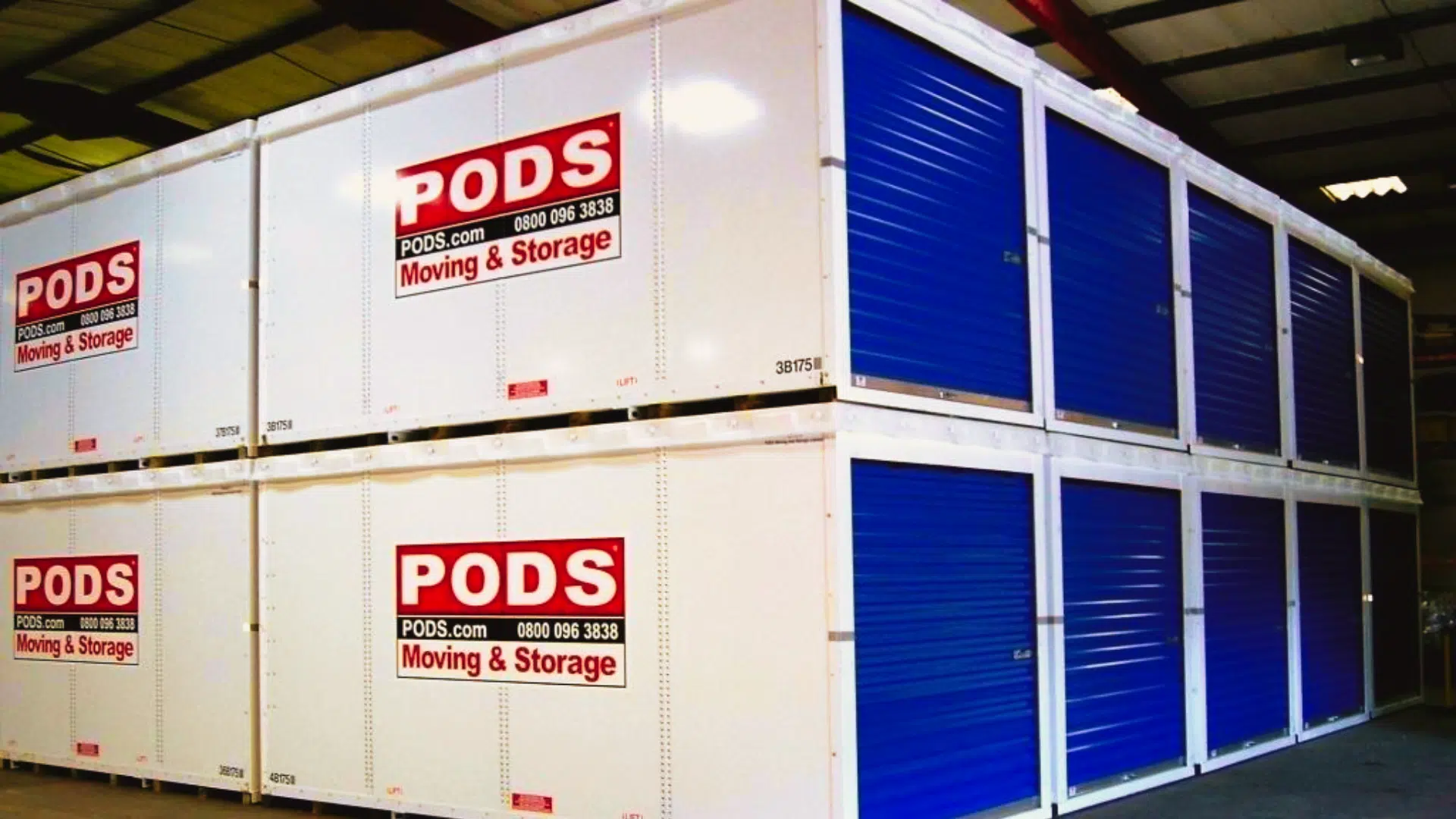
What PODS Offers
- Largest network: More locations across the country, which makes scheduling easier and reduces the chance of availability issues.
- Composite containers: Lighter build compared to steel, still durable enough for most moves but not as heavy-duty.
- Roll-up doors: Easy-access doors that work well in tight spaces since they don’t swing out into your driveway.
- Climate-controlled storage: Good for storing items that don’t do well with heat, moisture, or long-term temperature swings.
- Military discount: A consistent savings option for eligible customers, which PODS is known for offering year-round.
Key Differences Between Pack Rat and PODS

When you stack these two side by side, you start to see where each one stands out. Some differences are small until you’re actually moving, then they hit you. Here’s a look at things you wanna think about:
| Category | Pack Rat | PODS |
|---|---|---|
| Material | All-steel containers built for durability | Composite containers that are lighter and more flexible |
| Sizes | Fewer size options overall | More size options depending on location |
| Weight Capacity | Higher weight limits that handle heavy loads better | Lower weight limits, fine for standard household moves |
| Door Type | Barn doors that swing wide and need front clearance | Roll-up doors that work well in tight driveways |
| Availability | Smaller service area with fewer locations | Largest network with broad nationwide coverage |
| Storage Options | Standard storage with limited climate-controlled choices | More climate-controlled storage availability |
| Discounts | Price matching when you bring a competing quote | Military discount and occasional promos |
| Quote Flexibility | More negotiation because of price matching | More fixed pricing based on location and timing |
| Long-Distance vs. Local Strengths | Strong for long-distance when you hit their price sweet spot | Better for local and short-distance moves, more consistent scheduling |
Container Sizes and Build Quality
These containers look similar at first, but the way they’re built changes how they perform in real moves. The material, the weight they can handle, and how the doors open all affect how easy they are to use.
Pack Rat
Pack Rat uses all-steel construction. The container feels solid, doesn’t flex, and holds up well in rough weather. Steel doesn’t absorb moisture, so it’s better for long hauls or storage. It also holds heavy weight without shifting, which helps if you’re moving dense furniture or tools.
The downside is the barn-style doors. They open wide and give you a big entry, but they need space in front. If your driveway or parking spot is tight, those doors can get in the way.
PODS
PODS uses a composite material that’s lighter than steel. It’s sturdy enough for typical home moves and easier to place in tighter locations. It handles normal weather fine, but it isn’t as heavy-duty as steel for long-term storage or extreme conditions.
The roll-up door is the main advantage. It lifts straight up, which makes it easier to use in narrow driveways, apartment lots, or anywhere space is limited. It’s built more for convenience than maximum durability.
Price Comparison: PODS vs. Packrat
Talking about costs early matters because pricing is one of the biggest deciding factors for most moves.
The reality is this: prices shift a lot depending on how far you’re moving, how much stuff you have, how many containers you need, and even the local market where you live.
For some short moves, you might be under $1,000, but long interstate journeys with multiple containers can easily climb into the $4,000-$6,000 range or more.
Always get actual quotes for your exact move before you decide.
Local Move Pricing
Typical PODS ranges: Local PODS quotes generally start modest. Smaller local moves often come in under a thousand dollars once you add delivery, pickup, and rental fees.
Some customers reported delivery and pickup fees around $100-$150, with daily rental charges added if you keep the container longer.
Typical Pack Rat ranges: Pack Rat for local moves also varies, but many reported $300 or more once delivery, size, distance, and days held are factored in; often a bit higher than PODS on simple local jobs.
Hidden fees: Both companies can add delivery, pickup, taxes, per-day storage costs, or weekend scheduling charges. These show up after the initial quote unless you ask up front.
Minimum rental period: PODS typically structures pricing on a monthly base rate that often includes the first 30 days. Pack Rat often quotes based on the move you schedule, with monthly rates adding on after the initial period ends.
Long-Distance Move Pricing
Pack Rat “sweet spot”: Pricing comparisons show Pack Rat can be slightly cheaper than PODS for long moves in the mid-distance range (around 1,050 to 1,750 miles) once discounts or price matching are applied.
Where PODS is cheaper: PODS often comes out lower for short and very long distances; meaning local moves up to roughly 450 miles and big cross-country moves beyond about 1,850 miles.
Example ranges: Long-distance moves commonly fall between $1,300 and $4,000-$6,000+ depending on home size and mileage. In one comparison, a 100-mile move with PODS was around $1,367 compared to Pack Rat at $1,944, while at roughly 1,750 miles Pack Rat came in at $4,121 versus PODS at $4,559.
Weight limits affecting price: If you hit a container’s maximum weight, you may need an extra container or an upgrade, which increases the total cost regardless of which company you choose.
Deposit, Cancellation, and Extra Fees
Deposits: PODS often does not require a deposit before delivery. Pack Rat may require one for some long-distance bookings.
Pickup and delivery fees: Both companies usually charge delivery and pickup fees separate from the base rental. These can add a few hundred dollars depending on location and timing.
Rescheduling charges: Last-minute date changes after a container is dispatched can trigger extra fees for both companies.
Monthly storage fees: If you keep the container as storage after the move, monthly storage charges begin.
PODS often includes the first 30 days in the base price for many local moves, then switches to a monthly rate. Pack Rat varies more and usually charges by the month after the initial booking period unless negotiated.
Where Pack Rat and PODS are Available

Availability and delivery matter because you need a container that can actually reach your home and fit in your space. Both companies can get the job done, but their coverage and delivery setup work better in different situations.
Service Coverage (States and Cities)
PODS has a wider network, covering 46 states. That makes it easier to schedule deliveries, especially if you’re moving between major cities or across long distances.
Pack Rat operates in 33 states, so availability is more limited. They cover many larger metros but may not reach rural areas or smaller regions. Because of their smaller footprint, delivery dates can sometimes be tighter.
Delivery Logistics
Container delivery depends on the space around your home.
In apartment buildings, PODS is usually simpler because their roll-up doors make placement easier in narrow spots. Pack Rat can work, but their barn doors and heavier steel build need more room.
In tight driveways, PODS tends to fit better since the door lifts upward instead of swinging out. Pack Rat works best where you have a clear, open area in front of the container.
Some addresses require street permits for container placement. Both companies will tell you if it’s needed, but the permit itself is usually your responsibility.
If you live in an HOA, you might run into time limits or placement rules. PODS is often approved because the footprint is easier to manage, though Pack Rat can be allowed too, depending on the HOA’s policies.
Customer Experience and Reviews
Customer feedback shows clear patterns for both companies. PODS generally scores higher for overall reliability, while Pack Rat gets more mixed reactions. Still, both services get credit for being easy to use and straightforward once the container is on your property.
Common PODS Complaints
Many customers mention delays, especially during busy seasons. The container will sometimes arrive later than scheduled, or the pickup date shifts without much warning.
“Pick up was delayed because of weather. Then rescheduled. It was confusing when my pod was getting picked up.”
Another recurring issue is high long-distance pricing. PODS stays competitive on short and medium moves, but customers often say cross-country jobs come in higher than expected.
“I feel like it was very expensive but still worth it for the ease of use.”
Common Pack Rat Complaints
A number of reviewers talk about lost or misplaced containers. These show up as containers delivered to the wrong address, delayed in transit, or missing for days before the company sorts it out.
“The container was supposed to be delivered on Saturday but because of a truck breakdown the delivery was delayed which was a bummer.”
Customers also point out limited availability. Since Pack Rat serves fewer states, people report trouble getting the dates or locations they want.
“Having to wait 5 days to have the empty containers pickup arranged was challenging with reaching PackRat.”
There are frequent mentions of customer service issues. Reviews describe long hold times, inconsistent answers, and slow responses when trying to resolve a problem.
“Communication was difficult and monitoring pickup dates was confusing. Had to correct dates, times, and phone numbers.”
Positive Experiences for Both
Many customers praise the convenience of having a container delivered right to their home and being able to load at their own pace.
“The drop off and pickup were easy and very convenient, drivers communicated, all went well.”
People also like the simplicity of the process. Scheduling, loading, and paying is usually straightforward once the container is in place.
“My experience was great!! Drivers were wonderful!! My things arrived safely. Nothing was damaged.”
Both companies get credit for DIY flexibility. Customers appreciate being able to control their own timing without rushing to return a truck or meet a moving crew’s schedule.
“Their prices were a huge relief since they were about half of what PODS wanted to charge me. Scheduling and delivery were smooth.”
PODS or Packrat: Which Should You Choose?
At the end of the day, both companies work. They’re just built for different situations. The easiest way to pick the right one is to look at the space you live in, how much you’re moving, and what kind of container actually fits your setup.
Choose PODS If…
- You’re in a small apartment where space is tight and you can’t swing big barn doors open without hitting something.
- You need flexible scheduling, especially if your dates might shift a little and you want a company with more trucks and more availability.
- You live in a tight-space urban area where the container has to fit between buildings, fences, or parked cars. The roll-up door is a big advantage there.
- You want climate-controlled storage, because PODS offers more options for keeping your stuff protected if it’ll be stored for a while.
- You want wide availability, since PODS covers far more states and cities, making moves between locations simpler.
Choose Pack Rat If…
- You have heavy furniture or dense items that put real weight on the container. Their steel build handles that better.
- You’re packing a full household and need a sturdier container that doesn’t flex or shift when loaded all the way.
- You want steel durability for long-term storage or rough weather. Pack Rat’s build is noticeably tougher.
- You want to price-match aggressively and push for a lower quote. Pack Rat tends to be more flexible when you bring competing prices.
- You’re in their long-distance sweet spot, where they sometimes come in cheaper than PODS once you factor in discounts and mileage.
Alternatives to PODS and Pack Rat
If you want options outside of PODS and Pack Rat, there are a few solid choices that cover different moving styles. Some give you more control, some handle the work for you, and some work like a lighter version of container moving.
1. U-Pack
U-Pack is one of the most popular alternatives. You load your things into a ReloCube or trailer, and they handle the driving. It’s a good option if you want long-distance pricing that’s often cheaper than full-service movers.
2. Moving Truck DIY
If you’re open to driving your own truck, companies like U-Haul and Penske are the usual go-tos. You load everything, drive it yourself, and pay for gas and mileage. This is normally the cheapest option for short moves.
3. Full-Service Movers
If you want a team to handle everything, Allied Van Lines is one of the most established full-service moving companies. They load your home, transport your items, and unload everything at the new place. It’s the easiest choice but also the most expensive.
4. Local or Regional Container Companies
Some areas have smaller container companies that work just like PODS. One common name is Zippy Shell, which offers portable containers with more flexible delivery options in certain markets.
Wrapping Up
Choosing between Pack Rat and PODS comes down to how you move, the space you’re working with, and the level of control you want. Both companies give you flexibility, but each one solves a different type of problem.
If you’re dealing with weight, distance, or durability, Pack Rat leans harder in your favor. If you want reach, convenience, and smoother access in tight spaces, PODS feels easier to live with.
Either way, the right choice isn’t about the containers themselves; it’s about matching the service to your move.
Before you decide, compare real quotes, look at your layout, and choose the option that fits your reality. To get started, grab a quote today.