Understanding what customs clearance is can feel tricky at first because most people only hear about it when something goes wrong.
What many don’t realize is that customs isn’t just checking papers; it’s confirming the story behind your shipment, making sure every detail lines up with what you’re bringing in or sending out.
Small gaps in information, unclear item descriptions, or missing approvals can turn a simple shipment into a long delay.
In this blog, I’ll break down the process in a way that shows you why customs behaves the way it does, how each step connects, and what you can do to avoid the problems most beginners run into.
What is Customs Clearance?
Customs clearance is the process that allows goods to legally enter or leave a country.
When a shipment reaches a border, customs officers check the details of the goods, review the paperwork, and make sure all rules are followed. They also confirm that the right duties and taxes are paid.
Once everything is approved, the shipment is cleared to move forward. If information is missing or incorrect, the shipment can be delayed or held.
Customs clearance helps keep trade safe, fair, and organized, and it plays an important role in global shipping for businesses and individuals alike.
Why Customs Clearance Matters for Imports and Exports
Customs clearance plays a big role in keeping international trade moving smoothly.
- Allows Legal Movement of Goods: Customs clearance gives official approval for goods to enter or leave a country without breaking trade laws.
- Prevents Delays and Extra Costs: Correct clearance helps avoid holds, storage fees, and missed delivery timelines.
- Ensures Duties and Taxes are Paid: It makes sure the right taxes and fees are collected, keeping trade fair for everyone.
- Supports Border Safety and Compliance: Customs checks help stop restricted or unsafe goods from crossing borders.
Understanding this process makes importing and exporting much less stressful.
Who’s Involved in the Customs Clearance Process?
Many people and teams work together to complete the customs clearance process.
| Party Involved | What They Do |
|---|---|
| Importer or Exporter | Owns the goods and provides correct product and value details. |
| Customs Authority | Reviews documents, checks rules, and approves or holds shipments. |
| Customs Broker | Prepares and files paperwork and helps avoid costly mistakes. |
| Freight Carrier | Moves the goods by air, sea, or land to the destination country. |
| Port or Terminal Operator | Handles the cargo at the port or airport during clearance. |
When everyone does their part, customs clearance becomes faster and smoother.
Customs Clearance Process Step-by-Step
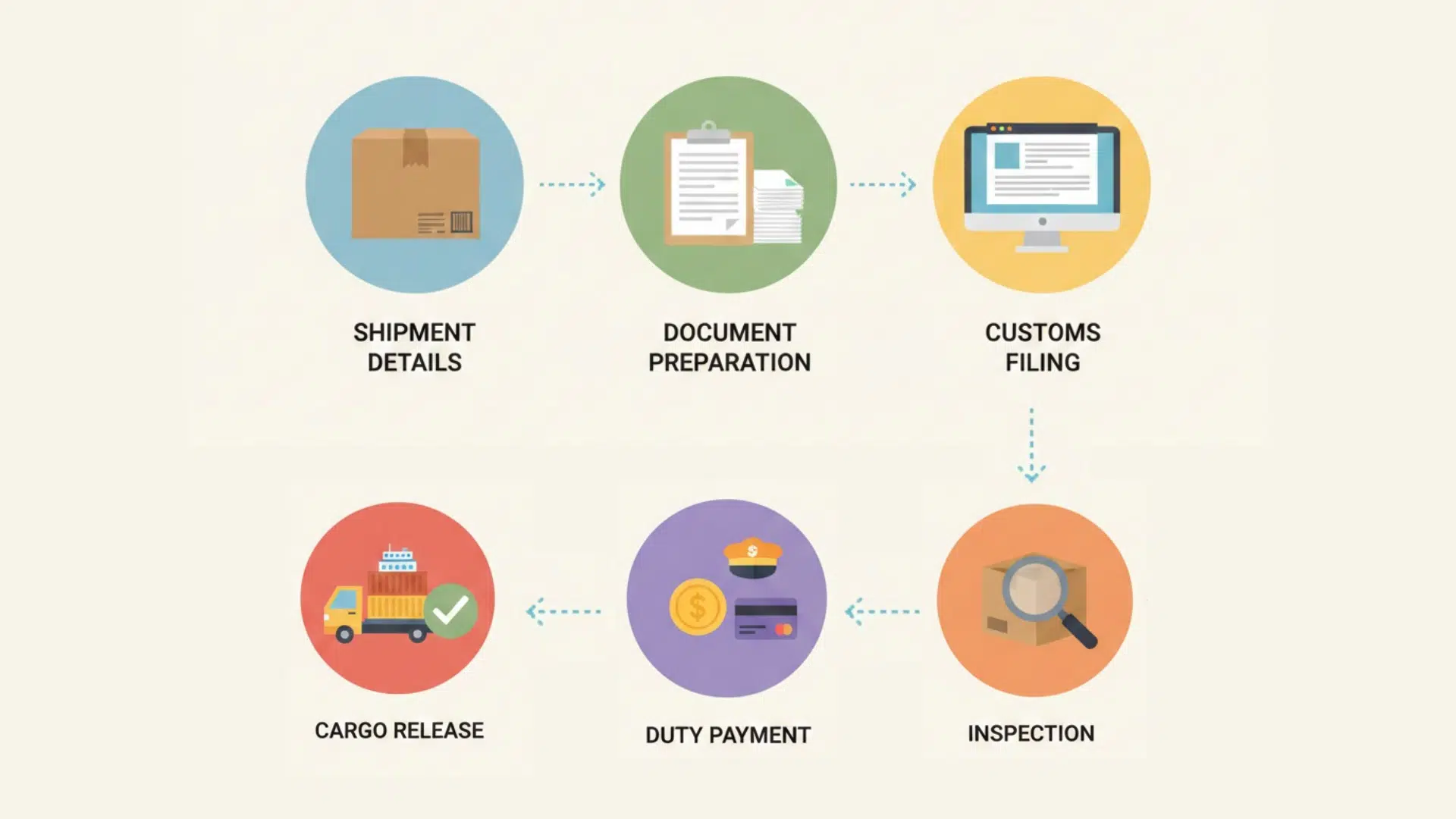
Customs clearance can feel like a lot, but it’s really a set of clear steps that help goods cross borders legally.
1. Get Your Shipment Details Ready
Start by gathering the basic details about your goods. This includes the product name, quantity, value, and country of origin.
Make sure the description is clear and matches what is actually in the boxes. If your details are vague or don’t match, customs may ask questions or delay the shipment. Clean, accurate details make everything easier later.
2. Prepare the Required Documents
Next, collect the main paperwork that customs will check. Each document should show the same key facts, like item names and quantities.
Double-check names, addresses, and numbers for small mistakes. Even one missing detail can slow the process down.
3. File the Customs Entry
Once the documents are ready, the shipment details must be submitted to customs. This is often called “filing an entry,” and it can be done by the importer or a customs broker.
The entry tells customs what the goods are and how they should be treated under the rules. If your shipment needs special permits, they may be checked here too. Filing early helps avoid last-minute stress.
4. Customs Review and Inspection
After filing, customs reviews the entry and decides if the shipment can move forward. Some shipments get cleared quickly, while others may be held for questions or inspection.
An inspection can include checking documents, scanning, or opening packages. This is normal and does not always mean something is wrong. The best way to avoid problems is to keep paperwork clear and truthful.
5. Pay Duties, Taxes, and Fees
If duties and taxes apply, they must be paid before the shipment is released. The amount depends on the product type, value, and trade rules in that country.
Some shipments also have extra fees, like handling or processing charges. Your broker or carrier may help you understand what is due. Paying on time helps your cargo move without delays.
6. Cargo Release and Delivery
Once customs is satisfied and payments are done, the shipment is released. This means it can leave the port, airport, or border area and move to the final address.
At this stage, the carrier arranges the next step of transport, like trucking to a warehouse. Keep copies of the final clearance papers for records. If anything comes up later, these papers help you prove it was cleared.
Key Customs Clearance Documents
Customs clearance depends heavily on the right paperwork. When documents are clear and complete, customs can review and approve shipments much faster.
- Commercial Invoice: Shows what the goods are, their value, quantity, and who is buying and selling them.
- Packing List: Explains how the goods are packed, including box counts, weights, and sizes.
- Bill of Lading or Air Waybill: Acts as a transport record and proof that the carrier received the goods.
- Certificate of Origin: Confirms where the goods were made and may affect duty rates.
- Import Licenses or Permits: Needed for restricted or controlled items, depending on local rules.
Having these documents ready helps avoid delays and extra costs.
Customs Clearance Time and Cost
Customs clearance time and cost can change based on the country, shipment type, and document accuracy.
In simple cases, clearance can take 1 to 3 days when the paperwork is correct, and no inspection is needed. If documents are missing or goods are flagged, it may take a week or longer.
Costs also vary. Customs broker fees usually range from $100 to $300 per shipment, while duties and taxes depend on the product value and type.
Some shipments may also face extra charges like port storage or inspection fees, which can add $50 to $200 or more.
Clear documents help keep both time and costs under control.
Customs Clearance for Special and Regulated Cargo
Special and regulated cargo needs extra care during customs clearance because of safety, legal, or health risks. These shipments are checked more closely to make sure all rules are followed.
| Cargo Type | Why It Needs Extra Checks | Common Requirements |
|---|---|---|
| Hazardous Goods | It can be dangerous if handled or shipped incorrectly | Safety data sheets, special labels, permits |
| Food and Agriculture | Affects public health and local farming | Health certificates, inspections |
| Medical Products | Used for treatment and care | Import licenses, quality approvals |
| Chemicals | May be harmful or restricted | Regulatory permits, clear product details |
| Controlled Items | Limited by law or policy | Government approvals, strict documentation |
Planning ahead and knowing the rules makes clearing special cargo much smoother.
Conclusion
Understanding what customs clearance is gives you a clearer view of how international shipping really works.
It’s not just about documents and fees; it’s about proving that your shipment is accurate, safe, and allowed to move across borders without issues
When you approach the process with organized details and a plan, it becomes much easier to predict timelines and avoid surprise costs. Clear communication, early preparation, and knowing when to get expert help make a bigger difference than most people expect.
If you’re ready to handle your next shipment with more confidence, read other guides on the site for simple, practical tips on global trade and logistics.