Older homes often attract buyers because of their architectural details, established neighbourhoods, and distinctive character. But purchasing an older property also means understanding which parts of the building may have changed over time and which systems remain from its original construction.
Most buyers pay attention to visible concerns such as the roof or foundation. One important component is much easier to overlook because it is buried underground: the water service line connecting the house to its supply.
When this pipe develops problems, homeowners may experience unreliable water pressure or unexpected leakage. In some cases, deterioration may eventually make main water line replacement more practical than continuing with isolated repairs.
Understanding the underground water service before moving in helps buyers ask better questions about the property’s condition and prepare for work that may otherwise interrupt the relocation process.
What Is an Underground Water Service Line?
An underground water service line carries drinking water from the supply connection toward the home’s internal plumbing system. In properties connected to a municipal water network, the line typically extends between the utility infrastructure and the building. Its installation and maintenance responsibilities depend on the municipality and the property’s connection arrangement.
Some sections may be maintained by the utility, while others belong to the property owner. This distinction matters because homeowners may be financially responsible for repairing or replacing portions of the line outside the house.
Water Supply Lines Are Not Sewer Lines
The underground water service line should not be confused with the sewer lateral. The water service delivers clean water to the property. The sewer lateral carries wastewater away from the building toward the municipal collection system or another approved disposal arrangement.
These pipes perform different functions and require different inspection methods. A sewer camera inspection, for example, is not a standard way to examine a pressurized drinking-water service line. Understanding the distinction helps buyers ask for the correct type of assessment.
Why the Line’s Condition Matters
The water service line affects the reliability of the home’s water supply. A deteriorated or restricted line may contribute to pressure problems. Underground leakage can also create water loss and damage surrounding soil or exterior surfaces.
Although not every problem requires full replacement, the condition of the service line is relevant to long-term property maintenance.
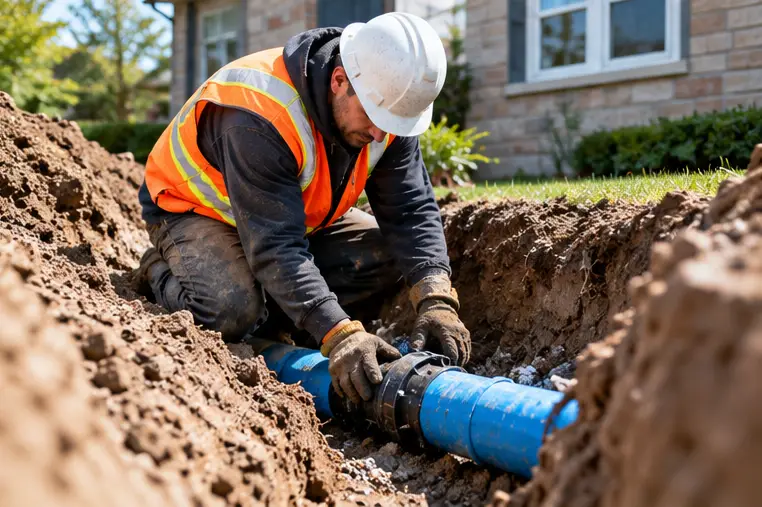
Underground water service lines may require excavation when inspecting or replacing damaged sections.
Why Older Properties Deserve Closer Inspection
An older house does not automatically have defective underground plumbing. Many properties have already undergone improvements. Others may retain original components or have a mixture of old and newer materials.
The challenge for buyers is determining what has actually been replaced.
Identify the Existing Pipe Material
Underground water service lines can be made from several materials, depending on when they were installed and the applicable requirements.
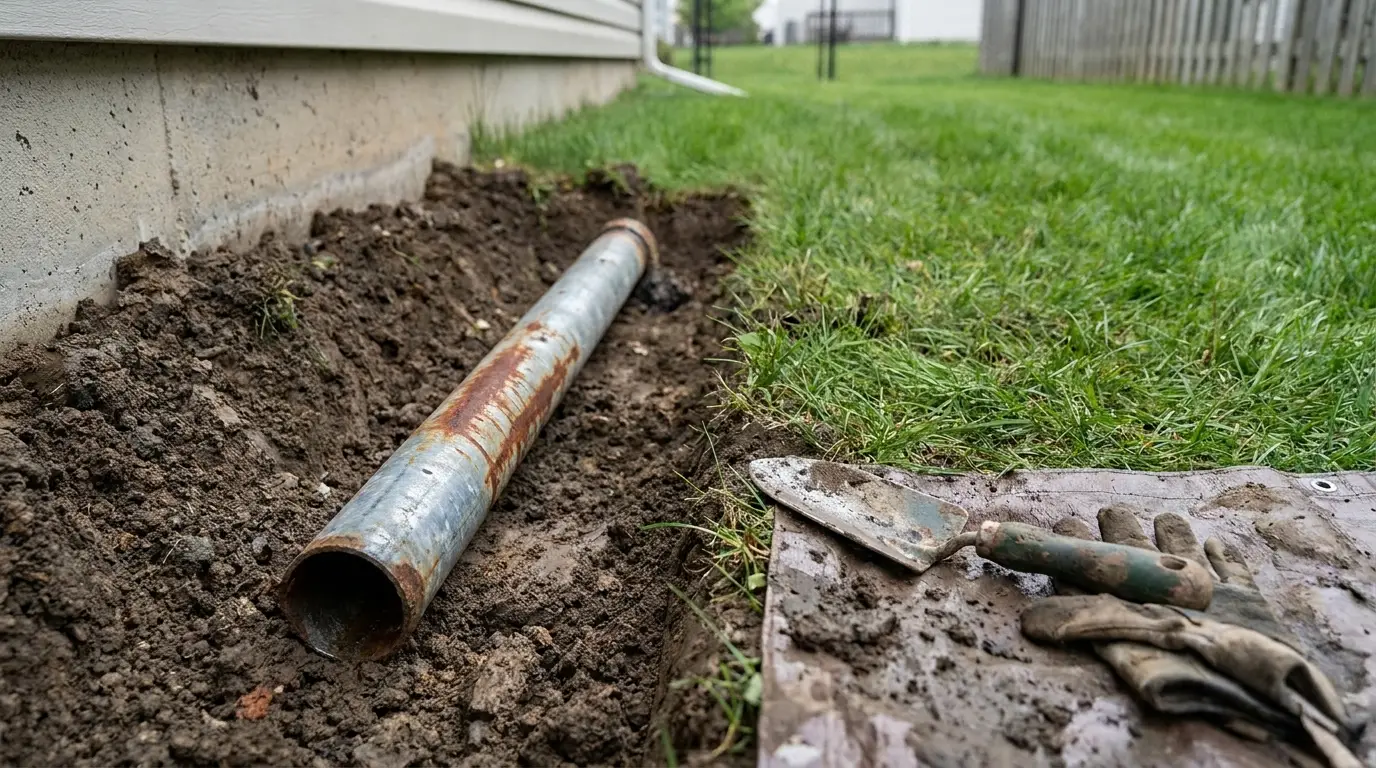
Older properties may contain galvanized steel or lead piping. Other homes may have copper or approved plastic service lines. Each material has different characteristics and potential maintenance concerns. Lead service lines deserve particular attention because lead can enter drinking water.
If records indicate that a property may contain a lead service connection, buyers should consult the local water utility and applicable public health guidance. Replacing a lead service line may be recommended even when there is no visible leakage.
Ask About Previous Water Line Repairs
A seller may report that underground plumbing work was completed several years earlier. That information is useful, but the scope matters. A localized repair does not necessarily mean the full water service was replaced. Ask for available invoices or municipal records showing which section was repaired.
Documentation may also identify the replacement material or reveal whether permits were issued. These details help buyers distinguish between an upgraded service line and a system that still contains older sections.
Consider the Property’s Exterior Layout
The route between the municipal connection and the house may pass beneath finished outdoor areas. A driveway, landscaped garden, or mature trees can complicate access to buried infrastructure. When replacement becomes necessary, the route and surrounding conditions may affect the work.
Buyers should therefore consider not only the pipe itself but also what lies above it.
Common Warning Signs of an Underground Water Line Problem
Underground water service problems do not always produce obvious symptoms. Some warning signs may also result from internal plumbing issues or municipal supply conditions. Professional diagnosis is important before concluding that the buried line needs replacement.
Unexplained Low Water Pressure
Low water pressure throughout the house may indicate a restriction or problem within the water supply system. However, it can also result from other causes. A pressure-reducing valve or an issue elsewhere in the building may affect performance.
Before assuming the underground service is damaged, a qualified professional should evaluate the supply conditions. The pattern of the pressure problem can provide useful diagnostic information.
Persistent Wet Areas Outside
Unexplained water appearing in the yard may suggest an underground leak. This is particularly relevant if the area remains wet during otherwise dry weather. However, groundwater and surface drainage conditions can produce similar symptoms.
An inspection should determine where the water originates. Excavation should not be based solely on a wet patch without considering alternative causes.
Unusual Water Meter Activity
Where the home has an individual water meter, unexpected consumption may indicate leakage. If all water-using fixtures and equipment are off but the meter continues registering use, further investigation may be appropriate.
Automatic equipment must be accounted for during the check. A meter observation can suggest a problem, but additional assessment is needed to establish its location.
Changes in Water Appearance
Rust-coloured or otherwise discoloured water can have several possible causes, including corrosion or disturbance of sediment. It does not necessarily prove that the underground water service line is deteriorating.
Persistent changes should be reported to the water utility or evaluated by an appropriate professional. If contamination is suspected, follow local drinking-water safety guidance rather than assuming the water is safe.
What Should Buyers Ask Before Closing?
A standard home inspection is useful, but it may not establish the condition of a buried water service line. Inspectors generally assess what is visible and accessible within the scope of their inspection. For older properties, buyers may need to ask additional questions.
Useful questions include:
- Has the underground water service ever been replaced?
- What pipe material is currently installed?
- Are there records of previous underground leaks?
- Is any portion of the connection known to contain lead?
- Which sections are maintained by the property owner?
The answers can help determine whether a specialist assessment is worthwhile before closing.
Review Available Property Records
Municipal records may contain information about previous service connections or approved work. However, record availability and completeness vary.
An absence of documentation does not establish that the line is defective. It simply means that buyers may need additional information to understand its condition.
Consider the Findings During Purchase Planning
If a water service issue is identified before closing, buyers can discuss the implications with their real estate and legal advisers. Depending on the transaction, options may include obtaining estimates or negotiating how the issue will be addressed.
The appropriate approach depends on the purchase agreement and local conditions. The important point is to understand the issue before making assumptions about its cost or complexity.
Repair or Replacement: How Is the Decision Made?
Not every damaged water service line needs to be replaced entirely. A localized repair may be appropriate when the surrounding pipe remains suitable for continued use.
However, replacement may become more practical when deterioration is widespread or when the existing material presents concerns.
When a Localized Repair May Be Suitable
A pipe with an isolated defect may be repairable if its overall condition is sound. The feasibility depends on the material and the nature of the damage. A repair should address the identified problem using an appropriate method.
Before proceeding, ask whether the remaining service line has been evaluated and whether additional failures are reasonably anticipated.
When Full Replacement Deserves Consideration
Replacement may be recommended when the pipe has experienced repeated failures or contains material that should be removed. Extensive corrosion can also make localized repairs less practical. Cheap Plumber offers underground water line repair and replacement services in Toronto and the GTA and is an example of a contractor homeowners may consult when evaluating the appropriate scope of work.
Before approving replacement, homeowners should understand the proposed installation method and the restoration work that may follow.
Can a Water Service Line Be Replaced Without Digging Up the Entire Yard?
Some underground water services may be suitable for trenchless replacement. These methods can reduce the amount of excavation compared with opening a continuous trench. However, they do not necessarily eliminate digging.
Access pits may still be required, and feasibility depends on the existing line and surrounding site conditions. The contractor should explain why the proposed method is appropriate for the property rather than assuming that trenchless installation is always preferable.
What Affects Underground Water Line Replacement Costs?
Replacing a buried water service line involves more than purchasing new pipe. The overall project may include excavation or trenchless installation, connection work, permits, and restoration of disturbed surfaces.
As a result, two similar-looking homes can have very different project requirements.
Distance and Installation Conditions
A longer service line generally requires more material and installation work. However, length is not the only consideration. Difficult access or ground conditions can influence the work even on a relatively short connection.
The location of existing underground utilities must also be considered.
Excavation and Surface Restoration
Traditional excavation may disturb lawns or finished exterior surfaces. In some cases, trenchless installation can limit the area requiring restoration.
However, the property may still need landscaping or hardscape repairs after the plumbing work is completed. Ask whether the estimate includes restoration and what standard of reinstatement is proposed.
This helps avoid confusion about which contractor is responsible for finishing the site.
Permits and Utility Coordination
Underground water service work may involve municipal approvals or coordination with the water utility. The requirements depend on where the property is located and which part of the connection is being modified.
Buyers should confirm these responsibilities before scheduling the project. A clear written scope can help explain what is included and what may require separate arrangements.
How to Plan Water Line Work Around Moving Day
Discovering an underground service problem shortly before relocation can complicate the moving schedule. If an inspection identifies concerns, coordinating the work early can reduce disruption.
Confirm Possible Water Interruptions
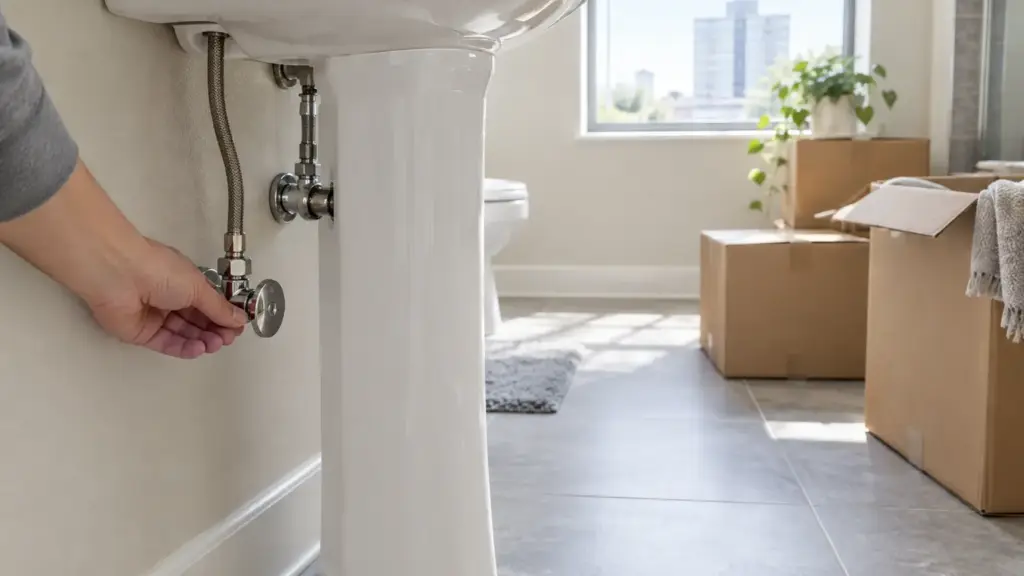
Replacing a service line generally requires interrupting the water supply during part of the work. Ask the contractor about the expected shutdown and any testing required before the new connection can be used.
Avoid scheduling essential cleaning or other water-dependent activities during the planned interruption. If the home will be occupied, discuss whether temporary arrangements are necessary.
Coordinate Driveway and Property Access
Moving trucks require convenient access to the property. Excavation equipment may need the same space. If water line work and relocation are planned close together, coordinate the schedules before confirming the moving date.
This can help prevent access conflicts and unnecessary delays.
Protect Your Belongings During Construction
Underground work may create dust or require equipment movement around the property. Keep moving boxes away from active work areas and follow the contractor’s site-access instructions.
If the property has limited access, it may be easier to complete the plumbing project before moving large furniture into the house. The best sequence depends on the scope of work and the availability of the property.
Final Thoughts
Older homes can offer distinctive character and a strong sense of place, but their hidden infrastructure deserves careful attention. The underground water service line is an important part of that assessment because its condition influences how reliably water reaches the house.
Buyers do not need to assume that every older pipe requires replacement. Instead, they should establish what is installed, review any available maintenance records, and arrange further assessment when genuine concerns arise.
Understanding these details before moving day allows homeowners to make informed decisions and plan necessary work around the relocation rather than discovering avoidable complications after settling in.