There’s a specific kind of disappointment that comes from scrolling through photos after a listing goes live, or after a summer party, and noticing things a walk-through never revealed: a streak across a window, cobwebs caught in the porch light, a mildew stain on the siding that somehow blended into the background every other day of the year. None of it was invisible exactly. It just wasn’t the kind of thing anyone’s eye stopped on – until a camera did.
That gap between what a person notices in passing and what a photograph or a gathering of guests actually reveals is worth understanding before either one happens, not after.
Why a Camera Sees Differently Than a Person Does
Human perception is generous in ways people don’t usually notice. Walking up a driveway, the eye moves, adjusts for shifting light, and mentally edits out the ordinary imperfections that come with actually living somewhere. A camera does none of that. It freezes a single moment, flattens depth into two dimensions, and – particularly with the wide-angle lenses standard in real estate photography – tends to exaggerate whatever’s near the edges of the frame rather than filtering it out.
The stakes for getting this right in a real estate context are real, even if the exact figures shift from one study to the next. Research on this has consistently pointed the same direction for years: professionally photographed listings tend to spend less time on the market than comparable listings with amateur images, and the pattern shows up across price points rather than just at the high end.
The more dependable finding underneath all of it is simpler and doesn’t need a specific percentage to make the point: the large majority of home buyers now begin their search online, and a listing’s photos are typically the first and most scrutinized part of that search – well before a buyer reads the description, checks the school district, or contacts an agent. None of that has much to do with staging the interior alone; the exterior is very often the first image a prospective buyer sees.
Hosting a gathering doesn’t carry the same measurable stakes, but it shares the same underlying issue: guests, like camera lenses, notice things a homeowner has stopped seeing simply because they walk past them every day.
What to Check Before Either One
The practical checklist for exterior prep looks different depending on whether the goal is a listing photo shoot or an evening with guests, but a handful of items matter for both, and they tend to be the things a walk-through misses:
- window glass, inside and out – streaks and pollen film are invisible in passing but read clearly in photos, especially with any reflected light, and they’re just as noticeable to a guest walking past a lit window after dark;
- cobwebs in eaves, corners, and light fixtures – these accumulate in places nobody looks up at regularly, and a camera flash or porch light tends to catch them directly;
- siding stains and roof streaking – algae, mildew, and the black streaking common on asphalt shingle roofs blend into daily perception over time but stand out sharply in a still photograph, particularly in direct sunlight;
- walkway and driveway staining – oil marks, rust spots, and general grime on concrete photograph as dark, distracting patches, and they’re one of the first things underfoot for arriving guests;
- mulch bed edges and lawn transitions – a crisp edge between lawn and bed reads as intentional; a blurred, overgrown one reads as neglected, even if the plants themselves look fine;
- anything utilitarian left in frame – trash bins, hoses, tools, and lawn equipment are easy to walk past without registering but are exactly the kind of detail a camera or a first-time guest notices immediately;
- porch and entry lighting – for evening gatherings specifically, working, clean fixtures matter as much for safety and first impression as for appearance.
Most of these are quick to address individually. The reason they pile up is that none of them announce themselves the way a broken step or an obviously overgrown lawn would.
Timing Matters as Much as the Checklist
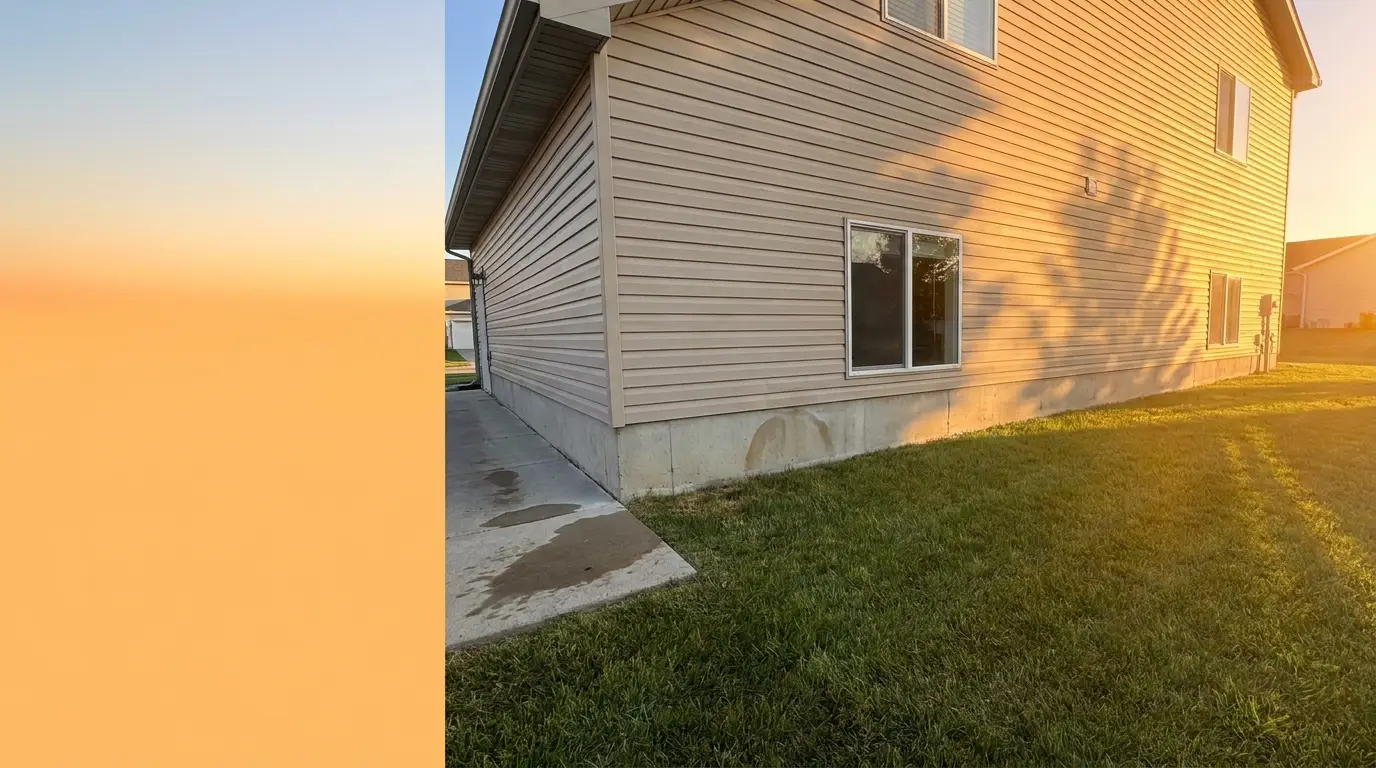
For real estate photography, timing has two layers. The obvious one is light – photographers generally prefer the soft, even light of early morning or late afternoon over the harsh shadows of midday sun, and this is worth coordinating around rather than leaving to whenever a schedule happens to be free.
The less obvious one is drying time: any exterior cleaning, whether it’s washing siding or clearing pollen off windows, needs at least a day to fully dry and for any residual streaking to settle before a camera shows up. Scheduling a wash the same morning as a shoot tends to backfire.
For hosting, the relevant timing is as much seasonal as it is daily. A New England exterior in early May, with a full winter’s accumulated pollen and grime not yet washed away by consistent rain, looks meaningfully different than the same house in late June.
Homeowners planning an outdoor gathering around a specific date are often working backward from an event they can’t move. That makes it worth scheduling exterior cleaning at least a week in advance to account for weather delays and drying time, rather than assuming it can happen the day before.
Why Locals Handle This the Same Way, Regardless of the Occasion
Real estate agents preparing a listing and homeowners preparing for a graduation party are, from a practical standpoint, solving the same problem: making sure the exterior reads the way it actually looks day-to-day, without the small, accumulated details a camera or a crowd of guests will notice.
Professional exterior house cleaning services in this region tend to see a similar seasonal rhythm around listing season and personal events. Demand often picks up in spring ahead of Memorial Day gatherings and the peak real estate market, then again in late summer before graduation parties and fall listings.
Companies that serve homeowners across Massachusetts and Southern New Hampshire generally recommend building a few days of buffer into that schedule – enough time for a wash to fully dry, for weather to cooperate, and for a final walk-through before either a photographer or the first guests arrive.
The parts of a home’s exterior that go unnoticed in everyday life are, almost without exception, the ones that show up first in a photograph or catch a guest’s eye. A walk-through with intentionally fresh eyes – or, more reliably, a short list and a few days of lead time – tends to catch far more than a last-minute glance on the way out the door.