A spa bathroom doesn’t necessarily require a complete renovation. I find the most convincing spaces usually come from a few deliberate choices rather than trying to recreate a hotel spa feature for feature.
The starting point can be as simple as changing the lighting, bringing in warmer materials, or clearing the vanity so the room feels less visually busy. From there, larger changes can make sense when the space and budget allow them.
I’ve included spa bathroom ideas across fixtures, finishes, storage, lighting, texture, scent, sound, and everyday comfort. Some are realistic weekend updates, while others make more sense during a bathroom remodel.
Pick the elements that suit your bathroom, then build around them gradually so the finished space still feels like your home.
What Makes a Bathroom Feel Like a Spa
A spa bathroom comes together through a small set of repeatable design elements rather than one signature upgrade.
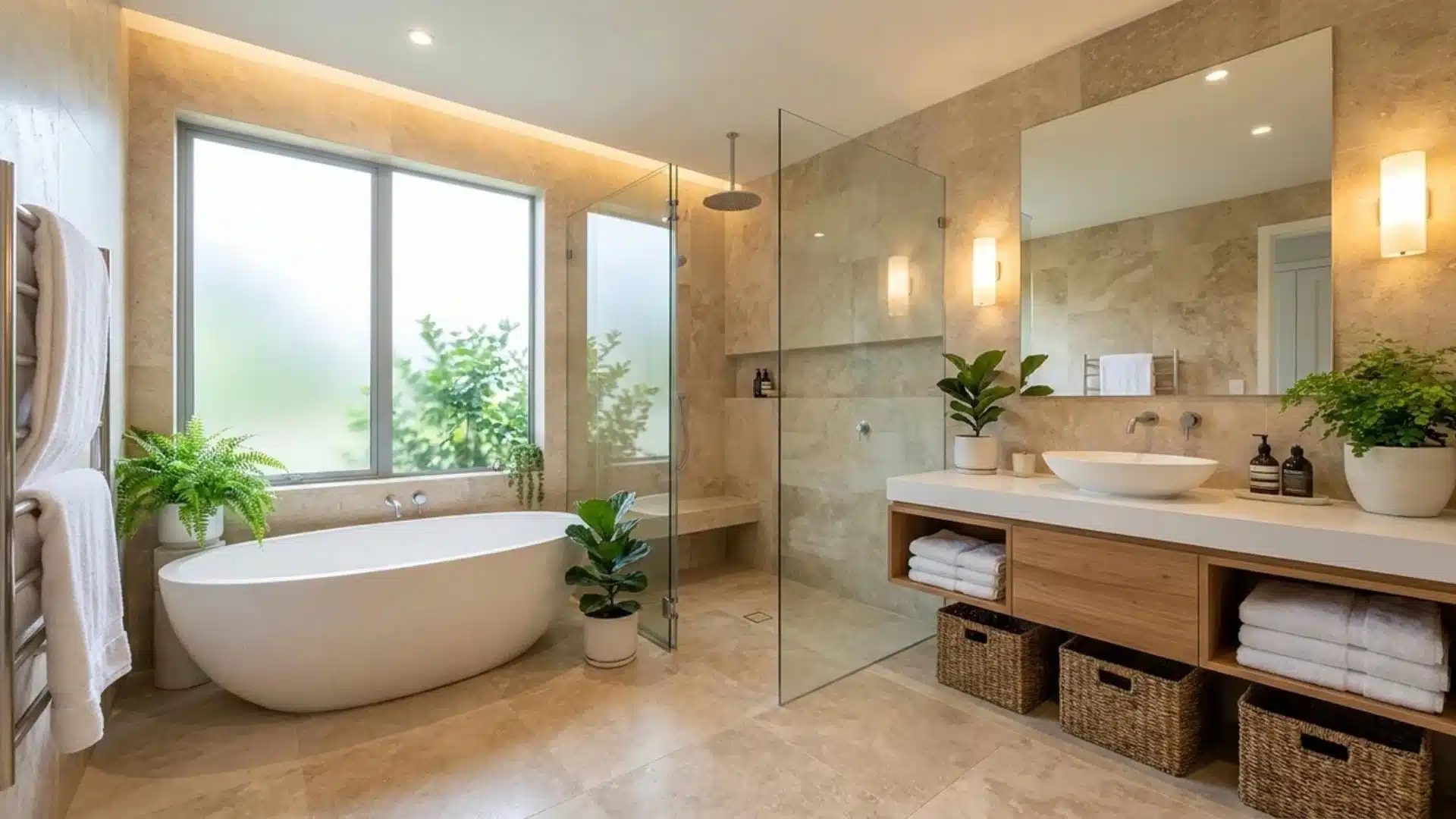
The overall effect usually comes from soft, neutral colors, natural materials, layered lighting, tactile textures, and sensory details such as scent and sound.
The combination matters more than any individual feature. Stone can establish a grounded look, while warm wood, soft textiles, and controlled lighting make the room feel more comfortable and considered.
You can create the same atmosphere through modest changes, so a spa-inspired bathroom does not automatically require a major renovation.
Spa Bathroom Ideas to Upgrade Your Space
There are plenty of ways to give a bathroom a more relaxing character without following a strict design formula.
1. Install a Rainfall Showerhead
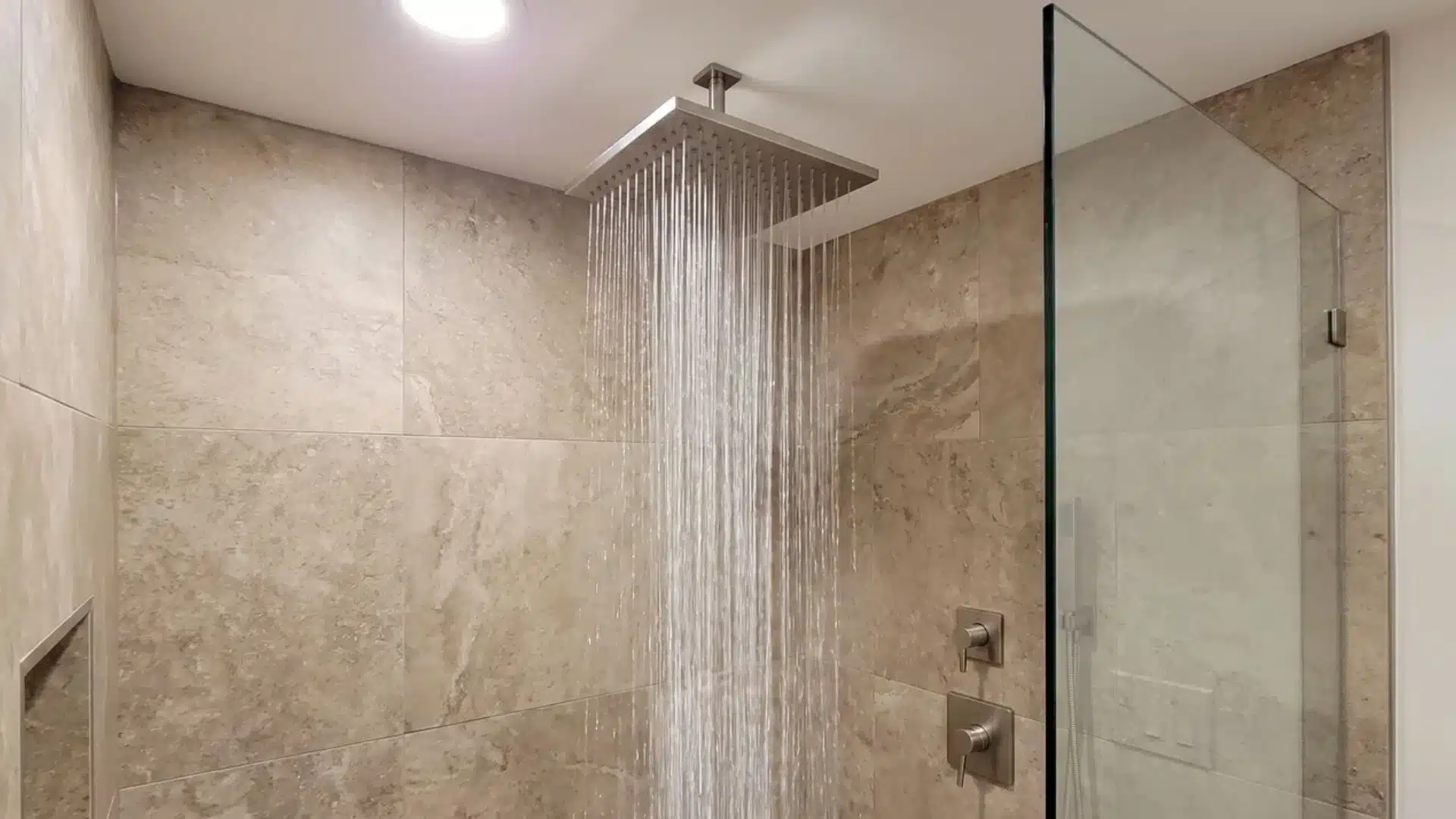
A rainfall showerhead distributes water across a wider surface than a conventional fixture, creating a softer, more enveloping stream. The broader coverage gives everyday showers a relaxed, resort-inspired character.
Position the head directly above the main standing area for balanced coverage. Select a model with adjustable flow settings, especially when household water pressure varies or conservation matters.
2. Add a Freestanding Soaking Tub
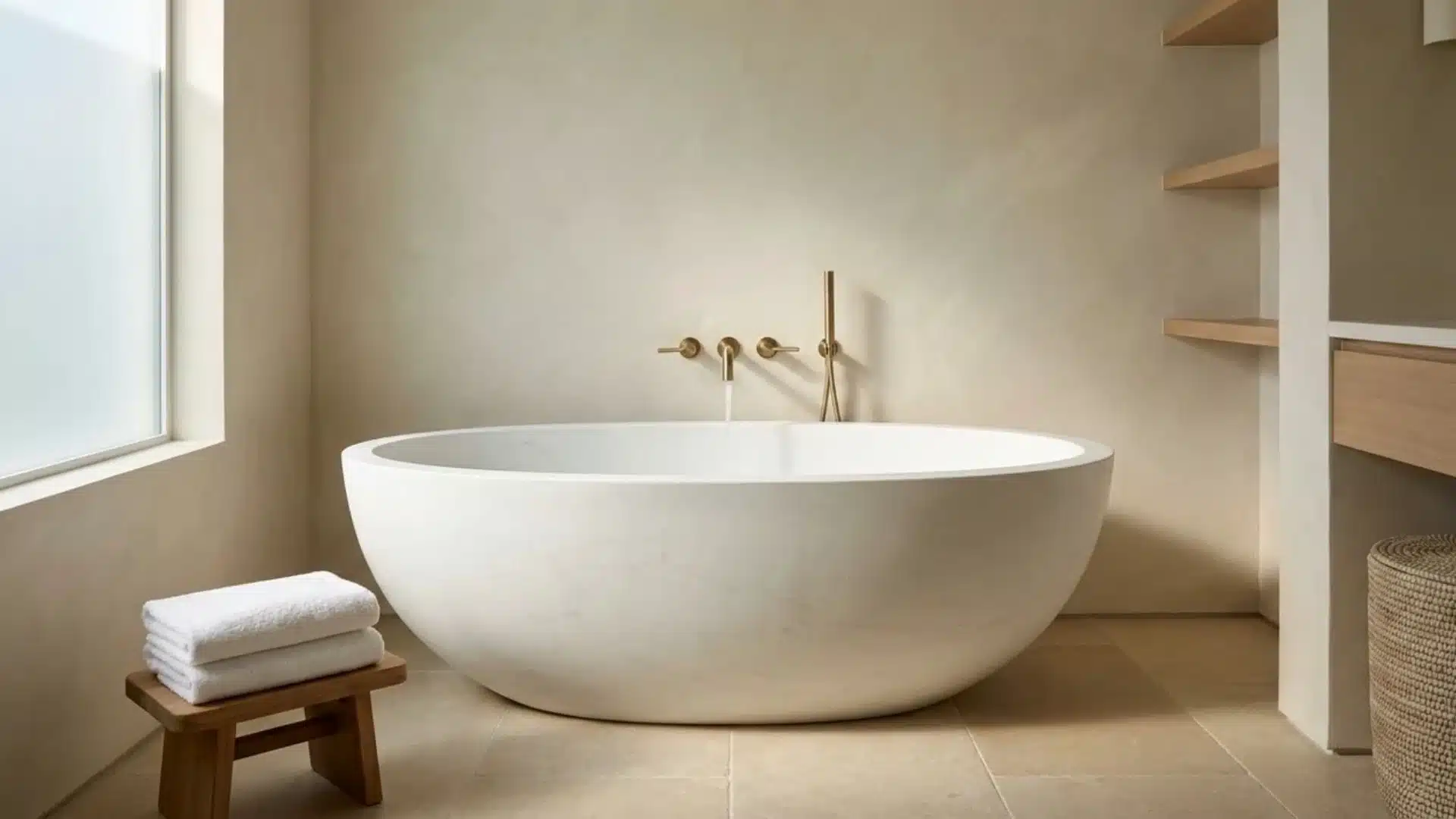
A freestanding soaking tub creates a strong visual focal point while providing a dedicated place for longer, more comfortable baths. Its sculptural silhouette can make the room feel deliberately designed rather than purely functional.
Leave enough clearance around the basin for comfortable movement and cleaning. Pair the installation with a floor- or wall-mounted filler that complements the surrounding finishes without overwhelming the tub.
3. Mount a Heated Towel Rack

A heated towel rack keeps bath linens warm while helping them dry between uses. The fixture also reduces the need to drape damp towels across doors, shower enclosures, or furniture.
Mount the rack where towels remain within easy reach after bathing. Select a hardwired or plug-in model according to the room’s electrical layout, keeping connections safely away from direct water exposure.
4. Convert Your Shower into a Steam Shower
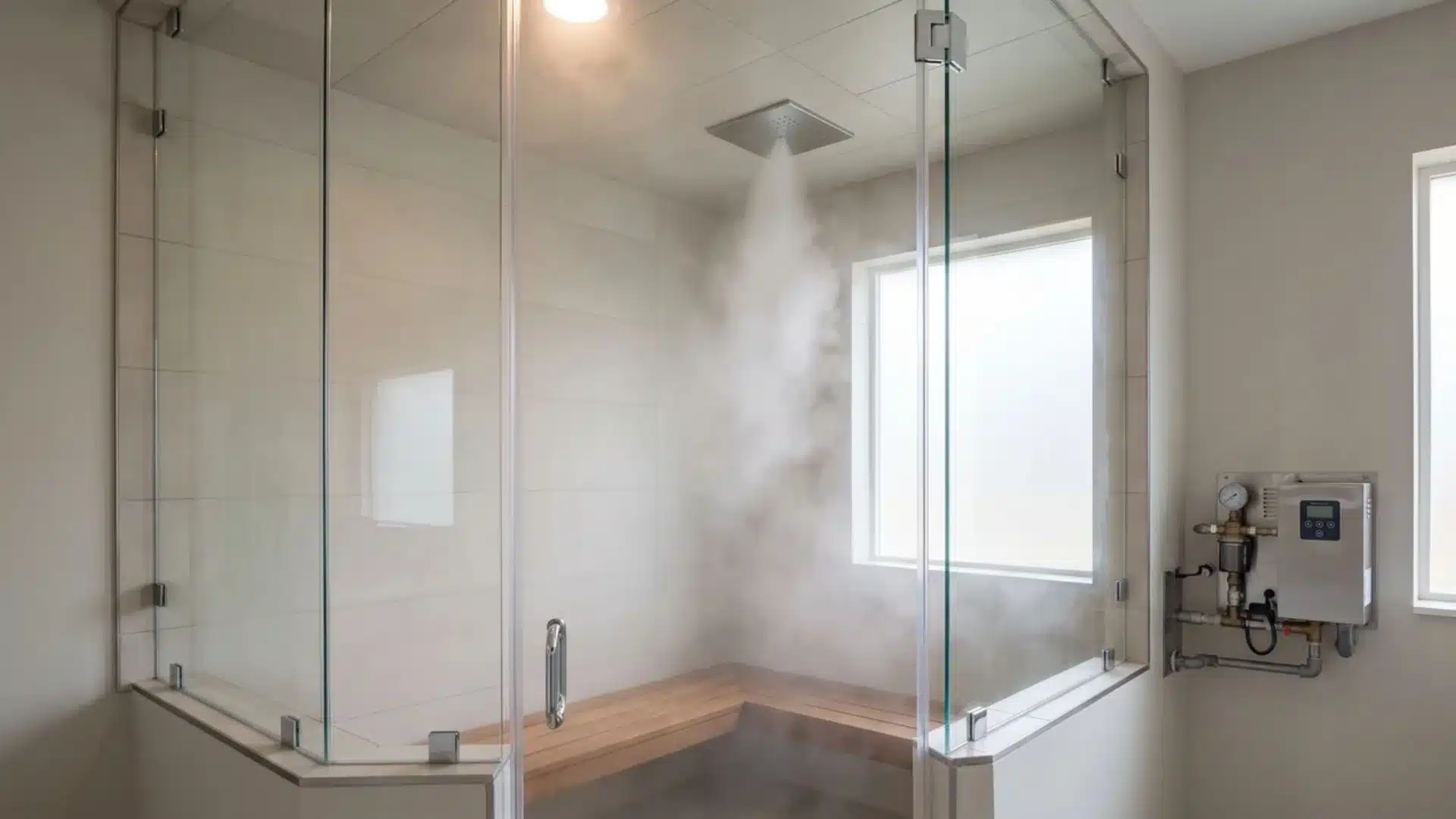
A steam shower requires more than replacing the shower door. The enclosure needs to retain steam, while a dedicated generator produces vapor that fills the enclosed space for a sauna-like experience.
Create a properly sealed enclosure with an appropriately sized steam generator and suitable ventilation. Have waterproofing, electrical connections, drainage, and generator installation completed by qualified professionals rather than treating the conversion as a simple fixture swap.
5. Choose Natural Stone Tile
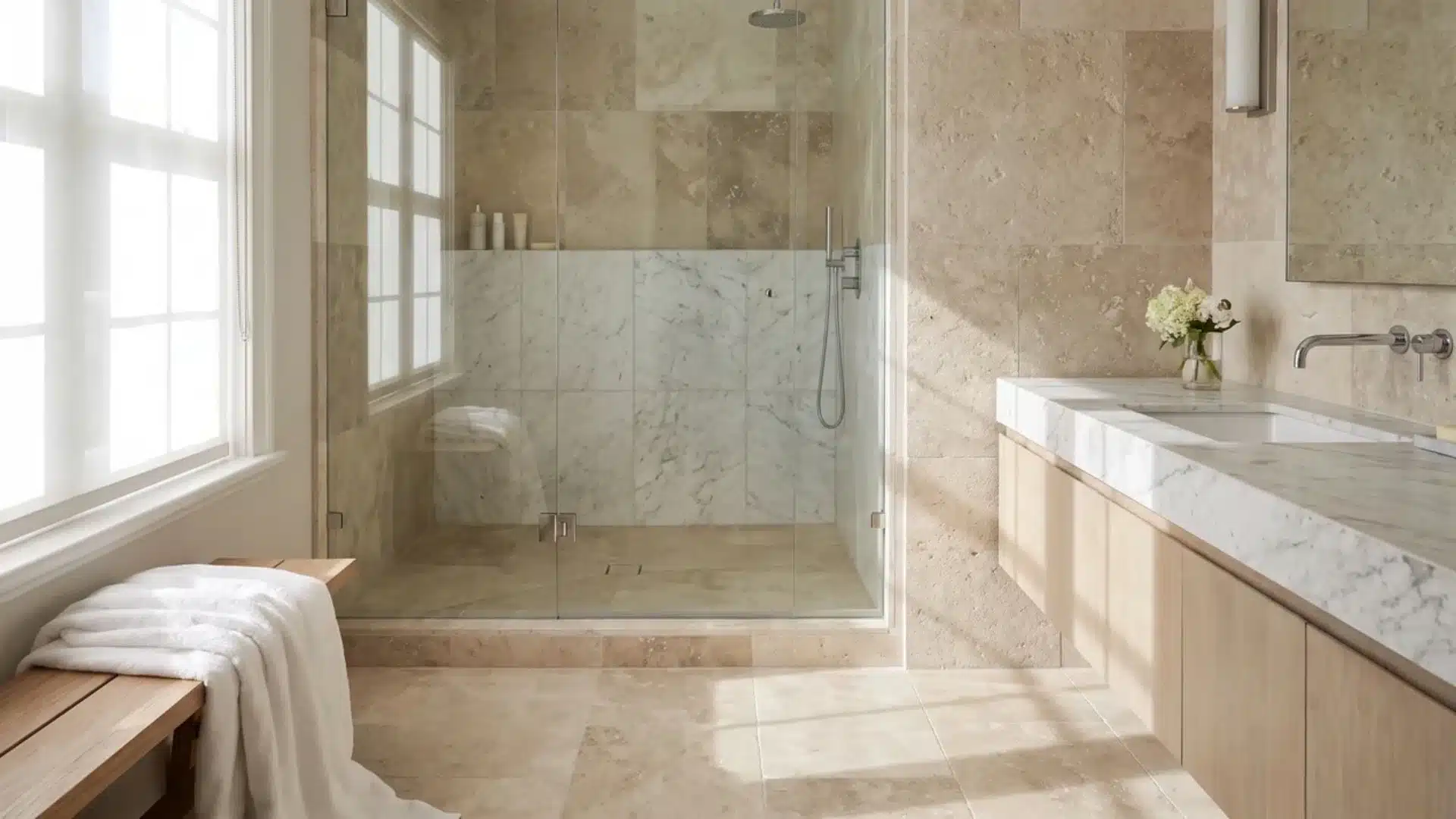
Natural stone such as marble, travertine, and limestone brings varied veining, subtle texture, and earthy character into a bathroom. Each surface has natural variation, giving the room a less uniform appearance.
Select stone according to moisture exposure, maintenance requirements, and slip resistance. Seal porous varieties as recommended, then pair them with restrained fixtures so the material remains visually prominent without making the room feel busy.
6. Bring in Terrazzo Accents
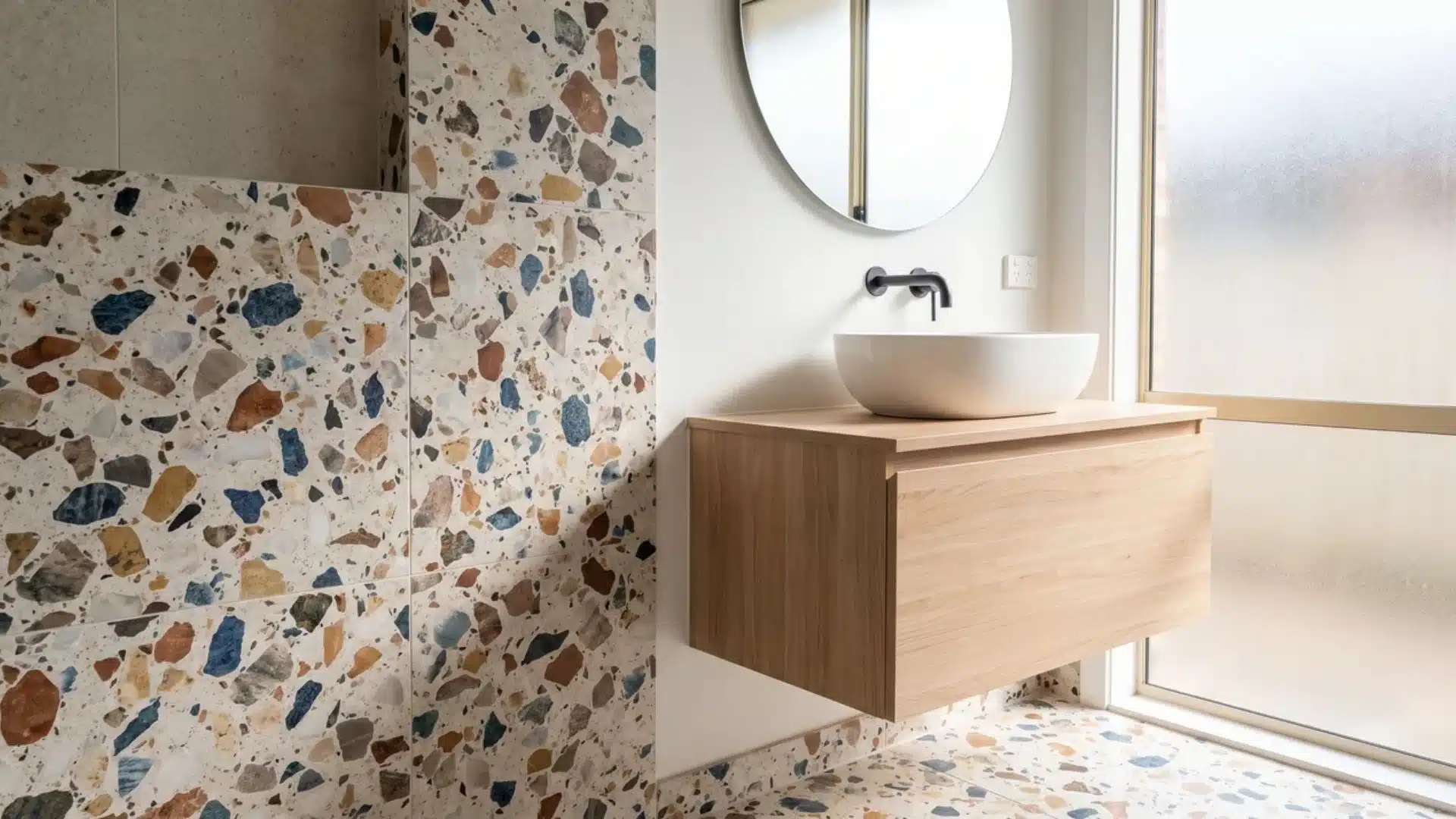
Terrazzo combines a cementitious or resin-based base with visible chips of materials such as marble, quartz, or glass. Its speckled appearance offers more visual interest than a completely plain surface.
Use terrazzo for flooring, a vanity surface, shower details, or a small backsplash rather than covering every surface. Coordinate its chip colors with existing finishes to create continuity without introducing unnecessary patterns.
7. Stick to a Soft, Neutral Palette

Muted blues, gentle greens, warm whites, beige, and soft gray can establish a quieter visual environment. These tones also provide a flexible backdrop for stone, wood, brass, and textiles.
Start with one dominant shade across walls or larger surfaces, then introduce two complementary tones through fixtures and accessories. Keep strong colors limited to smaller details so the overall composition remains calm.
8. Add Real, Low-Maintenance Plants

Humidity-tolerant species such as pothos, snake plants, ferns, and peace lilies can introduce natural color without requiring elaborate landscaping. Their foliage also adds organic contrast against hard tile and stone surfaces.
Place greenery according to available daylight rather than simply filling empty corners. Keep pots away from constant water splashes, and select species suited to the bathroom’s actual humidity and light conditions.
9. Layer Your Lighting
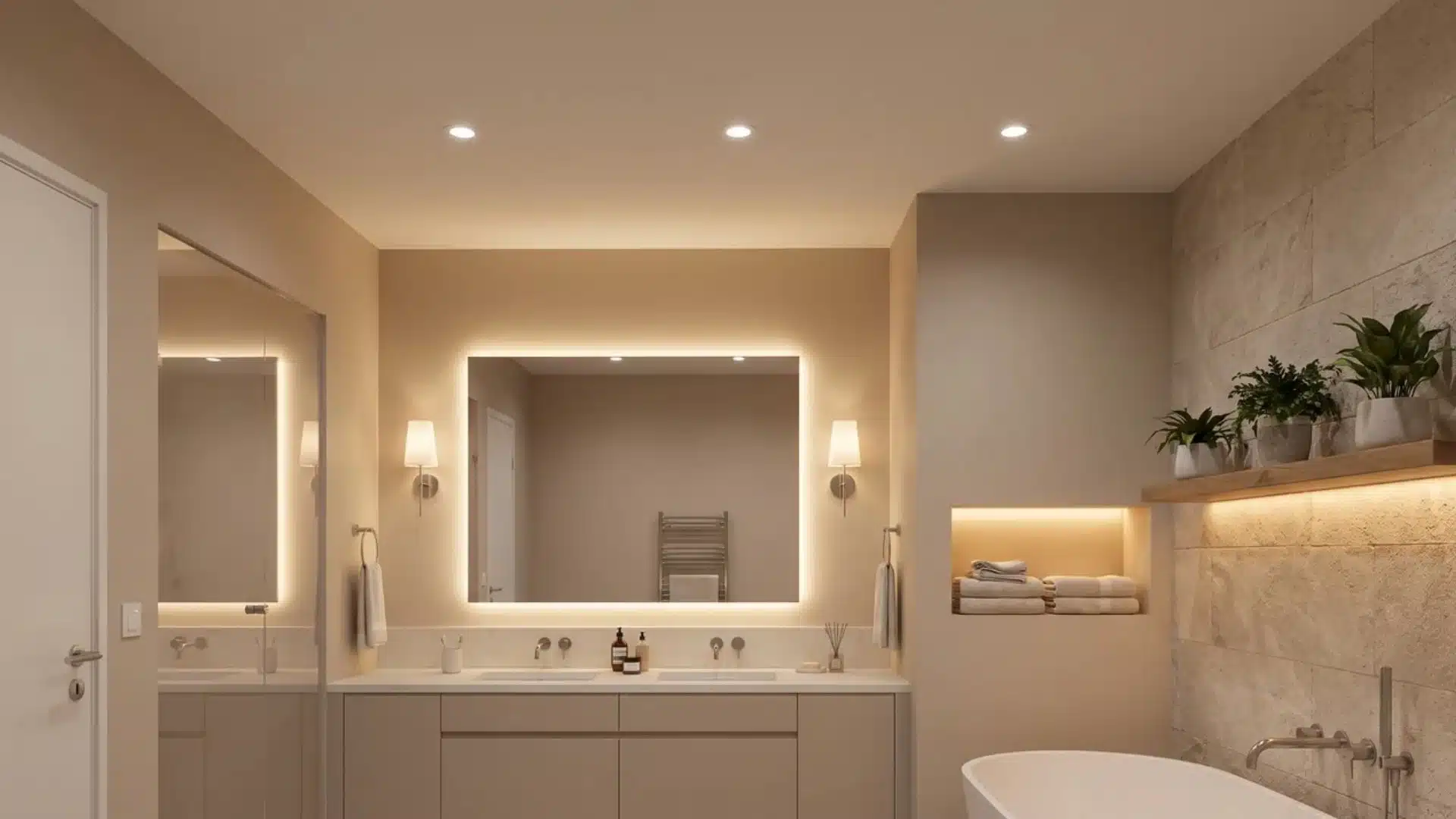
Layered lighting combines ambient illumination, task lighting, and accent sources instead of relying on one ceiling fixture. Multiple levels create better visibility while allowing the atmosphere to change throughout the day.
Use brighter task lighting around the vanity, softer ambient fixtures for general illumination, and discreet accent sources near architectural features. Install dimmers where compatible so brightness can be adjusted without replacing individual fixtures.
10. Add a Statement Light Fixture

A sculptural pendant, chandelier, or distinctive wall fixture can serve as a visual centerpiece separate from practical grooming illumination. A well-chosen fixture can change the room’s mood without altering the layout or adding major construction.
Select a fixture rated for the bathroom’s location and moisture conditions. Position decorative lighting where it complements the vanity, tub, or ceiling height while keeping essential task illumination separately available.
11. Use Candles or Flameless LED Candles
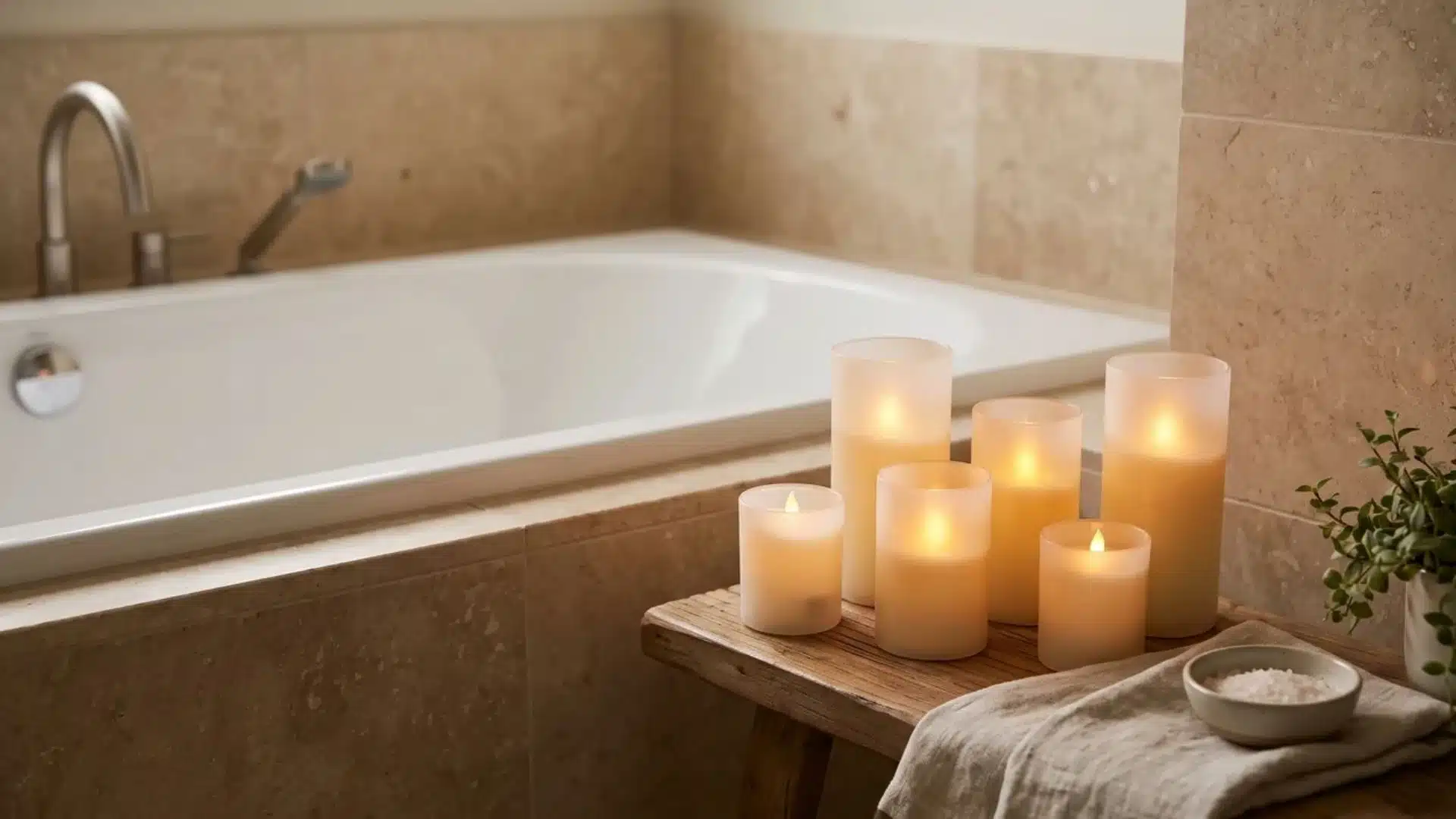
Flameless LED candles provide the warm flickering effect associated with candlelit baths without introducing an open flame around towels, toiletries, and other combustible materials. Their portability also makes placement easy.
Arrange several small units around the tub or on a dry vanity surface, keeping them away from direct splashes. Choose warm-white versions rather than cool LEDs for a softer evening glow.
12. Add a Wooden Bath Caddy or Tray
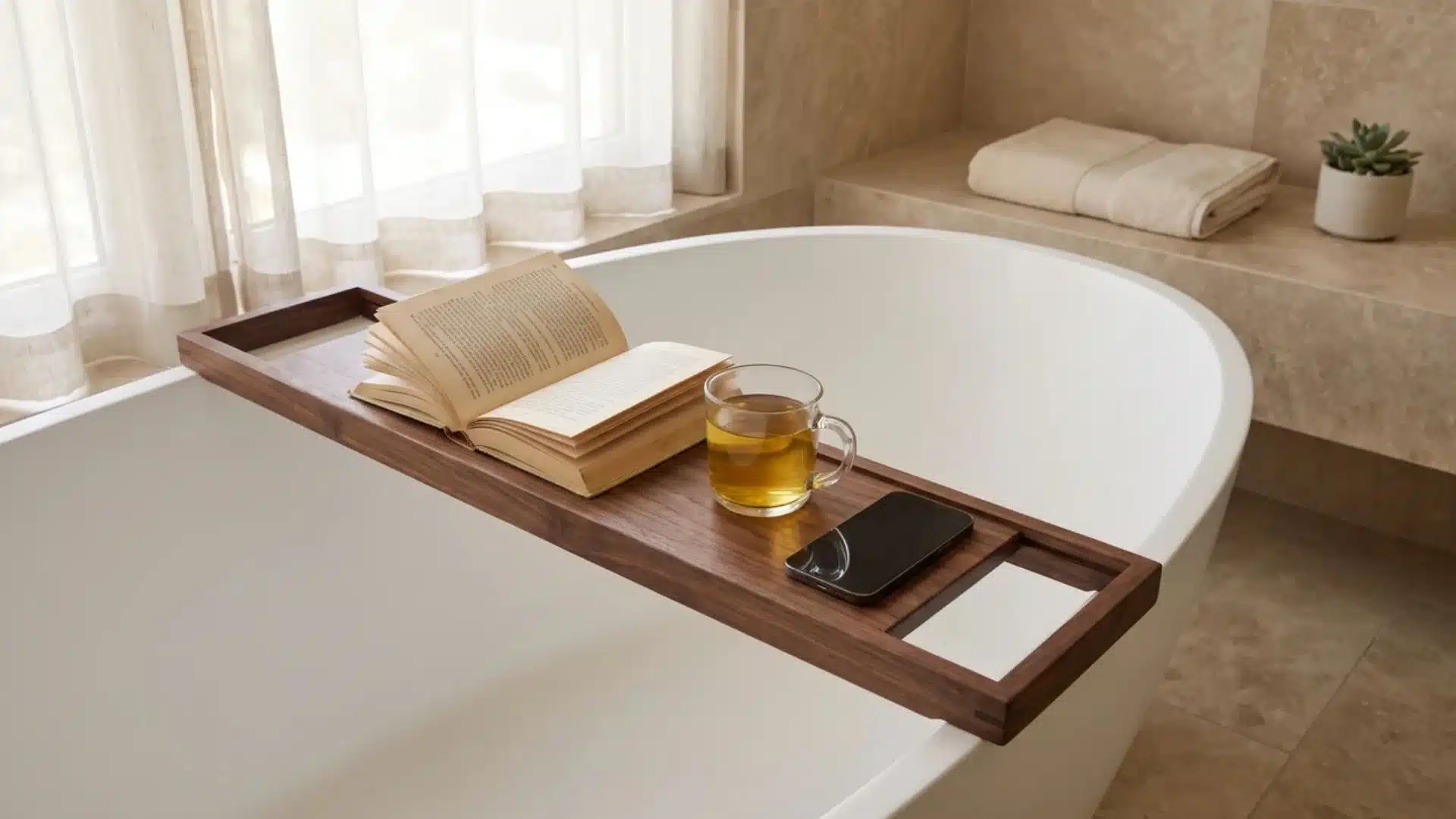
A wooden bath caddy creates a stable surface across the tub for practical items such as a book, phone, beverage, or small towel. It can also make a soaking area feel more intentionally arranged.
Measure the tub’s width before purchasing so the tray rests securely on both sides. Look for moisture-resistant wood such as teak or bamboo, and remove standing water after use to preserve the finish.
13. Bring in a Teak Shower Stool
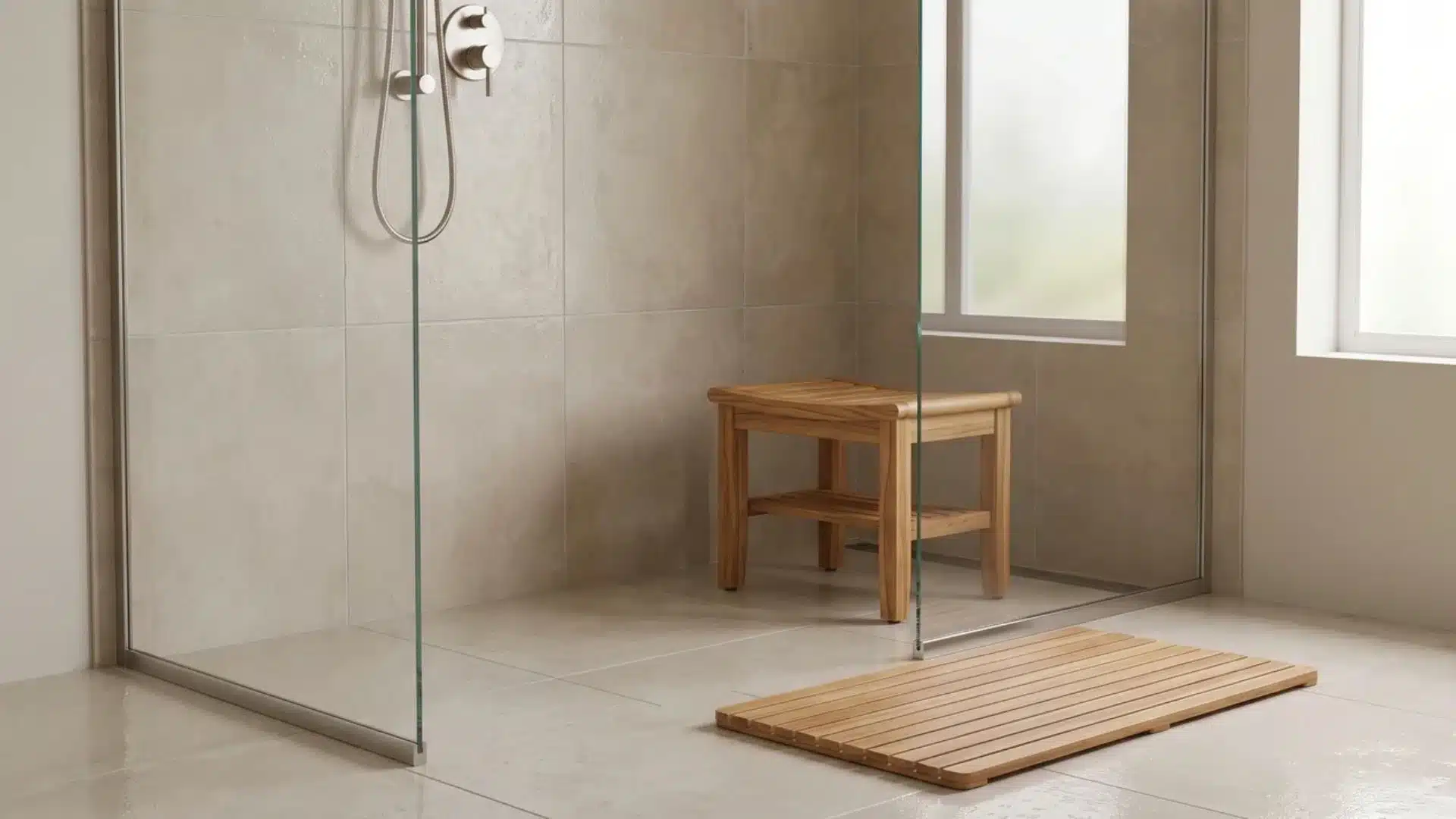
Teak works particularly well around wet areas because its natural oils provide useful resistance to moisture. A teak stool introduces warmth into a predominantly tiled enclosure while offering a practical place to sit.
Select a stool with stable, non-slip feet and adequate drainage underneath. Place it outside the strongest water stream, allowing the surface to dry between uses rather than remaining continuously saturated.
14. Store Extras in Woven Baskets
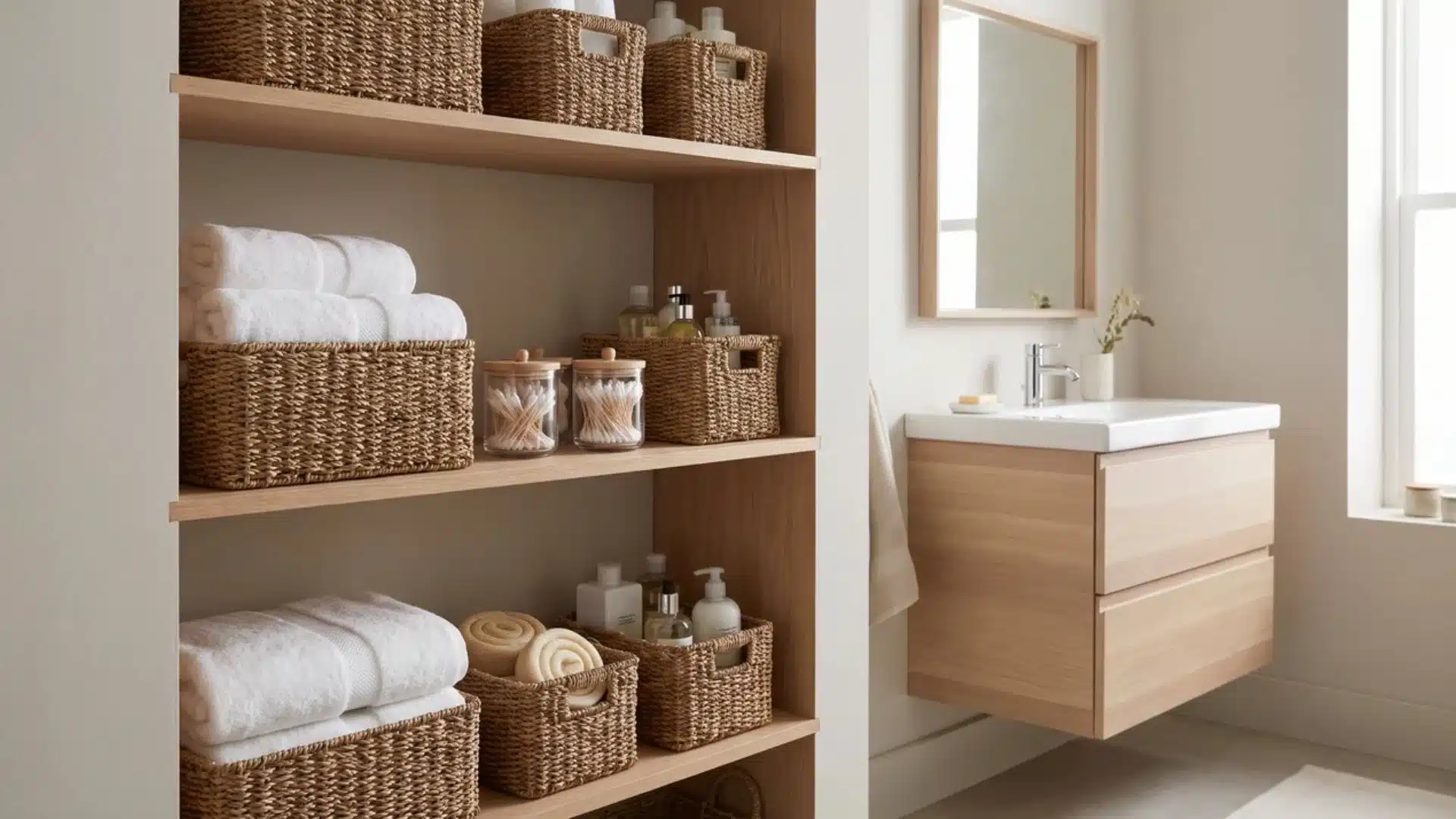
Woven baskets combine concealed storage with natural texture, making them useful for spare towels, toilet paper, toiletries, or cleaning supplies. They can replace visible plastic packaging without requiring built-in cabinetry.
Choose baskets sized to fit existing shelves, open vanities, or floor niches. Reserve separate containers for different categories so frequently used items remain accessible while visual clutter stays contained.
15. Upgrade to Plush, Oversized Towels
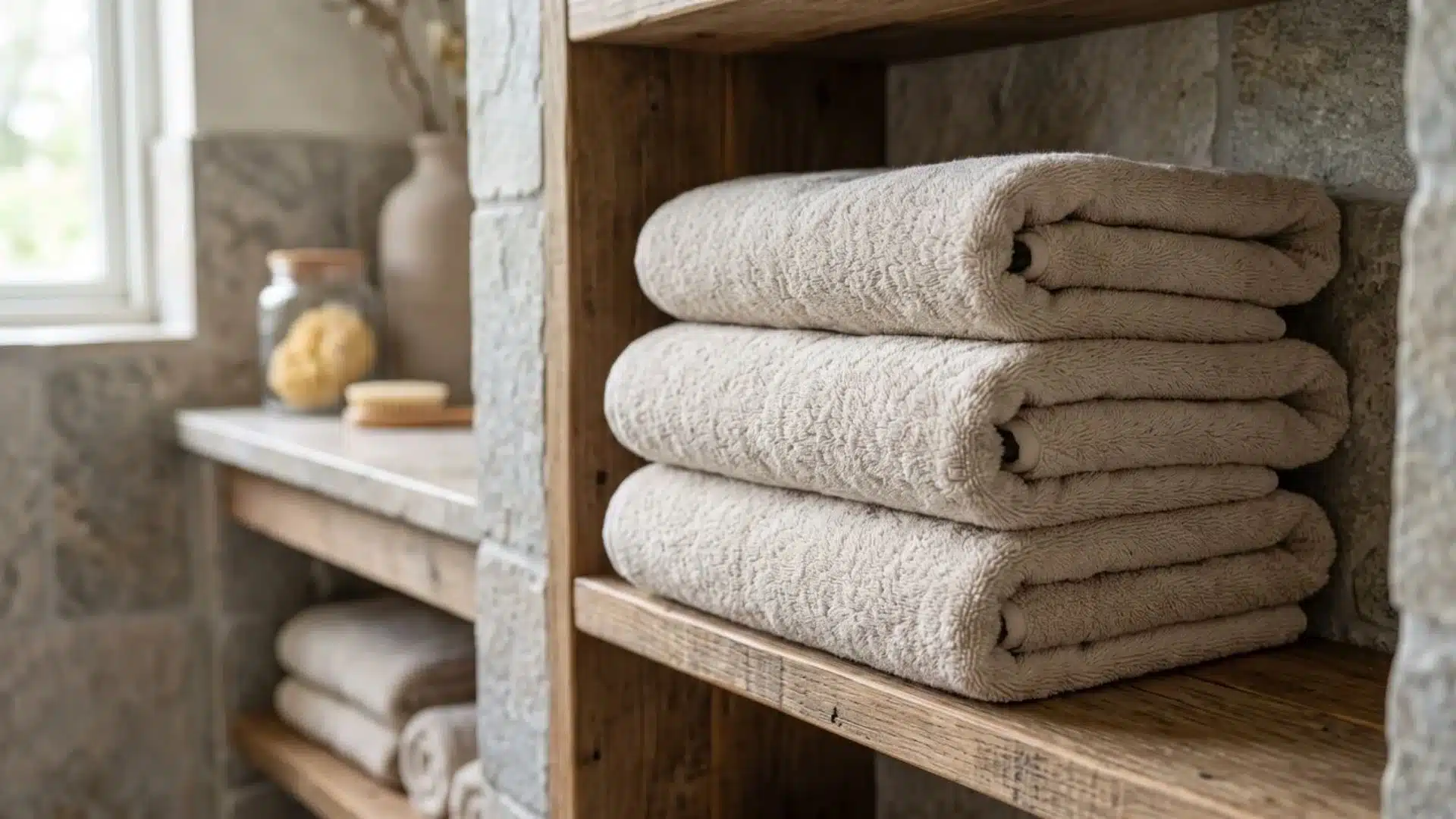
Large, substantial towels contribute to the hotel-spa feeling through their weight, softness, and generous coverage. Neutral white, cream, beige, or muted tones also reinforce a restrained bathroom palette.
Look for highly absorbent cotton with a comfortable weight rather than focusing solely on thickness. Keep several folded pieces together on open shelving or inside a basket for an organized, hospitality-inspired presentation.
16. Add an Aromatherapy Diffuser
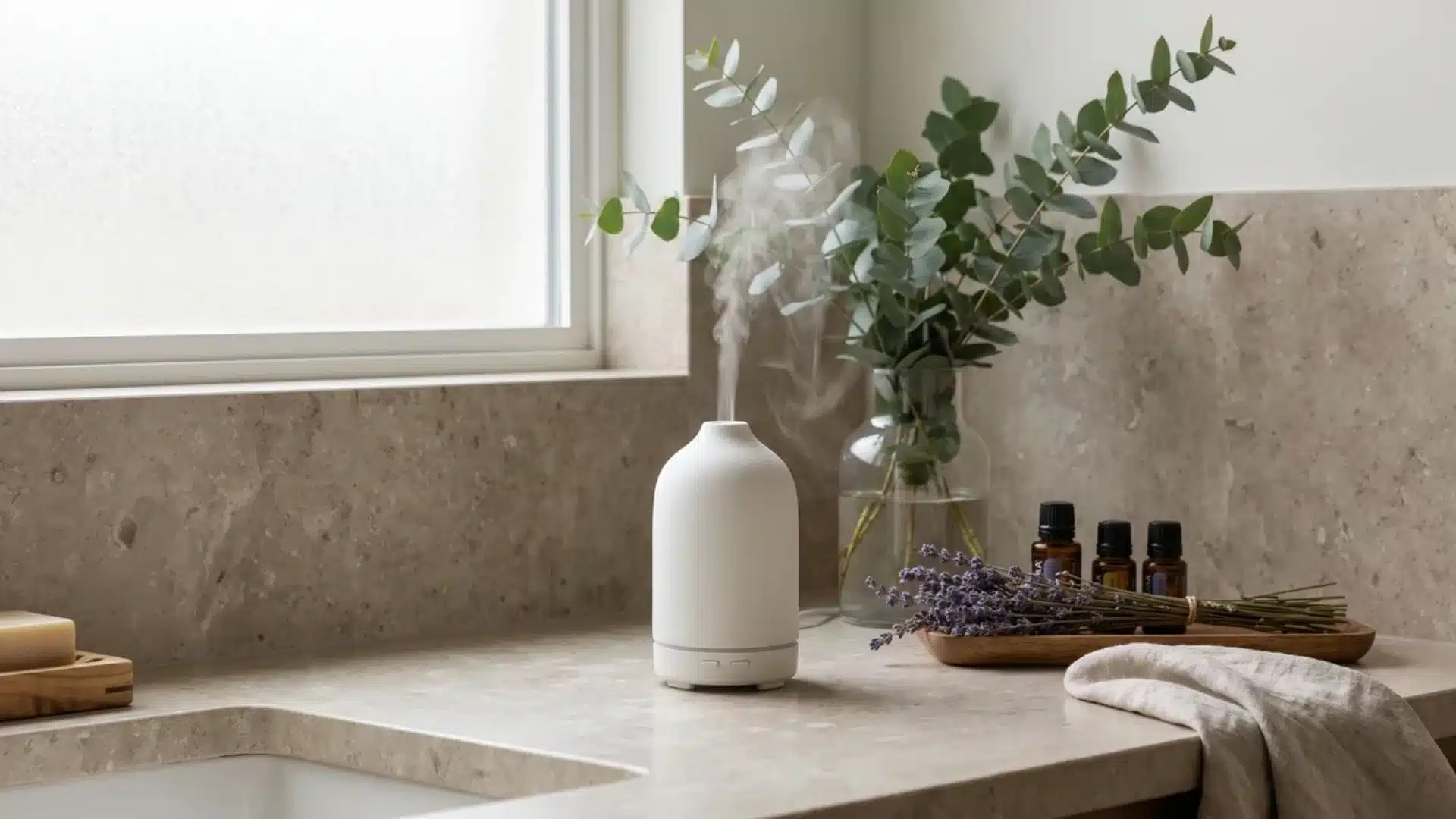
An aromatherapy diffuser can introduce subtle fragrances such as eucalyptus or lavender without relying on heavily scented soaps or sprays. Controlled fragrance adds another sensory layer alongside lighting, texture, and warmth.
Position the diffuser on a dry, stable surface with adequate ventilation around the unit. Follow the manufacturer’s instructions for water and essential-oil quantities, particularly in compact bathrooms where fragrance can become concentrated quickly.
17. Install a Bluetooth Speaker or Sound System
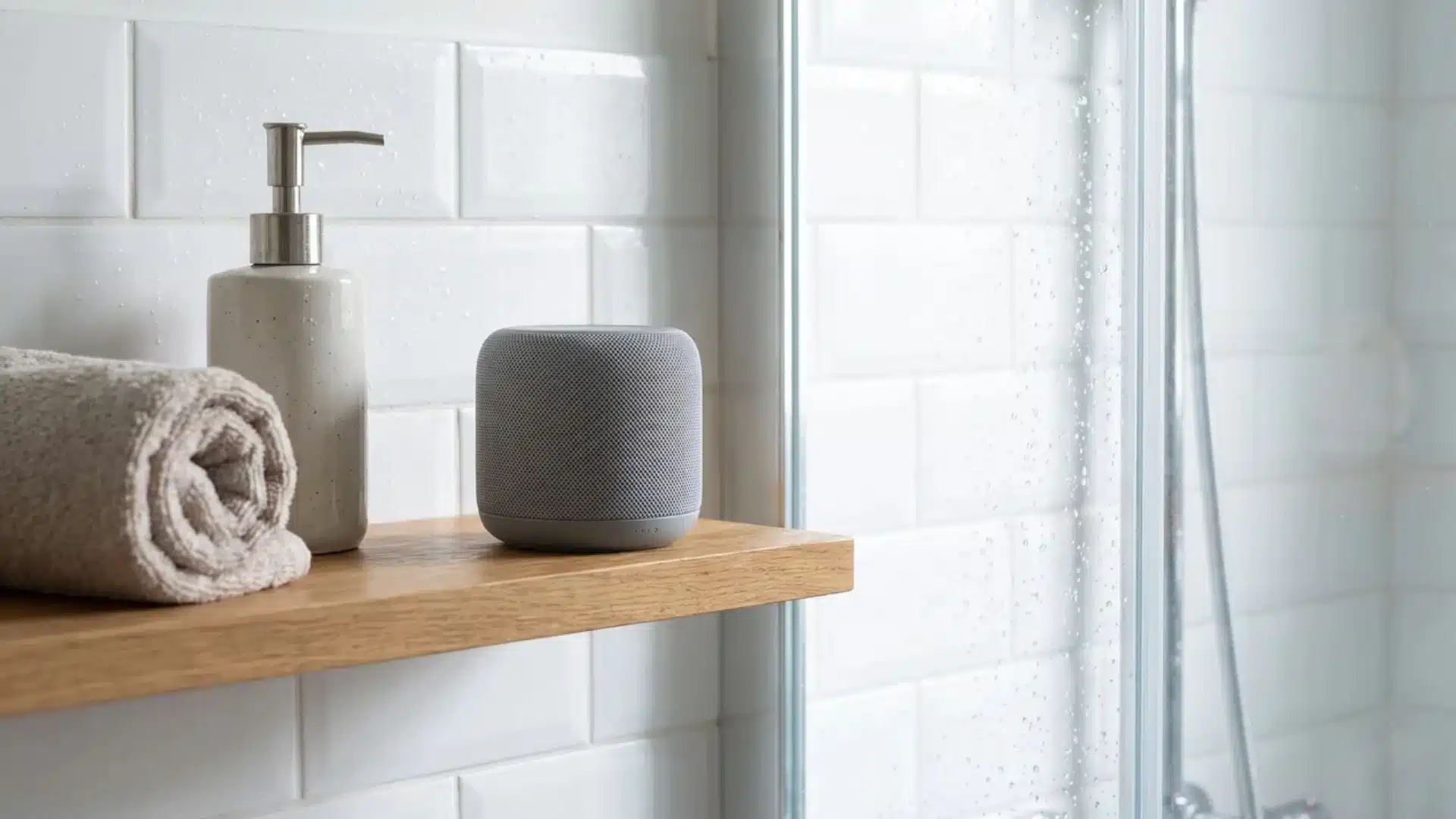
A moisture-rated Bluetooth speaker lets you introduce music, ambient sound, or podcasts without bringing unsuitable electronics into a humid environment. Audio can make routine bathing feel more intentional and relaxing.
Select equipment specifically designed for bathrooms or damp environments rather than relying on a standard portable speaker. Keep charging cables and power connections away from sinks, tubs, showers, and wet surfaces.
18. Switch to a Floating Vanity
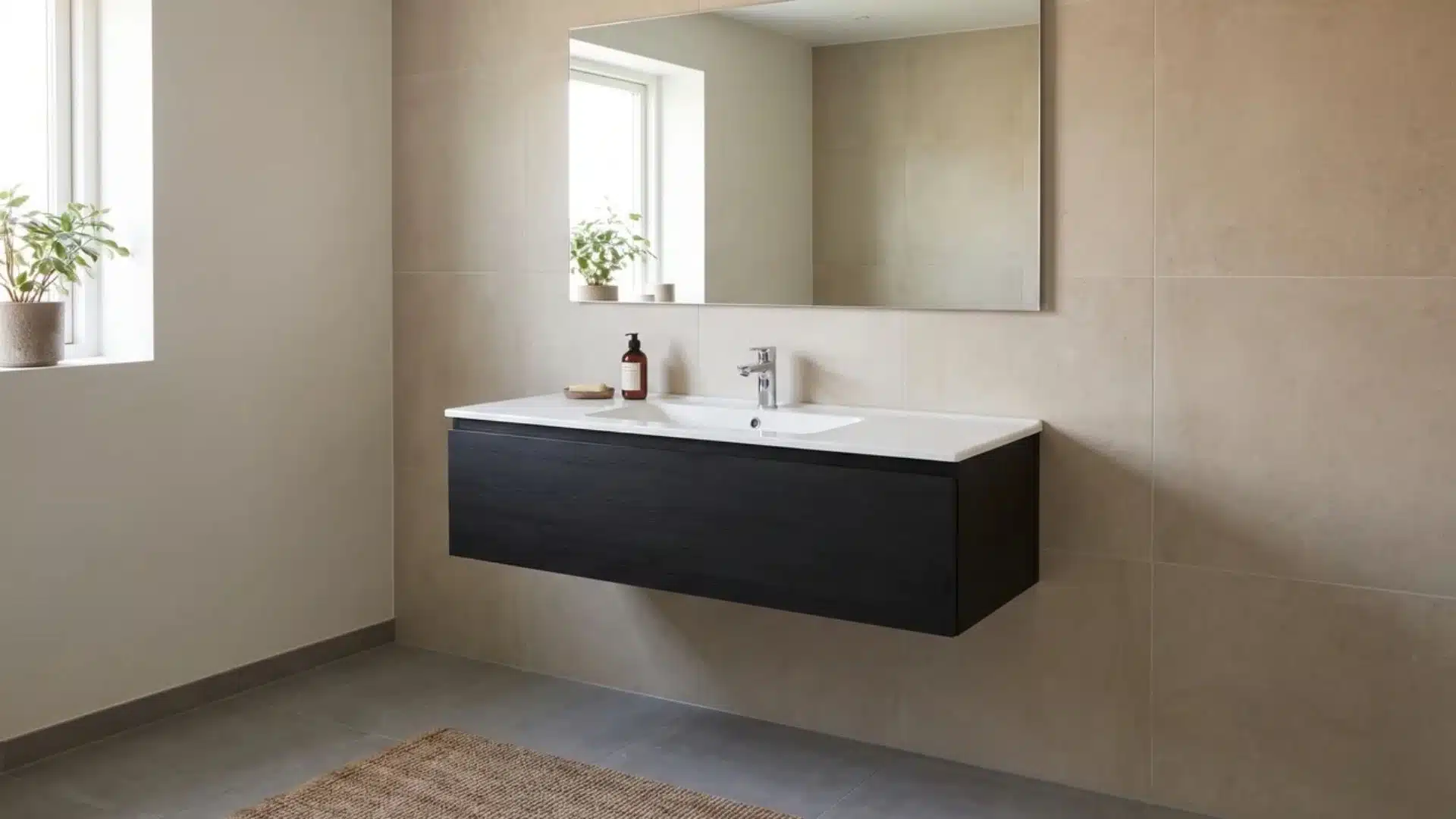
A floating vanity leaves visible floor beneath the cabinet, creating a more open appearance and making a compact bathroom feel less visually crowded. The uninterrupted flooring can also emphasize larger tile patterns.
Mount the cabinet at a comfortable working height while accounting for plumbing placement and wall structure. Keep the area beneath it relatively clear so the open-floor effect remains noticeable.
19. Update Fixtures to Matte or Brushed Brass

Brushed brass hardware can refresh an outdated bathroom without changing its fundamental layout. Replacing handles, faucets, shower controls, and accessories can produce a noticeable visual update.
Select one dominant metal finish and repeat it across several fixtures for consistency. Check existing plumbing dimensions before purchasing replacements, especially when swapping faucets or shower hardware.
20. Replace Curtains with a Frameless Glass Enclosure
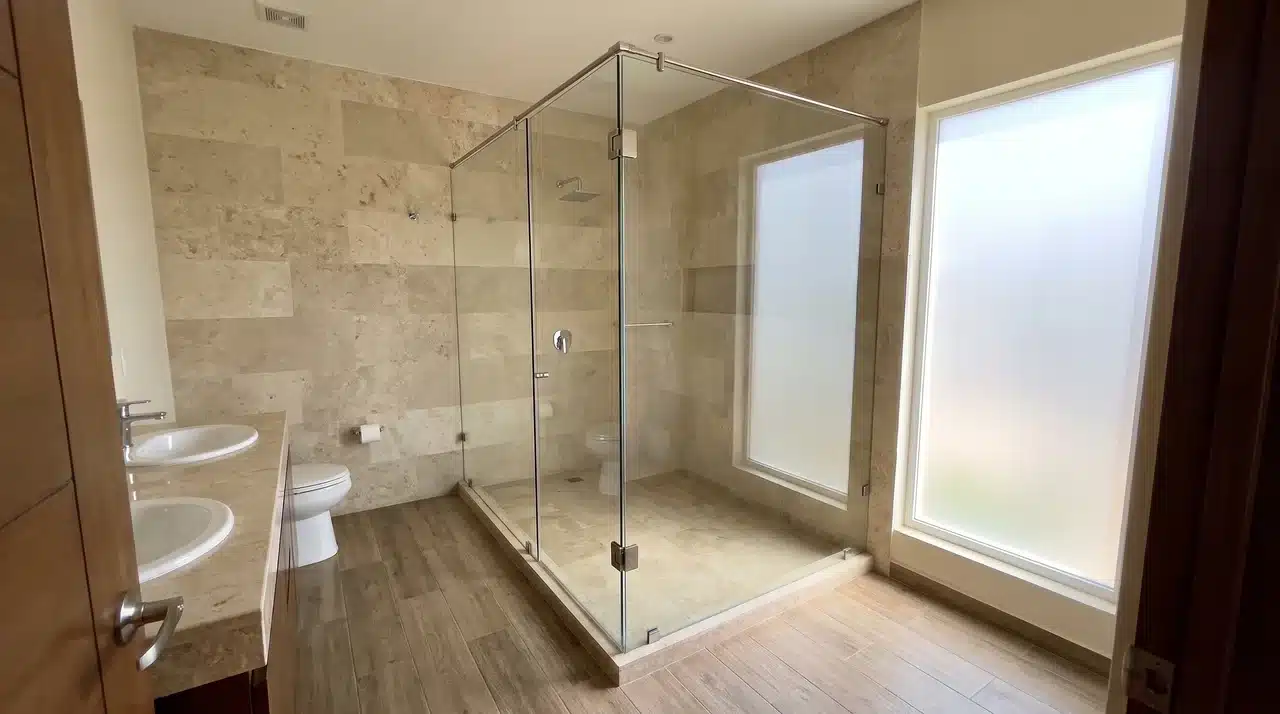
A frameless glass enclosure removes visual barriers created by shower curtains and heavy framing, helping smaller bathrooms appear more open. Clear sightlines allow tile, stone, and flooring to remain visible across the room.
Measure the opening carefully before ordering custom glass. Use appropriate tempered safety glass and confirm that the existing floor and walls can support the enclosure’s mounting requirements.
21. Maximize Natural Light with a Skylight or Larger Window
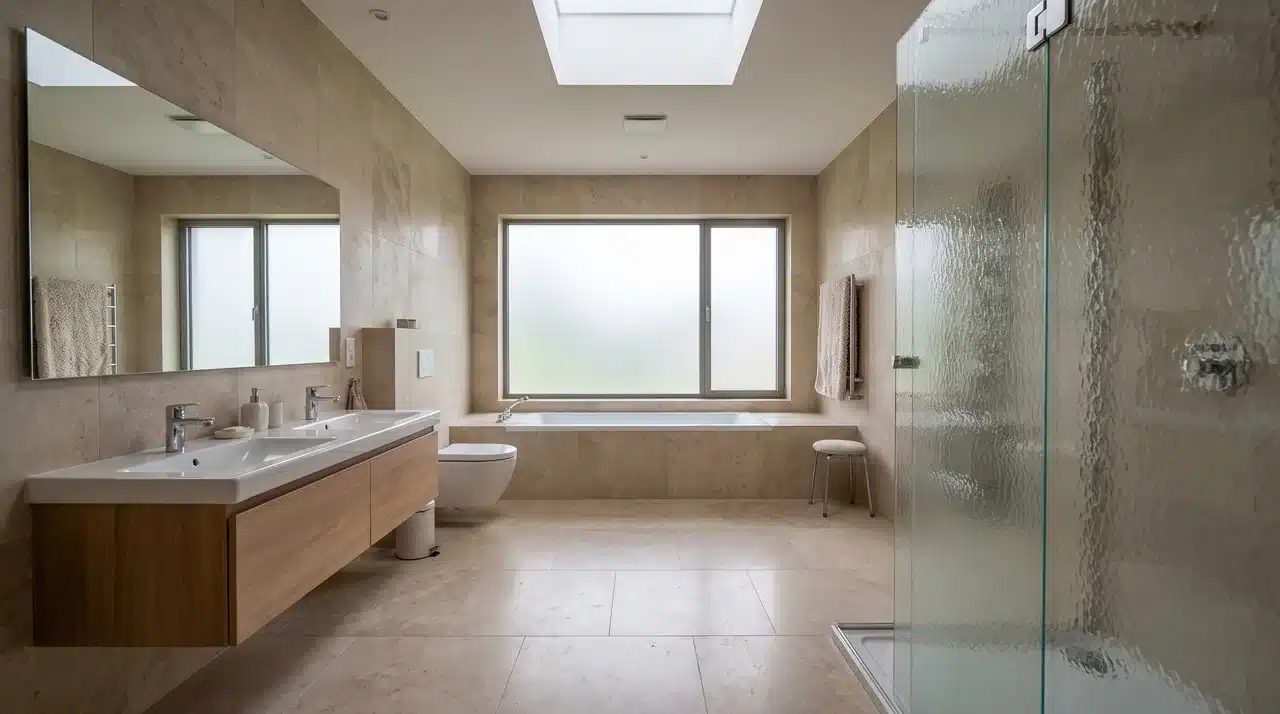
A skylight or larger window can bring more daylight into a bathroom while reducing reliance on artificial illumination during daytime hours. Privacy becomes the main consideration when increasing glazing.
Use frosted, textured, or privacy glass where direct visibility is a concern. For skylights, account for waterproofing, shading, ventilation, and roof structure before committing to the installation.
22. Soften Windows with Linen Curtains

Linen curtains introduce softness and filtered daylight, while blackout fabrics provide stronger privacy and greater control over brightness. Either option can make a window feel more finished than bare glass.
Use moisture-resistant or washable fabric where humidity is high, and keep textiles clear of direct splash zones. Hang the treatment slightly wider than the window so it frames rather than visually crowds the opening.
23. Add a Wall-Mounted Bathrobe Hook
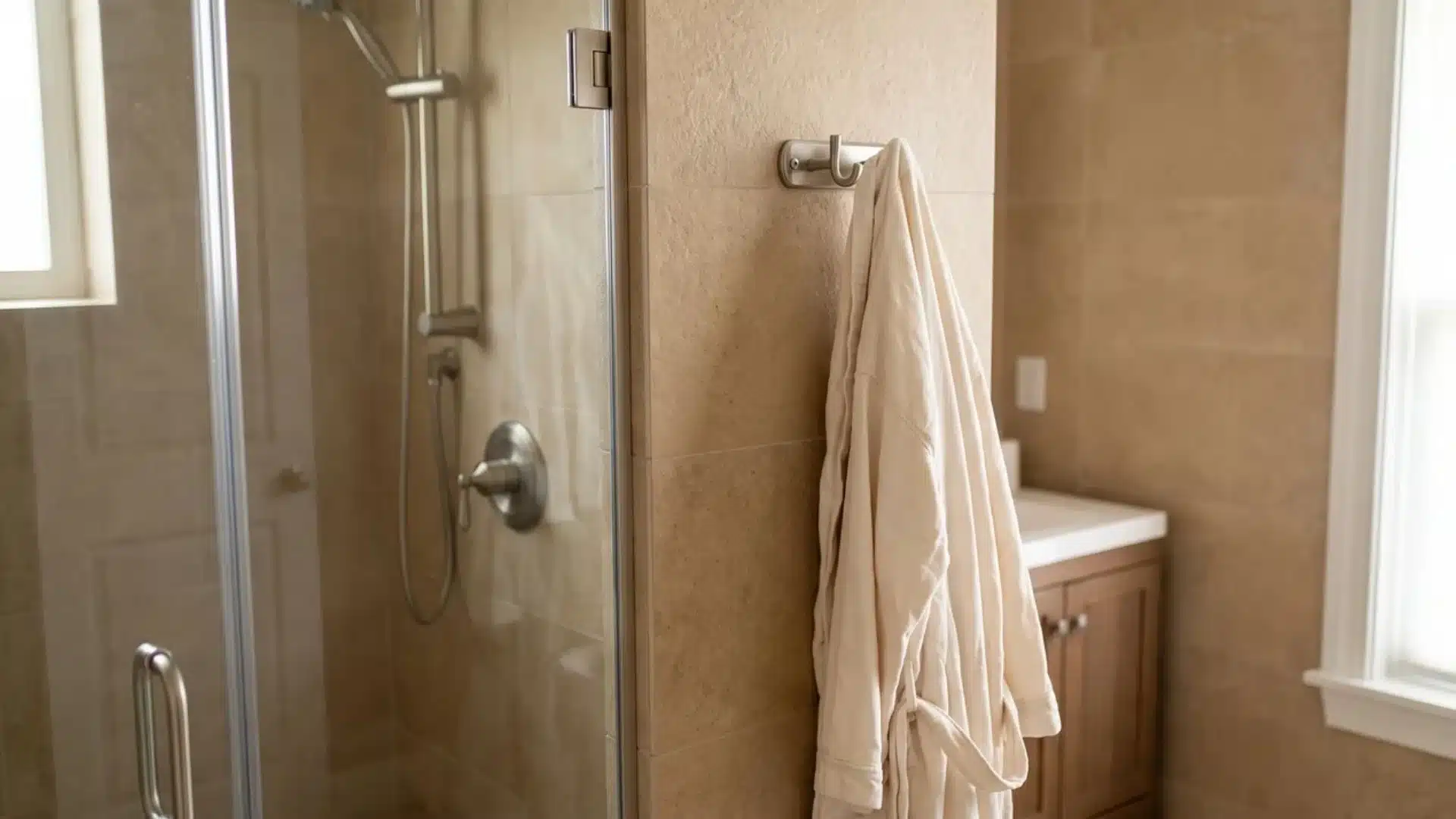
A wall-mounted bathrobe hook keeps robes within easy reach while giving the bathroom a small, practical finishing detail. A single sculptural hook can also add character without taking up valuable floor or counter space.
Install the hook near the shower or tub, but outside the direct splash zone. Mount it at a comfortable height and secure it properly to the wall so a damp robe can hang without loosening the hardware.
24. Display Products on a Decorative Tray
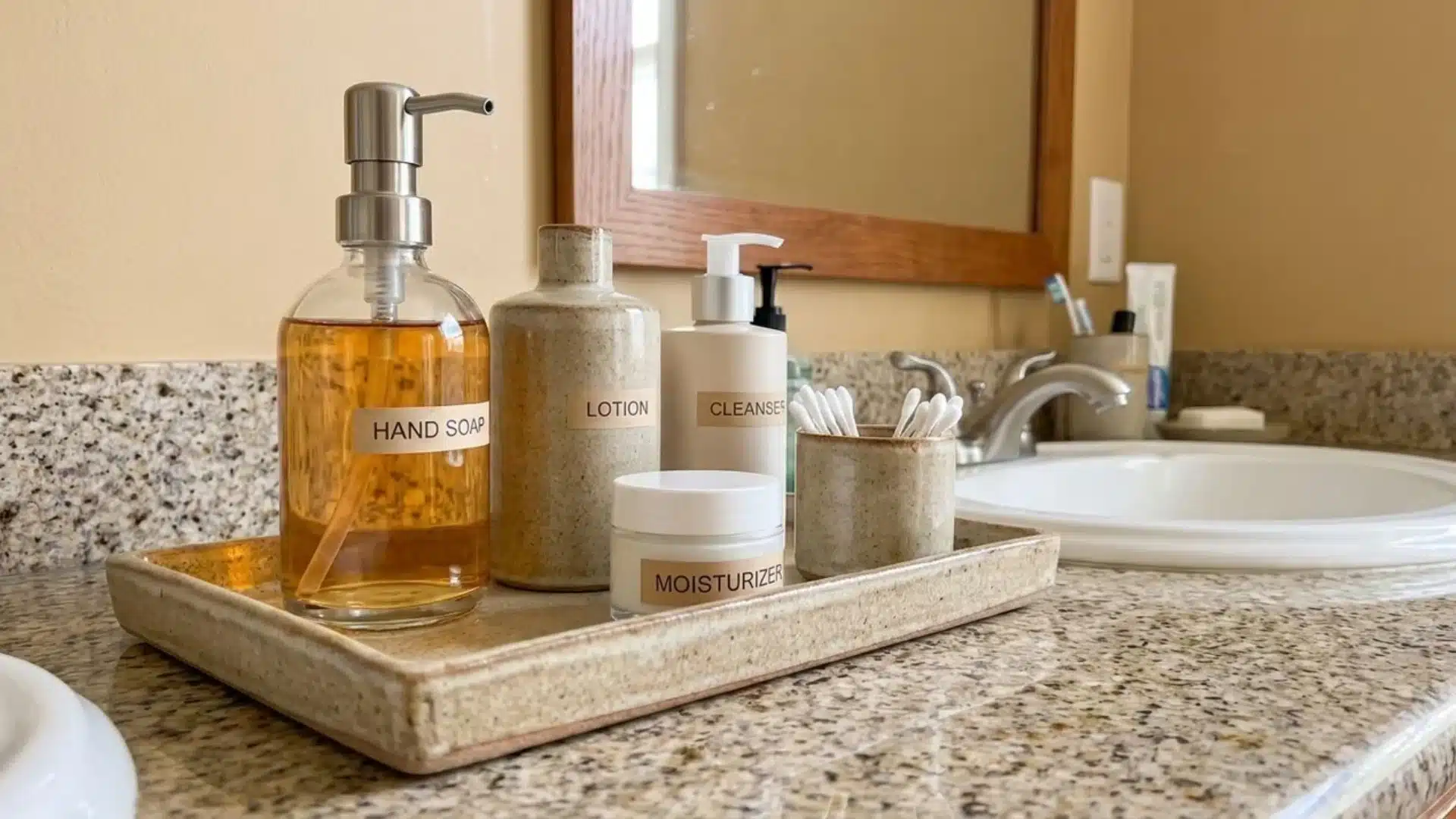
A decorative tray can turn everyday bottles, soaps, and skincare products into a deliberate countertop arrangement. Grouping similar items together makes the vanity appear tidier without hiding products you use regularly.
Select a tray made from stone, ceramic, wood, or another moisture-resistant material. Keep only frequently used items on display, and leave enough surrounding counter space for practical grooming tasks.
25. Add a Leaning Ladder Towel Rack
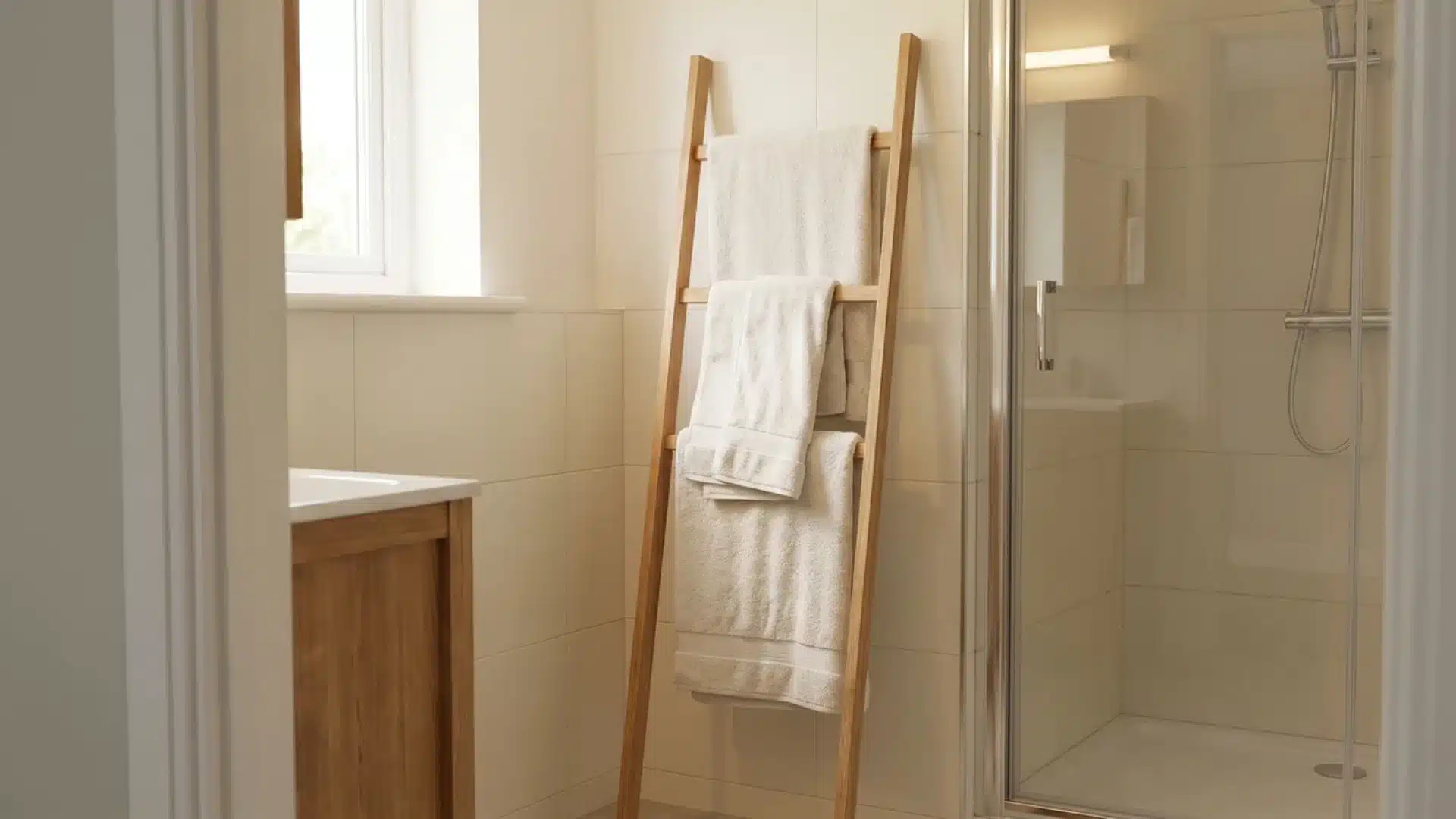
A leaning ladder rack provides vertical towel storage without requiring multiple wall-mounted brackets. Its narrow footprint makes it particularly useful beside a vanity, near a tub, or inside a compact bathroom.
Choose a stable design with wide enough feet to prevent movement on smooth flooring. Place the ladder where towels can hang freely and remain away from toilet splash zones or direct shower spray.
26. Hang Botanical or Abstract Wall Art
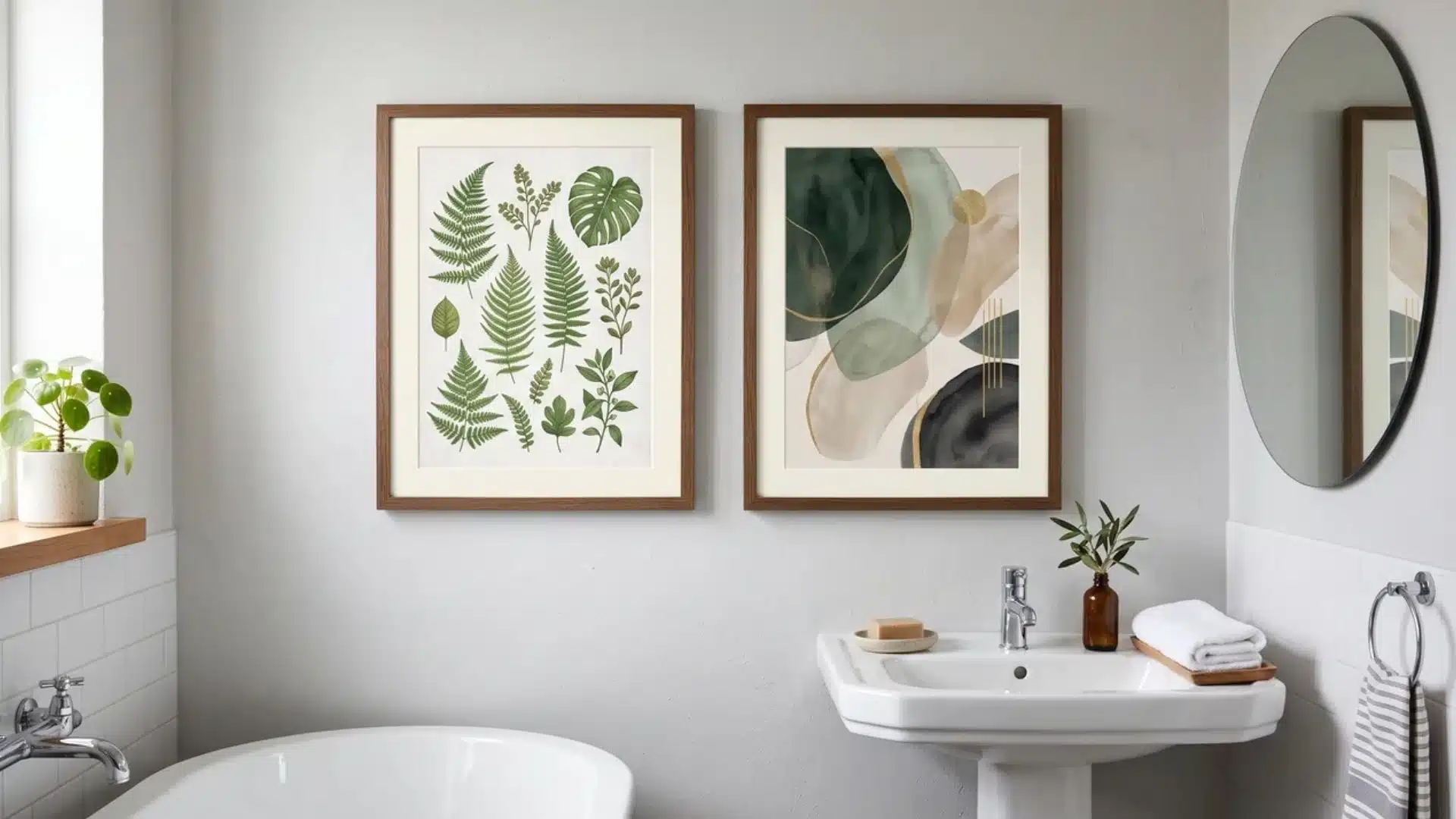
Botanical prints and abstract artwork can introduce personality without disrupting a restrained spa aesthetic. The artwork also gives blank walls visual interest beyond tile, mirrors, and cabinetry.
Use moisture-resistant prints, sealed frames, or artwork specifically intended for humid environments. Position pieces away from direct steam and water exposure, particularly around showers and freestanding tubs.
27. Layer In a Woven or Jute Rug
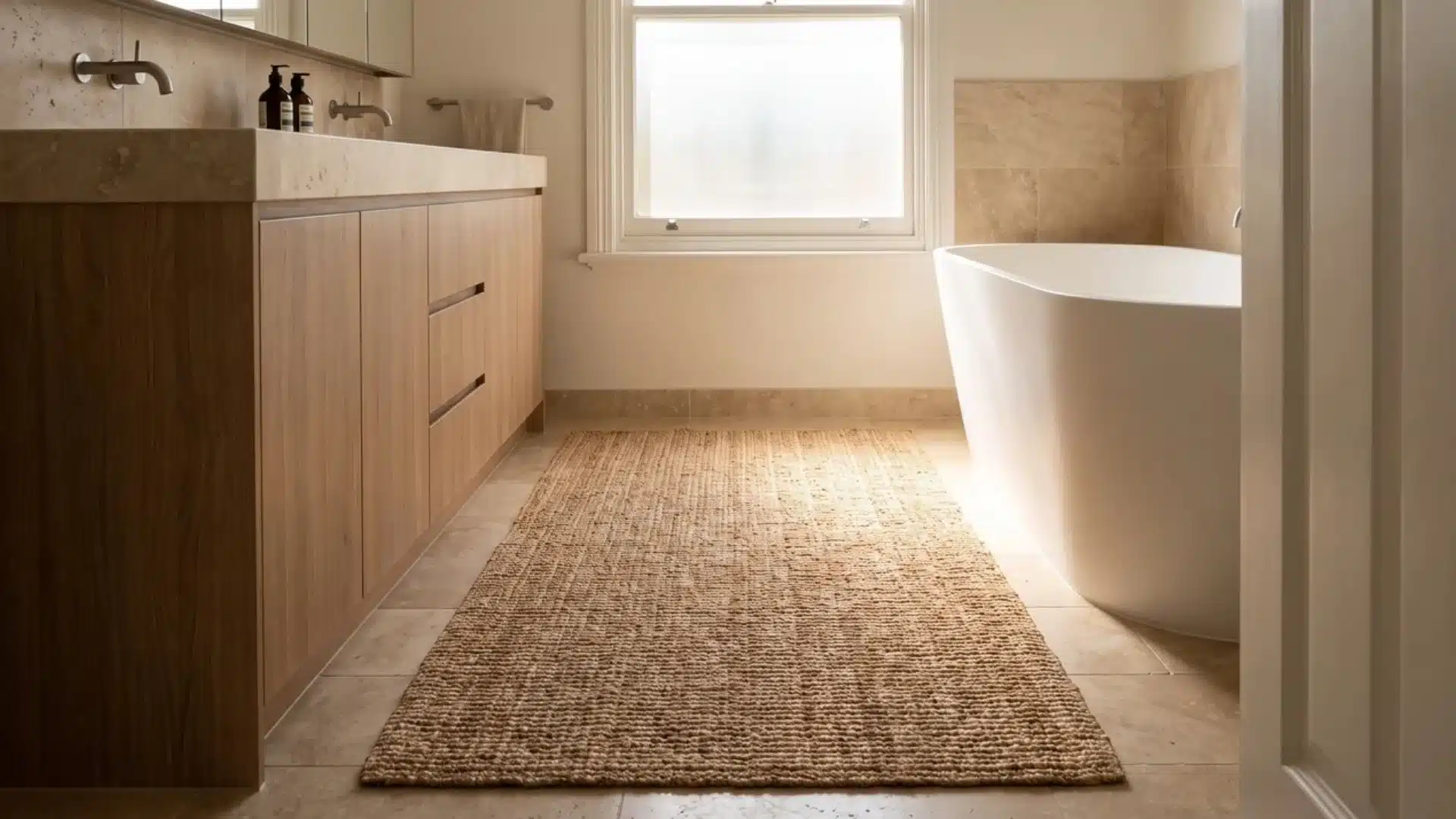
A woven or jute-style rug adds tactile warmth against hard tile or stone flooring. Its natural fibers and muted appearance can soften an otherwise cool, mineral-heavy material palette.
Select a bathroom-suitable version with a moisture-resistant backing rather than a decorative rug intended only for dry rooms. Place it outside the main splash zone and allow the underside to dry regularly.
28. Add a Double Vanity with Dedicated Storage
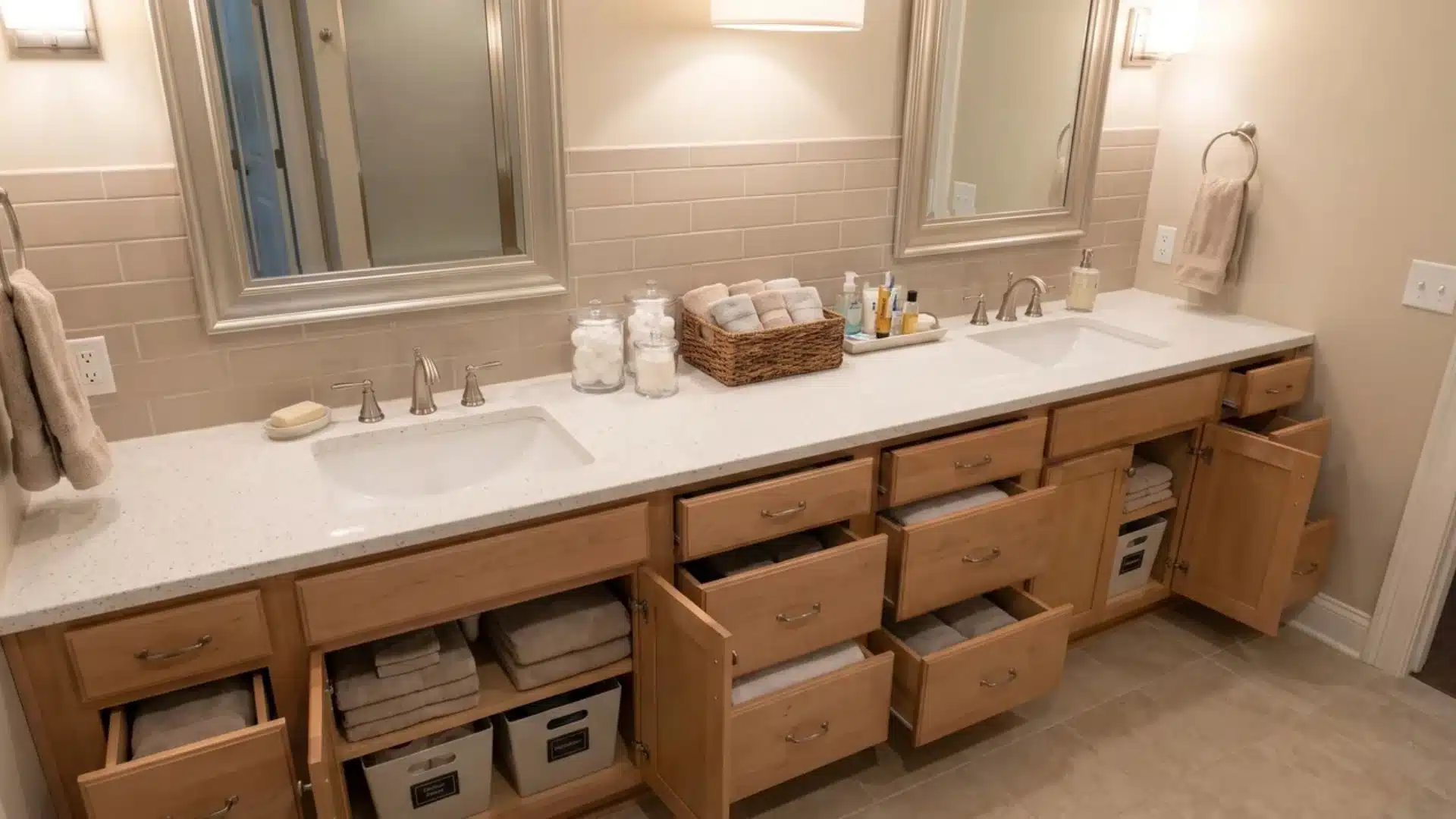
A double vanity can reduce counter congestion in shared bathrooms by giving two people separate sink areas and dedicated storage. The additional cabinetry also creates more room for everyday toiletries.
Plan drawer and cabinet interiors around each user’s routine before selecting the configuration. Include electrical outlets within practical reach while keeping them positioned according to local bathroom safety requirements.
29. Built-In Recessed Shower Niches
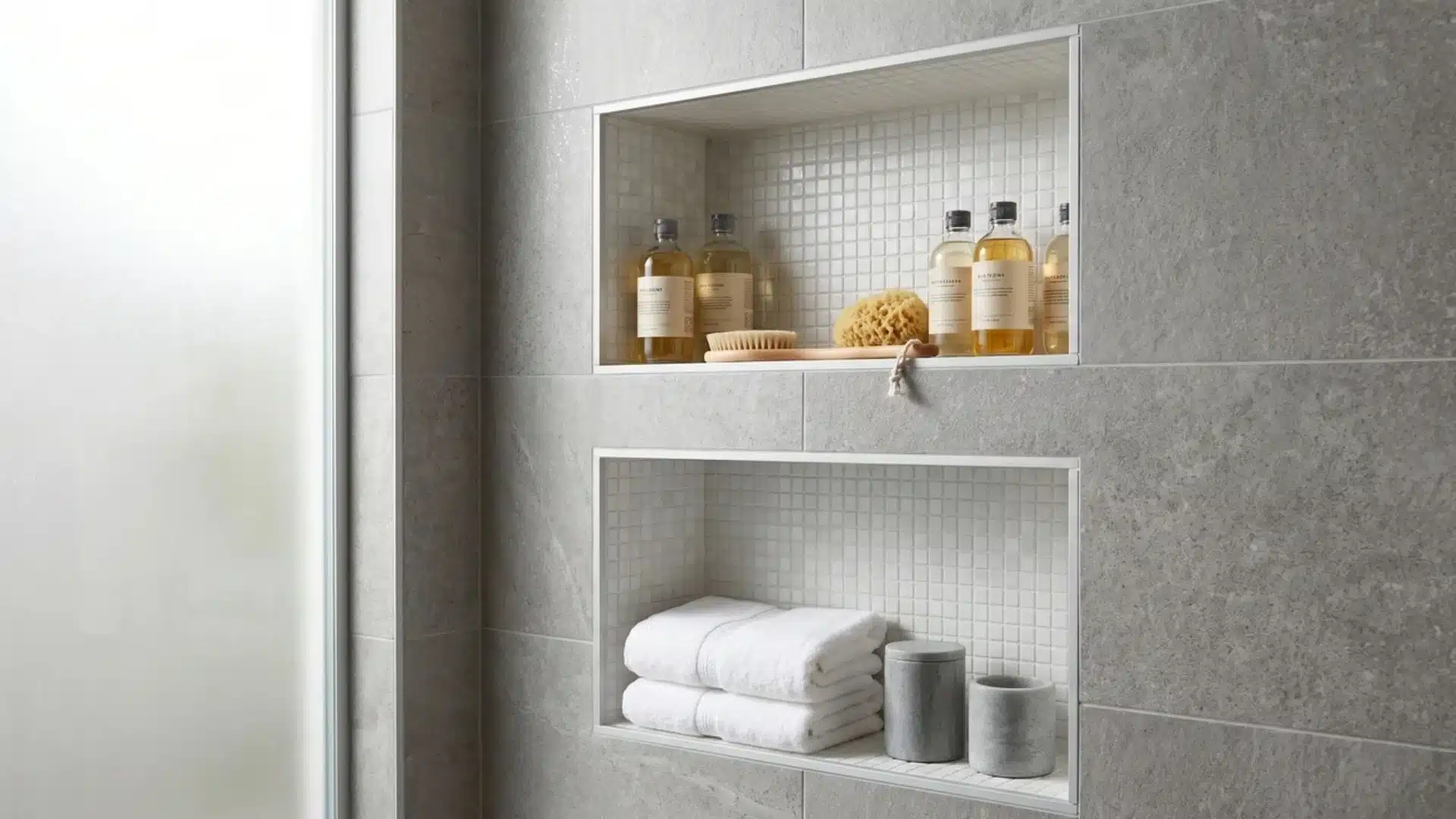
Recessed shower niches provide dedicated storage without hanging caddies across the enclosure. Keeping bottles inside the wall creates cleaner sightlines and leaves more usable floor and wall area.
Size each niche around the products you actually use rather than creating an unnecessarily large cavity. Waterproof the recess thoroughly and provide adequate drainage or slope on horizontal surfaces.
30. Use a Eucalyptus Shower Bundle for Natural Scent
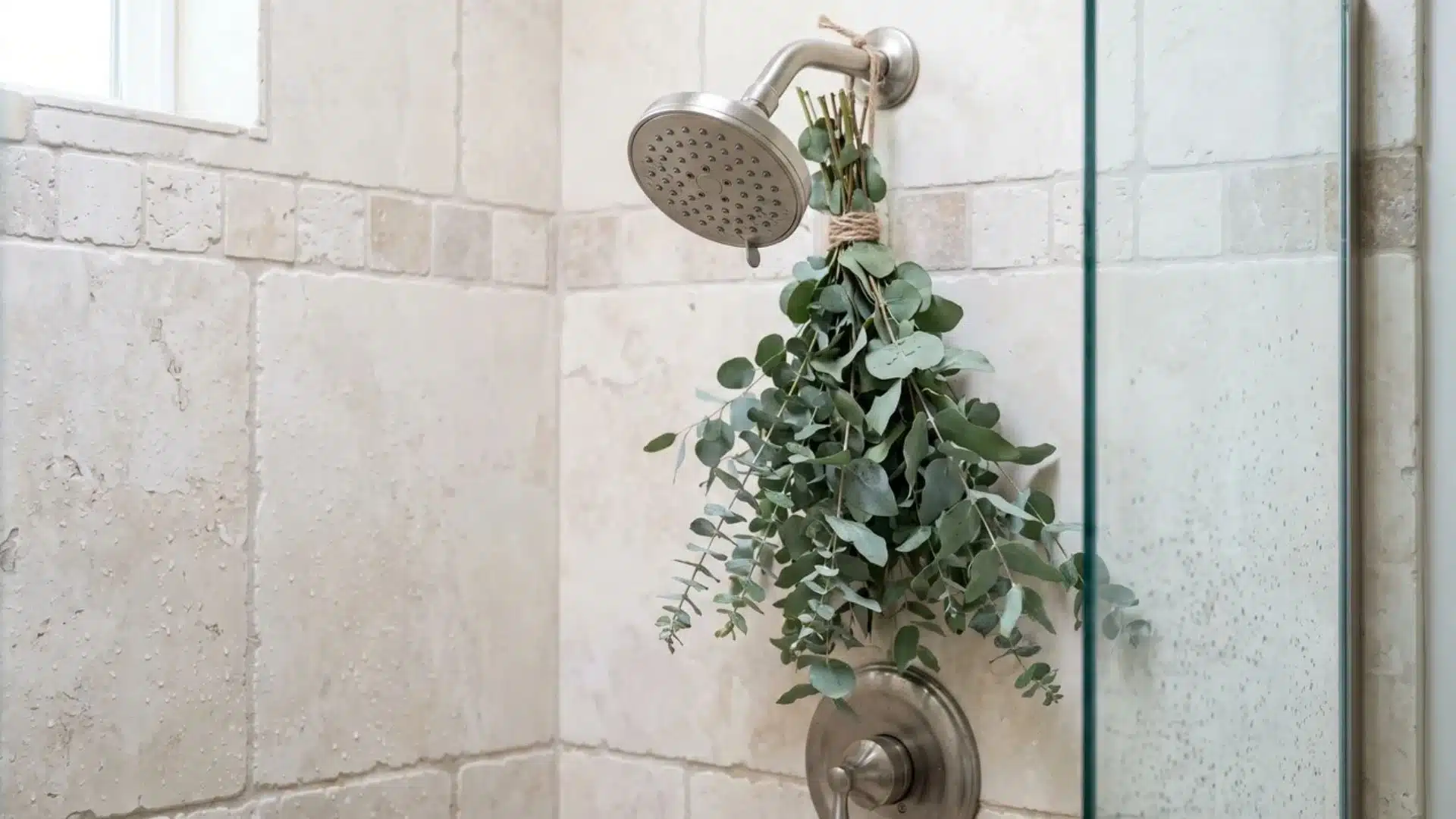
A eucalyptus shower bundle releases its fragrance as warm steam and moisture pass through the leaves. Unlike a diffuser, the scent source sits directly inside the shower and activates naturally during bathing.
Tie fresh or dried eucalyptus securely around the showerhead stem, keeping the bundle away from direct water pressure. Replace it once the aroma fades, and avoid placing loose leaves where they could enter the drain.
31. Install a Backlit or Hollywood-Style Mirror
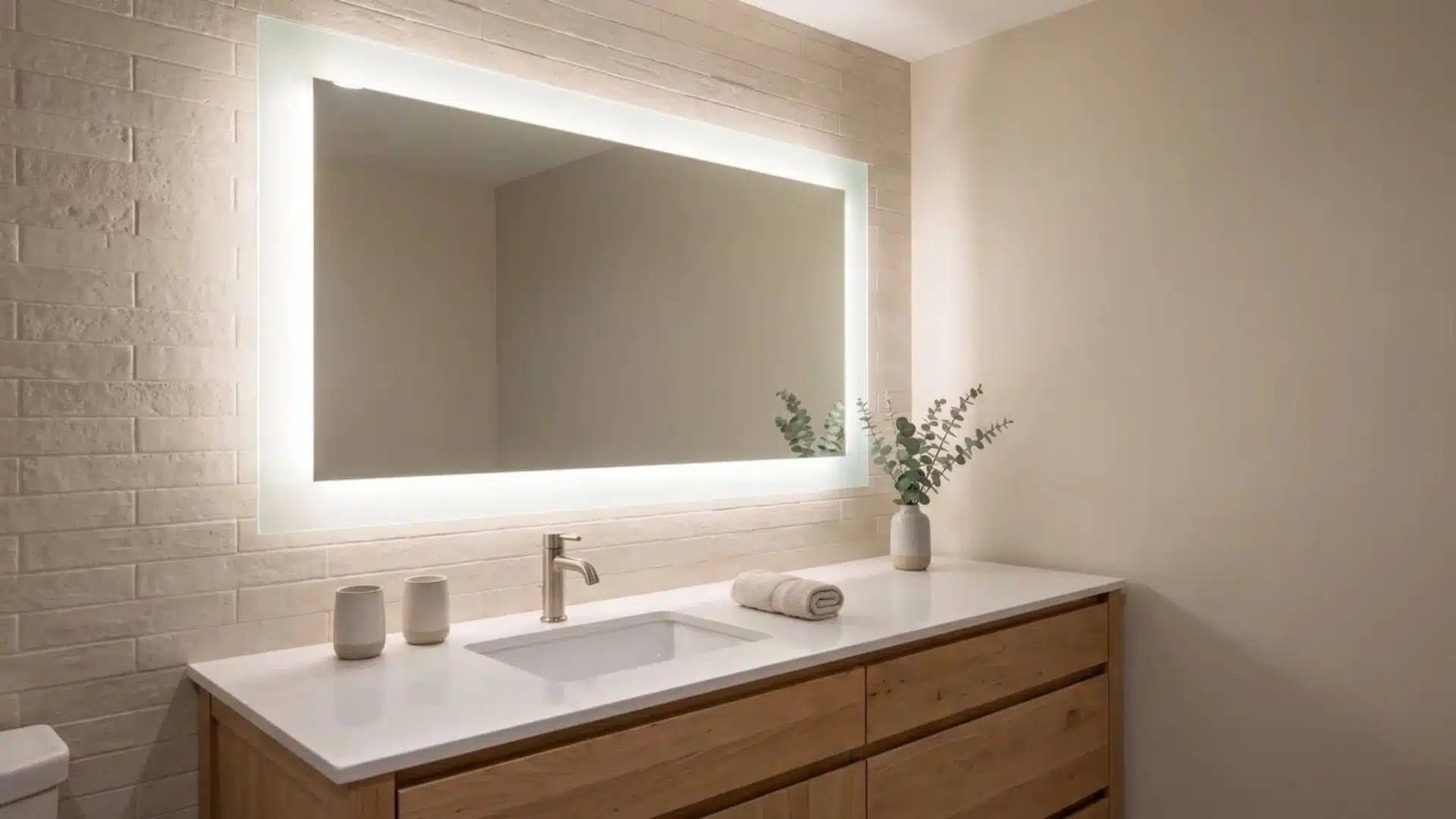
A backlit mirror combines ambient illumination with a useful grooming surface, while Hollywood-style bulbs provide more direct facial lighting. Either approach can make the vanity area feel more considered.
Position the mirror at a comfortable viewing height with sufficient clearance around the sink. Pair decorative illumination with separate task lighting so the mirror remains useful for shaving, skincare, makeup, or other close-up routines.
How to Choose the Right Ideas for Your Bathroom
| Your situation | Prioritize | Be cautious with |
|---|---|---|
| Renting | Woven baskets, diffusers, textiles, decorative trays, flameless candles, removable accessories | Built-in fixtures and structural changes |
| Small bathroom | Frameless glass, floating vanity, layered lighting, wall-mounted storage | Freestanding tubs and bulky furniture |
| Larger bathroom | Soaking tub, double vanity, shower upgrades, statement lighting | Filling open space with unnecessary décor |
| Limited budget | Towels, scent, lighting changes, rugs, trays, plants | Major plumbing or flooring work |
| Planning a remodel | Heated floors, steam shower, recessed niches, floating vanity | Adding features without considering the existing layout |
| Want a quick refresh | Scent, lighting, textiles, greenery, small accessories | Starting with expensive structural work |
Start with one or two sensory changes such as softer lighting, a calming scent, or better textiles. They are quick to introduce and make it easier to judge whether the spa-inspired direction suits your bathroom.
A compact bathroom generally benefits from features that preserve visual space, while a larger layout can accommodate substantial fixtures without making the room feel crowded.
Conclusion
Creating a spa-like bathroom does not require a complete renovation. I’d focus first on the details that change how the room feels and functions, then consider larger upgrades where the space and budget allow.
Soft lighting, natural textures, comfortable textiles, organized storage, and subtle sensory touches can make a noticeable difference without altering the layout.
For a larger project, features such as a soaking tub, heated floors, or a steam shower can take the experience further.
The best approach is to build around your bathroom rather than trying to recreate a spa exactly. Pick the ideas that suit your space, combine them thoughtfully, and let the room feel comfortable, calm, and practical.
Frequently Asked Questions
How can I make my bathroom look like a spa?
Focus on a soft, neutral palette, layered lighting, and natural materials such as stone or wood. Add texture through plush towels, woven storage, and real plants. Smaller upgrades like a rainfall showerhead, diffuser, or heated towel rack can create a calmer atmosphere without requiring a complete renovation.
What are the hottest bathroom trends for 2026?
Current bathroom design leans toward earthy neutrals, terrazzo surfaces, matte black or brushed brass hardware, and wellness-oriented additions such as steam showers and heated flooring. Floating vanities and frameless glass continue to appeal because they create cleaner sightlines and make compact rooms appear more spacious.
What makes a bathroom a spa bathroom?
A spa bathroom combines calming materials, restrained colors, comfortable textures, controlled lighting, and sensory details such as fragrance or sound. A dedicated relaxation feature, including a soaking tub, steam shower, or rainfall fixture, can further shift the room beyond basic functionality.
What does a $10,000 bathroom remodel look like?
A $10,000 renovation can potentially cover refreshed tile, a new vanity, upgraded fixtures, improved lighting, and smaller finish changes, depending on labor and existing conditions. Major plumbing alterations, steam systems, heated floors, and extensive structural work can consume a significant portion of the budget quickly.