Water is the resource that desert communities have always organized around. In places like the Coachella Valley and the broader Southwest, pressure on available water supply isn’t theoretical – it shows up in mandatory conservation measures, tiered rate structures that penalize high usage, and long-term uncertainty about how much water will be available as regional demand continues to outpace natural replenishment.
For homeowners in these communities, water-efficient plumbing isn’t a green building buzzword. It’s a practical response to conditions already affecting what it costs to live here.
What Desert Conditions Do to Plumbing Systems
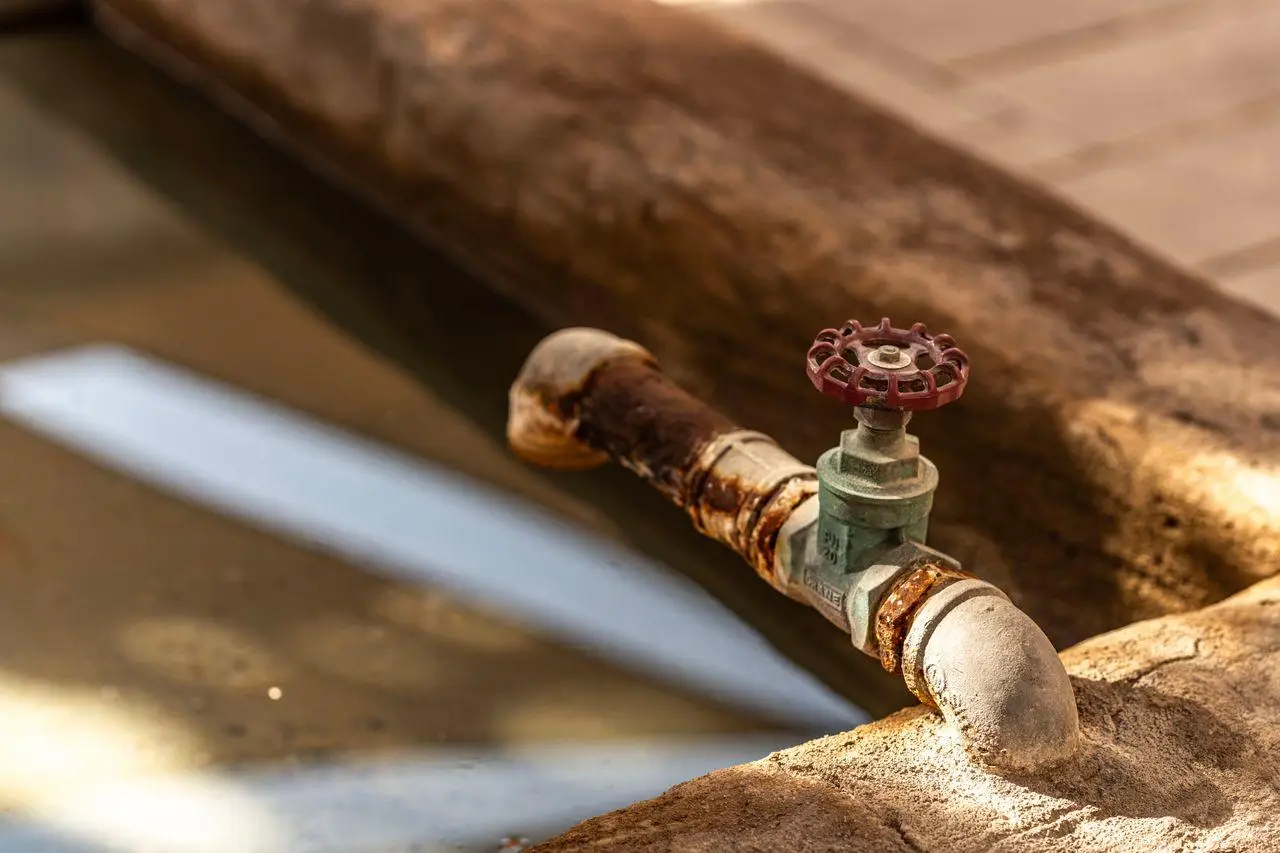
KC’s 23 ½ Palm Springs Plumbing serves a region where the plumbing challenges are distinct from those in moderate climates. Extreme heat, low humidity, hard water, and significant temperature swings between day and night create a specific set of conditions that accelerate wear on plumbing systems and amplify the cost of inefficiency.
Hard water is pervasive in desert communities. Groundwater and surface water in much of the Southwest carry high mineral content – primarily calcium and magnesium – that precipitates out as water is heated or sits in pipes and fixtures.
Scale buildup inside water heaters reduces efficiency and shortens equipment life. The same buildup in fixture aerators and showerheads restricts flow, pushing homeowners to run water longer, compounding the waste.
Thermal expansion from extreme heat is another issue that doesn’t get nearly enough attention in desert plumbing. Pipes – particularly plastic supply lines – expand significantly in high temperatures. Outdoor supply lines exposed to direct sun in summer can reach temperatures well above the design parameters of the fittings and connections at their ends.
Over time, this repeated expansion and contraction degrades joints and creates conditions for slow leaks that often go undetected until they’ve caused significant water loss or structural damage.
What desert heat specifically does to common plumbing components:
- Water heater efficiency loss – tank water heaters in hot environments work less efficiently because the ambient temperature around the unit climbs; the temperature differential the heater has to maintain shrinks in summer but the unit’s standby losses remain constant, creating a year-round inefficiency that’s worse in climates where tank temperatures are exceeded by ambient air temperatures in storage areas
- Pipe joint stress – repeated thermal cycling loosens fittings, particularly in supply lines running through attics or exterior walls that experience the most extreme temperature swings
- Fixture degradation – rubber seals, washer materials, and O-rings deteriorate faster in high heat, increasing the frequency of dripping faucets and running toilets that waste water continuously
- Water heater anode rod depletion – the sacrificial anode rod that protects a tank water heater from corrosion depletes faster in hard water conditions; without regular replacement, tank corrosion accelerates
The Efficiency Technologies That Make a Difference
Water efficiency in desert homes operates at several levels – the fixtures themselves, the delivery system, and the source and treatment of the water coming into the home.
Low-flow fixtures have improved considerably over the past decade. Early low-flow showerheads and faucets sacrificed pressure in ways users found unsatisfying.
Current-generation fixtures achieve reduced flow rates through aerator and pressure-compensation technology that maintains a satisfying feel while using less water. A showerhead rated at 1.8 gallons per minute performs comparably to a conventional 2.5 GPM head, with a 28% reduction in water use per shower.
Tankless water heaters address two inefficiencies simultaneously. The standby energy loss of a tank system – keeping stored water hot whether or not anyone uses it – disappears.
Delivery efficiency also improves: tankless units can be located closer to points of use, reducing the cold water volume that has to run before hot water arrives.
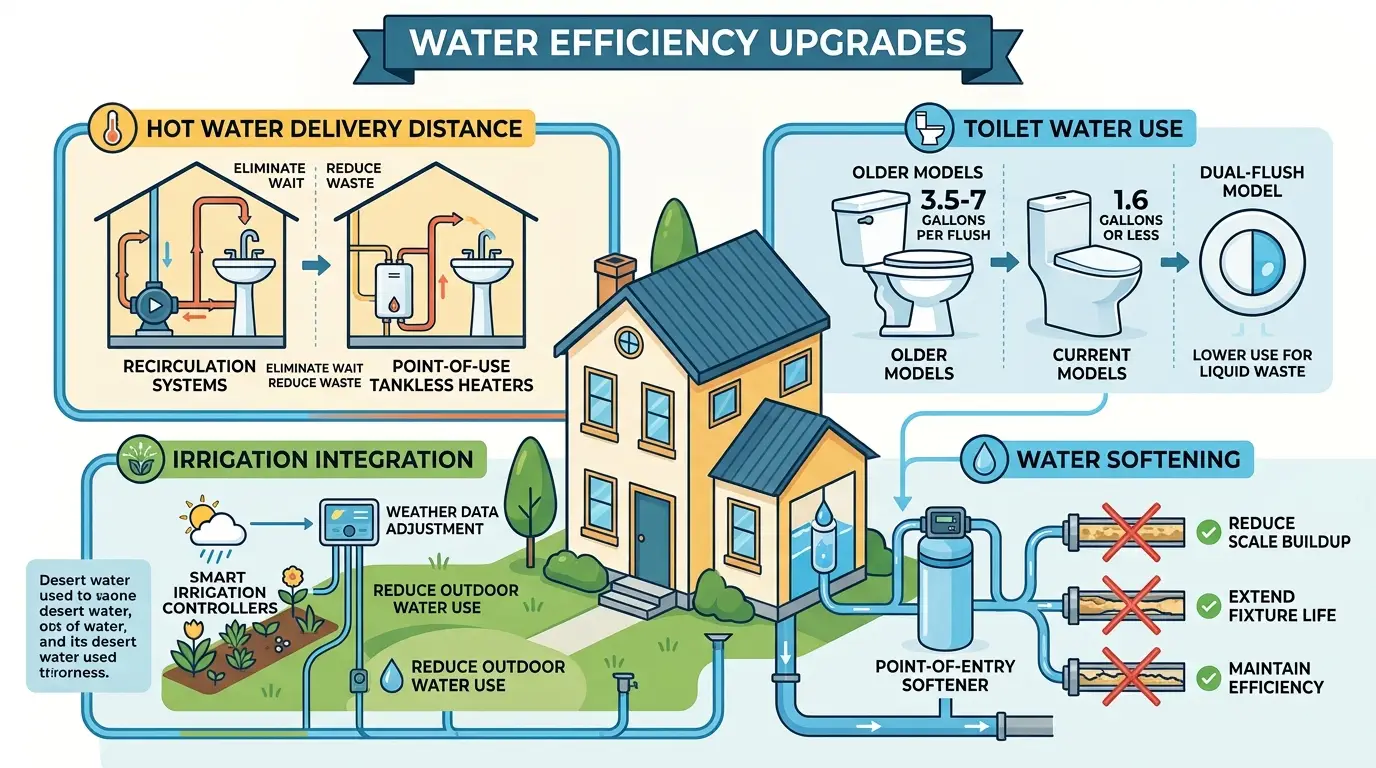
What well-chosen water efficiency upgrades typically address:
- Hot water delivery distance – recirculation systems or point-of-use tankless heaters eliminate the wait for hot water and the cold water waste associated with it
- Toilet water use – older toilets use 3.5 to 7 gallons per flush; current models often use 1.6 gallons or less, and dual-flush models allow even lower use for liquid waste
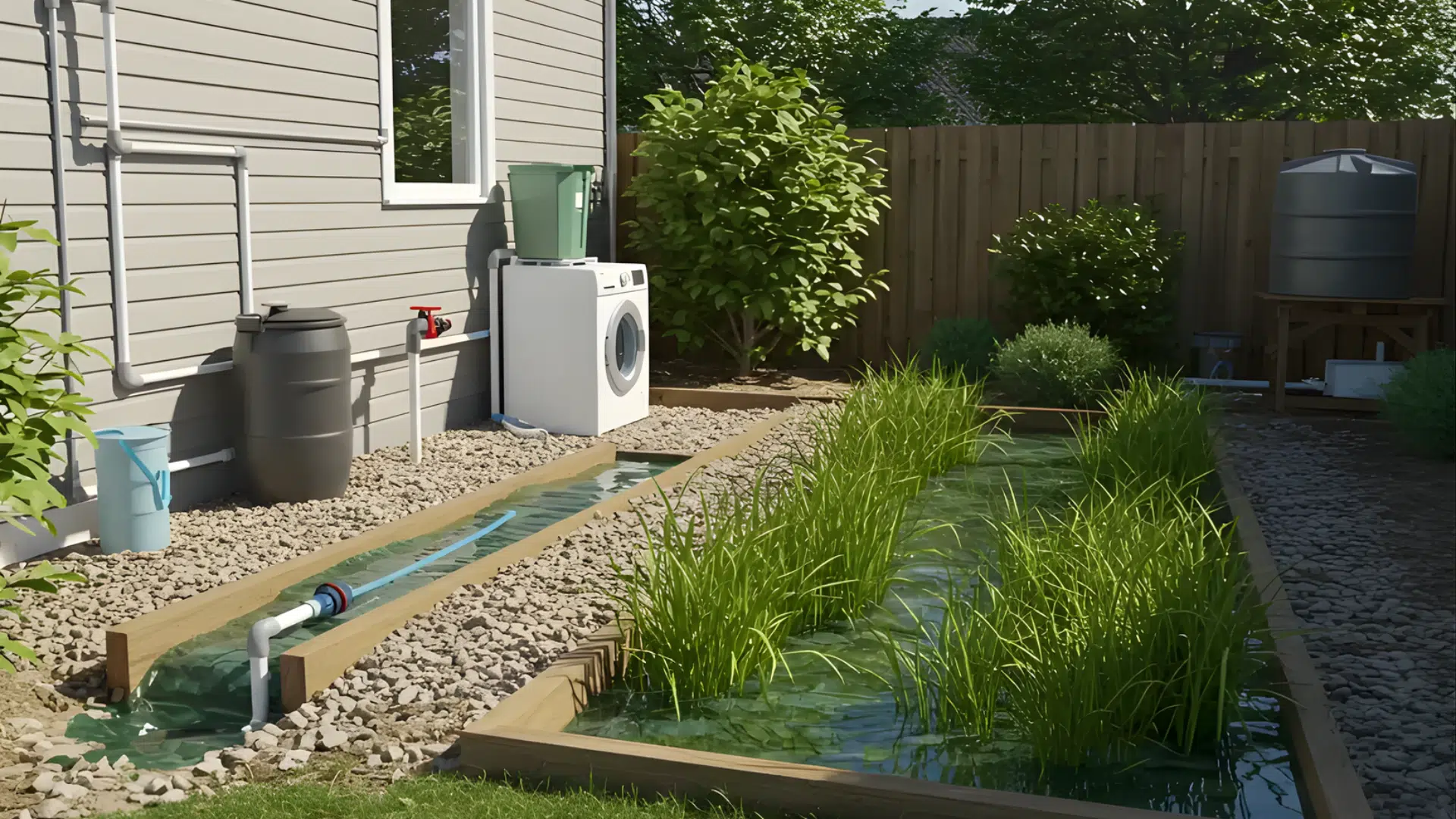
- Irrigation integration – smart irrigation controllers that adjust watering schedules based on real-time weather data reduce outdoor water use, which in desert homes often accounts for 50 to 70 percent of total water consumption
- Water softening – addressing the hard water problem at the point of entry reduces scale buildup throughout the entire system, extending fixture and appliance life and maintaining the flow efficiency that efficient fixtures are designed to deliver
The Financial Case
The conservation argument for water efficiency is clear in desert communities where water supply is a visible concern. The financial case is equally direct.
Tiered water pricing in many desert municipalities charges significantly higher rates once consumption exceeds baseline thresholds.
A household that regularly crosses into higher tiers can pay multiples of what a comparable efficient household pays. Payback periods on water-efficient fixtures in these rate structures are often measured in months rather than years.
The indirect costs – water heater replacements shortened by scale damage, plumber visits for leaking fixtures, pipe repairs from thermal stress – add up over the life of a home in ways that efficient systems reduce substantially.
In desert communities, water-efficient plumbing is neither a luxury upgrade nor an environmental statement. It’s the sensible way to run a home where water is constrained, rates reflect that constraint, and the environment accelerates wear on systems not designed for local conditions.