Small spaces have a comfort problem that big HVAC systems were never built to solve. A studio apartment, a finished attic, a converted garage, a backyard office, or that one stubborn room your central system can never quite reach all need targeted heating and cooling, not a whole new duct network. That is exactly where a ductless mini split earns its keep, and thanks to homeowner-ready systems like MRCOOL DIY, you no longer need a licensed crew, a weekend of scheduling, or a four-figure labor bill to put one in.
For years, the real catch with ductless comfort was not the equipment. It was the install. Connecting refrigerant lines, pulling a vacuum on the system, and charging it with refrigerant all required certification, specialized tools, and a professional on site. A MRCOOL DIY mini split removes that barrier entirely. The lines come pre-charged from the factory, the fittings click together by hand, and a confident homeowner can have a small room cooling and heating the same afternoon the box arrives. If you have ever tackled a basic home project, you already have the skill set.
Why Ductless Mini Splits Work So Well in Small Spaces
Traditional central air assumes you have ductwork running through your walls, and that ductwork assumes you have a fairly large, conventionally built home. Small and unconventional spaces break that assumption. A garage workshop or a room above the garage usually has no ducts at all. An older studio may have a single window unit struggling to keep up. An attic conversion fights heat that radiates straight through the roof.
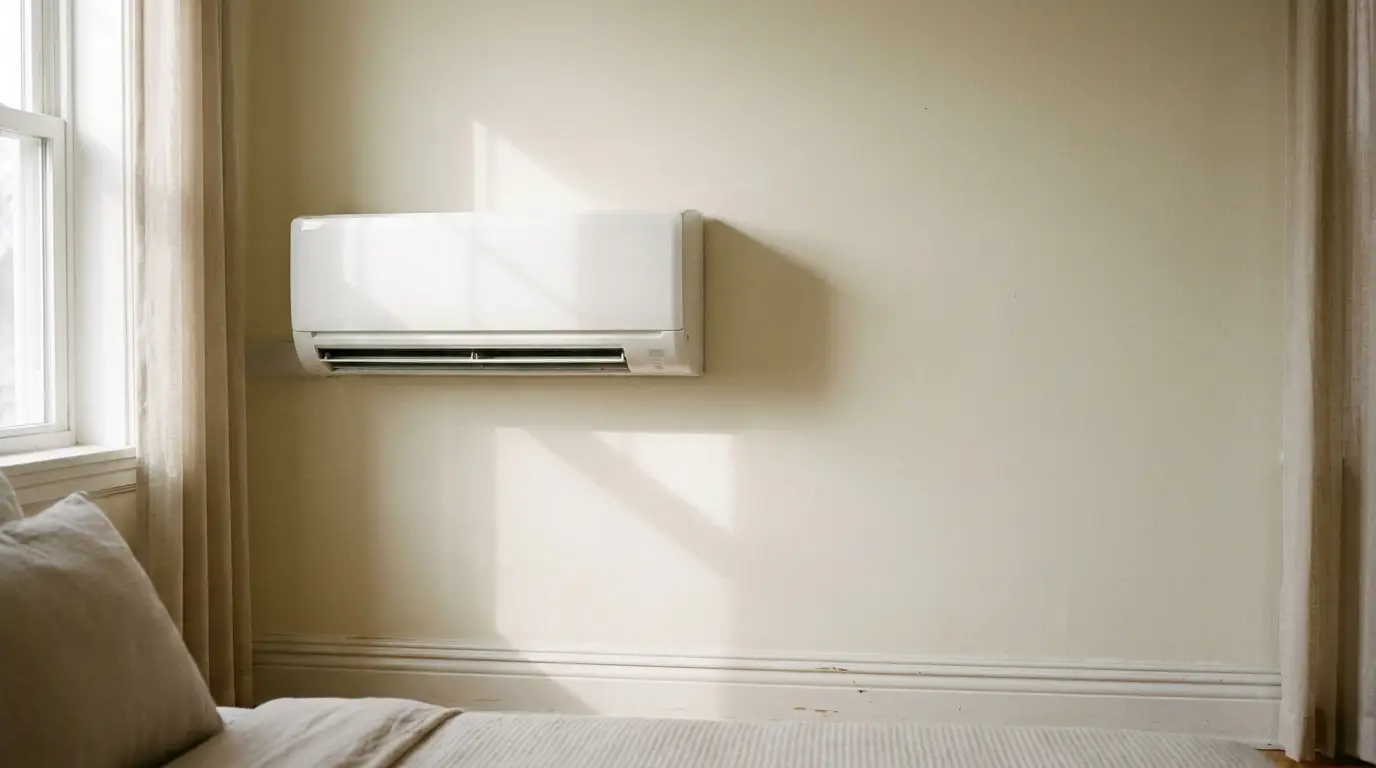
A ductless system sidesteps all of it. One slim air handler mounts on the wall and delivers conditioned air directly into the room, while a compact condenser sits outside. There is no ductwork to lose energy through, no central system you have to run just to cool one zone, and no permanent construction. For a small footprint, that translates into precise temperature control over exactly the space you use, which is both more comfortable and far cheaper to run.
The Quiet, Efficient Comfort Small Rooms Actually Need
Because these systems condition a single zone, they sip energy rather than gulp it. A smaller unit can run for just pennies an hour, and modern models hold high efficiency ratings that keep monthly costs low even in regions with serious summers. They are quiet, too, running at roughly the volume of a modern refrigerator, which matters a lot when the space in question is a home office, a guest room, or a studio where you sleep a few feet from the unit.
Can You Really Install a Ductless Mini Split Yourself?
Yes, and this is the part that surprises most people. The reason DIY mini splits exist is that the hardest, most regulated step of a conventional install has been engineered out of the process. The refrigerant lines arrive sealed and pre-charged, so you never open the refrigerant system, never handle it, and never need the gauges or vacuum pump a pro would normally bring.
What the Process Actually Looks Like
Most small-space installs follow three simple stages and wrap up in three to five hours.
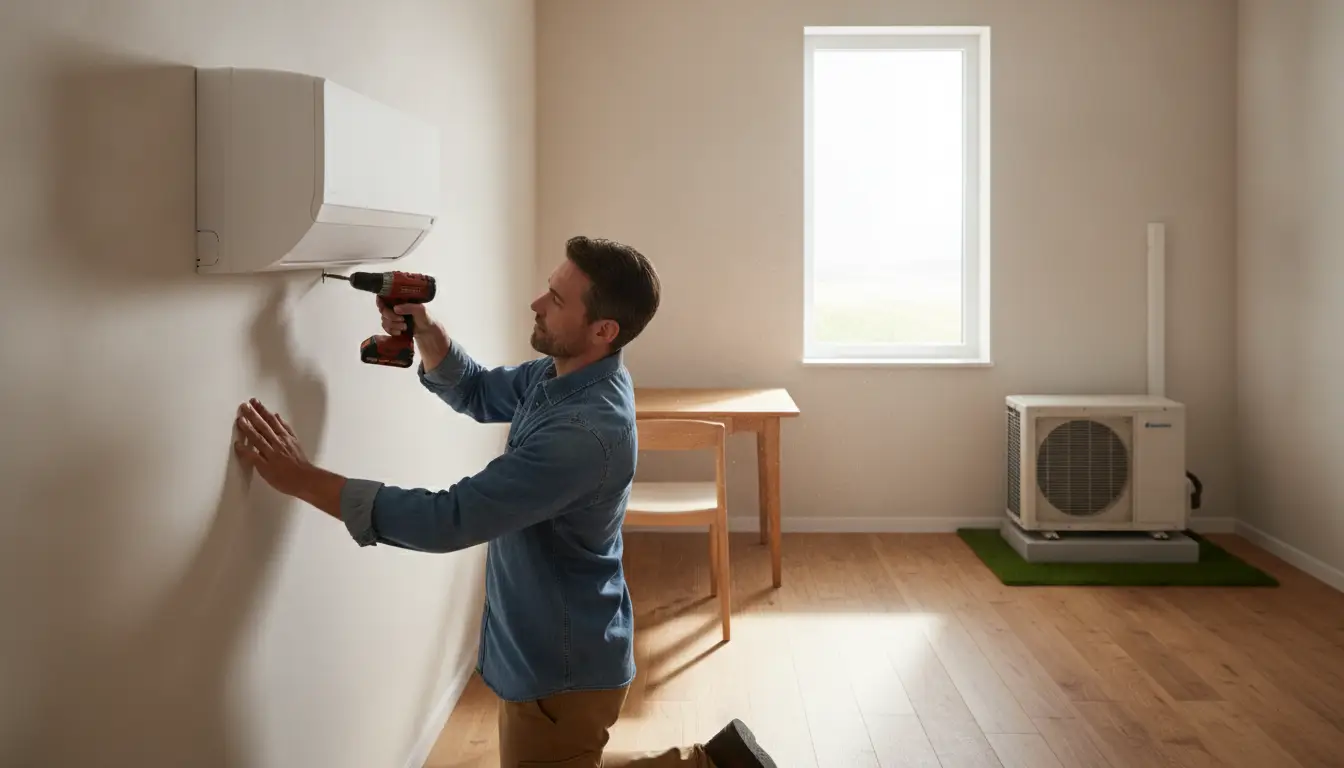
First, you mount the indoor air handler. You fix the wall bracket, drill a single pass-through hole for the line set, and set the outdoor condenser on a pad or bracket nearby.
Second, you connect the line set. The pre-charged quick-connect fittings thread directly onto the indoor and outdoor units and seal as you tighten them. This is the step that normally requires a technician, and here it takes a wrench and a few minutes.
Third, you power it on. You connect the electrical supply and start the system. If your space already has an appropriate circuit, you are finished. If it does not, this is the one point where you may want a licensed electrician to add a dedicated connection, which is a small, predictable cost compared to a full professional HVAC install.
What You Do Not Need
The list of things you can skip is the whole reason this approach works. You do not need an HVAC license, you do not handle refrigerant, you do not rent or buy a vacuum pump or gauges, and you do not coordinate a contractor’s schedule around yours. For a single-room project, that removes nearly every friction point that usually pushes people toward an expensive professional job or a noisy window unit instead.
The Real Reason DIY Installation Saves So Much
When homeowners look at quotes for ductless comfort, the sticker shock almost never comes from the equipment itself. It comes from labor. Professional installation routinely runs into the thousands of dollars for a single zone, and multi-zone jobs climb dramatically higher. That cost has nothing to do with the hardware sitting in your room. It is purely the price of the install.
Doing it yourself erases that line item entirely. You buy the same quality system, you mount it the same afternoon, and you keep the money that would have gone to labor. That is why a DIY mini split ends up costing a fraction of a comparable installed system once the full project is tallied. For a small space, where you are conditioning one or two rooms rather than an entire house, the savings are often the difference between getting real comfort this week and putting the project off indefinitely. Same equipment, same comfort, far less out the door.
Sizing: Matching the System to Your Space
Getting the size right is the single most important decision you will make, and it is easy to get wrong by guessing. A system that is too small will run constantly and never quite catch up on a hot afternoon. One that is too large will short-cycle, waste energy, and leave the room feeling clammy because it cools faster than it dehumidifies.
A Quick Way to Think About It
Capacity is measured in BTUs, and small spaces usually fall toward the lower end of the range. A modest bedroom, a home office, or a small studio is often well served by a 9,000 BTU single-zone unit, while a larger open room or a sun-soaked attic may call for 12,000 or 18,000 BTUs. Ceiling height, insulation quality, window count, and sun exposure all nudge that number, so a room that bakes in afternoon sun needs more capacity than its square footage alone suggests. When you are close to a cutoff, it is worth confirming with a sizing tool or a quick call to a specialist before you order so the system you install performs the way it should.
Is a DIY Mini Split Right for You?
This approach fits a specific kind of project beautifully. It is ideal if you want to avoid a heavy installation bill, you like controlling your own project timeline, and you are comfortable with straightforward home tasks like drilling a hole and tightening a fitting. For a small space you are trying to make genuinely livable year-round, it is hard to beat.
If your project involves complex routing, long line runs, or you simply prefer to hand the whole thing to a professional, a traditionally installed system may suit you better. But for most small rooms, garages, studios, and add-on spaces, installing a ductless mini split yourself is the rare upgrade that is faster, cheaper, and entirely within reach. You buy it, you mount it, and you keep the savings.