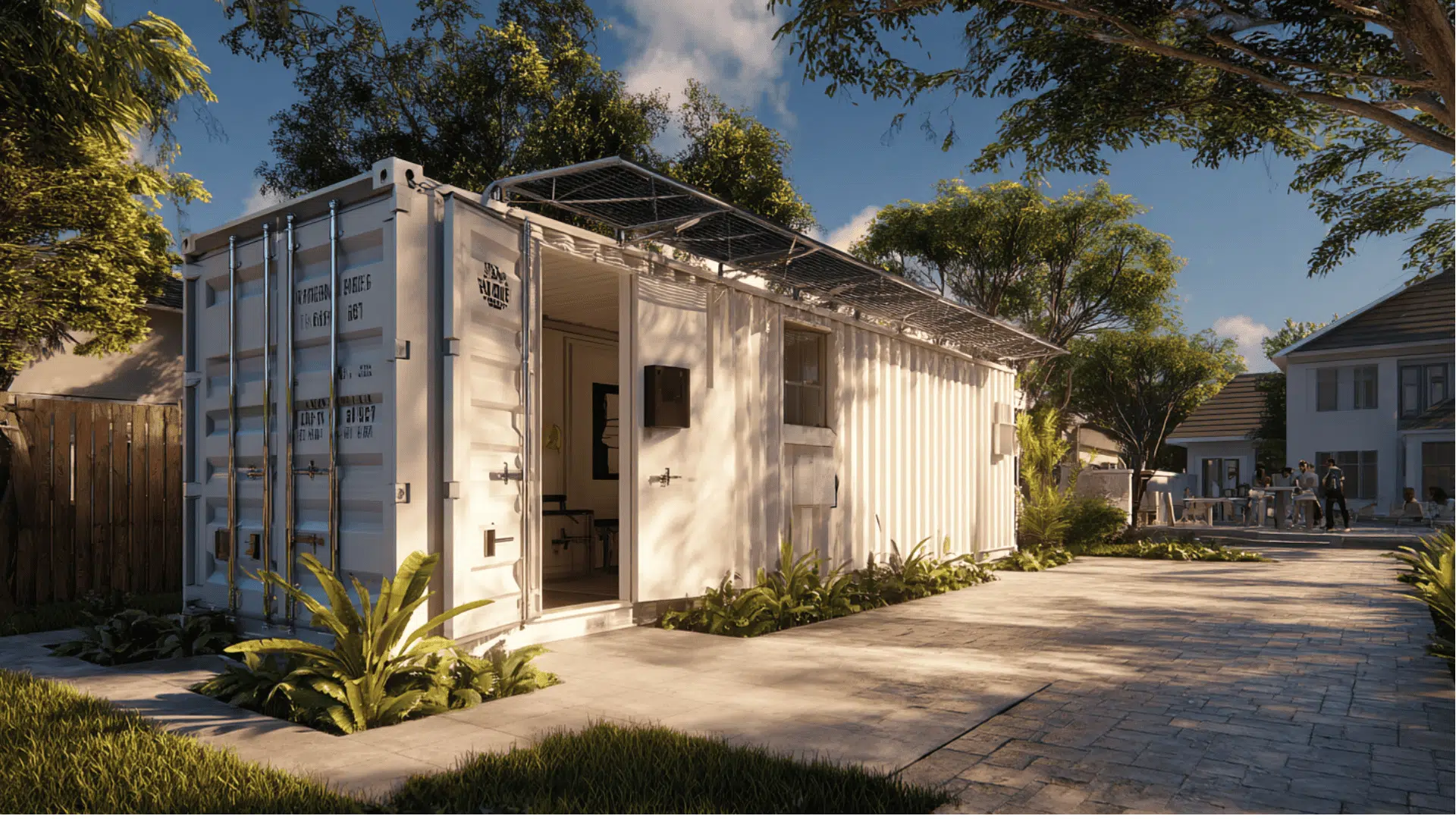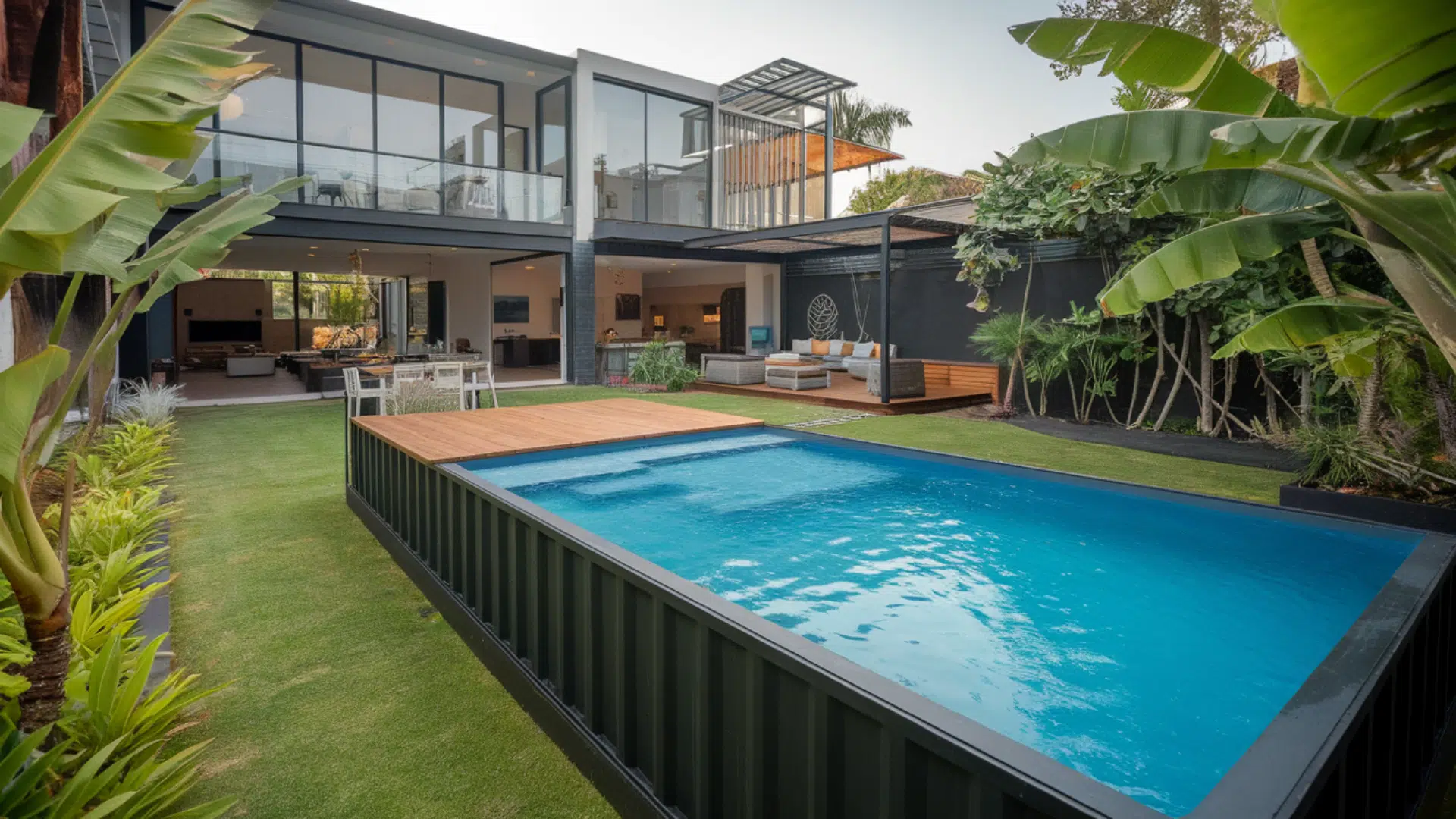
Building a 5-bedroom container home is a practical way to create a spacious family house with a flexible layout, durable structure, and modern design. For larger residential projects, homeowners often need wider rooms, connected living areas, and private bedroom zones.
A 5-bedroom home requires more planning than a small cabin, guest house, or weekend retreat. It should include enough space for sleeping, cooking, storage, bathrooms, utilities, and shared family activities. The main advantage of container construction is that each container works as a building block, so a modular approach with conjoined shipping containers can help create larger rooms and a more comfortable layout. This makes the home easier to divide into private bedroom zones, shared family areas, and practical utility spaces.
How Many Containers Are Needed for a 5-Bedroom Home?
The number of containers depends on the total size of the home, the selected layout, and the level of comfort you want to achieve. In many cases, a 5-bedroom container home may require around 8 to 12 containers, especially if the plan includes a large kitchen, open living room, several bathrooms, laundry area, and storage rooms.
A 40-foot container is often the main choice for residential builds because it provides more usable space than a 20-foot unit. High cube containers are even more practical because they offer extra height. This additional height is helpful after installing insulation, flooring, lighting, ventilation, and ceiling finishes.
Common container choices for a 5-bedroom home include:
- 40-foot high cube containers for bedrooms, living rooms, kitchens, and large shared spaces.
- 20-foot containers for guest rooms, offices, walk-in closets, or utility spaces.
- Mixed container sizes for more flexible and custom layouts.
The best approach is to start with the floor plan first and then choose the container sizes that support the design.
Recommended Container Characteristics for a 5-Bedroom Home
When planning a large container home, container size and condition have a direct impact on comfort, layout flexibility, and construction cost. For residential projects, 40-foot high cube containers are usually the most practical option because they provide more length and ceiling height than standard units.
| Container Type | Approximate Size | Best Use in a 5-Bedroom Home | Main Advantage |
|---|---|---|---|
| 20-foot standard container | 20 ft x 8 ft x 8.5 ft | Guest room, office, storage, utility room | Compact and easier to place |
| 40-foot standard container | 40 ft x 8 ft x 8.5 ft | Bedrooms, hallways, small living zones | More usable floor area |
| 40-foot high cube container | 40 ft x 8 ft x 9.5 ft | Main living areas, kitchen, master suite | Better ceiling height after insulation |
| Mixed container layout | Different sizes combined | Custom home layouts | More design flexibility |
Popular Layout Ideas for a 5-Bedroom Container Home
One of the biggest benefits of container construction is layout flexibility. Containers can be placed side by side, stacked, connected at angles, or arranged around a courtyard. For a 5-bedroom home, the layout should balance privacy, comfort, and shared family space.
The most common layout options include:
- H-shaped layouts for privacy.
- U-shaped layouts with a central courtyard.
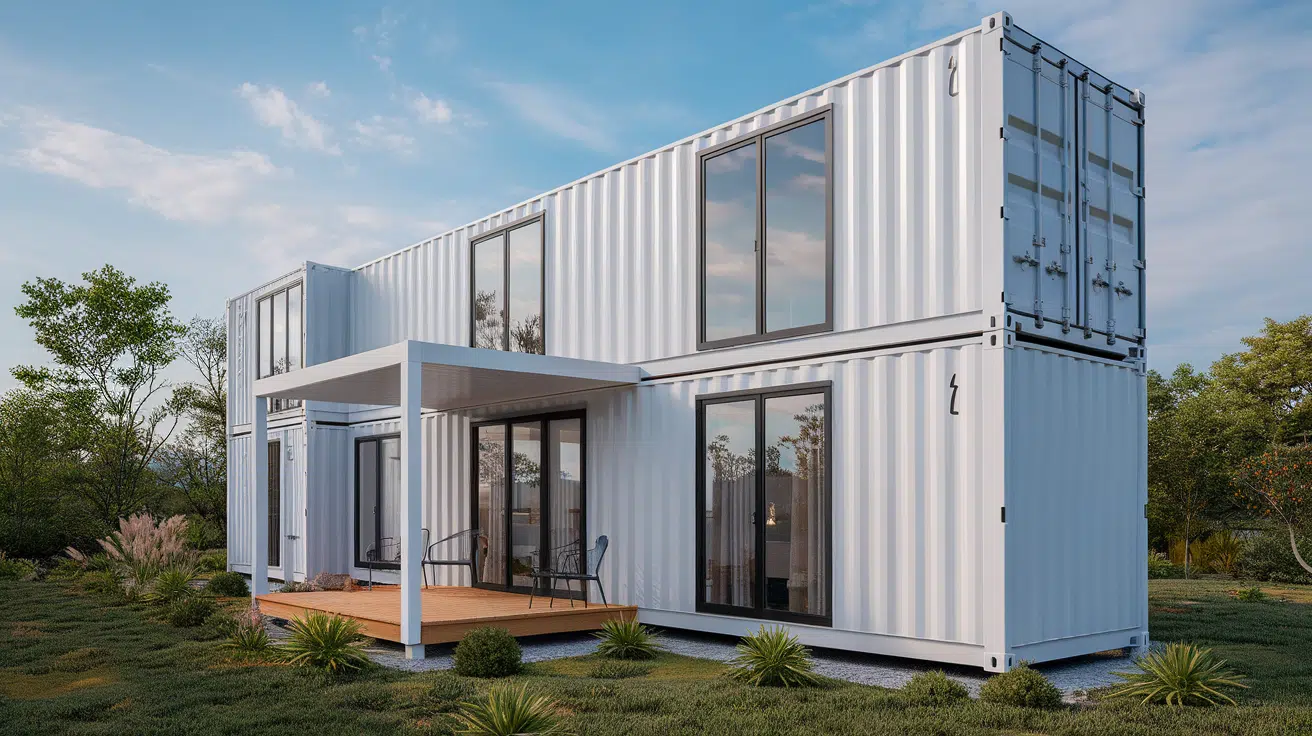
- Two-story layouts for smaller lots.
- Linear layouts for simpler construction.
- Cross-shaped layouts for separate living zones.
Each layout has its own advantages, so the right choice depends on the land size, family needs, budget, and local building requirements.
H-Shaped Layout for Family Privacy
An H-shaped layout is a strong option for larger families. This design usually places two parallel wings on each side, connected by a central section. One wing can include the master bedroom and a guest room, while the other wing can include children’s bedrooms or additional family rooms.
The middle part of the home can hold the kitchen, dining room, and living area. This makes the shared space easy to access from both sides of the house. The open area between the two wings can also become a private courtyard or outdoor seating area.
This layout is useful when different family members need their own quiet zones. Parents, children, guests, or older relatives can have more privacy without being fully separated from the main living area.
U-Shaped Layout With a Central Courtyard
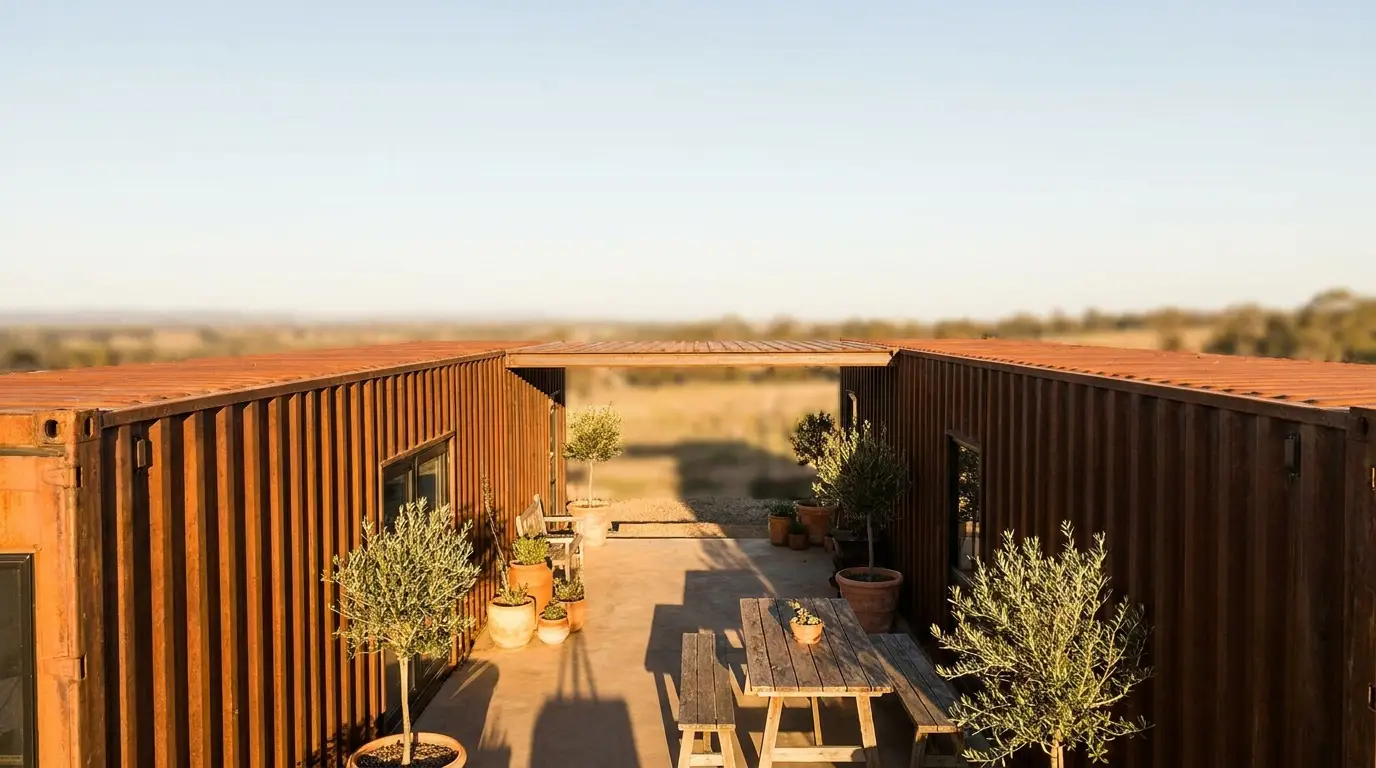
A U-shaped layout is another popular idea for container homes. In this plan, containers form three sides of the house, leaving an open area in the middle. This central courtyard can be used as a garden, patio, play area, or outdoor dining space.
For a 5-bedroom home, one side of the U can include bedrooms, another side can include shared living spaces, and the third side can hold bathrooms, laundry, storage, or a home office.
- A U-shaped layout can be a good choice because it offers:
- Better connection between indoor and outdoor spaces.
- More natural light for rooms facing the courtyard.
- A protected outdoor area for children or family gatherings.
- Clear separation between private and shared zones.
This layout works well for families who want a more open and lifestyle-focused home design.
Two-Story Layout for Smaller Lots
If the available land is limited, a two-story container home may be a better option. Stacking containers can help create more interior space without using too much ground area. In this design, the ground floor often includes the kitchen, dining room, living room, one guest bedroom, and utility spaces. The second floor can include the master bedroom and three additional bedrooms.
A two-story design may require more structural planning, engineering support, and careful staircase placement. However, it can be very effective for urban lots, narrow properties, or areas where outdoor space is limited.
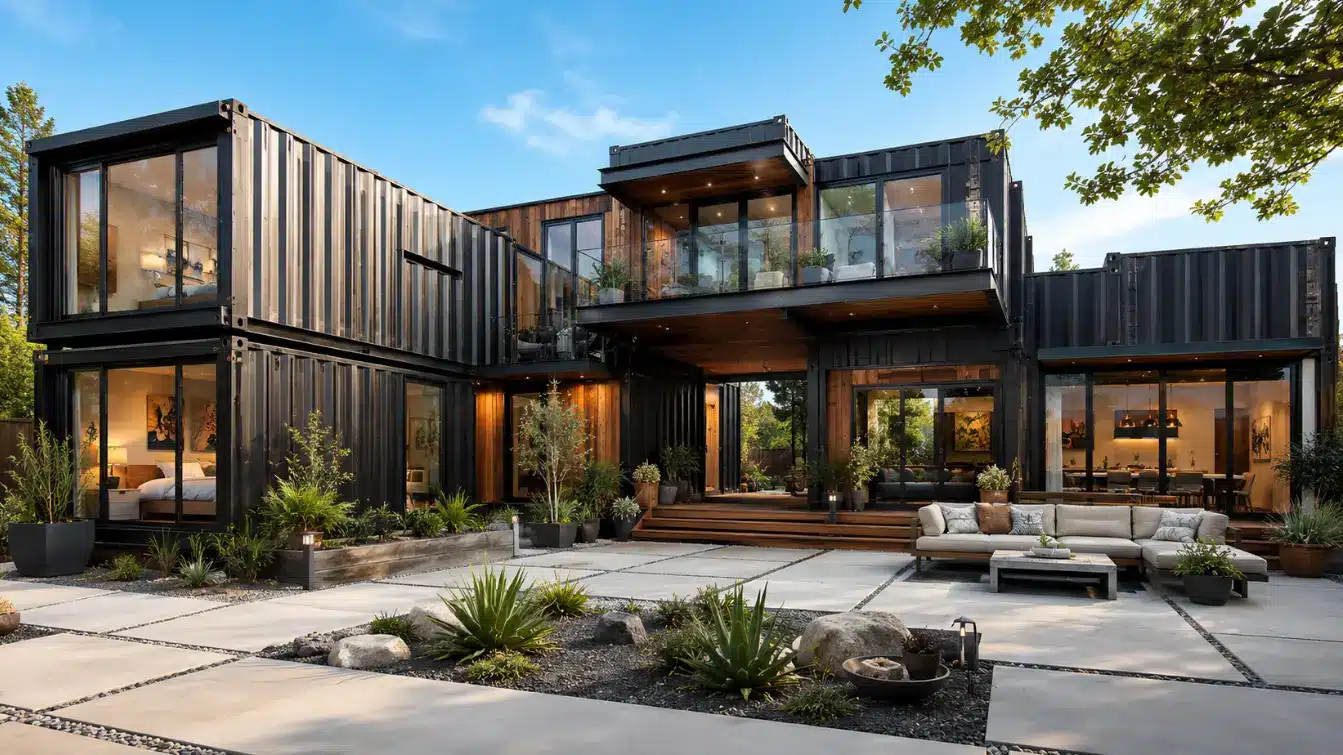
Large windows, balconies, and rooftop terraces can make a two-story container home feel more open and modern. Still, the design should always consider safety, load-bearing requirements, and local building codes.
Linear Layout for Simple Construction
A linear layout places containers in a straight or slightly staggered arrangement. This is one of the simplest approaches because it reduces complex connections and can make construction more straightforward.
For a 5-bedroom home, the bedrooms can be placed along one side or at both ends of the layout. The central part can contain the kitchen, dining room, and living room. Bathrooms and utility areas can be placed between bedrooms to reduce plumbing complexity.
This type of layout may not look as dramatic as an H-shaped or U-shaped design, but it can be more cost-efficient. It is also easier to expand later by adding another container to one end of the house.
Planning the Bedroom Zones
A 5-bedroom home should not feel crowded. Each bedroom should have enough space for a bed, storage, windows, and comfortable movement. The master bedroom may need extra room for an ensuite bathroom or walk-in closet.
Before finalizing the plan, it is useful to define the purpose of each bedroom:
- Master bedroom with private bathroom.
- Children’s bedrooms close to each other.
- Guest bedroom with easy bathroom access.
- Bedroom that can also work as a home office.
- Flexible room for future family needs.
Good bedroom planning improves daily comfort and makes the home easier to live in long term.
Kitchen, Living Room, and Shared Spaces
The shared spaces are the heart of a 5-bedroom container home. Since container interiors are narrow by default, many designs remove parts of the side walls between joined containers to create wider rooms. This can help form an open-plan kitchen, dining area, and living room.
However, removing container walls requires structural reinforcement. Support beams, columns, or engineered framing may be needed to keep the home safe and stable. This is why professional planning is important before making large openings between containers.
The living room should have enough natural light, comfortable circulation, and access to outdoor areas if possible. Sliding doors, large windows, and covered patios can make the home feel more spacious and comfortable.
Insulation, Ventilation, and Comfort
Comfort is one of the most important parts of container home planning. Steel containers can heat up quickly in hot weather and lose heat in cold weather, so proper insulation is essential. Spray foam, rigid foam board, mineral wool, or other insulation systems may be used depending on the climate and budget.
A comfortable 5-bedroom container home should include:
- Proper wall, roof, and floor insulation.
- Good ventilation in bedrooms and bathrooms.
- HVAC planning for heating and cooling.
- Moisture control to reduce condensation.
- Energy-efficient windows and doors.
Ventilation is especially important in a larger home because more people create more moisture and daily activity. Bathrooms, kitchen areas, laundry rooms, and bedrooms all need good airflow.
Foundation and Site Planning
A large container home needs a strong and level foundation. Common options include concrete piers, slab foundations, crawl spaces, or reinforced footings. The right choice depends on soil conditions, climate, drainage, and local regulations.
Before placing containers, the site should be prepared for access, utilities, and drainage. Large delivery trucks and cranes may need enough space to move and position the containers. Water, electricity, sewage, and internet connections should also be planned before construction begins.
Good site planning can prevent delays, reduce unexpected costs, and make the construction process smoother.
Key Planning Factors Before Construction
Before finalizing the project, homeowners should review several technical and practical factors. These details can affect the budget, timeline, comfort, and long-term durability of the home.
Important planning factors include:
- Container condition: used containers should be checked for rust, dents, floor damage, and structural issues.
- Wall removal: large openings between containers require reinforcement.
- Insulation system: the right insulation depends on climate and local energy requirements.
- Moisture control: steel structures need proper ventilation and condensation prevention.
- Utility layout: plumbing, electrical wiring, and HVAC should be planned before cutting or modifying containers.
- Foundation type: the site may require piers, a slab, crawl space, or reinforced footings.
- Permit requirements: local rules may affect size, height, setbacks, and construction methods.
Adding these details makes the article more practical because readers understand that a container home is not only about arranging boxes. It also requires engineering, comfort planning, and compliance with local rules. For additional guidance at the planning stage, resources such as how to choose the right container for construction https://www.urbansplatter.com/2026/02/how-to-choose-the-right-container-for-construction/ can help homeowners better understand container selection before moving into design and construction. With the right preparation, a 5-bedroom container home can become a comfortable, functional, and long-lasting family residence.