Most people underestimate packing until they’re surrounded by unlabeled boxes and can’t find their phone charger. It isn’t just about filling boxes.
It’s about doing it in the right order, with the right materials, so nothing breaks and nothing gets lost. This blog covers everything from what to pack first to how to label boxes so unpacking is actually manageable.
Follow the system in this guide and you’ll spend less time hunting for things, fewer items will arrive broken, and you’ll be able to unpack by room in the right order instead of sorting through mystery boxes for days.
How to Pack to Move: The Right Order
Packing without a plan leads to chaos. You’ll end up reopening boxes, scrambling for daily items, or rushing at the end and breaking things.
The key is simple: pack what you don’t need first. Leave the rest until the final days.
Before you pack a single box, do a pass through each room with one question: would you bother unpacking this at the new place? If the answer is no, it doesn’t go on the truck.
Declutter first, donate, sell, or discard, and you’ll pack fewer boxes, load a smaller truck, and unpack a cleaner home. This pays back more time than almost anything else in the process.
Room-by-room packing keeps boxes organized and makes unpacking faster because every box lands in the right room and stays there. When you pack across rooms, a kitchen item here, a bedroom item there, those boxes end up in the wrong place, and every wrong-room trip adds time you don’t have on moving day.
What to Pack 4–6 Weeks Before Moving vs. What to Keep Accessible Until Moving Day
| What to Pack 4–6 Weeks Before Moving | What to Keep Accessible Until Moving Day |
|---|---|
| Storage rooms and garage items | Toiletries and daily medications |
| Guest room furniture and bedding | Phone and laptop chargers |
| Seasonal clothes and holiday décor | Important documents (IDs, leases, passports) |
| Wall art and decorative pieces | Cleaning supplies |
| Extra linens, cookware, and backup kitchen tools | Daily clothing and shoes |
| — | Pet food, pet supplies, or children’s essentials |
Use the Right Packing Supplies for Different Items
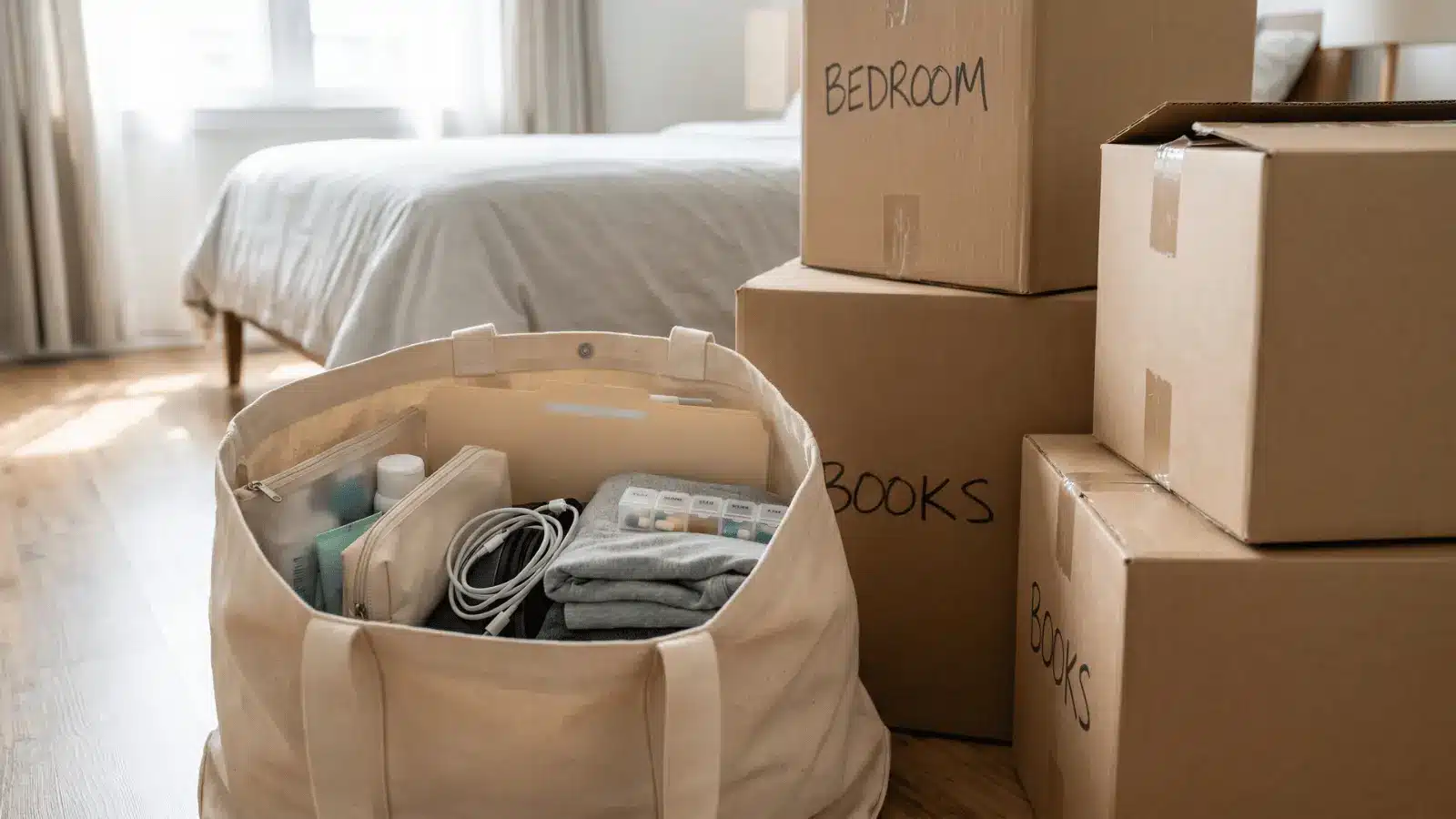
The box you choose matters just as much as how you pack it. Weak or oversized boxes collapse under weight, shift during transport, and damage what’s inside.
Here’s how box size affects safety:
- Heavy items (books, tools) → use small boxes
- Light, bulky items (pillows, linens) → use large boxes
Note: Keep any single box under 50 lbs. If you can’t comfortably lift it off the floor, it’s too heavy; repack and split the load.
Overfilled boxes split at the seams. Boxes with uneven weight distribution buckle at the bottom during stacking. And more tape does not fix a structurally weak box; it just delays the collapse.
Empty space inside a box is as damaging as a weak box. Items shift during loading, turns, and stops, and a plate that slides two inches into another plate during a corner is a plate that arrives cracked.
Fill every gap. Crumpled packing paper, rolled clothing, or folded towels all work. Press down lightly on the packed box before sealing it; if anything shifts noticeably, add more fill. The box should feel solid when you shake it gently, not loose.
Reused boxes from grocery or liquor stores wear down quickly. If a box shows creases, soft spots, or moisture damage, don’t use it.
Best Supplies to Have Before Packing Starts
Stock up on these before you begin. Running out mid-pack wastes time and breaks your momentum.
- Small and medium cardboard boxes
- Packing paper (for wrapping and filling gaps)
- Bubble wrap (for fragile items)
- Strong packing tape and markers
- Zip-lock bags (for screws, cables, small parts)
- Stretch wrap (for furniture and bundled items)
- Moving blankets
When Household Items Can Replace Packing Materials
You don’t always need to buy everything. Many household items work well as padding.
- Towels and clothing can cushion non-fragile items
- Socks stuffed inside shoes protect both the shoe and the sock
- Blankets wrapped around furniture prevent scratches
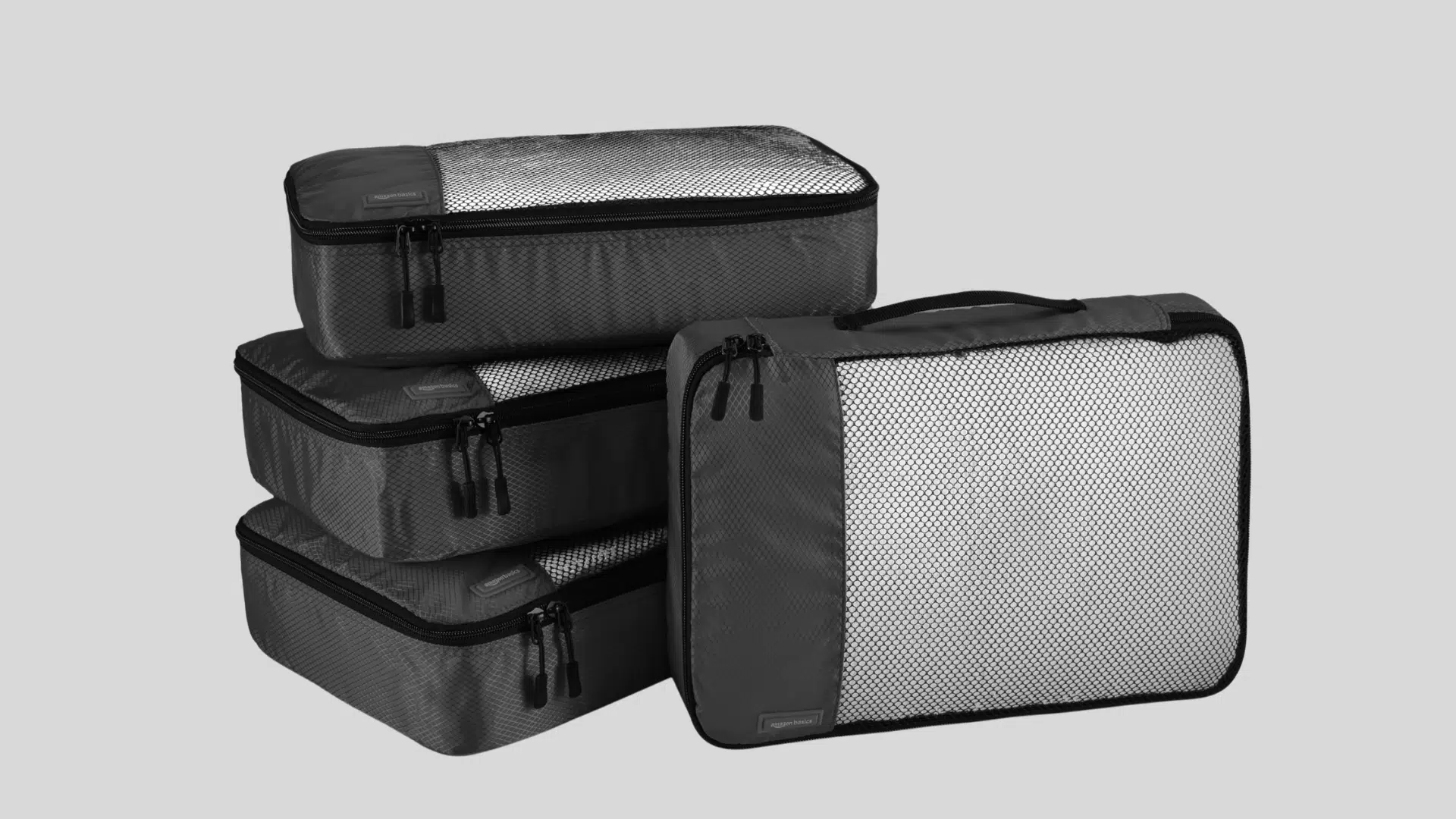
- Suitcases are great for heavy items like books or tools
Important: soft items alone don’t protect glass or ceramics. Without a rigid structure around them, fragile items can still break even when surrounded by fabric.
Pack an Essentials Box Before Anything Else
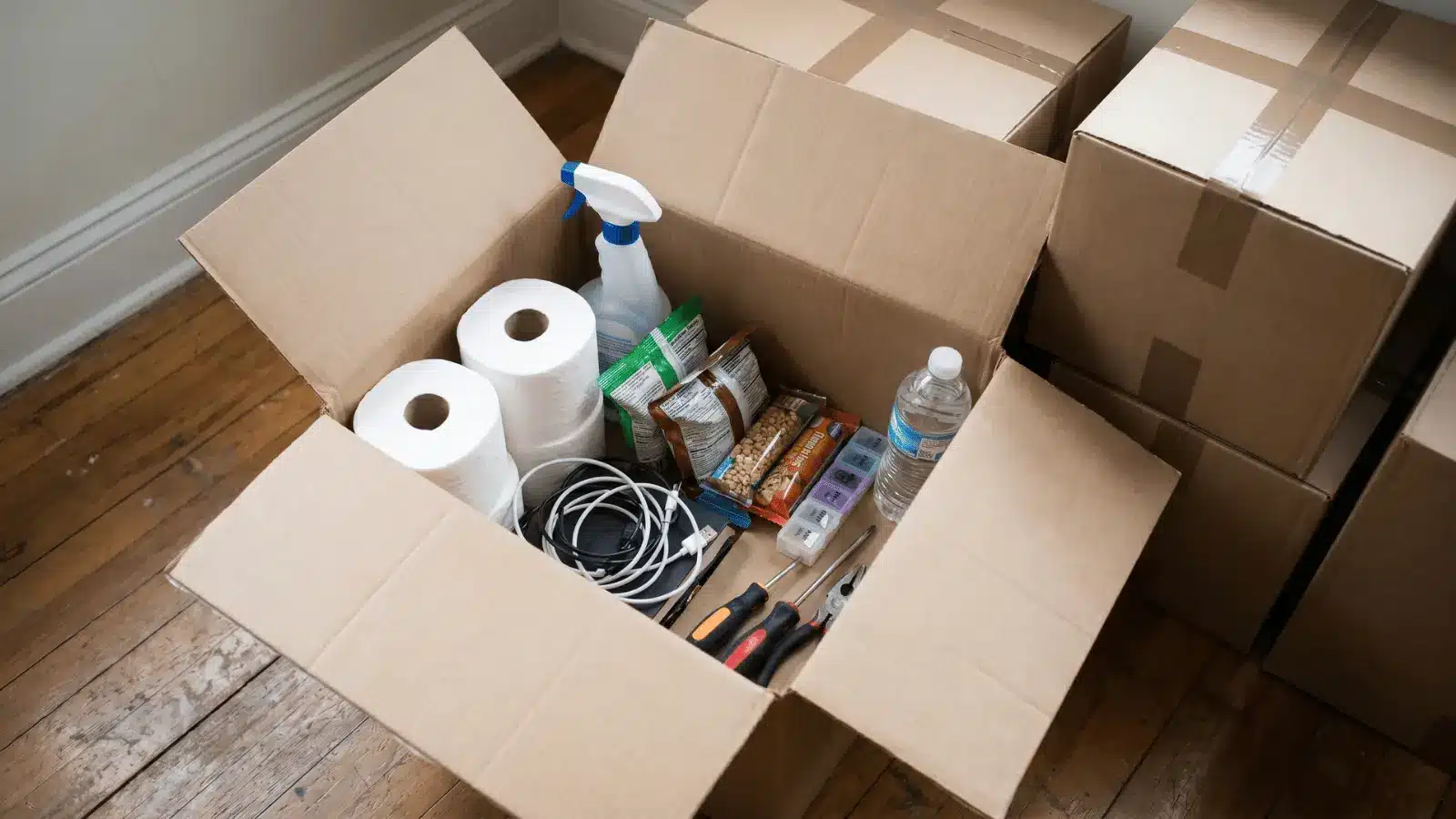
Before you seal a single moving box, pack your essentials box. This is the one box you keep with you, not on the truck.
What to Include in an Essentials Box
Pack enough for at least 48 hours. Think about what you’d need if you couldn’t unpack for two days.
- Toiletries (toothbrush, soap, shampoo)
- Medications (prescription and over-the-counter)
- Phone and device chargers
- Toilet paper and paper towels
- Basic tools (screwdriver, scissors, box cutter)
- Snacks and a reusable water bottle
- Important documents
- Change of clothes and sleepwear
- Cleaning spray and a few rags
Use Smarter Packing Methods for Clothes, Furniture, and Electronics
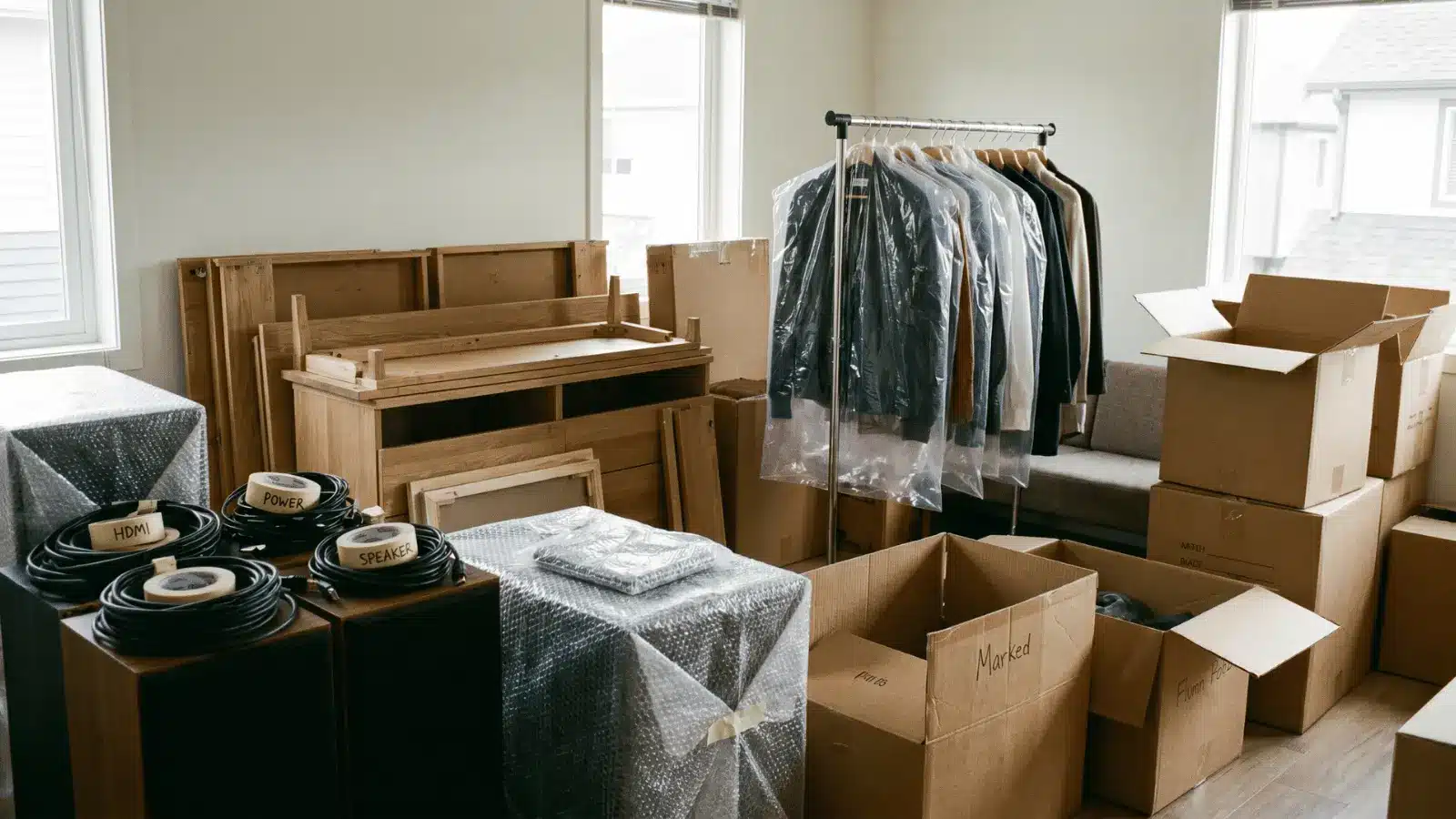
The way you pack clothes, furniture, and electronics determines how long reassembly takes, and how much gets damaged in transit. But large beds, bookshelves, and tables should be broken down where possible.
Always bag screws and hardware separately, and tape the bag to the piece of furniture it came from.
Losing a single bolt can make reassembly impossible. Original packaging for electronics is ideal, but not always necessary. What matters is proper cushioning on all sides.
Fast Clothing Packing Methods
Clothes are often the most time-consuming category. These shortcuts help:
- Leave folded clothes in dresser drawers if the drawers can be removed and transported separately
- Bundle hanging clothes directly in their hangers and cover with a trash bag, no wardrobe box needed
- Use vacuum bags for bulky soft goods like comforters and winter coats
Note: Avoid overcompressing delicate fabrics like wool or silk in vacuum bags. It can distort the shape or damage the material.
How to Protect Electronics and Furniture
Electronics are expensive and easy to damage without proper prep.
- Photograph cable setups before disconnecting anything
- Label each cord, so reassembly is simple
- Store screws and small hardware in labeled zip bags
- Wrap sharp furniture corners with moving blankets or foam
- Keep screens face-up and away from pressure; never stack items on top of a laptop or TV screen
Moving Day Packing Rules that Prevent Delays and Damage
The final hours of moving day are when most mistakes happen. Stay focused.
Load order matters: heavy furniture and large boxes go in first, against the truck walls. Lighter boxes stack on top. This keeps the truck balanced and prevents boxes from shifting.
Space in a truck is not harmless. Items slide and fall during turns and stops. Use blankets or bags to fill gaps.
Before leaving, do a full walkthrough of every cabinet, drawer, shelf, closet, and bathroom. Check under beds and in appliance cavities.
Liquids must be sealed: Cleaning products, cooking oils, and toiletries should be in zip bags or wrapped in plastic before boxing.
Last-Minute Checks Before Leaving
Run through this before locking up:
- Utility areas, laundry room, garage
- All outlets and chargers
- Documents left on desks or counters
- All sets of keys
- Medication from bathrooms or nightstands
- Refrigerated items you planned to take
- Items charging overnight (tablets, earbuds)
Packing Mistakes that Make Moving Harder
Small errors at the packing stage create big problems during unloading and unpacking. Here’s what to avoid:
- No declutter pass first: you end up paying movers to move things you don’t want
- Mismatched box sizes: they stack poorly and tip in transit; stick to small, medium, and large
- Boxes over 50 lbs: risk injury to anyone lifting them and structural failure at the bottom seam
- No labels: every box becomes a mystery at the destination, and mystery boxes end up in the wrong room
- Items from different rooms in the same box: unpacking becomes a sorting job before it becomes an unpacking job
- Starting to pack in the final 2–3 days: rushed packing breaks things and leaves items behind
- Hazardous materials on the truck: propane, paint, and many household cleaners are prohibited; check your mover’s restricted items list before loading
Each of these mistakes compounds during unloading. One unlabeled box in the wrong room creates a chain of unnecessary trips and wasted time.
How to Label Boxes So Unpacking Actually Works
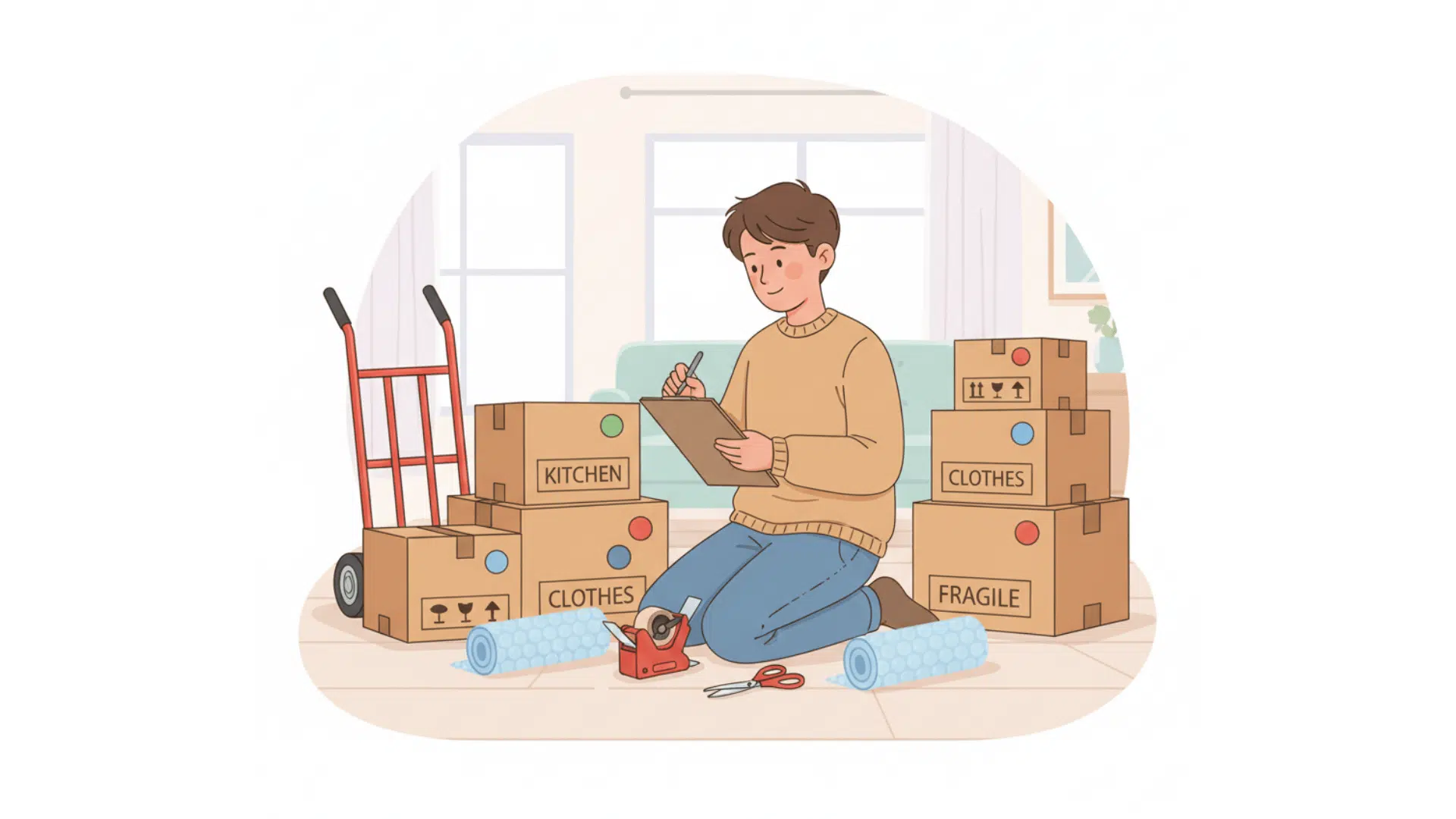
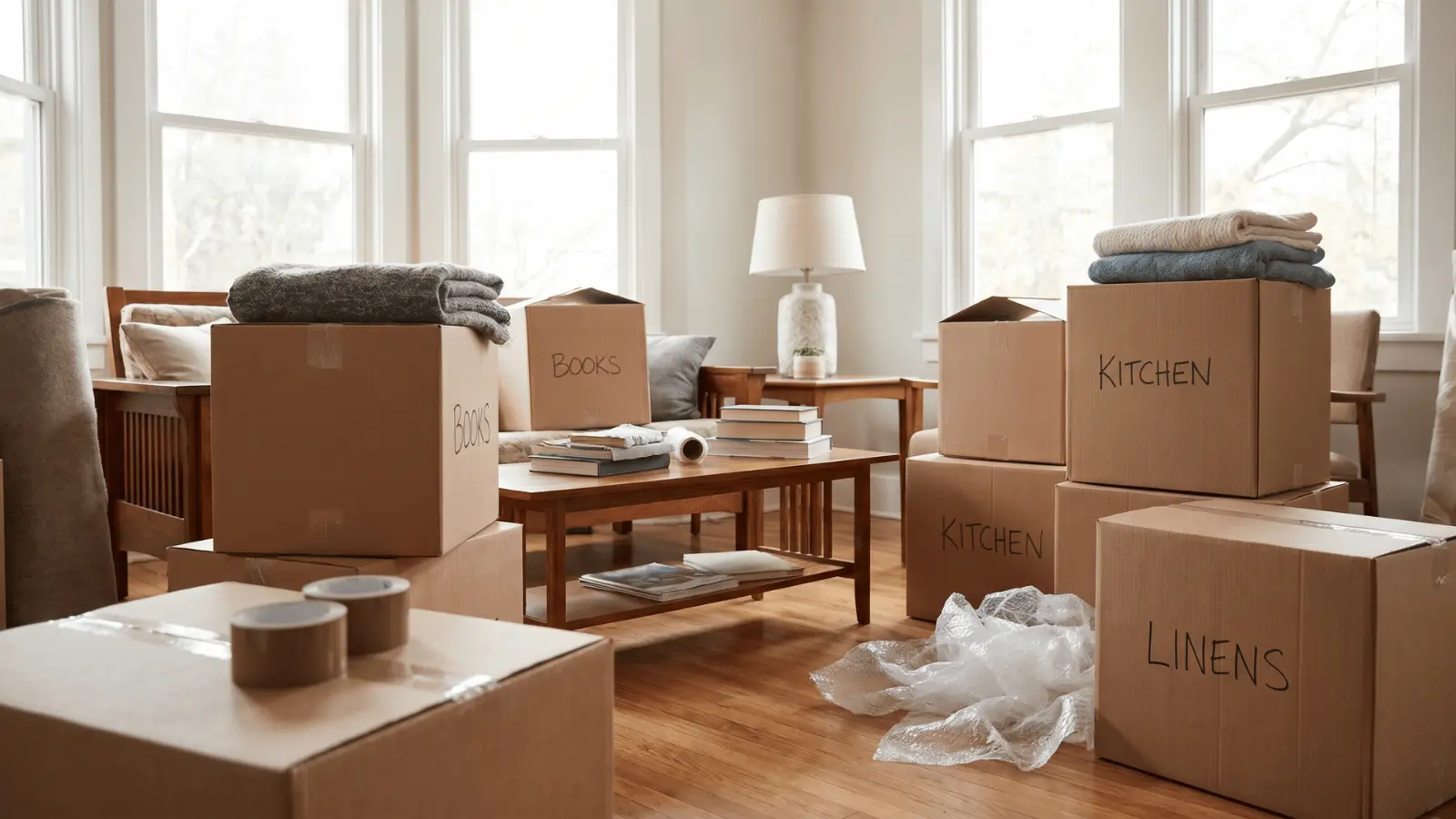
Most moving chaos at the destination comes down to one thing: boxes that don’t tell you anything useful. A box labeled “Kitchen” is fine. A box labeled “Kitchen > Plates & Glasses > FRAGILE > Open First” is the one that saves you 20 minutes of hunting.
Use this system on every box:
- Room name: write it large on at least two sides (not just the top; boxes get stacked)
- Contents summary: three to five items, enough to know what’s inside without opening it
- Priority: mark “Open First” on any box with items you’ll need in the first 24 hours
- Fragile: write it in large letters on the top and both sides; movers look at the sides, not just the top
- Color coding (optional but useful): use colored tape or markers by room. Blue for kitchen, red for bedroom, green for office. Put a matching colored label on the door of each room at the new place. Movers can route boxes without asking you every two minutes.
One rule that doesn’t get mentioned enough: label the sides of the box, not just the top. The moment boxes start stacking, the top label disappears. Side labels stay visible all the way through unloading.
Wrapping Up
Good packing tips for moving aren’t complicated; they just need to be followed in the right order. Now that you have a clear system, the next step is simple: start early, stay organized, and don’t skip the labels.
Every box you pack with intention is one less headache on moving day. And remember, the way you pack directly affects how fast you settle in.
The easier the unpack, the sooner your new place feels like home. Looking for more help with your move? Check out other blogs on moving checklists, home organization, and settling into a new space.
Frequently Asked Questions
Where can you get free moving boxes?
Check liquor stores, grocery stores, and Facebook Marketplace. People who’ve just moved often give boxes away for free. Just make sure they’re dry and sturdy before using.
How do you pack a kitchen for a move?
Start with rarely used appliances first. Leave one pan and basic cutlery for last. Wrap glasses individually, pack them upright, and seal all liquids in zip bags.
Can you move houseplants when moving?
Transport plants in your own vehicle, not the truck. Water them two days before, not right before. Check destination state rules for long-distance plant transport restrictions.
How do you pack jewelry for a move?
Never put jewelry on the truck. Thread necklaces through straws to avoid tangles. Use a pill organizer for small pieces. Carry high-value items personally on moving day.