If you are in the construction industry, or in any other industry in which you are thinking about finding the right ways to store some of your tools and equipment, then chances are that you have already started considering shipping containers. After all, these have evolved far beyond their, well, original purpose, that is the purpose of transporting cargo across the oceans. Sure, they are still largely used for that, but the truth is that they are also used for other purposes as well.
Understand what these are: https://en.wikipedia.org/wiki/Shipping_container
What kinds of other purposes, though? Well, to cut right to the chase, today they are actually widely used in construction sites, as well as industrial storage yards and warehouse projects. And they are used in those settings due to their durability, as well as their modularity and, of course, cost-effectiveness. Given that they bring so much to the table, it is no wonder, thus, that they have become so popular nowadays.
The thing is, though, choosing the right container size is absolutely critical when it comes to this, as it affects the storage capacity, as well as the transportation logistics and many more things. In short, it affects the overall project efficiency, which is why making the right decision here is of utmost importance. What is the right decision here, though?
Well, that is what we are here to find out. While the size that will best suit you will depend on your particular project and the purpose of using shipping containers, the truth is that there are some sizes that could be considered the best for construction and industrial warehouse projects. What we are going to do right now, thus, is talk about some of the best sizes that are commonly used in these cases, while also exploring some of their key features, as well as their ideal use cases, hoping to ultimately help you decide which one you want to get for yourself. Read more about the potential of shipping containers in architecture as well.
The 10-Foot Shipping Container
Okay, we are going to begin with a compact and a flexible option. That is, the smallest standard size that is available when it comes to shipping containers, and that can be perfect for those projects with limited spaces. 10 feet long, it offers a compact storage solution for your project, but without compromising durability. So, as you can understand, it is suitable for some tight spaces, and it is also quite easy to transport and reposition, which is a great plus that you should keep in mind when trying to decide which size to get for yourself.
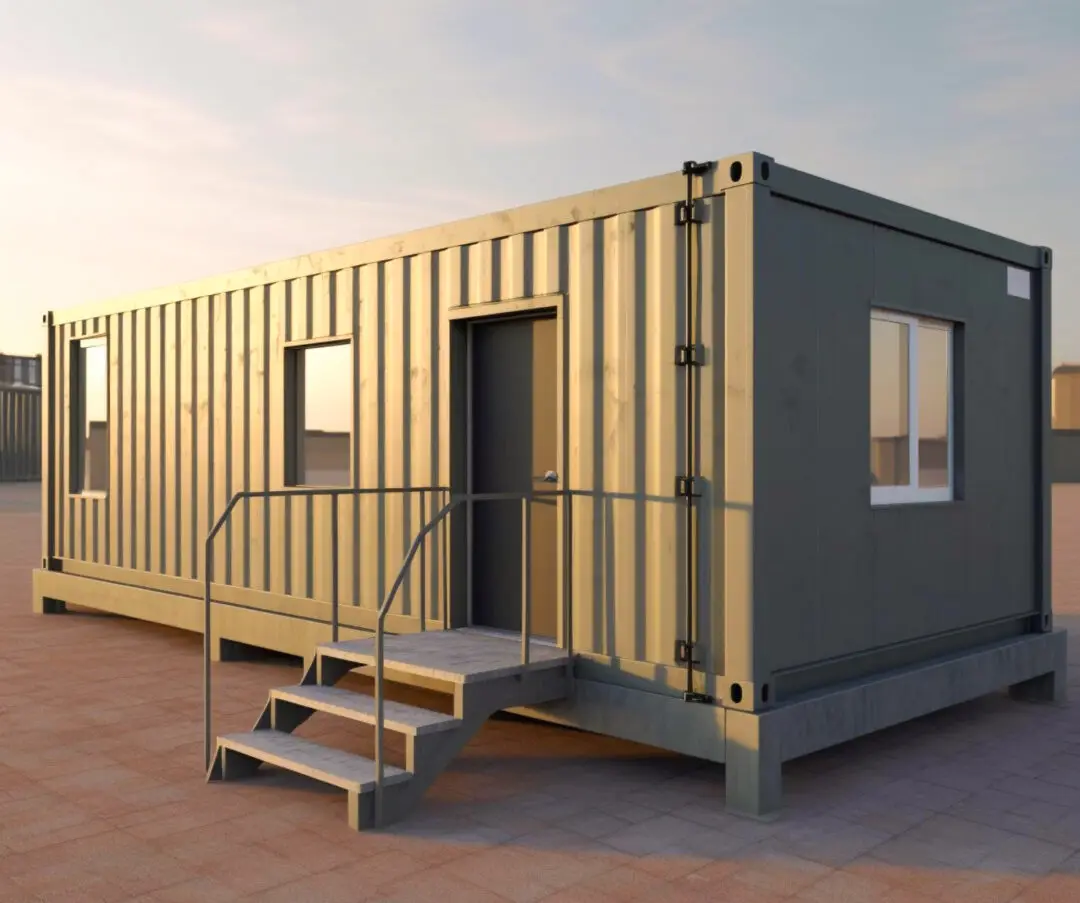
Now, this particular option can be ideal for different situations and circumstances. For example, it can be perfect for storing tools on a construction site, or as a small-scale industrial storage. But then, it can also be used as a temporary office or a guard cabin on those sites. Given its compact size, it tends to be particularly useful in those urban construction environments in which space is often constrained. So, you, as the contractor, can have secure on-site storage but without overcrowding the actual work area.
The 20-Foot Shipping Container
Now, the 10-foot option may be compact and flexible, but the truth is that construction and industrial warehouse projects often need a bit more. This is where the 20 ft shipping containers come into play, as the industry standard. Its dimensions offer a balanced combination of mobility and capacity, and it is often considered to be the backbone of not only the shipping, but also the construction industry. Furthermore, it is also quite versatile, meaning that you will easily get to find the option that works best for your project.
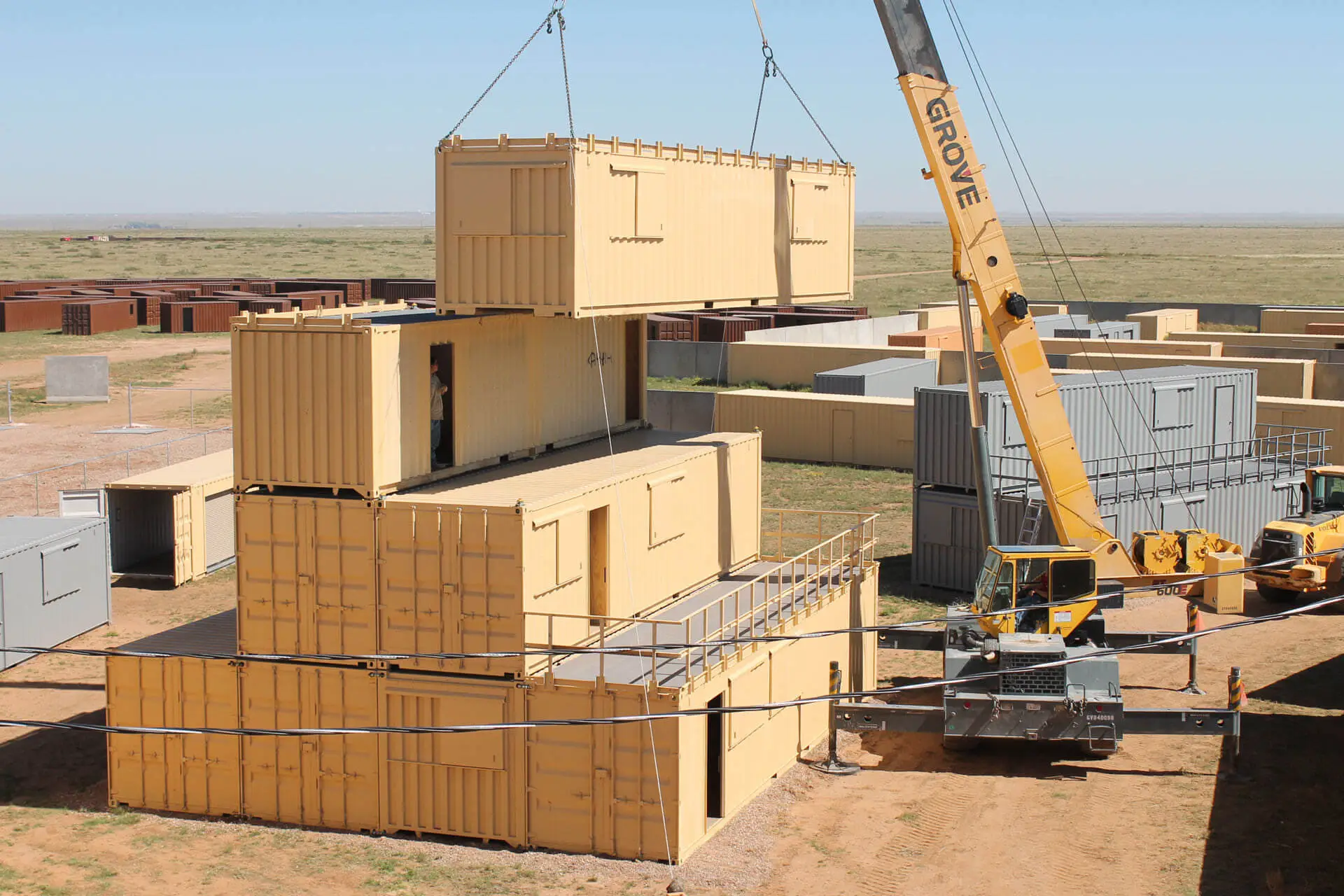
What are these best used for, though? Well, being considered the industry standard, the 20 ft shipping containers are used for a wide variety of purposes, from equipment and material storage to mobile workshops, and even modular construction units. This seems to be the perfect size, and it is widely used not only because it can fit into most job sites, but also because it is rather easy to transport. Furthermore, given that it serves as the baseline measurement unit in, well, global shipping, this particular container is widely available, so you won’t have trouble finding it for yourself.
The 40-Foot Shipping Container
If you are looking for a high capacity solution, then the 40-foot container could be your best option. It is a highly popular choice for those large-scale construction and industrial warehouse projects, offering nearly double the storage capacity of that standardized 20 ft. container. It also tends to be cost-efficient, and it is often used for bulk material storage, as well as for large equipment housing and as a warehouse extension.
The 40-Foot High Cube Container
Now, this one is similar in length to the standard 40-foot container, but it offers additional height. Meaning you get some extra vertical space, which allows you to significantly increase the internal storage volume, making this ideal for your warehouse applications and projects that require vertical stacking. They are often used for racking systems and shelving, as well as for some lightweight but bulky materials, and, of course, as modular container buildings. And these tend to be especially useful in those warehouse settings in which maximizing vertical space is important for efficiency.
The 45-Foot High Cube Container
Finally, another popular size is the 45-foot high cube container, offering maximum storage capacity, as it is the largest commonly available one. The extended length and the extended height together deliver amazing storage capacity suitable for those industrial-scale operations. They are often used for industrial warehousing, logistic hubs, as well as large modular construction projects. And, of course, they tend to be particularly useful for those businesses that tend to handle large volumes of goods or oversized materials, allowing you to reduce the number of containers needed and to thus improve operational efficiency. In the end, which size you will choose will depend on your particular project, your storage requirements, the site constraints, as well as your budget.