With the right approach, you can design a space that fits your fitness goals and daily schedule. A well-planned setup ensures that your gym remains functional, organized, and comfortable for long-term use.
In this blog, you’ll learn how to plan and build your own shipping container gym step by step.
You’ll also see how concepts used in a shipping container bunker can improve durability and structural integrity for long-term use.
Why Choose a Shipping Container Gym
A shipping container gym provides a dedicated, compact workout space that’s easy to customize. It works well for both beginners and experienced fitness enthusiasts who want control over their environment.
Its strong steel structure provides durability and stability. This makes it suitable for both indoor and outdoor setups while keeping your equipment safe.
Another advantage is the flexibility it offers in design and placement. You can set it up in your backyard, terrace, or any available space, making it a convenient option for creating a personal fitness zone without major construction.
Planning Your Shipping Container Gym
Proper planning helps you create a gym that fits your workout needs and available space. It ensures that your setup is organized, safe, and comfortable to use daily.
A few factors to take into consideration before building your shipping container gym:
- Space Layout: Plan where each piece of equipment will go to avoid crowding and ensure smooth movement during workouts.
- Budget: Decide how much you want to spend on materials and setup to keep your project within limits.
- Location: Choose between indoor and outdoor placement, as this affects durability and overall use.
- Ventilation: Ensure proper airflow to keep the space comfortable and suitable for regular workouts.
A clear plan makes your gym more efficient and easier to use.
Materials and Equipment Needed
Choosing the right materials ensures your gym is durable, safe, and comfortable for regular use. A well-prepared setup not only improves your workout experience but also reduces maintenance issues over time.
| Feature | Purpose | Benefit |
|---|---|---|
| Steel container structure | Provides a strong and stable base | Ensures durability and supports heavy gym equipment |
| Rubber flooring for safety | Reduces impact during workouts | Helps prevent injuries and protects joints |
| Insulation for temperature control | Regulates internal temperature | Keeps the space comfortable in hot or cold weather |
| Ventilation fans for airflow | Improves air circulation | Prevents heat buildup and keeps the space fresh |
| Lighting for visibility | Enhances visibility inside the gym | Allows safe and effective workouts at any time |
When selecting materials, focus on strength, safety, and functionality. A solid base and proper setup help you use your shipping container gym efficiently without frequent repairs or adjustments.
Step-by-Step Shipping Container Gym Setup
Building your gym step by step helps you stay organized and reduces the chances of errors. A clear process ensures each stage is completed properly, resulting in a functional, comfortable shipping container gym.
Step 1: Prepare the Container

Start by thoroughly cleaning the container and inspecting its condition. This step ensures your base structure is safe and ready for modification.
What you should do:
- Remove dirt, rust, and debris
- Inspect for dents or structural damage
- Apply anti-rust coating and primer
- Seal any visible cracks or gaps
Step 2: Modify the Structure

Once the container is ready, make necessary structural changes to improve usability. This includes adding openings and ensuring proper airflow.
What you should do:
- Cut space for doors and windows
- Add ventilation openings
- Reinforce cut areas with steel frames
- Smooth, sharp edges for safety
Step 3: Install Flooring and Insulation

This step improves comfort and safety inside your gym. Proper flooring and insulation make your workouts more effective and comfortable.
What you should do:
- Install rubber flooring for shock absorption
- Add insulation panels to the walls and ceiling
- Seal gaps to maintain temperature control
- Ensure flooring is level and secure
Step 4: Set Up Equipment

Now you can arrange your gym equipment based on your layout plan. Proper placement ensures smooth movement and better use of space.
What you should do:
- Place heavy equipment along walls
- Keep open space for movement and exercises
- Organize smaller equipment on racks
- Ensure easy access to all workout zones
Step 5: Add Lighting and Finishing Touches

Final touches improve usability and make your gym more functional. Good lighting and organization enhance your overall experience.
What you should do:
- Install LED or overhead lighting
- Add mirrors for better workout form
- Set up storage racks and hooks
- Keep the space clean and organized
Following these steps makes building a container gym more manageable.
Safety Features to Include
Safety is important to ensure your workouts remain comfortable and injury-free. A well-equipped setup not only reduces risks but also improves how efficiently you can use your gym.
| Feature | Purpose | Benefit |
|---|---|---|
| Ventilation System | Maintains proper airflow inside the container | Prevents suffocation, reduces heat buildup, and keeps workouts comfortable |
| Non-slip Flooring | Provides grip and shock absorption | Reduces chances of slips, protects joints, and supports intense workouts |
| Emergency Exit Option | Provides an additional way out if needed | Improves safety during emergencies and adds an extra layer of protection |
| Reinforced Doors and Locks | Secures the entry points of the container | Protects equipment and ensures controlled access |
| Temperature Control (Fans/Insulation) | Regulates internal temperature | Keeps the gym usable in different weather conditions |
| Fire Safety Equipment | Includes fire extinguishers or alarms | Reduces risk in case of electrical or equipment-related incidents |
Budget and Cost Considerations
Planning your budget helps you manage your expenses effectively and avoid overspending. When you break down the costs in advance, it becomes easier to prioritize essential elements and make better decisions for your gym setup.
- Cost of the container: Typically ranges from $2,000 to $6,000, depending on size, condition, and location. Used containers are more affordable, while new ones cost more but require less repair work.
- Equipment expenses: Can range from $500 to $5,000 or more based on your fitness goals. A basic setup with dumbbells and a bench is cheaper, while full machines and racks increase the total cost.
- Installation and setup costs: Usually fall between $1,500 and $8,000. This includes insulation, flooring, ventilation, cutting openings, and basic electrical work for lighting and fans.
- Maintenance requirements: Expect around $200 to $1,000 per year. This covers cleaning, minor repairs, and keeping equipment in good working condition.
A shipping container gym can be more cost-effective than traditional setups when you plan carefully and focus on essential features first.
Shipping Container Gym Ideas

Different designs let you customize your gym to your fitness goals. Choosing the right design helps you use space effectively and maintain a smooth workout flow.
1. Compact Gym Setup
This setup works best for small spaces where keeping things simple matters.
Items like dumbbells, resistance bands, and a foldable bench give enough variety for strength and flexibility training. Wall-mounted storage helps keep everything organized and easy to access.
The layout stays clean and open, making it easier to move around during exercises. This setup also requires a lower budget compared to larger gym designs. Overall, it’s a smart way to stay active without needing much space.
2. Full Workout Gym
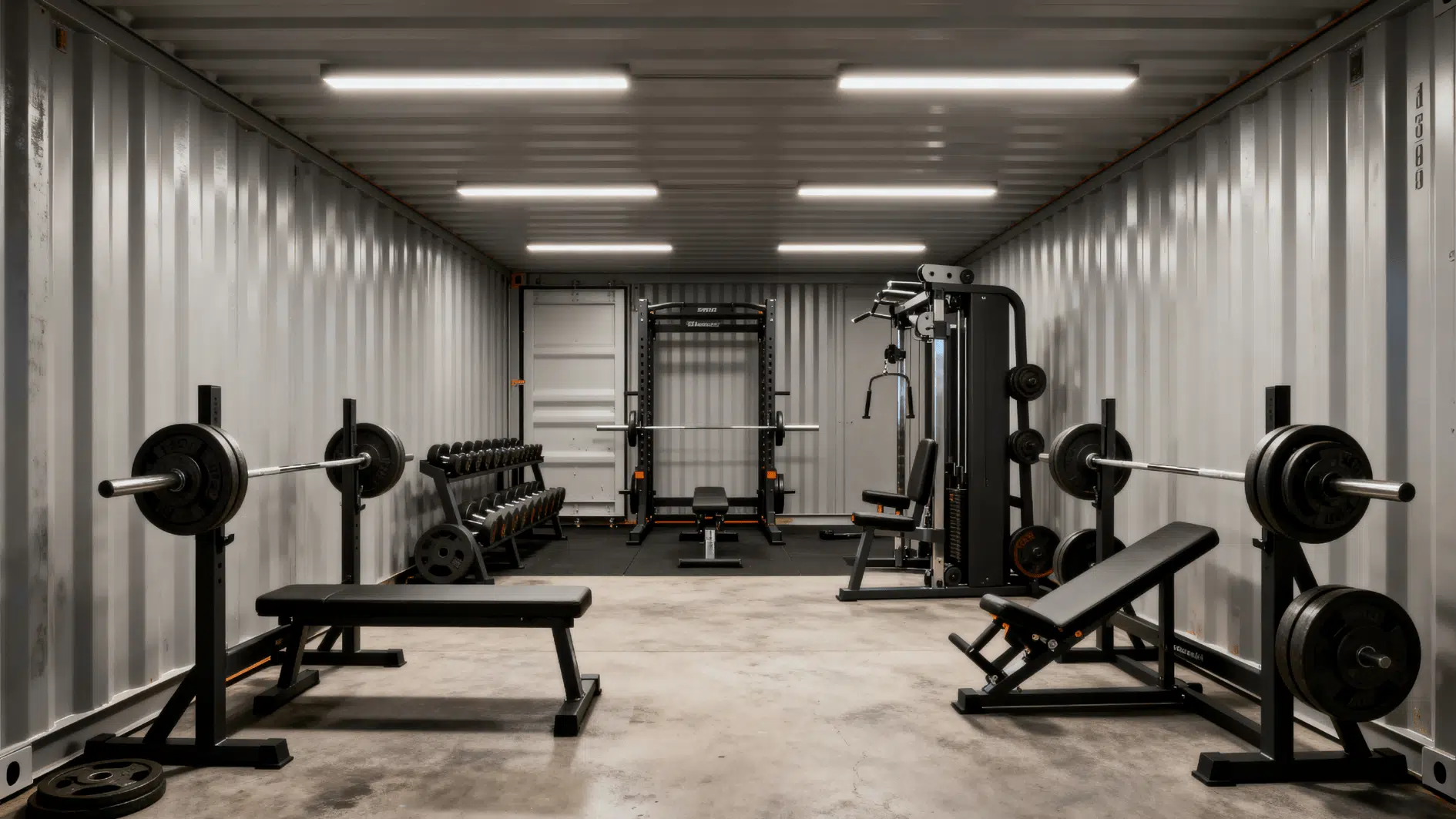
A full workout gym setup is designed for those who want access to a wide range of exercises in one place.
It includes cardio machines, strength-training equipment, and a dedicated free-weight area. This setup allows for a balanced fitness routine covering endurance, strength, and flexibility.
It works well for regular users who want a complete home gym experience. The layout needs more planning to ensure enough space for movement and safety. While it may cost more, it offers long-term convenience and flexibility.
3. Outdoor Bootcamp Hub
This idea extends your gym beyond the container, using the outdoor area as well. It allows you to create a flexible workout space that combines indoor and outdoor training.
Equipment like ropes, tires, and open workout zones support high-intensity and functional exercises. It’s a great option for group workouts or varied training routines.
4. Personal Home Gym Container
This setup is fully customized to match your personal fitness goals and preferences. You can choose equipment, layout, and design based on how you like to train. It focuses on creating a private and distraction-free workout environment.
The compact and organized layout makes it easy to use every day. It’s ideal for people who value convenience and consistency in their routine.
Customization also allows you to adjust the setup over time. This makes it a flexible and long-term fitness solution.
Maintenance and Upkeep
Keeping your gym well-maintained helps it stay safe, clean, and ready for daily use.
- Clean equipment regularly: Wipe down machines, weights, and surfaces to prevent dust and sweat buildup. This keeps the space hygienic and reduces wear over time.
- Check ventilation and airflow: Ensure fans and vents are working properly to maintain a steady flow of fresh air inside. Good airflow improves comfort and prevents overheating during workouts.
- Inspect the structure for damage: Look for rust, cracks, or weak spots in the container. Fixing small issues early helps avoid costly repairs later.
- Keep the space organized: Arrange equipment neatly to avoid clutter and reduce the risk of accidents. An organized setup also makes workouts more efficient.
- Monitor flooring condition: Check rubber flooring for wear or damage that could affect safety. Replacing worn sections helps prevent slips and injuries.
- Maintain electrical and lighting systems: Ensure lights, wiring, and switches are working properly. Good lighting improves visibility and overall safety during workouts.
Conclusion
Building a shipping container gym is a practical way to create a personalized workout space that fits your lifestyle.
With proper planning, the right materials, and a clear setup process, you can create a gym that effectively supports your fitness routine.
By applying structured ideas, including those inspired by a shipping container bunker, you improve durability and long-term usability.
This approach helps you build a space that is not only functional but also comfortable for daily use.