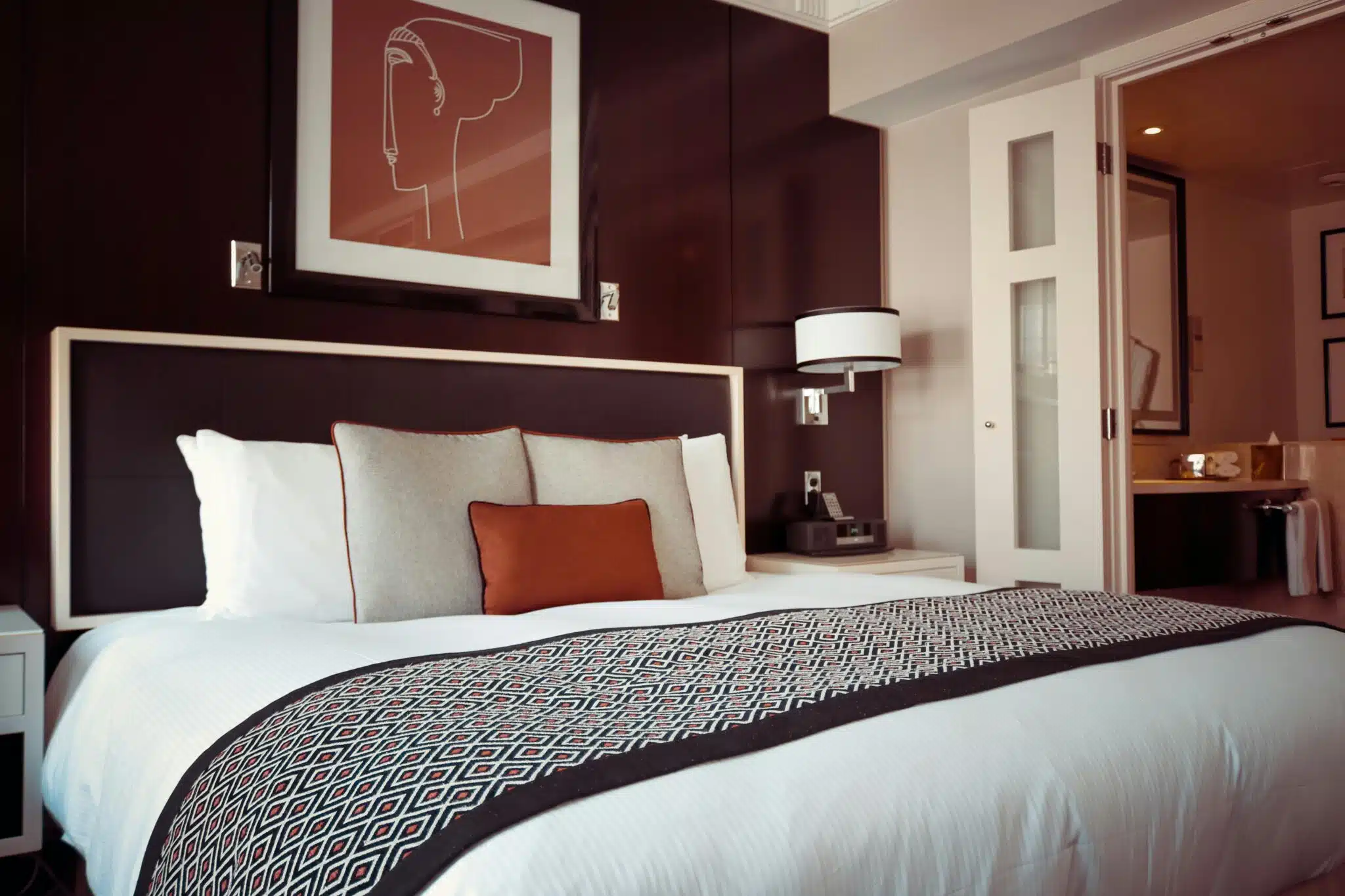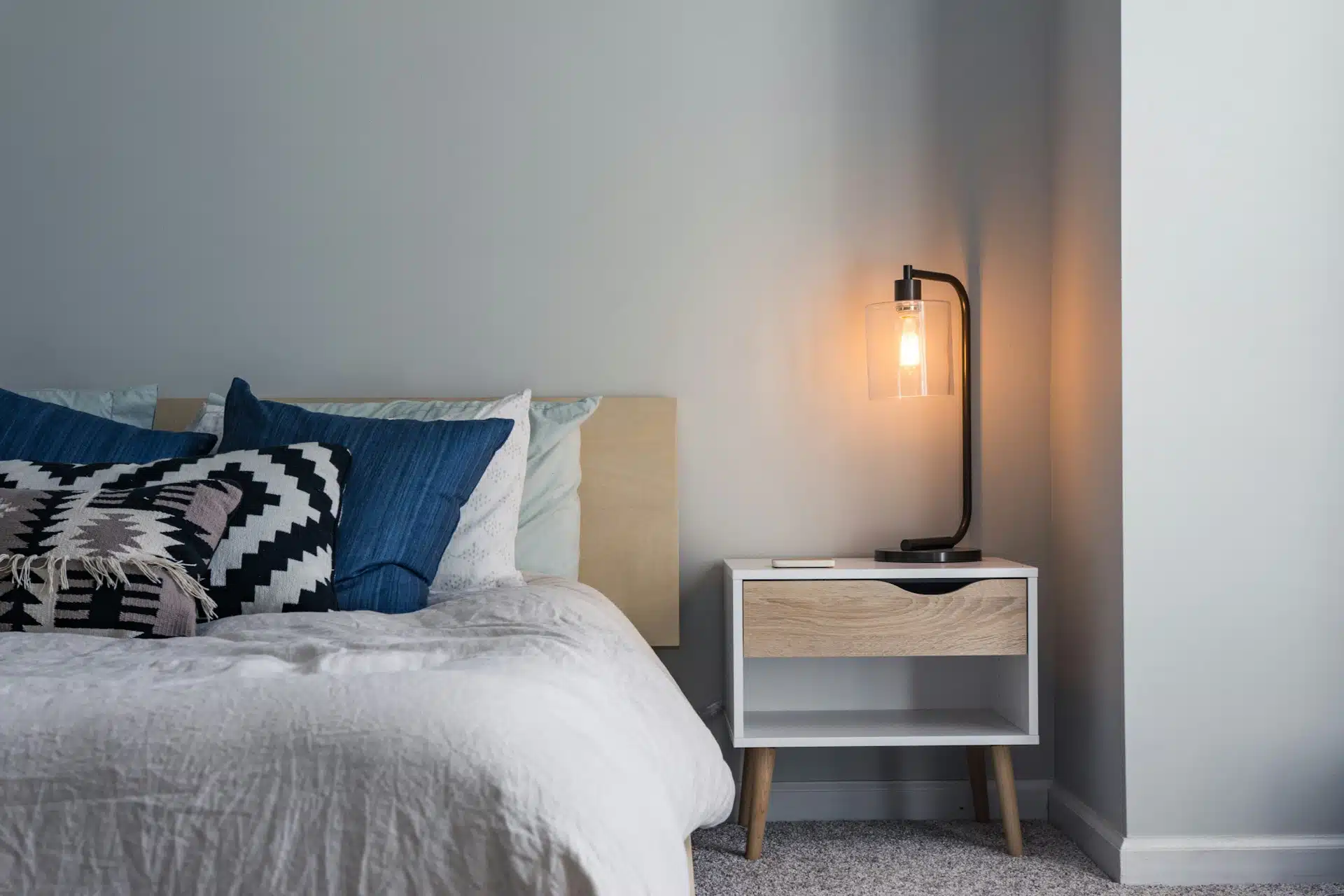
Your room feels cramped as you walk in and feel the walls closing in. It’s suffocating. Smaller than it should be. It’s probably not the room. It’s the lighting.
Bad lighting doesn’t just make a space feel darker, but it can make it feel unsafe. It makes it feel smaller, cramped, and closed in. It literally shrinks your room.
I spent years thinking my bedroom was just small. Then I fixed the lighting, and suddenly it felt completely different. Bigger, more open, and breathable.
The room hadn’t changed. The lighting had. Here are the lighting mistakes that are making your space feel smaller—and how to fix them.
Lighting That Shrinks Rooms vs. Lighting That Opens Them
|
Lighting Approach |
Effect On Space |
Why It Fails |
What Works Instead |
|---|---|---|---|
|
Too Dark |
Feels cramped |
Shadows close things in |
Bright, even light |
|
Only Overhead Light |
Flat and small |
No depth |
Layered lighting |
|
Wrong Color Temperature |
Cold or yellow-tinted |
Unnatural feel |
Warm white balance |
|
Single Dark Corner |
Creates shadows |
Uneven light makes small |
Even illumination |
|
Heavy Dark Fixtures |
Visually heavy |
Takes up space |
Minimal, bright fixtures |
|
No Accent Light |
Boring and flat |
Lacks dimension |
Accent lighting adds depth |
The Science Behind Light And Perceived Space
Lighting fundamentally changes how big a space actually feels. It’s not just about seeing better. It’s about perception and about how your brain interprets the space around you.
Dark rooms feel closed in. Your brain fills the shadows with unknown space. Everything contracts. Bright rooms feel open. Your eye can see to the edges, while everything expands.
Interior designer and lighting specialist Marcus Johnson explains it clearly: “Light doesn’t just illuminate space—it changes perception of space fundamentally. A small room with terrible lighting feels claustrophobic. That same room with proper lighting feels open and airy. The actual square footage hasn’t changed. Only the perception. That’s the power of lighting design.”
That’s exactly what Light House Co understands about lighting. It’s not just about brightness. It’s about how light changes the way space feels.
Common Lighting Errors That Make Spaces Feel Cramped
1. Darkness Is Closing You In
I lived in dark rooms for years, thinking I was just sensitive to light. I liked dimness and preferred darker spaces.
Then one day, I actually tried brightening my bedroom. Real brightness, not dim ambient light, but real illumination. The room suddenly felt twice as big. The walls pushed back and felt open
Darkness doesn’t make a space feel cozy. It makes it feel small, while shadows eat spaceand make walls feel closer.
What happens:
- Dark rooms feel closed in
- Shadows make space disappear
- Brightness opens everything up
- Light pushes walls back
2. One Ceiling Light Isn’t Enough
I had one overhead fixture for years. It was efficient, with a single light source and a single switch. But my room felt flat, dimensionless. Like a hospital room or a classroom. Boring and small.
A single overhead light creates flat lighting. No depth and visual interest. Just bright from above, dark around the edges. That flatness makes space feel smaller.
What happens:
- Creates flat, dimensionless space
- No depth or visual interest
- Looks institutional
- Layering creates dimension
3. Wrong Color Temperature Throws Off Perception
I had a light that cast a yellow-orange glow on everything. It felt warm but claustrophobic, like being inside a cave with firelight. Cozy, maybe, but small.
Then I switched to a cooler white light, and immediately the space felt bigger, fresher, and more open.
Color temperature affects how space feels. Yellow makes things feel warm and intimate. Which means small and enclosed, while white opens everything up.
What happens:
- The wrong temperature feels unnatural
- Throws off perception
- Warm white opens space
- Color affects how a space feels
4. Dark Corners Create Invisible Walls
I ignored the dark corner in my bedroom. Just let it be dark. I didn’t think about it. Then one day, I added a light to that corner, and everything changed. Suddenly, the corner no longer existed as a visual barrier. It was just part of the room.
Before, that dark corner made the room feel smaller, but my eye couldn’t go there. The space contracted around it.
Lighting that corner eliminated the visual boundary.
What happens:
- Unlit corners disappear
- Shadows make space contract
- Even light expands perception
- No dark zones
When Fixtures Themselves Make Rooms Feel Smaller
1. Oversized Fixtures Dominate Small Spaces
A big chandelier in a small room doesn’t create elegance. It creates clutter. The fixture itself takes up visual space. It draws your eye to the fixture instead of the room.
Small spaces need minimal fixtures. Ones that disappear, that let the space breathe.
2. Dark Heavy Fixtures Visually Weigh Down
A big dark fixture in a small room feels oppressive. It sits there, heavy and dark, visually taking up space, even if it’s not occupying physical space.
Light, minimal fixtures don’t compete with the room. They serve it.
3. Minimal Fixtures Let Space Breathe
In small spaces, less is more. A simple white fixture, barely visible recessed lights, or wall sconces that disappear into the wall.
These fixtures serve the light, not compete with it. They let the room breathe.
4. Fixture Choice Affects Perception
Choose fixtures that emphasize light, not themselves. Transparent fixtures, like white fixtures, small fixtures, and fixtures that fade into the background, so the light itself is the focus.
What Actually Makes Rooms Feel Bigger
1. Layered Lighting Creates Dimension
I used to think more light meant brighter light. Then I realized that more light sources mean more dimension.
One light is flat. Three light sources create depth while your eye travels around the room, and complexity makes the space feel larger.
Layering lighting creates visual interest while mirrors make rooms feel bigger.
What this does:
- Depth makes space feel bigger
- Different light levels create interest
- Avoids a flat, cramped feeling
- Visual complexity feels larger
2. Bright White Light Pushes Walls Back
This is the single biggest difference I’ve noticed. Bright white light makes walls feel farther away. Like they’ve retreated, and the space expands.
Not harsh or bright, just bright white, naturally bright like sunlight.
That brightness is magic for small spaces.
What this does:
- Brightness makes space expand
- Light feels more open
- White light lifts perception
- Illuminated space feels larger
3. Accent Lighting Adds Visual Depth
I added accent lighting, and suddenly my room felt interesting. A light on a shelf, a light on artwork, and many points of light around the room.
These don’t create brightness; they create depth while they give your eyes places to travel. That journey makes space feel bigger.
What this does:
- Draws eye around the room
- Creates visual interest
- Makes space feel complex
- Complexity = perceived size
4. Even Illumination Removes Shadows
Uneven lighting makes spaces feel disjointed. Bright here, dark there. Your eye bounces around, and the space feels fragmented. Even illumination feels cohesive. Your eye relaxes while the space feels whole. Bigger.
What this does:
- No hidden shadowy areas
- Full visibility makes the space bigger
- Walls feel farther back
- Open and airy feeling
Minimal fixtures let space breathe without competing for attention. A rechargeable lamp gives you flexibility without the visual weight of traditional fixtures. You can place light exactly where you need it. Move it if necessary. No permanent installation boxing you in visually.
How To Fix Lighting In Rooms That Feel Small
1. Add More Light Sources
Stop relying on one overhead fixture. Add wall sconces and table lamps, accent lights, and multiple sources to create depth and dimension.
2. Use Bright White Bulbs
Not harsh, not yellow. Use bright white.
Most bulbs come in different color temperatures. Get the bright white ones, and your space will feel completely different.
4. Choose Minimal Fixtures
In small spaces, fixtures should disappear. White fixtures, clear fixtures, small fixtures. Anything that lets the light be the focus, not the fixture itself.
5. Illuminate Every Corner
No dark corners or shadowy zones. Every part of your room deserves light, especially the corners. They’re where space contracts. Light pushes them back.
6. Layer Your Lighting
One light source is never enough. Overhead light, wall sconce light, table lamp light, accent light, and different levels create dimension.
Small Room Lighting By Room Type
Small bedrooms need different approaches than small bathrooms. For bedrooms, layer between bright and soft: bright light during the day and softer light in the evening. Wall sconces work great for this. For bathrooms, bright white light near mirrors. Even illumination throughout. No dark corners.
For offices, bright white overhead combined with task lighting. Your eyes need brightness for focus, but avoid harsh shadows.
For living rooms, layering is key. Multiple light sources at different heights and intensities. Creates the coziness of a small space without the claustrophobia.
Frequently Asked Questions
1. Does lighting really affect how big a room feels?
Absolutely. It’s not just about brightness. It’s about perception. Dark rooms feel small, while bright rooms feel open.
2. What color temperature makes rooms feel bigger?
Bright white light, not yellow, not warm. Neutral to cool white. It opens space and makes everything feel bigger and fresher.
3. How many light sources does a small room need?
At least three. Overhead, one wall or task light, the accent light. Three sources create depth. Depth creates perceived size.