Wind power often gets praised in quick lists. It’s labeled clean, renewable, affordable, and good for jobs. But those words can blur together after a while.
What does “renewable” actually mean? Does “zero emissions” really mean zero impact? And if wind is so cheap, why does building turbines cost so much?
When I read about this topic, I often see the benefits laid out quickly without much explanation behind them. When that context is missing, it’s easy to make assumptions about how things actually work.
Here, I’ll break down the real advantages of wind energy step by step. We’ll look at how each benefit works, why it shows up, and where the limits are.
By the end, you won’t just recognize the claims. You’ll understand the system behind them.
What Makes Wind Energy a Renewable Resource?
When people say wind is renewable, they usually mean it doesn’t run out like coal or oil. That part is true, but the reason is more interesting.
Wind begins with the sun. The sun heats the Earth unevenly, and land, water, and air all warm at different speeds. That uneven heating creates pressure differences in the atmosphere. Air naturally moves from high-pressure areas to low-pressure areas, and that moving air is wind.
This cycle keeps repeating as long as the sun continues to warm the planet. Atmospheric circulation regenerates wind over and over on human timescales. That is why it qualifies as renewable.
But renewable does not mean steady everywhere. Wind shifts by location, season, and even time of day. Coastal regions often see more consistent wind. Some inland areas see much less. One week may be strong and the next calmer.
So the advantage is not that wind is always blowing hard. The advantage is that the natural process creating wind keeps renewing itself. Unlike fossil fuels, we are not draining a stored supply. We are using a flow that keeps being recreated.
Why Wind Energy Produces Electricity Without Direct Emissions
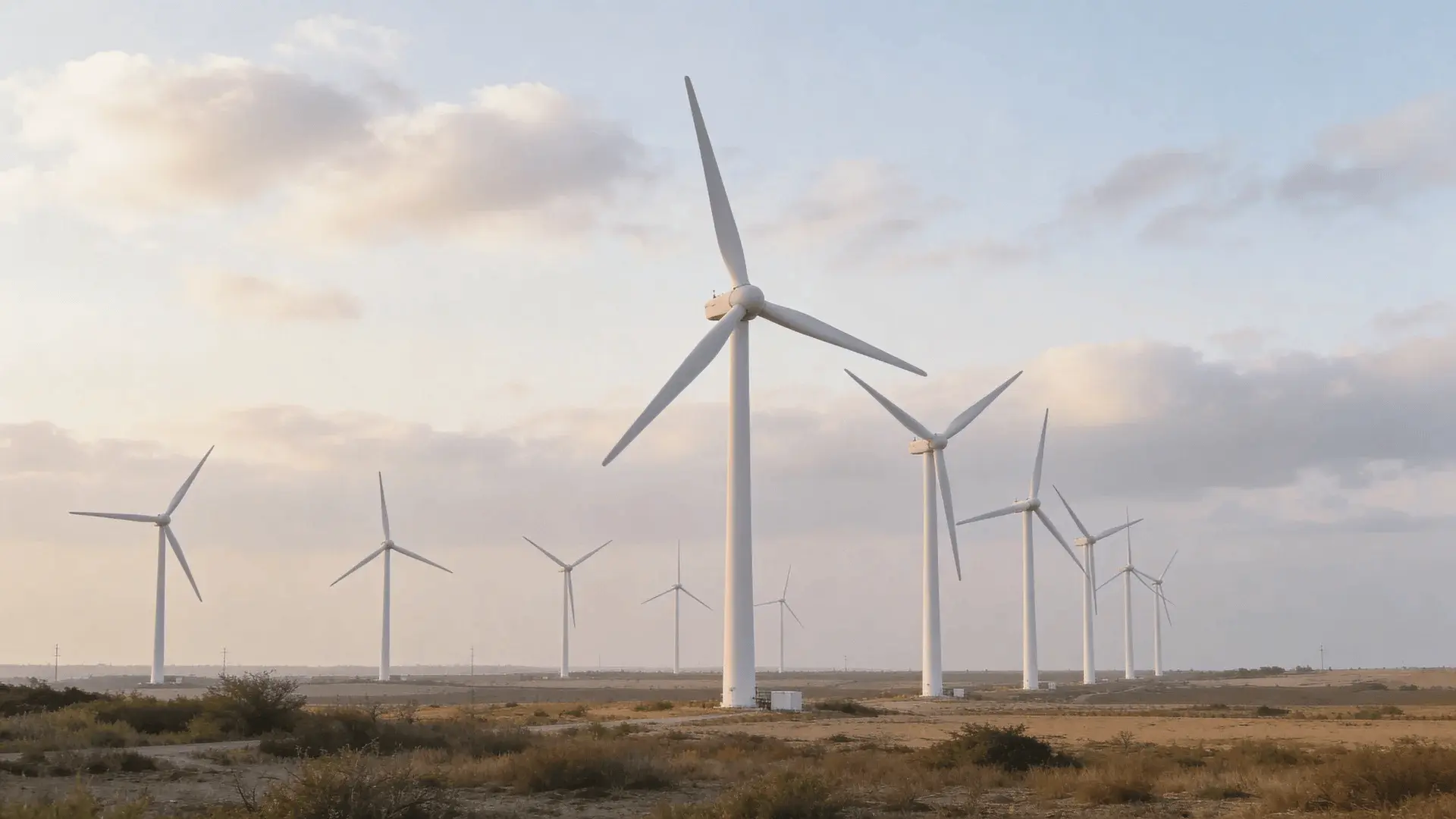
Wind energy avoids direct emissions because it relies on motion, not combustion, to generate electricity. The difference lies in how power is created at the source.
- Wind turns the blades – Moving air pushes against turbine blades, causing them to spin.
- Mechanical rotation replaces combustion – The spinning blades turn a shaft connected to a generator, avoiding any fuel-burning process.
- Electricity is created through magnetism – Inside the generator, magnets and copper coils convert rotational energy into electrical energy.
- No fuel is required – There is no coal, oil, or natural gas being burned to create heat.
- No greenhouse gases during operation – Because nothing is burned, carbon dioxide, nitrogen oxides, and sulfur dioxide are not released while generating electricity.
- No steam cycle involved – Unlike fossil fuel plants, wind turbines do not boil water or produce steam to spin turbines.
- Lower ongoing air pollution – The absence of combustion means no smoke stacks or exhaust emissions during daily operation.
- Lifecycle impact still exists – Manufacturing, transporting, and installing turbines create emissions, but these occur outside of operational electricity generation.
The key advantage is specific: wind turbines generate electricity without direct emissions during operation. That distinction is what separates wind power from combustion-based energy sources.
How Wind Energy Reduces Operating Costs Compared to Fossil Fuels
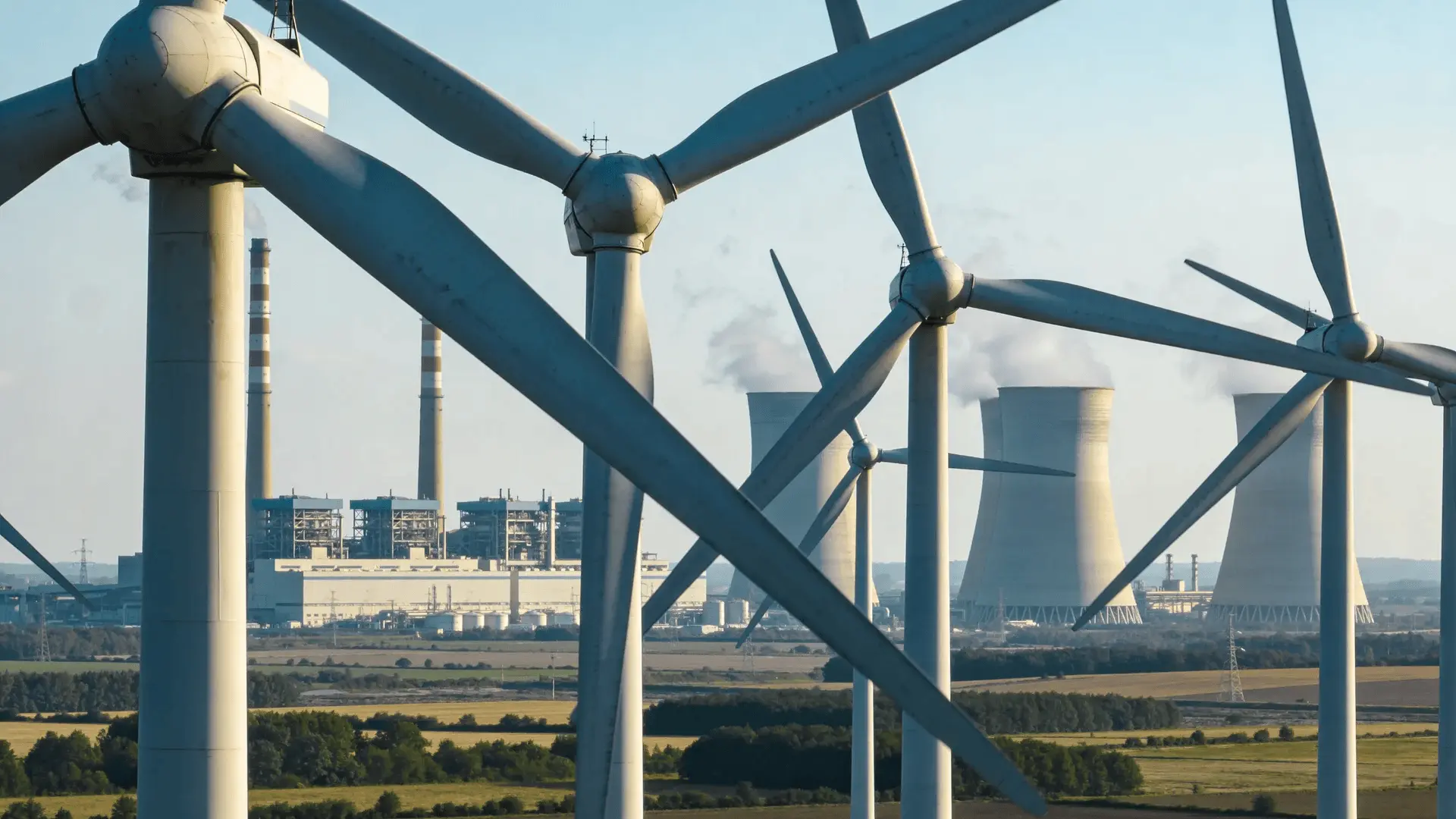
One of the strongest advantages of wind energy lies in how its costs are structured.
The wind itself is free. There is no fuel to extract, refine, transport, or purchase. After construction, the main costs are maintenance and occasional component replacement.
This creates a different financial pattern. Wind energy requires significant upfront investment for turbines, site preparation, and grid connections. Once built, however, the marginal cost of producing additional electricity stays low.
Fossil fuel plants follow another path. Even if construction costs are manageable, they depend on continuous fuel purchases. Coal must be mined and shipped. Natural gas must be drilled and delivered. Prices rise and fall.
With wind, there is no fuel price volatility. Operating expenses tend to remain more stable over time.
That does not mean wind is inexpensive to install. This is where confusion often creeps in. Low-cost electricity over the long term does not equal low construction cost at the beginning. The advantage appears over years of operation because fuel expenses never enter the equation.
How Wind Energy Contributes to Economic Growth and Jobs
Wind energy projects influence local economies at multiple stages, not just when turbines start spinning. The economic impact spreads across manufacturing, construction, and long-term community participation.
| Economic Layer | How It Contributes | Who Benefits |
|---|---|---|
| Manufacturing | Production of turbine blades, towers, gearboxes, and control systems supports factories and supply chains beyond the wind farm site. | Factory workers, suppliers, logistics providers |
| Installation & Construction | Transporting equipment, preparing foundations, assembling turbines, and connecting to transmission lines create short- to mid-term project jobs. | Construction crews, engineers, transport services |
| Operations & Maintenance | Ongoing inspections, repairs, part replacements, and system monitoring sustain long-term technical roles. | Technicians, maintenance teams, monitoring staff |
| Land Lease Income | Property owners lease land for turbines, generating steady payments over many years. | Farmers, ranchers, rural landowners |
| Local Tax Revenue | Wind facilities contribute property taxes that support public services and infrastructure. | Schools, road systems, local governments |
| Rural Economic Stability | Consistent project income circulates within local communities, supporting small businesses and services. | Broader rural economy |
The benefit goes well beyond electricity production. Wind projects create layered economic activity that supports jobs, landowners, and public services over the long term.
Why Wind Farms Can Share Land with Other Activities
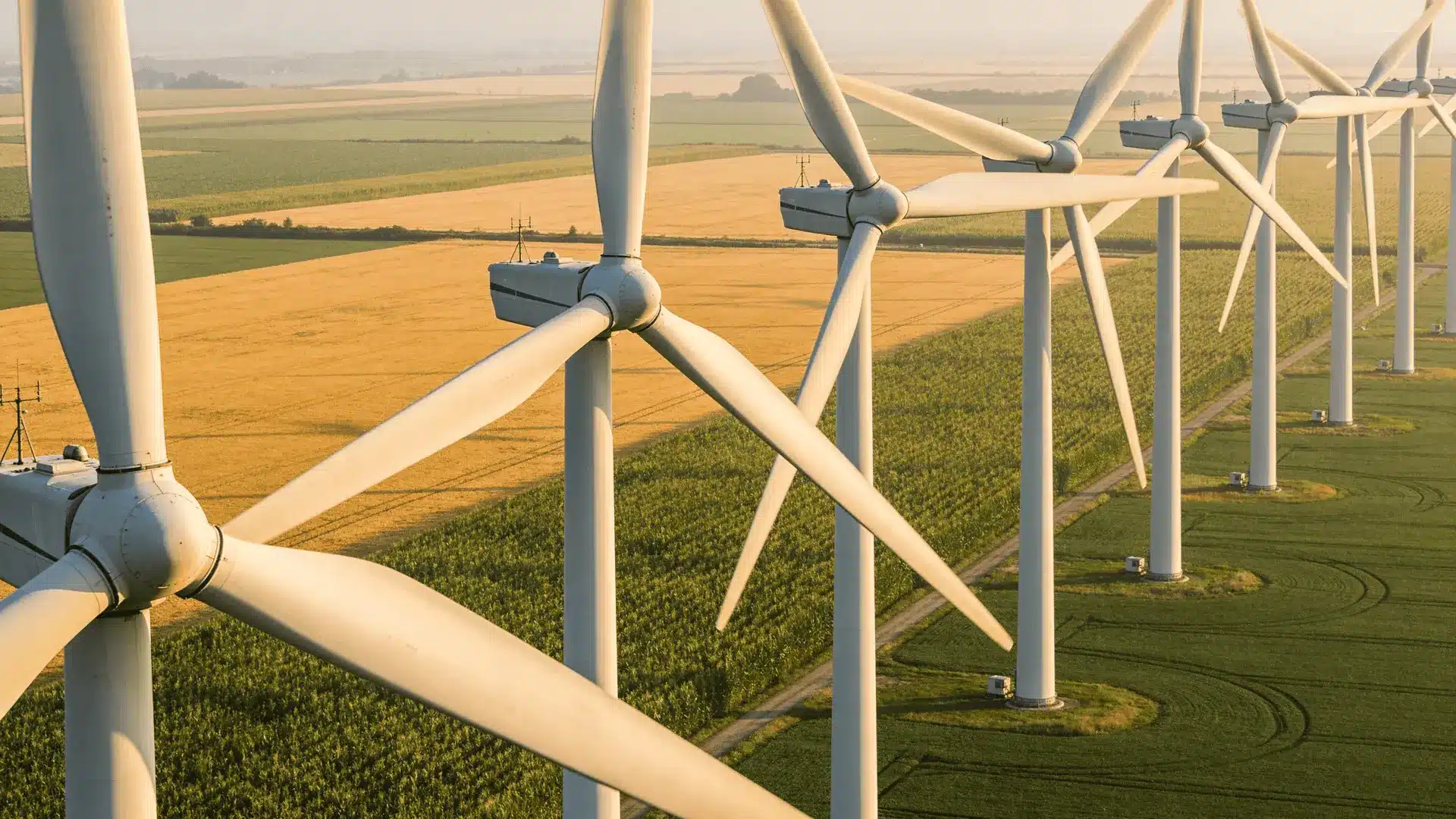
Wind farms may look like they dominate large areas, but the physical footprint tells a more detailed story.
Each turbine stands on a base that occupies a relatively small section of ground. Turbines are spaced apart so they do not block each other’s wind, which makes the project appear expansive on a map.
However, much of the land between turbines remains usable. Farmers can continue growing crops. Ranchers can graze livestock around the structures. Energy production and agriculture can operate side by side.
This differs from some other energy facilities that require fully dedicated sites.
Offshore wind follows a separate pattern. Turbines are placed in coastal waters, where wind speeds are often stronger and more consistent. This reduces land competition but introduces marine planning considerations.
A common misconception is that wind farms permanently consume entire landscapes. In practice, most of the land often stays productive. The limits still matter, including visual changes and local environmental factors, but shared use remains one of the structural advantages.
How Wind Energy Supports Energy Security and Domestic Supply
Wind energy strengthens energy security because it relies on a local resource and does not depend on imported fuel.
- Domestic and locally available resource – Wind is generated within national or regional borders, allowing electricity production without relying on foreign fuel supplies.
- No fuel imports and reduced price volatility – Because turbines require no purchased fuel, electricity generation is less exposed to global supply disruptions, geopolitical events, or sudden fuel price spikes.
- Diversified energy mix lowers risk – Adding wind to the grid spreads dependence across multiple sources, reducing vulnerability if one fuel type faces shortages or outages.
- Geographic distribution improves resilience – Wind farms in different regions help balance output, so if wind slows in one area, another location may still produce power.
- Supports stronger domestic production capacity – Expanding wind increases the share of electricity generated internally, strengthening national supply stability.
- Balanced energy independence – Wind reduces reliance on imported fuels but works alongside other energy sources rather than replacing them entirely.
The key advantage is greater stability. By using a domestic, fuel-free resource, wind energy helps reduce exposure to global supply risks while supporting a more resilient power system.
Why Wind Energy Uses Virtually No Water During Operation
Many traditional power plants depend on steam cycles.
In coal and nuclear facilities, fuel heats water into steam. That steam spins a turbine, and afterward it must be cooled back into liquid form so the cycle can continue.
Cooling systems require large amounts of water. Plants may withdraw water from rivers or lakes, and some lose significant volumes through evaporation in cooling towers.
Wind turbines bypass that process entirely. They rely on mechanical rotation. Wind turns the blades, and the generator converts motion directly into electricity. No cooling water is needed during normal operation.
This difference becomes important in water-stressed regions. Reducing water demand eases pressure on local supplies.
A common assumption is that all power plants use similar amounts of water. In reality, generation methods vary widely. Wind’s advantage is that it avoids the water-intensive steam cycle altogether.
Wrapping Up
Wind power is often reduced to short slogans. But the real advantages of wind energy become clearer once you look at the mechanics behind it.
Wind is renewed by ongoing atmospheric cycles. Turbines generate electricity without burning fuel. Operating costs remain stable because there is no fuel to buy. Land can stay productive. Water use remains minimal. Domestic supply becomes stronger.
Each benefit comes with limits. Wind is not constant everywhere. Turbines require upfront investment. Manufacturing still has an impact. Yet the core shift remains simple: instead of burning fuel, we capture motion.
If you want to understand modern energy choices, start with how the system works. Once you see the mechanics, the advantages make much more sense.
Frequently Asked Questions
What are the five disadvantages of wind energy?
Common drawbacks include variable wind speeds, high upfront costs, visual impact, noise concerns, and location limits. These factors shape where and how projects are built, even though they do not erase the benefits.
What are the positive effects of wind farms?
Wind farms reduce operational emissions, lower water use, create local income, and increase domestic energy production. They also diversify the power supply, which can improve long-term system stability.
What are the 5 advantages of renewable energy?
Renewable energy sources replenish naturally, produce lower operational emissions, reduce fuel dependence, support local economies, and often lower long-term operating costs compared to fuel-based systems.
Is wind energy good for the environment?
Wind energy avoids direct combustion emissions and uses very little water during operation. While manufacturing has impacts, overall environmental pressure is generally lower than fossil fuel generation.