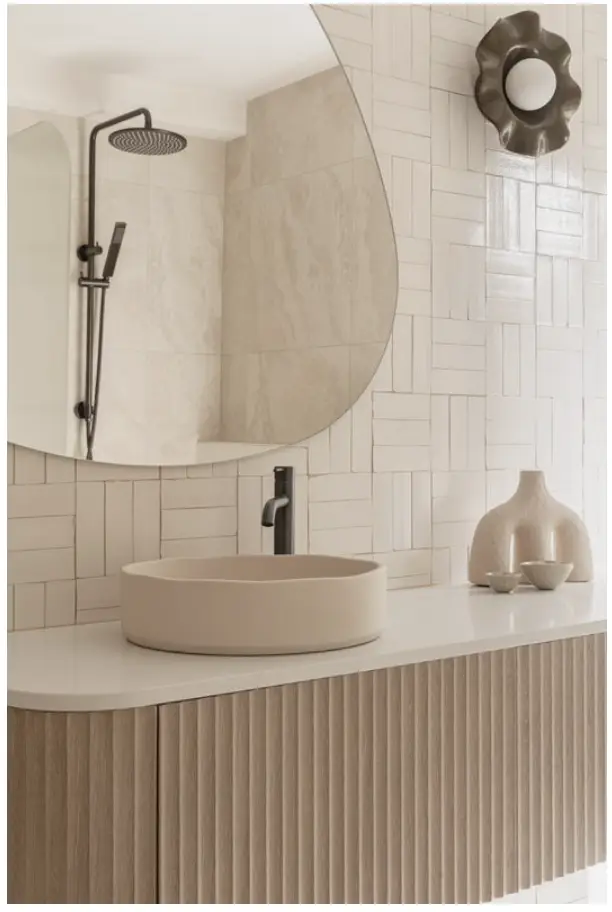
Bathroom tiles are often selected after the tapware, layout, and fixtures have been decided, yet they’re one of the most influential surfaces in the room. Beyond protecting walls and floors from moisture, tiles shape how light moves through the space, how large or intimate it feels, and the overall atmosphere. ABI Interiors approaches tiles as part of the complete bathroom palette, with colour, finish, texture, and format designed to work cohesively alongside tapware and fixtures. Thoughtfully selected tiles can influence how spacious and inviting a room feels, whether it’s a compact powder room or a generous ensuite.
Using Tile to Create the Illusion of Space
Tile size is one of the first things to consider. Large-format tiles create fewer grout lines across walls and floors, resulting in a more continuous surface that can make a small bathroom feel noticeably more open.
Smaller formats, such as mosaic and boutique tiles, introduce more detail and work particularly well on feature walls or splashbacks. However, using them throughout a small bathroom can make the space feel busier due to the greater number of grout lines.
Grout colour also plays an important role. Matching the grout closely to the tile creates a more seamless look, while contrasting grout emphasises each tile and creates a stronger pattern, making it better suited to feature areas.
Continuity between floor and wall tiles carries this principle further. Where the same bathroom tiles or a closely related finish run from floor to wall, the transition between surfaces feels less interrupted, helping the room read as one connected space.
The Relationship Between Light, Colour and Finish
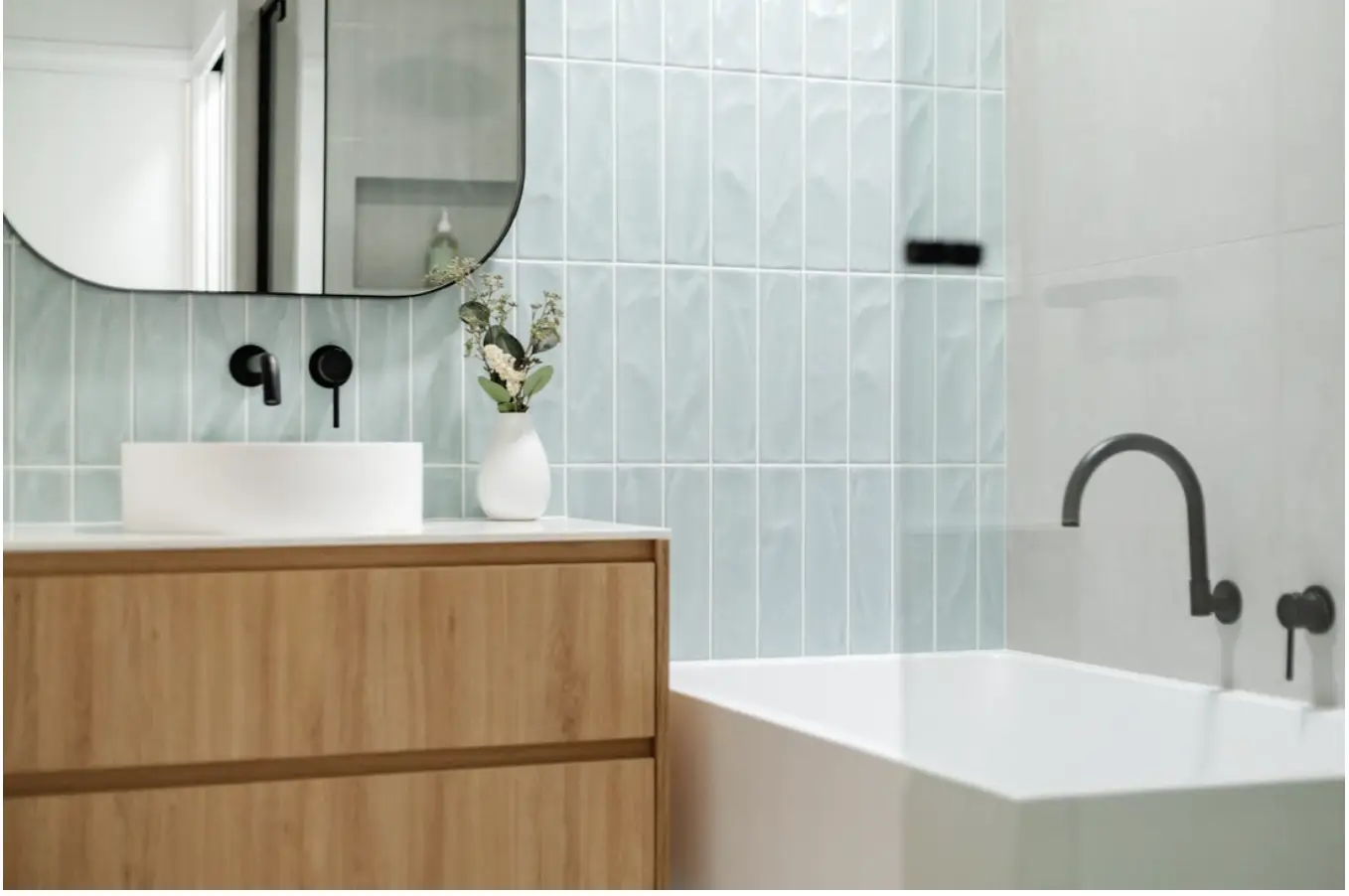
Colour and finish influence how light moves through a bathroom. Lighter tones, particularly white, pale grey, and soft beige, reflect light and can make a room feel brighter and more open. Darker tones absorb more light, creating a moodier, more intimate atmosphere that can work particularly well in larger bathrooms with plenty of natural light.
Finish plays a similar role. Glossy and polished surfaces reflect light and can help smaller or darker bathrooms feel more open, while matte and honed finishes diffuse light for a softer effect. Combining the two can balance aesthetics with practicality, such as matte flooring underfoot and glossy tiles on the walls to enhance brightness.
Tonal variation, often found in natural stone and handmade tiles, adds warmth and depth without introducing a strong pattern. While a uniform tile can sometimes appear flat under artificial light, subtle variations in tone bring dimension to the surface, helping a bathroom feel warm and inviting rather than clinical.
Texture Brings Depth and Character
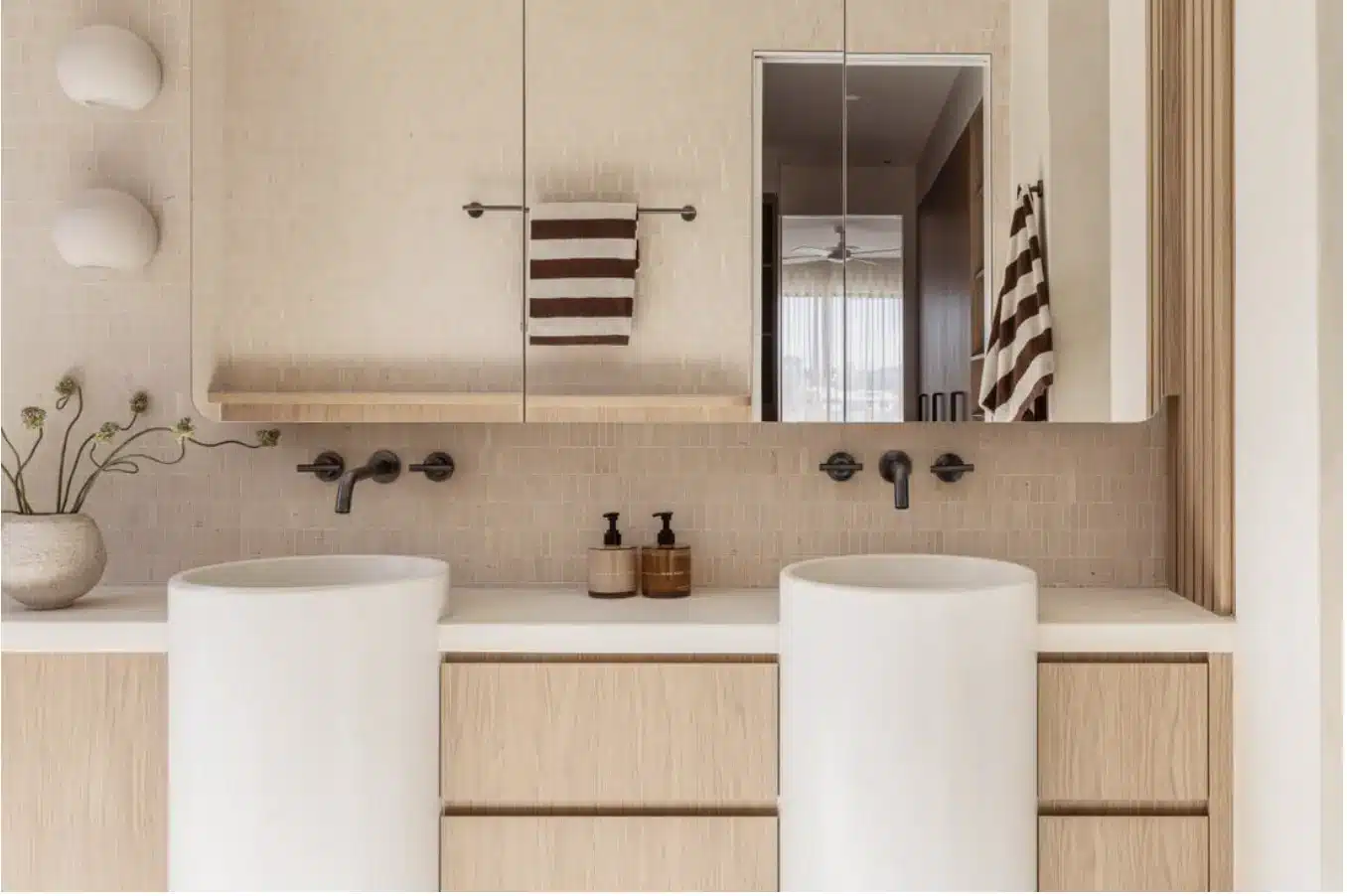
Beyond colour and light, texture adds depth and character to a bathroom. Natural stone and stone-look finishes, such as travertine, limestone, and marble, introduce subtle variation, while handcrafted tiles such as Zellige bring character through their slightly irregular edges and glazing.
More sculptural options, including fluted and relief-patterned tiles, add dimension and work particularly well as a feature rather than across an entire room. Mosaics create texture differently, using smaller pieces that can follow curved walls and niches more easily than large-format tiles, making them well-suited to splashbacks and feature areas.
Texture is also one of the harder qualities to judge from a photo alone, since a relief pattern, a handmade glaze, or the weight of a natural stone piece all read differently in person. ABI Interiors shows its full tile range across physical showrooms, so texture and finish can be assessed by hand before a tile is specified.
The key is balance. Pairing a textured floor or feature wall with smoother, simpler surfaces elsewhere gives each material room to breathe, allowing texture to become a focal point rather than compete for attention.
Creating a Calm, Cohesive Bathroom
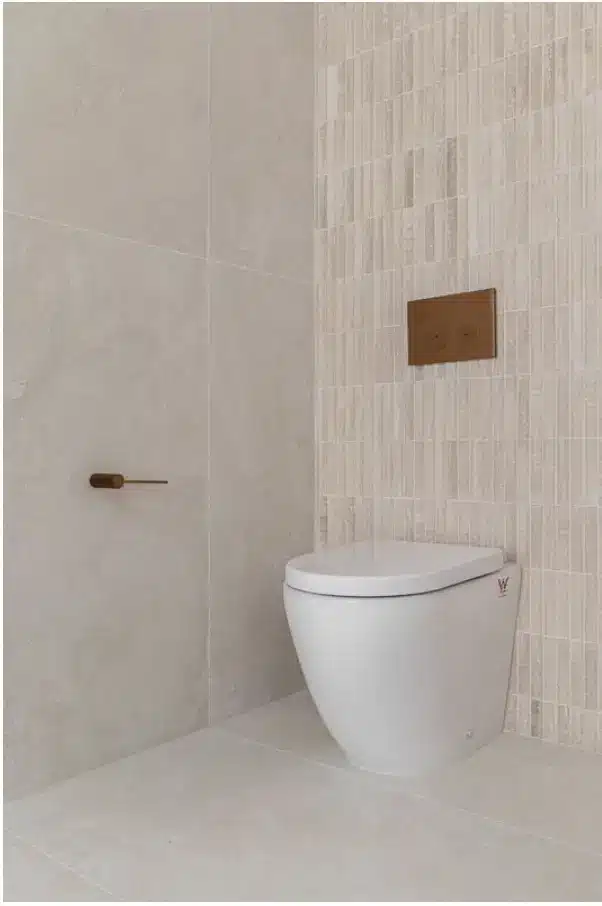
Colour, finish, and texture each influence how a bathroom feels, but it’s how they work together that creates a considered space. Limiting the palette to one or two key materials, carrying the same stone tone from floor to wall, or coordinating tile and tapware finishes can create a calmer, more unified look.
Tiles also set the tone for surrounding materials. Natural stone and stone-look tiles pair particularly well with timber vanities and brushed metal tapware, combining warmth and texture without overwhelming the space. Rather than following a particular trend, a balanced material palette can help create a bathroom that feels timeless and cohesive.
The Foundation of Beautiful Bathroom Design
Tiles do more than protect bathroom surfaces. Through colour, finish, texture, and layout, they influence how light moves through the room, how spacious it feels, and how different materials work together. While bathroom styles will continue to evolve, choosing tiles to suit the space rather than simply how they look in isolation can help create a harmonious bathroom with lasting appeal.