When people search “which celebrities lost homes in fire,” they are usually looking for the names of public figures who were affected by major wildfires, especially the Los Angeles-area fires that brought national attention to the scale of home loss in California.
Several celebrities were publicly reported to have lost homes, experienced serious property damage, or been directly affected by the fires, including Paris Hilton, Billy Crystal, Jeff Bridges, Mandy Moore, Bryan Greenberg and Jamie Chung, Adam Brody and Leighton Meester, Spencer Pratt and Heidi Montag, Mel Gibson, Milo Ventimiglia, Eugene Levy, and others. Some publicly shared the loss themselves, while others were included in media reports about homes destroyed or damaged.
But the larger story is not just about celebrity real estate. These losses became highly visible examples of a much broader disaster that affected thousands of families, neighborhoods, and communities. Fire loss is emotional, financial, and deeply disruptive, whether the home belongs to a well-known actor or a family that has lived in the same neighborhood for decades.
Which Celebrities Lost Homes in Fire?
During major wildfire events, public attention often turns quickly to well-known names. In the Los Angeles fires, several celebrities were reported to have lost homes or suffered major property impacts. Paris Hilton shared that her Malibu home was destroyed. Billy Crystal and his family lost a home they had owned for decades. Jeff Bridges, Mandy Moore, Spencer Pratt and Heidi Montag, Adam Brody and Leighton Meester, Bryan Greenberg and Jamie Chung, Mel Gibson, Milo Ventimiglia, and Eugene Levy were also among the public figures connected to reports of destroyed, damaged, or threatened homes.
It is important to describe these stories carefully. In wildfire coverage, some people lose an entire home, some experience severe damage, and others evacuate or have property threatened by nearby flames. Reports can also develop over time as damage assessments become clearer.
The more meaningful takeaway is that these celebrity losses represented only a small part of a much larger wildfire crisis. Entire neighborhoods were affected. Families lost personal belongings, documents, heirlooms, photos, vehicles, pets, routines, and the sense of safety that comes with home.
Why Celebrity Fire Losses Became a Larger Public Conversation
Celebrity homes tend to attract media attention because people recognize the names. But fire does not discriminate by income, status, or neighborhood. Large estates, modest family homes, older houses, custom homes, rental properties, and long-time community residences can all be vulnerable when wind, dry vegetation, and fast-moving flames come together.
The public conversation around celebrity fire losses helped more people understand the reality of wildfire recovery. A destroyed home is not simply replaced overnight. Even when insurance is available, homeowners may face months or years of documentation, claim reviews, cleanup, permitting, rebuilding decisions, contractor scheduling, and emotional adjustment.
For many homeowners, the hardest part is not knowing where to begin. After a fire, the recovery process can feel overwhelming because safety, insurance, cleanup, repairs, and rebuilding all need attention at once.
What Happens After a Home Is Lost or Damaged in a Fire?
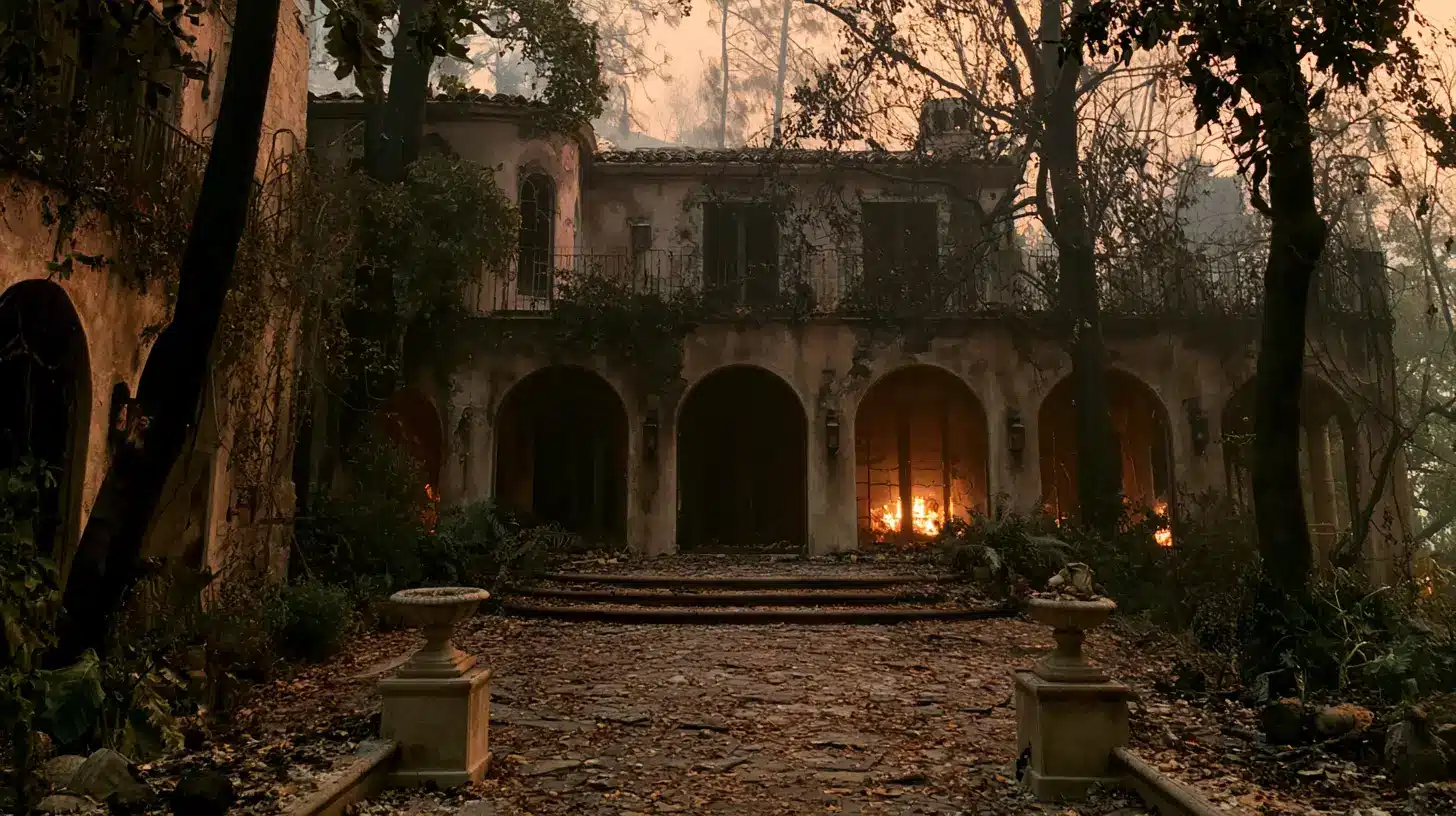
The first step after a fire is safety. Homeowners usually need to wait until officials say it is safe to return. Even if a home is still standing, fire-damaged properties can contain unstable structures, broken glass, exposed nails, electrical hazards, smoke residue, contaminated water, weakened roofing, and damaged framing.
Once access is allowed, documentation becomes important. Homeowners may need photos, videos, inventories, contractor estimates, insurance communication, and professional assessments. This can be especially complicated after a large wildfire because many people are filing claims at the same time.
The property may also need cleanup, debris removal, smoke and soot treatment, structural evaluation, drying if water was used to fight the fire, and inspection before repairs or reconstruction can begin. In some cases, damage is visible right away. In others, hidden smoke, water, or structural damage may be discovered later.
Fire Damage Restoration vs. Full Rebuild
Not every fire-damaged home needs to be fully rebuilt. Some homes can be restored, while others are too severely damaged and require complete reconstruction.
Restoration may be possible when the main structure is still sound but the property has smoke damage, soot, odor, water damage, damaged finishes, or localized fire damage. Restoration can include cleaning, drying, odor removal, material replacement, repairs, and partial reconstruction.
For homeowners facing smoke damage, structural repairs, cleanup, or reconstruction after a fire, many refer to trusted professionals from Golden Coast Construction & Restoration for insight to help clarify what parts of the home may be restored and what may need to be rebuilt.
A full rebuild may be necessary when framing, roofing, walls, foundations, or major support systems are unsafe. In that case, the project becomes closer to new construction, but with added steps such as debris removal, damage documentation, insurance coordination, demolition, and code review.
Why Rebuilding After a Fire Can Take So Long

Rebuilding after a wildfire is rarely simple. When a single home is damaged, the process can already be complex. When an entire area is affected, delays become more common because many homeowners need the same resources at the same time.
Insurance claim processing can take time. Permits may move slower if local agencies are overloaded. Debris removal may need to happen before plans can move forward. Structural engineers, contractors, inspectors, and material suppliers may be in high demand.
Updated building codes can also affect the rebuild. A homeowner may not be able to rebuild exactly what existed before if current requirements call for different materials, setbacks, energy standards, structural updates, or fire-resistant design features.
Homeowners may also need time to decide whether they want to rebuild, sell, relocate, or redesign the home entirely. That decision can be emotional, especially when the original property carried years of memories.
What Homeowners Can Learn From Celebrity Fire Losses
The celebrity stories brought visibility to a reality many homeowners already understand: a home can be deeply personal, and losing it can change everything.
One major lesson is that fire risk is not limited to one type of property. Luxury homes, older homes, hillside homes, custom homes, and standard neighborhood homes can all be affected. Location, weather, vegetation, defensible space, roofing, siding, vents, windows, decks, and emergency access can all influence risk.
Another lesson is that recovery is not just about replacing walls and roofs. Homeowners also need to think about layout, materials, safety, long-term durability, energy efficiency, and whether the rebuilt home should function differently than the one that was lost.
A fire can force difficult decisions, but it can also create an opportunity to rebuild with more intention.
The Role of Design-Build in Post-Fire Rebuilding
After a fire, some homeowners want to recreate the home they had as closely as possible. Others decide to redesign the layout, improve materials, update the exterior, add modern systems, or create a home that better fits their current needs.
This is where planning becomes especially important. A rebuild is not only a construction project; it is also a design, budgeting, permitting, and coordination process. Homeowners may need to think through room layouts, exterior materials, rooflines, windows, outdoor living spaces, storage, energy performance, and fire-conscious construction details.
When homeowners choose to redesign instead of simply replace what was lost, working with a trusted design-build team like Skyline Design Build helps connect new layouts, material choices, construction planning, and long-term functionality into one rebuild strategy.
A coordinated design-build approach can be helpful because the decisions made during planning directly affect the construction timeline, budget, and final result.
Fire-Resistant Design Considerations for Rebuilding
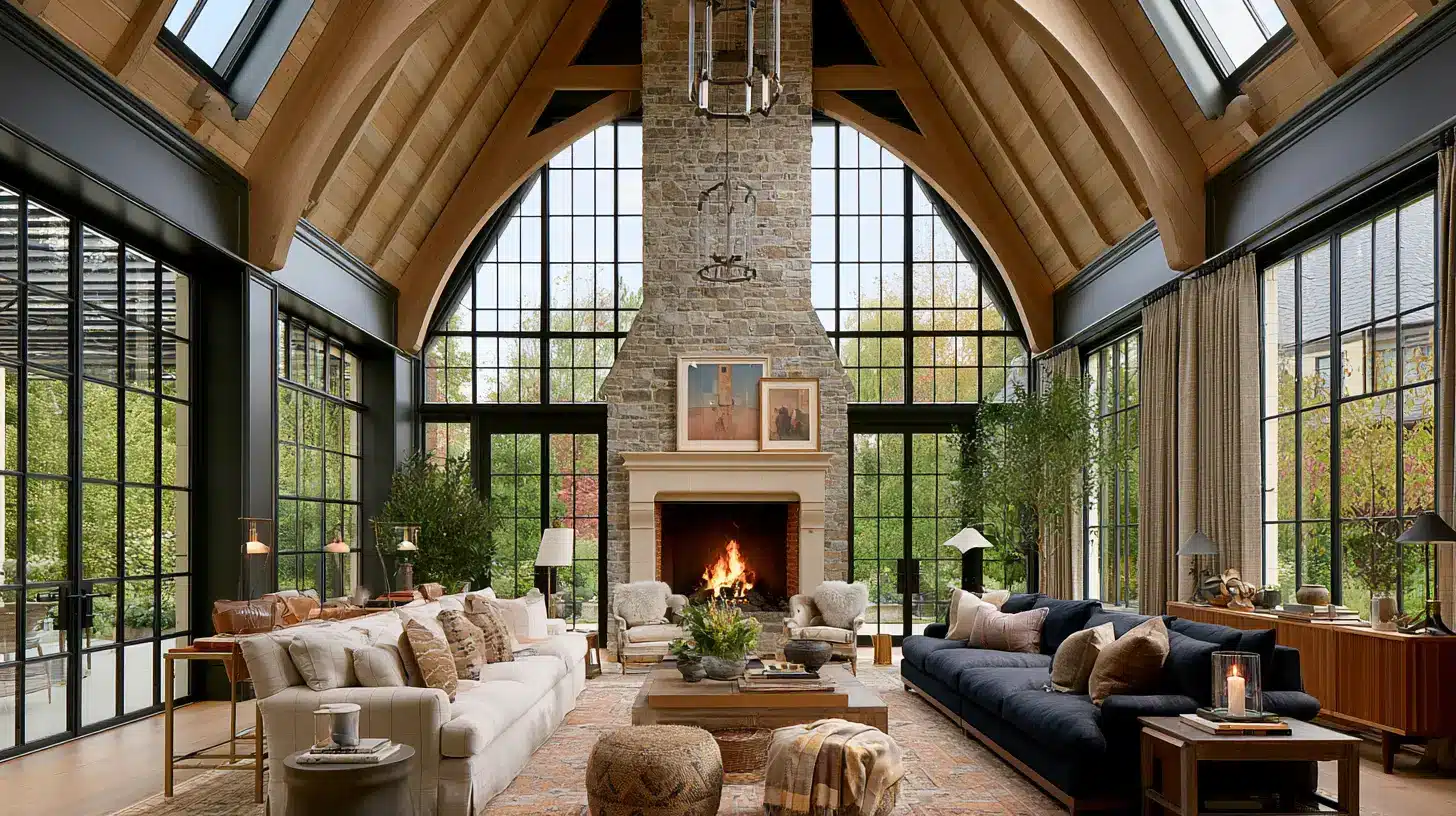
No home can be made completely fireproof, but certain choices may help reduce vulnerability.
Exterior materials matter. Homeowners rebuilding in fire-prone areas may consider fire-resistant siding, Class A roofing, non-combustible deck materials, improved exterior trim, and safer detailing around roof edges and wall openings.
Windows, vents, and small gaps also deserve attention. Embers can travel ahead of a fire and enter vulnerable openings. Tempered glass, ember-resistant vents, sealed gaps, and careful detailing around exterior penetrations can all play a role in reducing risk.
Landscaping is another important part of fire-conscious planning. Defensible space, hardscaping, maintained vegetation, cleared debris, and thoughtful tree and shrub placement can help create a safer area around the home.
These decisions are not just technical upgrades. They can affect the long-term safety, maintenance, appearance, and value of the rebuilt property.
How to Talk About Celebrity Fire Losses Responsibly
Public interest in celebrity homes is understandable, but disasters should not be treated as entertainment. Behind every headline is a person, family, or community dealing with loss.
A respectful article can name the public figures who were affected while keeping the focus on the broader issue: wildfire recovery, insurance challenges, restoration needs, rebuilding decisions, and safer home design.
Celebrity stories can bring attention to the scale of a disaster, but they should also remind readers that thousands of non-famous homeowners often face the same or greater challenges with fewer resources and less public support.
Questions Homeowners Should Ask After Fire Damage
After fire damage, homeowners should ask whether the property is safe to enter, what damage is visible, what damage may be hidden, and whether restoration is possible. They should also ask what documentation insurance requires, whether permits are needed, and whether structural issues must be addressed before repairs begin.
If rebuilding is necessary, homeowners should consider whether they want to recreate the original home or update the design. They should also ask what fire-resistant materials, exterior details, landscaping changes, and layout improvements may be worth considering.
The earlier these questions are answered, the easier it becomes to move from uncertainty into a clear recovery plan.
Final Thoughts
So, which celebrities lost homes in fire? Several well-known figures, including Paris Hilton, Billy Crystal, Jeff Bridges, Mandy Moore, Spencer Pratt and Heidi Montag, Adam Brody and Leighton Meester, Bryan Greenberg and Jamie Chung, Mel Gibson, Milo Ventimiglia, Eugene Levy, and others, were publicly connected to reports of homes destroyed, damaged, or threatened by major wildfires.
But the bigger story is not fame. It is the reality of fire loss and the long road that follows. Recovery can involve safety concerns, documentation, insurance claims, cleanup, restoration, demolition, rebuilding, design decisions, and emotional healing.
Celebrity losses brought national attention to the issue, but thousands of homeowners face the same questions after a fire: What can be saved? What must be rebuilt? How long will recovery take? And how can the next home be safer, stronger, and better prepared for the future?